Overview
This unit builds upon the basic microbiological concepts learned in first year and applies them to an environmental context. In this unit you will learn about the various microbial groups and develop a sound understanding of their relevance and importance in both natural and industrial environments. This unit has a very applied and practical focus, covering both field and laboratory microbiological methods. You will learn and apply practical skills which also include employability skills in the area of microbiology.
Details
Pre-requisites or Co-requisites
Pre-requisite: BIOL11102 Life Science Laboratory
Important note: Students enrolled in a subsequent unit who failed their pre-requisite unit, should drop the subsequent unit before the census date or within 10 working days of Fail grade notification. Students who do not drop the unit in this timeframe cannot later drop the unit without academic and financial liability. See details in the Assessment Policy and Procedure (Higher Education Coursework).
Offerings For Term 2 - 2026
Attendance Requirements
All on-campus students are expected to attend scheduled classes - in some units, these classes are identified as a mandatory (pass/fail) component and attendance is compulsory. International students, on a student visa, must maintain a full time study load and meet both attendance and academic progress requirements in each study period (satisfactory attendance for International students is defined as maintaining at least an 80% attendance record).
Recommended Student Time Commitment
Each 6-credit Undergraduate unit at CQUniversity requires an overall time commitment of an average of 12.5 hours of study per week, making a total of 150 hours for the unit.
Class Timetable
Assessment Overview
Assessment Grading
This is a graded unit: your overall grade will be calculated from the marks or grades for each assessment task, based on the relative weightings shown in the table above. You must obtain an overall mark for the unit of at least 50%, or an overall grade of 'pass' in order to pass the unit. If any 'pass/fail' tasks are shown in the table above they must also be completed successfully ('pass' grade). You must also meet any minimum mark requirements specified for a particular assessment task, as detailed in the 'assessment task' section (note that in some instances, the minimum mark for a task may be greater than 50%). Consult the University's Grades and Results Policy for more details of interim results and final grades.
All University policies are available on the CQUniversity Policy site.
You may wish to view these policies:
- Grades and Results Policy
- Assessment Policy and Procedure (Higher Education Coursework)
- Review of Grade Procedure
- Student Academic Integrity Policy and Procedure
- Academic Progression Policy and Procedure
- Student Refund and Credit Balance Policy and Procedure
- Complaints Policy and Procedure
- Information and Communications Technology Acceptable Use Policy and Procedure
This list is not an exhaustive list of all University policies. The full list of University policies are available on the CQUniversity Policy site.
Feedback, Recommendations and Responses
Every unit is reviewed for enhancement each year. At the most recent review, the following staff and student feedback items were identified and recommendations were made.
Feedback from SUTE comments
Students found the residential school to be very relevant to the unit and their learning
The residential school will continue in its current format.
Feedback from SUTE comments
Some agriculture students felt this unit was not very relevant to their degree
This was the first year that agriculture students enroled in this unit. I will look into probably adding modules specifically for agriculture students to make the unit more relevant to them.
- Describe the relationships between form and function, genetics, and growth dynamics in the major microbial groups
- Explain the fundamental principles of environmental microbiology
- Discuss the role of microbial interactions with the environment and other organisms, including industrial applications
- Discuss sampling, processing and analysis methods with respect to environmental microorganisms
- Practice and demonstrate selected microbiological procedures in the laboratory in a safe and efficient manner
- Interpret the results of laboratory experiments both individually and in groups.
Alignment of Assessment Tasks to Learning Outcomes
| Assessment Tasks | Learning Outcomes | |||||
|---|---|---|---|---|---|---|
| 1 | 2 | 3 | 4 | 5 | 6 | |
| 1 - Presentation and Written Assessment - 20% | ||||||
| 2 - Practical and Written Assessment - 30% | ||||||
| 3 - Online Test - 50% | ||||||
Alignment of Graduate Attributes to Learning Outcomes
| Graduate Attributes | Learning Outcomes | |||||
|---|---|---|---|---|---|---|
| 1 | 2 | 3 | 4 | 5 | 6 | |
| 1 - Communication | ||||||
| 2 - Problem Solving | ||||||
| 3 - Critical Thinking | ||||||
| 4 - Information Literacy | ||||||
| 5 - Team Work | ||||||
| 6 - Information Technology Competence | ||||||
| 7 - Cross Cultural Competence | ||||||
| 8 - Ethical practice | ||||||
| 9 - Social Innovation | ||||||
| 10 - First Nations Knowledges | ||||||
| 11 - Aboriginal and Torres Strait Islander Cultures | ||||||
Alignment of Assessment Tasks to Graduate Attributes
| Assessment Tasks | Graduate Attributes | ||||||||||
|---|---|---|---|---|---|---|---|---|---|---|---|
| 1 | 2 | 3 | 4 | 5 | 6 | 7 | 8 | 9 | 10 | 11 | |
| 1 - Presentation and Written Assessment - 20% | |||||||||||
| 2 - Practical and Written Assessment - 30% | |||||||||||
| 3 - Online Test - 50% | |||||||||||
Textbooks
Environmental Microbiology
- Edition: 3rd (2014)
- Authors: Pepper, Gerba and Gentry
- Elsevier
- Burlington Burlington , MA , USA
- ISBN: 978-0-12-394626-3
- Binding: Hardcover
IT Resources
- CQUniversity Student Email
- Internet
- Unit Website (Moodle)
All submissions for this unit must use the referencing styles below:
For further information, see the Assessment Tasks.
s.makiela@cqu.edu.au
Week 1
Begin Date: 13 Jul 2026Module/Topic
Microbial form and function
Chapter
1, 2
Events and Submissions/Topic
Week 2
Begin Date: 20 Jul 2026Module/Topic
Microbial form and function
Chapter
1, 2
Events and Submissions/Topic
Week 3
Begin Date: 27 Jul 2026Module/Topic
Microbial growth and control of growth
Chapter
3
Events and Submissions/Topic
Week 4
Begin Date: 03 Aug 2026Module/Topic
Microorganisms in nature
Chapter
4, 5, 6, 7
Events and Submissions/Topic
Week 5
Begin Date: 10 Aug 2026Module/Topic
Microbial interactions with the environment
Chapter
15, 16, 19
Events and Submissions/Topic
Residential school.
Week 6
Begin Date: 17 Aug 2026Module/Topic
Mechanisms of disease
Chapter
Readings will be provided on Moodle.
Events and Submissions/Topic
Online test 1 opens Monday 17th August at 9am AEST and close in 24h.
Vacation Week
Begin Date: 24 Aug 2026Module/Topic
Chapter
Events and Submissions/Topic
Week 7
Begin Date: 31 Aug 2026Module/Topic
Waste water microbiology
Chapter
23, 25, 26, 27, 28, 29 (sections will be specified on Moodle)
Events and Submissions/Topic
Week 8
Begin Date: 07 Sep 2026Module/Topic
Sampling, processing and culture of microbes
Chapter
8, 10
Events and Submissions/Topic
Online test 2 opens Friday 11th September at 9am AEST and close in 24h.
Practical skills, Project Report and Peer Assessment Due: Week 8 Monday (7 Sept 2026) 11:59 pm AEST
Week 9
Begin Date: 14 Sep 2026Module/Topic
Detection, enumeration and bioinformatics
Chapter
11, 12, 13, 21
Events and Submissions/Topic
Week 10
Begin Date: 21 Sep 2026Module/Topic
Biodegradation, bioremediation and bioleaching
Chapter
17, 18
Events and Submissions/Topic
Week 11
Begin Date: 28 Sep 2026Module/Topic
Industrial microbiology and biofuels
Chapter
Readings will be provided on Moodle.
Events and Submissions/Topic
Week 12
Begin Date: 05 Oct 2026Module/Topic
Revision.
Chapter
Events and Submissions/Topic
Online test 3 opens Friday 9th October at 9am AEST and close in 24h.
Exam Week
Begin Date: 12 Oct 2026Module/Topic
Chapter
Events and Submissions/Topic
Vacation/Exam Week
Begin Date: 19 Oct 2026Module/Topic
Chapter
Events and Submissions/Topic
1 Presentation and Written Assessment
Task Description
You will be assessed on two tasks (for a total weighting of 20%):
15% - essay
5% - presentation
Essay (Critical debate)
On the unit Moodle site, you will have a choice of several topics, each of which is a controversial issue in microbiology. Please note that the number of students in each topic may be restricted. You will need to write a critical debate on your chosen topic. There is no right or wrong answer, but you will need to critically review all sides of the issue and defend your opinion with references.
Word length: 1000-1400 words.
Presentation
You will need to prepare a one page graphical argument analysis on your essay topic. This is a summary of your essay arguments, main points, and conclusions, in the form of a flowchart. Instructions and exemplars will be provided on the Moodle site.
Level of GenAI use allowed:
Level 3: You may use Al to assist with specific tasks such as drafting text, refining and evaluating your work. You must critically evaluate and modify any Al-generated content you use.
A note on the use of AI:
Student are permitted to use Generative AI for this assessment in the following ways:
- developing literature search strategies
- compiling suitable literature sources and locating data
- guidance for structuring the assignment
All students (whether you used AI or not) must submit an AI Declaration Form with their assessment, available on the Moodle site in this assessment.
As per academic writing requirements and assessment criteria, citations of information should be of the primary source (i.e statistics returned by AI must be fact-checked and referenced from their original source as well as the AI source). Failure to cite primary sources as well as AI sources could be considered breach of academic integrity. Your use of Generative AI must be clearly outlined in the AI Declaration Form which includes the prompt(s) used and Generative AI response(s). Failure to include this may result in academic integrity investigation.
Week 7 Monday (31 Aug 2026) 11:59 pm AEST
Week 9 Friday (18 Sept 2026)
For the essay, a full assessment rubrics will be available on the unit Moodle site, using the following criteria:
- Content and range of knowledge (20%)
- Application of critical analysis (40%)
- Defense of argument (10%)
- Presentation (10%)
- Clarity of expression (10%)
- Referencing (10%)
For the presentation, detailed marking criteria will be available on the unit Moodle site, and will be based on the following:
- Gives an accurate representation of the essay (60%)
- Straightforward and easy to follow (20%)
- Presentation (20%)
- Explain the fundamental principles of environmental microbiology
- Discuss the role of microbial interactions with the environment and other organisms, including industrial applications
- Communication
- Critical Thinking
- Information Literacy
2 Practical and Written Assessment
For this assessment,you will be assessed on three tasks (for a total weighting of 30%):
10% - Practical skills
15% - Written report
5% - Peer assessment
Practical Skills
During the residential school you will be marked on basic microbiological techniques, on both your performance of the task and the results. The marking will occur during the normal course of the residential school (it is not under exam conditions). Detailed descriptions and requirements for this task will be available on the Moodle site.
Written Report
During the residential school you will do set practicals both individually and in groups. In addition to this you will undertake a small group project. At the start of term, you will be given a choice of two or three potential project areas. Based on each student's preference of project, you will be assigned to a group by the unit coordinator. In your group, during the residential school, you will design an experiment on your project topic (with guidance). You will carry out the project experiment, and then individually write a scientific report on the project results.
The written report will be in the style of an article for a journal submission. As such, you will need to follow the "Guidelines for Authors" document for the journal when preparing your submission. This document, the conventions to follow and the passing standards will be available on Moodle, and will be clearly outlined in the residential school.
Word limit: 1500-1800 words.
Level of GenAI use allowed:
Level 3: You may use Al to assist with specific tasks such as drafting text, refining and evaluating your work. You must critically evaluate and modify any Al-generated content you use.
A note on the use of AI:
Student are permitted to use Generative AI for this assessment in the following ways:
- developing literature search strategies
- compiling suitable literature sources and locating data
- guidance for structuring the assignment
All students (whether you used AI or not) must submit an AI Declaration Form with their assessment, available on the Moodle site in this assessment.
As per academic writing requirements and assessment criteria, citations of information should be of the primary source (i.e statistics returned by AI must be fact-checked and referenced from their original source as well as the AI source). Failure to cite primary sources as well as AI sources could be considered breach of academic integrity. Your use of Generative AI must be clearly outlined in the AI Declaration Form which includes the prompt(s) used and Generative AI response(s). Failure to include this may result in academic integrity investigation.
Peer Assessment
You will be asked to grade yourself and each of your team members on how well they performed as a team member. This will be done after the practical block session. Each student's final mark will be an average of the summative peer assessments. These will be done via the Self and Peer Assessment program, which will be available in Moodle. Please note: failure to complete the Self and Peer Assessment will result in no marks being awarded for this part of the assessment.
The 72 hour grace period does not apply to the Practical Skills.
Week 8 Monday (7 Sept 2026) 11:59 pm AEST
This is both the written report and the peer assessment.
Week 10 Friday (25 Sept 2026)
The practical skills will be marked on how well you perform each skill and the result (final product). A detailed marks sheet will be available on the Moodle site.
For the report, a full assessment rubrics will be available on the unit Moodle site, using the following criteria:
- Scientific writing (10%)
- Data presentation and analysis (20%)
- The extent to which the results are considered and discussed (40%)
- Report presentation (10%)
- Clarity of expression (10%)
- Referencing (10%)
The peer assessment questionnaire will be available on the unit Moodle site from the time of the residential school, and the criteria will be discussed at that time.
- Practice and demonstrate selected microbiological procedures in the laboratory in a safe and efficient manner
- Interpret the results of laboratory experiments both individually and in groups.
- Communication
- Problem Solving
- Critical Thinking
- Information Literacy
- Team Work
- Cross Cultural Competence
- Ethical practice
3 Online Test
Your knowledge of the content and concepts will be examined by three online tests held at regular intervals throughout the term. All test topics will be covered in lectures and tutorials.
The first online test will be on the Monday of week 6 (17th August), and will cover the content of weeks 1-4. The second will be on the Friday of week 8 (11th September), and cover the content of weeks 5-7. The third will be on the Friday of week 12 (9th October), and cover the content of weeks 8-11.
These online tests will be done as quizzes in Moodle. Each test opens at 9am AEST on the specified date, will be open for a 24h period (unless otherwise specified), and will be timed. You may do your test at any time during this period.
The quizzes consist of both multiple choice (MCQ) and short answer questions.
You must undertake these tests as an indivitual and not with classmates or others. As with all other University assessments, colluding with other students on a non-group work task is considered academic misconduct and will be dealt with in accordance with the Student Academic Integrity Policy.
Referencing:
For all short answer questions, you must cite your sources using the prescribed referencing styles (Harvard or APA). Failure to cite the source (or incorrectly citing your source) constitutes a breach of academic integrity and will be dealt with in accordance of the relevant policy.
If your answer came from lectures, simply cite as: Lectures, week x. If from the textbook, simply cite as: Textbook, chapter x. If your answer came from any other source, the full citation must be given (not just author and date).
Level of GenAI use Allowed:
Level 1: You must not use Al at any point during the assessment. You must demonstrate your core skills and knowledge.
The 72 hour grace period does not apply to this assessment.
Online test 1 due in week 6 on Tuesday, 9am AEST; online test 2 on the Saturday of week 8, 9am AEST; online test 3 on the Saturday of week 12, 9am AEST.
Test marks will be returned 10 working days after the test closing date.
Each MCQ in each online test will be marked automatically by Moodle, and will be based on correctness. Short answer questions will be marked manually, and will be based on completeness and correctness of your answer. Your total mark for this assessment will be the sum of all three online test marks.
- Describe the relationships between form and function, genetics, and growth dynamics in the major microbial groups
- Explain the fundamental principles of environmental microbiology
- Discuss the role of microbial interactions with the environment and other organisms, including industrial applications
- Discuss sampling, processing and analysis methods with respect to environmental microorganisms
- Communication
- Problem Solving
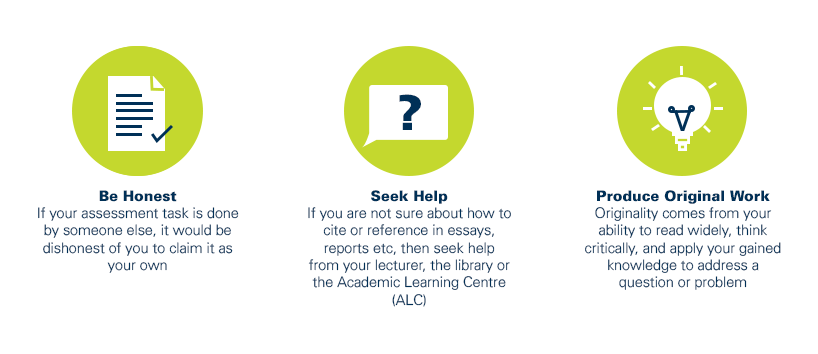
As a CQUniversity student you are expected to act honestly in all aspects of your academic work.
Any assessable work undertaken or submitted for review or assessment must be your own work. Assessable work is any type of work you do to meet the assessment requirements in the unit, including draft work submitted for review and feedback and final work to be assessed.
When you use the ideas, words or data of others in your assessment, you must thoroughly and clearly acknowledge the source of this information by using the correct referencing style for your unit. Using others’ work without proper acknowledgement may be considered a form of intellectual dishonesty.
Participating honestly, respectfully, responsibly, and fairly in your university study ensures the CQUniversity qualification you earn will be valued as a true indication of your individual academic achievement and will continue to receive the respect and recognition it deserves.
As a student, you are responsible for reading and following CQUniversity’s policies, including the Student Academic Integrity Policy and Procedure. This policy sets out CQUniversity’s expectations of you to act with integrity, examples of academic integrity breaches to avoid, the processes used to address alleged breaches of academic integrity, and potential penalties.
What is a breach of academic integrity?
A breach of academic integrity includes but is not limited to plagiarism, self-plagiarism, collusion, cheating, contract cheating, and academic misconduct. The Student Academic Integrity Policy and Procedure defines what these terms mean and gives examples.
Why is academic integrity important?
A breach of academic integrity may result in one or more penalties, including suspension or even expulsion from the University. It can also have negative implications for student visas and future enrolment at CQUniversity or elsewhere. Students who engage in contract cheating also risk being blackmailed by contract cheating services.
Where can I get assistance?
For academic advice and guidance, the Academic Learning Centre (ALC) can support you in becoming confident in completing assessments with integrity and of high standard.
What can you do to act with integrity?