Overview
In this unit, you will explore the role and scope of the midwife and the legal and ethical parameters framing midwifery practice. You will explore the philosophical and historical contexts underpinning the midwifery profession including the discourses that influence women's decision making in relation to their care. Legal and ethical parameters framing midwifery practice and their importance to professional accountability will be critically examined; specifically the Nursing and Midwifery Board of Australia (NMBA), the Midwife Standards for Practice and Code of Conduct for Midwives, the International Confederation of Midwives (ICM) International Code of Ethics for Midwives and other relevant Australian legislation. You will also be introduced to the Australian maternity services, models of midwifery care available, and the provision of inclusive culturally safe practice.
Details
Pre-requisites or Co-requisites
Co-requisite: MDWF12003 Midwifery Practice 1
Important note: Students enrolled in a subsequent unit who failed their pre-requisite unit, should drop the subsequent unit before the census date or within 10 working days of Fail grade notification. Students who do not drop the unit in this timeframe cannot later drop the unit without academic and financial liability. See details in the Assessment Policy and Procedure (Higher Education Coursework).
Offerings For Term 1 - 2026
Attendance Requirements
All on-campus students are expected to attend scheduled classes - in some units, these classes are identified as a mandatory (pass/fail) component and attendance is compulsory. International students, on a student visa, must maintain a full time study load and meet both attendance and academic progress requirements in each study period (satisfactory attendance for International students is defined as maintaining at least an 80% attendance record).
Recommended Student Time Commitment
Each 6-credit Undergraduate unit at CQUniversity requires an overall time commitment of an average of 12.5 hours of study per week, making a total of 150 hours for the unit.
Class Timetable
Assessment Overview
Assessment Grading
This is a graded unit: your overall grade will be calculated from the marks or grades for each assessment task, based on the relative weightings shown in the table above. You must obtain an overall mark for the unit of at least 50%, or an overall grade of 'pass' in order to pass the unit. If any 'pass/fail' tasks are shown in the table above they must also be completed successfully ('pass' grade). You must also meet any minimum mark requirements specified for a particular assessment task, as detailed in the 'assessment task' section (note that in some instances, the minimum mark for a task may be greater than 50%). Consult the University's Grades and Results Policy for more details of interim results and final grades.
All University policies are available on the CQUniversity Policy site.
You may wish to view these policies:
- Grades and Results Policy
- Assessment Policy and Procedure (Higher Education Coursework)
- Review of Grade Procedure
- Student Academic Integrity Policy and Procedure
- Academic Progression Policy and Procedure
- Student Refund and Credit Balance Policy and Procedure
- Complaints Policy and Procedure
- Information and Communications Technology Acceptable Use Policy and Procedure
This list is not an exhaustive list of all University policies. The full list of University policies are available on the CQUniversity Policy site.
Feedback, Recommendations and Responses
Every unit is reviewed for enhancement each year. At the most recent review, the following staff and student feedback items were identified and recommendations were made.
Feedback from Informal feedback provided to the unit coordinator via conversations with multiple students.
The group discussion assessment required students to post on the discussion board in response to four prompts provided in the assessment instructions. Students stated that there were too many topics, and they felt as though they had too many due dates.
Although the recommended word count for the assessment aligns with its weighting, dividing the task across four due dates may increase pressure and cognitive load for students. It is recommended that the number of required prompts and posts be reduced from four to three. Handover between Unit Coordinators regarding this adjustment should occur if needed.
Feedback from SUTE data.
The assignments were too close together, otherwise, an enjoyable subject.
The official due dates for the three assessments in this unit were appropriately spaced; however, the informal deadlines for the four discussion board posts may have contributed to a perception that the due dates were close together. It is recommended that the required number of prompts and posts be reduced from four to three.
Feedback from SUTE data.
Having more than news articles which can be extremely biased to base assignments on. Allowing us to see the actual facts of the case.
Students were required to explore the legal and ethical issues in a real-world maternity care scenario, presented through actual media publications. A key purpose of this assessment was for students to apply their knowledge of law, ethics, and midwifery practice to identify the relevant facts and issues themselves, rather than having them provided. Nonetheless, alternative sources of real-world maternity care scenarios can be considered for future offerings.
- Apply the historical, philosophical, legal, and ethical concepts applicable to midwifery practice and their relationship to the professional scope of the registered midwife
- Analyse professional accountability in relation to the responsibilities and obligations of the midwife
- Explore the different models of maternity care and the professional discourses that influence women's decision making in relation to their care
- Integrate effective, culturally safe, and inclusive ethical decision making within the midwifery profession.
Content in this unit incorporates a number of professional requirements including the following:
The draft ANMAC Midwifery Education Standards (2020).
Standard 1 Safety of the public.
Standard 3 Program of study.
Standard 5: Student assessment.
The National Safety and Quality Health Service Standards (2017).
Clinical governance.
Partnering with consumers.
Preventing and controlling healthcare-associated infection.
Medication safety.
Comprehensive care.
Communicating for safety.
The NMBA Midwife Standards for Practice (2018).
Standard 1: Promotes evidence-based maternal health and wellbeing.
Standard 2: Engages in respectful partnerships and professional relationships.
Standard 3: Demonstrates the capability and accountability for midwifery practice.
Standard 5: Develops plans for midwifery practice.
Standard 6: Provides safe and quality midwifery practice.
The NMBA Code of Conduct for Midwives (2018).
Principle 1: Legal Compliance
Principle 2: Woman-centred practice.
Principle 3: Cultural practice and respectful relationships.
Principle 4: Professional behaviour.
Principle 7: Health and wellbeing.
The International Confederation of Midwives (ICM) Code of Ethics for Midwives (2014).
Midwifery relationships.
Practice of midwifery.
Professional responsibilities of midwives.
Advancement of midwifery knowledge and practice.
Alignment of Assessment Tasks to Learning Outcomes
| Assessment Tasks | Learning Outcomes | |||
|---|---|---|---|---|
| 1 | 2 | 3 | 4 | |
| 1 - Group Discussion - 30% | ||||
| 2 - Critical Review - 30% | ||||
| 3 - Portfolio - 40% | ||||
Alignment of Graduate Attributes to Learning Outcomes
| Graduate Attributes | Learning Outcomes | |||
|---|---|---|---|---|
| 1 | 2 | 3 | 4 | |
| 1 - Communication | ||||
| 2 - Problem Solving | ||||
| 3 - Critical Thinking | ||||
| 4 - Information Literacy | ||||
| 5 - Team Work | ||||
| 6 - Information Technology Competence | ||||
| 7 - Cross Cultural Competence | ||||
| 8 - Ethical practice | ||||
| 9 - Social Innovation | ||||
| 10 - First Nations Knowledges | ||||
| 11 - Aboriginal and Torres Strait Islander Cultures | ||||
Alignment of Assessment Tasks to Graduate Attributes
| Assessment Tasks | Graduate Attributes | ||||||||||
|---|---|---|---|---|---|---|---|---|---|---|---|
| 1 | 2 | 3 | 4 | 5 | 6 | 7 | 8 | 9 | 10 | 11 | |
| 1 - Group Discussion - 30% | |||||||||||
| 2 - Critical Review - 30% | |||||||||||
| 3 - Portfolio - 40% | |||||||||||
Textbooks
Midwifery: Preparation for Practice
- Edition: 5e (2023)
- Authors: Pairman, Tracy, Dahlen and Dixon
- Elsevier
- Sydney Sydney , NSW , Australia
- ISBN: 978-0-7295-4381-1
IT Resources
- CQUniversity Student Email
- Internet
- Unit Website (Moodle)
- Academic Learning Centre services
- Endnote
- Headphones/speaker/microphone
- Wordprocessing, spreadsheeting and powerpoint software
- Zoom
- Microsft Office (Word, Excel, PowerPoint)
- CQUniveristy Library Resources
- CQU Library hosted Literature Databases
- Microsoft Teams (both microphone and webcam capability)
- Zoom access: microphone and webcam required
- Australian Standards (through CQU library)
- CQU library search tools
All submissions for this unit must use the referencing style: American Psychological Association 7th Edition (APA 7th edition)
For further information, see the Assessment Tasks.
t.capper@cqu.edu.au
Week 1
Begin Date: 09 Mar 2026Module/Topic
Midwifery philosophies
Chapter
Review the Moodle site and click on all the links.
Find out what is in Student Support.
Find out how to find the Library.
Click on the link and learn what is in the Academic Learning Centre.
Readings:
Chapters 2, 6, & 9 in Midwifery: Preparation for Practice.
Activities and readings outlined in the module.
Events and Submissions/Topic
Recorded presentations:
Welcome and unit introduction.
Weekly lecture.
Assessments:
Review the assessment tasks and make a study plan.
Foundations of Academic Integrity Program:
Complete your annual program.
Announcements and Discussion Forums:
Check for posts and updates.
Student email:
Check your student email at least twice per week for important communications.
Week 2
Begin Date: 16 Mar 2026Module/Topic
Midwifery historical contexts
Chapter
Chapter 1 in Midwifery: Preparation for Practice.
Activities and readings outlined in the module.
Events and Submissions/Topic
Recorded presentations:
Weekly lecture.
Assessment 1:
Start preparing your forum post and response to a peer for submission by week 3.
Announcements and Discussion Forums:
Check for posts and updates.
Student email:
Check your student email at least twice per week for important communications.
Week 3
Begin Date: 23 Mar 2026Module/Topic
Contemporary midwifery perspectives
Chapter
Chapters 3, 13 and 14 in Midwifery: Preparation for Practice.
Activities and readings outlined in the module.
Events and Submissions/Topic
Recorded presentations:
Weekly lecture.
Assessment 1:
Week 3 forum post and response to a peer due on Wednesday the 25th of March 2026 at 16:00 (AEST).
Census Date:
Is next week. If you are struggling, please contact your Unit Coordinator for help.
Announcements and Discussion Forums:
Check for posts and updates.
Student email:
Check your student email at least twice per week for important communications.
Week 4
Begin Date: 30 Mar 2026Module/Topic
The midwife-woman partnership
Chapter
Chapter 17 in Midwifery: Preparation for Practice.
Activities and readings outlined in the module.
Events and Submissions/Topic
Recorded presentations:
Weekly lecture.
Assessment 1:
Start preparing your forum post and response to a peer for submission by week 6.
Assessment 2:
Start preparing assessment 2 for submission in week 7.
Census Date
Tuesday 31st of March.
Announcements and Discussion Forums:
Check for posts and updates.
Student email:
Check your student email at least twice per week for important communications.
Week 5
Begin Date: 06 Apr 2026Module/Topic
Introduction to the law and Australia's legal system
Chapter
Chapters 1, 4 and 7 in Law for Nurses and Midwives.
Activities and readings outlined in the module.
Events and Submissions/Topic
Recorded presentations:
Weekly lecture.
Zoom:
Live Zoom Session on ASST 2
Assessment 1:
Start preparing your forum post and response to a peer for submission by week 6.
Assessment 2:
Progress work on assessment 2 for submission in week 7.
Announcements and Discussion Forums:
Check for posts and updates.
Student email:
Check your student email at least twice per week for important communications.
Week 6
Begin Date: 13 Apr 2026Module/Topic
The Australian Midwife Standards for Practice and related legislation
Chapter
Chapter 15 in Midwifery: Preparation for Practice.
Chapter 2 in Law for Nurses and Midwives.
Activities and readings outlined in the module.
Events and Submissions/Topic
Recorded presentations:
Weekly lecture.
Assessment 1:
Week 6 forum post and response to a peer due on Wednesday the 15th of April 2026 at 16:00 (AEST).
Assessment 2:
Finalise assessment 2 for submission in week 7.
Announcements and Discussion Forums:
Check for posts and updates.
Student email:
Check your student email at least twice per week for important communications.
Vacation Week
Begin Date: 20 Apr 2026Module/Topic
Chapter
Please use this mid-term break as an opportunity to rest and recover. Enjoy your break!
Events and Submissions/Topic
No timetables learning activities.
Please use this week to progress your assessments.
Assessment 2:
Check the originality of your assessment through Turnitin and make relevant changes to your assessment after reviewing the originality report.
Week 7
Begin Date: 27 Apr 2026Module/Topic
Consent and refusal of consent
Chapter
Chapter 6 in Law for Nurses and Midwives.
Activities and readings outlined in the module.
Events and Submissions/Topic
Recorded presentations:
Weekly lecture.
Assessment 1:
Consider your week 8 forum post and response to a peer.
Assessment 2:
Submit assessment task 2 due Wednesday 29/04/2026 at 16:00hrs AEST.
Announcements and Discussion Forums:
Check for posts and updates.
Student email:
Check your student email at least twice per week for important communications.
Critical Review Due: Week 7 Wednesday (29 Apr 2026) 4:00 pm AEST
Week 8
Begin Date: 04 May 2026Module/Topic
Record keeping
Chapter
Chapter 9 in Law for Nurses and Midwives.
pp. 708-710 of Midwifery: Preparation for Practice.
Activities and readings outlined in the module.
Events and Submissions/Topic
Recorded presentations:
Weekly lecture.
Zoom:
Live Zoom Session on ASST 3
Assessment 1:
Week 8 forum post and response to a peer due on Wednesday the 6th of May 2026 at 16:00 (AEST).
Assessment 3:
Start considering assessment task 3 for submission in week 10.
Announcements and Discussion Forums:
Check for posts and updates.
Student email:
Check your student email at least twice per week for important communications.
Week 9
Begin Date: 11 May 2026Module/Topic
Bioethics and midwifery practice
Chapter
Chapter 2 in Law and Ethics for Midwifery.
Activities and readings outlined in the module.
Events and Submissions/Topic
Recorded Webinar:
Smart Video Player Recording
Assessment 1:
Consider week 11 forum post and response to a peer.
Assessment 3:
Progress work on assessment task 3 for submission in week 10.
Announcements and Discussion Forums:
Check for posts and updates.
Student email:
Check your student email at least twice per week for important communications.
Week 10
Begin Date: 18 May 2026Module/Topic
Role and responsibilities of the midwife
Chapter
Chapter 13 in Midwifery: Preparation for Practice.
Activities and readings outlined in the module.
Events and Submissions/Topic
Recorded Video:
Video and reflective activity.
Assessment 1:
Consider your week 11 forum post and response to a peer.
Assessment 3:
Submit assessment task 3 due Wednesday 20/05/2026 at 16:00hrs AEST.
Announcements and Discussion Forums:
Check for posts and updates.
Student email:
Check your student email at least twice per week for important communications.
Don’t forget - Check your unit enrolments for next term.
Portfolio of Recommendations Due: Week 10 Wednesday (20 May 2026) 4:00 pm AEST
Week 11
Begin Date: 25 May 2026Module/Topic
Advocacy
Chapter
Chapter 1 in Communication Skills for Midwives: Challenges in Everyday Practice
Activities and readings outlined in the module.
Events and Submissions/Topic
Podcast:
Midwifery Love, Life and Learning: Global Midwifery Advocacy
Assessment 1:
Week 11 forum post and response to a peer due on Wednesday the 27th of May 2026 at 16:00 (AEST).
Announcements and Discussion Forums:
Check for posts and updates.
Student email:
Check your student email at least twice per week for important communications.
Student Unit and Teaching Evaluation survey:
We encourage you to provide feedback about your unit and teaching experiences in this unit. The survey opens Week 11 and closes one week before release of grades.
Group Discussion Due: Week 11 Wednesday (27 May 2026) 4:00 pm AEST
Week 12
Begin Date: 01 Jun 2026Module/Topic
Scope of practice and women's choice
Chapter
Chapter 2 in Midwifery: Preparation for Practice.
Activities and readings outlined in the module.
Events and Submissions/Topic
Recorded presentations:
Nil - use time to revise the unit content.
Announcements and Discussion Forums:
Check for posts and updates.
Student email:
Check your student email at least twice per week for important communications.
Student Unit and Teaching Evaluation survey – Please complete the unit evaluation survey.
Congratulations on completing this unit. Don’t forget to check your unit enrolments for next term.
Exam Week
Begin Date: 08 Jun 2026Module/Topic
Nil.
Chapter
Nil.
Events and Submissions/Topic
Nil.
Vacation/Exam Week
Begin Date: 15 Jun 2026Module/Topic
Nil.
Chapter
Nil.
Events and Submissions/Topic
Nil.
As this unit is offered online, students are asked to prepare their own individual study plan to undertake self-led and self-directed study throughout the term. A key to your success is a strategic self-directed approach to learning and regular contact with your Unit Coordinator/s. Please check the Announcements and Discussion forums at least twice a week – there will be regular announcements about assessments and unit resources throughout the term and reviewing this information is essential to unit knowledge and your success. CQUniversity communicates with students through CQUniversity email. We recommend that you access your CQUniversity email at least twice a week so that you do not miss vital information about your studies.
1 Group Discussion
Aim
The aim of this assessment is for you to demonstrate your understanding of legal and ethical midwifery practice by discussing various topics with your midwifery student peers, exploring professional accountability, and the historical, philosophical, legal and ethical concepts underpinning midwifery.
Instructions
Please refer to the assessment task instructions on the unit Moodle site.
Academic Integrity
1. You must abide by the principles of academic integrity (see Student Academic Integrity Policy and Procedure). Completion of this assessment with another party or sharing of responses is not permitted at any time.
2. The use of any generative artificial intelligence is permitted as per Level 2 (AI planning) AI Assessment scale tool indicators:
a. Gen AI content editing and proofreading.
b. Checking spelling and grammar.
c. CQUniversity’s Gen AI tools approved for use in this assessment are Microsoft Copilot (protected version), Studiosity and Grammarly.
3. Any use of Gen AI software:
a. Must be cited in the relevant sections.
b. Must be referenced as per APA 7th guidelines.
You must complete the declaration of Gen AI use on the title page of your assessment.
Extensions:
Not available for this assessment as per policy.
The 72-hour grace period does not apply to this assessment.
Minimum Pass Criteria
- You must achieve a cumulative grade of at least 49.5% across all assessments to pass this unit.
- In the event you are eligible for a supplementary assessment, all assessment tasks must be reasonably attempted in this unit.
Week 11 Wednesday (27 May 2026) 4:00 pm AEST
Each post is due to be posted on the discussion board by the Wednesday at 16:00 of the corresponding week (weeks 3, 6, 8, and 11). Then, prior to the final due date (Wednesday 27th May 2026, 16:00 (AEST)), cut and paste all your responses for each topic into a Word Document and submit it to final submission area for grading.
Vacation/Exam Week Wednesday (17 June 2026)
Please allow three weeks for the return of grade for this assessment.
Assessment criteria will be available on the Moodle site.
- Apply the historical, philosophical, legal, and ethical concepts applicable to midwifery practice and their relationship to the professional scope of the registered midwife
- Analyse professional accountability in relation to the responsibilities and obligations of the midwife
- Explore the different models of maternity care and the professional discourses that influence women's decision making in relation to their care
- Communication
- Problem Solving
- Critical Thinking
- Information Literacy
- Team Work
- Information Technology Competence
- Cross Cultural Competence
- Ethical practice
2 Critical Review
Aim
The purpose of this assessment is to analyse a clinical case study, identify the key midwifery issues, and evaluate how the care provided to the woman and baby may breach professional codes, standards, and ethical or legal requirements related to their safety.
Instructions
Please refer to the assessment task instructions on the unit Moodle site.
Academic Integrity
1. You must abide by the principles of academic integrity (see Student Academic Integrity Policy and Procedure). Completion of this assessment with another party or sharing of responses is not permitted at any time.
2. The use of any generative artificial intelligence is permitted as per Level 2 (AI planning) AI Assessment scale tool indicators:
a. Gen AI content editing and proofreading.
b. Checking spelling and grammar.
c. CQUniversity’s Gen AI tools approved for use in this assessment are Microsoft Copilot (protected version), Studiosity and Grammarly.
3. Any use of Gen AI software:
a. Must be cited in the relevant sections.
b. Must be referenced as per APA 7th guidelines.
You must complete the declaration of Gen AI use on the title page of your assessment.
Extensions:
Extensions to this assessment are available as per policy.
The 72-hour grace period may apply to this assessment.
Minimum Pass Criteria
- You must achieve a cumulative grade of at least 49.5% across all assessments to pass this unit.
- In the event you are eligible for a supplementary assessment, all assessment tasks must be reasonably attempted in this unit.
Week 7 Wednesday (29 Apr 2026) 4:00 pm AEST
Submit this assessment using the submission point on the unit Moodle site.
Week 10 Wednesday (20 May 2026)
Allow three weeks for the return of grades for this assessment.
Assessment criteria will be available on the Moodle site.
- Analyse professional accountability in relation to the responsibilities and obligations of the midwife
- Integrate effective, culturally safe, and inclusive ethical decision making within the midwifery profession.
- Communication
- Problem Solving
- Critical Thinking
- Information Literacy
- Cross Cultural Competence
- Ethical practice
3 Portfolio
Aim
The purpose of this assessment is for you to develop a portfolio that summarises your selected clinical scenario and provides recommendations for future midwifery practice, guided by the Nursing and Midwifery Board of Australia (NMBA, 2022) Decision-Making Framework for Nursing and Midwifery – Midwifery.
Instructions
Please refer to the assessment task instructions on the unit Moodle site.
Academic Integrity
1. You must abide by the principles of academic integrity (see Student Academic Integrity Policy and Procedure). Completion of this assessment with another party or sharing of responses is not permitted at any time.
2. The use of any generative artificial intelligence is permitted as per Level 2 (AI planning) AI Assessment scale tool indicators:
a. Gen AI content editing and proofreading.
b. Checking spelling and grammar.
c. CQUniversity’s Gen AI tools approved for use in this assessment are Microsoft Copilot (protected version), Studiosity and Grammarly.
3. Any use of Gen AI software:
a. Must be cited in the relevant sections.
b. Must be referenced as per APA 7th guidelines.
You must complete the declaration of Gen AI use on the title page of your assessment.
Extensions
Extensions to this assessment are available for this assessment as per policy.
The 72-hour grace period may apply to this assessment.
Minimum Pass Criteria
- You must achieve a cumulative grade of at least 49.5% across all assessments to pass this unit.
- In the event you are eligible for a supplementary assessment, all assessment tasks must be reasonably attempted in this unit.
Week 10 Wednesday (20 May 2026) 4:00 pm AEST
Submit this assessment using the submission point on the unit Moodle site by the due date.
Exam Week Wednesday (10 June 2026)
Allow three weeks for the return of grades for this assessment.
Assessment criteria will be available on the Moodle site.
- Apply the historical, philosophical, legal, and ethical concepts applicable to midwifery practice and their relationship to the professional scope of the registered midwife
- Analyse professional accountability in relation to the responsibilities and obligations of the midwife
- Explore the different models of maternity care and the professional discourses that influence women's decision making in relation to their care
- Integrate effective, culturally safe, and inclusive ethical decision making within the midwifery profession.
- Communication
- Problem Solving
- Critical Thinking
- Information Literacy
- Information Technology Competence
- Cross Cultural Competence
- Ethical practice
- Social Innovation
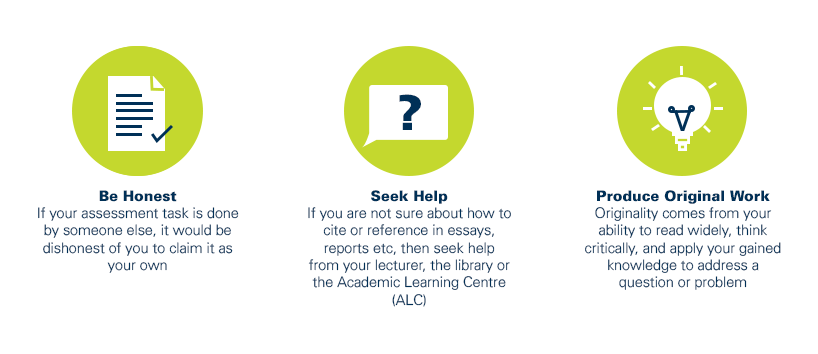
As a CQUniversity student you are expected to act honestly in all aspects of your academic work.
Any assessable work undertaken or submitted for review or assessment must be your own work. Assessable work is any type of work you do to meet the assessment requirements in the unit, including draft work submitted for review and feedback and final work to be assessed.
When you use the ideas, words or data of others in your assessment, you must thoroughly and clearly acknowledge the source of this information by using the correct referencing style for your unit. Using others’ work without proper acknowledgement may be considered a form of intellectual dishonesty.
Participating honestly, respectfully, responsibly, and fairly in your university study ensures the CQUniversity qualification you earn will be valued as a true indication of your individual academic achievement and will continue to receive the respect and recognition it deserves.
As a student, you are responsible for reading and following CQUniversity’s policies, including the Student Academic Integrity Policy and Procedure. This policy sets out CQUniversity’s expectations of you to act with integrity, examples of academic integrity breaches to avoid, the processes used to address alleged breaches of academic integrity, and potential penalties.
What is a breach of academic integrity?
A breach of academic integrity includes but is not limited to plagiarism, self-plagiarism, collusion, cheating, contract cheating, and academic misconduct. The Student Academic Integrity Policy and Procedure defines what these terms mean and gives examples.
Why is academic integrity important?
A breach of academic integrity may result in one or more penalties, including suspension or even expulsion from the University. It can also have negative implications for student visas and future enrolment at CQUniversity or elsewhere. Students who engage in contract cheating also risk being blackmailed by contract cheating services.
Where can I get assistance?
For academic advice and guidance, the Academic Learning Centre (ALC) can support you in becoming confident in completing assessments with integrity and of high standard.
What can you do to act with integrity?