Overview
This clinical placement unit is the third of four that provides you with midwifery clinical experience. You will apply your knowledge of highly complex physiological and psychosocial factors that impact upon the childbearing continuum. In addition to this, you will employ midwifery knowledge, cultural safety, and inclusivity in the care of marginalised groups such as women experiencing substance misuse, and/or incarceration, refugee and immigrant women, or members of the Lesbian, Gay, Bisexual, Transgender, or Queer (LGBTQ+) community. The clinical practicum component of this unit will require you to complete a minimum of 224 hours in addition to Continuity of Care Experiences (COCE).
Details
Pre-requisites or Co-requisites
Co-requisites: MDWF13008 Foundations of Midwifery 3
Important note: Students enrolled in a subsequent unit who failed their pre-requisite unit, should drop the subsequent unit before the census date or within 10 working days of Fail grade notification. Students who do not drop the unit in this timeframe cannot later drop the unit without academic and financial liability. See details in the Assessment Policy and Procedure (Higher Education Coursework).
Offerings For Term 3 - 2026
Attendance Requirements
All on-campus students are expected to attend scheduled classes - in some units, these classes are identified as a mandatory (pass/fail) component and attendance is compulsory. International students, on a student visa, must maintain a full time study load and meet both attendance and academic progress requirements in each study period (satisfactory attendance for International students is defined as maintaining at least an 80% attendance record).
Recommended Student Time Commitment
Each 12-credit Undergraduate unit at CQUniversity requires an overall time commitment of an average of 25 hours of study per week, making a total of 300 hours for the unit.
Class Timetable
Assessment Overview
Assessment Grading
This is a graded unit: your overall grade will be calculated from the marks or grades for each assessment task, based on the relative weightings shown in the table above. You must obtain an overall mark for the unit of at least 50%, or an overall grade of 'pass' in order to pass the unit. If any 'pass/fail' tasks are shown in the table above they must also be completed successfully ('pass' grade). You must also meet any minimum mark requirements specified for a particular assessment task, as detailed in the 'assessment task' section (note that in some instances, the minimum mark for a task may be greater than 50%). Consult the University's Grades and Results Policy for more details of interim results and final grades.
All University policies are available on the CQUniversity Policy site.
You may wish to view these policies:
- Grades and Results Policy
- Assessment Policy and Procedure (Higher Education Coursework)
- Review of Grade Procedure
- Student Academic Integrity Policy and Procedure
- Academic Progression Policy and Procedure
- Student Refund and Credit Balance Policy and Procedure
- Complaints Policy and Procedure
- Information and Communications Technology Acceptable Use Policy and Procedure
This list is not an exhaustive list of all University policies. The full list of University policies are available on the CQUniversity Policy site.
Feedback, Recommendations and Responses
Every unit is reviewed for enhancement each year. At the most recent review, the following staff and student feedback items were identified and recommendations were made.
Feedback from SUTE data
The therapeutic section of the midwifery practice reflective portfolios seem really repetitive.
The format of the reflective portfolio assessment task will be revised to clarify assessment expectations and minimise repetition.
Feedback from SUTE data
The assessment time of 16:00 hrs does not work for most students.
Students in this cohort were previously accustomed to assessment due times of 11:55 p.m. during Term 1 of 2024. Transitioning to a 4:00 p.m. deadline may have posed a challenge to their study planning. However, all units in the 2025 course offering will have a consistent 4:00 p.m. due time, which may help eliminate this issue.
- Critically evaluate the consequences of physiological and socio-cultural complexities upon the physical, social and emotional wellbeing of women across the childbearing continuum
- Apply midwifery knowledge, cultural safety, inclusivity, and digital health and emerging technologies to the care of women from marginalised groups.
- Demonstrate midwifery knowledge of regional, national, and global maternal health priorities and translate these into practice
- Employ midwifery knowledge, cultural safety, and inclusivity in the care of Aboriginal and Torres Strait Islander women and their families
- Critically reflect on clinical learning related to your continuity of care experiences (COCE) to enhance practice
- Demonstrate developing midwifery competence based upon the Nursing and Midwifery Board Australia (NMBA) Midwife Standards for Practice (2018) requirements.
The proposed changes to learning outcomes and the unit will meet the following:
The draft ANMAC Midwifery Education Standards (2020).
Standard 1: Safety of the public.
Standard 3: Program of study.
Standard 4: Student experience.
Standard 5: Student assessment.
NMBA Midwife Standards for Practice (2018).
Standard 1: Promotes evidence-based maternal health and wellbeing.
Standard 2: Engages in respectful partnerships and professional relationships.
Standard 3: Demonstrates the capability and accountability for midwifery practice.
Standard 4: Undertakes comprehensive assessments.
Standard 5: Develops plans for midwifery practice.
Standard 6: Provides safe and quality midwifery practice.
Standard 7: Evaluates outcomes to improve midwifery practice.
The Nursing and Midwifery Board of Australia (NMBA) Code of Conduct for Midwives (2018).
Principle 1. Legal compliance.
Principle 2. Woman-centred practice.
Principle 3. Cultural practice and respectful relationships.
Principle 4. Professional Behaviour.
Principle 5: Teaching, supervising, and assessing.
Principle 7: Health and wellbeing.
The International Confederation of Midwives (ICM) International Code of Ethics for Midwives (2014).
1. Midwifery Relationships.
2. Practice of Midwifery.
3. The Professional Responsibilities of Midwives.
4. Advancement of Midwifery Knowledge and Practice.
National Safety and Quality Health Service Standards (2017).
Clinical Governance Standard.
Partnering with Consumers Standard.
Preventing and Controlling Healthcare-Associated Infection Standard.
Medication Safety Standard.
Comprehensive Care Standard.
Communicating for Safety Standard.
Blood Management Standard.
Recognising and Responding to Acute Deterioration Standard.
The Nursing and Midwifery Digital Health Framework.
Alignment of Assessment Tasks to Learning Outcomes
| Assessment Tasks | Learning Outcomes | |||||
|---|---|---|---|---|---|---|
| 1 | 2 | 3 | 4 | 5 | 6 | |
| 1 - Critical Review - 40% | ||||||
| 2 - Portfolio - 60% | ||||||
| 3 - Professional Practice Placement - 0% | ||||||
Textbooks
Midwifery Preparation for Practice
- Edition: 5th (2022)
- Authors: Sally Pairman, Sally Tracy, Hannah Dahlen, Lesley Dixon
- Elsevier Australia
- Sydney Sydney , NSW , Australia
- ISBN: 9780729544764
Myles Textbook for Midwives
- Edition: 17th (2020)
- Authors: Jayne Marshall, Maureen Raynor
- Elsevier
- Chatswood Chatswood , N.S.W , Australia
- ISBN: 9780702076428
IT Resources
- CQUniversity Student Email
- Internet
- Unit Website (Moodle)
- Academic Learning Centre services
- CQUniversity library literature search tools
- Microsoft Word
- Wordprocessing, spreadsheeting and powerpoint software
- CQUniversity Library Resources
- Endnote bibliographic software. This is recommended for formatting references.
- Zoom access
- CQUniversity Library Nursing/Midwifery/Social Work Resources
- Australian Standards (through CQU library)
- Zoom ( both microphone and webcam capability)
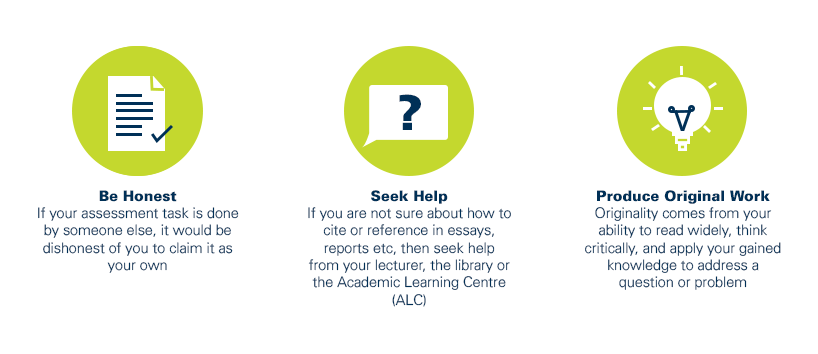
As a CQUniversity student you are expected to act honestly in all aspects of your academic work.
Any assessable work undertaken or submitted for review or assessment must be your own work. Assessable work is any type of work you do to meet the assessment requirements in the unit, including draft work submitted for review and feedback and final work to be assessed.
When you use the ideas, words or data of others in your assessment, you must thoroughly and clearly acknowledge the source of this information by using the correct referencing style for your unit. Using others’ work without proper acknowledgement may be considered a form of intellectual dishonesty.
Participating honestly, respectfully, responsibly, and fairly in your university study ensures the CQUniversity qualification you earn will be valued as a true indication of your individual academic achievement and will continue to receive the respect and recognition it deserves.
As a student, you are responsible for reading and following CQUniversity’s policies, including the Student Academic Integrity Policy and Procedure. This policy sets out CQUniversity’s expectations of you to act with integrity, examples of academic integrity breaches to avoid, the processes used to address alleged breaches of academic integrity, and potential penalties.
What is a breach of academic integrity?
A breach of academic integrity includes but is not limited to plagiarism, self-plagiarism, collusion, cheating, contract cheating, and academic misconduct. The Student Academic Integrity Policy and Procedure defines what these terms mean and gives examples.
Why is academic integrity important?
A breach of academic integrity may result in one or more penalties, including suspension or even expulsion from the University. It can also have negative implications for student visas and future enrolment at CQUniversity or elsewhere. Students who engage in contract cheating also risk being blackmailed by contract cheating services.
Where can I get assistance?
For academic advice and guidance, the Academic Learning Centre (ALC) can support you in becoming confident in completing assessments with integrity and of high standard.
What can you do to act with integrity?