Overview
This unit is the first step in your journey as a student medical radiation practitioner. The principle aim of this unit is to provide you with an introduction to the field of Medical Imaging and associated medical radiations professions. The theoretical and laboratory content of this unit enables you to develop the knowledge and skills to perform safely and professionally within your scope of practice.
Details
Pre-requisites or Co-requisites
Enrolment in CG92 Bachelor of Medical Imaging course.
Important note: Students enrolled in a subsequent unit who failed their pre-requisite unit, should drop the subsequent unit before the census date or within 10 working days of Fail grade notification. Students who do not drop the unit in this timeframe cannot later drop the unit without academic and financial liability. See details in the Assessment Policy and Procedure (Higher Education Coursework).
Offerings For Term 2 - 2026
Attendance Requirements
All on-campus students are expected to attend scheduled classes - in some units, these classes are identified as a mandatory (pass/fail) component and attendance is compulsory. International students, on a student visa, must maintain a full time study load and meet both attendance and academic progress requirements in each study period (satisfactory attendance for International students is defined as maintaining at least an 80% attendance record).
Recommended Student Time Commitment
Each 6-credit Undergraduate unit at CQUniversity requires an overall time commitment of an average of 12.5 hours of study per week, making a total of 150 hours for the unit.
Class Timetable
Assessment Overview
Assessment Grading
This is a graded unit: your overall grade will be calculated from the marks or grades for each assessment task, based on the relative weightings shown in the table above. You must obtain an overall mark for the unit of at least 50%, or an overall grade of 'pass' in order to pass the unit. If any 'pass/fail' tasks are shown in the table above they must also be completed successfully ('pass' grade). You must also meet any minimum mark requirements specified for a particular assessment task, as detailed in the 'assessment task' section (note that in some instances, the minimum mark for a task may be greater than 50%). Consult the University's Grades and Results Policy for more details of interim results and final grades.
All University policies are available on the CQUniversity Policy site.
You may wish to view these policies:
- Grades and Results Policy
- Assessment Policy and Procedure (Higher Education Coursework)
- Review of Grade Procedure
- Student Academic Integrity Policy and Procedure
- Academic Progression Policy and Procedure
- Student Refund and Credit Balance Policy and Procedure
- Complaints Policy and Procedure
- Information and Communications Technology Acceptable Use Policy and Procedure
This list is not an exhaustive list of all University policies. The full list of University policies are available on the CQUniversity Policy site.
Feedback, Recommendations and Responses
Every unit is reviewed for enhancement each year. At the most recent review, the following staff and student feedback items were identified and recommendations were made.
Feedback from SUTE Feedback
The lab workbook scores and feedback were not indicative of the students' expectations based on their interpretation of the marking rubric.
Investigate methods on how to provide more clarity to students of the expectations of the lab workbook task description and how to meet the assessment criteria requirements as detailed in the marking rubric.
Feedback from SUTE feedback and Unit Coordinator reflection
The structure of the Moodle quiz assessment questions were "jumbled" with multiple choice, short and long response questions in random order.
Review the format of the Moodle quizzes and create categories within the quiz that align similar styles of questions together. This will support student time management during the test by allowing them to access their favoured style of questions in their order of preference.
- Discuss the responsibilities, role and scope of practice of medical radiation practitioners, particularly in the contexts of professional, medico-legal and regulatory frameworks
- Discuss the Australian healthcare system and the provision of diagnostic imaging services within it
- Discuss the scientific and humanistic aspects of the various diagnostic and therapeutic branches of the medical radiation sciences
- Discuss learning strategies and professional attributes that enable student health professionals to learn and operate effectively within the culture of the clinical workplace
- Apply basic concepts of radiation science and instrumentation to radiographic imaging.
This unit maps to the following components of the Medical Radiation Practice Board of Australia's Professional Capabilities for Medical Radiation Practice (2026 version):
- Domain 1
- key capability 1, enabling components a-g
- key capability 3, enabling components a-c, e
- key capability 4, enabling component c
- key capability 5, enabling component a
- key capability 6, enabling components a-c
- key capability 7, enabling component a
- key capability 8, enabling component a
- key capability 9, enabling components d (iv)
- Domain 1A
- key capability 1, enabling components a-b, d-e
- Domain 2
- key capability 1, enabling components a-c, e-j, l-m
- key capability 3, enabling components a, c
- key capability 4, enabling component d
- Domain 3
- key capability 1, enabling components b-c, e-h
- key capability 2, enabling components a-c
- Domain 4
- key capability 2, enabling component a
- key capability 3, enabling components a-b
- Domain 5
- key capability 1, enabling components a-b, d-e
- key capability 2, enabling components a-b, e-g
- key capability 3, enabling component e
- key capability 4, enabling components a, c-h
- Domain 6
- key capability 1, enabling components b-e
- key capability 2, enabling component a
- key capability 3, enabling component a
Alignment of Assessment Tasks to Learning Outcomes
| Assessment Tasks | Learning Outcomes | ||||
|---|---|---|---|---|---|
| 1 | 2 | 3 | 4 | 5 | |
| 1 - Online Test - 15% | |||||
| 2 - Laboratory/Practical - 0% | |||||
| 3 - Online Test - 25% | |||||
| 4 - Online Test - 60% | |||||
Alignment of Graduate Attributes to Learning Outcomes
| Graduate Attributes | Learning Outcomes | ||||
|---|---|---|---|---|---|
| 1 | 2 | 3 | 4 | 5 | |
| 1 - Communication | |||||
| 2 - Problem Solving | |||||
| 3 - Critical Thinking | |||||
| 4 - Information Literacy | |||||
| 5 - Team Work | |||||
| 6 - Information Technology Competence | |||||
| 7 - Cross Cultural Competence | |||||
| 8 - Ethical practice | |||||
| 9 - Social Innovation | |||||
| 10 - First Nations Knowledges | |||||
| 11 - Aboriginal and Torres Strait Islander Cultures | |||||
Textbooks
There are no required textbooks.
IT Resources
- CQUniversity Student Email
- Internet
- Unit Website (Moodle)
All submissions for this unit must use the referencing style: Vancouver
For further information, see the Assessment Tasks.
l.macdonald@cqu.edu.au
Week 1
Begin Date: 13 Jul 2026Module/Topic
Learning the profession
Chapter
Sections from Chapter 1 of "Patient Care in Radiography: with an introduction to Medical Imaging" in the unit eReading list.
Other readings and activities as outlined in Moodle.
Events and Submissions/Topic
Tutorial
Week 2
Begin Date: 20 Jul 2026Module/Topic
The clinical environment
Chapter
Readings and activities outlined in Moodle.
Events and Submissions/Topic
Tutorial
Week 3
Begin Date: 27 Jul 2026Module/Topic
Fundamentals of x-ray production
Chapter
Sections from Chapters 1 & 2 of "Patient Care in Radiography: with an introduction to Medical Imaging" in the unit eReading list.
Other readings and activities as outlined in Moodle.
Events and Submissions/Topic
Tutorial
Lab activity (for Mackay and Cairns on campus students only)
Week 4
Begin Date: 03 Aug 2026Module/Topic
Fundamentals of the x-ray image
Chapter
Sections from Chapters 2 & 3 of "Patient Care in Radiography: with an introduction to Medical Imaging" in the unit eReading list.
Other readings and activities as outlined in Moodle.
Events and Submissions/Topic
Tutorial
Lab activity (for Mackay and Cairns on campus students only)
Online Test 1 Due: Week 4 Friday (7 Aug 2026) 8:00 pm AEST
Week 5
Begin Date: 10 Aug 2026Module/Topic
Fundamentals of the imaging procedure
Chapter
Readings and activities outlined in Moodle.
Events and Submissions/Topic
Tutorial
Lab activity (for Mackay and Cairns on campus students only)
Week 6
Begin Date: 17 Aug 2026Module/Topic
The clinical placement experience
Chapter
Chapters 1 & 5 from "Clinical & Fieldwork Placement in the Health Professions" from the unit eReading list.
Other readings and activities as outlined on Moodle.
Events and Submissions/Topic
Tutorial
Lab activity (for Mackay and Cairns on campus students only)
Vacation Week
Begin Date: 24 Aug 2026Module/Topic
Chapter
Events and Submissions/Topic
Weeks 7-9
Begin Date: 31 Aug 2026Module/Topic
Other medical imaging modalities and medical radiation professions:
- Advanced radiography - fluoroscopy and CT
- MRI
- Sonography
- Nuclear medicine
- Radiation therapy
Chapter
Chapter 22 of "Patient Care in Radiography: with an introduction to Medical Imaging" in the unit eReading list.
Other readings and activities as outlined in Moodle.
Events and Submissions/Topic
This content will take 2 weeks of study, to complete during weeks 7-9.
Tutorial in Week 7 and Week 8 only
Week 7 Lab activity (for Mackay and Cairns on campus students only)
Weeks 7-9 Residential school (for mixed mode students only)
- Week 7 Res School C/01 Mackay Campus: Friday 09:00 AM - 5:00 PM
- Week 8 Res School C/06 Cairns Campus: Wednesday 08:00AM - 04:00 PM
- Week 8 Res School C/02 Mackay Campus: Friday 09:00 AM - 5:00 PM
- Week 9 Res School C/07 Cairns Campus: Wednesday 08:00 AM - 04:00 PM
- Week 9 Res School C/03 Mackay Campus: Friday 09:00 AM - 5:00 PM
Laboratory Workbook and Attendance Due: 3 calendar days after the date of your last lab or residential school 5:00 pm AEST
Online Test 2 Due: Week 9 Monday (14 Sept 2026) 8:00 pm AEST
Week 10
Begin Date: 21 Sep 2026Module/Topic
Regulation of medical radiation practice
Chapter
Readings and activities outlined in Moodle.
Events and Submissions/Topic
Tutorial
Week 11
Begin Date: 28 Sep 2026Module/Topic
The provision of diagnostic imaging within the Australian healthcare system
Chapter
Readings and activities as outlined in Moodle.
Events and Submissions/Topic
Tutorial
Week 12
Begin Date: 05 Oct 2026Module/Topic
Consolidation
Chapter
Events and Submissions/Topic
MEDI11001 is a 6-credit point unit, requiring a total of 150 student engagement hours during the term. This means you should plan to spend approximately 10-12 hours per week studying the unit content. For each week, a suggested breakdown of your time would be:
- Watching recorded lectures: 2 hours
- Weekly readings and guided learning activities in Moodle: 2-4 hours
- Making your own notes based on the weekly learning goals: 2 hours
- Tutorial preparation and attendance: 2 hours
- Assessment preparation: 2 hours
These times are a guide and will vary each week depending on the weekly content. They will also vary throughout term depending on scheduled activities and assessments, such as labs or residential school attendance, completion of the lab workbook and revision for the online tests.
Laboratory classes or residential school
Lab activities provide you with an opportunity to observe and work with the radiographic imaging equipment, applying the theory concepts covered in the unit and developing skills that will be required for Year 2 study. These activities are also an essential component for completing the laboratory workbook and attendance assessment.
100% attendance is required to meet requirements for this assessment. More information can be found in the Assessment Tasks section of this unit profile.
For Mackay and Cairns students, the lab activities are timetabled in Weeks 3-7 and you must attend all labs.
For mixed mode students, there are multiple residential school options and you must attend one:
Mackay:
- Week 7 Res School Mackay Campus: Friday 4 September 2026
- Week 8 Res School Mackay Campus: Friday 11 September 2026
- Week 9 Res School Mackay Campus: Friday 18 September 2026
Cairns:
- Week 8 Res School Cairns Campus: Wednesday 9 September 2026
- Week 9 Res School Cairns Campus: Wednesday 16 September 2026
The day prior to the dates listed above will be your first day of the residential school for MEDI11005 Patient Care in the Allied Health Professions and the second day (dates listed above) of the residential school is for this unit. When attending labs and residential school you will be required to adhere to all occupational health and safety requirements related to the use of the Medical Imaging laboratories, including completion of the mandatory radiation safety and lab induction prior to your first session. You are required to adhere to the Medical Imaging Dress Code for all practical lab sessions and residential school. Course uniforms need to be ordered several weeks in advance through the University bookshop.
You will need to order:
- Your CQU health professional scrub set uniform (scrub shirt & scrub pants) online through CQUni bookshop: https://bookshop.cqu.edu.au/details.asp?ITEMNO=1110000167838.
- Your personalised CQU student name badge (that includes your first name, course name (Medical Imaging) and 'student') online through CQUni bookshop: https://bookshop.cqu.edu.au/badges.asp.
Tutorials
Tutorials are interactive sessions where your participation enables you to check your understanding of and your ability to apply the week's concepts. Your regular participation strongly supports your success in the unit. While online tutorials will be recorded, these recordings are not intended to replace your active participation in live sessions.
To support your success in this unit:
- head to the Moodle site regularly
- keep up-to-date with the weekly content
- know your assessment requirements, and
- be an active participant in your team-based learning activities, tutorials and via Moodle forums.
This unit helps you develop the knowledge, skills and behaviours to deliver safe and high quality care in compliance with the Australian Government's National Safety and Quality Health Service (NSQHS) Standards and Medical Radiation Practice Board of Australia (MRPBA) Professional Capabilities specifically:
- MRPBA Domain 1 Medical Radiation Practitioner
- MRPBA Domain 1A Diagnostic Radiographer
- MRPBA Domain 2 Professional and Ethical Practitioner
- MRPBA Domain 3 Communicator and Collaborator
- MRPBA Domain 4 Lifelong Learner
- MRPBA Domain 5 Safety, Quality and Risk Management Practitioner
- MRPBA Domain 6 Leader and Steward
- NSQHS Standard 1 Clinical Governance
- NSQHS Standard 2 Partnering with Consumers
- NSQHS Standard 5 Comprehensive Care
- NSQHS Standard 6 Communicating for Safety
The Unit Coordinator for this unit is - Lauren MacDonald. My preferred method of contact is via email - l.macdonald@cqu.edu.au
1 Online Test
You will complete an online test in Week 4 to demonstrate your understanding and ability to apply the concepts and use the terminology from Weeks 1 - 3 (inclusive). All questions will be based on the posted weekly learning goals. The question types may include multiple choice, matching terms, labelling diagrams, fill-in-the-gap and short written responses. Question tasks may include definitions, analysis of radiographs/photographs/diagrams/request forms, explanations and discussions.
The online test will be available on Friday of Week 4 (7 August 2026) from 2:00pm to 8:00pm AEST. You must log on to Moodle during this time period to complete the test. Once you commence the test, it will remain open for 30 minutes. No responses can be entered after 8pm (so ensure you start the test before 7:30pm). You can only attempt the online test once and it must be completed in a single session. You cannot save your answers and return to the test at a later time.
This online test is an open book assessment. It means that during the test you may access your study notes, textbook, the unit Moodle site. However, the expectation is that you will be familiar with the unit content and concepts. You should not assume you will have time to look up the answer to every question.
It is your responsibility to log on to Moodle and complete the online test during the time the test is available. There is no opportunity to apply a late penalty. In the absence of an approved extension, you cannot complete this assessment at a later time, and you will receive a mark of zero for the assessment if you have not completed it by the scheduled date and time. If you have an approved extension, you will be assigned a new test date and time as soon as possible after the original test date. It is your responsibility to ensure that you can attend at that new assigned date/time. Please see Section 5 of the University's Assessment Policy and Procedure for details regarding Assessment Management, specifically around assessment extension.
The 72 hour grace period does not apply to this assessment.
Academic integrity requirements
You must uphold the standards of academic integrity throughout this assessment.
- During the test, you may refer to your study notes, textbook and the unit Moodle site. If you use content from these sources, you must paraphrase or quote and cite appropriately. Direct copying without quotation and citation is not permitted.
- You must not consult with any other person via any means or accept any input or assistance from any other person regarding the test questions and responses.
- You must not communicate, verbally, non-verbally or digitally, with any other student during the test.
- Your question responses must be your own effort without assistance in any form.
- You must not access or use artificial intelligence ('AI') resources in any way.
- You must not use any resources such as homework assistance sites or similar platforms that provide direct answers to the submitted questions.
- Both during and after the test, you must not record by any means, give access to or share any of the test questions or your test responses with any other person.
- You must not provide assistance in any way to any other student during their test, whether it is before, during or after your own test.
At the start of your test you will be required to make a declaration that you understand these rules of academic integrity and that you agree to abide by them. Any indications of possible breach of academic integrity will be investigated and formally reported.
AI scale for this task: 1 NO AI. You must not use AI at any point during the assessment. You must demonstrate your core skills and knowledge.
MRPBA Professional Capabilities and NSQHS Standards
This assessment task maps to the following MRPBA Professional Capabilities (2026) and NSQHS Standards (2021):
- MRPBA Domain 1
Key capability 1, Enabling components a, c
Key capability 3, Enabling components a-b, d - MRPBA Domain 3
Key capability 1, Enabling components b, c, g
Key capability 2, Enabling components a-c - MRPBA Domain 4
Key capability 3, Enabling components a-b - MRPBA Domain 5
Key capability 1, Enabling components a-b, d-e
Key capability 2, Enabling components a-b, e-g
Key capability 4, Enabling components a, c-h - NSQHS Standard 1 Clinical Governance
- NSQHS Standard 2 Partnering with Consumers
- NSQHS Standard 5 Comprehensive Care
- NSQHS Standard 6 Communicating for Safety
Week 4 Friday (7 Aug 2026) 8:00 pm AEST
Week 6 Friday (21 Aug 2026)
Question responses will be scored on the following criteria:
- correct use of terminology
- correct selection and application of core concepts to the specific content of the question
- clarity, correctness, relevance and completeness of the response in addressing the question that was asked.
The number of marks for each question is allocated based on the depth and breadth of the required response and will be indicated on the test.
- Discuss the responsibilities, role and scope of practice of medical radiation practitioners, particularly in the contexts of professional, medico-legal and regulatory frameworks
- Apply basic concepts of radiation science and instrumentation to radiographic imaging.
2 Laboratory/Practical
The labs provide you with an opportunity to observe and work with the radiographic imaging equipment, applying the theory concepts covered in the unit. The lab activities will enable you to develop beginner level psychomotor skills in the use of professional equipment and occupational health and safety practices that will be required knowledge for Year 2 study.
Attendance and class registration
You will need to attend all labs (100% attendance) to be able to fully complete the lab workbook and meet the requirements of this assessment.
- If you are studying as an internal student in Mackay or Cairns, you must register to attend a timetabled weekly lab class that runs in Weeks 3-7.
- If you are studying by mixed-mode, you must register for one of the available one-day residential schools. Each residential school includes all five lab sessions in a single day format. You must attend in full all five sessions on that day. You are responsible for planning any travel and accommodation to ensure that you are able to meet that requirement.
While there are sufficient spaces in internal labs and residential schools for all students enrolled in each mode of study and at each campus, space is limited for each timetabled option. You are encouraged to register early so that you can arrange your personal commitments in order to attend your session(s).
Missed laboratory class(es) or residential school
There are limited opportunities to make up any missed lab class or residential school time. You are expected to plan in advance to attend as detailed above. If you miss a lab session or residential school due to circumstances that you could not reasonably have prevented or have foreseen prior to the start of term, you may apply for an assessment extension to make up the missed session(s) to meet the attendance requirement. Application for extension does not guarantee that an extension will be granted. If you are an internal student with documented just cause for your absence, you will be assigned a make-up session to attend later in the term. If you are a mixed mode student with documented just cause for your absence, you may be assigned a new residential school date and location to attend if space is available. If it is not, you may be delayed in your completion of the unit to the next year's residential school.
If you do not have documented just cause for your absence and thus do not have an approved extension, you may not be able to meet the attendance requirement and would thus fail the unit.
Please note the following:
- Students who fail a pass/fail assessment task within a unit will be deemed to have failed that unit.
- This assessment task must be completed on the specified day and time. In the absence of an approved extension, you cannot complete this assessment at a later date and time.
- The 72-hour grace period does not apply to this assessment.
Laboratory workbook assessment
You will be provided with the lab workbook (in Moodle) to complete for this assessment based on the activities you will complete during the labs or residential school.
Additional lab workbook information:
- Complete the workbook provided in Moodle and submit as a Word document.
- Although you will work with classmates during labs or your residential school, your lab workbook is an individual task and must be your own work.
Required attire and safety preparation for clinical simulation labs
All sessions take place in clinical simulation learning spaces. For all learning and assessment activity in these spaces, you are required to wear the following:
- CQU health professional student scrubs clinical uniform
- CQUni personalised student name badge
- shoes with closed toe and heel that meet Occupational Health and Safety requirements.
You will also need to complete all radiation safety and clinical simulation inductions prior to your first lab session. Lab induction information is provided on the CG92 Medical Imaging Portal in Moodle. You will not be allowed into the labs without meeting both the attire and induction requirements. This may impact your ability to meet the attendance requirement for this task.
Academic integrity requirements
You must uphold the standards of academic integrity in this assessment.
- Your workbook must be your own original work. Whilst you would have worked with classmates during lab activities, you must not consult with or receive assistance from any other person regarding the content of your workbook.
- You may use AI tools such as Grammarly to assist with clarity and structure of your academic writing.
- You may use AI tools to find external sources that are relevant to your learning and to provide summaries of those information sources. However, you must verify the accuracy of any summarised content before using it in your work.
- All external sources, including but not limited to those identified or summarised using AI tools must be properly acknowledged using correct in-text citations and a reference list.
- If you use content generated by AI in your workbook, you must paraphrase or quote it appropriately, use quotation marks for any directly copied text and provide full citations for all AI tools and sources used.
- You must not use AI tools to write full paragraphs or complete the workbook on your behalf.
- You must not submit work that is not your own or that has been generated entirely or in part by AI.
- You must not use any resources such as homework assistance sites or similar platforms that provide direct answers to the assessment tasks.
- Any indications of possible breach of academic integrity will be investigated and formally reported.
AI scale for this task: 3 AI Collaboration. You may use AI for to assist with specific tasks such as drafting text, refining and evaluating your work. You must critically evaluate and modify any Al-generated content you use.
MRPBA Professional Capabilities
This assessment task maps to the following MRPBA Professional Capabilities (2026):
- MRPBA Domain 1
Key capability 1, Enabling component a, c
Key capability 3, Enabling components b
Key capability 5, Enabling component a
Key capability 6, Enabling component c - MRPBA Domain 1A
Key capability 1, Enabling component a-b, d-e - MRPBA Domain 2
Key capability 1, Enabling components a-c, f
Key capability 2, Enabling components a, d
Key capability 3, Enabling components a, c
Key capability 4, Enabling component d - MRPBA Domain 3
Key capability 1, Enabling components b-c, e-h - MRPBA Domain 4
Key capability 2, Enabling component b - MRPBA Domain 5
Key capability 1, Enabling components a-b, d-e
Key capability 2, Enabling components a, e
Key capability 4, Enabling components a, d-h - MRPBA Domain 6
Key capability 1, Enabling components b-e
Key capability 3, Enabling component a
You must attend all your weekly labs or residential school at your timetabled date and time. The lab workbook will be due by 5pm AEST, 3 calendar days after the date of your last lab or residential school.
Results will be released within 2-weeks of students completing the assessment.
In order to pass this assessment, you must meet two criteria:
- Attend all laboratory activities (100% attendance) at your timetabled date and time, AND
- Submit a completed lab workbook to Moodle by the due date and time.
- Discuss learning strategies and professional attributes that enable student health professionals to learn and operate effectively within the culture of the clinical workplace
- Apply basic concepts of radiation science and instrumentation to radiographic imaging.
3 Online Test
You will complete an online test in Week 9 to demonstrate your understanding and ability to apply the concepts and use the terminology from Weeks 4 - 6 (inclusive). All questions will be based on the posted weekly learning goals. The question types may include multiple choice, matching terms, labelling diagrams, fill-in-the-gap and short written responses. Question tasks may include definitions, analysis of radiographs/photographs/diagrams/request forms, explanations and discussions.
The online test will be available on Monday of Week 9 (14 September 2026) from 2:00pm to 8:00pm AEST. You must log on to Moodle during this time period to complete the test. Once you commence the test, it will remain open for 30 minutes. No responses can be entered after 8pm (so ensure you start the test before 7:30pm). You can only attempt the online test once and it must be completed in a single session. You cannot save your answers and return to the test at a later time.
This online test is an open book assessment. It means that during the test you may access your study notes, textbook, the unit Moodle site. However, the expectation is that you will be familiar with the unit content and concepts. You should not assume you will have time to look up the answer to every question.
It is your responsibility to log on to Moodle and complete the online test during the time the test is available. There is no opportunity to apply a late penalty. In the absence of an approved extension, you cannot complete this assessment at a later time, and you will receive a mark of zero for the assessment if you have not completed it by the scheduled date and time. If you have an approved extension, you will be assigned a new test date and time as soon as possible after the original test date. It is your responsibility to ensure that you can attend at that new assigned date/time. Please see Section 5 of the University's Assessment Policy and Procedure for details regarding Assessment Management, specifically around assessment extension.
The 72 hour grace period does not apply to this assessment.
Academic integrity requirements
You must uphold the standards of academic integrity throughout this assessment.
- During the test, you may refer to your study notes, textbook and the unit Moodle site. If you use content from these sources, you must paraphrase or quote and cite appropriately. Direct copying without quotation and citation is not permitted.
- You must not consult with any other person via any means or accept any input or assistance from any other person regarding the test questions and responses.
- You must not communicate, verbally, non-verbally or digitally, with any other student during the test.
- Your question responses must be your own effort without assistance in any form.
- You must not access or use artificial intelligence ('AI') resources in any way.
You must not use any resources such as homework assistance sites or similar platforms that provide direct answers to the submitted questions. - Both during and after the test, you must not record by any means, give access to or share any of the test questions or your test responses with any other person.
- You must not provide assistance in any way to any other student during their test, whether it is before, during or after your own test.
At the start of your test you will be required to make a declaration that you understand these rules of academic integrity and that you agree to abide by them. Any indications of possible breach of academic integrity will be investigated and formally reported.
AI scale for this task: 1 NO AI. You must not use AI at any point during the assessment. You must demonstrate your core skills and knowledge.
MRPBA Professional Capabilities
This assessment task maps to the following MRPBA Professional Capabilities (2026):
- MRPBA Domain 1
Key capability 1, Enabling component a, c
Key capability 3, Enabling component b
Key capability 4, Enabling component c - MRPBA Domain 2
Key capability 1, Enabling components a-c, f
Key capability 2, Enabling components a, d - MRPBA Domain 3
Key capability 1, Enabling components b-c, g - MRPBA Domain 4
Key capability 2, Enabling component b - MRPBA Domain 5
Key capability 1, Enabling components a-b, d-e
Key capability 2, Enabling components a, e
Key capability 3, Enabling component e
Key capability 4, Enabling components a, c-h
Week 9 Monday (14 Sept 2026) 8:00 pm AEST
Week 11 Monday (28 Sept 2026)
Question responses will be scored on the following criteria:
- correct use of terminology
- correct selection and application of core concepts to the specific content of the question
- clarity, correctness, relevance and completeness of the response in addressing the question that was asked.
The number of marks for each question is allocated based on the depth and breadth of the required response and will be indicated on the test.
- Discuss learning strategies and professional attributes that enable student health professionals to learn and operate effectively within the culture of the clinical workplace
- Apply basic concepts of radiation science and instrumentation to radiographic imaging.
4 Online Test
You will complete an online test at the end of term to demonstrate your understanding and ability to apply the concepts and use the terminology from Weeks 7 - 11 (inclusive). All questions will be based on the posted weekly learning goals. The question types may include multiple choice, matching terms, labeling diagrams, fill-in-the-gap and written responses. Question tasks may include definitions, analysis of photographs/diagrams/referrals, explanations and discussions.
The online test will be available on Friday of Week 12 (9 October 2026) from 10:00am to 2:00pm AEST. You must log on to Moodle to complete the test during this time period. Once you commence the test, it will remain open for 90 minutes. No responses can be entered after 2pm (so ensure that you start the test before 12:30pm). You can only attempt the online test once and it must be completed in a single session. You cannot save your answers and return to the test at a later time.
This online test is an open book assessment. It means that during the test you may access your study notes, textbook, the unit Moodle site. However, the expectation is that you will be familiar with the unit content and concepts. You should not assume you will have time to look up the answer to every question.
It is your responsibility to log on to Moodle and complete the online test during the time the test is available. There is no opportunity to apply a late penalty. In the absence of an approved extension, you cannot complete this assessment at a later time, and you will receive a mark of zero for the assessment if you have not completed it by the scheduled date and time. If you have an approved extension, you will be assigned a new test date and time as soon as possible after the original test date. It is your responsibility to ensure that you can attend at that new assigned date/time. Please see Section 5 of the University's Assessment Policy and Procedure for details regarding Assessment Management, specifically around assessment extension.
The 72 hour grace period does not apply to this assessment.
Academic integrity requirements
You must uphold the standards of academic integrity throughout this assessment.
- During the test, you may refer to your study notes, textbook and the unit Moodle site. If you use content from these sources, you must paraphrase or quote and cite appropriately. Direct copying without quotation and citation is not permitted.
- You must not consult with any other person via any means or accept any input or assistance from any other person regarding the test questions and responses.
- You must not communicate, verbally, non-verbally or digitally, with any other student during the test.
- Your question responses must be your own effort without assistance in any form.
- You must not access or use artificial intelligence ('AI') resources in any way.
- You must not use any resources such as homework assistance sites or similar platforms that provide direct answers to the submitted questions.
- Both during and after the test, you must not record by any means, give access to or share any of the test questions or your test responses with any other person.
- You must not provide assistance in any way to any other student during their test, whether it is before, during or after your own test.
At the start of your test you will be required to make a declaration that you understand these rules of academic integrity and that you agree to abide by them. Any indications of possible breach of academic integrity will be investigated and formally reported.
AI scale for this task: 1 NO AI. You must not use AI at any point during the assessment. You must demonstrate your core skills and knowledge.
MRPBA Professional Capabilities and NSQHS Standards
This assessment task maps to the following MRPBA Professional Capabilities (2026) and NSQHS Standards (2021):
- MRPBA Domain 1
Key capability 1, Enabling components a-g
Key capability 3, Enabling components a-b, d
Key capability 4, Enabling component c
Key capability 6, Enabling components a-b
Key capability 7, Enabling component a
Key capability 8, Enabling component a
Key capability 9, Enabling component d (iv) - MRPBA Domain 2
Key capability 1, Enabling components a-c, e-j ,l-m
Key capability 2, Enabling components a, d - MRPBA Domain 3
Key capability 1, Enabling components b-c, e-h
Key capability 2, Enabling components a-c - MRPBA Domain 4
Key capability 2, Enabling component b - MRPBA Domain 5
Key capability 1, Enabling components a-b, d-e
Key capability 2, Enabling components a-b, e
Key capability 4, Enabling components a, d-h - MRPBA Domain 6
Key capability 2, Enabling component a - NSQHS Standard 1 Clinical Governance
- NSQHS Standard 2 Partnering with Consumers
- NSQHS Standard 5 Comprehensive Care
- NSQHS Standard 6 Communicating for Safety
Week 12 Friday (9 Oct 2026) 2:00 pm AEST
Vacation/Exam Week Friday (23 Oct 2026)
Question responses will be scored on the following criteria:
- correct use of terminology
- correct selection and application of core concepts to the specific content of the question
- clarity, correctness, relevance and completeness of the response in addressing the question that was asked.
The number of marks for each question is allocated based on the depth and breadth of the required response and will be indicated on the test.
- Discuss the responsibilities, role and scope of practice of medical radiation practitioners, particularly in the contexts of professional, medico-legal and regulatory frameworks
- Discuss the Australian healthcare system and the provision of diagnostic imaging services within it
- Discuss the scientific and humanistic aspects of the various diagnostic and therapeutic branches of the medical radiation sciences
- Discuss learning strategies and professional attributes that enable student health professionals to learn and operate effectively within the culture of the clinical workplace
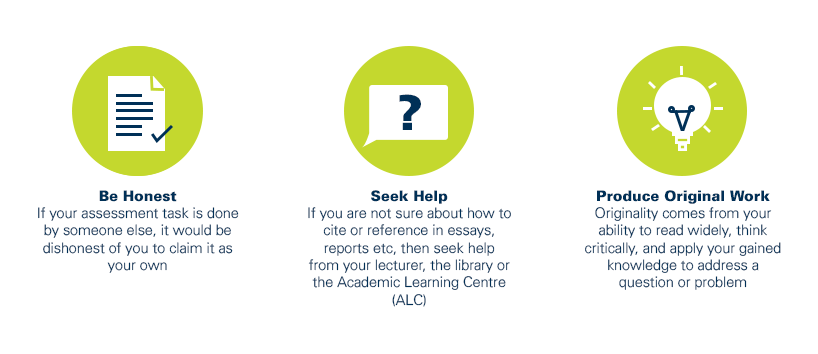
As a CQUniversity student you are expected to act honestly in all aspects of your academic work.
Any assessable work undertaken or submitted for review or assessment must be your own work. Assessable work is any type of work you do to meet the assessment requirements in the unit, including draft work submitted for review and feedback and final work to be assessed.
When you use the ideas, words or data of others in your assessment, you must thoroughly and clearly acknowledge the source of this information by using the correct referencing style for your unit. Using others’ work without proper acknowledgement may be considered a form of intellectual dishonesty.
Participating honestly, respectfully, responsibly, and fairly in your university study ensures the CQUniversity qualification you earn will be valued as a true indication of your individual academic achievement and will continue to receive the respect and recognition it deserves.
As a student, you are responsible for reading and following CQUniversity’s policies, including the Student Academic Integrity Policy and Procedure. This policy sets out CQUniversity’s expectations of you to act with integrity, examples of academic integrity breaches to avoid, the processes used to address alleged breaches of academic integrity, and potential penalties.
What is a breach of academic integrity?
A breach of academic integrity includes but is not limited to plagiarism, self-plagiarism, collusion, cheating, contract cheating, and academic misconduct. The Student Academic Integrity Policy and Procedure defines what these terms mean and gives examples.
Why is academic integrity important?
A breach of academic integrity may result in one or more penalties, including suspension or even expulsion from the University. It can also have negative implications for student visas and future enrolment at CQUniversity or elsewhere. Students who engage in contract cheating also risk being blackmailed by contract cheating services.
Where can I get assistance?
For academic advice and guidance, the Academic Learning Centre (ALC) can support you in becoming confident in completing assessments with integrity and of high standard.
What can you do to act with integrity?