Overview
This unit creates the foundations for an understanding of physics as it applies to our world around us, our bodies and our clinical environments. You will learn how to explain observed phenomena, predict changing behaviour and communicate using science conventions. You will apply problem-solving skills and knowledge of physics to find reasonable solutions to both word- and numerical-based situations.
Details
Pre-requisites or Co-requisites
There are no requisites for this unit.
Important note: Students enrolled in a subsequent unit who failed their pre-requisite unit, should drop the subsequent unit before the census date or within 10 working days of Fail grade notification. Students who do not drop the unit in this timeframe cannot later drop the unit without academic and financial liability. See details in the Assessment Policy and Procedure (Higher Education Coursework).
Offerings For Term 1 - 2026
Attendance Requirements
All on-campus students are expected to attend scheduled classes - in some units, these classes are identified as a mandatory (pass/fail) component and attendance is compulsory. International students, on a student visa, must maintain a full time study load and meet both attendance and academic progress requirements in each study period (satisfactory attendance for International students is defined as maintaining at least an 80% attendance record).
Recommended Student Time Commitment
Each 6-credit Undergraduate unit at CQUniversity requires an overall time commitment of an average of 12.5 hours of study per week, making a total of 150 hours for the unit.
Class Timetable
Assessment Overview
Assessment Grading
This is a graded unit: your overall grade will be calculated from the marks or grades for each assessment task, based on the relative weightings shown in the table above. You must obtain an overall mark for the unit of at least 50%, or an overall grade of 'pass' in order to pass the unit. If any 'pass/fail' tasks are shown in the table above they must also be completed successfully ('pass' grade). You must also meet any minimum mark requirements specified for a particular assessment task, as detailed in the 'assessment task' section (note that in some instances, the minimum mark for a task may be greater than 50%). Consult the University's Grades and Results Policy for more details of interim results and final grades.
All University policies are available on the CQUniversity Policy site.
You may wish to view these policies:
- Grades and Results Policy
- Assessment Policy and Procedure (Higher Education Coursework)
- Review of Grade Procedure
- Student Academic Integrity Policy and Procedure
- Academic Progression Policy and Procedure
- Student Refund and Credit Balance Policy and Procedure
- Complaints Policy and Procedure
- Information and Communications Technology Acceptable Use Policy and Procedure
This list is not an exhaustive list of all University policies. The full list of University policies are available on the CQUniversity Policy site.
Feedback, Recommendations and Responses
Every unit is reviewed for enhancement each year. At the most recent review, the following staff and student feedback items were identified and recommendations were made.
Feedback from PASS Leaders Informal student feedback
Weekly Peer Assisted Study Sessions (PASS) were well-utilised and positively received by students.
Investigate potential of maintaining the availably of PASS in future iterations to enhance academic support.
Feedback from Informal student feedback Unit Coordinator PASS Leaders
Students may benefit from more varied and updated learning resources to complement existing materials and support diverse learning preferences.
Explore opportunities to enhance the resource set by updating existing content and adding alternative formats and interactive elements to enrich learning and sustain student engagement.
- Discuss fundamental concepts, theories and principles of classical mechanics, matter, heat, sound, electromagnetism, electromagnetic energy and the atom
- Apply fundamental physics concepts, theories and principles to explain physical phenomena of everyday life and clinical situations and to predict outcomes under changing conditions
- Use problem-solving and numeracy skills, knowledge of fundamental physics concepts, theories and principles, and standard conventions of science communication to present reasonable solutions to problems.
Alignment of Assessment Tasks to Learning Outcomes
| Assessment Tasks | Learning Outcomes | ||
|---|---|---|---|
| 1 | 2 | 3 | |
| 1 - Online Quiz(zes) - 40% | |||
| 2 - Online Test - 60% | |||
Alignment of Graduate Attributes to Learning Outcomes
| Graduate Attributes | Learning Outcomes | ||
|---|---|---|---|
| 1 | 2 | 3 | |
| 1 - Communication | |||
| 2 - Problem Solving | |||
| 3 - Critical Thinking | |||
| 4 - Information Literacy | |||
| 5 - Team Work | |||
| 6 - Information Technology Competence | |||
| 7 - Cross Cultural Competence | |||
| 8 - Ethical practice | |||
| 9 - Social Innovation | |||
| 10 - First Nations Knowledges | |||
| 11 - Aboriginal and Torres Strait Islander Cultures | |||
Textbooks
Conceptual Physics
- Edition: 13th global (2022)
- Authors: Paul G. Hewitt
- Pearson Education Limited
- Harlow Harlow , Essex , England
- ISBN: 9781292437415
This e-book is available through the University's Library. Students are not required to purchase a hard copy.
- Binding: eBook
College Physics
- Edition: 2e (2024)
- Authors: Paul Peter Urone & Roger Hinrichs
- OpenStax College
- Houston Houston , Texas , USA
- ISBN: 9781951693602
This e-book is available through the University's Library. Students are not required to purchase a hard copy.
IT Resources
- CQUniversity Student Email
- Internet
- Unit Website (Moodle)
All submissions for this unit must use the referencing styles below:
For further information, see the Assessment Tasks.
r.d.kumar@cqu.edu.au
Week 1
Begin Date: 09 Mar 2026Module/Topic
Science fundamentals, Kinematics and Newton's Laws
- Science Basics
- Introduction to Kinematics
- Newton's First, Second and Third Laws of Motion
Chapter
Conceptual Physics - Excerpts from Chapters 2, 3, 4 & 5
See unit Moodle site for additional resources
Events and Submissions/Topic
Tutorial on Week 1 content
Week 2
Begin Date: 16 Mar 2026Module/Topic
Change in object's state of motion, Structure and States of matter
- Momentum, Inertia, Impulse
- Energy, Power, Centre of Mass
- Structure of Matter
- States of Matter
Chapter
Conceptual Physics - Excerpts from Chapters 6 & 7, 8, 11 & 12
See unit Moodle site for additional resources
Events and Submissions/Topic
Tutorial on Week 2 content
Week 3
Begin Date: 23 Mar 2026Module/Topic
Pressure in liquids & gases, Heat and Temperature
- Pressure
- Static and Flowing Fluids
- Pressure in Gases
- Internal energy, Heat and Temperature
- Heat transfer
Chapter
Conceptual Physics - Excerpts from Chapters 13 - 16 & 18
See unit Moodle site for additional resources
Events and Submissions/Topic
Tutorial on Week 3 content
Week 4
Begin Date: 30 Mar 2026Module/Topic
Waves and Sound
- Fundamentals of Traveling Waves
- Transverse and Longitudinal waves
- Wave interference
- Sound
- The Doppler Effect
Chapter
Conceptual Physics - Excerpts from Chapters 19, 20 & 21
See unit Moodle site for additional resources.
Events and Submissions/Topic
Tutorial on Week 4 content
Online test 1. Available from 8:00am - 8:00pm AEST on Monday 30th March 2026.
Week 5
Begin Date: 06 Apr 2026Module/Topic
Electrostatics, Electrical circuits and Laws governing them
- Charges and Electrostatic Force
- Movement of charges
- Electric fields and potentials
- Moving charges using electrical potentials
- Circuit basics
- Ohm's Law
- Kirchoff's Laws
Chapter
Conceptual Physics - Excerpts from Chapters 22 & 23
See unit Moodle site for additional resources.
Events and Submissions/Topic
Tutorial on Week 5 content
Week 6
Begin Date: 13 Apr 2026Module/Topic
Electrical supply and circuits
- Energy and Power in circuits
- Series circuit
- Parallel circuits
- Switches in circuits
- AC supply and Ground
- Current to and through a device
- Circuit heating and CLDs
Chapter
Conceptual Physics - Excerpts from Chapter 23
See unit Moodle site for additional resources
Events and Submissions/Topic
Tutorial on Week 6 content
Vacation Week
Begin Date: 20 Apr 2026Module/Topic
Break Week
Chapter
Events and Submissions/Topic
Week 7
Begin Date: 27 Apr 2026Module/Topic
Electric shock and safety practices
- Basics of electric shock
- Effects of electric shock
- Macroshock versus Microshock
- Circuit faults and detection devices
- Reducing shock risk
- Safe practices in using electrical devices
Chapter
Conceptual Physics Chapter 23
See unit Moodle site for additional resources
Events and Submissions/Topic
Tutorial on Week 7 content
Week 8
Begin Date: 04 May 2026Module/Topic
Magnetism, electromagnetism and real-world applications
- Foundations of Magnetism
- Magnetic properties of charges and materials
- Introduction to Electromagnetism
- The Motor Effect
- Electromagnetic Induction
- Applications of Electromagnetism
Chapter
Conceptual Physics - Excerpts from Chapters 24 & 25
See unit Moodle site for additional resources
Events and Submissions/Topic
Tutorial on Week 8 content
Online test 2. Available from 8:00am - 8:00pm AEST on Monday 4th May 2026.
Week 9
Begin Date: 11 May 2026Module/Topic
Electromagnetic Energy (EM)
- Production and propagation of electromagnetic energy
- The Wave particle duality of EM
- Quantum nature of orbital electrons
- EM's travel through matter and interactions
- Penetrability of EM beams
- The EM spectrum
Chapter
Conceptual Physics - Excerpts from Chapters 26, 30, 31 & 32
See unit Moodle site for additional resources
Events and Submissions/Topic
Tutorial on Week 9 content
Week 10
Begin Date: 18 May 2026Module/Topic
Physics of vision and seeing with light
- Selective behaviours of light
- Reflection of light
- Refraction, lenses and light images
- The physics of vision
- Application of light properties
Chapter
Conceptual Physics - Excerpts from Chapters 26 - 28 & 30
See unit Moodle site for additional resources
Events and Submissions/Topic
Tutorial on Week 10 content
Week 11
Begin Date: 25 May 2026Module/Topic
X-rays and radioactivity
- Quanta and orbital electrons
- X-ray production by decelerating electrons
- X-ray production by electron de-excitation
- The radioactive nucleus
- Radioactive emissions
- Radioactive decay, Half-life, Activity and Risk of detriment
- Common sources of environmental radiation
- Clinical applications of x-rays and radioactive materials
Chapter
Conceptual Physics - Excerpts from Chapters 32 - 34
See unit Moodle site for additional resources
Events and Submissions/Topic
Tutorial on Week 11 content
Week 12
Begin Date: 01 Jun 2026Module/Topic
Consolidation & assessment
Chapter
Events and Submissions/Topic
Q&A revision tutorial
Final Online Test Due: Week 12 Wednesday (3 June 2026) 8:00 pm AEST
MEDI11002 Physics for Health Sciences is a 6-point credit unit, which typically requires around 150 hours of total student workload. You are therefore expected to spend on average 10-12 hours per week in your study activities during the term. Below is a time budget to help you plan for your weekly study:
- 2 hours for watching recorded lectures and taking notes
- 1-1.5 hours for completing assigned readings
- 1 hour for completing other posted learning activities
- 2-2.5 hours for creating study notes to meet weekly learning goals using the lectures and readings
- 1 hour for applying weekly content using posted end-of-chapter questions
- 1 hour for working on posted tutorial questions in preparation for tutorial
- 1 hour for participation in tutorial
- 1-2 hours for preparation and/or revision for assessments
Take note that tutorials are interactive sessions where your participation enables you to check your understanding of and your ability to apply the week's concepts and for you to build your skills in responding to test questions. Your regular participation in tutorials strongly supports your success in the unit. While recordings of online tutorials will be provided (if there is sufficient student attendance), these recordings are not intended to replace your active participation in live sessions.
1 Online Quiz(zes)
As a future healthcare professional, you need to be able to harness core physical concepts and terminology to predict and explain observations in your clinical environment. You will be required to complete two online tests during the term. The aim of these In-term online tests is for you to demonstrate your knowledge, understanding and ability to apply core physics concepts and correct use of terminology that you will be learning in this unit.
Both the tests will be made available via the unit Moodle site. Each online test will be time-limited and once you open the test, you will not be able to pause or restart it. Once opened, the online tests will remain open for a specified duration and will automatically close once the specified time is reached. Any unanswered questions or unsaved responses will receive a mark of zero.
Online test 1
- The test contributes 15% towards the final unit grade.
- This test will be held on Monday 30th March 2026 in Week 4 and it will be assessing the first three weeks (i.e. Weeks 1-3) of content covered in this unit.
- The test will be available from 8:00am - 8:00pm AEST.
- This test is time-limited to 20 minutes. Please note, if you begin the test less than 20 minutes before the stated closing time, the test will close at that time and you will have less than 20 minutes to complete the test.
Online test 2
- The test contributes 25% towards the final unit grade.
- This test will be held on Monday 4th May 2026 in Week 8 and it will be focusing on content covered from Weeks 4-7 in the unit. You will also be expected to integrate concepts and apply terminology from the first three weeks of study when completing this test.
- The test will be available from 8:00am - 8:00pm AEST.
- This test is time-limited to 35 minutes. Please note, if you begin the test less than 35 minutes before the stated closing time, the test will close at that time and you will have less than 35 minutes to complete the test.
All questions will be based on the posted weekly learning goals. Question tasks will be a similar type to those discussed in weekly tutorials. The tasks may include analysis of diagrams, photographs and/or images. Questions may include quiz-style questions (for example multiple choice, fill-in-the blank, matching), true/false with explanation and written response. When completing the test, you will be required to:
- demonstrate logical application of concepts and ability to articulate them
- discuss the physics related to a given situation in terms of explaining why the situation has occurred, what would happen if the situation was altered in a specific way, how to achieve a specific outcome in altering the situation and/or what outcome would logically follow the occurrence of the situation
- solve numerical problems
- use terminology correctly
The number of marks for each question are allocated based on the depth and breadth of the required response and will be indicated on the test.
This is an open book test. It means that during the test you may access your study notes, textbook, the unit Moodle site and/or any website. If you use content from another source, you must put it in your own words or quote and cite it. If you copy and paste content directly from another source, you must put that content in quotation marks and cite the source. Take note that although the test is an open book assessment, you must remain mindful of the time you are taking to answer each question and have an understanding of the content and also familiarity with your resources to use them effectively. You should not expect to have the time to consult your notes and/or other resources for every question.
The standards of academic integrity still apply. You must uphold the standards of academic integrity throughout this assessment.
- During the test, you may refer to your study notes, textbook and the unit Moodle site. If you use content from these sources, you must paraphrase or quote and cite appropriately. Direct copying without quotation and citation is not permitted.
- No additional research is required so do not access any external websites, databases or journals.
- You must not consult with any other person via any means or accept any input or assistance from any other person regarding the test questions and responses.
- You must not communicate verbally, non-verbally or digitally with any other student during the test.
- Your question responses must be your own effort without assistance in any form.
- You must not access or use artificial intelligence ('AI') resources in any way.
- You must not use any resources such as homework assistance sites or similar platforms that provide direct answers to the submitted questions.
- Both during and after the test, you must not record by any means, give access to or share any of the test questions or your test responses with any other person.
- You must not provide assistance in any way to any other student during their test, whether it is before, during or after your own test.
At the start of your test you will be required to make a declaration that you understand these rules of academic integrity and that you agree to abide by them. Any indications of possible breach of academic integrity will be investigated and formally reported.
AI scale for this task: 1 NO AI. You must not use AI at any point during the assessment. You must demonstrate your core skills and knowledge.
You will need to ensure that you have reliable internet access and a computer for this test. It is highly recommended that you do not attempt the test using a tablet or smartphone due to the quantity of typing required. It is your responsibility to log on to the unit Moodle site and complete the online test during the time the test is available. If you start the test late, you will still be required to submit at the stated closing time.
As per the Assessment Policy and Procedures, this test must be completed at the timetabled date and time. There is no opportunity to apply a late penalty. The 72 hour grace period does not apply to this assessment. In the absence of an approved extension, you cannot complete this assessment at a later time and you will receive a mark of zero for the assessment if you have not submitted it by the scheduled date and time.
Online test 1 will be available from 8:00am - 8:00pm AEST on Monday 30th March 2026. Online test 2 will be available from 8:00am - 8:00pm AEST on Monday 4th May 2026.
Feedback for each online test will be provided within two weeks of the due date for the test.
Question responses will be scored on the following criteria:
- correct use of terminology
- correct selection and application of core concepts to the specific content of the question
- clarity, correctness, relevance and completeness of the response in addressing the question that was asked
- critical thinking
- Discuss fundamental concepts, theories and principles of classical mechanics, matter, heat, sound, electromagnetism, electromagnetic energy and the atom
- Apply fundamental physics concepts, theories and principles to explain physical phenomena of everyday life and clinical situations and to predict outcomes under changing conditions
- Use problem-solving and numeracy skills, knowledge of fundamental physics concepts, theories and principles, and standard conventions of science communication to present reasonable solutions to problems.
2 Online Test
As a future healthcare professional, you need to be able to harness core physical concepts and terminology to predict and explain observations in your clinical environment. You will complete a final online test at the end of the term. The purpose of this test is for you to demonstrate your knowledge, understanding and ability to apply core physics concepts and correct use of terminology that you will be learning in this unit.
This test will be made available via the unit Moodle site on from 1:00pm to 8:00pm AEST on Wednesday 3rd June 2026 in Week 12. Note that the posted due date/time is the latest submission time, not the test start time. The test will be time-limited to 90 minutes and once you open the test, you will not be able to pause or restart it. Once opened, the test will remain open for 90 minutes and will automatically close once 90 minutes is up. Please note, if you begin the test less than 90 minutes before the stated closing time, the test will close at that time and you will have less than 90 minutes to complete the test. Any unanswered questions or unsaved responses will receive a mark of zero.
All questions will be based on the posted weekly learning goals. Question tasks will be a similar type to those discussed in weekly tutorials. The tasks may include analysis of diagrams, photographs and/or images. Questions may include quiz-style questions (for example multiple choice, fill-in-the blank, matching), true/false with explanation and written response. When completing the test, you will be required to:
- demonstrate logical application of concepts and ability to articulate them
- discuss the physics related to a given situation in terms of explaining why the situation has occurred, what would happen if the situation was altered in a specific way, how to achieve a specific outcome in altering the situation and/or what outcome would logically follow the occurrence of the situation
- solve numerical problems
- use terminology correctly
The number of marks for each question are allocated based on the depth and breadth of the required response and will be indicated on the test.
This is an open book test. It means that during the test you may access your study notes, textbook, the unit Moodle site and/or any website. If you use content from another source, you must put it in your own words or quote and cite it. If you copy and paste content directly from another source, you must put that content in quotation marks and cite the source. Take note that although the test is an open book assessment, you must remain mindful of the time you are taking to answer each question and have an understanding of the content and also familiarity with your resources to use them effectively. You should not expect to have the time to consult your notes and/or other resources for every question.
The standards of academic integrity still apply. You must uphold the standards of academic integrity throughout this assessment.
- During the test, you may refer to your study notes, textbook and the unit Moodle site. If you use content from these sources, you must paraphrase or quote and cite appropriately. Direct copying without quotation and citation is not permitted.
- No additional research is required so do not access any external websites, databases or journals.
- You must not consult with any other person via any means or accept any input or assistance from any other person regarding the test questions and responses.
- You must not communicate verbally, non-verbally or digitally with any other student during the test.
- Your question responses must be your own effort without assistance in any form.
- You must not access or use artificial intelligence ('AI') resources in any way.
- You must not use any resources such as homework assistance sites or similar platforms that provide direct answers to the submitted questions.
- Both during and after the test, you must not record by any means, give access to or share any of the test questions or your test responses with any other person.
- You must not provide assistance in any way to any other student during their test, whether it is before, during or after your own test.
At the start of your test you will be required to make a declaration that you understand these rules of academic integrity and that you agree to abide by them. Any indications of possible breach of academic integrity will be investigated and formally reported.
AI scale for this task: 1 NO AI. You must not use AI at any point during the assessment. You must demonstrate your core skills and knowledge.
You will need to ensure that you have reliable internet access and a computer for this test. It is highly recommended that you do not attempt the test using a tablet or smartphone due to the quantity of typing required. It is your responsibility to log on to the unit Moodle site and complete the online test during the time the test is available. If you start the test late, you will still be required to submit at the stated closing time.
As per the Assessment Policy and Procedures, this test must be completed at the timetabled date and time. There is no opportunity to apply a late penalty. The 72 hour grace period does not apply to this assessment. In the absence of an approved extension, you cannot complete this assessment at a later time and you will receive a mark of zero for the assessment if you have not submitted it by the scheduled date and time.
Week 12 Wednesday (3 June 2026) 8:00 pm AEST
Two weeks after the final test date.
Question responses will be scored on the following criteria:
- correct use of terminology
- correct selection and application of core concepts to the specific content of the question
- clarity, correctness, relevance and completeness of the response in addressing the question that was asked
- critical thinking
- Discuss fundamental concepts, theories and principles of classical mechanics, matter, heat, sound, electromagnetism, electromagnetic energy and the atom
- Apply fundamental physics concepts, theories and principles to explain physical phenomena of everyday life and clinical situations and to predict outcomes under changing conditions
- Use problem-solving and numeracy skills, knowledge of fundamental physics concepts, theories and principles, and standard conventions of science communication to present reasonable solutions to problems.
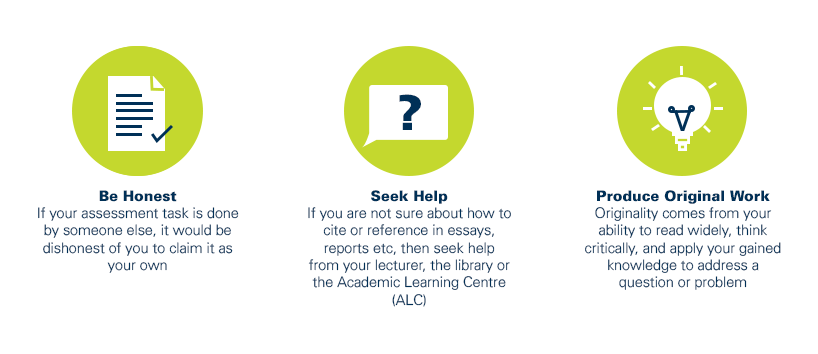
As a CQUniversity student you are expected to act honestly in all aspects of your academic work.
Any assessable work undertaken or submitted for review or assessment must be your own work. Assessable work is any type of work you do to meet the assessment requirements in the unit, including draft work submitted for review and feedback and final work to be assessed.
When you use the ideas, words or data of others in your assessment, you must thoroughly and clearly acknowledge the source of this information by using the correct referencing style for your unit. Using others’ work without proper acknowledgement may be considered a form of intellectual dishonesty.
Participating honestly, respectfully, responsibly, and fairly in your university study ensures the CQUniversity qualification you earn will be valued as a true indication of your individual academic achievement and will continue to receive the respect and recognition it deserves.
As a student, you are responsible for reading and following CQUniversity’s policies, including the Student Academic Integrity Policy and Procedure. This policy sets out CQUniversity’s expectations of you to act with integrity, examples of academic integrity breaches to avoid, the processes used to address alleged breaches of academic integrity, and potential penalties.
What is a breach of academic integrity?
A breach of academic integrity includes but is not limited to plagiarism, self-plagiarism, collusion, cheating, contract cheating, and academic misconduct. The Student Academic Integrity Policy and Procedure defines what these terms mean and gives examples.
Why is academic integrity important?
A breach of academic integrity may result in one or more penalties, including suspension or even expulsion from the University. It can also have negative implications for student visas and future enrolment at CQUniversity or elsewhere. Students who engage in contract cheating also risk being blackmailed by contract cheating services.
Where can I get assistance?
For academic advice and guidance, the Academic Learning Centre (ALC) can support you in becoming confident in completing assessments with integrity and of high standard.
What can you do to act with integrity?