Overview
This unit focuses on what it means to be a health professional in Australia. You will learn about and apply the skills needed for effective interprofessional practice so that you can be an effective team member. You will learn to examine your thinking and assumptions and to reflect on your experiences to enhance your personal and professional development. You will explore social, cultural, historical and political factors that impact on the experiences of wellness and illness and on access to and quality of health care in Australia, particularly for Aboriginal and Torres Strait Islander peoples. You will learn how to provide culturally competent and respectful care. You will be introduced to the concept of being a change agent to foster cultural safety in learning, working and care environments.
Details
Pre-requisites or Co-requisites
There are no requisites for this unit.
Important note: Students enrolled in a subsequent unit who failed their pre-requisite unit, should drop the subsequent unit before the census date or within 10 working days of Fail grade notification. Students who do not drop the unit in this timeframe cannot later drop the unit without academic and financial liability. See details in the Assessment Policy and Procedure (Higher Education Coursework).
Offerings For Term 2 - 2026
Attendance Requirements
All on-campus students are expected to attend scheduled classes - in some units, these classes are identified as a mandatory (pass/fail) component and attendance is compulsory. International students, on a student visa, must maintain a full time study load and meet both attendance and academic progress requirements in each study period (satisfactory attendance for International students is defined as maintaining at least an 80% attendance record).
Recommended Student Time Commitment
Each 6-credit Undergraduate unit at CQUniversity requires an overall time commitment of an average of 12.5 hours of study per week, making a total of 150 hours for the unit.
Class Timetable
Assessment Overview
Assessment Grading
This is a graded unit: your overall grade will be calculated from the marks or grades for each assessment task, based on the relative weightings shown in the table above. You must obtain an overall mark for the unit of at least 50%, or an overall grade of 'pass' in order to pass the unit. If any 'pass/fail' tasks are shown in the table above they must also be completed successfully ('pass' grade). You must also meet any minimum mark requirements specified for a particular assessment task, as detailed in the 'assessment task' section (note that in some instances, the minimum mark for a task may be greater than 50%). Consult the University's Grades and Results Policy for more details of interim results and final grades.
All University policies are available on the CQUniversity Policy site.
You may wish to view these policies:
- Grades and Results Policy
- Assessment Policy and Procedure (Higher Education Coursework)
- Review of Grade Procedure
- Student Academic Integrity Policy and Procedure
- Academic Progression Policy and Procedure
- Student Refund and Credit Balance Policy and Procedure
- Complaints Policy and Procedure
- Information and Communications Technology Acceptable Use Policy and Procedure
This list is not an exhaustive list of all University policies. The full list of University policies are available on the CQUniversity Policy site.
Feedback, Recommendations and Responses
Every unit is reviewed for enhancement each year. At the most recent review, the following staff and student feedback items were identified and recommendations were made.
Feedback from U/C Reflection
Several students did not self allocate to scheduled team based workshop activities.
Send frequent reminders and announcements so that attendance and participation in scheduled sessions occurs.
Feedback from SUTE Feedback U/C Reflection
Several students struggled to follow Portfolio Assessment Task instructions
Investigate methods to combine the various elements including templates into a single overarching guidance document for scaffolding purposes with pre, during and post tasks highlighted.
- Discuss attributes of professionalism and their application to both learning and clinical environments
- Demonstrate effective interprofessional learning and practice through respectful interaction, collaboration and teamwork
- Reflect on your experiences, values, attitudes, assumptions and biases to enhance your own personal and professional development
- Demonstrate knowledge of Aboriginal and Torres Strait Islander history, culture, values and social practices
- Discuss the impacts of social determinants of health, disability and culture on the experience of illness and access to health care for Indigenous and non-Indigenous Australians
- Discuss the core aspects of culturally safe and respectful practice that is responsive to patient diversity
- Discuss the attributes, motivations, skills, roles and actions that underpin positive social change.
This is a core unit for three health professional courses that are accredited by different external professional and regulatory bodies. The unit introduces a range of competencies at the foundational level.
For students in the CG92 Bachelor of Medical Imaging course, this unit links to the following components of the Medical Radiation Practice Board of Australia's Professional Capabilities (2026) for medical radiation practice:
- Domain 1: Medical Radiation Practictioner
- key capability 1, enabling components a - d, g
- key capability 3, enabling component a
- Domain 2: Professional and Ethical Practitioner
- key capability 1, enabling components a, b, c, f, h - m
- key capability 2, enabling components a - e
- key capability 3, enabling components a - d
- key capability 4, enabling components a- d
- Domain 3: Communicator and Collaborator
- key capability 1, enabling components a - d, h
- key capability 2, enabling componentsa - e
- key capability 3, enabling components a, c, d
- key capability 4, enabling components a - d
- Domain 4: Lifelong Learner
- key capability 1, enabling components a, b
- key capability 2, enabling components a - d
- key capability 3, enabling components a, f, h
- key capability 4, enabling components a - c
- Domain 5: Safety, Quality and Risk Manager
- key capability 2, enabling components e, f
- key capability 3, enabling component d
- Domain 6: Leader and Steward
- key capability 1, enabling components a, b, d, e
- key capability 2, enabling components a - e
- key capability 3, enabling components a, b, d, f
Alignment of Assessment Tasks to Learning Outcomes
| Assessment Tasks | Learning Outcomes | ||||||
|---|---|---|---|---|---|---|---|
| 1 | 2 | 3 | 4 | 5 | 6 | 7 | |
| 1 - Reflective Practice Assignment - 15% | |||||||
| 2 - Online Test - 20% | |||||||
| 3 - Group Discussion - 0% | |||||||
| 4 - Portfolio - 40% | |||||||
| 5 - Online Test - 25% | |||||||
Alignment of Graduate Attributes to Learning Outcomes
| Graduate Attributes | Learning Outcomes | ||||||
|---|---|---|---|---|---|---|---|
| 1 | 2 | 3 | 4 | 5 | 6 | 7 | |
| 1 - Communication | |||||||
| 2 - Problem Solving | |||||||
| 3 - Critical Thinking | |||||||
| 4 - Information Literacy | |||||||
| 5 - Team Work | |||||||
| 6 - Information Technology Competence | |||||||
| 7 - Cross Cultural Competence | |||||||
| 8 - Ethical practice | |||||||
| 9 - Social Innovation | |||||||
| 10 - First Nations Knowledges | |||||||
| 11 - Aboriginal and Torres Strait Islander Cultures | |||||||
Textbooks
Aboriginal and Torres Strait Islander Peoples' Health & Wellbeing
- 1st Edition (2019)
- Authors: Brett Biles and Jessica Biles
- Oxford University Press Australia & New Zealand
- Melbourne Melbourne , Victoria , Australia
- ISBN: Paperback: 978-0-190-31144-5, eBook: 978-0-190-31145-2
- Binding: eBook
Culture, Diversity and Health in Australia: Towards Culturally Safe Health Care
- 1st Edition (2021)
- Authors: Tinashe Dune, Kim McLeod and Robyn Williams
- Taylor & Francis Group
- Milton Park Milton Park , Oxon , England
- ISBN: Paperback: 978-1-760-52738-9, eBook: 978-1-003-13855-6
- Binding: eBook
IT Resources
- CQUniversity Student Email
- Internet
- Unit Website (Moodle)
All submissions for this unit must use the referencing style: Vancouver
For further information, see the Assessment Tasks.
r.druva@cqu.edu.au
Week 1
Begin Date: 13 Jul 2026Module/Topic
The Health Professional
- Attributes
- Responsibilities
- Codes of conduct
- Ethical practice
Chapter
Week 1 Study Guide
Other reading and activities as outlined in Moodle
Events and Submissions/Topic
Tutorial
Week 2
Begin Date: 20 Jul 2026Module/Topic
Developing as a Health Professional
- Reflective practice
- Setting SMART goals
- Contribution to quality improvement
- NSQHS standards
- Introduction to clinical governance
Chapter
Week 2 Study Guide
Chapter 7 from "Communications Toolkit" from the eReading List
Other readings and activities as outlined in Moodle
Events and Submissions/Topic
Tutorial
Week 3
Begin Date: 27 Jul 2026Module/Topic
Professional and interprofessional relationships (1)
- Collaborative practice
- Teamwork
- Team roles
Chapter
Week 3 Study Guide
Chapters 13 and 15 from "Communications Toolkit" from the eReading List
Other readings and activities as outlined in Moodle
Events and Submissions/Topic
Tutorial
Week 4
Begin Date: 03 Aug 2026Module/Topic
Professional and interprofessional relationships (2)
- Student group work
- Collaborative and interprofessional learning
- Giving and receiving feedback
Chapter
Week 4 Study Guide
Chapters 13 and 15 from "Communications Toolkit" from the eReading List
Other readings and activities as outlined in Moodle
Events and Submissions/Topic
Tutorial
Group Discussion Zoom Workshop 1 (interprofessional education team based learning)
Reflection Due: Week 4 Monday (3 Aug 2026) 11:45 pm AEST
Week 5
Begin Date: 10 Aug 2026Module/Topic
Health and Illness
- Conceptual understanding
- Models of health and healthcare
- Determinants of health and illness
- Social determinants of health
Chapter
Week 5 Study Guide
Parts of Chapters 1, 2 and 3 of "Culture, Diversity and Health in Australia" from the eReading List
Chapter 3 of "Aboriginal and Torres Strait Islander Peoples' Healthcare" from the eReading List
Other readings and activities as outlined in Moodle
Events and Submissions/Topic
Tutorial
Online Test 1 Due: Week 5 Wednesday (12 Aug 2026) 8:00 pm AEST
Week 6
Begin Date: 17 Aug 2026Module/Topic
Principles of cultural safety and cultural competence
- Recognition of own biases, assumptions and stereotypes
- Self-determined decision making, partnership and collaboration
Chapter
Chapters 4 and 6 of "Culture, Diversity and Health in Australia" from the eReading List
Chapter 1 of "Aboriginal and Torres Strait Islander Peoples' Healthcare" from the eReading List
Other readings and activities as outlined in Moodle
Events and Submissions/Topic
Tutorial
Assessment 4 - Portfolio: Portfolio Part A Due: Fourteen (14) days after your Week 4 Group Discussion Workshop (1) session 11:45 pm AEST
Vacation Week
Begin Date: 24 Aug 2026Module/Topic
N/A
Chapter
N/A
Events and Submissions/Topic
N/A
Week 7
Begin Date: 31 Aug 2026Module/Topic
Health and access to healthcare for Aboriginal and Torres Strait Islander Peoples
- Cultural perspectives
- Historical and political factors
- Culturally safe care
Chapter
Chapters 2 and 3 of "Aboriginal and Torres Strait Islander Peoples' Healthcare" from the eReading List
Chapter 7 of "Culture, Diversity and Health in Australia" from the eReading List
Other readings and activities outlined in Moodle
Events and Submissions/Topic
Tutorial
Group Discussion Zoom Workshop 2 (interprofessional education team based learning)
No student submission required for Assessment 3
Group Discussion Due: Week 7 Friday (4 Sept 2026) 11:45 pm AEST
Week 8
Begin Date: 07 Sep 2026Module/Topic
Diversity in Australia and culturally safe care (1)
- Culturally and linguistically diverse Australians
- Religious diversity
Chapter
Chapters 8 and 9 of "Culture, Diversity and Health in Australia" from the eReading List
Other readings and activities outlined in Moodle
Events and Submissions/Topic
Tutorial
Week 9
Begin Date: 14 Sep 2026Module/Topic
Diversity in Australia and culturally safe care (2)
- Australians with disabilities
- Diversity in age
Chapter
Chapters 10 and 13 of "Culture, Diversity and Health in Australia" from the eReading List
Other readings and activities outlined in Moodle
Events and Submissions/Topic
Tutorial
Week 10
Begin Date: 21 Sep 2026Module/Topic
Diversity in Australia and culturally safe care (3)
- Gender and health
- LGBTIQA+ Australians
Chapter
Chapters 11 and 12 of "Culture, Diversity and Health in Australia" from the eReading List
Other readings and activities outlined in Moodle
Events and Submissions/Topic
Tutorial
Week 11
Begin Date: 28 Sep 2026Module/Topic
Fostering culturally safe learning and working environments
- Planning for positive change
Chapter
Week 11 Study Guide
Other readings and activities outlined in Moodle
Events and Submissions/Topic
Tutorial
Assessment 4 - Portfolio: Portfolio Part B Due: Monday (28 Sept 2026) 11:45 pm AEST
Week 12
Begin Date: 05 Oct 2026Module/Topic
Consolidation of knowledge and assessment completion
Chapter
Review material from Weeks 1 - 11
Events and Submissions/Topic
Exam Week
Begin Date: 12 Oct 2026Module/Topic
Chapter
Events and Submissions/Topic
Vacation/Exam Week
Begin Date: 19 Oct 2026Module/Topic
Chapter
Events and Submissions/Topic
MEDI11004 is a 6-credit point unit, which means you should plan to spend about 10-12 hours per week studying the unit content. For each week, a suggested breakdown of your time would be:
- Reading of the weekly study guide (when available) and/or other prescribed readings: 3 - 4 hours
- Completing other learning activities in Moodle: 2 hours
- Developing your own study notes to meet the weekly learning goals: 2 hours
- Attending tutorials: 1 hour
- Work on assessment items: 2 - 3 hours
This will vary each week, depending on the stage of the unit and progress of assessment items.
In this unit, you will sign up for and attend a pair of group sessions with peers from your course and other courses. You will need to actively participate in both of your allocated sessions. If you do not attend or actively participate during both sessions, you put yourself at risk of not meeting the assessment requirements for both the Group Discussion and Portfolio assessment tasks and failing these assessment tasks.
Your two (2) group sessions will take place online via Zoom with the first session in Week 4 and the second session in Week 7. These are paired sessions where you will need to choose your preferred allocation selection based on your discipline in Moodle. You will need to ensure your availability for both sessions. If you are unable to attend either or both of your allocated timetabled sessions, you must contact the Unit Coordinator as soon as possible about your absence. If you are able to provide reasonable grounds with suitable documentation for your absence, you may be able to attend (an) alternate session(s) if one is available. Please see further details about attendance and participation requirements in the relevant Assessment section.
Tutorials in this unit will be held both on-campus in Mackay or Cairns and online via Zoom to support your understanding of the content and your work on assessment items. Your regular participation strongly supports your success in the unit. While online tutorials will be recorded, these recordings are not intended to replace your active participation during live sessions.
To support your success in this unit:
- head to the Moodle site regularly
- keep up-to-date with the weekly content
- know your assessment requirements and
- be an active participant in your team-based learning activity sessions and tutorials.
This unit helps you develop the knowledge, skills and behaviours to deliver safe and high quality care in compliance with the Australian Government's National Safety and Quality Health Service (NSQHS) Standards, specifically:
- Clinical Governance (regarding actions related to the role of leaders and others in safety and quality and Aboriginal and Torres Strait Islander health)
- Partnering with Consumers (regarding actions related to treating patients with dignity and respect, sharing information with them, encouraging participation and collaboration in healthcare processes)
- Comprehensive Care (regarding actions related to the coordinated delivery of health care and the identification and management of risks to the patient)
This unit also provides you an Interprofessional practice (IPE) learning opportunity to communicate and collaborate with other health professional students.
1 Reflective Practice Assignment
Overview:
Reflection is a skill that enables you to consider an experience with the purpose of learning and growing from that experience. It is therefore a valuable skill for a health professional, and one that you will use throughout your studies and career. You will be asked to reflect regularly throughout this unit to support your learning.
For this assessment, you will reflect on a single experience you have had in life where either you or a family member experienced compassionate or empathetic care from a healthcare professional that was memorable or meaningful. This may be a recent experience or one from your childhood.
The reflection must include the following key aspects of a reflective cycle:
- Brief description of the experience
- Analysis and discussion of the experience (exploring contributing factors of people’s assumptions, biases and emotional responses, why those mattered and what consequences arose)
- Action Plan (addressing what you can take from this experience and from thinking through it and applying this to your role as a student health care professional to improve the quality of care you would provide to patients)
Submission requirements:
- The reflection must use the reflection template provided on the Unit Moodle site.
- The recommended word count is about 500-700 words.
- Submit this reflection as a pdf file.
AI Assessment scale for this task: 3 AI Collaboration You may use Al to assist with specific tasks such as drafting text, refining and evaluating your work. You must critically evaluate and modify any Al-generated content you use. Note that this refers to both the use of AI tools to generate graphic representations of numerical data and use of writing feedback tools such as Grammarly to assist with clarity and structure of your academic writing. You may also use AI tools to find external sources that are relevant to your learning and to provide summaries of those information sources. You are required to access the summarised resources to verify the correctness of the summarised information before you use it. If you copy any part of the AI-generated text into your assignment, you must indicate with quotation marks that it is copied text. Whether you paraphrase or quote the AI-generated content, you must also to acknowledge through in-text citations and your reference list all resources you used, including AI tools.
Connections to National Safety and Quality Health Services Standards:
This assessment task activity helps to ensure that you have the knowledge and skills to provide safe and effective care and to be an effective member of the healthcare team in compliance with the Australian Government’s National Safety and Quality Health Service (NSQHS) Standards regarding:
- Partnering with Consumers (regarding actions related to treating patients with dignity and respect, sharing information with them, encouraging participation and collaboration in healthcare processes)
- Comprehensive Care (regarding actions related to the coordinated delivery of health care and the identification and management of risks to the patient)
Week 4 Monday (3 Aug 2026) 11:45 pm AEST
Results will be available 2 weeks after the due date.
Each reflection is assessed on:
- Completion of all aspects of a reflective cycle as included on the template provided in Moodle.
- Depth of exploration of the experience in the analysis.
- Relevance of analysis and action plan to the experience.
- Use of external sources to inform learning.
- Communication: clarity of expression, use of appropriate language and terminology.
A scoring rubric is provided on the unit Moodle site.
- Reflect on your experiences, values, attitudes, assumptions and biases to enhance your own personal and professional development
2 Online Test
In Online Test 1, you will demonstrate your understanding of concepts from weeks 1-4 and your ability to apply these concepts to given scenarios. Question types may include multiple choice, short answer, explanations or discussions about these scenarios. All questions will be related to the posted weekly learning goals. The number of marks for each question are allocated based on the depth and breadth of the required response and will be indicated on the test.
This is an open-book assessment. It means that you may access your study notes, textbooks, the unit Moodle site and/or any website. However, the expectation is that you will be familiar with the unit content and concepts. You should not assume you will have time to look up the answer to every question. Furthermore there are academic integrity requirements to follow as outlined below.
Academic integrity requirements
You must uphold the standards of academic integrity throughout this assessment.
- During the test, you may refer to your study notes, textbook and the unit Moodle site. If you use content from these sources, you must paraphrase or quote and cite appropriately. Direct copying
without quotation and citation is not permitted. - No additional research is required so do not access any external websites, databases or journals.
- You must not consult with any other person via any means, or accept any input or assistance from any other person regarding the test questions and responses.
- You must not communicate, verbally, non-verbally or digitally, with any other student during the test.
- Your question responses must be your own effort without assistance in any form.
- You must not access or use artificial intelligence ('AI') resources in any way.
- You must not use any resources such as homework assistance sites or similar platforms that provide direct answers to the submitted questions.
- Both during and after the test, you must not record by any means, give access to or share any of the test questions or your test responses with any other person.
- You must not provide assistance in any way to any other student during their test, whether it is before, during or after your own test.
At the start of your test you will be required to make a declaration that you understand these rules of academic integrity and that you agree to abide by them. Any indications of possible breach
of academic integrity will be investigated and formally reported.
AI scale for this task: 1 NO AI. You must not use AI at any point during the assessment. You must demonstrate your core skills and knowledge.
Test due date and extensions
The test availability period is from 8:00 am to 8:00 pm AEST on Wednesday 12th August 2026. It is your responsibility to log on to Moodle and complete the online test during the time it is available.
- The test is time-limited to 45 minutes. Once started, the test must be completed within this time.
- If you begin the test less than 45 minutes before 8:00 pm AEST on Wednesday 12th August 2026, you will have less than 45 minutes to complete it. The test will automatically close at 8:00 pm AEST.
As per the Assessment Policy and Procedure, this test must be completed at the timetabled date and time. There is no opportunity to apply a late penalty. The 72 hour grace period does not apply to
this assessment. In the absence of a formally approved extension, you cannot complete this test at a later time. You will receive a mark of zero for the assessment if you have not submitted by the date and time of your scheduled test. Please see Section 5 of the University's Assessment Policy and Procedure for details regarding Assessment Management, specifically around assessment extension.
Connections to National Safety and Quality Health Services Standards:
This assessment task activity helps to ensure that you have the knowledge and skills to provide safe and effective care and to be an effective member of the healthcare team in compliance with the Australian Government’s National Safety and Quality Health Service (NSQHS) Standards regarding:
- Partnering with Consumers (encouraging participation and collaboration in healthcare processes)
Week 5 Wednesday (12 Aug 2026) 8:00 pm AEST
Results will be available 2 weeks after the due date.
Question responses will be scored on the following criteria:
- correct use of terminology
- correct selection and application of core concepts to the specific content of the question
- clarity, correctness, relevance and completeness of the response in addressing the question that was asked
- critical thinking
- Discuss attributes of professionalism and their application to both learning and clinical environments
- Demonstrate effective interprofessional learning and practice through respectful interaction, collaboration and teamwork
3 Group Discussion
As future health professionals, it is vital that you develop the knowledge and skills to work effectively within the multidisciplinary healthcare team and have the opportunity to demonstrate your knowledge and skills in a safe learning environment with peers from a variety of health professions.
Mandatory attendance and participation
You must attend and participate in both of your group workshop sessions (one in Week 4 and one in Week 7) to meet the requirements of this assessment. If you do not attend or actively participate during both sessions, you put yourself at risk of not meeting the requirement of the assessment task and failing this assessment task.
You will sign up for and attend a pair of group workshop sessions held on Zoom with peers from your course and other related courses. The options are available in Moodle for you to choose your selection based on your course/profession. You will need to ensure your availability for both sessions of the pair that you select. Your first session is in Week 4 and the second is in Week 7. You will work with the same student group from your course and other courses in both sessions. Each session is 2 hours in duration. Each will include a sequence of activities in both large and small groups, with each activity facilitated by an academic leader. You will complete pre-session learning activities (e.g. readings and activities) that will introduce topics and scenarios that will form the basis of group activities and discussions for each session. In each workshop session you will work with your peers to complete the various tasks of the assigned activity. You are expected to have prepared for each workshop session by having completed assigned preparatory activities and to actively contribute to the group's discussion. Your academic leader will monitor your participation and attendance.
Missed workshop(s)
There are limited opportunities to make up any missed workshops. You are expected to plan in advance to attend as detailed above. If you miss a workshop due to circumstances that you could not reasonably have prevented or have foreseen prior to the start of term, you may apply for an assessment extension to make up the missed workshop(s) to meet the attendance requirement. Application for extension does not guarantee that an extension will be granted. If you have documented just cause for your absence, you may be assigned a new workshop date/time to attend if space is available. If it is not, you may be delayed in your completion of the unit to the next year's workshop sessions.
If you do not have documented just cause for your absence and thus do not have an approved extension, you may not be able to meet the attendance requirement and would thus fail the unit.
Please note the following:
- Students who fail a pass/fail assessment task within a unit will be deemed to have failed that unit.
- This assessment task must be completed on your allocated dates and times in Weeks 4 and 7. In the absence of an approved extension, you cannot complete this assessment at a later date and time.
- The 72-hour grace period does not apply to this assessment.
Relevance to the Portfolio Assessment
After each session you will summarise and reflect on your session experiences using post activity templates to guide your writing that will contribute to your Portfolio Assessment task separately. The Group Discussion and Portfolio are linked tasks that support each other for your interprofessional (IPE) learning to provide an opportunity to communicate and collaborate with students in other health professional courses.
AI scale for this task: 3 AI collaboration. You may use AI for to assist with specific tasks such as drafting text, refining and evaluating your work. You must critically evaluate and modify any Al-generated content you use.
Week 7 Friday (4 Sept 2026) 11:45 pm AEST
After your second workshop . Your workshop academic leader will monitor and document your attendance and participation in each workshop pair during Weeks 4 & 7.
Results will be released within two weeks
Your workshop academic leader will monitor and document your attendance and participation in each workshop pair during Weeks 4 & 7.
To achieve a Pass score in this assessment, you must:
- attend and actively participate in both of your workshop sessions at your allocated date and time in Weeks 4 and 7.
No submission method provided.
- Discuss attributes of professionalism and their application to both learning and clinical environments
- Demonstrate effective interprofessional learning and practice through respectful interaction, collaboration and teamwork
4 Portfolio
Overview:
As future health professionals, it is vital that you develop the knowledge and skills to work effectively within the multidisciplinary healthcare team.
To prepare for this assessment you will use various learning resources to build your knowledge of attributes of effective teams, group dynamics and the contribution of the individual to the success of the team. You will also participate in structured group learning activities to practice teamwork skills. Through these activities you will produce multiple pieces of evidence (‘artefacts' and 'templates') that document your groupwork participation and your development of behavioural attributes that support effective teamwork. You will compile your artefacts into a learning portfolio.
This assessment task has two sides to it. The first is ‘assessment OF learning’ where you provide evidence of your ability to meet the learning outcomes associated with this task. The second is ‘assessment FOR learning’ where the activities you will undertake to complete the task will progress your learning, both about the official curriculum and about yourself.
The goals of this assessment task are for you to:
- apply core concepts from this unit to clinical contexts
- increase your awareness of what is required of health professionals in terms of contributing to effective teams that provide safe and effective healthcare
- build and apply attributes of effective team members to support achievement of the team’s learning objectives
- develop your awareness of the skills and knowledge that you have developed both within this unit and through various life experiences
- apply academic writing skills in organising and communicating your learning
Building your portfolio:
A core part of your portfolio are the templates that you will complete before and after your group workshop sessions that have been mentioned in the earlier (group discussion) assessment task. Fourteen (14) days after the first group session you will submit some of these supporting documents alongside a structured reflective recording video about the collaboration and teamwork dynamic demonstrated.
In addition to the templates, you should also include artefacts related to your broader learning and living experiences that address each of the following topics:
- A life experience where you demonstrated professional attributes
- A life experience where you demonstrated culturally safe and respectful practice in response to patient diversity (e.g. race, religion, disability, age, gender, socioeconomic status).
For each artefact that you include, you will provide an explanation of what you learned from the associated experience and how that learning relates to the selected topic. Note that the goal is not to maximise the number of artefacts but to illustrate your learning effectively through selection and discussion of a reasonable number of artefacts.
Format of the portfolio:
You will organise your collection of templates and artefacts using a Word-document that will be provided in the unit. The structure of the portfolio will be standardised to enable you to focus on content rather than appearances.
There are two separate submission portions that are divided into Part A and Part B to help manage the size of the task. Within Part A there is a reflective recording (video) which is to be submitted into Echo360 with a link uploaded into the template after the first workshop and prior to the second workshop. The remainder of the portfolio (Part B) using the provided template is submitted on the specified due date.
Instructions are provided in Moodle on how to upload templates and artefacts, including the structured reflective video recording, for your portfolio submission.
AI Assessment scale for this task: 3 AI Collaboration You may use Al to assist with specific tasks such as drafting text, refining and evaluating your work. You must critically evaluate and modify any Al-generated content you use.
Connections to National Safety and Quality Health Services Standards:
This assessment task helps you to develop the knowledge and skills to provide safe and effective care and to be an effective member of the healthcare team in compliance with the Australian Government’s National Safety and Quality Health Service (NSQHS) Standards regarding:
- Clinical Governance (regarding actions related to the role of leaders and others in safety and quality and Aboriginal and Torres Strait Islander health)
- Partnering with Consumers (regarding actions related to treating patients with dignity and respect, sharing information with them, encouraging participation and collaboration in healthcare processes)
- Comprehensive Care (regarding actions related to the coordinated delivery of health care and the identification and management of risks to the patient)
Part A due fourteen (14) days after your first group workshop session at 11:45 pm AEST; Part B due Monday Week 11 at 11:45 pm AEST
Results will be available 2 weeks after the due date.
Your portfolio is assessed on:
- Completeness of the portfolio relative to posted requirements
- Correctness, completeness and relevance of responses in the structured activity templates
- Relevance, appropriateness and scope of selected artefacts
- Degree to which learning in each core topic is demonstrated through discussion of artefacts
- Depth and relevance of reflections on experiences
- Use of external sources to inform learning
- Communication and academic writing
Marking guidance is provided on Moodle
- Discuss attributes of professionalism and their application to both learning and clinical environments
- Demonstrate effective interprofessional learning and practice through respectful interaction, collaboration and teamwork
- Reflect on your experiences, values, attitudes, assumptions and biases to enhance your own personal and professional development
- Discuss the impacts of social determinants of health, disability and culture on the experience of illness and access to health care for Indigenous and non-Indigenous Australians
- Discuss the core aspects of culturally safe and respectful practice that is responsive to patient diversity
5 Online Test
In Online Test 2, you will demonstrate your understanding of concepts from weeks 5-11 and your ability to apply these concepts to given scenarios. Question types may include multiple choice, short answer, explanations or discussions about these scenarios. All questions will be related to the posted weekly learning goals.
The number of marks for each question are allocated based on the depth and breadth of the required response and will be indicated on the test.
This is an open-book assessment. It means that you may access your study notes, textbooks, the unit Moodle site and/or any website. However, the expectation is that you will be familiar with the unit content and concepts. You should not assume you will have time to look up the answer to every question. Furthermore there are academic integrity requirements to follow as outlined below.
Academic integrity requirements
You must uphold the standards of academic integrity throughout this assessment.
- During the test, you may refer to your study notes, textbook and the unit Moodle site. If you use content from these sources, you must paraphrase or quote and cite appropriately. Direct copying
without quotation and citation is not permitted. - No additional research is required so do not access any external websites, databases or journals.
- You must not consult with any other person via any means, or accept any input or assistance from any other person regarding the test questions and responses.
- You must not communicate, verbally, non-verbally or digitally, with any other student during the test.
- Your question responses must be your own effort without assistance in any form.
- You must not access or use artificial intelligence ('AI') resources in any way.
- You must not use any resources such as homework assistance sites or similar platforms that provide direct answers to the submitted questions.
- Both during and after the test, you must not record by any means, give access to or share any of the test questions or your test responses with any other person.
- You must not provide assistance in any way to any other student during their test, whether it is before, during or after your own test.
At the start of your test you will be required to make a declaration that you understand these rules of academic integrity and that you agree to abide by them. Any indications of possible breach
of academic integrity will be investigated and formally reported.
AI scale for this task: 1 NO AI. You must not use AI at any point during the assessment. You must demonstrate your core skills and knowledge.
Test due date and extensions
The test availability period is from 8:00 am to 8:00 pm AEST on Wednesday 7th October 2026. It is your responsibility to log on to Moodle and complete the online test during the time it is available.
- The test is time-limited to 45 minutes. Once started, the test must be completed within this time.
- If you begin the test less than 45 minutes before 8:00 pm AEST on Wednesday 7th October 2026, you will have less than 45 minutes to complete it. The test will automatically close at 8:00 pm AEST.
As per the Assessment Policy and Procedure, this test must be completed at the timetabled date and time. There is no opportunity to apply a late penalty. The 72 hour grace period does not apply to
this assessment. In the absence of a formally approved extension, you cannot complete this test at a later time. You will receive a mark of zero for the assessment if you have not submitted by the date and time of your scheduled test. Please see Section 5 of the University's Assessment Policy and Procedure for details regarding Assessment Management, specifically around assessment extension.
Connections to National Safety and Quality Health Services Standards:
This assessment task activity helps to ensure that you have the knowledge and skills to provide safe and effective care and to be an effective member of the healthcare team in compliance with the Australian Government’s National Safety and Quality Health Service (NSQHS) Standards regarding:
- Clinical Governance (regarding actions related to the role of leaders and others in safety and quality and Aboriginal and Torres Strait Islander health)
- Partnering with Consumers (regarding actions related to treating patients with dignity and respect, sharing information with them, encouraging participation and collaboration in healthcare processes)
- Comprehensive Care (regarding actions related to the coordinated delivery of health care and the identification and management of risks to the patient)
Week 12 Wednesday (7 Oct 2026) 8:00 pm AEST
Results will be available 2 weeks after the due date.
Question responses will be scored on the following criteria:
- correct use of terminology
- correct selection and application of core concepts to the specific content of the question
- clarity, correctness, relevance and completeness of the response in addressing the question that was asked
- critical thinking
- Demonstrate knowledge of Aboriginal and Torres Strait Islander history, culture, values and social practices
- Discuss the impacts of social determinants of health, disability and culture on the experience of illness and access to health care for Indigenous and non-Indigenous Australians
- Discuss the core aspects of culturally safe and respectful practice that is responsive to patient diversity
- Discuss the attributes, motivations, skills, roles and actions that underpin positive social change.
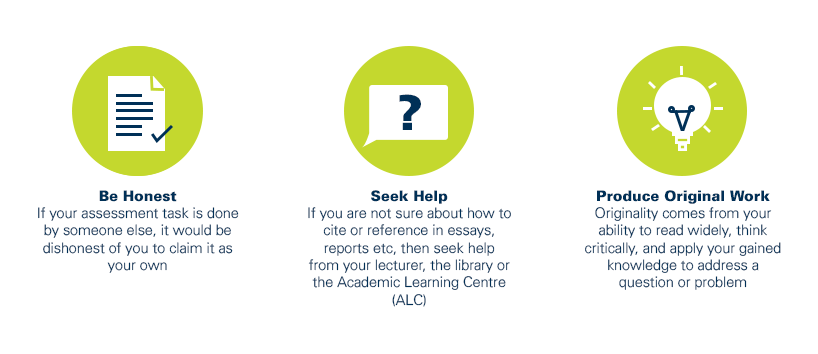
As a CQUniversity student you are expected to act honestly in all aspects of your academic work.
Any assessable work undertaken or submitted for review or assessment must be your own work. Assessable work is any type of work you do to meet the assessment requirements in the unit, including draft work submitted for review and feedback and final work to be assessed.
When you use the ideas, words or data of others in your assessment, you must thoroughly and clearly acknowledge the source of this information by using the correct referencing style for your unit. Using others’ work without proper acknowledgement may be considered a form of intellectual dishonesty.
Participating honestly, respectfully, responsibly, and fairly in your university study ensures the CQUniversity qualification you earn will be valued as a true indication of your individual academic achievement and will continue to receive the respect and recognition it deserves.
As a student, you are responsible for reading and following CQUniversity’s policies, including the Student Academic Integrity Policy and Procedure. This policy sets out CQUniversity’s expectations of you to act with integrity, examples of academic integrity breaches to avoid, the processes used to address alleged breaches of academic integrity, and potential penalties.
What is a breach of academic integrity?
A breach of academic integrity includes but is not limited to plagiarism, self-plagiarism, collusion, cheating, contract cheating, and academic misconduct. The Student Academic Integrity Policy and Procedure defines what these terms mean and gives examples.
Why is academic integrity important?
A breach of academic integrity may result in one or more penalties, including suspension or even expulsion from the University. It can also have negative implications for student visas and future enrolment at CQUniversity or elsewhere. Students who engage in contract cheating also risk being blackmailed by contract cheating services.
Where can I get assistance?
For academic advice and guidance, the Academic Learning Centre (ALC) can support you in becoming confident in completing assessments with integrity and of high standard.
What can you do to act with integrity?