Overview
This unit covers the essential steps in creating useful digital radiographs. You will build on your understanding of how the x-ray beam's interaction with various structures influences image appearances and apply image geometry concepts to manage the depiction of structures on radiographs. You will explore the key attributes and factors affecting radiographic image quality, including controlling scatter radiation and its impact on radiographs. You will also learn about digital imaging technologies and clinical information systems, focusing on the production, display, manipulation, storage, distribution and retention of digital radiographs. You will apply concepts of signal processing and image post-processing to improve radiographic appearances. You will learn the processes of information flow and management within clinical information systems as well as the integration of artificial intelligence (AI) to support imaging workflows.
Details
Pre-requisites or Co-requisites
Pre-requisites: MEDI11001 Fundamentals of Imaging Professions MEDI11002 Physics for Health Sciences Either MEDI11006 Imaging Science 1 or MEDI12001 Radiation Science
Important note: Students enrolled in a subsequent unit who failed their pre-requisite unit, should drop the subsequent unit before the census date or within 10 working days of Fail grade notification. Students who do not drop the unit in this timeframe cannot later drop the unit without academic and financial liability. See details in the Assessment Policy and Procedure (Higher Education Coursework).
Offerings For Term 1 - 2026
Attendance Requirements
All on-campus students are expected to attend scheduled classes - in some units, these classes are identified as a mandatory (pass/fail) component and attendance is compulsory. International students, on a student visa, must maintain a full time study load and meet both attendance and academic progress requirements in each study period (satisfactory attendance for International students is defined as maintaining at least an 80% attendance record).
Recommended Student Time Commitment
Each 6-credit Undergraduate unit at CQUniversity requires an overall time commitment of an average of 12.5 hours of study per week, making a total of 150 hours for the unit.
Class Timetable
Assessment Overview
Assessment Grading
This is a graded unit: your overall grade will be calculated from the marks or grades for each assessment task, based on the relative weightings shown in the table above. You must obtain an overall mark for the unit of at least 50%, or an overall grade of 'pass' in order to pass the unit. If any 'pass/fail' tasks are shown in the table above they must also be completed successfully ('pass' grade). You must also meet any minimum mark requirements specified for a particular assessment task, as detailed in the 'assessment task' section (note that in some instances, the minimum mark for a task may be greater than 50%). Consult the University's Grades and Results Policy for more details of interim results and final grades.
All University policies are available on the CQUniversity Policy site.
You may wish to view these policies:
- Grades and Results Policy
- Assessment Policy and Procedure (Higher Education Coursework)
- Review of Grade Procedure
- Student Academic Integrity Policy and Procedure
- Academic Progression Policy and Procedure
- Student Refund and Credit Balance Policy and Procedure
- Complaints Policy and Procedure
- Information and Communications Technology Acceptable Use Policy and Procedure
This list is not an exhaustive list of all University policies. The full list of University policies are available on the CQUniversity Policy site.
Feedback, Recommendations and Responses
Every unit is reviewed for enhancement each year. At the most recent review, the following staff and student feedback items were identified and recommendations were made.
Feedback from Unit coordinator
Transitioning from an online test to in-class supervised tests appears to have better supported student preparation, performance and fairness.
Explore the option to continue with in-class supervised tests in future iterations to reinforce deeper learning over rote memorisation and provide a more structured, equitable environment for demonstrating knowledge and skills.
Feedback from Unit coordinator Informal student feedback SUTE
Students valued the use of small groups during tutorials and lab activities as it promoted interaction, peer learning and better engagement with the unit content.
Invest in continuing with incorporating small group activities in tutorials and lab sessions in future deliveries to strengthen peer interactions, engagement and collaborative learning.
Feedback from SUTE Unit coordinator
Students may benefit from more varied and updated learning resources to complement existing materials and support diverse learning preferences.
Conduct a review of existing learning resources and update selected lecture recordings to enrich learning and improve student engagement.
- Use correct technical terminology to describe radiographic image appearances and explain the underlying factors that contributed to those appearances
- Analyse and apply concepts of image geometry, differential attenuation, scatter production and equipment operation to assess image quality and control radiographic image appearances
- Discuss the design and operation of digital imaging technologies and clinical information management systems in the production, display, manipulation, storage, distribution and retention of radiographs within imaging workflows
- Apply concepts of digital image processing and post-processing to effectively manage and improve the stored content and displayed image.
- Discuss the emerging role of AI in the acquisition, processing and interpretation of medical images.
This unit links to the following Professional Capabilities for Medical Radiation Practitioners as detailed by the Medical Radiation Practice Board of Australia (effective March 2020):
- Domain 1: Key capabilities 2, Enabling components b, c, d & e.
- Domain 1A: Key capabilities 1, Enabling components a, d & e.
- Domain 5: Key capabilities 1, Enabling components c & d.
Alignment of Assessment Tasks to Learning Outcomes
| Assessment Tasks | Learning Outcomes | ||||
|---|---|---|---|---|---|
| 1 | 2 | 3 | 4 | 5 | |
| 1 - In-class Test(s) - 40% | |||||
| 2 - In-class Test(s) - 60% | |||||
Alignment of Graduate Attributes to Learning Outcomes
| Graduate Attributes | Learning Outcomes | ||||
|---|---|---|---|---|---|
| 1 | 2 | 3 | 4 | 5 | |
| 1 - Communication | |||||
| 2 - Problem Solving | |||||
| 3 - Critical Thinking | |||||
| 4 - Information Literacy | |||||
| 5 - Team Work | |||||
| 6 - Information Technology Competence | |||||
| 7 - Cross Cultural Competence | |||||
| 8 - Ethical practice | |||||
| 9 - Social Innovation | |||||
| 10 - First Nations Knowledges | |||||
| 11 - Aboriginal and Torres Strait Islander Cultures | |||||
Textbooks
Essentials of Radiographic Physics & Imaging
- Edition: 3rd (2020)
- Authors: James Johnston and Terri Fauber
- Elsevier
- St. Louis St. Louis , Missouri , USA
- ISBN: 9780323566681
This book is available through the University's Library. Students are not required to purchase a hard copy.
- Binding: Hardcover
Radiography in the Digital Age: Physics - Exposure - Radiation Biology
- Edition: 4th (2023)
- Authors: Quinn B. Carroll
- Charles C. Thomas Publisher
- Springfield Springfield , Illinois , USA
- ISBN: 9780398094089
This e-book is available through the University's Library. Students are not required to purchase a hard copy.
- Binding: eBook
Additional Textbook Information
The prescribed textbooks, all available through the University's Library, will be used throughout this unit. Additional e-resources (including publications, journal article and books), also available through the Library, will be referenced for specific weeks of unit content.
IT Resources
- CQUniversity Student Email
- Internet
- Unit Website (Moodle)
- CQUniversity PACS
All submissions for this unit must use the referencing style: Vancouver
For further information, see the Assessment Tasks.
r.d.kumar@cqu.edu.au
Week 1
Begin Date: 09 Mar 2026Module/Topic
Fundamentals of radiographic imaging
- Terminology
- Radiograph as attenuation map
- Effect of beam characteristics on attenuation map
- Differential attenuation, subject contrast and resultant image contrast
- Effect of patient condition, pathology and contrast agents on subject and/or image contrast
Chapter
"Radiography in the Digital Age" - selected excerpts from Chapters 11, 12, 15, 16 and 19
Refer to Moodle for any additional readings
Events and Submissions/Topic
On campus lab and on campus tutorial
Week 2
Begin Date: 16 Mar 2026Module/Topic
Image quality and factors affecting it
- Terminology
- Contrast resolution and image grayscale
- Spatial resolution
- Signal-to-noise ratio (SNR)
- Quantum mottle/noise
Chapter
"Radiography in the Digital Age" - selected excerpts from Chapters 9, 13, 21, 22 and 25
Refer to Moodle for any additional readings
Events and Submissions/Topic
On campus lab and on campus tutorial
Week 3
Begin Date: 23 Mar 2026Module/Topic
Image Geometry and factors affecting it (Part 1)
- Terminology
- Image geometry basics
- Superimposition
- Distortion
Chapter
"Radiography in the Digital Age" - selected excerpts from Chapters 14, 21, 22, 23, 24 and 25
Refer to Moodle for any additional readings
Events and Submissions/Topic
On campus lab and on campus tutorial
Week 4
Begin Date: 30 Mar 2026Module/Topic
Image Geometry and factors affecting it (Part 2)
- Terminology
- Magnification
- Unsharpness
Chapter
"Radiography in the Digital Age" - selected excerpts from Chapters 12, 18 and 20
Refer to Moodle for any additional readings
Events and Submissions/Topic
On campus lab only
No on campus tutorial this week
In-class test 1 is due on Monday 30th March 2026 (There are two back-to-back sittings of this test so your test start and end time will depend on your registered session)
Week 5
Begin Date: 06 Apr 2026Module/Topic
Scatter and its control
- Terminology
- Scatter production and contributing factors
- Effect on image quality
- Collimation
- Air-gap technique
- Radiographic grids (Construction, types, metrics, application and errors)
- Gridless technology
Chapter
"Radiography in the Digital Age" - selected excerpts from Chapters 18, 20, 30 and 32
Refer to Moodle for any additional readings
Events and Submissions/Topic
On campus lab and on campus tutorial
Week 6
Begin Date: 13 Apr 2026Module/Topic
Fundamentals of digital image
- Terminology
- Digital image properties
- Raw data and processed data matrix
- Bit depth, dynamic range and contrast resolution
Chapter
"Radiography in the Digital Age" - selected excerpts from Chapter 28
Refer to Moodle for any additional readings
Events and Submissions/Topic
On campus tutorial only
No on campus lab this week
Vacation Week
Begin Date: 20 Apr 2026Module/Topic
Break week
Chapter
Events and Submissions/Topic
Week 7
Begin Date: 27 Apr 2026Module/Topic
Digital image acquisition systems
- Terminology
- Direct and Indirect digital radiography (DR) systems
Chapter
"Radiography in the Digital Age" - selected readings from selected excerpts from Chapters 13 and 33
Refer to Moodle for any additional readings
Events and Submissions/Topic
On campus tutorial only
No on campus lab this week
In-class test 2 is due on Monday 27th April 2026 (There are two back-to-back sittings of this test so your test start and end time will depend on your registered session)
Week 8
Begin Date: 04 May 2026Module/Topic
Digital signal processing - Part 1
- Terminology
- Pre-processing and correction
- Image sampling and quantisation
- Automatic rescaling and image segmentation
- Generation, analysis and manipulation of histograms
- Exposure index (EI) and deviation index (DI)
Chapter
"Radiography in the Digital Age" - selected excerpts from Chapters 29 and 31
Refer to Moodle for any additional readings
Events and Submissions/Topic
On campus tutorial only
No on campus lab this week
Week 9
Begin Date: 11 May 2026Module/Topic
Digital signal processing - Part 2
- Image processing algorithms/kernels
- Look up tables (LUTs)
- Windowing
- Geometric operations
- Edge enhancement, smoothing and unsharp masking
Chapter
"Radiography in the Digital Age" - selected excerpts from Chapters 28 and 30
Refer to Moodle for any additional readings
Events and Submissions/Topic
On campus lab and on campus tutorial
Week 10
Begin Date: 18 May 2026Module/Topic
Digital image display and clinical information management systems in imaging workflows & emerging role of artificial intelligence (AI)
- Digital image display workstations
- RIS, PACs, HIS and DICOM
- Image storage, archiving and retention
- Image distribution, communication and interoperability
- Data security, privacy and confidentiality
- Emerging role of AI in the acquisition, processing and interpretation of medical images
Chapter
"Radiography in the Digital Age" - selected excerpts from Chapters 34 and 35
Refer to Moodle for any additional readings
Events and Submissions/Topic
On campus tutorial only
No on campus lab this week
Week 11
Begin Date: 25 May 2026Module/Topic
Displayed image - putting the pieces together
- What happens if...address how changes at acquisition, processing, display and systems levels affect the final image.
Chapter
"Radiography in the Digital Age" - selected excerpts from Chapters 11, 12, 18, 19, 28 and 33
Refer to Moodle for any additional readings
Events and Submissions/Topic
On campus tutorial only
No on campus lab this week
Week 12
Begin Date: 01 Jun 2026Module/Topic
Assessment week
Chapter
Events and Submissions/Topic
MEDI12002 Imaging Science 2 builds up on the pre-requisite units MEDI11001 Fundamentals of Imaging Professions, MEDI11002 Physics for Health Sciences and MEDI11006 Imaging Science 1. It is a 6-point credit unit, which typically requires around 150 hours of total student workload. You are therefore expected to spend on average 12 hours per week in your study activities during the term. Below is a time budget to help you plan for your weekly study:
- 2 hours for watching recorded lectures and taking notes
- 1 hour for completing assigned readings
- 2 hours for creating study notes to meet weekly learning goals using the lectures and readings
- 1.5 hours for working on posted tutorial questions in preparation for tutorial
- 1.5 hours for participation in on campus tutorial
- 2 hours for lab preparation, participation in lab activities and engaging in related discussions
- 2 hours for preparation and/or revision for assessments
Take note that tutorials are interactive sessions where your participation enables you to check your understanding of and your ability to apply the week's concepts and for you to build your skills in responding to test questions. Your regular participation in tutorials strongly supports your success in the unit.
There are on campus labs in Weeks 1-5 and 9. When attending these lab sessions, you will be required to adhere to all occupational health and safety requirements related to the use of the Medical Imaging teaching labs, including the completion of mandatory radiation safety and lab inductions prior to your first session. You are required to adhere to the Medical Imaging Dress Code for all lab classes.
There is no compulsory attendance requirement for any classes in this unit. Please note that none of the on campus lab and tutorial sessions will be recorded.
1 In-class Test(s)
You will be required to complete two In-class tests during the term. Both tests will be closed book on campus supervised tests. The aim of these In-class tests is for you to demonstrate your knowledge, understanding and ability to apply core concepts and correct use of terminology learned in the unit.
In-class test 1
- This test contributes 15% towards the final unit grade.
- This test will be held on Monday 30th March 2026 in Week 4 and it will be assessing the first three weeks (i.e. Weeks 1-3 inclusive) of content covered in this unit.
- This test is time-limited to 20 minutes. You will sit this test at your timetabled assessment time on the due date. There are two back-to-back sittings of this test so your test start and end time will depend on your registered session. You should be in attendance at your allocated room at the start time of your registered session. Further instructions will be provided in Moodle.
In-class test 2
- This test contributes 25% towards the final unit grade.
- This test will be held on Monday 27th April 2026 in Week 7 and it will be assessing Weeks 4-6 inclusive of content covered in this unit. You will also be required to integrate concepts and apply terminology from the first three weeks to the Weeks 4-6 content.
- This test is time-limited to 50 minutes. You will sit this test at your timetabled assessment time on the due date. There are two back-to-back sittings of this test so your test start and end time will depend on your registered session. You should be in attendance at your allocated room at the start time of your registered session. Further instructions will be provided in Moodle.
All questions will be based on the posted weekly learning goals. Question tasks will be a similar type to those discussed in weekly tutorials. The tasks may include analysis of diagrams, photographs and/or images. Questions may include quiz-style questions (for example multiple choice, fill-in-the-blank, matching), true/false with explanation and written response. The written response questions require you to apply your knowledge and understanding, rather than simply recall facts. The number of marks for each question are allocated based on the depth and breadth of the required response and will be indicated on the test.
The standards of academic integrity still apply. Your test response must be your own work. It means that during the test you must not access your study notes, textbook, the unit Moodle site content and/or any website. You must not consult with any other person via any means or accept any input or assistance from any other person regarding the test questions and your responses during the test. The question responses that you submit must be your own effort, written without assistance from any other person. You must not use artificial intelligence (AI) resources to generate response content. You must not use 'homework assistance' sites or any other resource that provides responses to submitted questions. You must not record by any means, give access to, or share any of the test questions or your test responses with other students during or after the test. You must also not provide any other assistance to other students during their test. At the start of the test, you will need to make a declaration that you understand these rules of academic integrity and that you agree to abide by them. Any identified cases of potential cheating and/or collusion will result in a breach of academic integrity case being raised.
AI scale for this task: 1 NO AI. You must not use AI at any point during the assessment. You must demonstrate your core skills and knowledge.
As per the Assessment Policy and Procedures, this test must be completed at the timetabled date and time. There is no opportunity to apply a late penalty. The 72 hour grace period does not apply to this assessment. In the absence of an approved extension, you cannot complete this assessment at a later time, and you will receive a mark of zero for the assessment if you have not submitted it by the scheduled date and time.
In-class test 1 is due on Monday 30th March 2026 in Week 4 and In-class test 2 is due on Monday 27th April 2026 in Week 7.
Feedback for each In-class test will be provided within two weeks of the due date for the test.
Question responses will be scored on the following criteria:
- correct use of terminology
- correct selection and application of core concepts to the specific content of the question
- clarity, correctness, relevance and completeness of the response in addressing the question that was asked
- critical thinking
- Use correct technical terminology to describe radiographic image appearances and explain the underlying factors that contributed to those appearances
- Analyse and apply concepts of image geometry, differential attenuation, scatter production and equipment operation to assess image quality and control radiographic image appearances
2 In-class Test(s)
Take note that this is a closed-book on-campus supervised test. You will complete an in-class closed-book test on Friday 5th June 2026 in Week 12 to demonstrate your ability to apply concepts and terminology learned in the unit.
This test will allow you to demonstrate your knowledge of, and ability to apply the concepts and use the terminology from all weeks of the unit, with an emphasis on Weeks 7-11 inclusive. All questions will be based on the posted weekly learning goals and may include analysis of diagrams, photographs and/or radiographs. Questions may include quiz-style questions (for example multiple choice, fill-in-the-blank, matching), true/false with explanation and written response. The question tasks will be of similar type to those discussed in weekly tutorials and will require you to apply your knowledge and understanding, rather than to simply recall facts. The number of marks for each question are allocated based on the depth and breadth of the required response and will be indicated on the test.
This test is time-limited to 80 minutes. You will sit this test at your timetabled assessment time on the due date. There are two back-to-back sittings of this test so your test start and end time will depend on your registered session. You should be in attendance at your allocated room at the start time of your registered session. Further instructions will be provided in Moodle.
The standards of academic integrity still apply. Your test response must be your own work. It means that during the test you must not access your study notes, textbook, the unit Moodle site content and/or any website. You must not consult with any other person via any means or accept any input or assistance from any other person regarding the test questions and your responses during the test. The question responses that you submit must be your own effort, written without assistance from any other person. You must not use artificial intelligence (AI) resources to generate response content. You must not use 'homework assistance' sites or any other resource that provides responses to submitted questions. You must not record by any means, give access to, or share any of the test questions or your test responses with other students during or after the test. You must also not provide any other assistance to other students during their test. At the start of the test, you will need to make a declaration that you understand these rules of academic integrity and that you agree to abide by them. Any identified cases of potential cheating and/or collusion will result in a breach of academic integrity case being raised.
AI scale for this task: 1 NO AI. You must not use AI at any point during the assessment. You must demonstrate your core skills and knowledge.
As per the Assessment Policy and Procedures, this test must be completed at the timetabled date and time. There is no opportunity to apply a late penalty. The 72 hour grace period does not apply to this assessment. In the absence of an approved extension, you cannot complete this assessment at a later time, and you will receive a mark of zero for the assessment if you have not submitted it by the scheduled date and time.
Week 12 Friday (5 June 2026) 1:00 pm AEST
Feedback will be provided within two weeks of the due date for the test.
Question responses will be scored on the following criteria:
- correct use of terminology
- correct selection and application of core concepts to the specific content of the question
- clarity, correctness, relevance and completeness of the response in addressing the question that was asked
- critical thinking
- Use correct technical terminology to describe radiographic image appearances and explain the underlying factors that contributed to those appearances
- Analyse and apply concepts of image geometry, differential attenuation, scatter production and equipment operation to assess image quality and control radiographic image appearances
- Discuss the design and operation of digital imaging technologies and clinical information management systems in the production, display, manipulation, storage, distribution and retention of radiographs within imaging workflows
- Apply concepts of digital image processing and post-processing to effectively manage and improve the stored content and displayed image.
- Discuss the emerging role of AI in the acquisition, processing and interpretation of medical images.
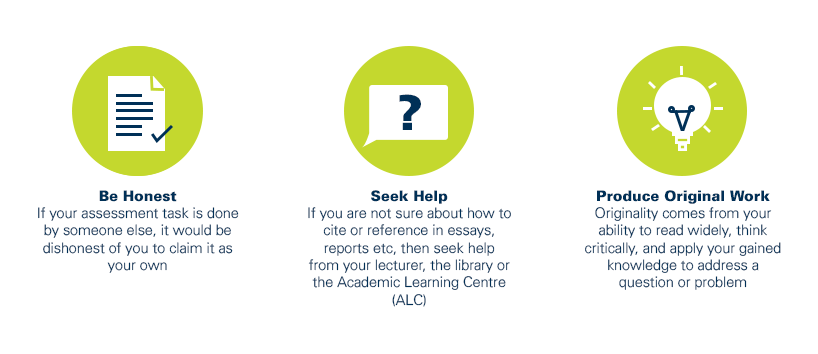
As a CQUniversity student you are expected to act honestly in all aspects of your academic work.
Any assessable work undertaken or submitted for review or assessment must be your own work. Assessable work is any type of work you do to meet the assessment requirements in the unit, including draft work submitted for review and feedback and final work to be assessed.
When you use the ideas, words or data of others in your assessment, you must thoroughly and clearly acknowledge the source of this information by using the correct referencing style for your unit. Using others’ work without proper acknowledgement may be considered a form of intellectual dishonesty.
Participating honestly, respectfully, responsibly, and fairly in your university study ensures the CQUniversity qualification you earn will be valued as a true indication of your individual academic achievement and will continue to receive the respect and recognition it deserves.
As a student, you are responsible for reading and following CQUniversity’s policies, including the Student Academic Integrity Policy and Procedure. This policy sets out CQUniversity’s expectations of you to act with integrity, examples of academic integrity breaches to avoid, the processes used to address alleged breaches of academic integrity, and potential penalties.
What is a breach of academic integrity?
A breach of academic integrity includes but is not limited to plagiarism, self-plagiarism, collusion, cheating, contract cheating, and academic misconduct. The Student Academic Integrity Policy and Procedure defines what these terms mean and gives examples.
Why is academic integrity important?
A breach of academic integrity may result in one or more penalties, including suspension or even expulsion from the University. It can also have negative implications for student visas and future enrolment at CQUniversity or elsewhere. Students who engage in contract cheating also risk being blackmailed by contract cheating services.
Where can I get assistance?
For academic advice and guidance, the Academic Learning Centre (ALC) can support you in becoming confident in completing assessments with integrity and of high standard.
What can you do to act with integrity?