Overview
This unit is the first of two that examine the relational anatomy of the human body and develop your pattern recognition skills in radiographic appearances of anatomical structures. The focus of this unit is on the musculoskeletal structures of the extremities, shoulder girdle and pelvic girdle. You will apply your knowledge of anatomy, physiology and pathophysiology to studying the development, change through the lifespan and change due to injury and disease of bones and joints in those anatomical regions. For each bone and joint you will study its morphology and spatial characteristics relative to adjacent structures and external landmarks. You will apply that knowledge to building your awareness of radiographic appearances of these structures, including standard appearances, normal variants, injuries and diseases. You will build your vocabulary of radiographic terminology in describing image appearances of anatomical structures and their positional relationships with other structures. You will learn to articulate a reasoned decision in interpreting radiographic appearances at an introductory level.
Details
Pre-requisites or Co-requisites
Prerequisites: BMSC11010 Human Anatomy and Physiology 1 BMSC11011 Human Anatomy and Physiology 2 MEDI11001 Fundamentals of the Imaging Professions MPAT12001 Medical Pathophysiology
Important note: Students enrolled in a subsequent unit who failed their pre-requisite unit, should drop the subsequent unit before the census date or within 10 working days of Fail grade notification. Students who do not drop the unit in this timeframe cannot later drop the unit without academic and financial liability. See details in the Assessment Policy and Procedure (Higher Education Coursework).
Offerings For Term 1 - 2026
Attendance Requirements
All on-campus students are expected to attend scheduled classes - in some units, these classes are identified as a mandatory (pass/fail) component and attendance is compulsory. International students, on a student visa, must maintain a full time study load and meet both attendance and academic progress requirements in each study period (satisfactory attendance for International students is defined as maintaining at least an 80% attendance record).
Recommended Student Time Commitment
Each 6-credit Undergraduate unit at CQUniversity requires an overall time commitment of an average of 12.5 hours of study per week, making a total of 150 hours for the unit.
Class Timetable
Assessment Overview
Assessment Grading
This is a graded unit: your overall grade will be calculated from the marks or grades for each assessment task, based on the relative weightings shown in the table above. You must obtain an overall mark for the unit of at least 50%, or an overall grade of 'pass' in order to pass the unit. If any 'pass/fail' tasks are shown in the table above they must also be completed successfully ('pass' grade). You must also meet any minimum mark requirements specified for a particular assessment task, as detailed in the 'assessment task' section (note that in some instances, the minimum mark for a task may be greater than 50%). Consult the University's Grades and Results Policy for more details of interim results and final grades.
All University policies are available on the CQUniversity Policy site.
You may wish to view these policies:
- Grades and Results Policy
- Assessment Policy and Procedure (Higher Education Coursework)
- Review of Grade Procedure
- Student Academic Integrity Policy and Procedure
- Academic Progression Policy and Procedure
- Student Refund and Credit Balance Policy and Procedure
- Complaints Policy and Procedure
- Information and Communications Technology Acceptable Use Policy and Procedure
This list is not an exhaustive list of all University policies. The full list of University policies are available on the CQUniversity Policy site.
Feedback, Recommendations and Responses
Every unit is reviewed for enhancement each year. At the most recent review, the following staff and student feedback items were identified and recommendations were made.
Feedback from SUTE, emails from students and verbal comments by students in class
Students appreciated the hands-on learning in the anatomy labs and were disappointed that labs were not scheduled every week due to public holidays.
Investigate the potential to schedule lab classes on a different day so that students are not impacted significantly by public holidays.
Feedback from SUTE and verbal comments by students in class
Some students would appreciate answers to lab sessions to be given to assist with learning.
Investigate methods of supporting students without creating a passive learning environment where students are not expected to work out answers.
Feedback from Coordinator reflection
Image evaluation is complex, with several aspects to any given scenario. This can sometimes make students feel slightly overwhelmed with the volume of response needed.
Consider splitting the tutorial class into groups for some questions and have groups discuss one aspect of image interpretation, ready to report that one aspect to the class as a whole.
- Identify on projection radiographs specific anatomical musculoskeletal structures of the upper and lower extremities, shoulder girdle and pelvis
- Discuss the development, changes through the lifespan and changes due to injuries and diseases of bones and joints of the upper and lower extremities, shoulder girdle and pelvis
- For each bone and joint of the upper and lower extremities, shoulder girdle and pelvis, describe its morphology and spatial characteristics relative to adjacent structures and surface landmarks
- Employ standard professional terminology and conventions in describing anatomical features, locations and positional relationships of musculoskeletal structures and in describing radiographic appearances of those structures
- Apply knowledge of anatomy and pathophysiology and skill in pattern recognition in predicting and interpreting normal and abnormal radiographic appearances of the musculoskeletal structures of the upper and lower extremities, shoulder girdle and pelvis
- Present a reasoned judgment in predicting and interpreting normal and abnormal radiographic appearances of the musculoskeletal structures of the upper and lower extremities, shoulder girdle and pelvis.
This unit maps to the following components of the Medical Radiation Practice Board of Australia's Professional Capabilities for Medical Radiation Practice:
Domains 1.1 and 1.7
Alignment of Assessment Tasks to Learning Outcomes
| Assessment Tasks | Learning Outcomes | |||||
|---|---|---|---|---|---|---|
| 1 | 2 | 3 | 4 | 5 | 6 | |
| 1 - In-class Test(s) - 30% | ||||||
| 2 - Objective Structured Clinical Examinations (OSCEs) - 20% | ||||||
| 3 - In-class Test(s) - 50% | ||||||
Alignment of Graduate Attributes to Learning Outcomes
| Graduate Attributes | Learning Outcomes | |||||
|---|---|---|---|---|---|---|
| 1 | 2 | 3 | 4 | 5 | 6 | |
| 1 - Communication | ||||||
| 2 - Problem Solving | ||||||
| 3 - Critical Thinking | ||||||
| 4 - Information Literacy | ||||||
| 5 - Team Work | ||||||
| 6 - Information Technology Competence | ||||||
| 7 - Cross Cultural Competence | ||||||
| 8 - Ethical practice | ||||||
| 9 - Social Innovation | ||||||
| 10 - First Nations Knowledges | ||||||
| 11 - Aboriginal and Torres Strait Islander Cultures | ||||||
Textbooks
Accident and Emergency Radiology a Survival Guide
- Edition: 3 (2014)
- Authors: Raby, N.; Berman, L.; de Lacey, G.
- Elsevier
- ISBN: 9780702050312; 0-7020-5031-8
This textbook is available via the e-reading lists on the unit Moodle site. There is no requirement to purchase a physical copy.
Comprehensive Radiographic Pathology
- Edition: 8 (2024)
- Authors: Eisenberg, R. L.
- Elsevier
- ISBN: 9780443119347
This textbook is available as hard-copy or as an e-book.
Sectional Anatomy for Imaging Professionals e-book
- Edition: 4 (2018)
- Authors: Kelley, L.L..; Petersen, C.M.
- Mosby
- ISBN: 9780323595377
This textbook is available via the e-reading lists on the unit Moodle site. There is no requirement to purchase a physical copy.
IT Resources
- CQUniversity Student Email
- Internet
- Unit Website (Moodle)
All submissions for this unit must use the referencing style: Vancouver
For further information, see the Assessment Tasks.
r.druva@cqu.edu.au
Week 1
Begin Date: 09 Mar 2026Module/Topic
Terminology for radiographic anatomy and appearances
Osteogenesis and bone remodeling
Chapter
Sectional anatomy for Imaging Professionals, Chapter 1
Comprehensive Radiographic Pathology Chapters 1 & 4 (pp. 86, 90-97 )
Events and Submissions/Topic
Laboratory Class
Tutorial
Week 2
Begin Date: 16 Mar 2026Module/Topic
Image evaluation
Image interpretation
Radiographic anatomy and appearances of the fingers and thumb
Chapter
Sectional Anatomy for Imaging Professionals, pp. 621,630,636-639,646-653
Accident & Emergency Radiology: A Survival Guide, Chapter 1, Chapter 10 (pp. 154-155)
Comprehensive Radiographic Pathology (pp. 131-136)
Events and Submissions/Topic
Laboratory Class
Tutorial
Week 3
Begin Date: 23 Mar 2026Module/Topic
Radiographic anatomy and appearances of the hand and wrist
Chapter
Sectional Anatomy for Imaging Professionals, pp. 621-635, 639-645, 646-651
Accident & Emergency Radiology: A Survival Guide, Chapters 9 & 10
Comprehensive Radiographic Pathology (pp. 131-136, 137-140)
Events and Submissions/Topic
Laboratory Class
Tutorial
Week 4
Begin Date: 30 Mar 2026Module/Topic
Radiographic anatomy and appearances of the forearm, elbow and distal humerus
Chapter
Sectional Anatomy for Imaging Professionals, pp. 601-621, 646, 650-651
Accident & Emergency Radiology: A Survival Guide, Chapters 7 & 8
Events and Submissions/Topic
Laboratory Class
Zoom Tutorial (Further information will be provided on Moodle site)
Week 5
Begin Date: 06 Apr 2026Module/Topic
Radiographic anatomy and appearances of the shoulder girdle
Chapter
Sectional Anatomy for Imaging Professionals, pp. 563-600, 646
Accident & Emergency Radiology: A Survival Guide, Chapter 6
Events and Submissions/Topic
Laboratory Class
Tutorial
Week 6
Begin Date: 13 Apr 2026Module/Topic
Consolidation of the upper limb
Chapter
Events and Submissions/Topic
Tutorial
In-class Test(s) Due: Week 6 Thursday (16 Apr 2026) 11:00 am AEST
Vacation Week
Begin Date: 20 Apr 2026Module/Topic
Vacation week (Mid term break)
Chapter
Events and Submissions/Topic
Week 7
Begin Date: 27 Apr 2026Module/Topic
Radiographic anatomy and appearances of the foot
Chapter
Sectional Anatomy for Imaging Professionals, pp. 714-745, 747, 753
Accident & Emergency Radiology: A Survival Guide, Chapter 17
Events and Submissions/Topic
Laboratory Class
Tutorial
Week 8
Begin Date: 04 May 2026Module/Topic
Radiographic anatomy and appearances of the ankle and distal tibia and fibula
Chapter
Sectional Anatomy for Imaging Professionals, pp. 714-745, 747, 753
Accident & Emergency Radiology: A Survival Guide, Chapter 16
Events and Submissions/Topic
Laboratory Class
Tutorial
Week 9
Begin Date: 11 May 2026Module/Topic
Radiographic anatomy and appearances of the proximal tibia and fibula, knee and distal femur
Chapter
Sectional Anatomy for Imaging Professionals, pp. 682-713, 746-754
Accident & Emergency Radiology: A Survival Guide, Chapter 15
Events and Submissions/Topic
Laboratory Class
Tutorial
Week 10
Begin Date: 18 May 2026Module/Topic
Radiographic anatomy and appearances of the proximal femur and hip joint
Chapter
Sectional Anatomy for Imaging Professionals, pp. 655-682, 746, 753
Accident & Emergency Radiology: A Survival Guide, Chapter 14
Events and Submissions/Topic
Laboratory Class
Tutorial
Week 11
Begin Date: 25 May 2026Module/Topic
Radiographic anatomy and appearances of the pelvic girdle
Chapter
Sectional Anatomy for Imaging Professionals, Chapter 8
Accident & Emergency Radiology: A Survival Guide, Chapter 13
Events and Submissions/Topic
Laboratory Class
Tutorial
Objective Structured Clinical Examination (OSCE) Due: Week 11 Monday (25 May 2026) 3:00 pm AEST
Week 12
Begin Date: 01 Jun 2026Module/Topic
Consolidation and Final Assessment
Chapter
Events and Submissions/Topic
The unit coordinator for this unit is: Ruth Druva
I can be contacted on r.druva@cqu.edu.au. During term I may be off campus or teaching other subjects so the preferred method of initial contact is via email.
As a 6-credit unit you are expected to spend 150 hours throughout the term on this subject. This equates to approximately 12.5 hours per week. It is important to maintain engagement with the content and not fall behind. A suggested time budget is as follows:
- Completing pre-reading: 1 - 2 hours per week
- Watching recorded lecture presentations and making notes: 3 - 4 hours per week
- Preparing for and attending weekly tutorials: 2 hours per week
- Preparing for and attending scheduled laboratory classes: 2 hours per week
- Preparation for and completion of assessment tasks: 50 hours over the term
Take note that tutorials are interactive sessions on-campus where your participation enables you to check your understanding of and your ability to apply the week’s concepts and for you to build your skills in responding to test questions. Your regular participation in tutorials strongly supports your success in the unit. There are on-campus labs in Weeks 1-5 and 7-11. Again these are interactive sessions supporting your learning. There are no compulsory attendance requirements for any classes in this unit. Please note that none of the on-campus lab and tutorial sessions will be recorded.
1 In-class Test(s)
Radiographers are health professionals who are responsible for imaging human anatomy. As such, they are expected to be able to identify organs and structures in any cross-section and at any level in the body. The relative positions of structures may help to differentiate normal from abnormal body processes. The Medical Radiation Practice Board of Australia (MRPBA) requires radiographers to be able to apply knowledge of anatomy, physiology and pathology to practice. In this task you are required to identify, describe and orient structures in the human body using terminology expected of a radiographer. The MRPBA also require radiographers to be able to identify unexpected or urgent findings. The in-class test will assess your ability to interpret medical images for the presence of normal, normal variant or abnormal appearances.
The in-class test will assess your knowledge of the name, location, size, orientation, relative position and morphology of major structures studied from weeks 1 to 5 inclusive, and your use of professional terminology to communicate that knowledge. You will also be assessed on your application of knowledge related to radiographic appearances. Question tasks may include labelling diagrams, responding to multiple-choice, matching and short answer questions, explanations of concepts related to radiographic anatomy and appearances and making judgements on image appearances.
You will sit this test at your timetabled assessment time on the due date. There are two back-to-back sittings of this test so your test start and end time will depend on your registered session. You should be in attendance at your allocated room at the start time of your registered session. Further instructions will be provided in Moodle. The in-class test will be time-limited, and once you open the test you will not be able to pause or re-start it. Once opened, the test will remain open for 45 minutes and will then automatically close. Any unanswered questions or unsaved responses will receive a mark of zero. The test will be made available via the unit Moodle site. If you start the test late, with less than 45 minutes remaining, the test will close at the scheduled time, and you will not have a full 45 minutes in which to complete the test.
The standards of academic integrity still apply. Your test response must be your own work. It means that during the test you must not access your study notes, textbook, the unit Moodle site content and/or any website. You must not consult with any other person via any means or accept any input or assistance from any other person regarding the test questions and your responses during the test. The question responses that you submit must be your own effort, written without assistance from any other person. You must not use artificial intelligence (AI) resources to generate response content. You must not use ‘homework assistance’ sites or any other resource that provides responses to submitted questions. You must not record by any means, give access to or share any of the test questions or your responses with other students during or after the test. You also must not provide any other assistance to other students during their test. At the start of the test, you will need to make a declaration that you understand these rules of academic integrity and that you agree to abide by them. Any identified cases of potential cheating and/or collusion will result in a breach of academic integrity case being raised.
Level of GenAI use allowed: Level 1 - No AI. You must not use Al at any point during the assessment. You must demonstrate your core skills and knowledge.
In the absence of an approved assessment extension, if you do not complete the test by the stated due date and time, you will receive a mark of zero for this assessment. If you have an approved extension, you will be assigned a new test date and time as soon as possible after the original test date. It is your responsibility to ensure that you can attend at the new assigned date and time. Please see section 5 of the university's Assessment Policy and Procedure for details specifically around assessment extension. The 72-hour grace period does not apply to this assessment.
Week 6 Thursday (16 Apr 2026) 11:00 am AEST
Results will be released within 2-weeks of all students completing the test, including those with approved extensions.
Your responses are scored on the following criteria:
- Correct spelling and use of professional terminology
- Correctness, relevance and completeness of the response to the question asked
- Clarity of responses
- Critical thinking in relation to the topic of the question.
The number of marks for each question are allocated based on the depth and breadth of the required response and will be indicated on the sidebar of the Moodle test screen.
- Identify on projection radiographs specific anatomical musculoskeletal structures of the upper and lower extremities, shoulder girdle and pelvis
- Discuss the development, changes through the lifespan and changes due to injuries and diseases of bones and joints of the upper and lower extremities, shoulder girdle and pelvis
- For each bone and joint of the upper and lower extremities, shoulder girdle and pelvis, describe its morphology and spatial characteristics relative to adjacent structures and surface landmarks
- Employ standard professional terminology and conventions in describing anatomical features, locations and positional relationships of musculoskeletal structures and in describing radiographic appearances of those structures
- Apply knowledge of anatomy and pathophysiology and skill in pattern recognition in predicting and interpreting normal and abnormal radiographic appearances of the musculoskeletal structures of the upper and lower extremities, shoulder girdle and pelvis
- Present a reasoned judgment in predicting and interpreting normal and abnormal radiographic appearances of the musculoskeletal structures of the upper and lower extremities, shoulder girdle and pelvis.
2 Objective Structured Clinical Examinations (OSCEs)
Image evaluation and interpretation is an intrinsic part of reviewing performed x-ray examinations. The Medical Radiation Practice Board of Australia (MRPBA) requires radiographers to be able to apply knowledge of anatomy and pathophysiology to their professional practice. In this task you are required to identify, describe and align structures in the human body using terminology expected of a radiographer. The MRPBA also require radiographers to be able to identify unexpected or urgent findings.
This task assesses your knowledge and pattern recognition skills in the evaluation and interpretation of radiographic images of the musculoskeletal structures of the appendicular skeleton which covers the upper and lower extremities, shoulder girdle and pelvis. You will identify and describe anatomical features whilst distinguishing between normal and abnormal radiographic appearances. You will provide reasoned judgement to support your decision making.
This is a time limited assessment. You will have approximately 15 minutes at one of a number of designated stations. At each station students will be presented with a number of different radiographic images that have been covered in this unit. You will be required to verbally respond to a series of questions that will be asked about radiographic images displayed to you. You will need to articulate responses using correct terminology in a clear manner about image interpretation for diagnostic purposes. This will include identifying the anatomical features and describing the radiographic appearances in a systematic format. A pattern recognition perspective is to be applied in distinguishing and interpreting between normal and abnormal radiographic appearances. In your responses reasoned judgement is to be provided to support your decision making about the displayed radiographic images.
Your responses will be video recorded to enable marking and moderation of your responses relative to the posted marking rubric.
Please note:
- This is a timed examination. Any elements not completed at a station within the allocated time will be scored as not attempted.
- Your performance will be video recorded to enable moderation.
- Not all students will be presented with the same radiographic images
Level of GenAI use allowed: Level 1 - No AI. You must not use Al at any point during the assessment. You must demonstrate your core skills and knowledge.
The 72 – hour grace period does not apply to this assessment
Academic integrity requirements
You must uphold the standards of academic integrity throughout this assessment.
- You must not consult with any other person via any means or accept any input or assistance from any other person regarding the assessment questions and responses.
- You must not communicate by any means with any other student during the assessment.
- Your performance must be your own effort without assistance in any form.
- Both during and after the assessment, you must not record by any means, give access to or share any of the assessment questions with any other person.
- You must not provide assistance in any way to any other student during their assessment.
This assessment item must be completed during your timetabled OSCE assessment session on the specified due date. If you have extenuating circumstances that cause you to be unable to attend your OSCE at your timetabled date and time, you must apply for an assessment extension. See Section 5 of the University's Assessment Policy and Procedure for details regarding assessment management, specifically around assessment extension. If your request for an extension is approved, you will be assigned a new OSCE date and time which will be set according to the availability of the facilities and assessors. It is your responsibility to ensure that you can attend at that new assigned date and time. In the absence of an approved extension, you will not be able to complete this task at a later date and will receive a score of zero for the assessment task.
Week 11 Monday (25 May 2026) 3:00 pm AEST
Results will be released within 2-weeks of all students completing the test, including those with approved extensions.
Your responses are scored on the following criteria:
Clarity, correctness, relevance and completeness of the response in addressing the question that was asked
Correct use of standard professional, anatomical and pathophysiology terminology
Evidence of critical thinking and reasoned judgment
- Identify on projection radiographs specific anatomical musculoskeletal structures of the upper and lower extremities, shoulder girdle and pelvis
- Employ standard professional terminology and conventions in describing anatomical features, locations and positional relationships of musculoskeletal structures and in describing radiographic appearances of those structures
- Apply knowledge of anatomy and pathophysiology and skill in pattern recognition in predicting and interpreting normal and abnormal radiographic appearances of the musculoskeletal structures of the upper and lower extremities, shoulder girdle and pelvis
- Present a reasoned judgment in predicting and interpreting normal and abnormal radiographic appearances of the musculoskeletal structures of the upper and lower extremities, shoulder girdle and pelvis.
3 In-class Test(s)
Radiographers are health professionals who are responsible for imaging human anatomy. As such, they are expected to be able to identify organs and structures in any cross-section and at any level in the body. The relative positions of structures may help to differentiate normal from abnormal body processes. The Medical Radiation Practice Board of Australia (MRPBA) requires radiographers to be able to apply knowledge of anatomy, physiology and pathology to practice. In this task you are required to identify, describe and orient structures in the human body using terminology expected of a radiographer. The MRPBA also require radiographers to be able to identify unexpected or urgent findings. The in-class test will assess your ability to interpret medical images for the presence of normal, normal variant or abnormal appearances.
The in-class test will assess your knowledge of the name, location, size, orientation, relative position and morphology of major structures studied from all content weeks, and your use of professional terminology to communicate that knowledge. You will also be assessed on your application of knowledge related to radiographic appearances. Question tasks may include labelling diagrams, responding to multiple-choice, matching and short answer questions, explanations of concepts related to radiographic anatomy and appearances and making judgements on image appearances.
You will sit this test at your timetabled assessment time on the due date. There are two back-to-back sittings of this test so your test start and end time will depend on your registered session. You should be in attendance at your allocated room at the start time of your registered session. Further instructions will be provided in Moodle. The in-class test will be time-limited, and once you open the test you will not be able to pause or re-start it. Once opened, the test will remain open for 75 minutes and will then automatically close. Any unanswered questions or unsaved responses will receive a mark of zero. The test will be made available via the unit Moodle site.
The standards of academic integrity still apply. Your test response must be your own work. It means that during the test you must not access your study notes, textbook, the unit Moodle site content and/or any website. You must not consult with any other person via any means or accept any input or assistance from any other person regarding the test questions and your responses during the test. The question responses that you submit must be your own effort, written without assistance from any other person. You must not use artificial intelligence (AI) resources to generate response content. You must not use ‘homework assistance’ sites or any other resource that provides responses to submitted questions. You must not record by any means, give access to or share any of the test questions or your responses with other students during or after the test. You also must not provide any other assistance to other students during their test. At the start of the test, you will need to make a declaration that you understand these rules of academic integrity and that you agree to abide by them. Any identified cases of potential cheating and/or collusion will result in a breach of academic integrity case being raised.
Level of GenAI use allowed: Level 1 - No AI. You must not use Al at any point during the assessment. You must demonstrate your core skills and knowledge.
In the absence of an approved assessment extension, if you do not complete the test by the stated due date and time, you will receive a mark of zero for this assessment. If you have an approved extension, you will be assigned a new test date and time as soon as possible after the original test date. It is your responsibility to ensure that you can attend at the new assigned date and time. Please see section 5 of the university's Assessment Policy and Procedure for details specifically around assessment extension. The 72-hour grace period does not apply to this assessment.
Week 12 Wednesday (3 June 2026) 1:00 pm AEST
Results will be released within 2-weeks of all students completing the test, including those with approved extensions.
Results will be released within 2-weeks of all students completing the test, including those with approved extensions.
Your responses are scored on the following criteria:
- Correct spelling and use of professional terminology
- Correctness, relevance and completeness of the response to the question asked
- Clarity of responses
- Critical thinking in relation to the topic of the question.
The number of marks for each question are allocated based on the depth and breadth of the required response, and will be indicated on the sidebar of the Moodle test screen.
- Identify on projection radiographs specific anatomical musculoskeletal structures of the upper and lower extremities, shoulder girdle and pelvis
- Discuss the development, changes through the lifespan and changes due to injuries and diseases of bones and joints of the upper and lower extremities, shoulder girdle and pelvis
- For each bone and joint of the upper and lower extremities, shoulder girdle and pelvis, describe its morphology and spatial characteristics relative to adjacent structures and surface landmarks
- Employ standard professional terminology and conventions in describing anatomical features, locations and positional relationships of musculoskeletal structures and in describing radiographic appearances of those structures
- Apply knowledge of anatomy and pathophysiology and skill in pattern recognition in predicting and interpreting normal and abnormal radiographic appearances of the musculoskeletal structures of the upper and lower extremities, shoulder girdle and pelvis
- Present a reasoned judgment in predicting and interpreting normal and abnormal radiographic appearances of the musculoskeletal structures of the upper and lower extremities, shoulder girdle and pelvis.
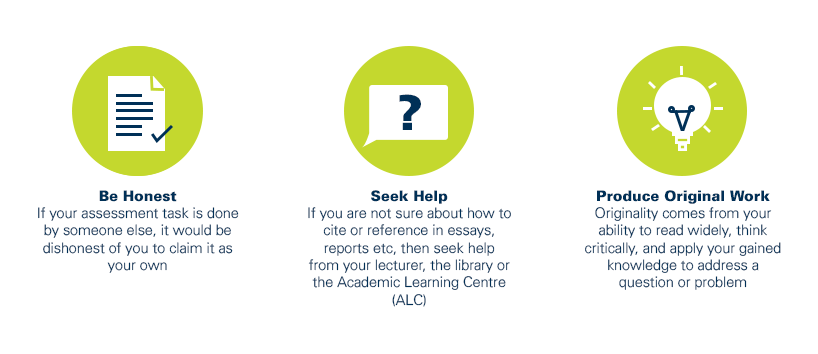
As a CQUniversity student you are expected to act honestly in all aspects of your academic work.
Any assessable work undertaken or submitted for review or assessment must be your own work. Assessable work is any type of work you do to meet the assessment requirements in the unit, including draft work submitted for review and feedback and final work to be assessed.
When you use the ideas, words or data of others in your assessment, you must thoroughly and clearly acknowledge the source of this information by using the correct referencing style for your unit. Using others’ work without proper acknowledgement may be considered a form of intellectual dishonesty.
Participating honestly, respectfully, responsibly, and fairly in your university study ensures the CQUniversity qualification you earn will be valued as a true indication of your individual academic achievement and will continue to receive the respect and recognition it deserves.
As a student, you are responsible for reading and following CQUniversity’s policies, including the Student Academic Integrity Policy and Procedure. This policy sets out CQUniversity’s expectations of you to act with integrity, examples of academic integrity breaches to avoid, the processes used to address alleged breaches of academic integrity, and potential penalties.
What is a breach of academic integrity?
A breach of academic integrity includes but is not limited to plagiarism, self-plagiarism, collusion, cheating, contract cheating, and academic misconduct. The Student Academic Integrity Policy and Procedure defines what these terms mean and gives examples.
Why is academic integrity important?
A breach of academic integrity may result in one or more penalties, including suspension or even expulsion from the University. It can also have negative implications for student visas and future enrolment at CQUniversity or elsewhere. Students who engage in contract cheating also risk being blackmailed by contract cheating services.
Where can I get assistance?
For academic advice and guidance, the Academic Learning Centre (ALC) can support you in becoming confident in completing assessments with integrity and of high standard.
What can you do to act with integrity?