Overview
This unit explores the abdomen, specifically normal and pathological ultrasound examinations. Online lectures and interactive Zoom tutorials are used to lay the foundation for this knowledge. Sonography images and scanning videos, both of normal and abnormal abdominal organs, are used to familiarise you with how things appear on ultrasound. This unit prepares you for not only MEDS12004 Sonographic Skills Development 1 where you will scan normal abdomens, but also for clinical placement, where patients' pathologies need to be detected by the sonographer. This unit will also allow you to develop the skills required to read and understand patient request forms, including what clinical tests have been done on the presenting patient, and what these tests and results are indicating in terms of areas of concern the referring doctor is looking for in the patient.
Details
Pre-requisites or Co-requisites
Prerequisite MEDS11001 Fundamentals of Sonographic Practice AND Prerequisite MEDS11002 Relational Anatomy and Image Recognition
Important note: Students enrolled in a subsequent unit who failed their pre-requisite unit, should drop the subsequent unit before the census date or within 10 working days of Fail grade notification. Students who do not drop the unit in this timeframe cannot later drop the unit without academic and financial liability. See details in the Assessment Policy and Procedure (Higher Education Coursework).
Offerings For Term 1 - 2026
Attendance Requirements
All on-campus students are expected to attend scheduled classes - in some units, these classes are identified as a mandatory (pass/fail) component and attendance is compulsory. International students, on a student visa, must maintain a full time study load and meet both attendance and academic progress requirements in each study period (satisfactory attendance for International students is defined as maintaining at least an 80% attendance record).
Recommended Student Time Commitment
Each 6-credit Undergraduate unit at CQUniversity requires an overall time commitment of an average of 12.5 hours of study per week, making a total of 150 hours for the unit.
Class Timetable
Assessment Overview
Assessment Grading
This is a graded unit: your overall grade will be calculated from the marks or grades for each assessment task, based on the relative weightings shown in the table above. You must obtain an overall mark for the unit of at least 50%, or an overall grade of 'pass' in order to pass the unit. If any 'pass/fail' tasks are shown in the table above they must also be completed successfully ('pass' grade). You must also meet any minimum mark requirements specified for a particular assessment task, as detailed in the 'assessment task' section (note that in some instances, the minimum mark for a task may be greater than 50%). Consult the University's Grades and Results Policy for more details of interim results and final grades.
All University policies are available on the CQUniversity Policy site.
You may wish to view these policies:
- Grades and Results Policy
- Assessment Policy and Procedure (Higher Education Coursework)
- Review of Grade Procedure
- Student Academic Integrity Policy and Procedure
- Academic Progression Policy and Procedure
- Student Refund and Credit Balance Policy and Procedure
- Complaints Policy and Procedure
- Information and Communications Technology Acceptable Use Policy and Procedure
This list is not an exhaustive list of all University policies. The full list of University policies are available on the CQUniversity Policy site.
Feedback, Recommendations and Responses
Every unit is reviewed for enhancement each year. At the most recent review, the following staff and student feedback items were identified and recommendations were made.
Feedback from UC observation, student feedback.
Extended focus was placed on teaching the importance of correct measurements, and this was reflected in high marks most students got for measurement questions.
Extended focus on teaching correct measurements will continue in future deliveries of the unit.
Feedback from UC observation, SUTE data.
Some students have challenges with differentiating descriptive sonographic terms up until late in the term. SUTE data indicated some students thought this was the first time they had learned this information.
Investigate the use of Moodle interactive games to engage students in learning descriptive sonographic terms.
Feedback from SUTE data, student feedback via email.
Students find the interactive tutorials fun and very beneficial for their learning as they help to scaffold their learning within the unit. Use of real-world analogies and "everyday props" for understanding complex concepts or knowledge has been much appreciated.
Tutorials will continue in the same format as this year's delivery of the unit.
- Describe anatomical structures and commonly encountered pathologies on sonographic images and videos of the abdomen, using appropriate anatomical and sonographic terminology
- Differentiate the clinical indications, sonographic appearance, and aetiology of abdominal pathologies
- Explain the relevance of laboratory data in relation to sonographic imaging of the abdomen
- Analyse clinical scenarios to provide a pathological differential diagnosis and to produce a sonographic report
The learning outcomes for this unit relate to the requirements of general sonography courses under the Australasian Sonography Accreditation Registry (ASAR), Standards for the Accreditation of Sonographer Courses (SASC):
Foundation Units of Competence 1-5
Critical Practice Units of Competence 6
Alignment of Assessment Tasks to Learning Outcomes
| Assessment Tasks | Learning Outcomes | |||
|---|---|---|---|---|
| 1 | 2 | 3 | 4 | |
| 1 - Oral Examination - 0% | ||||
| 2 - Online Test - 50% | ||||
| 3 - Examination - 50% | ||||
Alignment of Graduate Attributes to Learning Outcomes
| Graduate Attributes | Learning Outcomes | |||
|---|---|---|---|---|
| 1 | 2 | 3 | 4 | |
| 1 - Communication | ||||
| 2 - Problem Solving | ||||
| 3 - Critical Thinking | ||||
| 4 - Information Literacy | ||||
| 5 - Team Work | ||||
| 6 - Information Technology Competence | ||||
| 7 - Cross Cultural Competence | ||||
| 8 - Ethical practice | ||||
| 9 - Social Innovation | ||||
| 10 - First Nations Knowledges | ||||
| 11 - Aboriginal and Torres Strait Islander Cultures | ||||
Textbooks
Diagnostic Medical Sonography: Abdomen and Superficial Structures
- Edition: 5th (2023)
- Authors: Diane M. Kawamura & Tanya D. Nolan
- Lippincott, Williams & Wilkins
- Philadelphia Philadelphia , Pennsylvan , USA
- ISBN: 9781975174972
- Binding: Hardcover
Sonography Exam Review: Physics, Abdomen, Obstetrics and Gynecology
- Edition: 3rd (2019)
- Authors: Susanna Ovel
- Elsevier
- St. Louis St. Louis , Missouri , USA
- ISBN: 9780323582285
- Binding: Paperback
Workbook for Diagnostic Medical Sonography: A Guide to Clinical Practice, Abdomen and Superficial Structures
- Edition: 5th (2023)
- Authors: Diane M. Kawamura & Tanya D. Nolan
- Lippincott, Williams & Wilkins
- Philadelphia Philadelphia , Pennsylvan , USA
- ISBN: 9781975177089
- Binding: Hardcover
IT Resources
- CQUniversity Student Email
- Internet
- Unit Website (Moodle)
- Zoom Collaborate
All submissions for this unit must use the referencing style: Vancouver
For further information, see the Assessment Tasks.
c.tinetti@cqu.edu.au
Week 1
Begin Date: 09 Mar 2026Module/Topic
Abdominal Vascular Structures
How to present your sonographic scan findings
Chapter
- Chapter 6 in Abdomen & Superficial Structures, 5th Ed: p 89-106, 108-115, 117-120, 125-126; chapter 4 in Abdomen & Superficial Structures, 4th Ed: p 59-79, 87-97
- Chapter 13 in Sonography Exam Review: p 184-198
Events and Submissions/Topic
- Zoom Session: Wednesday 3pm BNE & MKY / 4pm MEL & SYD
Week 2
Begin Date: 16 Mar 2026Module/Topic
Pancreas
Chapter
- Chapter 9 in Abdomen & Superficial Structures, 5th Ed: p 243-257; chapter 7 in Abdomen & Superficial Structures, 4th Ed: p 213-227
- Chapter 9 in Sonography Exam Review: p 123-135
Events and Submissions/Topic
- Zoom Session: Wednesday 3pm BNE & MKY / 4pm MEL & SYD
Week 3
Begin Date: 23 Mar 2026Module/Topic
Gallbladder & Biliary System
Chapter
- Chapter 8 in Abdomen & Superficial Structures, 5th Ed: p 203-241; chapter 6 in Abdomen & Superficial Structures, 4th Ed: p 171-209
- Chapter 8 in Sonography Exam Review: p 105-122
Events and Submissions/Topic
- Zoom Session: Wednesday 3pm BNE & MKY / 4pm MEL & SYD
ORAL EXAMINATIONS - to be booked in by 5pm AEST Friday.
Week 4
Begin Date: 30 Mar 2026Module/Topic
Liver
Chapter
- Chapter 7 in Abdomen & Superficial Structures, 5th Ed: p 131-200; chapter 5 in Abdomen & Superficial Structures, 4th Ed: p 101-169
- Chapter 7 in Sonography Exam Review: p 86-104
Events and Submissions/Topic
- Zoom Session: Wednesday 3pm BNE & MKY / 4pm MEL & SYD
ORAL EXAMINATIONS held this week.
Week 5
Begin Date: 06 Apr 2026Module/Topic
Kidneys
(Omitting vascular disorders of the kidneys)
Chapter
- Chapter 12 in Abdomen & Superficial Structures, 5th Ed: p 309-401; chapter 10 in Abdomen & Superficial Structures, 4th Ed: p 271-333
- Chapter 10 in Sonography Exam Review: p 136-146
Events and Submissions/Topic
- Zoom Session: Wednesday 3pm AEST
Week 6
Begin Date: 13 Apr 2026Module/Topic
Spleen
Chapter
- Chapter 10 in Abdomen & Superficial Structures, 5th Ed: p 259-275; chapter 8 in Abdomen & Superficial Structures, 4th Ed: p 229-245
- Chapter 11 in Sonography Exam Review: p 158-169
Events and Submissions/Topic
- Zoom Session: Wednesday 3pm AEST
Vacation Week
Begin Date: 20 Apr 2026Module/Topic
Chapter
Events and Submissions/Topic
Week 7
Begin Date: 27 Apr 2026Module/Topic
Lower Urinary System
Chapter
- Chapter 13 in Abdomen & Superficial Structures, 5th Ed: p 405-428; chapter 11 in Abdomen & Superficial Structures, 4th Ed: p 335-356
- Chapter 10 in Sonography Exam Review: p 148-149
Events and Submissions/Topic
- Zoom Session: Wednesday 3pm AEST
ONLINE TEST PART B - this test goes for 60 minutes; from 12-1pm AEST Wednesday. Content from weeks 4 and 5.
Week 8
Begin Date: 04 May 2026Module/Topic
Prostate
Chapter
- Chapter 14 in Abdomen & Superficial Structures, 5th Ed: p 429-449; chapter 12 in Abdomen & Superficial Structures, 4th Ed: p 357-375
- Chapter 16 in Sonography Exam Review: p 229-238 (Prostate components only)
Events and Submissions/Topic
- Zoom Session: Wednesday 3pm AEST
Week 9
Begin Date: 11 May 2026Module/Topic
Adrenal Glands
Chapter
- Chapter 15 in Abdomen & Superficial Structures, 5th Ed: p 451-476; chapter 13 in Abdomen & Superficial Structures, 4th Ed: p 377-402
- Chapter 12 in Sonography Exam Review: p 170-175
Events and Submissions/Topic
- Zoom Session: Wednesday 3pm AEST
Week 10
Begin Date: 18 May 2026Module/Topic
No new content
Chapter
Events and Submissions/Topic
ONLINE TEST PART C - this test goes for 30 minutes; from 12-12:30pm AEST Wednesday. Content from weeks 6 to 9 inclusive.
Week 11
Begin Date: 25 May 2026Module/Topic
Putting it all together
Chapter
Events and Submissions/Topic
- Zoom Session: Wednesday 3pm AEST
Week 12
Begin Date: 01 Jun 2026Module/Topic
Revision Week
Chapter
Events and Submissions/Topic
- Zoom Session: Wednesday 3pm AEST
Exam Weeks
Begin Date: 08 Jun 2026Module/Topic
Exam Week
Chapter
Events and Submissions/Topic
- Last minute Q&A Zoom: Wednesday 10/6/26 @ 3pm AEST
Unit Coordinator Information:
Your unit coordinator for 2026 is Celia Tinetti (she/her). Celia is based on the Melbourne campus and can be reached via email: c.tinetti@cqu.edu.au or telephone: 03 9616 0528. Please note, all staff emails end in ".cqu.edu.au" - Celia also has a student account but this is not monitored; emails sent to this incorrect account will not be responded to.
Unit Details:
MEDS12002 is a 6-credit point unit and is a prerequisite for MEDS12004 Sonographic Skills Development 1 (SSD1), which is run in term two of second year. This unit has been designed to ensure your learning is aligned with what is required of you in SSD1, where you will be performing actual ultrasound examinations on the abdomen. This term you will be looking at normal and pathological images and surveys of the abdomen. This will help prepare you for next term when you are performing ultrasound examinations.
The teachings of 'Abdominal Ultrasound' will be regularly revisited throughout your studies in both skills and clinical units, and in your future career as an accredited sonographer. I encourage you to carefully study the unit profile and to be active in the unit's online discussion forums. It is recommended that you commit to 12.5 hours of study each week, therefore a total of 150 study hours upon completion of this unit.
This is the first unit where you will need to incorporate information from previous units, in particular MEDS11002 Relational Anatomy and Image Recognition, and MEDS11001 Fundamentals of Ultrasound Practice. Please refresh this information before and throughout this unit to ensure you are well prepared and can keep up to date with the weekly content.
Zoom Tutorial Sessions:
Zoom tutorial sessions will be conducted throughout the term on Wednesdays at 3pm AEST - please see Unit Outline for exact dates and times. These are recorded for later review, however tutorials are designed for live teacher-student interaction, so attendance in realtime is highly recommended. Case study scenarios and sonographic image interpretation (both normal and pathological) will be used to teach correct sonographer worksheet completion and reporting of findings. Tutorial material may be included in any of the assessment components.
1 Oral Examination
The purpose of this assessment is to confirm your understanding of descriptors required to accurately describe sonographic images. You will be provided with a list of sonographic descriptors. You will then be shown five sonographic images and you will be asked to describe an anatomical or pathological section of each image.
Oral examinations will be held via Zoom with the unit coordinator. These are individual sessions only; you are required to be alone during the examination and may be asked to provide evidence of this with your camera in real time. You will be required to have your camera and microphone on at all times, have your face clearly visible, and answer questions unassisted. All oral examinations will be recorded. Examples of oral examinations are available on the unit Moodle page.
The exam will take around 5-10 minutes and once started, cannot be paused or restarted, so please ensure you are prepared beforehand. If you are unwell, please let the unit coordinator know before your examination begins.
The 72-hour grace period does not apply to this assessment item.
Students are permitted to use Generative AI for this assessment in the following ways:
Level 1 No AI - You must not use AI at any point during the assessment. You must demonstrate your core skills and knowledge.
Students are required to self-select their Oral Examination time by Friday (27/3/26) 5pm AEST
Results for the oral exams will be released within two weeks of the exam or once all students have completed them, whichever is the latter.
The oral examination is a PASS/FAIL task where you are required to demonstrate the correct use of sonographic descriptors. You can select a maximum of six incorrect descriptors for the whole the assessment task in order to pass. In the event that seven or more descriptors are incorrectly used during the oral examination, there will be ONE opportunity to reattempt this assessment item in week 12. The same criteria will apply.
This assessment task is to be undertaken as an individual. As per the Student Academic Integrity Policy and Procedure document, section 3.13, student academic misconduct includes, but is not limited to: collision and cheating. Examples of both of these are found within the document in sections 3.17 and 3.18. Cheating and colluding with other students on non-group work tasks is considered academic misconduct and will be reported to the Academic Integrity Unit.
No submission method provided.
- Describe anatomical structures and commonly encountered pathologies on sonographic images and videos of the abdomen, using appropriate anatomical and sonographic terminology
- Differentiate the clinical indications, sonographic appearance, and aetiology of abdominal pathologies
2 Online Test
In these three online tests, you will be demonstrating your critical thinking skills to answer the questions. This may include:
- using information from clinical and ultrasound image presentations to arrive at diagnoses;
- using a diagnosis and working backwards to describe the expected sonographic presentation;
- other combinations of clinical presentation, laboratory data, sonographic presentation, and diagnoses; and
- extending the ultrasound examination if appropriate.
To do this, you will evaluate clinical case studies, images, and clinical presentation information. Questions will be in the format of short answer, medium length answer, and various types of multiple-choice questions (MCQs).
The online tests will be available at the following dates and times:
- Part A - Week 5, Wednesday 8/4/26, 12-12:30pm AEST - on content from weeks 1 to 3 inclusive
- Part B - Week 7, Wednesday 29/4/26, 12-1pm AEST - on content from weeks 4 and 5
- Part C - Week 10, Wednesday 20/5/26, 12-12:30pm AEST - on content from weeks 6 to 9 inclusive
The length of each test is listed above so please ensure you start as soon as the test becomes available to allow adequate time to complete it. At the test closing times, all attempts will be automatically submitted.
The 72-hour grace period does not apply to this assessment item.
These assessment tasks must be completed on the due dates and times listed above. No late submissions are permitted after the tests have closed, so please ensure adequate time for completion. If you have computer / test access difficulties, you need to contact TaSAC as soon as possible for assistance, and the unit coordinator (after you've contacted TaSAC) if you cannot complete the test in the allocated time before the end of the test.
Students are permitted to use Generative AI for this assessment in the following ways:
Level 1 No AI - You must not use AI at any point during the assessment. You must demonstrate your core skills and knowledge.
Online Test A due Wednesday (8/4/26) 12:30pm AEST; Online Test B due Wednesday (29/4/26) 1pm AEST; Online Test C due Wednesday (20/5/26) 12:30pm AEST
Results will be released within 2 weeks or once all students have completed the test, whichever is the latter.
You will be assessed on your critical thinking ability by evaluating clinical information including sonographic images, clinical presentation information, ultrasound findings, and how to extend your ultrasound examination. Answers require critical thinking and may include:
- Explaining what has been demonstrated in the images using appropriate sonographic terminology, including anatomical features, differential diagnoses, a provisional diagnosis, and how to extend the ultrasound examination.
- Working backward to provide possible clinical presentations of patients with those specific images.
The cumulative pass mark for this assessment task is 50%. In the event of a cumulative mark of 50% not being reached, a supplementary assessment may be available if all criteria are met according to the Assessment Policy and Procedure (Higher Education Coursework). A supplementary assessment for this assessment item will include content from weeks 1 to 9 inclusive.
This assessment task is to be undertaken as an individual. As per the Student Academic Integrity Policy and Procedure document, section 3.13, student academic misconduct includes, but is not limited to: collision, cheating, and file sharing. Examples of each of these are found within the document in sections 3.17 through to and including 3.21. Cheating and colluding with other students on non-group work tasks is considered academic misconduct and will be reported to the Academic Integrity Unit.
- Describe anatomical structures and commonly encountered pathologies on sonographic images and videos of the abdomen, using appropriate anatomical and sonographic terminology
- Differentiate the clinical indications, sonographic appearance, and aetiology of abdominal pathologies
- Explain the relevance of laboratory data in relation to sonographic imaging of the abdomen
- Analyse clinical scenarios to provide a pathological differential diagnosis and to produce a sonographic report
Examination
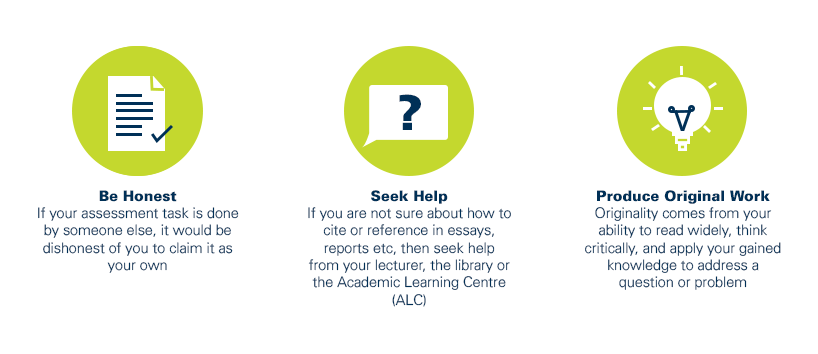
As a CQUniversity student you are expected to act honestly in all aspects of your academic work.
Any assessable work undertaken or submitted for review or assessment must be your own work. Assessable work is any type of work you do to meet the assessment requirements in the unit, including draft work submitted for review and feedback and final work to be assessed.
When you use the ideas, words or data of others in your assessment, you must thoroughly and clearly acknowledge the source of this information by using the correct referencing style for your unit. Using others’ work without proper acknowledgement may be considered a form of intellectual dishonesty.
Participating honestly, respectfully, responsibly, and fairly in your university study ensures the CQUniversity qualification you earn will be valued as a true indication of your individual academic achievement and will continue to receive the respect and recognition it deserves.
As a student, you are responsible for reading and following CQUniversity’s policies, including the Student Academic Integrity Policy and Procedure. This policy sets out CQUniversity’s expectations of you to act with integrity, examples of academic integrity breaches to avoid, the processes used to address alleged breaches of academic integrity, and potential penalties.
What is a breach of academic integrity?
A breach of academic integrity includes but is not limited to plagiarism, self-plagiarism, collusion, cheating, contract cheating, and academic misconduct. The Student Academic Integrity Policy and Procedure defines what these terms mean and gives examples.
Why is academic integrity important?
A breach of academic integrity may result in one or more penalties, including suspension or even expulsion from the University. It can also have negative implications for student visas and future enrolment at CQUniversity or elsewhere. Students who engage in contract cheating also risk being blackmailed by contract cheating services.
Where can I get assistance?
For academic advice and guidance, the Academic Learning Centre (ALC) can support you in becoming confident in completing assessments with integrity and of high standard.
What can you do to act with integrity?