Overview
This unit explores the sonographic assessment of normal and pathological superficial structures. You will apply knowledge of anatomy, physiology and embryology to conduct sonographic examinations of superficial structures in the laboratory setting as well as utilising simulated clinical scenarios and case studies to critically reflect on sonographic problems. Development of the knowledge, skills and attitudes required to perform an ultrasound examination of the thyroid will be assessed within a simulated environment.
Details
Pre-requisites or Co-requisites
Prerequisites MEDS11001 Fundamentals of Sonographic Practice and MEDS11002 Relational Anatomy and Image Recognition and Corequisite MEDS12001 Physics of Ultrasound
Important note: Students enrolled in a subsequent unit who failed their pre-requisite unit, should drop the subsequent unit before the census date or within 10 working days of Fail grade notification. Students who do not drop the unit in this timeframe cannot later drop the unit without academic and financial liability. See details in the Assessment Policy and Procedure (Higher Education Coursework).
Offerings For Term 1 - 2026
Attendance Requirements
All on-campus students are expected to attend scheduled classes - in some units, these classes are identified as a mandatory (pass/fail) component and attendance is compulsory. International students, on a student visa, must maintain a full time study load and meet both attendance and academic progress requirements in each study period (satisfactory attendance for International students is defined as maintaining at least an 80% attendance record).
Recommended Student Time Commitment
Each 6-credit Undergraduate unit at CQUniversity requires an overall time commitment of an average of 12.5 hours of study per week, making a total of 150 hours for the unit.
Class Timetable
Assessment Overview
Assessment Grading
This is a pass/fail (non-graded) unit. To pass the unit, you must pass all of the individual assessment tasks shown in the table above.
All University policies are available on the CQUniversity Policy site.
You may wish to view these policies:
- Grades and Results Policy
- Assessment Policy and Procedure (Higher Education Coursework)
- Review of Grade Procedure
- Student Academic Integrity Policy and Procedure
- Academic Progression Policy and Procedure
- Student Refund and Credit Balance Policy and Procedure
- Complaints Policy and Procedure
- Information and Communications Technology Acceptable Use Policy and Procedure
This list is not an exhaustive list of all University policies. The full list of University policies are available on the CQUniversity Policy site.
Feedback, Recommendations and Responses
Every unit is reviewed for enhancement each year. At the most recent review, the following staff and student feedback items were identified and recommendations were made.
Feedback from SUTE unit comments
Students felt the Moodle content was extensive and the layout could be improved and condensed
Consider condensing the information under sub-headings to make navigation simpler and content easier to find.
Feedback from SUTE unit comments
Some students were not satisfied with the time limit of the online test even though it was increased from prior year.
Continue with zoom tutorials using cases studies to demonstrate examples of online test questions. Consider stressing the importance of tutorial attendance to students in welcome and assessment videos.
Feedback from SUTE unit comments and Unit co-ordinator reflection
Students liked the extra labs added to the unit and the 30 minute appointment-style time limit to complete Assessment One
Keep Assessment One as an authentic style assessment and the extra lab practice for students
- Apply knowledge of anatomy, physiology and embryology of superficial structures to the sonographic examination.
- Differentiate the clinical appearance, sonographic appearance and aetiology of pathologies of superficial structures.
- Analyse clinical scenarios to provide a differential diagnosis and produce a sonographic report.
- Apply the practical skills and critical thinking necessary to perform a sonographic examination of the thyroid.
- Display professional behaviour, teamwork and communication skills and criteria to meet safe sonographic practice, the profession's Code of Conduct, and CQUniversity's graduate attributes.
The learning outcomes for this unit relate to the requirements of general sonography courses under the Australasian Sonography Accreditation Registry (ASAR), Standards for the Accreditation of Sonographer Courses (SASC):
Foundation Units of Competence 1-5
Critical Practice Units of Competence 12
Alignment of Assessment Tasks to Learning Outcomes
| Assessment Tasks | Learning Outcomes | ||||
|---|---|---|---|---|---|
| 1 | 2 | 3 | 4 | 5 | |
| 1 - Practical Assessment - 0% | |||||
| 2 - Online Quiz(zes) - 0% | |||||
| 3 - Online Test - 0% | |||||
| 4 - On-campus Activity - 0% | |||||
Alignment of Graduate Attributes to Learning Outcomes
| Graduate Attributes | Learning Outcomes | ||||
|---|---|---|---|---|---|
| 1 | 2 | 3 | 4 | 5 | |
| 1 - Communication | |||||
| 2 - Problem Solving | |||||
| 3 - Critical Thinking | |||||
| 4 - Information Literacy | |||||
| 5 - Team Work | |||||
| 6 - Information Technology Competence | |||||
| 7 - Cross Cultural Competence | |||||
| 8 - Ethical practice | |||||
| 9 - Social Innovation | |||||
| 10 - First Nations Knowledges | |||||
| 11 - Aboriginal and Torres Strait Islander Cultures | |||||
Textbooks
Textbook of Diagnostic Sonography
- Edition: 9th (2022)
- Authors: Hagen-Ansert
- Elsevier
- St Louis St Louis , Missouri , USA
- ISBN: 9780323826464
- Binding: Hardcover
IT Resources
- CQUniversity Student Email
- Internet
- Unit Website (Moodle)
- Access to CQ university campus (Sonography lab)
- Access to Phillips iSite (PACS) on-campus
All submissions for this unit must use the referencing style: Vancouver
For further information, see the Assessment Tasks.
j.wardle@cqu.edu.au
c.winnett@cqu.edu.au
Week 1
Begin Date: 09 Mar 2026Module/Topic
Topic:
Introduction to Superficial Structures
Sonography Lab:
Compulsory Lab- Thursday
Chapter
Hagen-Ansert SL, Textbook of Diagnostic Sonography (9th Ed) Part I: Foundations of Sonography, p 124-129
Hagen-Ansert (9th Ed) Part III: Superficial Structures, Ch 22, p 684-704
Events and Submissions/Topic
COMPULSORY Zoom tutorial
Held Wednesday 11th MARCH 2026 1 PM AEST / 2PM AEDT
(Other non-compulsory Zoom tutorials will be held on most Mondays through the term. Please see the unit Moodle site for this schedule)
Assessment 4 Part A - INDUCTION DOCUMENTS
Students will not be permitted entry to the sonography lab until both are correctly completed.
Due Tuesday 10th of MARCH 2026 12PM AEST/ 1PM AEDT
Week 2
Begin Date: 16 Mar 2026Module/Topic
Topic:
Thyroid/parathyroid and Post-op Thyroid
Sonography Lab:
Compulsory Lab- Thursday
Tutor Assisted Practice (TAP)- Friday
Chapter
Hagen-Ansert (9th Ed) Part III: Superficial Structures, Ch 22, p 684-704
Additional content will be provided via lectures and eReading list
Events and Submissions/Topic
Zoom tutorial
Monday 1 PM AEST / 2PM AEDT
Other non-compulsory Zoom tutorials will be held on most Mondays through the term. Please see the unit Moodle site for this schedule
Week 3
Begin Date: 23 Mar 2026Module/Topic
Topic:
Thyroid imaging-TIRADS
Sonography Lab:
Compulsory Lab-Thursday
TAP- Friday
Peer Assisted Practice (PAP)- Saturday
Chapter
Hagen-Ansert (9th Ed) Part III: Superficial Structures, Ch 22, p 704
Additional content will be provided via lectures and eReading list
Events and Submissions/Topic
Week 4
Begin Date: 30 Mar 2026Module/Topic
Topic:
Scanning Skills and Image Critique
Chapter
Content will be provided via lectures and eReading list
Events and Submissions/Topic
Assessment 2 - ONLINE QUIZZES
Quiz 1 opens TUESDAY 9AM AEST
Quiz 1 closes WEDNESDAY 5PM AEST
Week 5
Begin Date: 06 Apr 2026Module/Topic
Topic:
Salivary glands
Sonography Lab-
Compulsory Lab-Thursday
Chapter
Content will be provided via lectures and eReading list
Events and Submissions/Topic
Week 6
Begin Date: 13 Apr 2026Module/Topic
Topic: :
Anterior and Posterior Triangles of the Neck
Sonography Lab:
Compulsory lab-Thursday
TAP-Friday
PAP- Saturday
Chapter
Content will be provided via lectures and eReading list
Events and Submissions/Topic
Break Week
Begin Date: 20 Apr 2026Module/Topic
Sonography lab:
PAP- Friday
Chapter
Events and Submissions/Topic
Week 7
Begin Date: 27 Apr 2026Module/Topic
Topic:
Scrotum, Testes and Penis
Sonography Lab:
TAP- Friday
Chapter
Hagen-Ansert (9th Ed) Part III: Superficial Structures, Ch 23, p 709-730
Events and Submissions/Topic
Week 8
Begin Date: 04 May 2026Module/Topic
Topic:
Scanning skills and image critique
Sonography Lab:
Compulsory Lab- Thursday
TAP- Friday
Chapter
Content will be provided via lectures and eReading list
Events and Submissions/Topic
Assessment 2 - ONLINE QUIZZES
Quiz 2 opens TUESDAY 9AM AEST
Quiz 2 closes WEDNESDAY 5PM AEST
Week 9
Begin Date: 11 May 2026Module/Topic
Topic:
Superficial Lumps, foreign bodies, fistulas, tracts and sinuses
Sonography Lab:
Compulsory lab-Thursday Mock Assessment
TAP-Friday
Chapter
Content will be provided via lectures and eReading list
Events and Submissions/Topic
Week 10
Begin Date: 18 May 2026Module/Topic
Topic:
Eye and ultrasound guided interventional procedures
Sonography Lab:
TAP- Thursday
Chapter
Content will be provided via lectures and eReading list
Events and Submissions/Topic
Week 11
Begin Date: 25 May 2026Module/Topic
Topic:
Scanning Skills and image critique
Sonography Lab:
Compulsory Lab-Thursday Assessment 1 skills test assessment
PAP- Friday
Chapter
Content will be provided via lectures and eReading list
Events and Submissions/Topic
Assessment 1 - Practical skills test
All students are required on campus all day
Held THURSDAY 28TH MAY 2026 from 8.30AM local time
Week 12
Begin Date: 01 Jun 2026Module/Topic
Sonography Lab:
PAP-Thursday
Compulsory Lab-Friday Assessment 1 skills test assessment
Chapter
Events and Submissions/Topic
Assessment 3 - ONLINE TEST
Test opens TUESDAY 9AM AEST
Test closes WEDNESDAY 5PM AEST
Assessment 4 Part B&C - Reflection and Professional
Due FRIDAY 5TH JUNE 5PM AEST
Assessment 1 - Practical skills test
All students are required on campus all day
Held Friday 5th June 2026 from 8.30AM local time
Exam Week
Begin Date: 08 Jun 2026Module/Topic
Chapter
Events and Submissions/Topic
Vacation/Exam Week
Begin Date: 15 Jun 2026Module/Topic
Chapter
Events and Submissions/Topic
The unit coordinator for this unit is Jane Wardle. Jane is located in Brisbane can be reached at j.wardle@cqu.edu.au or by phone on 07 3023 4200. Please use your CQU student email for all correspondence and check your email regularly for updates. If you wish to arrange a phone or Zoom meeting, email Jane to organise a suitable time.
This unit is assessed on a pass/fail (non-graded) basis. In accordance with the Assessment Policy and Procedure (Higher Education Coursework), students who fail a single assessment in a pass/fail unit or a pass/fail component in a graded unit may be allowed an opportunity to re-attempt the assessment task if this is stated in the unit profile or otherwise approved in line with the policy. All written assessment items must be submitted accurately, in the correct format, and by the due date, as late penalties such as a 5% deduction do not apply to pass/fail assessment tasks. For further details, refer to the Assessment Policy and Procedure) and Grades and Results Procedure, available on the CQUni IMPortal.
Zoom tutorial sessions are held most Mondays during the term, except for Week 1, which has a compulsory tutorial on Wednesday, 11 March 2026 at 1:00 PM AEST. Details for tutorial times, dates, and topics are available on Moodle under the Virtual Classes tile. Peer-assisted and tutor-assisted practice sessions are scheduled throughout the term and are strongly recommended for success in practical
skills assessments.
If you are unable to attend or anticipate being late to a compulsory lab or assessment day, you must notify the unit coordinator and sonography lab staff (by phone or email) before the session starts. Absences for valid reasons require supporting documentation, and you should contact the unit coordinator to arrange make-up time for missed scanning practice. Compulsory labs missed without approval, or lateness, cannot be made up. Notify staff before scanning if you are injured or ill; if your condition could impact yourself or others, you will be sent home and must provide acceptable medical documentation for your absence.
Acceptable reasons for assessment adjustments include disability, medical or health-related conditions, hardship or trauma, compassionate circumstances, or unavoidable commitments, as outlined in the Assessment Policy and Procedure. If you cannot attend a practical skills assessment due to illness or injury and provide acceptable medical documentation, the unit coordinator will arrange an
alternative assessment time
1 Practical Assessment
In preparation for your future role as a sonographer, you will undertake simulation lab training to develop competency in performing sonographic examinations of superficial structures. For this assessment, you are required to complete a practical sonographic assessment of the thyroid, focusing on pre-scan, scanning, and post-scan skills, assessed using the Assessment of Readiness for Clinical (ARC) tool. The assessment consists of three components: professional (communication, infection control, consent, and patient care), technical (performing a modified thyroid protocol and acquiring diagnostic images), and clinical knowledge (identifying anatomical structures and verbalising technical elements in real time). All critical skills must be demonstrated accurately and consistently to pass, as outlined in the ARC and its appendix. You will have access to compulsory and non-compulsory lab sessions, demonstration videos, lectures, tutorials, and a mock test to support your learning. The entire practical exam must be completed within 30 minutes.
Note: the CQU 72-hour grace period for assessments does not apply to the Practical Skills Test
Level of Gen AI use allowed: Level 1: You must not use Gen Al at any point during the assessment. You must demonstrate your core skills and knowledge.
Practical Assessment will be assessed on-campus during the Compulsory labs Week 11 Thursday and Week 12 Friday
Returned via upload to Moodle
This is a PASS/FAIL assessment item.
To PASS this assessment, the professional, technical and clinical components must be graded as a pass against the marking criteria framework - refer to the ARC tool for specifications.
The professional 'critical' skills are the bolded items in the ARC tool and must be completed in order to pass.
The technical and clinical skills are separated into critical and non- critical skills. Critical skills must be demonstrated consistently throughout the assessment to pass. There is no limit of non critical errors that may be made and still pass this assessment, however if any of those errors result in a critical error due to severity, then they will count instead as a critical error.
Two attempts at this assessment will be offered. Students must pass at least one of these attempts to achieve an overall pass for this unit.
Additional information
Your grade (PASS/FAIL) will be allocated following consensus moderation. Please be aware that all practical skills assessments will be video recorded however these videos will not be released to students. Videos may be viewed by CQU sonography staff and tutors for the purposes of marking and moderation of assessments. It also may be required to be viewed by other CQU staff in the event of a student requesting a Review of Grade or Appeal of Grade.
- Apply knowledge of anatomy, physiology and embryology of superficial structures to the sonographic examination.
- Apply the practical skills and critical thinking necessary to perform a sonographic examination of the thyroid.
- Display professional behaviour, teamwork and communication skills and criteria to meet safe sonographic practice, the profession's Code of Conduct, and CQUniversity's graduate attributes.
2 Online Quiz(zes)
A strong understanding of anatomy and physiology, as well as the ability to correlate sonographic findings with clinical indications, is essential for sonographers to provide accurate diagnoses. This assessment consists of two online quizzes designed to test your knowledge of ultrasound of superficial parts.
Quiz 1 (Week 4) covers content from Weeks 1–3, and Quiz 2 (Week 8) covers content from Weeks 4–7. Each quiz contains 20 multiple choice questions, has a 20-minute time limit, and allows only one attempt. Quizzes are accessed via Moodle and cannot be paused or restarted once begun. To prepare, use lectures, tutorials, and practice quizzes. If your internet connection is unreliable, attempt the quizzes on campus and ensure you are in a quiet, organised space. In the event of a technical issue, take a screenshot or photo as evidence, contact TaSAC immediately, and notify the unit coordinator. Extension requests must be submitted via the Moodle Extension Request procedure with supporting documentation before the quiz closes; without an approved extension or documented technical issue, missed quizzes cannot be completed after closure.
Note: the CQU 72-hour grace period for assessments does not apply to online quiz 1 or online quiz 2.
Level of Gen AI use allowed: Level 1: You must not use Gen Al at any point during the assessment. You must demonstrate your core skills and knowledge.
Quiz 1 opens Tuesday 31/03/2026 at 9AM AEST/10AM AEDT and closes Wednesday 01/04/2026 at 5PM AEST/6PM AEDT. Quiz 2 opens Tuesday 05/05/2026 at 9AM AEST and closes Wednesday 06/05/2026 at 5PM AEST.
Students will receive their results once all students have completed the quiz.
This is a pass/fail assessment item.
In order for a student to achieve a pass mark in this assessment, the student must achieve a minimum score of 50% or higher averaged over both quizzes. Students must demonstrate a reasonable attempt to complete both quizzes within this assessment item by set due date and time. This assessment must be completed individually—collusion is considered academic misconduct.
- Apply knowledge of anatomy, physiology and embryology of superficial structures to the sonographic examination.
- Differentiate the clinical appearance, sonographic appearance and aetiology of pathologies of superficial structures.
3 Online Test
Accurately documenting and interpreting sonographic findings is a critical skill for sonographers. For this assessment, you will complete a short answer online test in Week 12, where you will be provided with sonographic images and videos from superficial structure ultrasound examinations. You will be required to interpret and describe the findings, demonstrating your ability to identify and
document pathology.
Test details:
• 10 short answer questions
• 25-minute time limit
• Only one attempt; the test cannot be paused or restarted once begun
If your internet connection is unreliable, attempt the test on campus and ensure you are in a quiet, organised space. In the event of a technical issue, take a screenshot or photo as evidence, contact TaSAC immediately, and notify the unit coordinator. This assessment must be completed individually—collusion is considered academic misconduct. Extension requests must be submitted via the Moodle
Extension Request procedure with supporting documentation before the test closes; without an approved extension or documented technical issue, missed tests cannot be completed after closure.
Note: the CQU 72-hour grace period for assessments does not apply to this online test.
Level of Gen AI use allowed: Level 1: You must not use Gen Al at any point during the assessment. You must demonstrate your core skills and knowledge.
Opens Week 12 Tuesday 02/06/2026 9AM AEST and closes Wednesday 03/06/2026 at 5PM AEST
Results available on Moodle
This is a PASS/FAIL assessment item.
To achieve a pass mark in this assessment, the student must achieve a minimum score of 50% in the online test.
Students must demonstrate a reasonable attempt to complete this assessment item by the set due date and time. The online test short answer questions will be marked by the Unit Coordinator. This is an open book test, you can consult your notes, lecture slides, textbooks, and Moodle page. This assessment is to be undertaken as an individual and is not approved as group work.
- Apply knowledge of anatomy, physiology and embryology of superficial structures to the sonographic examination.
- Differentiate the clinical appearance, sonographic appearance and aetiology of pathologies of superficial structures.
- Analyse clinical scenarios to provide a differential diagnosis and produce a sonographic report.
4 On-campus Activity
This is a pass/fail assessment item.
The purpose of this assessment is to prepare you for the professionalism and documentation responsibilities on clinical placement, as well as develop self-reflection skills by setting weekly goals and following-up on your progress. When working clinically, patients and physicians rely on quick, efficient, and complete documentation to issue treatment. Failure to complete paperwork correctly in the clinical environment may have dire consequences to patient management. Professional behaviour encompasses these and other components such as communication, presentation, responsibility and ethics.
PART A: Induction
This assessment will require you to complete the documentation in your Lab Manual and within the Unit Introduction tile on the Moodle site:
- Workplace Health and Safety Induction
- Lab Agreement
- Consent Form - Sonographic Examination for Teaching Purposes
- Compulsory tutorial
Uploaded documentation is in pdf format.
Please ensure your SURNAME, first name, student number, and name of what you are uploading is used in that order in the title of the document, separated by either underscores or single spaces. Any other order variation or information is incorrect so please take note of this:
Wardle_Jane_0123456_lab_agreement.pdf
OR
Wardle Jane 0123456 lab agreement.pdf
To simulate real clinical environments where correct documentation is of critical importance, non-completed or incorrectly completed paperwork will be returned to students with ONE opportunity provided to correct the error. As this is a pass/fail assessment item, repeated errors may result in a fail of the assessment item.
The compulsory tutorial covers requirements for the Professional Behaviour Assessment (Assessment 4), as well as important induction and term information. It is compulsory that all students attend on WEDNESDAY 11th MARCH 2026 1PM AEST / 2PM AEDT
PART B: Reflection
Reflective practice is a critical component in the realm of medical sonography, defined as the process of critically analysing one’s experiences to inform and enhance future clinical actions. This approach not only fosters a deeper understanding of one’s professional experiences but also encourages continuous improvement in practice. Within the dynamic field of medical sonography, where technology and techniques are continually evolving, reflective practice becomes essential for practitioners to adapt and thrive.
Engaging in reflective practice promotes professional growth by cultivating self-awareness and encouraging practitioners to examine their biases and strengths. It is through this critical self-analysis that sonographers can identify areas for improvement, thereby enhancing their clinical skills and decision-making capabilities. Moreover, reflective practice nurtures an environment of lifelong learning, empowering practitioners to remain adaptable in a field characterized by rapid advancements and changing patient needs. Feedback is a vital addition to the reflective process. Feedback is a dynamic, co-constructive interaction in a safe and mutually respectful relationship. Its purpose is to challenge your ways of thinking, acting, or being to support your growth as a sonographer. You will be offered feedback from tutors and peers and this should be considered while reflecting on your progress.
From this, you are required to complete weekly self-reflection based on your performance in the sonography labs this term.
Note: the CQU 72-hour grace period for assessments does not apply any part of this assessment.
Level of Gen AI use allowed: Level 1: You must not use Gen Al for any part of the assessment. You must demonstrate your core skills and knowledge.
PART C: Professional Behaviour Assessment
The Medical Sonography Professionalism Assessment at CQU is designed to ensure students develop and demonstrate the high standards of professional behaviour expected in clinical environments, both during their studies and as future graduate sonographers. Students are required to treat each lab session as a work shift, exhibiting professionalism towards colleagues, staff, patients, the environment, and equipment, in line with the Professional Behaviour Assessment (PBA) description and relevant codes of conduct, including the Lab Manual, ASAR, and CQU Codes of Conduct, all available on Moodle. The assessment is based on attendance and application in labs, with behaviour monitored from week 4 and marked against clear criteria; students may receive up to three Lapses in Professionalism (LiPs) without penalty, but a fourth results in a fail. LiPs are documented with written feedback, and students can discuss these with the unit coordinator. Reports of unprofessional behaviour from classmates not witnessed by staff result in an unofficial warning and documented feedback. There is no student submission required, and understanding the rationale and importance of these standards is essential, as lapses in professionalism can have significant academic and professional consequences.
There is no student submission for this assessment.
Part A due Tuesday 11th MARCH 2026 at 5PM AEST/6PM AEDT (except compulsory tutorial). Part B due 12pm the day after each compulsory lab with the final submission due Friday 5th JUNE 2026 at 5PM AEST. Part C- No student submission required.
10 working days after submission date.
This is a pass/fail assessment task in a pass/fail unit. A fail grade for any component of a pass/fail assessment task will result in a fail grade for the assessment task, and subsequently the entire unit.
To pass Part A and B you must:
- complete all paperwork accurately
- save and upload in the format specified including document name
- submit by the due date and time specified
Documentation in the clinical environment must be correctly issued, otherwise there can be dire consequences for patient and legal ramifications for the sonographer. Hence, in the lab, non-completed or incorrectly completed paperwork will be returned to students, with ONE opportunity provided to correct the error. Repeated errors may incur a fail of the assessment item due to Professional Behaviour Assessment requirements
To pass Part C you must:
- receive no more than 3 LiPs through out the term in relation to lab activities. LiPs will begin to accrue from week 4 only. Instances prior to week 3 will receive written feedback.
The LiP system is designed to provide a warning and feedback system to students when they exhibit unprofessional behaviour, and hence up to three LiPs (official warnings) can be issued within the unit without adverse consequence. A fourth LiP however will result in the assessment being graded as a fail.
- Apply the practical skills and critical thinking necessary to perform a sonographic examination of the thyroid.
- Display professional behaviour, teamwork and communication skills and criteria to meet safe sonographic practice, the profession's Code of Conduct, and CQUniversity's graduate attributes.
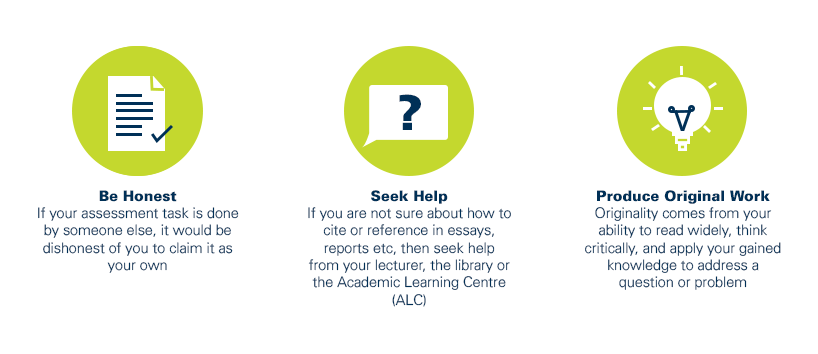
As a CQUniversity student you are expected to act honestly in all aspects of your academic work.
Any assessable work undertaken or submitted for review or assessment must be your own work. Assessable work is any type of work you do to meet the assessment requirements in the unit, including draft work submitted for review and feedback and final work to be assessed.
When you use the ideas, words or data of others in your assessment, you must thoroughly and clearly acknowledge the source of this information by using the correct referencing style for your unit. Using others’ work without proper acknowledgement may be considered a form of intellectual dishonesty.
Participating honestly, respectfully, responsibly, and fairly in your university study ensures the CQUniversity qualification you earn will be valued as a true indication of your individual academic achievement and will continue to receive the respect and recognition it deserves.
As a student, you are responsible for reading and following CQUniversity’s policies, including the Student Academic Integrity Policy and Procedure. This policy sets out CQUniversity’s expectations of you to act with integrity, examples of academic integrity breaches to avoid, the processes used to address alleged breaches of academic integrity, and potential penalties.
What is a breach of academic integrity?
A breach of academic integrity includes but is not limited to plagiarism, self-plagiarism, collusion, cheating, contract cheating, and academic misconduct. The Student Academic Integrity Policy and Procedure defines what these terms mean and gives examples.
Why is academic integrity important?
A breach of academic integrity may result in one or more penalties, including suspension or even expulsion from the University. It can also have negative implications for student visas and future enrolment at CQUniversity or elsewhere. Students who engage in contract cheating also risk being blackmailed by contract cheating services.
Where can I get assistance?
For academic advice and guidance, the Academic Learning Centre (ALC) can support you in becoming confident in completing assessments with integrity and of high standard.
What can you do to act with integrity?