Overview
This unit will introduce you to vascular sonography. In this unit you will explore the sonographic assessment of normal and pathological vascular cases. You will apply knowledge of vascular anatomy and physiology, and the physical properties of Doppler ultrasound to clinical scenarios and case studies to critically reflect on sonographic problems. Engaging in this sonographic decision-making process will culminate in the creation of sonographer’s interpretive reports, including a provisional diagnosis.
Details
Pre-requisites or Co-requisites
Prerequisites: MEDS12004 Sonographic Skills Development 1
Important note: Students enrolled in a subsequent unit who failed their pre-requisite unit, should drop the subsequent unit before the census date or within 10 working days of Fail grade notification. Students who do not drop the unit in this timeframe cannot later drop the unit without academic and financial liability. See details in the Assessment Policy and Procedure (Higher Education Coursework).
Offerings For Term 3 - 2026
Attendance Requirements
All on-campus students are expected to attend scheduled classes - in some units, these classes are identified as a mandatory (pass/fail) component and attendance is compulsory. International students, on a student visa, must maintain a full time study load and meet both attendance and academic progress requirements in each study period (satisfactory attendance for International students is defined as maintaining at least an 80% attendance record).
Recommended Student Time Commitment
Each 6-credit Undergraduate unit at CQUniversity requires an overall time commitment of an average of 12.5 hours of study per week, making a total of 150 hours for the unit.
Class Timetable
Assessment Overview
| Assessment Task | Part Weighting (% of assessment) |
Assessment Security Level | Gen AI Guidance Levels |
|---|---|---|---|
| 1. Oral Assessment (40% of unit ) | |||
| Oral Assessment (Oral Examination) | 100% of 40% | High | No Gen AI Use |
| 2. In-class Test (60% of unit ) | |||
| In-class Test (In-class Test(s)) | 100% of 60% | High | No Gen AI Use |
Assessment Grading
This is a graded unit: your overall grade will be calculated from the marks or grades for each assessment task, based on the relative weightings shown in the table above. You must obtain an overall mark for the unit of at least 50%, or an overall grade of 'pass' in order to pass the unit. If any 'pass/fail' tasks are shown in the table above they must also be completed successfully ('pass' grade). You must also meet any minimum mark requirements specified for a particular assessment task, as detailed in the 'assessment task' section (note that in some instances, the minimum mark for a task may be greater than 50%). Consult the University's Grades and Results Policy for more details of interim results and final grades.
All University policies are available on the CQUniversity Policy site.
You may wish to view these policies:
- Grades and Results Policy
- Assessment Policy and Procedure (Higher Education Coursework)
- Review of Grade Procedure
- Student Academic Integrity Policy and Procedure
- Academic Progression Policy and Procedure
- Student Refund and Credit Balance Policy and Procedure
- Complaints Policy and Procedure
- Information and Communications Technology Acceptable Use Policy and Procedure
This list is not an exhaustive list of all University policies. The full list of University policies are available on the CQUniversity Policy site.
Feedback, Recommendations and Responses
Every unit is reviewed for enhancement each year. At the most recent review, the following staff and student feedback items were identified and recommendations were made.
Feedback from UC reflection, student feedback
Some students struggled to maintain their studies during their 5-week placement block which resulted in them struggling to catch up before quizzes and tests.
The unit structure will be modified for next year's delivery to condense the content and allow content-free weeks for when students are on their five-week placement. Content weeks will include an oral examination, to be held during the first or second half of the term, depending on when students are on placement. This will significantly reduce student workload while on placement, allowing them to structure their learning more easily.
Feedback from UC reflection, student feedback
Some students expressed a desire for more practise tests throughout term.
With the newly condensed delivery of the unit, the provision of additional practise tests will be explored.
- Evaluate and justify the application of Doppler physics principles and haemodynamic artefact recognition to optimise diagnostic accuracy, patient outcomes, and safety in clinical practice.
- Apply knowledge of the anatomy, physiology, and pathological processes of the vascular system to sonographic examinations and sonographic image appearances.
- Describe sonographic techniques and protocols appropriate to vascular ultrasound.
- Analyse normal, anomalous, and abnormal flow haemodynamics and laboratory findings to provide differential diagnoses and produce a provisional written or verbal sonographic report.
The learning outcomes for this unit relate to the requirements of general sonography courses under the Australasian Sonography Accreditation Registry (ASAR), Standards for the Accreditation of Sonographer Courses (SASC):
Foundation Units of Competence 1-5
Critical Practice Units of Competence 13
Alignment of Assessment Tasks to Learning Outcomes
| Assessment Tasks | Learning Outcomes | |||
|---|---|---|---|---|
| 1 | 2 | 3 | 4 | |
|
1.
Assessment 1
(40% of unit )
Oral Examination
|
||||
|
2.
Assessment 2
(60% of unit )
In-class Test(s)
|
||||
Alignment of Graduate Attributes to Learning Outcomes
| Graduate Attributes | Learning Outcomes | |||
|---|---|---|---|---|
| 1 | 2 | 3 | 4 | |
| 1 - Communication | ||||
| 2 - Problem Solving | ||||
| 3 - Critical Thinking | ||||
| 4 - Information Literacy | ||||
| 5 - Team Work | ||||
| 6 - Information Technology Competence | ||||
| 7 - Cross Cultural Competence | ||||
| 8 - Ethical practice | ||||
| 9 - Social Innovation | ||||
| 10 - First Nations Knowledges | ||||
Textbooks
Clinical Doppler Ultrasound
- Edition: 3rd edn (2014)
- Authors: Pozniak, M & Allan, P
- Churchill Livingstone Elsevier
- London London , UK
- ISBN: 978-0-7020-5015-2
- Binding: Hardcover
Vascular Ultrasound How, Why And When
- 3rd edition (2009)
- Authors: Thrush, A & Hartshorne, T
- Churchill Livingstone Elsevier
- London London , UK
- ISBN: 978-0-443-06918-5
- Binding: Hardcover
IT Resources
- CQUniversity Student Email
- Internet
- Unit Website (Moodle)
- Zoom Collaborate
- Webcam and microphone—required for assessment
All submissions for this unit must use the referencing style: Vancouver
For further information, see the Assessment Tasks.
c.tinetti@cqu.edu.au
Week 1
Begin Date: 09 Nov 2026Module/Topic
Doppler physics and haemodynamic principles
Chapter
Clinical Doppler Ultrasound by Pozniak & Allan: Chapters 1 and 2, pp. 1-38
Vascular Ultrasound, How, Why and When by Thrush and Hartshorne: Chapters 3, 4, 5, 6 and 7, pp. 23-86
Events and Submissions/Topic
Zoom tutorial Wednesday 3pm AEST / 4pm AEDT
Week 2
Begin Date: 16 Nov 2026Module/Topic
Abdominal aorta, IVC, and hepatoportal circulation
Chapter
Pozniak & Allan: Chapter 6, pp. 122-134; Chapter 8, pp. 148-192
Thrush and Hartshorne: Chapter 11, pp. 155-174
Events and Submissions/Topic
Zoom tutorial Wednesday 3pm AEST / 4pm AEDT
Week 3
Begin Date: 23 Nov 2026Module/Topic
Cerebral arterial system
Chapter
Pozniak & Allan: Chapter 3, pp. 39-70
Thrush and Hartshorne: Chapter 8, pp. 87-116
Events and Submissions/Topic
Zoom tutorial Wednesday 3pm AEST / 4pm AEDT
Week 4
Begin Date: 30 Nov 2026Module/Topic
Peripheral arterial systems
Chapter
Pozniak & Allan: Chapter 4, pp. 71-93
Thrush and Hartshorne: Chapter 9, pp. 117-142; Chapter 10, pp. 143-154
Events and Submissions/Topic
Zoom tutorial Wednesday 3pm AEST / 4pm AEDT
Assessment 1 Oral Assessment: Group 1 assessments held this week
Week 5
Begin Date: 07 Dec 2026Module/Topic
Renal Vasculature; haemodialysis access
Chapter
Pozniak & Allan: Chapter 5, pp. 114-120; Chapter 9, pp. 193-213
Thrush and Hartshorne: Chapter 12, pp. 175-187; Chapter 13, pp. 199-232
Events and Submissions/Topic
Zoom tutorial Wednesday 3pm AEST / 4pm AEDT
Week 6
Begin Date: 14 Dec 2026Module/Topic
Peripheral venous systems
Chapter
Pozniak & Allan: Chapter 5, pp. 94-120
Thrush and Hartshorne: Chapter 13 pp. 193-215 and Chapter 14: pp. 199-253
Events and Submissions/Topic
Zoom tutorial Wednesday 3pm AEST / 4pm AEDT
Break Weeks
Begin Date: 21 Dec 2026Module/Topic
Have a safe break!
Chapter
Events and Submissions/Topic
Week 7
Begin Date: 04 Jan 2027Module/Topic
Abdominal aorta, IVC, and hepatoportal circulation (repeat)
Chapter
Events and Submissions/Topic
Zoom Q&A session Wednesday 3pm AEST / 4pm AEDT—students are advised to watch the Week 2 tutorial recording for completeness
Week 8
Begin Date: 11 Jan 2027Module/Topic
Cerebral arterial system (repeat)
Chapter
Events and Submissions/Topic
Zoom Q&A session Wednesday 3pm AEST / 4pm AEDT—students are advised to watch the Week 3 tutorial recording for completeness
Week 9
Begin Date: 18 Jan 2027Module/Topic
Peripheral arterial systems (repeat)
Chapter
Events and Submissions/Topic
Zoom Q&A session Wednesday 3pm AEST / 4pm AEDT—students are advised to watch the Week 4 tutorial recording for completeness
Assessment 1 Oral Assessment: Group 2 assessments held this week
Week 10
Begin Date: 25 Jan 2027Module/Topic
Renal Vasculature; haemodialysis access (repeat)
Chapter
Events and Submissions/Topic
Zoom Q&A session Wednesday 3pm AEST / 4pm AEDT—students are advised to watch the Week 5 tutorial recording for completeness
Week 11
Begin Date: 01 Feb 2027Module/Topic
Peripheral venous systems (repeat)
Chapter
Events and Submissions/Topic
Zoom Q&A session Wednesday 3pm AEST / 4pm AEDT—students are advised to watch the Week 6 tutorial recording for completeness
Week 12 / Exam
Begin Date: 08 Feb 2027Module/Topic
Review Week
Chapter
Events and Submissions/Topic
Zoom Q&A session Wednesday 3pm AEST / 4pm AEDT
Exam Week
Begin Date: 15 Feb 2027Module/Topic
Chapter
Events and Submissions/Topic
Zoom Q&A session Tuesday 3pm AEST / 4pm AEDT
Assessment 2 In-class Test: Tuesday; time and location to be confirmed
In-class Test Due: Exam Week Tuesday (16 Feb 2027) 11:45 pm AEST
Unit Coordinator Information:
Your unit coordinator for 2026 is Dr. Celia Tinetti. Celia is based on the Melbourne campus and can be reached via email: c.tinetti@cqu.edu.au or telephone: 03 9616 0528. Please note, all staff emails end in ".cqu.edu.au". Celia also has a student email account that ends in "@cqumail.com"—emails sent to this email will be missed as this account is not monitored.
Unit Details:
MEDS13008 Vascular Sonography is a 6-credit-point unit and is a prerequisite for MEDS13011 Sonographic Skills Development 2 (SSD2), which is run in term 1 of third year. This unit has been designed to ensure your learning is aligned with what is required of you in SSD2, where you will be performing actual ultrasound examinations of the lower extremity veins (DVT studies) and carotid arteries.
This year, the unit has had a major structural change in response to student feedback and reflection from teaching staff, with the restructure aligning content with when students are not on clinical placement. The unit has 6 weeks of condensed content delivered twice. Students in Block 1 (of placement) will be in Group 2 of this unit, and vice versa. The Assessment 1 Oral assessments will be held halfway through the content weeks for each group (Week 4 for Group 1 and Week 9 for Group 2), with all students completing the Assessment 2 In-class test on campus in Week 13.
While there is no vascular scanning this term, so you won't be in the 'driver's seat', you will be in the 'passenger seat', looking at the vascular systems of the whole body, including normal and pathological images and surveys of the arterial and venous systems. This early exposure to what you may observe when scanning will help prepare you for next term, as well as when you are on placement. The teachings of MEDS13008 Vascular Sonography will be regularly revisited throughout your studies and your knowledge will be relied upon to assist in you in passing SSD2 practical assessments. As you progress through your clinical units, you will also benefit from revising content from this unit as a part of your critical thinking skills.
I encourage you to carefully study the unit profile and to be active in the unit online discussion forums. It is recommended that you commit around 20 hours of study for each of the six allocated content weeks with another 30 hours of revision before the final in-class test—a total of 150 study hours upon completion of this unit. This unit is another where you will need to incorporate information from previous units, in particular MEDS11002 Relational Anatomy and Image Recognition and MEDS12001 Physics of Ultrasound. If your anatomy, image recognition, and physics recollection is a bit hazy, please do yourself a huge favour and refresh this before and throughout the unit—it really will help!
Zoom Tutorial Sessions:
Zoom tutorial sessions will be conducted throughout the term—please see Virtual Classes tile on Moodle for exact dates and times. Video recordings and chat conversations are uploaded following the tutorial so that students who did not attend can follow along. While every attempt is made to record tutorials, technical mishaps may prevent tutorials from being uploaded for later viewing, so attendance in real-time is highly recommended. Case study scenarios and sonographic image interpretation (both normal and pathological) will be used to teach correct sonographer worksheet completion and reporting of findings. Tutorial material may be included in any of the assessment components.
1. Oral Assessment ( 40% of unit )
Oral Examination
The purpose of the oral assessment is to assess your understanding of content from Week 1. You will be required to demonstrate an understanding of Doppler and haemodynamic principles and application of these when interpreting sonographic Doppler images of arteries and veins. You will also be required to identify the cause of artefacts on duplex Doppler images and explain both how this can affect the patient results and how to correct these.
Oral assessments will be held via Zoom. These are individual sessions only; you are required to be alone during the assessment and may be asked to provide evidence of this with your camera in real time. You will be required to have your camera and microphone on at all times, have your face clearly visible, and answer questions unassisted. All oral assessments will be recorded. Examples of oral assessments are available on the unit Moodle page.
The 72-hour grace period does not apply to this assessment item.
The assessment will take around 20-30 minutes and once started, cannot be paused or restarted, so please ensure you are prepared beforehand. If you are unwell, please let the unit coordinator know before your oral assessment begins.
This assessment task is to be undertaken as an individual. As per the Student Academic Integrity Policy and Procedure document (available on the unit Moodle site), section 3.13, student academic misconduct includes, but is not limited to: collision, cheating, and contract cheating, including file sharing. Examples of each of these are found within the document in sections 3.17 through to and including 3.21. Cheating and colluding with other students on non-group work tasks is considered academic misconduct and will be reported to the Academic Integrity Unit.
Students are permitted to use Generative AI for this assessment in the following ways:
Level 1 No AI—You must not use AI at any point during the assessment. You must demonstrate your core skills and knowledge.
Oral assessments will be scheduled in Week 4 (Group 1) or Week 9 (Group 2).
Results will be released once all students within the group have completed the assessment. Feedback documents will be released once all students have completed the assessment.
During the assessment, you will be shown sonographic images and interactive videos. You will be required to adjust settings and indicators, and answer specific questions related to these. This may include being asked to identify the presence or absence of artefacts, how specific artefacts may affect the patient’s results, and how this could be corrected
This assessment makes up 40% of the unit total and has a pass mark of 50%. In the event of the pass mark not being achieved, a supplementary assessment (SA) may be available if all criteria are met according to the Assessment Policy and Procedure (Higher Education Coursework; available on the unit Moodle page). All SAs for this assessment item will include content from week 1 and will be held after Certification of Grades.
No submission method provided.
- Evaluate and justify the application of Doppler physics principles and haemodynamic artefact recognition to optimise diagnostic accuracy, patient outcomes, and safety in clinical practice.
- Apply knowledge of the anatomy, physiology, and pathological processes of the vascular system to sonographic examinations and sonographic image appearances.
- Describe sonographic techniques and protocols appropriate to vascular ultrasound.
2. In-class Test ( 60% of unit )
In-class Test(s)
In this on campus, supervised test, you will be demonstrating your critical thinking skills to answer questions. This may include:
- using information from clinical and sonographic image presentations to arrive at diagnoses;
- using a diagnosis and working backwards to describe the expected sonographic presentation;
- other combinations of clinical presentation, laboratory data, sonographic presentation, and diagnoses; and
- extending the sonography examination if appropriate.
To do this, you will evaluate clinical case studies, images, and clinical presentation information. Questions will be in the format of short answer, medium length answer, and various types of multiple-choice questions (MCQs). Questions and images may include content from weeks 2 to 6 inclusive.
The 72-hour grace period does not apply to this assessment item.
This 2-hour on campus, supervised test must be completed on your campus of enrolment during Week 13—computer lab allocations will be available in week 12. No late submissions are permitted after the test has closed, so please arrive 15 minutes early to your assigned computer lab to prepare and ensure you receive the full amount of available time to complete the test. At the test closing time, all attempts will be automatically submitted. You are allowed ONE attempt at the online test and once started, the test cannot be paused or restarted, so please ensure you are prepared beforehand. If you are sick or unable to complete the assessment task before the end of the test due to exceptional circumstances (see policy on Moodle page), please contact the unit coordinator or notify your room supervisor before the end of the test. Note: Students who are on placement at the time of the test may request to have their in-class test deferred, to be rescheduled by the unit coordinator.
This assessment task is to be undertaken as an individual. As per the Student Academic Integrity Policy and Procedure document (available on the unit Moodle site), section 3.13, student academic misconduct includes, but is not limited to: collision, cheating, and contract cheating, including file sharing. Examples of each of these are found within the document in sections 3.17 through to and including 3.21. Cheating and colluding with other students on non-group work tasks is considered academic misconduct and will be reported to the Academic Integrity Unit.
Students are permitted to use Generative AI for this assessment in the following ways:
Level 1 No AI—You must not use AI at any point during the assessment. You must demonstrate your core skills and knowledge.
Exam Week Tuesday (16 Feb 2027) 11:45 pm AEST
Information regarding the time of in-class test as well as on campus computer lab allocations will be provided to students once known.
Results will be released within 2 weeks or once all students have completed the test, whichever is the latter.
You will be assessed on your critical thinking ability by evaluating clinical information including sonographic images, clinical presentation information, sonographic findings, and how to extend your sonography examination. Answers to non-MCQ questions are required to align with content within this unit, including but not limited to using the same terminology used in lectures, tutorials, and on the unit Moodle page. Answers require critical thinking and may include:
- explaining what has been demonstrated in sonographic images using appropriate terminology, including anatomical features, differential diagnoses or a provisional diagnosis, and how to extend the ultrasound examination; and
- working backward to provide possible clinical presentations of patients with those specific images.
This assessment makes up 60% of the unit total and has a pass mark of 50%. In the event of the pass mark not being achieved, a supplementary assessment (SA) may be available if all criteria are met according to the Assessment Policy and Procedure (Higher Education Coursework; available on the unit Moodle page). All SAs for this assessment item will include content from weeks 2 to 6 inclusive (equivalent to weeks 7 to 11 for Group 2 students) and will be held after Certification of Grades.
- Apply knowledge of the anatomy, physiology, and pathological processes of the vascular system to sonographic examinations and sonographic image appearances.
- Describe sonographic techniques and protocols appropriate to vascular ultrasound.
- Analyse normal, anomalous, and abnormal flow haemodynamics and laboratory findings to provide differential diagnoses and produce a provisional written or verbal sonographic report.
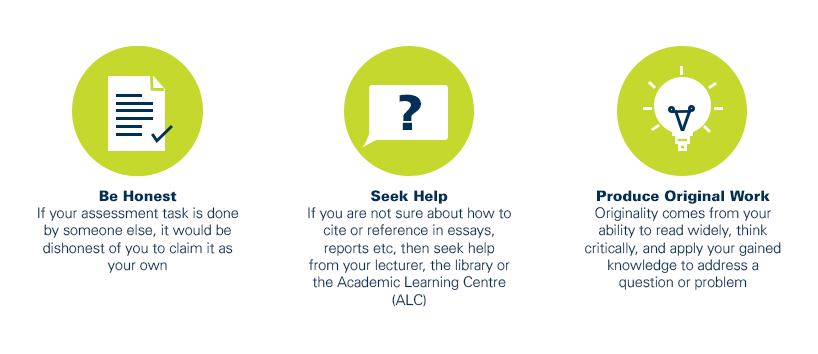
As a CQUniversity student you are expected to act honestly in all aspects of your academic work.
Any assessable work undertaken or submitted for review or assessment must be your own work. Assessable work is any type of work you do to meet the assessment requirements in the unit, including draft work submitted for review and feedback and final work to be assessed.
When you use the ideas, words or data of others in your assessment, you must thoroughly and clearly acknowledge the source of this information by using the correct referencing style for your unit. Using others’ work without proper acknowledgement may be considered a form of intellectual dishonesty.
Participating honestly, respectfully, responsibly, and fairly in your university study ensures the CQUniversity qualification you earn will be valued as a true indication of your individual academic achievement and will continue to receive the respect and recognition it deserves.
As a student, you are responsible for reading and following CQUniversity’s policies, including the Student Academic Integrity Policy and Procedure. This policy sets out CQUniversity’s expectations of you to act with integrity, examples of academic integrity breaches to avoid, the processes used to address alleged breaches of academic integrity, and potential penalties.
What is a breach of academic integrity?
A breach of academic integrity includes but is not limited to plagiarism, self-plagiarism, collusion, cheating, contract cheating, and academic misconduct. The Student Academic Integrity Policy and Procedure defines what these terms mean and gives examples.
Why is academic integrity important?
A breach of academic integrity may result in one or more penalties, including suspension or even expulsion from the University. It can also have negative implications for student visas and future enrolment at CQUniversity or elsewhere. Students who engage in contract cheating also risk being blackmailed by contract cheating services.
Where can I get assistance?
For academic advice and guidance, the Academic Learning Centre (ALC) can support you in becoming confident in completing assessments with integrity and of high standard.
What can you do to act with integrity?