Overview
This unit advances your study of obstetric ultrasound from MEDS12006 Gynae + Early Obs Sonography and MEDS13001 12-24 Week Obs Sonography to explore the sonographic assessment of normal and pathological third trimester obstetric cases. You will study the sonographic appearance, scanning techniques, management and pathological complications associated with third trimester scans as well as become familiar with investigations and interventions relevant to the management of post partum patients and prenatal anomalies of the fetus. You will also investigate sonographic studies relating to a paediatric patient. Common paediatric anomalies as well as inherent congenital diseases will be reviewed to include their sonographic appearance, safe scanning techniques, prognosis and treatment. Clinical scenarios/case studies are used to engage you in the sonographic decision-making process for both the third trimester scan and the paediatric patient.
Details
Pre-requisites or Co-requisites
Pre-requisite: MEDS13001 12-24 Week Obs Sonography and MEDS12007 Medical Sonography Clinical Unit 1
Important note: Students enrolled in a subsequent unit who failed their pre-requisite unit, should drop the subsequent unit before the census date or within 10 working days of Fail grade notification. Students who do not drop the unit in this timeframe cannot later drop the unit without academic and financial liability. See details in the Assessment Policy and Procedure (Higher Education Coursework).
Offerings For Term 2 - 2026
Attendance Requirements
All on-campus students are expected to attend scheduled classes - in some units, these classes are identified as a mandatory (pass/fail) component and attendance is compulsory. International students, on a student visa, must maintain a full time study load and meet both attendance and academic progress requirements in each study period (satisfactory attendance for International students is defined as maintaining at least an 80% attendance record).
Recommended Student Time Commitment
Each 6-credit Undergraduate unit at CQUniversity requires an overall time commitment of an average of 12.5 hours of study per week, making a total of 150 hours for the unit.
Class Timetable
Assessment Overview
Assessment Grading
This is a graded unit: your overall grade will be calculated from the marks or grades for each assessment task, based on the relative weightings shown in the table above. You must obtain an overall mark for the unit of at least 50%, or an overall grade of 'pass' in order to pass the unit. If any 'pass/fail' tasks are shown in the table above they must also be completed successfully ('pass' grade). You must also meet any minimum mark requirements specified for a particular assessment task, as detailed in the 'assessment task' section (note that in some instances, the minimum mark for a task may be greater than 50%). Consult the University's Grades and Results Policy for more details of interim results and final grades.
All University policies are available on the CQUniversity Policy site.
You may wish to view these policies:
- Grades and Results Policy
- Assessment Policy and Procedure (Higher Education Coursework)
- Review of Grade Procedure
- Student Academic Integrity Policy and Procedure
- Academic Progression Policy and Procedure
- Student Refund and Credit Balance Policy and Procedure
- Complaints Policy and Procedure
- Information and Communications Technology Acceptable Use Policy and Procedure
This list is not an exhaustive list of all University policies. The full list of University policies are available on the CQUniversity Policy site.
Feedback, Recommendations and Responses
Every unit is reviewed for enhancement each year. At the most recent review, the following staff and student feedback items were identified and recommendations were made.
Feedback from SUTE data
Students suggested the lectures on the paediatric head had too much information and needed to be condensed as the topic is difficult to follow.
Review the paediatric head lectures and breaking them down into smaller lectures.
Feedback from SUTE data and UC reflection
Students found it difficult to manage the tuorial time due to it immediately preceeding another unit's tutorial.
Revise tutorial timetabling in conjunction with the other unit co-ordinator to reduce conflicts.
- Describe safe ultrasound assessment of the fetus in late pregnancy, maternal post partum pelvis and the paediatric patient
- Differentiate the aetiology, ultrasound appearance and Doppler haemodynamics of abnormalities in third trimester pregnancies and post partum patients
- Analyse normal and abnormal paediatric ultrasound findings with reference to anatomy, clinical presentation, sonographic appearance, and aetiology
- Critically evaluate and analyse clinical scenarios to communicate a differential diagnosis which includes ethical and management considerations.
The learning outcomes for this unit relate to the requirements of general sonography courses under the Australasian Sonography Accreditation Registry (ASAR), Standards for the Accreditation of Sonographer Courses (SASC):
Foundation Units of Competence 1-5
Critical Practice Units of Competence 10
Alignment of Assessment Tasks to Learning Outcomes
| Assessment Tasks | Learning Outcomes | |||
|---|---|---|---|---|
| 1 | 2 | 3 | 4 | |
| 1 - Presentation and Written Assessment - 40% | ||||
| 2 - Online Test - 60% | ||||
Alignment of Graduate Attributes to Learning Outcomes
| Graduate Attributes | Learning Outcomes | |||
|---|---|---|---|---|
| 1 | 2 | 3 | 4 | |
| 1 - Communication | ||||
| 2 - Problem Solving | ||||
| 3 - Critical Thinking | ||||
| 4 - Information Literacy | ||||
| 5 - Team Work | ||||
| 6 - Information Technology Competence | ||||
| 7 - Cross Cultural Competence | ||||
| 8 - Ethical practice | ||||
| 9 - Social Innovation | ||||
| 10 - First Nations Knowledges | ||||
| 11 - Aboriginal and Torres Strait Islander Cultures | ||||
Textbooks
Callen's Ultrasonography in Obstetrics and Gynecology
- Edition: 6th (2016)
- Authors: Mary E Norton
- Elsevier
- ISBN: 0323328342
- Binding: eBook
Pediatric Ultrasound E-Book: How, Why and When.
- Edition: 2nd (2010)
- Authors: Darge, Kassa
- Elsevier
- ISBN: 9780080982489
- Binding: eBook
IT Resources
- CQUniversity Student Email
- Internet
- Unit Website (Moodle)
- Smart phone video access or desktop/laptop webcam with recording capabilities
All submissions for this unit must use the referencing style: Vancouver
For further information, see the Assessment Tasks.
k.mills@cqu.edu.au
Week 1
Begin Date: 13 Jul 2026Module/Topic
Third trimester scan
Chapter
Work through provided lesson material and readings.
Complete learning activities.
Events and Submissions/Topic
Tutorial: Tuesday 7:00pm AEST
Week 2
Begin Date: 20 Jul 2026Module/Topic
Doppler use in obstetrics
Chapter
Work through provided lesson material and readings.
Complete learning activities.
Events and Submissions/Topic
Week 3
Begin Date: 27 Jul 2026Module/Topic
Growth disturbances in the fetus
Chapter
Work through provided lesson material and readings.
Complete learning activities.
Events and Submissions/Topic
Tutorial: Tuesday 7:00pm AEST
Week 4
Begin Date: 03 Aug 2026Module/Topic
Interventional ultrasound in pregnancy and gynaecology
Placental disorders
Maternal complications
Chapter
Work through provided lesson material and readings.
Complete learning activities.
Events and Submissions/Topic
Week 5
Begin Date: 10 Aug 2026Module/Topic
Imaging the obese pregnant patient
The post partum uterus
Understanding the communication needs of all patients
Chapter
Work through provided lesson material and readings.
Complete learning activities.
Finalise written assessment due this week.
Events and Submissions/Topic
Tutorial: Tuesday 7:00pm AEST
Assessment 1- Written assessment Due: Week 5 Wednesday (12 Aug 2026) 11:59 pm AEST
Week 6
Begin Date: 17 Aug 2026Module/Topic
Revision week
Chapter
Revise week 1 - 5 lesson material in preparation for first exam.
Events and Submissions/Topic
Vacation Week
Begin Date: 24 Aug 2026Module/Topic
Break week
Chapter
Events and Submissions/Topic
Assessment 2: online test 1 | Monday 24th August 2026, opens 830AM AEST, closes 430PM AEST
Week 7
Begin Date: 31 Aug 2026Module/Topic
Introduction to paediatric ultrasound
Neonatal head
Chapter
Work through provided lecture material and readings.
Complete learning activities.
Events and Submissions/Topic
Tutorial: Tuesday 7:00pm AEST
Week 8
Begin Date: 07 Sep 2026Module/Topic
Paediatric spine
Chapter
Work through provided lecture material and readings.
Complete learning activities.
Events and Submissions/Topic
Week 9
Begin Date: 14 Sep 2026Module/Topic
Paediatric hip
Chapter
Work through provided lecture material and readings.
Complete learning activities.
Events and Submissions/Topic
Tutorial: Tuesday 7:00pm AEST
Week 10
Begin Date: 21 Sep 2026Module/Topic
Paediatric renal tract and adrenals
Chapter
Work through provided lecture material and readings.
Complete learning activities.
Events and Submissions/Topic
Week 11
Begin Date: 28 Sep 2026Module/Topic
Paediatric gastrointestinal tract
Chapter
Work through provided lecture material and readings.
Complete learning activities.
Events and Submissions/Topic
Tutorial: Tuesday 7:00pm AEST
Week 12
Begin Date: 05 Oct 2026Module/Topic
Revision week
Chapter
Revise week 7 - 11 lecture material in preparation for final exam.
Events and Submissions/Topic
Assessment 2: online test 2 | Friday 9th October 2026, opens 830AM AEST, closes 430PM AEST
Exam Week
Begin Date: 12 Oct 2026Module/Topic
Chapter
Events and Submissions/Topic
Vacation/Exam Week
Begin Date: 19 Oct 2026Module/Topic
Chapter
Events and Submissions/Topic
The unit coordinator is Kirsty Mills. Kirsty is based on the Mackay campus, Monday to Wednesday. The best way to contact Kirsty is via the Q and A forum on the unit Moodle site. It is important to check the Q and A forum regularly for updates and information about the unit. If the matter is of a more personal nature email Kirsty at k.mills@cqu.edu.au ensuring that all email correspondence is via your CQU student email.
Discussion about unit content and assessments are provided in the tutorials. Tutorials are held on Tuesdays at 7:00 PM AEST fortnightly, starting in week 1 (as per the above term schedule). The schedule, links and tutorial recordings are available in the virtual classes tile of the unit Moodle site.
1 Presentation and Written Assessment
Currently there is much debate in the profession about sonographer reporting and not if, but rather when this will eventuate. Sonographers can learn a lot from current radiologist reports in terms of formatting, descriptions and utilising correct evidence.
This assessment is going to future proof you as the new generation of sonographers and perhaps sonographer practitioners.
Part A: Verification
You will be given a real patient scenario that includes a referral, ultrasound images and sonographer worksheet. You will be supplied a GenAI prompt for creation of a radiologist report based on this scenario. Your job is to critique the report generated and assess its accuracy as well as reflect on the use of AI in the field of sonography.
This assessment is designed to test your critical thinking and ability to verify the information provided by AI through information collation, image review, crosscheck of literature and academic writing and referencing pertaining to the condition. The purpose of this assessment is for you to explore how AI can be utilised (where appropriate and directed) and what limitations it may have.
You will verify whether AI has
- Made an accurate diagnosis based off the patient information, ultrasound images and information you have learnt in this unit. No marks are associated with the exact diagnosis of this case; however, marks are allocated to justification and critical thinking processes with associated sonographic features and patient history.
- Correctly provided the relevant information pertaining to this topic for the following categories:
- Important clinical information (e.g. relevant patient history and/or clinical tests),
- Characteristic sonographic features,
- Compared with at least one differential diagnosis, and
- Further investigations and clinical management options.
- Written in the format of a radiologist report.
- Provided accurate and verifiable references that are relevant to the topic with an accurate reference list in Vancouver referencing style.
Level of GenAI use allowed: Level 4 – Full AI. You may use AI extensively throughout your work as specifically directed in your assessment.
Part B: Reflection
Your task is to reflect on the impact of AI in ultrasound diagnoses and the repercussions this could have on sonographic practice. In Part A, you have explored what limitations AI may have on its ability to diagnose, critically evaluate and provide literature-based evidence in an education setting. Increasingly AI is becoming a part of our world and infiltrating every day uses in medical imaging. For example, in MRI, it is now used for improving image quality, mapping out cardiac anatomy for workups, and speeding up scan times.
The Part B reflection is designed to generate critical thinking about the integration and use of AI in medical imaging and how this may affect your practice as a student sonographer working in the field. For this reason, your reflection is free form (meaning you may structure it how you wish), however the small word count means that you must be critical in your reflection.
Level of GenAI use allowed: Level 1 – No AI. You must not use AI at any point during your reflection.
Week 5 Wednesday (12 Aug 2026) 11:59 pm AEST
Moodle online submission
Week 7 Thursday (3 Sept 2026)
Online
Part A: Verification
You must use the Copilot LLM platform for the purposes of this assessment using your CQU credentials to log in. You will be given a prompt to copy and paste into Copilot to produce the report. You have permission to provide additional prompts to Copilot to refine its work. Export your entire chat with Copilot and submit as an appendix that won’t be marked. This is to show your conversation with Copilot and further prompt refinements.
Please see the Moodle site for detailed information on how to provide commentary on the report and how to upload your submission.
Assessment Criteria Part A:
- Evaluate current information and clinical consensus around the given topic by demonstrating thorough, relevant, and up to date literature searches to support the information that Copilot provided.
- Describe the sonographic appearance and highlight the relevance of the sonographers' role in the diagnosis and management of this condition.
- Critiqued the references provided by Copilot. Referencing should be done using CQU Vancouver style with a minimum of 10 scientific peer reviewed references.
- Critically evaluate and verify the information produced by Copilot using the comments function on Word.
- Font Style & Size: Arial 11 or Times New Roman 12
- Line Spacing: 1.5 (body), single (references)
Part B: Reflection
Assessment Criteria Part B:
- Font Style & Size: Arial 11 or Times New Roman 12
- Line Spacing: 1.5 (body)
- Word count: 500 words
- Your reflection should be submitted in the same document as Part A. Please see the exemplar for layout.
- You are required to reference your justification where appropriate using CQU Vancouver style (minimum five references).
For more detailed marking criteria please see the marking rubric under the Assessment tile on the unit Moodle site.
- Describe safe ultrasound assessment of the fetus in late pregnancy, maternal post partum pelvis and the paediatric patient
- Differentiate the aetiology, ultrasound appearance and Doppler haemodynamics of abnormalities in third trimester pregnancies and post partum patients
- Analyse normal and abnormal paediatric ultrasound findings with reference to anatomy, clinical presentation, sonographic appearance, and aetiology
- Critically evaluate and analyse clinical scenarios to communicate a differential diagnosis which includes ethical and management considerations.
2 Online Test
Each health profession possesses a body of knowledge, the fundamentals of which must be learnt and understood. The sonography profession has selected these concepts as relevant to your future scope of practice and you will build upon them in your future clinical capacity.
You will complete 2 online tests to assess your understanding of the concepts delivered in MEDS13009. The tests can be accessed through the assessment tab on the unit Moodle site.
Online Test 1 (Late Obs): Break Week Monday 24th August 2026 8:30 AM to 4:30 PM AEST
Online Test 2 (Paediatrics): Week 12 Friday 9th October 2026 8:30 AM to 4:30PM AEST
Each test will comprise 5 questions which will require written answers. Students will need to note opening and closing times to complete the exam during this time period.
Each test will be open for 50 mins (allowing 10 minutes per question) and only ONE attempt is allowed. Once started, the test cannot be paused or restarted.
All unit content may be examined.
Questions will be drawn from a pool of questions to allow tests to be different for each student.
Level of GenAI use allowed:
Level 1: You must not use AI at any point during the assessment. You must demonstrate your core skills and knowledge
This assessment is to be undertaken as an individual. As with all other university assessment, colluding with other students on non group work tasks is considered academic misconduct, and may lead to action being taken. Inserting answers from other websites at the time of the online test without referencing the source is considered plagiarism.
As the quizzes are in two different weeks in the term, their due dates are listed in the unit's Moodle site (for weeks 6 and 12). The online quiz is open from 8:30 am AEST to 4:30 pm AEST
Two weeks after the test has closed.
In order for a student to achieve a pass mark in this assessment, the student must achieve a minimum score of 50% or higher averaged over both online tests. Students must demonstrate a reasonable attempt to complete both tests within this assessment item by set due date and time.
You will be allocated a 50 minute time period for each online test.
Students will need to provide medium length typed responses to 5 online questions within the time period.
Film viewing questions may be included and you are required to be familiar with normal and pathological sonographic imaging of the areas discussed in MEDS13009.
Each question is worth 10 marks (giving a max total of 50 marks per online test)
If extensions are required these must be applied for before the online test has closed and answers have been released to students. The 72 hour grace period does not apply to this assessment.
Responses will be assessed according to:
- Use of appropriate terminology and descriptors as well as grammar, spelling of technical terms, relevance of response and competence to correctly address all elements of the question.
- The students ability to correctly interpret sonographic images/graphs/tables and then to succinctly compose an appropriate response based on their learning from the unit.
- Describe safe ultrasound assessment of the fetus in late pregnancy, maternal post partum pelvis and the paediatric patient
- Differentiate the aetiology, ultrasound appearance and Doppler haemodynamics of abnormalities in third trimester pregnancies and post partum patients
- Analyse normal and abnormal paediatric ultrasound findings with reference to anatomy, clinical presentation, sonographic appearance, and aetiology
- Critically evaluate and analyse clinical scenarios to communicate a differential diagnosis which includes ethical and management considerations.
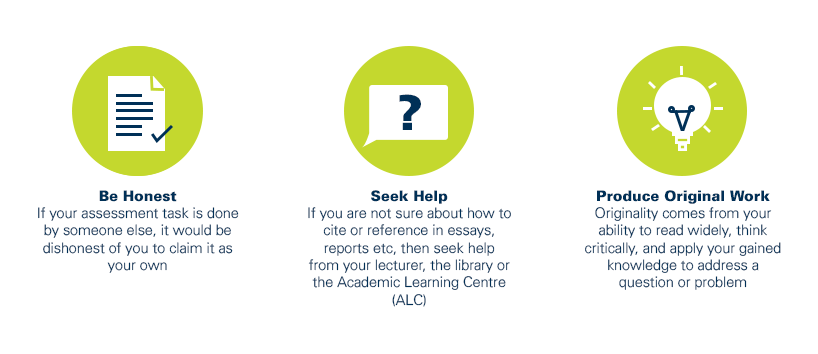
As a CQUniversity student you are expected to act honestly in all aspects of your academic work.
Any assessable work undertaken or submitted for review or assessment must be your own work. Assessable work is any type of work you do to meet the assessment requirements in the unit, including draft work submitted for review and feedback and final work to be assessed.
When you use the ideas, words or data of others in your assessment, you must thoroughly and clearly acknowledge the source of this information by using the correct referencing style for your unit. Using others’ work without proper acknowledgement may be considered a form of intellectual dishonesty.
Participating honestly, respectfully, responsibly, and fairly in your university study ensures the CQUniversity qualification you earn will be valued as a true indication of your individual academic achievement and will continue to receive the respect and recognition it deserves.
As a student, you are responsible for reading and following CQUniversity’s policies, including the Student Academic Integrity Policy and Procedure. This policy sets out CQUniversity’s expectations of you to act with integrity, examples of academic integrity breaches to avoid, the processes used to address alleged breaches of academic integrity, and potential penalties.
What is a breach of academic integrity?
A breach of academic integrity includes but is not limited to plagiarism, self-plagiarism, collusion, cheating, contract cheating, and academic misconduct. The Student Academic Integrity Policy and Procedure defines what these terms mean and gives examples.
Why is academic integrity important?
A breach of academic integrity may result in one or more penalties, including suspension or even expulsion from the University. It can also have negative implications for student visas and future enrolment at CQUniversity or elsewhere. Students who engage in contract cheating also risk being blackmailed by contract cheating services.
Where can I get assistance?
For academic advice and guidance, the Academic Learning Centre (ALC) can support you in becoming confident in completing assessments with integrity and of high standard.
What can you do to act with integrity?