Overview
This unit advances your preparation for the clinical workplace through the development of ultrasound scanning skills in the areas of lower extremity veins, carotid artery and transvaginal female pelvis. Psychomotor skills and professional behaviour techniques gained in previous scanning skills units and during clinical placement will be built upon, with an emphasis on problem solving techniques required to produce appropriate clinical outcomes. You are required to demonstrate the skills, knowledge, and professional behaviours needed to work in a clinical setting, and will be assessed within a simulated environment.
Details
Pre-requisites or Co-requisites
Prerequisites: MEDS12004 Sonographic Skills Development 1 AND MEDS12006 Ultrasound of Obstetrics and Gynaecology AND MEDS13008 Vascular Sonography
Important note: Students enrolled in a subsequent unit who failed their pre-requisite unit, should drop the subsequent unit before the census date or within 10 working days of Fail grade notification. Students who do not drop the unit in this timeframe cannot later drop the unit without academic and financial liability. See details in the Assessment Policy and Procedure (Higher Education Coursework).
Offerings For Term 1 - 2026
Attendance Requirements
All on-campus students are expected to attend scheduled classes - in some units, these classes are identified as a mandatory (pass/fail) component and attendance is compulsory. International students, on a student visa, must maintain a full time study load and meet both attendance and academic progress requirements in each study period (satisfactory attendance for International students is defined as maintaining at least an 80% attendance record).
Recommended Student Time Commitment
Each 12-credit Undergraduate unit at CQUniversity requires an overall time commitment of an average of 25 hours of study per week, making a total of 300 hours for the unit.
Class Timetable
Assessment Overview
Assessment Grading
This is a pass/fail (non-graded) unit. To pass the unit, you must pass all of the individual assessment tasks shown in the table above.
All University policies are available on the CQUniversity Policy site.
You may wish to view these policies:
- Grades and Results Policy
- Assessment Policy and Procedure (Higher Education Coursework)
- Review of Grade Procedure
- Student Academic Integrity Policy and Procedure
- Academic Progression Policy and Procedure
- Student Refund and Credit Balance Policy and Procedure
- Complaints Policy and Procedure
- Information and Communications Technology Acceptable Use Policy and Procedure
This list is not an exhaustive list of all University policies. The full list of University policies are available on the CQUniversity Policy site.
Feedback, Recommendations and Responses
Every unit is reviewed for enhancement each year. At the most recent review, the following staff and student feedback items were identified and recommendations were made.
Feedback from SUTE comments
Some students were dissatisfied with the timing and format of practical assessments during the term, in particular with the OSCE assessment format (Assessment 1 Part A).
Consider alternative ways to timetable assessments within the constraints of available resources and university term calendar whilst still maintaining appropriate assessment of unit learning outcomes.
Feedback from Zoom Polling SUTE comments Unit Coordinator reflection
Live tutorials were introduced in 2025 in a travelling roadshow style to include all campuses. There was mixed student feedback on these sessions with some highly valuing them whilst others felt they were not useful.
Continue offering live tutorials across the different campuses, but explore ways to improve their delivery. In particular, IT resource limitations created challenges, so potential workarounds should be investigated.
Feedback from SUTE comments
Some students felt that completing Quiz 4 in the available time frame was too great a challenge.
All of the four quizzes in the unit underwent editing and creation of new questions for 2025 delivery. Suggest revisiting Quiz 4 in particular to ensure that timing is appropriate for the questions posed and expected answers.
- Complete sonographic examinations of the lower extremity veins, carotid arteries, and transvaginal female pelvis
- Critically reflect and improve upon own professional practice and sonographic psychomotor skills to integrate new learning and experiences with the goal of improving your pratice
- Formulate problem-solving and critical-thinking strategies to appropriately address patient presentation
- Display professional behaviour, teamwork, and communication skills consistent with safe sonographic practice, the profession's Code of Conduct, and CQUniversity's graduate attributes.
Australasian Sonography Accreditation Registry Standards for the Accreditation of Sonographer Courses (SASC):
Foundational Units of Competence 1-5
Critical Practice Units of Competence 9, 10 & 13
Alignment of Assessment Tasks to Learning Outcomes
| Assessment Tasks | Learning Outcomes | |||
|---|---|---|---|---|
| 1 | 2 | 3 | 4 | |
| 1 - Objective Structured Clinical Examinations (OSCEs) - 0% | ||||
| 2 - Written Assessment - 0% | ||||
| 3 - Online Quiz(zes) - 0% | ||||
| 4 - On-campus Activity - 0% | ||||
Alignment of Graduate Attributes to Learning Outcomes
| Graduate Attributes | Learning Outcomes | |||
|---|---|---|---|---|
| 1 | 2 | 3 | 4 | |
| 1 - Communication | ||||
| 2 - Problem Solving | ||||
| 3 - Critical Thinking | ||||
| 4 - Information Literacy | ||||
| 5 - Team Work | ||||
| 6 - Information Technology Competence | ||||
| 7 - Cross Cultural Competence | ||||
| 8 - Ethical practice | ||||
| 9 - Social Innovation | ||||
| 10 - First Nations Knowledges | ||||
| 11 - Aboriginal and Torres Strait Islander Cultures | ||||
Textbooks
There are no required textbooks.
IT Resources
- CQUniversity Student Email
- Internet
- Unit Website (Moodle)
- Access card to CQUniversity campus (Melbourne students)
- Access card to the Ultrasound Imaging Lab (Mackay students)
- Access card to CQUniversity sonography lab (Brisbane students)
All submissions for this unit must use the referencing style: Vancouver
For further information, see the Assessment Tasks.
r.mahony@cqu.edu.au
Week 1
Begin Date: 09 Mar 2026Module/Topic
MODULE 1 - Carotid Doppler examination
- Compulsory lab and tutorial activities Tuesday
- Tutor-assisted (supervised) practice Wednesday
Chapter
Prescribed text:
Pozniak (2014): Chapter 2 pg. 26-37; Chapter 3 pg. 39-50; Chapter 3 pg. 50-66
Supplementary text:
Rumack et al. (2011): Chapter 25 pg. 957-991
Events and Submissions/Topic
COMPULSORY Zoom tutorial
This Zoom session covers requirements for the Professional Behaviour Assessment, as well as important information about the term, and it is compulsory that all students attend.
(Other non-compulsory Zoom tutorials will be held on most Thursdays and drop-in sessions on some Mondays throughout the term. Please see the Moodle site for this schedule)
Held MONDAY 9 MAR 2026 6.00PM AEST / 7.00PM AEDT
Assessment 2 Part A - INDUCTION DOCUMENTS
- WHS compulsory Lab Safety Induction online quiz must be completed prior to access to any lab activity; 100% pass mark required.
- Lab Agreement and Consent Form must be uploaded prior to access to any lab activity.
Students will not be permitted entry to the sonography lab until both are correctly completed.
Due MONDAY 9 MAR 2026 4PM AEST/ 5PM AEDT
Week 2
Begin Date: 16 Mar 2026Module/Topic
MODULE 1 - Carotid Doppler examination
- Compulsory lab activities Tuesday
- Tutor-assisted (supervised) practice Wednesday
- Peer-assisted practice Monday, Tuesday, Wednesday, Saturday
Chapter
Events and Submissions/Topic
Week 3
Begin Date: 23 Mar 2026Module/Topic
MODULE 1 - Carotid Doppler examination
- Compulsory lab activities Tuesday
- Tutor-assisted (supervised) practice Wednesday
- Peer-assisted practice Monday, Tuesday, Wednesday
Chapter
Events and Submissions/Topic
Week 4
Begin Date: 30 Mar 2026Module/Topic
MODULE 1 - Carotid Doppler examination
- Compulsory lab activities Tuesday
- Peer-assisted practice Monday
Chapter
Events and Submissions/Topic
Assessment 3 - QUIZ 1
Opens TUESDAY 9AM AEST / 10AM AEDT
Closes WEDNESDAY 6PM AEST / 7PM AEDT
*The mock assessment for the carotid skills test will be held in this week's lab
Week 5
Begin Date: 06 Apr 2026Module/Topic
MODULE 2 - DVT examination
- Compulsory lab and tutorial activities Tuesday
- Tutor-assisted (supervised) practice Wednesday
- Peer-assisted practice Saturday
Chapter
Prescribed text:
Pozniak (2014): Chapter 1 pg. 1-24; Chapter 2 pg. 26-37; Chapter 3 pg. 39-66; Chapter 5 pg. 94-114
Supplementary text:
Curry & Tempkin (2011): Chapter 29 pg. 589-593
Rumack et al. (2011): Chapter 25 pg. 957-991; Chapter 27 pg. 1023-1033
Events and Submissions/Topic
Week 6
Begin Date: 13 Apr 2026Module/Topic
MODULE 2 - DVT examination
- Compulsory lab activities Tuesday
- Peer-assisted practice Monday
Chapter
Events and Submissions/Topic
Assessment 3 - QUIZ 2
Opens TUESDAY 9AM AEST
Closes WEDNESDAY 6PM AEST
Vacation Week
Begin Date: 20 Apr 2026Module/Topic
MODULE 2 - DVT examination
- Tutor-assisted (supervised) practice Tuesday/Wednesday
- Peer-assisted practice Monday
Chapter
Events and Submissions/Topic
Week 7
Begin Date: 27 Apr 2026Module/Topic
MODULE 2 - DVT examination
- Compulsory lab activities Tuesday
- Peer-assisted practice Monday, Tuesday, Wednesday, Saturday
Chapter
Supplementary text:
Curry & Tempkin (2011): Chapter 19 pg. 372-373
Rumack et al. (2011): Chapter 15 pg. 552-571, 576-595
Events and Submissions/Topic
*The mock assessment for the DVT skills test will be held in this week's lab
Week 8
Begin Date: 04 May 2026Module/Topic
OSCE (Module 1&2)
- Compulsory lab assessments Tuesday, Wednesday
Chapter
Events and Submissions/Topic
Assessment 1 - PART A, OSCE
All students are required on campus all day
Held TUESDAY 5th & WEDNESDAY 6th MAY 2026 from 8.30AM local time
Week 9
Begin Date: 11 May 2026Module/Topic
MODULE 3 - Transvaginal female pelvis examination
- Compulsory lab and tutorial activities Tuesday
- Tutor- assisted practice Wednesday
- Peer-assisted practice Monday, Saturday
Chapter
Events and Submissions/Topic
Assessment 3 - QUIZ 3
Opens THURSDAY 9AM AEST
Closes FRIDAY 6PM AEST
Week 10
Begin Date: 18 May 2026Module/Topic
Practical Assessment (Module 3)
- Compulsory lab assessments Tuesday
- Tutor-assisted (supervised) practice Wednesday
- Peer-assisted practice Monday
Chapter
Events and Submissions/Topic
Assessment 1- Part B, Practical Assessment (Module 3)
All students are required on campus all day
Held TUESDAY 13th MAY 2026 8.30am local time
Week 11
Begin Date: 25 May 2026Module/Topic
CONSOLIDATION
- Non-compulsory lab activities Tuesday
- Tutor-assisted (supervised) practice Wednesday
- Peer-assisted practice Monday, Tuesday, Wednesday, Saturday
Chapter
Events and Submissions/Topic
Assessment 3 - QUIZ 4
Opens TUESDAY 9AM AEST
Closes WEDNESDAY 6PM AEST
Week 12
Begin Date: 01 Jun 2026Module/Topic
FINALS
- Compulsory lab assessment Tuesday/Wednesday if required
- Tutor-assisted (supervised) practice Monday
Chapter
Events and Submissions/Topic
Assessment 1 - PART C , FINALS
All students are required on campus all day regardless of sitting finals or not
Held TUESDAY 3 & WEDNESDAY 2nd/3rd JUNE 2026 from 8.30AM local time
Assessment 2 - PART B - REFLECTION DOCUMENTS
See Lab Manual and Moodle site for detailed submission instructions.
Due FRIDAY 5 JUNE 2026 5PM AEST
Assessment 4 - Professional Behaviour Assessment
Ends FRIDAY 5 JUNE 2026 5PM AEST (no student submission required)
Exam Week
Begin Date: 08 Jun 2026Module/Topic
Chapter
Events and Submissions/Topic
Vacation/Exam Week
Begin Date: 15 Jun 2026Module/Topic
Chapter
Events and Submissions/Topic
My name is Rebecca Mahony and welcome to this unit. I am the unit coordinator and can be reached at r.mahony@cqu.edu.au or by phone on 02 3245753. There are also co-coordinators for this unit on each campus so students have a local contact point in addition to myself - we are all responsible for the running of this unit as well as marking of assessments including practical skills assessments. We aim to make your journey through this unit as seamless as possible. Please feel free to contact any of us if you are having concerns, worries, or just need to talk.
This is a 12 credit point unit (ie double unit) and thus you should set aside around 25 hours a week for success.
This is a non-graded, pass/fail unit. Please familiarise yourself with university policies pertaining to pass/fail units and pass/fail assessments in the Assessment Policy and Procedure (Higher Education Coursework) which can be accessed on the CQUni IMPortal http://www.cqu.edu.au/policy. This unit is scheduled to run once a year only - the next delivery will be in Term 1, 2026. All written assessment items must be submitted accurately and in the correct format by the due date, as there is no opportunity to apply a 5% penalty due to the pass/fail nature of each assessment task.
Online tutorial sessions will held most Thursdays throughout the term, and drop-in sessions on some Mondays. Please check the MEDS13011 unit Moodle site Virtual Classes tile for dates and times of these tutorials.
In regard to Assessment 1, attendance at skills labs for this unit is mandatory including all assessment days. Skills labs, as well as Peer-assisted practices and Tutor-assisted practises, will be scheduled throughout the term. OSCE assessment, Practical assessment, and Final assessment days occur in weeks 8, 10 and 12 respectively. Please pay close attention to the lab schedule for this unit which can be located on the unit Moodle page with outlines of all these on-campus activities.
You must notify the unit coordinator and local lab staff (phone, email) before the start of compulsory labs if you are unable to attend or anticipate being late; this includes practical assessment days. Labs missed for a valid reason require supporting documentation, and you are advised to contact the unit coordinator to organise time to make up for the missed scanning time during practise sessions. Any compulsory lab missed without approval, or being late to labs will not be made up. Missed Tutor and Peer-assisted practices do not require approval or documentation and are not made up. If you know you will be missing a practice session but don't want to forfeit your scanning time, please arrange a swap with a peer.
You must notify staff before beginning scanning on any day (compulsory labs, tutor-guided practise, peer-assisted practise, and practical skills assessments) if you are injured or ill, just like you would be required to do when working with patients and other healthcare team members. In the event that your condition could harm or negatively impact either yourself or those around you (e.g. put you at risk of exacerbating an injury, or pass on viral or bacterial infections to other students and staff), you will be sent home and, in the event of it being a compulsory lab or practical skills assessment, you will need to provide acceptable medical documentation for your absence as described above.
Acceptable reasons for adjusting assessment for exceptional circumstances are articulated in the CQUniversity Assessment Policy and Procedure (Higher Education Coursework), and are applicable for practical skills assessments, quizzes, and written assessment components.
If you cannot attend a practical skills assessment on the scheduled day due to illness or injury and have provided acceptable medical documentation, the unit coordinator will arrange for the practical skills assessment to be undertaken at another time.
Whilst Tutor and Peer-assisted practise sessions are not compulsory, they are strongly recommended for student success in the practical skills assessments. If you are unable to attend a Peer-assisted practise session (self-scheduled with your peers as patients/scanners), or running late, please give your partner in these sessions as much notice as possible. Professional behaviour is expected in labs and in association with this unit at all times - please see Assessment 4 for further information regarding expectations of professionalism.
In regard to Assessment 2, there are induction activities that need to be completed on day 1 of term, MONDAY 9th MAR 2026, prior to accessing labs on Tuesday of week 1. There is a compulsory online WH&S Lab Induction - this must be completed before you can attend the sonography labs in any capacity.
In regard to Assessment 3, the quizzes will be held in weeks 4, 6, 9 and 11. In the event that you are unable to complete the quiz in the allocated time and have suitable medical documentation for exceptional circumstances as discussed above, apply for an extension via the Assessment Extension Request link which can be found in the Support drop down menu on the Moodle site. If this is near to the quiz close time please also notify me by phone before the end of the quiz to be granted an extension to the quiz time.
In regard to Assessment 4, there is a compulsory online Zoom session on MONDAY 9th MAR 2026. This session will cover the Professional Behaviour Assessment to articulate professional behaviour marking criteria and the consequences of exemplary, satisfactory, and unsatisfactory performance.
You are required to adhere to the Sonography Labs Dress Code at all times when using the ultrasound simulation labs, including peer-assisted practises, and the CQU Zero Tolerance Policy will be followed - both of these aspects are covered by the Professional Behaviour assessment (Assessment 4) and failure to comply will result in being asked to leave the lab (if in unsuitable or unsafe attire). This unit is preparation for clinical placement, where it is a requirement to follow WH&S requirements, wear the correct uniform, and to look and behave like a medical professional at all times.
1 Objective Structured Clinical Examinations (OSCEs)
Each Module (Carotid artery Doppler, Lower Extremity Veins for DVT, and Transvaginal female pelvis) will have skills tests associated with it as follows:
- Mock assessments (formative) - TUESDAY weeks 4, 7
- Part A, OSCE (Module 1&2) TUESDAY and WEDNESDAY week 8
- Part B, Transvaginal female pelvis - TUESDAY week 10
- Part C, Finals (all Modules) TUESDAY and WEDNESDAY week 12
MOCK ASSESSMENTS
The purpose of mock assessments is for your interim skill level to be assessed and feedback provided at intervals throughout the term, which can allow you to reflect and improve along the way. You will be required to complete sonographic examinations under an appropriate time limit, as per the respective imaging protocol, including professional (pre-scan, during, and post-scan), technical (scanning) and clinical (knowledge) requirements that are discussed in the unit lab manual, instructed labs, lectures, demonstrations, and tutorials. Mock assessments are experiential and formative, and do not count towards your unit grade. Mock assessment non moderated ARC tools are intended as learning tools.
PART A OSCE
The purpose of Part A OSCE in week 8 is to assess your capability as a student practitioner overarching modules 1 and 2. You will be assessed on professional, technical and clinical requirements of the examination holistically. The assessor will instruct you to perform targeted portions of examinations in Part A, rather than complete full protocols. You will be required to perform THREE targeted portions per module with a time limit of 20 minutes per Module, and 45 minutes for the entire assessment.
All OSCE assessments will initially be marked live, and unit coordinator moderation will follow. Video recordings of your performance will be used for this purpose which provides a more robust marking process than the live assessment. One grade will be allocated at the completion of all marking and moderating and you will receive the final ARC tool/s as feedback.
PART B Practical Assessment (Module 3)
The purpose of Part B Practical Assessment in week 10 is to assess your capability as a student practitioner performing a transvaginal examination. You will be assessed on professional, technical and clinical requirements of the examination holistically. The assessor will instruct you to perform THREE targeted portions of examination, rather than complete full protocols. The time limit for the Assessment is 30 minutes appointment time which includes the professional and technical components.
The assessment will initially be marked live, and unit coordinator moderation will follow. Video recordings of your performance will be used for this purpose which provides a more robust marking process than the live assessment. One grade will be allocated at the completion of all marking and moderating and you will receive the final ARC tool/s as feedback
PART C FINALS
The purpose of Part C skills tests in week 12 is to provide a final opportunity to pass the unit if any module/s within the OSCE or Part B were not already passed. These are full protocols. If the OSCE and Part B Practical Assessment was passed in all modules, no Finals will be required.
Students will be assessed using the ‘Assessment of Readiness for Clinical’ (ARC) tool, which is available on the unit Moodle site. The ARC tool assesses the three components holistically.
Part C, Finals will only be required for any module not passed within the week 8 OSCE assessment or Part B Practical assessment. As with Part A and B, the ARC tools from any required Finals will be moderated using video recordings and graded.
One grade will be allocated for each assessment at the completion of all marking and moderating and you will receive the final ARC tool/s including feedback comments.
Please carefully review the assessment information and ARC tools posted on the unit Moodle site.
Part A OSCE held TUESDAY & WEDNESDAY week 8 - all students. Part B Practical assessment held TUESDAY week 10. Part C Finals held TUESDAY & WEDNESDAY week 12 - as required.
Part A OSCE results and feedback will be available within 2 weeks of assessments. Part B Practical assessment will be available end week 11. Part C Final results and feedback will be made available to students on Certification of Grades.
This is a pass/fail assessment.
You must demonstrate critical skills consistently throughout the assessments with a view to becoming a capable student practitioner on completion of this unit. Each module covers a different examination which varies in protocol and complexity and is thus marked accordingly. Please review the Appendix to the ARC tool for a listing of Correct Practice and explanation of what would determine a critical or non-critical error. There is no limit on non-critical skill errors, however there is a limit on critical skill errors. Demonstration of consistent critical skills in the clinical, technical and professional components and all critical requirements (bolded points) in the professional component, is required to pass.
Professional (pre-scan, during, and post-scan) requirements:
- Apply patient care techniques and effective communication to obtain relevant patient history, informed consent, and to direct ‘patients’ accordingly
- Apply professionalism in dealing with 'patients', colleagues, equipment, and the scanning setting
Technical (scanning) requirements:
- Students are required to perform routine sonographic scanning techniques, image optimisation, and acquisition, in a reasonable time period to competency level 2.
- An 'appointment time' is applied to all Module assessments. This time is aligned with standard student expectations in a clinical environment.
Clinical (knowledge) requirements:
- Students are to narrate their actions during the sonographic examination to demonstrate underlying knowledge and thought processes of the skills being performed as relevant to the examination.
- Difficulties during the examination are to be verbalised and actions justified.
There is only ONE attempt per student per assessment.
If the Part A OSCE (Modules 1 & 2) and Part B Practical assessment (Module 3) is passed outright, Finals will not be required.
If the Part A OSCE and/or Part B Practical assessment is not passed outright, Finals will be required in week 12 for any Module that was not passed in week 8 and 10
As each Module is a hurdle assessment, the unit cannot be passed if any Module has not been passed.
Please be aware that all assessments will be video recorded. Videos may be viewed by CQU sonography staff and tutors for the purposes of marking and moderation of assessments, and may be required to be viewed by other CQU staff in the event of a student requesting either a Review of Grade or an Appeal of Grade.
- Complete sonographic examinations of the lower extremity veins, carotid arteries, and transvaginal female pelvis
- Formulate problem-solving and critical-thinking strategies to appropriately address patient presentation
- Display professional behaviour, teamwork, and communication skills consistent with safe sonographic practice, the profession's Code of Conduct, and CQUniversity's graduate attributes.
2 Written Assessment
This is a pass/fail assessment item.
The purpose of this assessment is to prepare you for the professionalism and documentation responsibilities you will have on clinical placement, as well as to develop self-reflection skills by setting weekly goals and following-up on your progress. When working clinically, patients and physicians rely on quick, efficient, and complete documentation to issue treatment. Failure to complete paperwork correctly in the clinical environment may have dire consequences to patient management.
This assessment will require you to complete the documentation set forth in your Lab Manual. This includes documents forming Part A - Lab Induction, and documents forming Part B - Reflection on feedback through the term, as follows:
PART A - INDUCTION
- Workplace Health and Safety Induction - completed via Quiz activity in Moodle
- Lab Agreement - scanned hard copy or eForm to be submitted via Moodle
- Consent and Confidentiality Form - scanned hard copy or eForm to be submitted via Moodle
- Compulsory tutorial - attend and engage online
PART B - REFLECTION
- Peer feedback from each lab session - completed in Glossary activity in Moodle
- Mock ARC tools for each module (both tutor and peer) - scanned hard copy or eForm to be submitted via Moodle
- Speed round images and reflection from each lab session - completed via Quiz activity in Moodle
Any uploaded documentation is to be in pdf format. Please ensure your first name, surname, student number, and name of document you are uploading is used in that order in the title of the document, separated by either underscores or single spaces. Any other order variation or information is incorrect so please take note of this.
i.e. Rebecca _Mahony_10123456_lab_agreement.pdf or Rebecca Mahony 10123456 lab agreement.pdf
To simulate real clinical environments where correct documentation is of critical importance, non-completed or incorrectly completed paperwork will be returned to students with ONE opportunity provided to correct the error. As this is a pass/fail assessment item, repeated errors may result in a fail of the assessment item.
The compulsory tutorial covers requirements for the Professional Behaviour Assessment (Assessment 4), as well as important induction and term information. It is compulsory that all students attend on MONDAY 9th MAR 2026 6.00PM AEST / 7.00PM AEDT.
This assessment also ties in with Assessment 4 - Professional Behaviour Assessment. You are required to complete Peer Feedback Forms before leaving at the end of each lab (as you would be required to complete documentation for each patient's scan before the end of a clinical shift). You must upload all required documentation for this assessment by the due date and time to obtain a 'pass'. Note that a Lapse in Professionalism may apply if documentation has not been completed correctly.
'Speed round' images will be taken in labs, based on what had been learned the week before. These will be taken under a time pressure to enhance your understanding of the difference between 'perfect', 'diagnostic' and 'non-diagnostic'. You will reflect on the images in writing each week to deepen your awareness of assessment requirements.
PART A - Induction documents due Monday 9th MAR 2026 4PM AEST / 5PM AEDT. PART B - Reflection documents due Friday 5th JUNE 2026 5PM AEST.
Documents will be graded within 10 working days of due dates
This is a pass/fail assessment task in a pass/fail unit - a fail grade for any component of a pass/fail assessment task will result in a fail grade for the assessment task, and subsequently the entire unit.
To pass this assessment item you must:
- complete all paperwork accurately
- meaningfully reflect on progress and images
- save and upload each task in the format specified
- submit by the due date and time specified
Documentation in the clinical environment must be correctly issued, otherwise there can be dire consequences for patient and legal ramifications for the sonographer. Hence, in the lab, non-completed or incorrectly completed paperwork will be returned to students, with one opportunity provided to correct the error. Repeated errors may incur a fail of the assessment item due to requirements in Assessment 4 (see below).
- Critically reflect and improve upon own professional practice and sonographic psychomotor skills to integrate new learning and experiences with the goal of improving your pratice
3 Online Quiz(zes)
- There are FOUR quizzes for this unit which are each available to you over a two day period.
- The content of quizzes 1-3 will be sonographic anatomy, protocol and technique relevant to the respective module, and may include expected prior knowledge relevant to that module, asked in a multiple choice format. The purpose of these quizzes is to support your preparation prior to Assessment 1 Part A - OSCE and Assessment 1 Part B - Practical assessment . Quizzes 1-3 are each worth 20% of this assessment task grade.
- Quiz 4 is an end of term quiz and covers all modules, asked in combination of MCQ and short answer format, designed to test your critical thinking and clinical judgement prior to Part C Final assessment. Quiz 4 is worth 40% of this assessment task grade.
- Students must achieve a cumulative score of 70% across the four quizzes to pass this assessment.
- You are allowed ONE attempt at each quiz and once you have started the quiz, it cannot be paused or restarted.
- Time limit for Quizzes 1-3 is 10 minutes (10 questions). Once the time limit is reached any open questions will be automatically submitted.
- Time limit for Quiz 4 is 20 minutes (10 questions). Once the time limit is reached any open questions will be automatically submitted.
- These assessment tasks must be completed on or before the due dates listed.
- No late submissions are permitted after each quiz has closed so please ensure adequate time for completion. If you have computer / quiz access difficulties, you need to contact TaSAC as soon as possible for assistance, and the unit coordinator (after you've contacted TaSAC) if you cannot complete the quiz in the allocated time before the end of the quiz.
- In the event that you are unable to complete the quiz in the allocated time and have suitable documentation for exceptional circumstances, you need to notify the unit coordinator or apply online for an extension before the end of the quiz to be granted an extension to the quiz time.
- In the absence of an approved extension, or documented IT issues, there will be no opportunity to complete a quiz after it has closed.
Quiz weeks, topics (weightings) are as follows:
WEEK 4 Module 1 Carotid Doppler examination (20%)
WEEK 6 Module 2 Deep Venous Thrombosis examination (20%)
WEEK 9 Module 3 Transvaginal Female Pelvis examination (20%)
WEEK 11 Modules 1-3 End of term quiz (40%)
QUIZ 1 opens TUESDAY 31st MAR 9AM AEST/10AM AEDT, closes WEDNESDAY 1st APR 6PM AEST/7PM AEDT. QUIZ 2 opens TUESDAY 14th APR 9AM AEST, closes WEDNESDAY 15th APR 6PM AEST. QUIZ 3 opens THURSDAY 14th MAY 9AM AEST, closes FRIDAY 15th MAY 6PM AEST. QUIZ 4 opens TUESDAY 26th MAY 9AM AEST, closes WEDNESDAY 27th MAY 6PM AEST
QUIZ 1-3: Students will receive their scores and feedback for each quiz once all students have completed that quiz. QUIZ 4: Students will receive their result within 10 working days.
Quizzes 1-3: Multiple choice questions will either be correct or incorrect and tabulated by the unit's online Moodle system.
Quiz 4: Short answer questions will be marked by the Unit Coordinator.
Students must achieve a cumulative score of 70% across the four quizzes to pass this assessment.
As per Assessment Policy and Procedure (Higher Education Coursework), in online quiz assessments where answers are released to students on completion, in the absence of an approved extension, there will be no opportunity to complete a quiz after it has closed.
This is an open book quiz, so you have the opportunity to consult your notes, lecture slides, text books, and Moodle page. However, this assessment is to be undertaken as an individual, and is not approved as group work. As per the Student Academic Integrity Policy and Procedure, colluding with other students on non-group work tasks is considered academic misconduct, and will be reported to the Academic Integrity Unit.
- Complete sonographic examinations of the lower extremity veins, carotid arteries, and transvaginal female pelvis
- Formulate problem-solving and critical-thinking strategies to appropriately address patient presentation
4 On-campus Activity
Professionalism and professional behaviour are critical parts of any medically aligned profession, and encompass the manner in which we treat our colleagues, patients, and the professional settings and equipment provided to us. The purpose of this assessment is to ensure that students from the Medical Sonography course are well-equipped to embody the high standards of professionalism that are expected from CQUniversity students while on their upcoming clinical placements, and as graduate sonographers in their future careers. Developing your professionalism during this unit will prepare you for the next environment in which you will be expected to maintain professional behaviour whenever in your uniform and representing the university, placement site, and yourself.
This assessment will require you to treat each of your lab sessions as a scheduled "work shift" and to exhibit professional attitudes to ensure you are prepared to enter the work force with the skills required to provide safe and professional patient care. As such, this assessment is based on assessment of student application and attendance during labs throughout the term.
Expected behaviour and its relevance to the clinical environment is listed in the Professional Behaviour Assessment description. Additionally, please familiarise yourself with the CODE OF CONDUCT in the Lab Manual as well as the ASAR CODE OF CONDUCT and the CQU CODE OF CONDUCT so that you have a clear understanding of the rationale for, and importance of this assessment. All of these documents are posted on the unit Moodle site for your information. Professionalism extends to peers, colleagues, staff, patients, environment, and equipment.
This is a pass/fail assessment.
This assessment is marked against the Professional Behaviour Assessment (PBA) description and incorporates a process of warnings and feedback on expected behaviour of students when in the lab environment. This will commence in week 2 of the term, and apply to activities within the lab. A warning is known as a Lapse in Professionalism (LiP). Up to three LiPs can be received within the unit without adverse consequence. A fourth LiP however will result in the assessment being graded as a fail.
In the event that a LiP point is accrued, written documentation of the reason will be completed by the on-site lecturer or the unit coordinator, and provided to you as feedback. You will have the opportunity to seek further clarification from or discuss the circumstances of the LiP from the unit coordinator.
If unprofessional attitude or behaviour is reported by fellow classmates and not witnessed by a staff member, an unofficial warning with formative feedback will be provided in writing detailing the allegation, and your response will be documented.
There is a COMPULSORY Zoom session on MONDAY 9th MAR 2026 6.00PM AEST / 7.00PM AEDT regarding requirements for this assessment task.
Professional behaviour is to be demonstrated when in the lab environment across the term.
Documents will be graded within 10 working days of due date
This is a pass/fail assessment.
The LiP system is designed to provide a warning to students when they exhibit unprofessional behaviour, and hence up to three LiPs (official warnings) can be issued within the unit without adverse consequence. A fourth LiP however will result in the assessment being graded as a fail.
A maximum of three LiP points can be accrued to pass this assessment. As this is a pass/fail unit, a pass in all assessment items is required to pass this unit.
- Display professional behaviour, teamwork, and communication skills consistent with safe sonographic practice, the profession's Code of Conduct, and CQUniversity's graduate attributes.
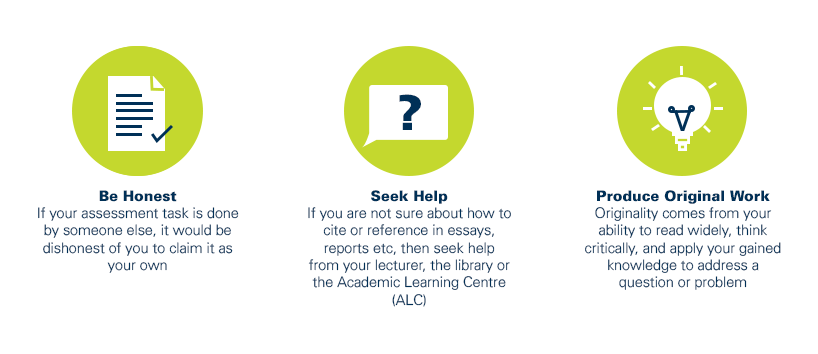
As a CQUniversity student you are expected to act honestly in all aspects of your academic work.
Any assessable work undertaken or submitted for review or assessment must be your own work. Assessable work is any type of work you do to meet the assessment requirements in the unit, including draft work submitted for review and feedback and final work to be assessed.
When you use the ideas, words or data of others in your assessment, you must thoroughly and clearly acknowledge the source of this information by using the correct referencing style for your unit. Using others’ work without proper acknowledgement may be considered a form of intellectual dishonesty.
Participating honestly, respectfully, responsibly, and fairly in your university study ensures the CQUniversity qualification you earn will be valued as a true indication of your individual academic achievement and will continue to receive the respect and recognition it deserves.
As a student, you are responsible for reading and following CQUniversity’s policies, including the Student Academic Integrity Policy and Procedure. This policy sets out CQUniversity’s expectations of you to act with integrity, examples of academic integrity breaches to avoid, the processes used to address alleged breaches of academic integrity, and potential penalties.
What is a breach of academic integrity?
A breach of academic integrity includes but is not limited to plagiarism, self-plagiarism, collusion, cheating, contract cheating, and academic misconduct. The Student Academic Integrity Policy and Procedure defines what these terms mean and gives examples.
Why is academic integrity important?
A breach of academic integrity may result in one or more penalties, including suspension or even expulsion from the University. It can also have negative implications for student visas and future enrolment at CQUniversity or elsewhere. Students who engage in contract cheating also risk being blackmailed by contract cheating services.
Where can I get assistance?
For academic advice and guidance, the Academic Learning Centre (ALC) can support you in becoming confident in completing assessments with integrity and of high standard.
What can you do to act with integrity?