Overview
This unit is designed to introduce you to the dynamic interplay of factors that influence the direction and success of contemporary business. You will explore the emerging shift from a linear economy to a circular economy and the facilitating role of entrepreneurship and innovation in successful business transitions. This includes the flow-on effects these have on business strategy, structures, employees, organisational design, and business operations. Business plays a significant role in society and the management skills required for business to be fit for the future rests with each of us. You have a role in this as an agent of positive change.
Details
Pre-requisites or Co-requisites
There are no requisites for this unit.
Important note: Students enrolled in a subsequent unit who failed their pre-requisite unit, should drop the subsequent unit before the census date or within 10 working days of Fail grade notification. Students who do not drop the unit in this timeframe cannot later drop the unit without academic and financial liability. See details in the Assessment Policy and Procedure (Higher Education Coursework).
Offerings For Term 1 - 2022
Attendance Requirements
All on-campus students are expected to attend scheduled classes - in some units, these classes are identified as a mandatory (pass/fail) component and attendance is compulsory. International students, on a student visa, must maintain a full time study load and meet both attendance and academic progress requirements in each study period (satisfactory attendance for International students is defined as maintaining at least an 80% attendance record).
Recommended Student Time Commitment
Each 6-credit Undergraduate unit at CQUniversity requires an overall time commitment of an average of 12.5 hours of study per week, making a total of 150 hours for the unit.
Class Timetable
Assessment Overview
Assessment Grading
This is a graded unit: your overall grade will be calculated from the marks or grades for each assessment task, based on the relative weightings shown in the table above. You must obtain an overall mark for the unit of at least 50%, or an overall grade of 'pass' in order to pass the unit. If any 'pass/fail' tasks are shown in the table above they must also be completed successfully ('pass' grade). You must also meet any minimum mark requirements specified for a particular assessment task, as detailed in the 'assessment task' section (note that in some instances, the minimum mark for a task may be greater than 50%). Consult the University's Grades and Results Policy for more details of interim results and final grades.
All University policies are available on the CQUniversity Policy site.
You may wish to view these policies:
- Grades and Results Policy
- Assessment Policy and Procedure (Higher Education Coursework)
- Review of Grade Procedure
- Student Academic Integrity Policy and Procedure
- Monitoring Academic Progress (MAP) Policy and Procedure - Domestic Students
- Monitoring Academic Progress (MAP) Policy and Procedure - International Students
- Student Refund and Credit Balance Policy and Procedure
- Student Feedback - Compliments and Complaints Policy and Procedure
- Information and Communications Technology Acceptable Use Policy and Procedure
This list is not an exhaustive list of all University policies. The full list of University policies are available on the CQUniversity Policy site.
Feedback, Recommendations and Responses
Every unit is reviewed for enhancement each year. At the most recent review, the following staff and student feedback items were identified and recommendations were made.
Feedback from Verbatim student feedback in the SUTE Term Report
"I really enjoyed this unit. Malcolm is a great lecturer, the content was interesting and the readings were insightful and helpful."
The Entrepreneurship, Innovation, and Sustainability themes have been embraced in the renewal of this unit within the CQURenew project. The preparation of customised content in the synopses captures the themes in a way that current textbooks do not. Readings and discussions in workshops bring these perspectives to life. The recommendation is to continue this approach.
Feedback from Verbatim student feedback in the SUTE Term Report
"The overall content covered within the unit was interesting and engaging."
Respect for each person's experience and insights is the foundation for engaged discussion and enriched learning. The recommendation is to continue this approach.
Feedback from Verbatim student feedback in the SUTE Term Report
"Workshops and the synopsis (were good aspects of the unit)"
Success relies on the workshop dynamic so there will be some variability week-to-week, but hopefully one that continues to improve through the term. Continue this approach for subsequent Terms.
Feedback from Verbatim student feedback in the SUTE Term Report
"There needs to be a better explanation of the requirements for the assessment tasks as it can be hard to decipher what needs to be done. It would also be beneficial if there were examples of previous submissions to give students an idea of what direction they need to go in."
The feedback comment is respectfully considered as follows. Moodle design seeks to make resources easy to access. Sometimes the resources provided, such as recorded assessment briefings and example reports are not obvious at first glance. Participation in workshops and/or viewing the recordings uploaded to Moodle provides additional pointers as to where resources are located. Academic staff continue to be contactable if there are questions. Therefore, it is recommended that assessment task requirements be communicated through multiple modes, including the unit profile, workshops, forum, the assessment tab in Moodle, and assessment briefings.
- Describe the scope, scale, and contributions of contemporary business
- Critically assess the dynamic influence of entrepreneurial, innovation, and sustainability (EIS) drivers in contemporary business
- Critically assess the the consequential impacts of EIS on business strategy and structure, people, organisational design, and business operations
- Critically evaluate the management skill requirements for successfully leveraging emerging EIS opportunities
- Critically evaluate the influence of leadership in shaping ethical and socially responsible initiatives for a circular economy.
Alignment of Assessment Tasks to Learning Outcomes
| Assessment Tasks | Learning Outcomes | ||||
|---|---|---|---|---|---|
| 1 | 2 | 3 | 4 | 5 | |
| 1 - Online Quiz(zes) - 20% | |||||
| 2 - Written Assessment - 40% | |||||
| 3 - Reflective Practice Assignment - 40% | |||||
Alignment of Graduate Attributes to Learning Outcomes
| Graduate Attributes | Learning Outcomes | ||||
|---|---|---|---|---|---|
| 1 | 2 | 3 | 4 | 5 | |
| 1 - Communication | |||||
| 2 - Problem Solving | |||||
| 3 - Critical Thinking | |||||
| 4 - Information Literacy | |||||
| 5 - Team Work | |||||
| 6 - Information Technology Competence | |||||
| 7 - Cross Cultural Competence | |||||
| 8 - Ethical practice | |||||
| 9 - Social Innovation | |||||
| 10 - First Nations Knowledges | |||||
| 11 - Aboriginal and Torres Strait Islander Cultures | |||||
Alignment of Assessment Tasks to Graduate Attributes
| Assessment Tasks | Graduate Attributes | ||||||||||
|---|---|---|---|---|---|---|---|---|---|---|---|
| 1 | 2 | 3 | 4 | 5 | 6 | 7 | 8 | 9 | 10 | 11 | |
| 1 - Online Quiz(zes) - 20% | |||||||||||
| 2 - Written Assessment - 40% | |||||||||||
| 3 - Reflective Practice Assignment - 40% | |||||||||||
Textbooks
There are no required textbooks.
IT Resources
- CQUniversity Student Email
- Internet
- Unit Website (Moodle)
- eReading List
All submissions for this unit must use the referencing style: American Psychological Association 7th Edition (APA 7th edition)
For further information, see the Assessment Tasks.
m.n.johnson@cqu.edu.au
k.lin@cqu.edu.au
Week 1
Begin Date: 07 Mar 2022Module/Topic
Introduction to contemporary business
Chapter
The required readings each week are provided in the eReading list (access at the top of Moodle)
Events and Submissions/Topic
Assignment 1 Quiz Briefing session: (check Moodle for Zoom ID)
Week 2
Begin Date: 14 Mar 2022Module/Topic
Dynamic contexts
Chapter
Refer eReading list for Week 2
Events and Submissions/Topic
Online Quiz #1 opens Monday 14 March at 9:00 AM (AEST)
Week 3
Begin Date: 21 Mar 2022Module/Topic
Entrepreneurial drivers
Chapter
Refer eReading list for Week 3
Events and Submissions/Topic
Online Quiz #1 closes Friday 25 March at 5.00 PM (AEST)
Online Quiz #2 opens Monday 21 March at 9:00 AM (AEST)
Week 4
Begin Date: 28 Mar 2022Module/Topic
Innovation drivers
Chapter
Refer eReading list for Week 4
Events and Submissions/Topic
Online Quiz #2 closes Friday 1 April 5.00 PM (AEST)
Online Quiz #3 opens Monday 28 March at 9:00 AM (AEST)
Week 5
Begin Date: 04 Apr 2022Module/Topic
Sustainability drivers
Chapter
Refer eReading list for Week 5
Events and Submissions/Topic
Online Quiz #3 closes Friday 8 April at 5.00 pm AEST
Online Quiz #4 opens Monday 4 April at 9:00 AM (AEST)
Assignment 2 Essay Briefing session: (check Moodle for Zoom ID)
Vacation Week
Begin Date: 11 Apr 2022Module/Topic
No lectures scheduled this week
Chapter
Events and Submissions/Topic
Week 6
Begin Date: 18 Apr 2022Module/Topic
Strategic perspectives
Chapter
Refer eReading list for Week 6
Events and Submissions/Topic
Online Quiz #4 closes Friday 22 April at 5.00 PM (AEST)
Week 7
Begin Date: 25 Apr 2022Module/Topic
Structural considerations
Chapter
Refer eReading list for Week 7
Events and Submissions/Topic
Week 8
Begin Date: 02 May 2022Module/Topic
People perspectives
Chapter
Refer eReading list for Week 8
Events and Submissions/Topic
Week 9
Begin Date: 09 May 2022Module/Topic
Organisational design
Chapter
Refer eReading list for Week 9
Events and Submissions/Topic
Assignment 3 Business Report Briefing session: (check Moodle for Zoom ID)
Week 10
Begin Date: 16 May 2022Module/Topic
Operational perspectives
Chapter
Refer eReading list for Week 10
Events and Submissions/Topic
Week 11
Begin Date: 23 May 2022Module/Topic
Looking forward: Skills for the future
Chapter
Refer eReading list for Week 11
Events and Submissions/Topic
Week 12
Begin Date: 30 May 2022Module/Topic
Your role as change agent
Chapter
Refer eReading list for Week 12
Events and Submissions/Topic
Review/Exam Week
Begin Date: 06 Jun 2022Module/Topic
Chapter
Events and Submissions/Topic
Exam Week
Begin Date: 13 Jun 2022Module/Topic
Chapter
Events and Submissions/Topic
1 Online Quiz(zes)
This assessment comprises four (4) online quizzes to assess your understanding of key business concepts. Each quiz will comprise ten (10) multiple choice questions and contribute five percent (5%) respectively to the final result in the unit. The total value of this assessment is twenty percent (20%) of the unit.
The quizzes can be accessed from the assessment tab in Moodle and will be available for completion at the following times:
| Quiz | Content covered | Quiz opens | Quiz closes |
| 1 | Week 1 | Week 2: Monday 14 March at 9:00am AEST | Week 3: Friday 25 March at 5.00pm AEST |
| 2 | Week 2 | Week 3: Monday 21 March at 9:00am AEST | Week 4: Friday 1 April at 5.00pm AEST |
| 3 | Week 3 | Week 4: Monday 28 March at 9:00am AEST | Week 5: Friday 8 April at 5.00pm AEST |
| 4 | Week 4 | Week 5: Monday 4 April at 9:00am AEST | Week 6: Friday 22 April at 5.00pm AEST |
4
As detailed in the table above
Score for the quiz is shown when the quiz is completed
Each quiz is open for 20 minutes and has ten (10) multiple choice questions. Each correct answer is awarded 0.5 percent. The total value of each quiz is five (5) percent.
Please allow 20 minutes to attempt each quiz. The quiz cannot be paused. Be sure to access the quiz in Moodle at least 20 minutes before the quiz closes at 5.00PM (AEST) on the nominated date.
In the absence of an approved extension, there will be no late submissions allowed for these quizzes.
- Describe the scope, scale, and contributions of contemporary business
- Critically assess the dynamic influence of entrepreneurial, innovation, and sustainability (EIS) drivers in contemporary business
- Problem Solving
- Critical Thinking
- Information Literacy
- Information Technology Competence
- Cross Cultural Competence
2 Written Assessment
In line with the unit learning outcomes 3 and 4, this 1500-word essay (following academic essay format), requires you to critically analyse the following statement:
"Consumer interest in electric vehicles (EVs) is gaining momentum in Australia. As vehicle ownership transitions to EVs, increasing disruption will occur for businesses that service cars with petrol-powered engines. How can entrepreneurial thinking and strategy reconcile this disruptive innovation?"
To support your argument, your critical analysis should use research from peer-reviewed academic journals, incorporating different perspectives on the statement, and identifying both positive and limiting factors. Your critical discussion must express an informed argument and draw compelling conclusions.
Before you start writing:
- Review material covered in Weeks 1 to 6.
- The eReading List accessed on Moodle provides a briefing on what critical thinking is (Week 1) and the student Guide which elaborates how to write an academic essay.
- It may also be helpful to read the example essay that has been uploaded as a resource in Moodle.
- You will also need to actively engage with the resources offered by Academic Learning Centre (ALC) available in the ALC companion Moodle site associated with MGMT11010, including tutorial sessions.
- For convenience, the unit learning outcomes referred to above follow here:
#3: Critically assess the consequential impacts of entrepreneurial, innovation, and sustainability (EIS) drivers on business strategy and structure, people, organisational design, and business operations; and
#4: Critically evaluate the management skill requirements for successfully leveraging emerging EIS opportunities.
Assignment re-attempt. This assessment allows for a resubmitted attempt in certain circumstances. If you have achieved between 40–49% of the total marks for this assessment item, you may request the Unit Coordinator for this unit to allow you to make a resubmission. You must make this request in writing via email within three calendar days of receiving your marks and feedback for this assessment.
The Unit Coordinator has the sole discretion for allowing a re-submission attempt. If the Unit Coordinator allows a resubmission attempt, the decision will be conveyed to you in writing via email to your student email address. The notice will include instructions for you on:
· What has to be done by you
· When and how you must resubmit (no more than seven calendar days from the decision being emailed to you will be allowed).
Your resubmission will result in no more than 50% of the allowed marks for this assessment item being awarded in total. That is, if you are allowed a resubmission, you can achieve no more than 50% for this assessment item, regardless of how well you perform in your resubmission.
No extensions will be allowed for your resubmission.
Week 8 Friday (6 May 2022) 5:00 pm AEST
Please submit through Turnitin in Moodle
Week 10 Friday (20 May 2022)
Your result and comprehensive feedback will be available in Moodle by clicking on the 'blue pencil'
Your essay will be marked against the rubric which will be available on the Moodle page. In summary, the assessment criteria follow:
1. Through critical analysis, discuss how entrepreneurship, innovation and sustainability (EIS) concepts might positively address the impact of EVs on the established motor vehicle servicing sector (15%)
2. Critically evaluate the management skill requirements for successfully leveraging this disruptive innovation (15%)
3. Adherence to academic essay structure, 1500-word limit, and quality of written expression, paragraph structure, grammar, punctuation, with spelling using Australian English (5%)
4. Insights from at least six (6) peer-reviewed papers from academic journals. Adherence to CQUniversity APA (7th Edition) reference style. (5%)
NOTE: In alignment with the CQUniversity Assessment Policy and Procedure, a late submission penalty of five (5) percent of the total available marks for the assessment must be deducted for each full or part calendar day the assessment task is overdue. Adhere to word-length: Assignment submissions in excess or below the specified word limit (+/-10%) will be penalised at 1% per 100-words over/under the limit.
- Critically assess the the consequential impacts of EIS on business strategy and structure, people, organisational design, and business operations
- Critically evaluate the management skill requirements for successfully leveraging emerging EIS opportunities
- Communication
- Problem Solving
- Critical Thinking
- Information Literacy
- Information Technology Competence
3 Reflective Practice Assignment
This assignment enables you to demonstrate learning outcomes 4 and 5, respectively:
- Critically evaluate the management skill requirements for successfully leveraging emerging EIS (entrepreneurship, innovation, and sustainability) opportunities;
- Critically evaluate the influence of leadership in shaping ethical and socially responsible initiatives for a circular economy.
In a 1500-word business report, critically evaluate how Shell PLC (formerly known as Royal Dutch Shell) might evaluate EIS and circular economy initiatives as countries increasingly encourage a transition of their economies away from a reliance on fossil fuels.
Before you start this assignment:
- Review material covered in lectures about organisational structure (Week 7), people (Week 8), organisational design (Week 9), and business operations (Week 10).
- The eReading list
- Moodle site provides example business reports
Week 12 Friday (3 June 2022) 5:00 pm AEST
Submissions must be made through Turnitin on the unit website in Moodle.
Results and marking feedback will be made available on the unit website after Certification of Grades.
Your report will be assessed according to the following criteria. Your report must:
1. Identify and critically discuss emerging EIS and circular economy opportunities for Shell plc as countries increasingly encourage a transition of their economies away from a reliance on fossil fuels. (10%)
2. Discuss the management skills required to leverage these opportunities effectively (10%)
3. Analyse how the influence of leadership may shape ethical and socially responsible initiatives for a circular economy (10%)
4. Adherence to business report format, limit of 1500-words, and quality of written expression, grammar, punctuation, and correct spelling using Australian English. (5%)
5. Insights from at least six (6) peer-reviewed papers from academic journals. Adherence to CQUniversity APA (7th Edition) reference style. (5%)
PLEASE NOTE: In alignment with the CQUniversity Assessment Policy and Procedure, a late submission penalty of five (5) percent of the total available marks for the assessment must be deducted for each full or part calendar day the assessment task is overdue, unless an extension has been granted. Excess word penalty: Assignment submissions in excess or below the specified word limit (+/-10%) will be penalised at 1% per 100-words over/under the limit.
- Critically evaluate the management skill requirements for successfully leveraging emerging EIS opportunities
- Critically evaluate the influence of leadership in shaping ethical and socially responsible initiatives for a circular economy.
- Communication
- Problem Solving
- Critical Thinking
- Information Literacy
- Information Technology Competence
- Ethical practice
- Social Innovation
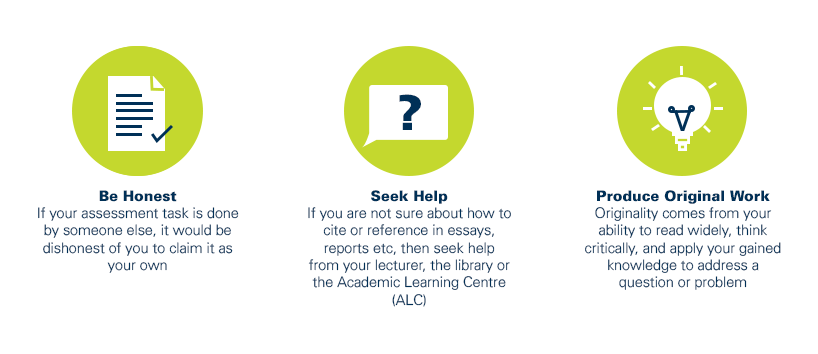
As a CQUniversity student you are expected to act honestly in all aspects of your academic work.
Any assessable work undertaken or submitted for review or assessment must be your own work. Assessable work is any type of work you do to meet the assessment requirements in the unit, including draft work submitted for review and feedback and final work to be assessed.
When you use the ideas, words or data of others in your assessment, you must thoroughly and clearly acknowledge the source of this information by using the correct referencing style for your unit. Using others’ work without proper acknowledgement may be considered a form of intellectual dishonesty.
Participating honestly, respectfully, responsibly, and fairly in your university study ensures the CQUniversity qualification you earn will be valued as a true indication of your individual academic achievement and will continue to receive the respect and recognition it deserves.
As a student, you are responsible for reading and following CQUniversity’s policies, including the Student Academic Integrity Policy and Procedure. This policy sets out CQUniversity’s expectations of you to act with integrity, examples of academic integrity breaches to avoid, the processes used to address alleged breaches of academic integrity, and potential penalties.
What is a breach of academic integrity?
A breach of academic integrity includes but is not limited to plagiarism, self-plagiarism, collusion, cheating, contract cheating, and academic misconduct. The Student Academic Integrity Policy and Procedure defines what these terms mean and gives examples.
Why is academic integrity important?
A breach of academic integrity may result in one or more penalties, including suspension or even expulsion from the University. It can also have negative implications for student visas and future enrolment at CQUniversity or elsewhere. Students who engage in contract cheating also risk being blackmailed by contract cheating services.
Where can I get assistance?
For academic advice and guidance, the Academic Learning Centre (ALC) can support you in becoming confident in completing assessments with integrity and of high standard.
What can you do to act with integrity?