Overview
Leadership and Integrity extensively explores issues about how leadership practices facilitate organisational effectiveness. Understanding, analysing and applying the nature and effective practice of leadership are important for organisations to pursue sustainable development in the changing environment. In this unit you will examine a variety of traditional and more contemporary approaches to leadership, their effect on followers and when and how they should be applied. You will also consider leadership in a cross-cultural context and how different leadership styles are more accepted, or less tolerated, in different cultures. You will identify the key competencies required of leaders to effectively influence followers whilst demonstrating a high degree of integrity. Using advanced reflective practice as the basis for personal development, you will be required to research, reflect on and acquire the conceptual knowledge, behavioural skills and attitudinal components of specific leadership competencies needed to be an effective leader.
Details
Pre-requisites or Co-requisites
Students enrolled in CL20 (Master of Business Administration), CC52 (Graduate Diploma in Business Administration), CL21 (Master of Business Management), and CM35 (Graduate Diploma of Leading Organisational Change) can enrol in this unit. Students in other Masters courses who have greater than three years relevant work or professional experience, i.e. they meet the entry criteria to CL20 may also enrol, subject to verification.
Important note: Students enrolled in a subsequent unit who failed their pre-requisite unit, should drop the subsequent unit before the census date or within 10 working days of Fail grade notification. Students who do not drop the unit in this timeframe cannot later drop the unit without academic and financial liability. See details in the Assessment Policy and Procedure (Higher Education Coursework).
Offerings For Term 2 - 2026
Attendance Requirements
All on-campus students are expected to attend scheduled classes - in some units, these classes are identified as a mandatory (pass/fail) component and attendance is compulsory. International students, on a student visa, must maintain a full time study load and meet both attendance and academic progress requirements in each study period (satisfactory attendance for International students is defined as maintaining at least an 80% attendance record).
Recommended Student Time Commitment
Each 6-credit Postgraduate unit at CQUniversity requires an overall time commitment of an average of 12.5 hours of study per week, making a total of 150 hours for the unit.
Class Timetable
Assessment Overview
Assessment Grading
This is a graded unit: your overall grade will be calculated from the marks or grades for each assessment task, based on the relative weightings shown in the table above. You must obtain an overall mark for the unit of at least 50%, or an overall grade of 'pass' in order to pass the unit. If any 'pass/fail' tasks are shown in the table above they must also be completed successfully ('pass' grade). You must also meet any minimum mark requirements specified for a particular assessment task, as detailed in the 'assessment task' section (note that in some instances, the minimum mark for a task may be greater than 50%). Consult the University's Grades and Results Policy for more details of interim results and final grades.
All University policies are available on the CQUniversity Policy site.
You may wish to view these policies:
- Grades and Results Policy
- Assessment Policy and Procedure (Higher Education Coursework)
- Review of Grade Procedure
- Student Academic Integrity Policy and Procedure
- Academic Progression Policy and Procedure
- Student Refund and Credit Balance Policy and Procedure
- Complaints Policy and Procedure
- Information and Communications Technology Acceptable Use Policy and Procedure
This list is not an exhaustive list of all University policies. The full list of University policies are available on the CQUniversity Policy site.
Feedback, Recommendations and Responses
Every unit is reviewed for enhancement each year. At the most recent review, the following staff and student feedback items were identified and recommendations were made.
Feedback from SUTE
I really enjoyed this unit and found it extremely valuable. It helped me identify the areas of skills I have to develop to improve my leadership skills.
Diagnostic tool-based class exercise to learn how to address behavioural patterns.
Feedback from Feedback from students.
Lecturer's knowledge and efforts to engage with students.
Continue to provide timely feedback and encourage students to contact the unit leader/lecturers for assistance.
Feedback from SUTE
Reflective essay (third assignment) provides an excellent opportunity to assess the learning outcomes
Provide structured guidelines for improving the quality of the reflective essay by using the theories and diagnostic tools
- Analyse and critically reflect on the contribution made by leaders in different organisational settings
- Develop an advanced and integrated understanding of the different approaches to leadership and integrity behaviours and the impact on followers
- Develop, through independent research, an advanced and integrated understanding of the competencies and their conceptual, behavioural and attitudinal foundations, that underpin successful leadership development and integrity
- Critically assess the leadership challenges and tasks at different levels of the organisation that contribute to effectiveness
- Analyse critically and reflect on cultural differences in leadership and the implication for followers.
Alignment of Assessment Tasks to Learning Outcomes
| Assessment Tasks | Learning Outcomes | ||||
|---|---|---|---|---|---|
| 1 | 2 | 3 | 4 | 5 | |
| 1 - Presentation - 30% | |||||
| 2 - Literature Review or Systematic Review - 40% | |||||
| 3 - Reflective Practice Assignment - 30% | |||||
Alignment of Graduate Attributes to Learning Outcomes
| Graduate Attributes | Learning Outcomes | ||||
|---|---|---|---|---|---|
| 1 | 2 | 3 | 4 | 5 | |
| 1 - Knowledge | |||||
| 2 - Communication | |||||
| 3 - Cognitive, technical and creative skills | |||||
| 4 - Research | |||||
| 5 - Self-management | |||||
| 6 - Ethical and Professional Responsibility | |||||
| 7 - Leadership | |||||
| 8 - First Nations Knowledges | |||||
| 9 - Aboriginal and Torres Strait Islander Cultures | |||||
Textbooks
There are no required textbooks.
Additional Textbook Information
The students are required to read the selected articles and book chapters for each week's topics.
Case studies will be posted on the Moodle site for discussion at the weekly workshops.
IT Resources
- CQUniversity Student Email
- Internet
- Unit Website (Moodle)
- Students require access to digital devices and applications with audio-video capability to enable participation in online sessions
All submissions for this unit must use the referencing style: American Psychological Association 7th Edition (APA 7th edition)
For further information, see the Assessment Tasks.
m.tanveer@cqu.edu.au
Week 1- Introduction to Leadership
Begin Date: 13 Jul 2026Module/Topic
Discussing introduction to leadership and integrity.
Chapter
Cole, K., (2019), Leadership and Management: Theory and Practice, 257-287, Cengage Learning.
Chapter 10
Events and Submissions/Topic
Introduction discussion on requirements of Unit and assessments.
Week 2- Approaches to Leadership
Begin Date: 20 Jul 2026Module/Topic
Discuss
· Contingency and Situational Leadership.
· Transformational and Transactional Leadership.
Chapter
Tabrizi, B., Lam, E., Girard, K., & Irvin, V. (2019). Digital transformation is not about technology. Harvard Business Review, 13(March), 1-6.
Events and Submissions/Topic
Discussion on Behaviors of Leaders with examples of past and contemporary leaders.
Group Formation for Assessment 1 and Assessment briefing.
Week 3- Leadership Competencies: Power and Influence
Begin Date: 27 Jul 2026Module/Topic
Discuss the Conceptual Knowledge and Sources of Power (personal and organizational).
Behavioral characteristics of managers with influence.
Chapter
Lunenburg, F. C. (2012). Power and leadership: An influence process. International Journal of Management, Business, and Administration, 15(1), 1-9.
Events and Submissions/Topic
Case study with questions: Focus on Power.
Completion of Self-Assessment diagnostic tool.
Week 4- Leadership Competencies: Credibility and Visibility
Begin Date: 03 Aug 2026Module/Topic
Behavioral characteristics of managers with credibility.
Link to Power bases.
Chapter
Williams, R. I., Raffo, D. M., Randy Clark, W., & Clark, L. A. (2023). A systematic review of leader credibility: its murky framework needs clarity. Management Review Quarterly, 73(4), 1751-1794.
Men, L. R. (2012). CEO credibility perceived organizational reputation, and employee engagement. Public Relations Review, 38(1), 171-173.
Events and Submissions/Topic
Completion of Diagnostic tools: (1) Visibility (2) Leaders Self Insight.
Week 5- Leadership Competencies: Positive Outlook
Begin Date: 10 Aug 2026Module/Topic
Behavioral characteristics of managers with positive outlook.
Chapter
Shelton, C. D., Hein, S. D., & Phipps, K. A. (2022). Positive and proactive leadership: disentangling the relationships between stress, resilience, leadership style and leader satisfaction/well-being. International Journal of Organizational Analysis, 30(2), 408-429.
Moldoveanu, M., & Narayandas, D. (2019). The future of leadership development. Harvard Business Review, 97(2), 40-48.
Events and Submissions/Topic
Student group discussion on proactive and reactive people in business with examples.
Assessment 2 Briefing.
Week 6- Leadership Traits
Begin Date: 17 Aug 2026Module/Topic
Personality traits, characteristics, and behaviors of effective leaders.
Chapter
DuBrin.A., (9th Ed), (2018), In Leadership: Research Findings, Practice and Skills, Cengage Learning.
Chapter 2
Events and Submissions/Topic
Group Presentations: In class presentations and online for distance students.
Assessment 2 Briefing.
Assessment 1- Professional Presentation and Executive Summary Due: Week 6 Friday (21 Aug 2026) 6:00 pm AEST
Vacation Week
Begin Date: 24 Aug 2026Module/Topic
Chapter
Events and Submissions/Topic
Week 7- Complexity of Leadership
Begin Date: 31 Aug 2026Module/Topic
Discussion of complexities of leadership and impact on followers.
Chapter
Harrison, J. S., Thurgood, G. R., Boivie, S., & Pfarrer, M. D. (2019). Measuring CEO personality: Developing, validating, and testing a linguistic tool. Strategic Management Journal, 40(8), 1316-1330.
Marion, R., & Uhl-Bien, M. (2001). Leadership in complex organizations. The leadership Quarterly, 12(4), 389-418.
Events and Submissions/Topic
Completion of Myers Brigg Personality tool.
Week 8- Contemporary Approaches to Leadership I
Begin Date: 07 Sep 2026Module/Topic
Discuss
· Ethical Leadership and Integrity
· Courage and Moral Leadership
· Authentic Leadership.
Chapter
Lakshmi, N. (2023). Navigating Leadership Horizons: Strategies for 21st Century Organizations. NOLEGEIN-Journal of Leadership & Strategic Management, 6(2), 15-20.
George, B., Sims, P., McLean, A. N., & Mayer, D. (2007). Discovering your authentic leadership. Harvard Business Review, 85(2), 129.
Events and Submissions/Topic
In-class discussion on contemporary approaches to leadership with examples.
Briefing on Assessment 3.
Week 9- Contemporary Approaches to Leadership II
Begin Date: 14 Sep 2026Module/Topic
Contemporary and Emerging Approaches:
Followership.
Stewardship and Servant. Leadership.
Chapter
Eva, N., Robin, M., Sendjaya, S., Van Dierendonck, D., & Liden, R. C. (2019). Servant leadership: A systematic review and call for future research. The Leadership Quarterly, 30(1), 111-132.
Martela, F. (2023). The outsized benefits of" minimalist" leadership. Harvard Business Review.
Events and Submissions/Topic
In-class discussion on contemporary approaches to leadership with examples.
Finalizing assessment 2.
Week 10- Contemporary Approaches to Leadership III
Begin Date: 21 Sep 2026Module/Topic
Discuss
· Charismatic Leadership.
· Leadership and Emotional Intelligence.
Chapter
Wowak, A. J., Mannor, M. J., Arrfelt, M., & McNamara, G. (2016). Earthquake or glacier? How CEO charisma manifests in firm strategy over time. Strategic Management Journal, 37(3), 586-603.
Events and Submissions/Topic
In-class discussion on contemporary approaches to leadership with examples.
Assessment 2- Conceptual Review of Leadership Competencies Due: Week 10 Tuesday (22 Sept 2026) 6:00 pm AEST
Week 11- Leadership Application: International Perspectives
Begin Date: 28 Sep 2026Module/Topic
Application and Analysis of
· Leadership Practice.
· International Perspectives of Leadership.
· International Leadership Competencies.
Chapter
Rahman, A. (2018). Leadership for multicultural teams: The challenges in managing cross-cultural conflicts.
What Makes You “Multicultural” Knowledge of more than one culture can often help you create innovative solutions. Harvard Business Review.
Events and Submissions/Topic
Case Study: Building a Multi-Cultural Team
Assessment 3 discussion.
Week 12- Crisis Leadership
Begin Date: 05 Oct 2026Module/Topic
Discuss
· Crisis Leadership Competencies
· Crisis Risk Assessment Model
· Learning Organizations.
Chapter
Mitter, R., & Johnson, E. (2021). What the west gets wrong about China. Harvard Business Review, 99(3), 42-48.
Petriglieri, G. (2020). The psychology behind effective crisis leadership. Harvard Business Review, 22.
Events and Submissions/Topic
In-class discussion on leadership crisis with examples.
Assessment 3 discussion.
Exam Week
Begin Date: 12 Oct 2026Module/Topic
Chapter
Events and Submissions/Topic
Vacation/Exam Week
Begin Date: 19 Oct 2026Module/Topic
Chapter
Events and Submissions/Topic
1 Presentation
Format: Professional Presentation and Executive Summary
Length: 15-20 minutes each
Weight: 30 marks in total
15 marks will be allocated to the group for the Executive Summary
15 marks will be allocated to each student for their presentation.
Task: The facilitator will nominate a specific task or analysis. The presentation will provide an opportunity for groups to examine leadership practice using accepted leadership models and perspectives and assess the impact on followers.
Students are to prepare a presentation addressing a specific aspect of leadership practice. Students must upload their presentation, which consists of the PowerPoint slides, an executive summary of approximately 1000 +/-10% words, and a reference list to the Moodle site by the due date.
Students will be allocated into groups during the introductory session. The size and composition of groups will be determined by the class facilitator.
This is a pass-fail activity, and students must be in a group; students cannot undertake this task individually.
Submit your assessment via the Moodle site. Late submissions incur a penalty of 5% per day.
Week 6 Friday (21 Aug 2026) 6:00 pm AEST
Presentation – WEEK 6 Workshop (Online students will present in person via Zoom. Face-to-face students will present in class). Report - WEEK 6 Friday 29th August 2025, 6 pm (AEST).
Week 8 Friday (11 Sept 2026)
Formal feedback is provided.
- Quality of research – Demonstrate a thorough knowledge of relevant concepts/materials through the use of a minimum of 12 academic quality sources (including a minimum of five relevant peer-reviewed academic journal articles).
- Application of theory – Ability to incorporate relevant key leadership terms, theories, models, and concepts.
- Findings and recommendations - Ability to present key findings and recommendations in a business presentation to expected professional standards.
- Presentation structure - Concise and structured presentation with introduction, main presentation, and conclusion.
- Delivery – Ability to effectively use audio visuals and verbal communication delivered within the time allocation.
- Teamwork - Ability to work collaboratively and effectively as a team.
As post-graduate students, you are required to engage in research as per the Australian Quality Framework (AQF) guidelines. Two specific requirements need to be considered:
1. Students need to demonstrate “a body of knowledge that includes the understanding of recent developments in a discipline and/or area of professional practice", and
2. Students must demonstrate "knowledge of research principles and methods applicable to a field of work and/or learning”.
Each Masters unit has several required readings in terms of academic texts, journals, and business publications that represent the appropriate body of knowledge and recent developments referred to by the AQF. To demonstrate the ability to engage in appropriate research, students should read and utilize these texts and journals, and publications. As post-graduate students, you are expected to research beyond this minimum standard through additional texts, journals, and studies to demonstrate an ability to engage in independent research. Your attention is drawn to the University’s stated position on plagiarism. THE WORK OF OTHERS, WHICH IS INCLUDED IN THE ASSIGNMENT, MUST BE ATTRIBUTED TO ITS SOURCE (a full list of references must be submitted as part of the assessment.
Marking Criteria
- Overview of two leaders’ behaviors 60%
- Demonstrated Research and Referencing 30%
- Ability to present information, analysis, and key findings 10%
A detailed rubric is available in the Assessment Folder on the Unit Moodle Site, which provides further information regarding this assessment.
- Analyse and critically reflect on the contribution made by leaders in different organisational settings
- Develop an advanced and integrated understanding of the different approaches to leadership and integrity behaviours and the impact on followers
- Analyse critically and reflect on cultural differences in leadership and the implication for followers.
2 Literature Review or Systematic Review
Format: Individual Report
Length: 1800-2000 words +/-10%. Excluding the coversheet, table of contents and references.
Weight: 40%
Task: This Assessment is an exploration of "Leadership competencies" examined in this unit. Students must select ONE competency that they wish to develop. (Note - Assessment 3 is a self-analysis and reflection using the same competency as selected in Assessment 2.)
- Power and Influence
- Visibility/Credibility
- Positive Outlook/Proactivity
1. Summarize the conceptual knowledge that typifies leaders who have developed the competency you have selected.
2. Reference the key authors associated with the input-based competency movement.
3. Describe the behaviours that leaders who have developed this competency exhibit. This is an important aspect of the report.
4. Identify two recent articles that present evidence that your chosen competency leads to superior performance.
Week 10 Tuesday (22 Sept 2026) 6:00 pm AEST
Students are to submit their work via the Moodle site. Please note that late submission incurs a penalty of 5% per day.
Week 12 Tuesday (6 Oct 2026)
Feedback will be provided.
- Clear definition and overview of the chosen leadership competencies.
- A concise summary of the conceptual knowledge of the chosen competency.
- A discussion of the behaviours exhibited by leaders who have developed this competency.
- Identification of at least two (2) sources of evidence that leaders with this competency are more effective or demonstrate superior performance.
- Breadth and quality of research, using a minimum of 12-16 scholarly academic sources.
- Correctly using the APA in-text referencing system to cite academic sources.
- Formatting requirements- Times New Roman/ Arial, line spacing 1.5, size 12.
As post-graduate students, you are required to engage in research as per the Australian Quality Framework (AQF) guidelines. Two specific requirements need to be considered:
1. Students need to demonstrate “a body of knowledge that includes the understanding of recent developments in a discipline and/or area of professional practice", and
2. Students must demonstrate "knowledge of research principles and methods applicable to a field of work and/or learning”.
Each topic in this unit has several required weekly readings in terms of academic texts, journals, and business publications that represent the appropriate body of knowledge and recent developments referred to by the AQF. In order to demonstrate the ability to engage in appropriate research, students should read and utilize these texts and journals, and publications, and as post-graduate students, indicate a willingness to research beyond this minimum standard through additional texts, journals, and studies that demonstrate an ability to engage in independent research.
Marking Criteria
- Leadership Competency Analysis 60%
- Demonstrated Research and Referencing 30%
- Report Presentation 10%
A detailed rubric is available in the Assessment Folder on the Unit Moodle Site which provides further information regarding this assessment.
- Develop an advanced and integrated understanding of the different approaches to leadership and integrity behaviours and the impact on followers
- Develop, through independent research, an advanced and integrated understanding of the competencies and their conceptual, behavioural and attitudinal foundations, that underpin successful leadership development and integrity
- Critically assess the leadership challenges and tasks at different levels of the organisation that contribute to effectiveness
- Analyse critically and reflect on cultural differences in leadership and the implication for followers.
3 Reflective Practice Assignment
Format: Professional written essay – as it is a reflective essay, it must be written in the first person.
Length: 2000 +/- 10% words. Excluding reference list.
Weight: 30%
Task: The purpose of this assessment is to increase your self-awareness by analysing and reflecting on your level of leadership capability. There are several analytical components to this assessment that include a self-analysis reflection and the development of a personal developmental plan.
I. Describe a recent work-related incident that involves the specific leadership competency you identified in Assessment Two. Describe specific behaviours, actions, and attitudes you displayed in the incident.
II. Using the conceptual and behavioural framework of this competency, identify the extent to which you demonstrated knowledge of this competency via your actions, and the extent to which you demonstrated the behavioural characteristics of leaders who have developed this competency.
III. Before commencing this assessment, complete a minimum of five (5) diagnostic tools, two (2) of which may be general personality type tools, including the MBTI, Big 5, Quinn Management or Authentic Leadership, and three (3) tools directly assessing your chosen competency. Include the results from your diagnostic tools in the Appendix.
IV. Compare and contrast your actual results from the diagnostic tools and discuss what they mean regarding your preferences. This information can be used as a reflection to ascertain the key knowledge or behavioural gaps in the incident you described. You must identify a minimum of two learning needs from this behavioural and conceptual analysis.
V. Map a Personal Developmental Plan:
Include a minimum of five (5) specific activities designed to address the conceptual and behavioural knowledge you require to enhance your knowledge and skills for your selected competency (e.g. readings from recognized texts or academic journals, attendance at specific workshops or training sessions organized by third parties including professional institutes, mentoring, network activities, courses from VET colleges, electives at CQU relevant to the competency, or journaling.) Include a brief outline of timelines and state the expected outcomes.
Exam Week Friday (16 Oct 2026) 6:00 pm AEST
Students are to submit their work via the Moodle site. Please note that late submission incurs a penalty of 5% per day.
Exam Week Friday (16 Oct 2026)
Feedback will be provided.
- Inclusion and understanding of a minimum of five relevant diagnostic tools. (Results sheet only attached as an appendix.)
- Demonstration of self-analysis, including reflection on diagnostic results directly linked to examples of own behaviour and relevant conceptual and behavioural competency literature.
- Presentation of a development plan that identifies specific activities and appropriate timeframes for implementation, plus the expected outcomes.
- Breadth and quality of research, using a minimum of 12 academic sources.
- Correctly using the APA in-text referencing system to cite academic sources.
As post-graduate students, you are required to engage in research as per the Australian Quality Framework (AQF) guidelines. Two specific requirements need to be considered:
1. Students need to demonstrate “a body of knowledge that includes the understanding of recent developments in a discipline and/or area of professional practice", and
2. Students must demonstrate "knowledge of research principles and methods applicable to a field of work and/or learning”.
Each topic in this unit has several required weekly readings in terms of academic texts, journals, and business publications that represent the appropriate body of knowledge and recent developments referred to by the AQF. In order to demonstrate the ability to engage in appropriate research, students should read and utilize these texts and journals, and publications, and as post-graduate students, indicate a willingness to research beyond this minimum standard through additional texts, journals, and studies that demonstrate an ability to engage in independent research.
Marking Criteria
- Diagnostic Tools 30%
- Reflective Essay, Analysis and Learning Contract 50%
- Demonstrated Research and Referencing 10%
- Report Presentation 10%
A detailed rubric is available in the Assessment Folder on the Unit Moodle Site which provides further information regarding this assessment.
- Analyse and critically reflect on the contribution made by leaders in different organisational settings
- Develop, through independent research, an advanced and integrated understanding of the competencies and their conceptual, behavioural and attitudinal foundations, that underpin successful leadership development and integrity
- Critically assess the leadership challenges and tasks at different levels of the organisation that contribute to effectiveness
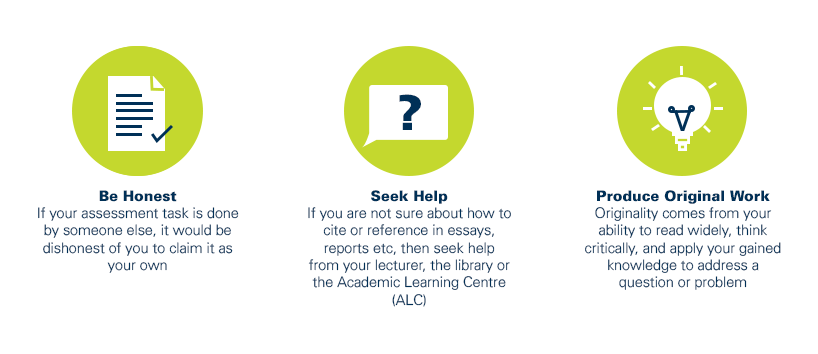
As a CQUniversity student you are expected to act honestly in all aspects of your academic work.
Any assessable work undertaken or submitted for review or assessment must be your own work. Assessable work is any type of work you do to meet the assessment requirements in the unit, including draft work submitted for review and feedback and final work to be assessed.
When you use the ideas, words or data of others in your assessment, you must thoroughly and clearly acknowledge the source of this information by using the correct referencing style for your unit. Using others’ work without proper acknowledgement may be considered a form of intellectual dishonesty.
Participating honestly, respectfully, responsibly, and fairly in your university study ensures the CQUniversity qualification you earn will be valued as a true indication of your individual academic achievement and will continue to receive the respect and recognition it deserves.
As a student, you are responsible for reading and following CQUniversity’s policies, including the Student Academic Integrity Policy and Procedure. This policy sets out CQUniversity’s expectations of you to act with integrity, examples of academic integrity breaches to avoid, the processes used to address alleged breaches of academic integrity, and potential penalties.
What is a breach of academic integrity?
A breach of academic integrity includes but is not limited to plagiarism, self-plagiarism, collusion, cheating, contract cheating, and academic misconduct. The Student Academic Integrity Policy and Procedure defines what these terms mean and gives examples.
Why is academic integrity important?
A breach of academic integrity may result in one or more penalties, including suspension or even expulsion from the University. It can also have negative implications for student visas and future enrolment at CQUniversity or elsewhere. Students who engage in contract cheating also risk being blackmailed by contract cheating services.
Where can I get assistance?
For academic advice and guidance, the Academic Learning Centre (ALC) can support you in becoming confident in completing assessments with integrity and of high standard.
What can you do to act with integrity?