Overview
In today’s complex and interconnected world, ethical leadership and sustainable business practices are more important than ever. This unit offers a dynamic exploration of personal and business ethics alongside the evolving concept of business sustainability. You will critically analyse how socio-cultural environments shape business operations, with a focus on the significant variations across global cities and countries. Through engaging case studies and real-world examples, you’ll examine ethical decision-making frameworks used by managers and how these are influenced by diverse stakeholder groups. You’ll explore the key debates surrounding sustainable development and consider its implications for organisations operating at both local and global levels. This unit also investigates the vital relationship between personal values and organisational ethics, equipping you with tools to navigate ethical challenges posed by technological change, societal expectations, and cultural diversity. By the end of the unit, you’ll not only be prepared to identify and respond to ethical dilemmas in business settings but also to lead with integrity and purpose in a rapidly evolving professional landscape.
Details
Pre-requisites or Co-requisites
There are no requisites for this unit.
Important note: Students enrolled in a subsequent unit who failed their pre-requisite unit, should drop the subsequent unit before the census date or within 10 working days of Fail grade notification. Students who do not drop the unit in this timeframe cannot later drop the unit without academic and financial liability. See details in the Assessment Policy and Procedure (Higher Education Coursework).
Offerings For Term 1 - 2026
Attendance Requirements
All on-campus students are expected to attend scheduled classes - in some units, these classes are identified as a mandatory (pass/fail) component and attendance is compulsory. International students, on a student visa, must maintain a full time study load and meet both attendance and academic progress requirements in each study period (satisfactory attendance for International students is defined as maintaining at least an 80% attendance record).
Recommended Student Time Commitment
Each 6-credit Postgraduate unit at CQUniversity requires an overall time commitment of an average of 12.5 hours of study per week, making a total of 150 hours for the unit.
Class Timetable
Assessment Overview
Assessment Grading
This is a graded unit: your overall grade will be calculated from the marks or grades for each assessment task, based on the relative weightings shown in the table above. You must obtain an overall mark for the unit of at least 50%, or an overall grade of 'pass' in order to pass the unit. If any 'pass/fail' tasks are shown in the table above they must also be completed successfully ('pass' grade). You must also meet any minimum mark requirements specified for a particular assessment task, as detailed in the 'assessment task' section (note that in some instances, the minimum mark for a task may be greater than 50%). Consult the University's Grades and Results Policy for more details of interim results and final grades.
All University policies are available on the CQUniversity Policy site.
You may wish to view these policies:
- Grades and Results Policy
- Assessment Policy and Procedure (Higher Education Coursework)
- Review of Grade Procedure
- Student Academic Integrity Policy and Procedure
- Academic Progression Policy and Procedure
- Student Refund and Credit Balance Policy and Procedure
- Complaints Policy and Procedure
- Information and Communications Technology Acceptable Use Policy and Procedure
This list is not an exhaustive list of all University policies. The full list of University policies are available on the CQUniversity Policy site.
Feedback, Recommendations and Responses
Every unit is reviewed for enhancement each year. At the most recent review, the following staff and student feedback items were identified and recommendations were made.
Feedback from Feedback in class.
Students appreciate the experience and knowledge sharing of the teaching team.
The recommendation is that the teaching team remain the same to ensure consistency of delivery across campuses.
Feedback from SUTE Commets 2025/1.
Should involve more interactive sessions rather than just watch videos.
The recommendation is to include more interactive sessions with short, engaging quizzes and polls in classes. Having some live lectures could be included.
- Examine the interconnections among business ethics, morality, law, sustainability, and globalisation, and evaluate their influence on business practices and societal outcomes.
- Explain and assess key elements of corporate social responsibility and sustainability, including the United Nations’ 17 Sustainable Development Goals (SDGs), and analyse their impact on business strategy and operations.
- Apply major ethical theories and decision-making frameworks to real-world business scenarios to enhance ethical reasoning and strategic outcomes.
- Evaluate how ethics is managed within organisations by applying tools and concepts such as corporate social responsibility initiatives, codes of ethics and conduct, and anti-bribery strategies to promote ethical behaviour in both business and broader civil society.
- Apply widely accepted professional ethical standards in workplace practices and interpersonal interactions.
The unit does not link to any specific external professional accreditation.
Alignment of Assessment Tasks to Learning Outcomes
| Assessment Tasks | Learning Outcomes | ||||
|---|---|---|---|---|---|
| 1 | 2 | 3 | 4 | 5 | |
| 1 - Reflective Practice Assignment - 50% | |||||
| 2 - Presentation and Written Assessment - 30% | |||||
| 3 - Take Home Exam - 20% | |||||
Alignment of Graduate Attributes to Learning Outcomes
| Graduate Attributes | Learning Outcomes | ||||
|---|---|---|---|---|---|
| 1 | 2 | 3 | 4 | 5 | |
| 1 - Knowledge | |||||
| 2 - Communication | |||||
| 3 - Cognitive, technical and creative skills | |||||
| 4 - Research | |||||
| 5 - Self-management | |||||
| 6 - Ethical and Professional Responsibility | |||||
| 7 - Leadership | |||||
| 8 - First Nations Knowledges | |||||
| 9 - Aboriginal and Torres Strait Islander Cultures | |||||
Textbooks
There are no required textbooks.
IT Resources
- CQUniversity Student Email
- Internet
- Unit Website (Moodle)
All submissions for this unit must use the referencing style: American Psychological Association 7th Edition (APA 7th edition)
For further information, see the Assessment Tasks.
q.nisar@cqu.edu.au
a.kaul@cqu.edu.au
Week 1
Begin Date: 09 Mar 2026Module/Topic
An Introduction to Business Ethics and Society
Chapter
Ferrell, O.C., Fraedrich, J., and Ferrell, L. (2018) Business Ethics: Ethical Decision Making & Cases, (12th edition)., Southwest College. Chapter 1.
McDonald, G. (2015). Business Ethics: A Contemporary Approach, Cambridge University Press. Chapter 1.
Carroll, A.B., and Brown, J. (2022) Business and Society: Ethics, Sustainability, and Stakeholder Management, Cengage Learning Australia. Chapter 7.
Please refer to the Moodle site for unit notes, additional readings, and journal articles.
Events and Submissions/Topic
The weekly content is presented in a series of short lecture videos. Please watch these videos in advance of the workshop.
The workshop contains a range of interactive activities, which are aimed at enhancing your competence in business ethics and sustainability
Week 2
Begin Date: 16 Mar 2026Module/Topic
Individual Values and Morality
Chapter
Ferrell, O.C., Fraedrich, J., and Ferrell, L. (2018) Business Ethics: Ethical Decision Making & Cases, (12th edition)., Southwest College. Chapters 5 & 6.
McDonald, G. (2015). Business Ethics: A Contemporary Approach, Cambridge University Press. Chapter 11.
Carroll, A.B., and Brown, J. (2022) Business and Society: Ethics, Sustainability, and Stakeholder Management, Cengage Learning Australia. Chapter 7.
Please refer to the Moodle site for unit notes, additional readings, and journal articles.
Events and Submissions/Topic
The weekly content is presented in a series of short lecture videos. Please watch these videos in advance of the workshop.
The workshop contains a range of interactive activities, which are aimed at enhancing your competence in business ethics and sustainability.
Compulsory Moral Accountability Cases.
Compulsory Moral Inventory Diagnostic Tool.
Week 3
Begin Date: 23 Mar 2026Module/Topic
Values, Culture, and Relativism
Chapter
Ferrell, O.C., Fraedrich, J., and Ferrell, L. (2018) Business Ethics: Ethical Decision Making & Cases, (12th edition)., Southwest College. Chapter 6 (Section on Relativism).
McDonald, G. (2015). Business Ethics: A Contemporary Approach, Cambridge University Press. Chapter 11.
Carroll, A.B., and Brown, J. (2022) Business and Society: Ethics, Sustainability, and Stakeholder Management, Cengage Learning Australia. Chapter 10.
Please refer to the Moodle site for unit notes, additional readings, and journal articles.
Events and Submissions/Topic
The weekly content is presented in a series of short lecture videos. Please watch these videos in advance of the workshop.
The workshop contains a range of interactive activities, which are aimed at enhancing your competence in business ethics and sustainability.
Compulsory Relativism Case Study
Compulsory Values Inventory Diagnostic Tool
Week 4
Begin Date: 30 Mar 2026Module/Topic
Ethical Decision Making
Chapter
Ferrell, O.C., Fraedrich, J., and Ferrell, L. (2018) Business Ethics: Ethical Decision Making & Cases, (12th edition)., Southwest College. Chapters 5 & 6.
McDonald, G. (2015). Business Ethics: A Contemporary Approach, Cambridge University Press. Chapters 10 & 11.
Please refer to the Moodle site for unit notes, additional readings, and journal articles.
Events and Submissions/Topic
The weekly content is presented in a series of short lecture videos. Please watch these videos in advance of the workshop.
The workshop contains a range of interactive activities, which are aimed at enhancing your competence in business ethics and sustainability.
Compulsory Ethical Case Studies.
Week 5
Begin Date: 06 Apr 2026Module/Topic
Business, Society, and Stakeholder Approach
Chapter
Carroll, A.B., and Brown, J. (2022) Business and Society: Ethics, Sustainability, and Stakeholder Management, Cengage Learning Australia. Chapters 1 & 3.
McDonald, G. (2015). Business Ethics: A Contemporary Approach, Cambridge University Press. Chapters 1 & 3.
Events and Submissions/Topic
The weekly content is presented in a series of short lecture videos. Please watch these videos in advance of the workshop.
The workshop contains a range of interactive activities, which are aimed at enhancing your competence in business ethics and sustainability.
Week 6
Begin Date: 13 Apr 2026Module/Topic
Corporate Social Responsibility
Chapter
Ferrell, O.C., Fraedrich, J., and Ferrell, L. (2018) Business Ethics: Ethical Decision Making & Cases, (12th edition)., Southwest College. Chapter 2.
Carroll, A.B., and Brown, J. (2022) Business and Society: Ethics, Sustainability, and Stakeholder Management, Cengage Learning Australia. Chapter 2.
McDonald, G. (2015). Business Ethics: A Contemporary Approach, Cambridge University Press. Chapter 2.
Please refer to unit notes on the Moodle site for additional text and journal readings.
Events and Submissions/Topic
The weekly content is presented in a series of short lecture videos. Please watch these videos in advance of the workshop.
The workshop contains a range of interactive activities, which are aimed at enhancing your competence in business ethics and sustainability.
Reflective Essay: Ethical Decision Making Due: Week 6 Friday (17 Apr 2026) 11:59 pm AEST
Vacation Week
Begin Date: 20 Apr 2026Module/Topic
Chapter
Events and Submissions/Topic
Week 7
Begin Date: 27 Apr 2026Module/Topic
Developing Ethical Organizations
Chapter
Ferrell, O.C., Fraedrich, J., and Ferrell, L. (2018) Business Ethics: Ethical Decision Making & Cases, (12th edition)., Southwest College. Chapters 7, 8, & 9.
McDonald, G. (2015). Business Ethics: A Contemporary Approach, Cambridge University Press. Chapter 12.
Carroll, A.B., and Brown, J. (2022) Business and Society: Ethics, Sustainability, and Stakeholder Management, Cengage Learning Australia. Chapter 8.
Please refer to unit notes on the Moodle site for additional text and journal readings.
Events and Submissions/Topic
The weekly content is presented in a series of short lecture videos. Please watch these videos in advance of the workshop.
The workshop contains a range of interactive activities, which are aimed at enhancing your competence in business ethics and sustainability.
Week 8
Begin Date: 04 May 2026Module/Topic
Sustainability
Chapter
Ferrell, O.C., Fraedrich, J., and Ferrell, L. (2018) Business Ethics: Ethical Decision Making & Cases, (12th edition)., Southwest College. Chapter 12.
McDonald, G. (2015). Business Ethics: A Contemporary Approach, Cambridge University Press. Chapter 2.
Carroll, A.B., and Brown, J. (2022) Business and Society: Ethics, Sustainability, and Stakeholder Management, Cengage Learning Australia. Chapter 15.
Please refer to unit notes on the Moodle site for additional text and journal readings.
Events and Submissions/Topic
The weekly content is presented in a series of short lecture videos. Please watch these videos in advance of the workshop.
The workshop contains a range of interactive activities, which are aimed at enhancing your competence in business ethics and sustainability.
Week 9
Begin Date: 11 May 2026Module/Topic
The Role of Government and Regulation
Chapter
Carroll, A.B., and Brown, J. (2022) Business and Society: Ethics, Sustainability, and Stakeholder Management, Cengage Learning Australia. Chapters 17 & 18.
Events and Submissions/Topic
The weekly content is presented in a series of short lecture videos. Please watch these videos in advance of the workshop.
The workshop contains a range of interactive activities, which are aimed at enhancing your competence in business ethics and sustainability.
Week 10
Begin Date: 18 May 2026Module/Topic
International Business Ethics
Chapter
Ferrell, O.C., Fraedrich, J., and Ferrell, L. (2018) Business Ethics: Ethical Decision Making & Cases, (12th edition)., Southwest College. Chapter 10.
McDonald, G. (2015). Business Ethics: A Contemporary Approach, Cambridge University Press. Chapter 9.
Carroll, A.B., and Brown, J. (2022) Business and Society: Ethics, Sustainability, and Stakeholder Management, Cengage Learning Australia. Chapter 10.
Please refer to unit notes on the Moodle site for additional text and journal readings.
Events and Submissions/Topic
The weekly content is presented in a series of short lecture videos. Please watch these videos in advance of the workshop.
The workshop contains a range of interactive activities, which are aimed at enhancing your competence in business ethics and sustainability.
Week 11
Begin Date: 25 May 2026Module/Topic
Group Analysis Presentation
Chapter
Events and Submissions/Topic
Group Presentations 10-15 minutes per group. Presentation slides must be submitted before the scheduled presentation.
Distribution of case for take-home paper. Information on take-home procedure and expectations.
Week 12
Begin Date: 01 Jun 2026Module/Topic
Unit Review and Take-Home Paper Presentation
Chapter
Review of key chapters and readings.
Preparation for take-home paper.
Events and Submissions/Topic
Take Home Case Study.
Exam Week
Begin Date: 08 Jun 2026Module/Topic
Chapter
Events and Submissions/Topic
Vacation/Exam Week
Begin Date: 15 Jun 2026Module/Topic
Chapter
Events and Submissions/Topic
1 Reflective Practice Assignment
Type: Reflective Essay: Ethical Decision Making
The task is to analyze the decisions made at the time of the two cases that were discussed during workshops. Students are expected to look at each decision they made and use ethical theory to classify the approach they took, or the justifications used.
The key aspect of reflection is a critical evaluation of yourself. The students will undertake several in-class cases between weeks 2-5 and must use two (2) of the nominated cases as the basis for their self-analysis completed in class.
The unit coordinator nominates which cases will be used as part of the assessment and will release the nominated cases in Week 2 - these cases will be the required cases for this assessment. Students are not permitted to self-select cases.
Students are not to re-analyze the cases and come up with new decisions.
A detailed rubric is available on the Moodle site, providing further details for this assessment task.
This assessment requires students to adhere to the guidelines on the use of artificial intelligence tools as specified in the Artificial Intelligence Assessment Scale (AIAS) Level 1. Any misuse or lack of disclosure regarding the use of AI tools will be considered a breach of academic integrity. AIAS Level 1 states: The assessment is completed entirely without AI assistance in a controlled environment, ensuring that students rely solely on their existing knowledge, understanding, and skills. You must not use AI at any point during the assessment. You must demonstrate your core skills and knowledge.
Week 6 Friday (17 Apr 2026) 11:59 pm AEST
Assignments are to be submitted via the Moodle site. A 5% penalty is applied for assignments submitted each day past the due date.
Week 7 Friday (1 May 2026)
Results available via gradebook
Students are required to:
-
Examine the decisions made from the two cases and utilize and reflect on the results of a minimum of 2 diagnostic tools, to evaluate the interconnections among ethics, morality, law, sustainability, and globalisation and how these shaped your assumptions and values. (30%)
-
Analyse your decisions using diagnostic results and ethical theories, applying ethical frameworks and professional standards to explain your ethical position, and reflect on why you made your original decision and whether you would choose a different approach based on what you have learned. (50%)
-
Present a clear, well-structured reflective essay that meets professional ethical standards in academic communication. (10%)
-
Apply APA referencing conventions in both in text citations and the reference list. (10%)
- Examine the interconnections among business ethics, morality, law, sustainability, and globalisation, and evaluate their influence on business practices and societal outcomes.
- Apply major ethical theories and decision-making frameworks to real-world business scenarios to enhance ethical reasoning and strategic outcomes.
- Apply widely accepted professional ethical standards in workplace practices and interpersonal interactions.
2 Presentation and Written Assessment
Type: Group Presentation and Executive Report
Assessment 2 requires students to work in groups of up to four (4) members to analyze an organization, examining its external engagement through its corporate social responsibility and sustainability strategy and processes.
Each group will present as a team of consultants, such as KPMG, Ernst and Young, etc., and assume that the organization has hired them to conduct the analysis and present it to the CEO and/or Board of Directors.
This assignment requires an analysis of the organization's implementation of these policies and procedures against the models and concepts examined in the unit.
This requires students to present an analysis of the organization’s approach to CSR and sustainability using several CSR and Sustainability models as an analytical framework, including the CSR models of Carroll and Ho and other sustainability models (e.g., the United Nations' 17 SDGs, etc.).
Organizations are to be benchmarked against similar organizations (another two organizations), identifying gaps between the "best practices" and approaches of the selected organizations, and, where appropriate, a series of supported recommendations.
A detailed rubric is available in the Assessment Folder below, providing further details for this assessment task.
This assessment requires students to adhere to the guidelines on the use of artificial intelligence tools as specified in the Artificial Intelligence Assessment Scale (AIAS) Level 1. Any misuse or lack of disclosure regarding the use of AI tools will be considered a breach of academic integrity. AIAS Level 1 states: The assessment is completed entirely without AI assistance in a controlled environment, ensuring that students rely solely on their existing knowledge, understanding, and skills. You must not use AI at any point during the assessment. You must demonstrate your core skills and knowledge.
Exam Week Friday (12 June 2026) 11:59 pm AEST
Presentations will occur in the scheduled workshop of Week 11. A 5% penalty is applied for assignments submitted each day past the due date.
Vacation/Exam Week Friday (19 June 2026)
Results available via gradebook
Group Presentation (10%)
Students are to demonstrate knowledge of the subject matter and effective presentation skills by:
- Providing a concise and structured presentation with an introduction, main presentation, and conclusion. (4%)
- Effectively using audiovisuals and verbal communication delivered within the time allocation (maximum 15 minutes per group) (3%)
- Demonstrating a commitment to professional business presentation standards, paralleling those of professional consulting firms, and applying widely accepted professional ethical standards. (3%)
Executive Report (20%)
Students are to demonstrate knowledge of the subject matter and effective written skills by:
- Providing a concise overview of the content of the presentation of 1000 +/- 10% words.
- Using key CSR and sustainability models, concepts, and theories as an analytical framework to explain and assess CSR and sustainability, including the SDGs. (5%)
- Identifying the organisation's practices against the CSR and Sustainability analytical framework to evaluate how ethics is managed within organisations, including CSR initiatives, codes of ethics, and anti‑bribery strategies. (5%)
- Providing a clear set of recommendations supported by literature to enhance ethical behaviour in business and broader civil society. (5%)
- Working collaboratively and effectively as a team in line with professional ethical standards. (3%)
- Apply APA referencing conventions in both in‑text citations and the reference list. (2%)
- Explain and assess key elements of corporate social responsibility and sustainability, including the United Nations’ 17 Sustainable Development Goals (SDGs), and analyse their impact on business strategy and operations.
- Evaluate how ethics is managed within organisations by applying tools and concepts such as corporate social responsibility initiatives, codes of ethics and conduct, and anti-bribery strategies to promote ethical behaviour in both business and broader civil society.
- Apply widely accepted professional ethical standards in workplace practices and interpersonal interactions.
3 Take Home Exam
Students will be provided with a case study in Week 11, which will be the basis of an analysis to be completed in Week 13 under a time restriction of 2 hours.
The case will contain a description of decisions, contexts, and perspectives that raise ethical issues and challenges from personal, organizational, national, and international levels.
A series of questions will be provided 10 minutes before the opening of submissions that will require the application of ethical theories and concepts to reach justifiable and ethical solutions.
This is an open-book-style take-home case. Accurate definitions and theories are, therefore, expected to be at a minimum.
Whilst brief definitions and outlines of theories are expected, students will primarily be awarded marks for the accuracy and quality of their responses to ethical dilemmas.
Referencing is not required for this assessment.
This assessment requires students to adhere to the guidelines on the use of artificial intelligence tools as specified in the Artificial Intelligence Assessment Scale (AIAS) Level 1. Any misuse or lack of disclosure regarding the use of AI tools will be considered a breach of academic integrity. AIAS Level 1 states: The assessment is completed entirely without AI assistance in a controlled environment, ensuring that students rely solely on their existing knowledge, understanding, and skills. You must not use AI at any point during the assessment. You must demonstrate your core skills and knowledge.
Vacation/Exam Week Friday (19 June 2026) 8:00 pm AEST
The take-home exam will start at 6:00 pm AEST and end at 8:00 pm AEST
Vacation/Exam Week Friday (19 June 2026)
Results available via gradebook
- Apply major ethical concepts and theories to accurately identify and analyse ethical or moral issues in the case in alignment with broader considerations of morality, law, and sustainability (6%)
- Critically evaluate multiple ethical theories and decision‑making frameworks to develop well‑reasoned and defensible decision options. (6%)
- Effectively examine CSR and sustainability models, concepts, and relevant SDGs to analyse organisational responsibilities, strategy, and operations in the case. (4%)
- Accurately identify and apply relevant national and international legislation, regulatory standards, and codes of conduct to inform ethical analysis and decision‑making. (2%)
- Provide recommendations that are fully ethical, legal, and socially responsible, with the understanding that any unethical or illegal solutions will receive no credit. (2%)
- Examine the interconnections among business ethics, morality, law, sustainability, and globalisation, and evaluate their influence on business practices and societal outcomes.
- Explain and assess key elements of corporate social responsibility and sustainability, including the United Nations’ 17 Sustainable Development Goals (SDGs), and analyse their impact on business strategy and operations.
- Apply major ethical theories and decision-making frameworks to real-world business scenarios to enhance ethical reasoning and strategic outcomes.
- Evaluate how ethics is managed within organisations by applying tools and concepts such as corporate social responsibility initiatives, codes of ethics and conduct, and anti-bribery strategies to promote ethical behaviour in both business and broader civil society.
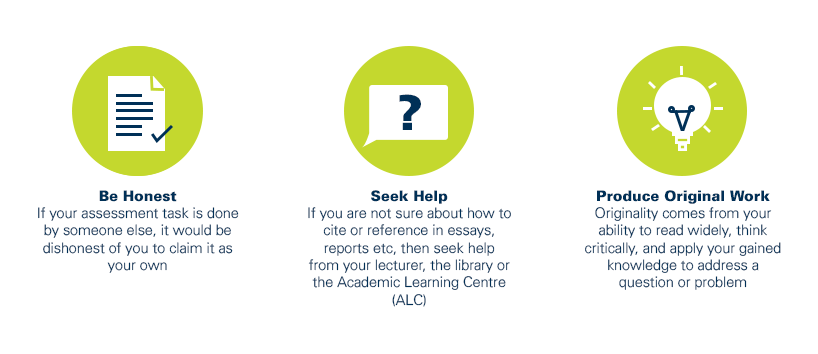
As a CQUniversity student you are expected to act honestly in all aspects of your academic work.
Any assessable work undertaken or submitted for review or assessment must be your own work. Assessable work is any type of work you do to meet the assessment requirements in the unit, including draft work submitted for review and feedback and final work to be assessed.
When you use the ideas, words or data of others in your assessment, you must thoroughly and clearly acknowledge the source of this information by using the correct referencing style for your unit. Using others’ work without proper acknowledgement may be considered a form of intellectual dishonesty.
Participating honestly, respectfully, responsibly, and fairly in your university study ensures the CQUniversity qualification you earn will be valued as a true indication of your individual academic achievement and will continue to receive the respect and recognition it deserves.
As a student, you are responsible for reading and following CQUniversity’s policies, including the Student Academic Integrity Policy and Procedure. This policy sets out CQUniversity’s expectations of you to act with integrity, examples of academic integrity breaches to avoid, the processes used to address alleged breaches of academic integrity, and potential penalties.
What is a breach of academic integrity?
A breach of academic integrity includes but is not limited to plagiarism, self-plagiarism, collusion, cheating, contract cheating, and academic misconduct. The Student Academic Integrity Policy and Procedure defines what these terms mean and gives examples.
Why is academic integrity important?
A breach of academic integrity may result in one or more penalties, including suspension or even expulsion from the University. It can also have negative implications for student visas and future enrolment at CQUniversity or elsewhere. Students who engage in contract cheating also risk being blackmailed by contract cheating services.
Where can I get assistance?
For academic advice and guidance, the Academic Learning Centre (ALC) can support you in becoming confident in completing assessments with integrity and of high standard.
What can you do to act with integrity?