Overview
This unit is designed to equip you with the knowledge and skills necessary to achieve excellence in procurement practices including sourcing, tendering, contract management, buyer-supplier relationship management, and the crucial elements of probity and integrity. You will gain valuable insights into effective strategies and processes, all while maintaining a commitment to ethical governance and sustainable procurement. Unlike traditional units on procurement, we prioritise the often-overlooked aspects of integrity and fairness, alongside harnessing innovative technologies to revolutionise procurement practices, offering a rare chance to develop a holistic understanding of the field. The unit allows you to embrace the evolving landscape of procurement, where fairness and ethical governance are paramount, and you will explore how fair and ethical dealing benefits both public and private sectors. You will also uncover the pivotal role fair dealing plays in accountability, transparency, economic participation, competitiveness, market engagement, buyer-supplier relationships, and innovation partnerships that drive organisational growth and success.
Details
Pre-requisites or Co-requisites
There are no requisites for this unit.
Important note: Students enrolled in a subsequent unit who failed their pre-requisite unit, should drop the subsequent unit before the census date or within 10 working days of Fail grade notification. Students who do not drop the unit in this timeframe cannot later drop the unit without academic and financial liability. See details in the Assessment Policy and Procedure (Higher Education Coursework).
Offerings For Term 1 - 2026
Attendance Requirements
All on-campus students are expected to attend scheduled classes - in some units, these classes are identified as a mandatory (pass/fail) component and attendance is compulsory. International students, on a student visa, must maintain a full time study load and meet both attendance and academic progress requirements in each study period (satisfactory attendance for International students is defined as maintaining at least an 80% attendance record).
Recommended Student Time Commitment
Each 12-credit Postgraduate unit at CQUniversity requires an overall time commitment of an average of 25 hours of study per week, making a total of 300 hours for the unit.
Class Timetable
Assessment Overview
Assessment Grading
This is a graded unit: your overall grade will be calculated from the marks or grades for each assessment task, based on the relative weightings shown in the table above. You must obtain an overall mark for the unit of at least 50%, or an overall grade of 'pass' in order to pass the unit. If any 'pass/fail' tasks are shown in the table above they must also be completed successfully ('pass' grade). You must also meet any minimum mark requirements specified for a particular assessment task, as detailed in the 'assessment task' section (note that in some instances, the minimum mark for a task may be greater than 50%). Consult the University's Grades and Results Policy for more details of interim results and final grades.
All University policies are available on the CQUniversity Policy site.
You may wish to view these policies:
- Grades and Results Policy
- Assessment Policy and Procedure (Higher Education Coursework)
- Review of Grade Procedure
- Student Academic Integrity Policy and Procedure
- Monitoring Academic Progress (MAP) Policy and Procedure - Domestic Students
- Monitoring Academic Progress (MAP) Policy and Procedure - International Students
- Student Refund and Credit Balance Policy and Procedure
- Student Feedback - Compliments and Complaints Policy and Procedure
- Information and Communications Technology Acceptable Use Policy and Procedure
This list is not an exhaustive list of all University policies. The full list of University policies are available on the CQUniversity Policy site.
- Apply a thorough understanding of best practices in procurement, focusing on sourcing, contracts, ethics, and technology to build strong buyer-supplier relationships
- Evaluate the multifaceted implications of fair and ethical dealing and socially and environmentally sustainable procurement practices in both public and private sectors, emphasising its impact on accountability, transparency, and economic participation
- Explore strategies and innovative technologies for cultivating mutually beneficial buyer-supplier relationships, recognising their significance in achieving procurement excellence
- Integrate procurement excellence ethical practices, innovation, technology, and sustainability into procurement processes, from sourcing to contract management and buyer-supplier relationships.
Alignment of Assessment Tasks to Learning Outcomes
| Assessment Tasks | Learning Outcomes | |||
|---|---|---|---|---|
| 1 | 2 | 3 | 4 | |
| 1 - Practical Assessment - 25% | ||||
| 2 - Group Discussion - 25% | ||||
| 3 - Report - 50% | ||||
Alignment of Graduate Attributes to Learning Outcomes
| Graduate Attributes | Learning Outcomes | |||
|---|---|---|---|---|
| 1 | 2 | 3 | 4 | |
| 1 - Knowledge | ||||
| 2 - Communication | ||||
| 3 - Cognitive, technical and creative skills | ||||
| 4 - Research | ||||
| 5 - Self-management | ||||
| 6 - Ethical and Professional Responsibility | ||||
| 7 - Leadership | ||||
| 8 - First Nations Knowledges | ||||
| 9 - Aboriginal and Torres Strait Islander Cultures | ||||
Textbooks
There are no required textbooks.
IT Resources
- CQUniversity Student Email
- Internet
- Unit Website (Moodle)
- Zoom
- Microsoft Teams
All submissions for this unit must use the referencing style: American Psychological Association 7th Edition (APA 7th edition)
For further information, see the Assessment Tasks.
m.akbari@cqu.edu.au
Week 1
Begin Date: 09 Mar 2026Module/Topic
Overview of strategic procurement principles, including sourcing, tendering, and probity
Chapter
Module 1: Introduction to Strategic Procurement
Events and Submissions/Topic
Workshop
Week 2
Begin Date: 16 Mar 2026Module/Topic
Integrity in procurement processes.
Chapter
Module 1: Introduction to Strategic Procurement
Events and Submissions/Topic
Workshop
Week 3
Begin Date: 23 Mar 2026Module/Topic
Understanding fair dealing in both public and private sectors.
Chapter
Module 2: Fair Dealing and Its Implications
Events and Submissions/Topic
Workshop
Week 4
Begin Date: 30 Mar 2026Module/Topic
Implications of fair dealing on accountability, transparency, and economic participation
Chapter
Module 2: Fair Dealing and its Implications
Events and Submissions/Topic
Workshop
Week 5
Begin Date: 06 Apr 2026Module/Topic
Strategies for cultivating mutually beneficial supplier relationships
Chapter
Module 3: Supplier Relationships and Procurement Objectives
Events and Submissions/Topic
Workshop
A Role-Playing Procurement Simulation Due: Week 5 Friday (10 Apr 2026) 11:55 am AEST
Week 6
Begin Date: 13 Apr 2026Module/Topic
Recognising the significance of supplier relationships in achieving procurement objectives and organisational excellence
Chapter
Module 3: Supplier Relationships and Procurement Objectives
Events and Submissions/Topic
Workshop
Vacation Week
Begin Date: 20 Apr 2026Module/Topic
Chapter
Events and Submissions/Topic
Week 7
Begin Date: 27 Apr 2026Module/Topic
Implementing ethical governance principles in sourcing and tendering
Chapter
Module 4: Ethical Governance in Procurement
Events and Submissions/Topic
Workshop
Week 8
Begin Date: 04 May 2026Module/Topic
Integrating fairness and integrity into supplier relationships
Chapter
Module 4: Ethical Governance in Procurement
Events and Submissions/Topic
Workshop
Panel Discussion Due: Week 8 Friday (8 May 2026) 11:55 am AEST
Week 9
Begin Date: 11 May 2026Module/Topic
Analysis of real-world case studies highlighting successful procurement strategies
Chapter
Module 5: Case Studies and Application
Events and Submissions/Topic
Workshop
Week 10
Begin Date: 18 May 2026Module/Topic
Applying learned principles to hypothetical procurement scenarios
Chapter
Module 5: Case Studies and Application
Events and Submissions/Topic
Workshop
Week 11
Begin Date: 25 May 2026Module/Topic
Reviewing and summarising the key learning + Q&A about the final assessment
Chapter
Module 6: Review and Synthesis.
Events and Submissions/Topic
Workshop
Week 12
Begin Date: 01 Jun 2026Module/Topic
Review and reflections
Chapter
Module 6: Review and Synthesis.
Events and Submissions/Topic
Workshop
Supplier Relationship Management Plan Due: Week 12 Friday (5 June 2026) 11:55 am AEST
Exam Week
Begin Date: 08 Jun 2026Module/Topic
Chapter
Events and Submissions/Topic
Vacation/Exam Week
Begin Date: 15 Jun 2026Module/Topic
Chapter
Events and Submissions/Topic
1 Practical Assessment
A role-playing simulation is an experiential learning activity where you will assume roles and engage in realistic scenarios to develop problem-solving, decision-making, and communication skills. Simulations aim to enhance your learning by providing hands-on experience in applying theoretical concepts to practical situations, fostering critical thinking and collaboration. Using simulations allows you to use your ability to analyse problems, make strategic decisions, and work effectively in teams, making learning more interactive and impactful.
This assessment requires you to conduct a procurement simulation where you assume roles within a procurement team. You will be presented with scenarios requiring you to analyse the importance of probity and integrity, make decisions, and manage supplier relationships effectively. The simulation exercise allows you to apply supplier relationship management principles practically within a procurement context. It also requires you to make decisions and manage supplier relationships effectively, ultimately enhancing procurement outcomes and organisational performance.
Length: 30 minutes of role-playing and a 500-word reflective essay.
This assessment requires you to adhere to the guidelines on the use of artificial intelligence tools as specified in the Artificial Intelligence Assessment Scale (AIAS) Level 1. Any misuse or lack of disclosure regarding the use of AI tools will be considered a breach of academic integrity. AIAS Level 1 states: The assessment is completed entirely without AI assistance in a controlled environment, ensuring that students rely solely on their existing knowledge, understanding, and skills. You must not use AI at any point during the assessment. You must demonstrate your core skills and knowledge.
For further details about the assessment, please refer to the unit's Moodle page.
Week 5 Friday (10 Apr 2026) 11:55 am AEST
A late penalty @ 5% per day applies.
Week 7 Friday (1 May 2026)
See your result in the Moodle
Your assessment will be marked on the following criteria:
- Evidence of an understanding of procurement practices and processes is evident in the scenario with an emphasis on probity, buyer-supplier relationship management, ethical governance and compliance, innovation and technology, and sustainability. This should be displayed in both the simulation and reflective essay. (10 marks)
- Knowledge and use of frameworks during the simulation that relate to sourcing, tendering, contract management, and buyer-supplier relationship management that contribute to procurement excellence. This should also be evident in the reflective essay. (9 marks)
- A clear flow of thought throughout the reflective essay, illustrating that learning has occurred. (2 marks)
- Critical review skills and integration of relevant academic and professional literature in the reflective essay. A minimum of five (5) academic and professional references must be used in the essay. (2 marks)
- Appropriate in-text referencing and reference list. Adherence to CQUniversity APA reference style in the essay. (1 mark)
- Demonstration of professional levels of personal literacy shows clarity of expression, grammar, and spelling (1 mark)
- Apply a thorough understanding of best practices in procurement, focusing on sourcing, contracts, ethics, and technology to build strong buyer-supplier relationships
- Integrate procurement excellence ethical practices, innovation, technology, and sustainability into procurement processes, from sourcing to contract management and buyer-supplier relationships.
2 Group Discussion
In this assessment, you will participate in either a debate or a panel discussion. Debates require debating teams to express their opinions from two competing perspectives to contradict each other’s arguments. They require you to pose complex questions for inquiry, conduct research, listen effectively, and take notes simultaneously. Debating employs your critical thinking skills and ability to conceptualise diverse ideas around complex themes. Debates are usually conducted in teams of four.
A panel discussion is a structured conversation where a group of experts (you as panellists) discuss a specific topic in front of an audience. It is usually moderated by a panel moderator, who guides the discussion, asks questions, and ensures a smooth flow of conversation. Taking part requires that you share your knowledge and experiences around a particular topic.
You will take part in a debate or panel discussion on fair dealing in procurement. You will be assigned roles representing different perspectives, such as government officials, procurement officers, and industry representatives. You are required to discuss the implications of fair dealing on accountability, transparency, and innovation partnerships. This assessment primarily focuses on exploring the concept of fair dealing in procurement and evaluating its implications on accountability, transparency, market engagement, and innovation partnerships. By taking part in a debate or panel discussion, you will engage with different perspectives and discuss the implications of fair dealing, directly addressing these learning outcomes.
Length: 20 minutes of participation and 500-word ‘script/written assessment
This assessment requires you to adhere to the guidelines on the use of artificial intelligence tools as specified in the Artificial Intelligence Assessment Scale (AIAS) Level 1. Any misuse or lack of disclosure regarding the use of AI tools will be considered a breach of academic integrity. AIAS Level 1 states: The assessment is completed entirely without AI assistance in a controlled environment, ensuring that students rely solely on their existing knowledge, understanding, and skills. You must not use AI at any point during the assessment. You must demonstrate your core skills and knowledge.
For further details about the assessment, please refer to the unit's Moodle page.
Week 8 Friday (8 May 2026) 11:55 am AEST
A late penalty @ 5% per day applies.
Week 10 Friday (22 May 2026)
See your result in Moodle
Your participation and ‘script’ will be assessed on the following criteria:
- Demonstrated knowledge of the impact of fair dealing and ethical conduct throughout the procurement process with an emphasis on accountability, transparency, and economic participation in the procurement process in both public and private sectors. (9 marks)
- Ability to design and develop a framework that includes ethical governance and compliance, or innovation and technology, or sustainability in sourcing, tendering, conflict management, and buyer-supplier relationships management. (9 marks)
- Ability to talk persuasively and listen actively, responding to others in an ethical and professional manner. (3 marks)
- Critical review skills and integration of relevant academic and professional literature. A minimum of five (5) academic and professional references must be used. (2 marks)
- Appropriate in-text referencing and reference list. Adherence to CQUniversity APA reference style. (1 mark)
- Demonstration of professional levels of personal literacy shows clarity of expression, grammar, and spelling. Appropriate format with good use of bullet points, illustrations, and figures (1 mark)
- Evaluate the multifaceted implications of fair and ethical dealing and socially and environmentally sustainable procurement practices in both public and private sectors, emphasising its impact on accountability, transparency, and economic participation
- Integrate procurement excellence ethical practices, innovation, technology, and sustainability into procurement processes, from sourcing to contract management and buyer-supplier relationships.
3 Report
Reports or plans present information (facts) and analysis about a problem and often offer a solution. A report or plan is a well-structured and researched document that informs a specific audience on a particular problem or topic. The purpose of a report or plan is to inform, guide, or influence decision-making and/or the outcome of a course of action. Writing reports is common in many workplaces.
You are tasked with developing a comprehensive Supplier Relationship Management (SRM) plan for your fictional company. The report or plan should identify strategies to build and maintain effective supplier relationships to enhance procurement outcomes and organisational performance. This assessment requires you to comprehensively understand SRM principles and practices. Additionally, you are required to identify strategies to build and maintain effective, ethical, sustainable, and fair supplier relationships to enhance procurement outcomes and organisational performance.
Length: 2500 words (+/- 10%)
Note: In this report/plan, the word count starts at the first word of the introduction and ends with the final word of the recommendations. That is, it excludes the executive summary, reference list, and any appendices.
This assessment requires you to adhere to the guidelines on the use of artificial intelligence tools as specified in the Artificial Intelligence Assessment Scale (AIAS) Level 1. Any misuse or lack of disclosure regarding the use of AI tools will be considered a breach of academic integrity. AIAS Level 1 states: The assessment is completed entirely without AI assistance in a controlled environment, ensuring that students rely solely on their existing knowledge, understanding, and skills. You must not use AI at any point during the assessment. You must demonstrate your core skills and knowledge.
For further details about the assessment, please refer to the unit's Moodle page.
Week 12 Friday (5 June 2026) 11:55 am AEST
A late penalty @ 5% per day applies.
Vacation/Exam Week Friday (19 June 2026)
The result will be released after grade certification
Your assessment will be marked on the following criteria:
- Ability to explore and critically assess strategies and innovative technologies for fostering mutually beneficial buyer-supplier relationships, demonstrating their role in achieving procurement excellence. (13 marks)
- Demonstrated effectiveness in designing and developing a comprehensive procurement excellence plan that incorporates ethical governance, compliance, and sustainability across key procurement functions. (13 marks)
- Application of critical thinking, problem-solving, and technical skills to assess supplier capabilities, leverage procurement tools, and integrate ethical governance principles, ensuring fairness, integrity, and professionalism in procurement processes. (13 marks)
- A clear flow of thought throughout the report with a convincing executive summary; clear and succinct purpose described in the introduction; relevant structure and content within the body of the report; and a clear and succinct conclusion. (3 marks)
- Critical review skills and integration of relevant academic and professional literature. A minimum of fifteen (15) academic and professional references must be used. (3 marks)
- Appropriate in-text referencing and reference list. Adherence to CQUniversity APA reference style. (2 marks)
- Demonstration of professional levels of personal literacy showing a clarity of expression, grammar, and spelling. Appropriate format with good use of bullet points, illustrations, and figures. (3 marks)
- Explore strategies and innovative technologies for cultivating mutually beneficial buyer-supplier relationships, recognising their significance in achieving procurement excellence
- Integrate procurement excellence ethical practices, innovation, technology, and sustainability into procurement processes, from sourcing to contract management and buyer-supplier relationships.
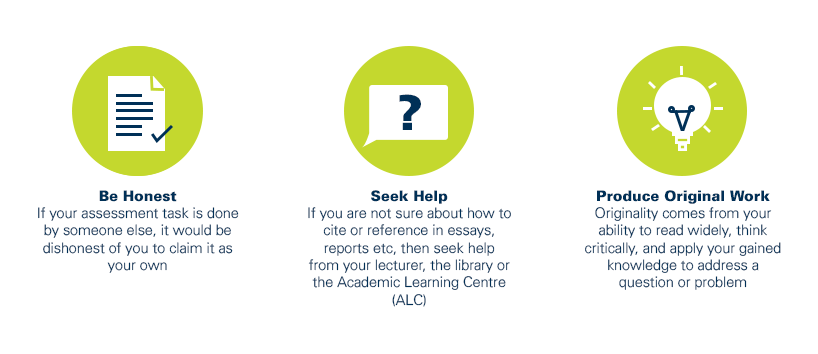
As a CQUniversity student you are expected to act honestly in all aspects of your academic work.
Any assessable work undertaken or submitted for review or assessment must be your own work. Assessable work is any type of work you do to meet the assessment requirements in the unit, including draft work submitted for review and feedback and final work to be assessed.
When you use the ideas, words or data of others in your assessment, you must thoroughly and clearly acknowledge the source of this information by using the correct referencing style for your unit. Using others’ work without proper acknowledgement may be considered a form of intellectual dishonesty.
Participating honestly, respectfully, responsibly, and fairly in your university study ensures the CQUniversity qualification you earn will be valued as a true indication of your individual academic achievement and will continue to receive the respect and recognition it deserves.
As a student, you are responsible for reading and following CQUniversity’s policies, including the Student Academic Integrity Policy and Procedure. This policy sets out CQUniversity’s expectations of you to act with integrity, examples of academic integrity breaches to avoid, the processes used to address alleged breaches of academic integrity, and potential penalties.
What is a breach of academic integrity?
A breach of academic integrity includes but is not limited to plagiarism, self-plagiarism, collusion, cheating, contract cheating, and academic misconduct. The Student Academic Integrity Policy and Procedure defines what these terms mean and gives examples.
Why is academic integrity important?
A breach of academic integrity may result in one or more penalties, including suspension or even expulsion from the University. It can also have negative implications for student visas and future enrolment at CQUniversity or elsewhere. Students who engage in contract cheating also risk being blackmailed by contract cheating services.
Where can I get assistance?
For academic advice and guidance, the Academic Learning Centre (ALC) can support you in becoming confident in completing assessments with integrity and of high standard.
What can you do to act with integrity?