Overview
This unit builds upon prerequisite units in human anatomy and physiology to develop a conceptual understanding of disease and dysfunction, with emphasis on the effects of disease upon normal physiological systems. The unit content is presented in a way that fosters (a) an understanding of the widespread effects that dysfunction of a particular organ or system of the human body has upon other systems and (b) the ability to critically evaluate symptoms of dysfunction and predict the outcome. Topics include altered cells and tissues, altered cellular proliferation and differentiation, inflammation and tissue repair, and alterations of human body systems.
Details
Pre-requisites or Co-requisites
Prerequisites: ALLH11005 Anatomy and Physiology for Health Professionals 1 OR BMSC11001 Human Body Systems 1 OR BMSC11007 Medical Anatomy and Physiology 1 OR BMSC11010 Human Anatomy and Physiology 1 AND ALLH11004 Anatomy and Physiology for Health Professionals 2 OR BMSC11002 Human Body Systems 2 OR BMSC11008 Medical Anatomy and Physiology 2 OR BMSC11011 Human Anatomy and Physiology 2 This unit is NOT available to students who have only completed BIOH11005 Introductory Anatomy and Physiology AND BIOH11006 Advanced Anatomy and Physiology
Important note: Students enrolled in a subsequent unit who failed their pre-requisite unit, should drop the subsequent unit before the census date or within 10 working days of Fail grade notification. Students who do not drop the unit in this timeframe cannot later drop the unit without academic and financial liability. See details in the Assessment Policy and Procedure (Higher Education Coursework).
Offerings For Term 1 - 2026
Attendance Requirements
All on-campus students are expected to attend scheduled classes - in some units, these classes are identified as a mandatory (pass/fail) component and attendance is compulsory. International students, on a student visa, must maintain a full time study load and meet both attendance and academic progress requirements in each study period (satisfactory attendance for International students is defined as maintaining at least an 80% attendance record).
Recommended Student Time Commitment
Each 6-credit Undergraduate unit at CQUniversity requires an overall time commitment of an average of 12.5 hours of study per week, making a total of 150 hours for the unit.
Class Timetable
Assessment Overview
Assessment Grading
This is a graded unit: your overall grade will be calculated from the marks or grades for each assessment task, based on the relative weightings shown in the table above. You must obtain an overall mark for the unit of at least 50%, or an overall grade of 'pass' in order to pass the unit. If any 'pass/fail' tasks are shown in the table above they must also be completed successfully ('pass' grade). You must also meet any minimum mark requirements specified for a particular assessment task, as detailed in the 'assessment task' section (note that in some instances, the minimum mark for a task may be greater than 50%). Consult the University's Grades and Results Policy for more details of interim results and final grades.
All University policies are available on the CQUniversity Policy site.
You may wish to view these policies:
- Grades and Results Policy
- Assessment Policy and Procedure (Higher Education Coursework)
- Review of Grade Procedure
- Student Academic Integrity Policy and Procedure
- Academic Progression Policy and Procedure
- Student Refund and Credit Balance Policy and Procedure
- Complaints Policy and Procedure
- Information and Communications Technology Acceptable Use Policy and Procedure
This list is not an exhaustive list of all University policies. The full list of University policies are available on the CQUniversity Policy site.
Feedback, Recommendations and Responses
Every unit is reviewed for enhancement each year. At the most recent review, the following staff and student feedback items were identified and recommendations were made.
Feedback from SUTE
Some students have noted that certain unit concepts appear misaligned with their degree focus.
Clarify the connections between concepts and demonstrate their relevance to broader professional competencies.
Feedback from Face-to-face feedback
Although some students found the unit content-heavy, material is structured into manageable sections to support student understanding and engagement.
Continue to provide clear links between unit content and professional applications, while maintaining the structured delivery of material in manageable segments to support student engagement and comprehension.
Feedback from SUTE and face-to-face feedback
Some students have found the pacing of the unit challenging, particularly during weeks with multiple complex topics introduced simultaneously.
Review the weekly content distribution to ensure complex topics are introduced with adequate scaffolding and spacing, allowing students time to consolidate learning before progressing.
- Argue the physiological consequences, symptoms and effects on health of specific dysfunction of organs and systems
- Explain how the interdependence of human physiological systems can result in disease of one organ having widespread effects
- Explain the mechanisms that cause altered cells and tissues, altered cellular proliferation and differentiation, inflammation and the consequences of these changes upon health
- Describe the major causes, symptoms and consequences of dysfunction of the human body systems.
Alignment of Assessment Tasks to Learning Outcomes
| Assessment Tasks | Learning Outcomes | |||
|---|---|---|---|---|
| 1 | 2 | 3 | 4 | |
| 1 - Written Assessment - 50% | ||||
| 2 - Examination - 50% | ||||
Alignment of Graduate Attributes to Learning Outcomes
| Graduate Attributes | Learning Outcomes | |||
|---|---|---|---|---|
| 1 | 2 | 3 | 4 | |
| 1 - Communication | ||||
| 2 - Problem Solving | ||||
| 3 - Critical Thinking | ||||
| 4 - Information Literacy | ||||
| 5 - Team Work | ||||
| 6 - Information Technology Competence | ||||
| 7 - Cross Cultural Competence | ||||
| 8 - Ethical practice | ||||
| 9 - Social Innovation | ||||
| 10 - First Nations Knowledges | ||||
| 11 - Aboriginal and Torres Strait Islander Cultures | ||||
Textbooks
Applied Pathophysiology: A Conceptual Approach
- 4th edition (2022)
- Authors: Nath, Judi & Braun, Carie
- Wolters Kluwer
- Philadelphia Philadelphia , PA , USA
- ISBN: 9781975179199
- Binding: Paperback
IT Resources
- CQUniversity Student Email
- Internet
- Unit Website (Moodle)
All submissions for this unit must use the referencing style: American Psychological Association 7th Edition (APA 7th edition)
For further information, see the Assessment Tasks.
a.vanwaveren@cqu.edu.au
r.j.batacan@cqu.edu.au
Week 1
Begin Date: 09 Mar 2026Module/Topic
Introduction to Pathophysiology
Altered Cells and Tissues
Chapter
Chapter 1
Chapter 2
Events and Submissions/Topic
Case Study online selection site opens on Week 1, Monday 9:00am AEST (closes on Week 4, Friday, 5:00 pm AEST)
Week 2
Begin Date: 16 Mar 2026Module/Topic
Inflammation and Tissue Repair
Chapter
Chapter 3
Events and Submissions/Topic
Week 3
Begin Date: 23 Mar 2026Module/Topic
Altered Cellular Proliferation and Differentiation
Chapter
Chapter 7
Events and Submissions/Topic
Week 4
Begin Date: 30 Mar 2026Module/Topic
Altered Fluid, Electrolyte Balance
Altered Acid-Base Balance
Chapter
Chapter 8
Chapter 9
Events and Submissions/Topic
Case Study online selection site closes on Week 4, Friday, 5:00pm AEST
Week 5
Begin Date: 06 Apr 2026Module/Topic
Altered Neuronal Transmission
Chapter
Chapter 10
Events and Submissions/Topic
Week 6
Begin Date: 13 Apr 2026Module/Topic
Altered Somatic and Special Sensory Function
Chapter
Chapter 12
Events and Submissions/Topic
Vacation Week
Begin Date: 20 Apr 2026Module/Topic
Chapter
Events and Submissions/Topic
Week 7
Begin Date: 27 Apr 2026Module/Topic
Altered Hormonal and Metabolic Regulation
Chapter
Chapter 13
Events and Submissions/Topic
Week 8
Begin Date: 04 May 2026Module/Topic
Altered Reproductive Function
Chapter
Chapter 14
Events and Submissions/Topic
Week 9
Begin Date: 11 May 2026Module/Topic
Altered Ventilation and Diffusion
Chapter
Chapter 15
Events and Submissions/Topic
Week 10
Begin Date: 18 May 2026Module/Topic
Altered Perfusion
Chapter
Chapter 16
Events and Submissions/Topic
Week 11
Begin Date: 25 May 2026Module/Topic
Altered Nutrition
Chapter
Chapter 17
Events and Submissions/Topic
Week 12
Begin Date: 01 Jun 2026Module/Topic
Altered Elimination
Chapter
Chapter 18
Events and Submissions/Topic
Exam Week
Begin Date: 08 Jun 2026Module/Topic
Chapter
Events and Submissions/Topic
The exam will take place during this period and will be scheduled by the University. Students will receive further details regarding the date, time, and location closer to the examination period.
Vacation/Exam Week
Begin Date: 15 Jun 2026Module/Topic
Chapter
Events and Submissions/Topic
The unit coordinator is Dr. Alannah van Waveren. You can contact Dr. van Waveren by phone (07 49309441) or email (a.vanwaveren@cqu.edu.au). Your tutor will be Dr Claire Torres (c.torres@cqu.edu.au).
1 Written Assessment
Rationale
In the clinical context, health professionals are expected to have in-depth knowledge and understanding of pathophysiology processes and their interrelationships. Population demographics demonstrate increased ageing and concomitant complex morbidities in healthcare. This assessment requires you to construct links between pathophysiology, etiology, risk factors, clinical manifestations, diagnosis and treatment. You must be able to give evidence-based advice, within your scope of practice, which serves to educate the patient and close gaps in health care.
Task
You will be provided with an authentic clinical case study on the Moodle site. You are required to identify information within the case study which is relevant to the aspects of the disease process. You are then required to complete a written response to questions related to your case study to demonstrate your understanding of the links between pathophysiology, etiology, risk factors, clinical manifestations, diagnosis, and treatment.
Guidelines to complete the written response and the marking rubric will be available on the Moodle site.
Level of GenAI use allowed:
Level 3: You may use AI to assist with specific tasks such as drafting text, refining and evaluating your work. You must critically evaluate and modify any AI-generated content you use.
In developing your assignment, you should consult peer-reviewed journal articles and referenced textbooks. Extensive use of non-peer-reviewed sources of information is strongly discouraged.
If Generative AI is used in any way, it must be cited as per the CQU Guidelines (Academic Learning Centre). The following statement must be completed and included on the front page of the uploaded assessment:
"I have used (insert technology) to (insert how you used this) in accordance with the requirements of this unit. The reason I used this was to (explain why you used it). The details of how I used it as (insert how). I hereby declare that the submission is an appropriate representation of my individual skills and abilities to meet the requirements of the task/s."
As per academic writing requirements and assessment criteria; citations of information should be of the primary source (i.e statistics returned by AI must be fact-checked and referenced from their original source as well as the AI source). Failure to cite primary sources as well as AI sources could be considered breach of academic integrity.
Your use of Generative AI must be clearly outlined in an appendix including the prompt used and Generative AI response. Failure to include an appendix may result in academic integrity investigation.
Week 8 Friday (8 May 2026) 5:00 pm AEST
Week 11 Friday (29 May 2026)
Within 3 weeks of assessment submission
Your submission will be assessed according to a detailed marking rubric which is available on the Moodle site.
- Argue the physiological consequences, symptoms and effects on health of specific dysfunction of organs and systems
- Explain how the interdependence of human physiological systems can result in disease of one organ having widespread effects
- Describe the major causes, symptoms and consequences of dysfunction of the human body systems.
Examination
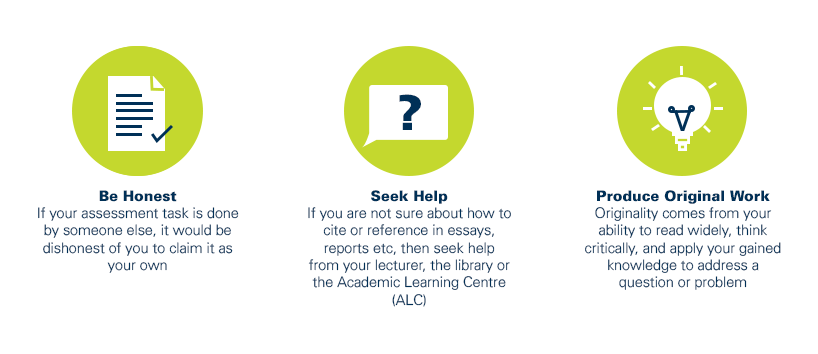
As a CQUniversity student you are expected to act honestly in all aspects of your academic work.
Any assessable work undertaken or submitted for review or assessment must be your own work. Assessable work is any type of work you do to meet the assessment requirements in the unit, including draft work submitted for review and feedback and final work to be assessed.
When you use the ideas, words or data of others in your assessment, you must thoroughly and clearly acknowledge the source of this information by using the correct referencing style for your unit. Using others’ work without proper acknowledgement may be considered a form of intellectual dishonesty.
Participating honestly, respectfully, responsibly, and fairly in your university study ensures the CQUniversity qualification you earn will be valued as a true indication of your individual academic achievement and will continue to receive the respect and recognition it deserves.
As a student, you are responsible for reading and following CQUniversity’s policies, including the Student Academic Integrity Policy and Procedure. This policy sets out CQUniversity’s expectations of you to act with integrity, examples of academic integrity breaches to avoid, the processes used to address alleged breaches of academic integrity, and potential penalties.
What is a breach of academic integrity?
A breach of academic integrity includes but is not limited to plagiarism, self-plagiarism, collusion, cheating, contract cheating, and academic misconduct. The Student Academic Integrity Policy and Procedure defines what these terms mean and gives examples.
Why is academic integrity important?
A breach of academic integrity may result in one or more penalties, including suspension or even expulsion from the University. It can also have negative implications for student visas and future enrolment at CQUniversity or elsewhere. Students who engage in contract cheating also risk being blackmailed by contract cheating services.
Where can I get assistance?
For academic advice and guidance, the Academic Learning Centre (ALC) can support you in becoming confident in completing assessments with integrity and of high standard.
What can you do to act with integrity?