Overview
Businesses and organisations cannot thrive in the global marketplace without the knowledge and expertise of international marketing. This unit explores the processes involved in designing and implementing systematic marketing programs across national boundaries. You will develop a critical understanding of how marketing principles can be effectively applied to diverse international markets and adapted to dynamic marketing environments. Furthermore, the unit provides valuable insights into market evaluation, market entry, strategy formulation, and emerging trends in international marketing, including the growing demand for sustainable and environmentally responsible products and services.
Details
Pre-requisites or Co-requisites
Prerequisite: MRKT11029 Marketing Fundamentals or MRKT11028 Digital Marketing plus 24 credit points.
Important note: Students enrolled in a subsequent unit who failed their pre-requisite unit, should drop the subsequent unit before the census date or within 10 working days of Fail grade notification. Students who do not drop the unit in this timeframe cannot later drop the unit without academic and financial liability. See details in the Assessment Policy and Procedure (Higher Education Coursework).
Offerings For Term 2 - 2026
Attendance Requirements
All on-campus students are expected to attend scheduled classes - in some units, these classes are identified as a mandatory (pass/fail) component and attendance is compulsory. International students, on a student visa, must maintain a full time study load and meet both attendance and academic progress requirements in each study period (satisfactory attendance for International students is defined as maintaining at least an 80% attendance record).
Recommended Student Time Commitment
Each 6-credit Undergraduate unit at CQUniversity requires an overall time commitment of an average of 12.5 hours of study per week, making a total of 150 hours for the unit.
Class Timetable
Assessment Overview
Assessment Grading
This is a graded unit: your overall grade will be calculated from the marks or grades for each assessment task, based on the relative weightings shown in the table above. You must obtain an overall mark for the unit of at least 50%, or an overall grade of 'pass' in order to pass the unit. If any 'pass/fail' tasks are shown in the table above they must also be completed successfully ('pass' grade). You must also meet any minimum mark requirements specified for a particular assessment task, as detailed in the 'assessment task' section (note that in some instances, the minimum mark for a task may be greater than 50%). Consult the University's Grades and Results Policy for more details of interim results and final grades.
All University policies are available on the CQUniversity Policy site.
You may wish to view these policies:
- Grades and Results Policy
- Assessment Policy and Procedure (Higher Education Coursework)
- Review of Grade Procedure
- Student Academic Integrity Policy and Procedure
- Academic Progression Policy and Procedure
- Student Refund and Credit Balance Policy and Procedure
- Complaints Policy and Procedure
- Information and Communications Technology Acceptable Use Policy and Procedure
This list is not an exhaustive list of all University policies. The full list of University policies are available on the CQUniversity Policy site.
Feedback, Recommendations and Responses
Every unit is reviewed for enhancement each year. At the most recent review, the following staff and student feedback items were identified and recommendations were made.
Feedback from Student and Unit Teaching Evaluations (SUTE)
At times, the assessment requirements were unclear and contradictory.
The future unit coordinator should ensure clear and detailed assessment requirements and explain them during sessions.
Feedback from Student and Unit Teaching Evaluations (SUTE)
The feedback received was detailed; however feedback was provided late, making it difficult to actually implement the advice.
The future unit coordinator should ensure timely release of assessment result and feedback.
- Evaluate major analytical frameworks in international marketing
- Examine the complexities of environmental factors affecting international marketing strategies
- Apply international marketing principles, models, and frameworks to real-world business challenges to develop effective marketing strategies for diverse global markets.
- Critically evaluate contemporary trends and emerging issues in international marketing theory and practice.
Alignment of Assessment Tasks to Learning Outcomes
| Assessment Tasks | Learning Outcomes | |||
|---|---|---|---|---|
| 1 | 2 | 3 | 4 | |
| 1 - Presentation - 40% | ||||
| 2 - Written Assessment - 60% | ||||
Alignment of Graduate Attributes to Learning Outcomes
| Graduate Attributes | Learning Outcomes | |||
|---|---|---|---|---|
| 1 | 2 | 3 | 4 | |
| 1 - Communication | ||||
| 2 - Problem Solving | ||||
| 3 - Critical Thinking | ||||
| 4 - Information Literacy | ||||
| 5 - Team Work | ||||
| 6 - Information Technology Competence | ||||
| 7 - Cross Cultural Competence | ||||
| 8 - Ethical practice | ||||
| 9 - Social Innovation | ||||
| 10 - First Nations Knowledges | ||||
| 11 - Aboriginal and Torres Strait Islander Cultures | ||||
Textbooks
International Marketing: An Asia-Pacific Perspective
- Edition: 7th ed
- Authors: Richard Fletcher & Heather Crawford
- Pearson
- Melbourne Melbourne , Victoria , Australia
- ISBN: ISBN-13: 9781488611179
IT Resources
- CQUniversity Student Email
- Internet
- Unit Website (Moodle)
- Microsoft Powerpoint
- Microsoft Word
- Zoom
- CQU Success
All submissions for this unit must use the referencing style: American Psychological Association 7th Edition (APA 7th edition)
For further information, see the Assessment Tasks.
vishnu.menon@cqu.edu.au
Week 1
Begin Date: 13 Jul 2026Module/Topic
Introduction to International Marketing and Globalisation - Rationale and Scope
Chapter
Chapters 1 and 11
Events and Submissions/Topic
Unit overview, assessment briefing
Week 2
Begin Date: 20 Jul 2026Module/Topic
The Political and Legal Environment of International Marketing
Chapter
Chapter 2
Events and Submissions/Topic
Assessment 1 discussion
Week 3
Begin Date: 27 Jul 2026Module/Topic
The Economic and Financial Environment
Chapter
Chapter 3
Events and Submissions/Topic
In-class activities: Discussion questions / exercises / mini cases
Week 4
Begin Date: 03 Aug 2026Module/Topic
Social and Cultural Environment: Consumer Behaviour Across Borders
Chapter
Chapter 4
Events and Submissions/Topic
In-class activities: Discussion questions / exercises / mini cases
Week 5
Begin Date: 10 Aug 2026Module/Topic
Digital Technologies, AI and International Marketing
Chapter
Chapter 5
Events and Submissions/Topic
In-class activities: Discussion questions / exercises / mini cases.
Assessment 1 DUE on Friday, 16 August 11:45 pm AEST
Individual Presentation: International Marketing Environment Analysis Due: Week 5 Friday (14 Aug 2026) 11:45 pm AEST
Week 6
Begin Date: 17 Aug 2026Module/Topic
Sustainable and Ethical International Marketing
Chapter
Chapter 6
Events and Submissions/Topic
In-class activities: Discussion questions / exercises / mini cases.
Vacation Week
Begin Date: 24 Aug 2026Module/Topic
Chapter
Events and Submissions/Topic
Week 7
Begin Date: 31 Aug 2026Module/Topic
International Market Selection, Entry and Competitive Strategies
Chapter
Chapters 8 and 9
Events and Submissions/Topic
Assessment 2 discussion
In-class activities: Discussion questions / exercises / mini cases.
Week 8
Begin Date: 07 Sep 2026Module/Topic
Modifying Products for International Markets
Chapter
Chapter 13
Events and Submissions/Topic
In-class activities: Discussion questions / exercises / mini cases.
Week 9
Begin Date: 14 Sep 2026Module/Topic
International Pricing for Profit
Chapter
Chapter 14
Events and Submissions/Topic
Assessment 2 discussion
In-class activities: Discussion questions / exercises / mini cases.
Week 10
Begin Date: 21 Sep 2026Module/Topic
Promotion in International Marketing
Chapter
Chapter 15
Events and Submissions/Topic
In-class activities: Discussion questions / exercises / mini cases.
Week 11
Begin Date: 28 Sep 2026Module/Topic
Effective International Distribution
Chapter
Chapter 16
Events and Submissions/Topic
Assessment 2 Q&A
In-class activities: Discussion questions / exercises / mini cases.
Week 12
Begin Date: 05 Oct 2026Module/Topic
Review and Future Directions in International Marketing
Chapter
No set chapter
Events and Submissions/Topic
Assessment 2 DUE on Friday, 9 October 11:45 pm AEST
International Marketing Mix Strategies Due: Week 12 Friday (9 Oct 2026) 11:45 pm AEST
1 Presentation
Overview
This assessment is designed to develop your ability to independently analyse the international marketing environment and evaluate how environmental factors shape a company's marketing decisions in a foreign market. You will demonstrate this by researching and presenting an environmental analysis for a hypothetical Australian sustainable activewear/sportswear company considering its first international expansion.
Scenario
You are an international marketing consultant engaged by a hypothetical Australian sustainable activewear/sportswear company. The company has established a strong presence in the Australian domestic market and is now evaluating expansion into an international market. As part of this process, you have been asked to analyse the international marketing environment of the proposed target market and present your findings to the company's senior management team.
Task Requirements
Select ONE of the following target markets for your analysis:
- Germany
- India
- Japan
- China
- Malaysia
- Colombia
Identify and analyse any TWO factors of the international marketing environment that would most significantly influence the company's marketing decisions in your chosen market. Environmental factors may include, but are not limited to:
- Political and legal factors (e.g. trade regulations, intellectual property laws, government stability)
- Economic and financial factors (e.g. GDP, purchasing power, exchange rate risk)
- Social and cultural factors (e.g. consumer values, lifestyle trends, cultural attitudes toward fitness and sustainability)
- Digital and technological factors (e.g. e-commerce infrastructure, social media platforms, digital consumer behaviour)
- Sustainability-related factors (e.g. environmental regulations, consumer attitudes toward ethical and sustainable products)
For each factor, you must clearly identify the factor, explain its relevance to the chosen market, and justify why it is particularly significant for an Australian sustainable activewear/sportswear company entering that market. Your analysis must draw on relevant concepts, theories, tools, and/or models covered in the first four weeks of this unit.
Presentation Format and Submission Requirements
Your submission must be a voice-recorded PowerPoint presentation of no more than 7 minutes, consisting of a maximum of 7 slides structured as follows:
- Slide 1: Student information and presentation title
- Slide 2: Background of the chosen country market
- Slide 3: First environmental factor: Identification, explanation, and justification
- Slide 4: Second environmental factor: Identification, explanation, and justification
- Slide 5: Two recommendations
- Slide 6: Conclusion: Key strategic implications for the company
- Slide 7: Reference list (APA 7th edition)
In the “notes” section of each slide, include the full script or a detailed outline of what you say in your recording. This is a submission requirement, not optional.
Recording and Submission Instructions
- Record your voiceover directly in PowerPoint using the Record Slide Show function. For guidance, refer to: https://support.microsoft.com/en-us/powerpoint/training/record-a-slide-show-with-narration-and-slide-timings
- Submit your completed .pptx or .ppt file (with the voiceover embedded) via the assessment submission link on Moodle.
- If you experience technical difficulties uploading your file to Moodle, you may instead submit via Echo360. Do not upload to YouTube or any other public platform. The following resources provide guidance on Echo360 submission: How to Submit a Video Assessment Using Echo360 in Moodle: https://cdn2.hubspot.net/hubfs/16036/QRC-INSTR-Moodle-Video-Assignment.pdf
Important Policies and Deadlines
- Due date: Week 5 – Friday 14 August 2026, 11:45 pm AEST
- Late submissions: Penalties apply as per CQU Assessment Policy and Procedure
- Extension requests: Must be submitted through the unit Moodle site at least 24 hours before the deadline. Retrospective extensions will not be granted.
- Academic integrity: This assessment must be your own work. All sources must be cited using APA 7th edition referencing.
Use of AI
This assessment requires students to adhere to the guidelines on the use of artificial intelligence tools as specified in the Artificial Intelligence Assessment Scale (AIAS). Any misuse or lack of disclosure regarding the use of AI tools will be considered a breach of academic integrity. The designated AI scale level for this assessment is AI PLANNING. You may use AI for planning, idea development, and initial research, but your final submission must reflect your own analysis, judgement, and academic voice. You must disclose how AI was used in accordance with the assessment guidelines available on Moodle.
Week 5 Friday (14 Aug 2026) 11:45 pm AEST
Week 7 Friday (4 Sept 2026)
This task will be assessed based on the following criteria. A detailed marking rubric is available on Moodle.
- Identification of two relevant environmental factors - 10 marks
- Explanation of each factor with theoretical grounding - 10 marks
- Justification of relevance to the chosen market and company - 10 marks
- Presentation quality, structure, and delivery - 10 marks
Total - 40 marks
- Evaluate major analytical frameworks in international marketing
- Examine the complexities of environmental factors affecting international marketing strategies
- Apply international marketing principles, models, and frameworks to real-world business challenges to develop effective marketing strategies for diverse global markets.
- Critically evaluate contemporary trends and emerging issues in international marketing theory and practice.
2 Written Assessment
Overview
This assessment brings together the analytical and strategic skills developed throughout the unit. Building directly on your environmental analysis from Assessment Task 1, you will now design a comprehensive International Marketing Mix Strategy for the same hypothetical Australian sustainable activewear/sportswear company and target market. This assessment requires you to move beyond analysis into strategic recommendation, defining the market characteristics of your chosen country and proposing a well-justified, market-specific marketing mix that reflects current international marketing theory and practice. A key requirement of this assessment is the integration of either digital marketing or sustainability dimensions into your strategy, reflecting the realities of competing in international markets today.
Scenario
You are an international marketing consultant engaged by a hypothetical mid-sized Australian sustainable activewear and sportswear company. You may give the company a name of your choosing. The company has been operating in the Australian domestic market for five years and has built its reputation on:
- Producing activewear using recycled and sustainably sourced materials, including recycled ocean plastics, organic cotton, and low-impact dyes
- Transparent supply chain practices and third-party ethical certifications (e.g., Fair Trade)
- A strong direct-to-consumer (DTC) model in Australia, primarily through its own e-commerce platform and select retail partners
- A growing social media community focused on outdoor fitness, wellness, and environmental advocacy
The company is now ready to pursue international expansion and has asked you to develop a comprehensive, evidence-based International Marketing Mix Strategy for the same target market you analysed in Assessment Task 1:
- Germany
- India
- Japan
- China
- Malaysia
- Colombia
Your strategy must be grounded in research, supported by current international marketing theory, and tailored specifically to the conditions and characteristics of your chosen market.
Task Requirements
Your report must address all four elements of the marketing mix: Product, Price, Promotion, and Place, and must explicitly integrate at least ONE of the following dimensions into your strategies:
- Digital channels and digital marketing: How will the company use digital platforms, e-commerce, social media, or influencer marketing to enter and compete in the chosen market? Consider platforms relevant to the specific country (e.g., WeChat/Douyin for China, Tokopedia/Shopee for Southeast Asia, Instagram/Mercado Libre for Colombia).
- Sustainability and responsible marketing: How will the company's sustainability credentials and ethical sourcing practices be communicated and positioned in the chosen market? How do local consumer attitudes toward sustainability shape the marketing strategy?
These are not separate sections. The digital and/or sustainability dimension must be woven into your analysis of the 4Ps rather than treated as a standalone addition. For example, your Promotion strategy might incorporate digital influencer marketing alongside sustainability messaging; your Product strategy might address ethical labelling and eco-certification standards relevant to your chosen market.
Your strategies must be grounded in relevant international marketing theories, frameworks, and models discussed throughout the unit. For example, standardisation versus adaptation, market entry modes, Hofstede's cultural dimensions, and PESTLE analysis. Generic strategies not anchored in country-specific evidence will be assessed negatively.
Report Format
Your report must be structured as follows and submitted as a Word document (.docx):
- Title page: Unit code, unit name, student name, student ID, assessment task name, word count, and submission date
- Executive summary: Maximum 200 words, not included in the word count
- Table of contents
- Introduction: Company background, rationale for the chosen market, and scope of the report
- Market characteristics: Consumer profile, competitive landscape, and key environmental factors relevant to the chosen market
- International Marketing Mix Strategies: Product, Price, Promotion, and Place, with digital and/or sustainability integration woven throughout
- Conclusion
- Reference list: Minimum 8 academic sources, formatted in APA 7th edition
- Appendices (if applicable)
Word Limit
The maximum word limit is 2,000 words. This applies to the body of the report, from the introduction through to and including the conclusion. The title page, executive summary, table of contents, reference list, and appendices are excluded from the word count.
Penalties apply for exceeding the word limit: 1% of the total mark will be deducted for every 100 words over the 2,000 word limit. It is your responsibility to check and declare your word count before submitting.
Referencing and Source Requirements
- All sources must be cited and referenced using APA 7th edition
- Your report must draw on a minimum of eight (8) academic sources such as peer-reviewed journal articles and academic books that are recent and relevant to your arguments
- The following sources are not acceptable as academic references and will be assessed negatively if used: Wikipedia, social media platforms (Instagram, Facebook, LinkedIn, etc.), NetMBA, MarketingTeacher, tutor2u, contract assignment services, and similar third-party websites
- The Turnitin similarity rate must not exceed 25%. Submissions above this threshold will be reviewed for academic integrity concerns
Important Policies and Deadlines
- Due date: Week 12, Friday 9 October 2026, 11:00 pm AEST
- Results released: After certification of grades (expected 6 November 2026)
- Late submissions: 5% of the total mark will be deducted per day unless an approved extension has been granted
- Extension requests: Must be submitted through the unit Moodle site at least 24 hours before the deadline. Retrospective extensions will not be granted.
- Continuity requirement: This report must use the same company scenario and country market as Assessment 1. If you have changed your country selection since Assessment 1, note this clearly in your introduction and provide a brief rationale.
- Academic integrity: This report must be entirely your own work. Familiarise yourself with CQU's policies on plagiarism, collusion, contract cheating, and self-plagiarism before you begin.
Use of AI
This assessment requires students to adhere to the guidelines on the use of artificial intelligence tools as specified in the Artificial Intelligence Assessment Scale (AIAS). Any misuse or lack of disclosure regarding the use of AI tools will be considered a breach of academic integrity. The designated AI scale level for this assessment is AI PLANNING. You may use AI for planning, idea development, and initial research, but your final submission must reflect your own analysis, judgement, and academic voice. You must disclose how AI was used in accordance with the assessment guidelines available on Moodle.
Week 12 Friday (9 Oct 2026) 11:45 pm AEST
The marked assessment will be returned following the certification of grades (4 November)
This task will be assessed based on the following criteria. A detailed marking rubric is available on Moodle.
- Executive summary and introduction: Clarity, scope, and company/market framing - 12 marks
- Market characteristics: Depth and accuracy of consumer, competitive, and environmental analysis - 6 marks
- Marketing mix strategies (Product, Price, Promotion, Place): Theoretical grounding, market specificity, and integration of digital and/or sustainability dimension - 36 marks
- Report format and academic writing quality - 6 marks
Total - 60 marks
- Evaluate major analytical frameworks in international marketing
- Examine the complexities of environmental factors affecting international marketing strategies
- Apply international marketing principles, models, and frameworks to real-world business challenges to develop effective marketing strategies for diverse global markets.
- Critically evaluate contemporary trends and emerging issues in international marketing theory and practice.
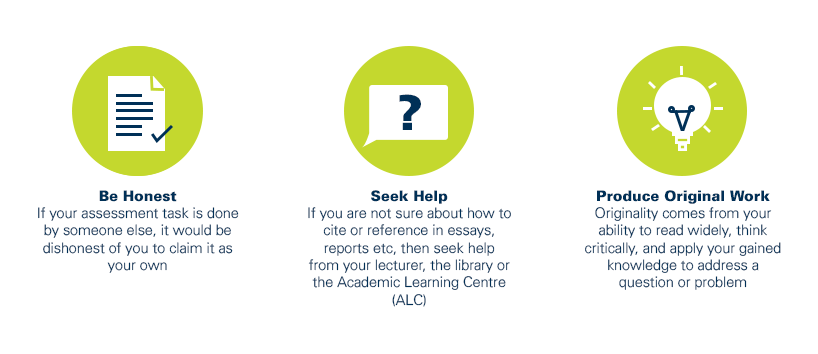
As a CQUniversity student you are expected to act honestly in all aspects of your academic work.
Any assessable work undertaken or submitted for review or assessment must be your own work. Assessable work is any type of work you do to meet the assessment requirements in the unit, including draft work submitted for review and feedback and final work to be assessed.
When you use the ideas, words or data of others in your assessment, you must thoroughly and clearly acknowledge the source of this information by using the correct referencing style for your unit. Using others’ work without proper acknowledgement may be considered a form of intellectual dishonesty.
Participating honestly, respectfully, responsibly, and fairly in your university study ensures the CQUniversity qualification you earn will be valued as a true indication of your individual academic achievement and will continue to receive the respect and recognition it deserves.
As a student, you are responsible for reading and following CQUniversity’s policies, including the Student Academic Integrity Policy and Procedure. This policy sets out CQUniversity’s expectations of you to act with integrity, examples of academic integrity breaches to avoid, the processes used to address alleged breaches of academic integrity, and potential penalties.
What is a breach of academic integrity?
A breach of academic integrity includes but is not limited to plagiarism, self-plagiarism, collusion, cheating, contract cheating, and academic misconduct. The Student Academic Integrity Policy and Procedure defines what these terms mean and gives examples.
Why is academic integrity important?
A breach of academic integrity may result in one or more penalties, including suspension or even expulsion from the University. It can also have negative implications for student visas and future enrolment at CQUniversity or elsewhere. Students who engage in contract cheating also risk being blackmailed by contract cheating services.
Where can I get assistance?
For academic advice and guidance, the Academic Learning Centre (ALC) can support you in becoming confident in completing assessments with integrity and of high standard.
What can you do to act with integrity?