Overview
Organisations are increasingly using marketing research, insights and analytics to inform marketing decision-making. Data from marketing research is also used to forecast new trends and future implications. This unit equips you with skills to systematically conduct marketing research and you will examine how to design research, gather, analyse and present data for effective decision-making. You will also learn how to apply new tools and techniques for questionnaire design and data analysis. Contemporary digital marketing analytics techniques will be examined and evaluated.
Details
Pre-requisites or Co-requisites
Prerequisites: MRKT 11029 Fundamentals of Marketing.
Important note: Students enrolled in a subsequent unit who failed their pre-requisite unit, should drop the subsequent unit before the census date or within 10 working days of Fail grade notification. Students who do not drop the unit in this timeframe cannot later drop the unit without academic and financial liability. See details in the Assessment Policy and Procedure (Higher Education Coursework).
Offerings For Term 1 - 2026
Attendance Requirements
All on-campus students are expected to attend scheduled classes - in some units, these classes are identified as a mandatory (pass/fail) component and attendance is compulsory. International students, on a student visa, must maintain a full time study load and meet both attendance and academic progress requirements in each study period (satisfactory attendance for International students is defined as maintaining at least an 80% attendance record).
Recommended Student Time Commitment
Each 6-credit Undergraduate unit at CQUniversity requires an overall time commitment of an average of 12.5 hours of study per week, making a total of 150 hours for the unit.
Class Timetable
Assessment Overview
Assessment Grading
This is a graded unit: your overall grade will be calculated from the marks or grades for each assessment task, based on the relative weightings shown in the table above. You must obtain an overall mark for the unit of at least 50%, or an overall grade of 'pass' in order to pass the unit. If any 'pass/fail' tasks are shown in the table above they must also be completed successfully ('pass' grade). You must also meet any minimum mark requirements specified for a particular assessment task, as detailed in the 'assessment task' section (note that in some instances, the minimum mark for a task may be greater than 50%). Consult the University's Grades and Results Policy for more details of interim results and final grades.
All University policies are available on the CQUniversity Policy site.
You may wish to view these policies:
- Grades and Results Policy
- Assessment Policy and Procedure (Higher Education Coursework)
- Review of Grade Procedure
- Student Academic Integrity Policy and Procedure
- Academic Progression Policy and Procedure
- Student Refund and Credit Balance Policy and Procedure
- Complaints Policy and Procedure
- Information and Communications Technology Acceptable Use Policy and Procedure
This list is not an exhaustive list of all University policies. The full list of University policies are available on the CQUniversity Policy site.
Feedback, Recommendations and Responses
Every unit is reviewed for enhancement each year. At the most recent review, the following staff and student feedback items were identified and recommendations were made.
Feedback from Staff self-reflection
Students expected to have the exemplars for all assessments available on Moodle to get the support of the report structure.
Provide detailed description of the structure for all assessments.
Feedback from Student feedback
There is scope to improve the lecture content to make it more engaging and interactive for students.
Integrate practical examples within the video to contextualise theory and maintain relevance.
- Apply effective data analysis techniques in digital and/or traditional marketing research
- Utilise scientific methods and technology to interpret marketing data and translate findings into practical marketing strategies.
- Apply critical thinking to assess the applicability of secondary data in support of specific research findings.
- Effectively communicate marketing research concepts, results and analysis.
Alignment of Assessment Tasks to Learning Outcomes
| Assessment Tasks | Learning Outcomes | |||
|---|---|---|---|---|
| 1 | 2 | 3 | 4 | |
| 1 - Presentation - 40% | ||||
| 2 - Written Assessment - 60% | ||||
Alignment of Graduate Attributes to Learning Outcomes
| Graduate Attributes | Learning Outcomes | |||
|---|---|---|---|---|
| 1 | 2 | 3 | 4 | |
| 1 - Communication | ||||
| 2 - Problem Solving | ||||
| 3 - Critical Thinking | ||||
| 4 - Information Literacy | ||||
| 5 - Team Work | ||||
| 6 - Information Technology Competence | ||||
| 7 - Cross Cultural Competence | ||||
| 8 - Ethical practice | ||||
| 9 - Social Innovation | ||||
| 10 - First Nations Knowledges | ||||
| 11 - Aboriginal and Torres Strait Islander Cultures | ||||
Textbooks
Marketing Research
- 5th edition (2020)
- Authors: Barry J. Babin, Steve D'Alessandro, Hume Winzar, Ben Lowe, William Zikmund
- Cengage, Australia
- ISBN: 9780170438964
- Binding: Paperback
IT Resources
- CQUniversity Student Email
- Internet
- Unit Website (Moodle)
- Microsoft Office
- SPSS 19.0 may be needed for data analysis
- Jamovi
All submissions for this unit must use the referencing style: American Psychological Association 7th Edition (APA 7th edition)
For further information, see the Assessment Tasks.
n.nabi@cqu.edu.au
Week 1
Begin Date: 09 Mar 2026Module/Topic
The role of marketing research and the research process
Chapter
1
Events and Submissions/Topic
Week 2
Begin Date: 16 Mar 2026Module/Topic
Problem definition and the research process
Chapter
2
Events and Submissions/Topic
Week 3
Begin Date: 23 Mar 2026Module/Topic
Secondary research and big data
Chapter
4
Events and Submissions/Topic
Week 4
Begin Date: 30 Mar 2026Module/Topic
Qualitative research
Chapter
3
Events and Submissions/Topic
Week 5
Begin Date: 06 Apr 2026Module/Topic
Preparing for Assessment 1
Chapter
No set chapters
Events and Submissions/Topic
Question-answer session
Individual Presentation Due: Week 5 Friday (10 Apr 2026) 11:00 pm AEST
Week 6
Begin Date: 13 Apr 2026Module/Topic
Survey research
Chapter
5
Events and Submissions/Topic
Vacation Week
Begin Date: 20 Apr 2026Module/Topic
Chapter
Events and Submissions/Topic
Week 7
Begin Date: 27 Apr 2026Module/Topic
Experimental research and test marketing
Chapter
7
Events and Submissions/Topic
Week 8
Begin Date: 04 May 2026Module/Topic
Measurement
Chapter
8
Events and Submissions/Topic
Week 9
Begin Date: 11 May 2026Module/Topic
Questionnaire design
Chapter
9
Events and Submissions/Topic
Week 10
Begin Date: 18 May 2026Module/Topic
Sampling: Sample design and sample size
Chapter
10
Events and Submissions/Topic
Week 11
Begin Date: 25 May 2026Module/Topic
Bivariate statistical analysis: Tests of association
Chapter
14
Events and Submissions/Topic
Week 12
Begin Date: 01 Jun 2026Module/Topic
Preparing for Assessment 2
Chapter
No set chapter
Events and Submissions/Topic
Question-answer session
Individual Written Assessment Due: Week 12 Friday (5 June 2026) 11:00 pm AEST
1 Presentation
This assessment requires students to adhere to the guidelines on the use of artificial intelligence tools as specified in the Artificial Intelligence Assessment Scale (AIAS). Any misuse or lack of disclosure regarding the use of AI tools will be considered a breach of academic integrity. The appropriate AI scale level for this Assessment is AI PLANNING. You may use AI for planning, idea development, and research. Your final submission should demonstrate how you have developed and refined these ideas in accordance with the assessment guidelines available on Moodle.
Your task in this assessment is to analyse the comments provided by the viewers of a YouTube video (available on this unit's Moodle) to understand audience perceptions, reactions and meanings expressed in response to the video content. Utilising a Thematic Analysis, you will identify themes and sub-themes emerging from the comments provided by the viewers of the video, and draw meaningful inferences about the audience responses. You are also required to draw a diagram to explain how the themes (including its sub-themes) are connected and develop hypotheses based on the diagram.
You will present your analysis as a voice-over PowerPoint presentation consisting of 10 slides, supported by detailed explanatory notes in the "click to add notes" section of each slide. The detailed notes must explain the slide content, justify the findings, and demonstrate critical thinking (please see Assessment 1 guidelines and marking rubric in Moodle for details).
Please pay attention to the following details on presentation and submission methods:
- The presentation component will be in PowerPoint format with recorded voice-over limited to 10 slides (excluding title slide and reference list) and no longer than 10 minutes in duration. The following link provides a good video tutorial on how to record voice-over in PowerPoint: https://www.youtube.com/watch?v=jHeH05PKvHg
- Word length for discussions in the note section: 1000 words maximum (in total).
- Discussion should be supported with clear evidence through in-text referencing, and should be backed by a minimum of 5 academic references (recent and relevant journal articles, and books).
- Penalties for late submission are applied as per CQU policy. If you need to submit an assessment extension request, you can only apply through the unit Moodle site at least 24 hours before the deadline ends.
- Any assessment with a ‘Turnitin’ score of more than 25% will be checked by the marker and unit coordinator for potential plagiarism issue, although it may not necessarily mean that you have
plagiarised. If there is a substantial similarity score in the ‘Turnitin’ report, your assessment could be forwarded to an appropriate office/authority.
Week 5 Friday (10 Apr 2026) 11:00 pm AEST
Results will be released after moderation is completed (expected release time to students is 2 weeks after the submission excluding public and University holidays time).
Presentation will be assessed as follows (40 marks):
Introduction - 3 marks
Identification and discussion of content - 12 marks
Diagram - 5 marks
Hypotheses - 5 marks
Referencing - 5 marks
Presentation delivery (i.e., delivery is professional and finishes within 10 minutes) (10 marks)
See Moodle for a detailed marking rubric for this assessment task.
- Apply effective data analysis techniques in digital and/or traditional marketing research
- Utilise scientific methods and technology to interpret marketing data and translate findings into practical marketing strategies.
- Apply critical thinking to assess the applicability of secondary data in support of specific research findings.
- Effectively communicate marketing research concepts, results and analysis.
2 Written Assessment
This assessment requires students to adhere to the guidelines on the use of artificial intelligence tools as specified in the Artificial Intelligence Assessment Scale (AIAS). Any misuse or lack of disclosure regarding the use of AI tools will be considered a breach of academic integrity. The appropriate AI scale level for this Assessment is AI PLANNING. You may use AI for planning, idea development, and research. Your final submission should demonstrate how you have developed and refined these ideas in accordance with the assessment guidelines available on Moodle.
Your task in this assessment is to conduct quantitative data analysis and discuss your analysis findings from a marketing researcher's perspective. You will be provided a dataset in Week 6, and for this dataset, you will:
- Examine the demographic profiles.
- Test the associations between required variables.
- Discuss and justify the marketing implications of the analysis findings.
Please pay attention to the following details on presentation and submission methods:
- Word length for this assessment: 1500 words maximum (excluding table of contents, tables, charts/graphs, the reference list and appendices (if applicable).
- Discussion should be supported with clear evidence through in-text referencing, and should be backed by a minimum of 8 academic references (recent and relevant journal articles, and books).
- Penalties for late submission are applied as per CQU policy. If you need to submit an assessment extension request, you can only apply through the unit Moodle site at least 24 hours before the deadline ends.
- Any assessment with a ‘Turnitin’ score of more than 25% will be checked by the marker and unit coordinator for potential plagiarism issue, although it may not necessarily mean that you have plagiarised. If there is a substantial similarity score in the ‘Turnitin’ report, your assessment could be forwarded to an appropriate office/authority.
Week 12 Friday (5 June 2026) 11:00 pm AEST
Marked assessments will be returned following certification of grades (8 July 2026).
Written report will be assessed as follows (60 marks):
Executive summary and introduction - 5 marks
Data analysis and interpretation - Examining the demographic profiles - 15 marks
Data analysis and interpretation - Testing the associations between required variables - 20 marks
Discussion of the marketing implications - 15 marks
Writing style and referencing - 5 marks
See Moodle for a detailed marking rubric for this assessment task.
- Apply effective data analysis techniques in digital and/or traditional marketing research
- Utilise scientific methods and technology to interpret marketing data and translate findings into practical marketing strategies.
- Apply critical thinking to assess the applicability of secondary data in support of specific research findings.
- Effectively communicate marketing research concepts, results and analysis.
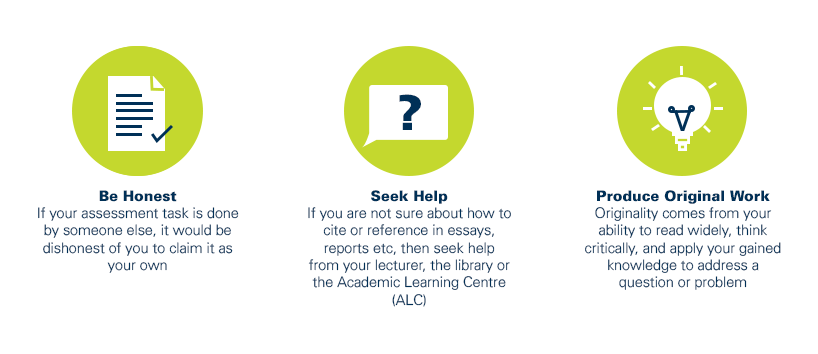
As a CQUniversity student you are expected to act honestly in all aspects of your academic work.
Any assessable work undertaken or submitted for review or assessment must be your own work. Assessable work is any type of work you do to meet the assessment requirements in the unit, including draft work submitted for review and feedback and final work to be assessed.
When you use the ideas, words or data of others in your assessment, you must thoroughly and clearly acknowledge the source of this information by using the correct referencing style for your unit. Using others’ work without proper acknowledgement may be considered a form of intellectual dishonesty.
Participating honestly, respectfully, responsibly, and fairly in your university study ensures the CQUniversity qualification you earn will be valued as a true indication of your individual academic achievement and will continue to receive the respect and recognition it deserves.
As a student, you are responsible for reading and following CQUniversity’s policies, including the Student Academic Integrity Policy and Procedure. This policy sets out CQUniversity’s expectations of you to act with integrity, examples of academic integrity breaches to avoid, the processes used to address alleged breaches of academic integrity, and potential penalties.
What is a breach of academic integrity?
A breach of academic integrity includes but is not limited to plagiarism, self-plagiarism, collusion, cheating, contract cheating, and academic misconduct. The Student Academic Integrity Policy and Procedure defines what these terms mean and gives examples.
Why is academic integrity important?
A breach of academic integrity may result in one or more penalties, including suspension or even expulsion from the University. It can also have negative implications for student visas and future enrolment at CQUniversity or elsewhere. Students who engage in contract cheating also risk being blackmailed by contract cheating services.
Where can I get assistance?
For academic advice and guidance, the Academic Learning Centre (ALC) can support you in becoming confident in completing assessments with integrity and of high standard.
What can you do to act with integrity?