Overview
With increasing digitisation in the globalised world, businesses are realising that there is a need to apply the digital technologies in expanding their target markets overseas for survival, growth and profitability. This unit builds on a series of critical global marketing concepts, where you will be able to learn how to analyse and evaluate the global marketing environmental forces and the associated digital trends, and how to strategically develop and manage contemporary entry, competitive and international marketing mix strategies. On completion of this unit, you will have an advanced and integrated understanding of global marketing theories, practices, and strategies applicable in this digital era. This unit enables students to focus on an industry or organisation of their choice from a list of options for all assessments.
Details
Pre-requisites or Co-requisites
Pre-requisite: MRKT20052
Important note: Students enrolled in a subsequent unit who failed their pre-requisite unit, should drop the subsequent unit before the census date or within 10 working days of Fail grade notification. Students who do not drop the unit in this timeframe cannot later drop the unit without academic and financial liability. See details in the Assessment Policy and Procedure (Higher Education Coursework).
Offerings For Term 1 - 2026
Attendance Requirements
All on-campus students are expected to attend scheduled classes - in some units, these classes are identified as a mandatory (pass/fail) component and attendance is compulsory. International students, on a student visa, must maintain a full time study load and meet both attendance and academic progress requirements in each study period (satisfactory attendance for International students is defined as maintaining at least an 80% attendance record).
Recommended Student Time Commitment
Each 6-credit Postgraduate unit at CQUniversity requires an overall time commitment of an average of 12.5 hours of study per week, making a total of 150 hours for the unit.
Class Timetable
Assessment Overview
Assessment Grading
This is a graded unit: your overall grade will be calculated from the marks or grades for each assessment task, based on the relative weightings shown in the table above. You must obtain an overall mark for the unit of at least 50%, or an overall grade of 'pass' in order to pass the unit. If any 'pass/fail' tasks are shown in the table above they must also be completed successfully ('pass' grade). You must also meet any minimum mark requirements specified for a particular assessment task, as detailed in the 'assessment task' section (note that in some instances, the minimum mark for a task may be greater than 50%). Consult the University's Grades and Results Policy for more details of interim results and final grades.
All University policies are available on the CQUniversity Policy site.
You may wish to view these policies:
- Grades and Results Policy
- Assessment Policy and Procedure (Higher Education Coursework)
- Review of Grade Procedure
- Student Academic Integrity Policy and Procedure
- Academic Progression Policy and Procedure
- Student Refund and Credit Balance Policy and Procedure
- Complaints Policy and Procedure
- Information and Communications Technology Acceptable Use Policy and Procedure
This list is not an exhaustive list of all University policies. The full list of University policies are available on the CQUniversity Policy site.
Feedback, Recommendations and Responses
Every unit is reviewed for enhancement each year. At the most recent review, the following staff and student feedback items were identified and recommendations were made.
Feedback from Student feedback
Student feedback highlighted the lecturer’s clear explanations of content and consistent interaction with every student, which fostered engagement and improved understanding.
It is recommended that this practice of combining clear content delivery with inclusive student interaction be maintained and further encouraged across teaching teams.
Feedback from Student feedback
Students enjoyed participating in and appreciated the value of group assessment.
The unit coordinator will continue to provide quality group assessments to future students of this unit, and will also encourage all participating students to interact and learn from each other through their group work.
- Demonstrate in-depth understanding of the major theories and contemporary practices of global marketing in the digital era.
- Critically analyse and evaluate the global marketing environments and the associated digital trends.
- Develop analytical and problem-solving skills related to market selection, entry and competitive strategies in global physical and digital markets.
- Formulate and synthesise global marketing mix strategies to respond to complex global marketing challenges and opportunities in the digital era.
Alignment of Assessment Tasks to Learning Outcomes
| Assessment Tasks | Learning Outcomes | |||
|---|---|---|---|---|
| 1 | 2 | 3 | 4 | |
| 1 - Written Assessment - 40% | ||||
| 2 - Presentation - 60% | ||||
Alignment of Graduate Attributes to Learning Outcomes
| Graduate Attributes | Learning Outcomes | |||
|---|---|---|---|---|
| 1 | 2 | 3 | 4 | |
| 1 - Knowledge | ||||
| 2 - Communication | ||||
| 3 - Cognitive, technical and creative skills | ||||
| 4 - Research | ||||
| 5 - Self-management | ||||
| 6 - Ethical and Professional Responsibility | ||||
| 7 - Leadership | ||||
| 8 - First Nations Knowledges | ||||
| 9 - Aboriginal and Torres Strait Islander Cultures | ||||
Textbooks
Global Marketing
- Global Edition, 11th ed. (2025)
- Authors: Mark C. Green & Warren J. Keegan.
- Pearson
- ISBN: ISBN-13: 9781292750590
If the 11th edition is not available, the students can also use the 10th ed.
International Marketing: An Asia-Pacific Perspective
- 7th edition
- Authors: Richard Fletcher & Heather Crawford
- ISBN: ISBN-13: 9781488611179
IT Resources
- CQUniversity Student Email
- Internet
- Unit Website (Moodle)
All submissions for this unit must use the referencing style: American Psychological Association 7th Edition (APA 7th edition)
For further information, see the Assessment Tasks.
vishnu.menon@cqu.edu.au
Week 1 - The Rationale for International Marketing and Globalisation
Begin Date: 09 Mar 2026Module/Topic
The Rationale for International Marketing and Globalisation
Chapter
Chapters 1 & 11
Events and Submissions/Topic
Unit overview: Briefing of assessment tasks, and unit expectations.
In-class activities: Discussion questions / exercises / mini cases
Week 2 - Influences of Social and Cultural Environments on International Marketing
Begin Date: 16 Mar 2026Module/Topic
Influences of Social and Cultural Environments on International Marketing
Chapter
Chapter 4
Events and Submissions/Topic
In-class activities: Discussion questions / exercises / mini cases.
Week 3 - Influences of Technology and Other Contemporary Variables on International Marketing
Begin Date: 23 Mar 2026Module/Topic
Influences of Technology and Other Contemporary Variables on International Marketing
Chapter
Chapters 5 & 6
Events and Submissions/Topic
In-class activities: Discussion questions/exercises/mini cases.
Week 4 - Influences of Political and Legal Environments on International Marketing
Begin Date: 30 Mar 2026Module/Topic
Influences of Political and Legal Environments on International Marketing
Chapter
Chapter 2
Events and Submissions/Topic
In-class activities: Discussion questions/exercises/mini cases.
Week 5 - Influences of Economic and Financial Environments on International Marketing
Begin Date: 06 Apr 2026Module/Topic
Influences of Economic and Financial Environments on International Marketing
Chapter
Chapter 3
Events and Submissions/Topic
Last minute Q&A session for Assessment Task 1 Written Assessment (Environmental Analysis).
In-class activities: Discussion questions/exercises/mini cases.
Written Assessment - Environmental Analysis Due: Week 5 Friday (10 Apr 2026) 11:00 pm AEST
Week 6 - International Market Selection, Entry and Competitive Strategies
Begin Date: 13 Apr 2026Module/Topic
International Market Selection, Entry and Competitive Strategies
Chapter
Chapters 8 and 9
Events and Submissions/Topic
In-class activities: Discussion questions/exercises/mini cases.
Vacation Week
Begin Date: 20 Apr 2026Module/Topic
Vacation Week
Chapter
Vacation Week
Events and Submissions/Topic
Vacation Week
Week 7 - Product strategies for International Markets
Begin Date: 27 Apr 2026Module/Topic
Product strategies for International Markets
Chapter
Chapter 13
Events and Submissions/Topic
Group formation for Assessment 2: DUE in Week 7.
Discussion on Assessment Task 2.
In-class activities: Discussion questions/exercises/mini cases.
Week 8 - Pricing strategies for International Markets
Begin Date: 04 May 2026Module/Topic
Pricing strategies for International Markets
Chapter
Chapter 14
Events and Submissions/Topic
In-class activities: Discussion questions/exercises/mini cases.
Week 9 - Promotion strategies for International Markets
Begin Date: 11 May 2026Module/Topic
Promotion strategies for International Markets
Chapter
Chapter 15
Events and Submissions/Topic
In-class activities: Discussion questions/exercises/mini cases.
Week 10 - Distribution strategies for International Markets
Begin Date: 18 May 2026Module/Topic
Distribution strategies for International Markets
Chapter
Chapter 16
Events and Submissions/Topic
Discussion on Assessment Task 2.
In-class activities: Discussion questions/exercises/mini cases.
Week 11 - Marketing Services Internationally
Begin Date: 25 May 2026Module/Topic
Marketing Services Internationally
Chapter
Chapter 17
Events and Submissions/Topic
Presentations begin (this activity is part of Assessment 2)
Presentation and Group Report (Recommendations for International Marketing Decisions) Due: Week 11 Friday (29 May 2026) 11:00 pm AEST
Week 12 - International Marketing in the Decade Ahead
Begin Date: 01 Jun 2026Module/Topic
International Marketing in the Decade Ahead
Chapter
Chapter 18
Events and Submissions/Topic
Presentations continue(this activity is part of Assessment 2)
1 Written Assessment
Assessment Task 1 is designed to promote independent learning and to develop the skills necessary evaluate environmental factors influencing a company's international marketing decisions.
To conduct a comprehensive environmental analysis, each student must select a hypothetical Australian company/brand from any ONE of the following industry -
- Ready-to-Drink Teas
- Energy-Efficient Lighting Systems
Assume that the company is currently operating in the domestic Australian market. You are now required to investigate potential opportunities and/or threats in ONE of the following international markets:
- Japan
- China
- Malaysia
- Thailand
Notes and Important Advice:
- Assessment Task 1 is an individual assessment.
- Students are required to conduct a detailed environmental analysis of the selected country to evaluate the potential opportunities and/or threats influencing the hypothetical company's entry into that market.
- Environmental factors to be analysed may include economic, financial, political, legal, social, cultural, technological, and other relevant contemporary factors. If a particular environmental factor does not influence international marketing decisions in the selected context, it should not be included.
- Students are required to provide a self-reflection outlining their learnings, clearly articulating the insights and lessons gained from completing this assessment.
- All discussions must be supported with appropriate in-text referencing (e.g., books, academic journal articles, industry reports, government publications, charts, diagrams, websites, and newspaper articles). Sources must be dated 2020 or later. Students are strongly discouraged from relying on generic country profile sources such as the CIA Factbook, Wikipedia, or similar general websites. A minimum of 10 academic references is required.
- The report's length must not exceed 1600 words (excluding the title page, executive summary, table of contents, reference list, appendices, and charts).
- Formatting requirements: 12 point Times New Roman, 1.5 line spacing
- Penalties will be apply for exceeding the word limit (1% mark deduction for every 100 words over 1600 words).
- Late submission penalties apply (5% mark deduction per day late unless an approved extension has been granted).
- The marking criteria should be used as a guide when preparing both the slides and the report.
This assessment requires students to adhere to the guidelines on the use of artificial intelligence tools as specified in the Artificial Intelligence Assessment Scale (AIAS). Any misuse or lack of disclosure regarding the use of AI tools will be considered a breach of academic integrity. The appropriate AI scale level for this Assessment is AI PLANNING. You may use AI for planning, idea development, and research. Your final submission should show how you have developed and refined these ideas in accordance with the assessment guidelines and marking rubric available on Moodle.
Week 5 Friday (10 Apr 2026) 11:00 pm AEST
Results will be released after moderation is completed (The expected release time to students is 2 weeks after the submission, excluding public holidays and University holidays)
The assessment will be graded based on following criteria:
Executive summary (4 marks)
Introduction: Background research on the industry and country selected (8 marks)
Analysis of Environmental Factors: examination of issues related to the products and the chosen country (16 marks)
Integration of knowledge/concepts: Synthesizes information from relevant sources to address complex (4 marks)
Self-reflection: reflect on what you have learned in the unit/class and the lessons gained (3 marks)
Strength of arguments (3 marks)
Writing styles and referencing (2 marks)
Please see Moodle for a detailed marking rubric for this assessment task.
- Demonstrate in-depth understanding of the major theories and contemporary practices of global marketing in the digital era.
- Critically analyse and evaluate the global marketing environments and the associated digital trends.
- Develop analytical and problem-solving skills related to market selection, entry and competitive strategies in global physical and digital markets.
- Formulate and synthesise global marketing mix strategies to respond to complex global marketing challenges and opportunities in the digital era.
2 Presentation
Assessment 2 is a group assignment designed to support students in practically applying international marketing theories and concepts within a workplace context.This task requires students to prepare a report that provides recommendations regarding:
(a) mode of entry
(b) competitive strategies
(c) marketing mix strategies (4Ps)
Apart from the report, the students are also required to present their findings in class.
Each group must select a hypothetical company/brand from ONE of the industries used in Assessment 1 (Ready-to-Drink Teas OR Energy-Efficient Lighting Systems), with a specific focus on entering one of the following markets:
- Japan
- China
- Malaysia
- Thailand
Notes and important advice:
- Assessment 2 is a group assignment. All students are expected to form their groups (no more than FOUR members per group) within the first six weeks. Groups should comprise members who can communicate regularly. The selection of the product and country must be discussed and agreed upon within the group.
- Each group must submit both a PowerPoint (PPT) file and a written report. Only ONE PPT file and ONE report should be submitted per group.
- The report's length must not exceed 1600 words (excluding the title page, executive summary, table of contents, reference list, appendices, and charts).
- Formatting requirements: 12 point Times New Roman, 1.5 line spacing
- Penalties will be apply for exceeding the word limit (1% mark deduction for every 100 words over 1600 words).
- Students are required to provide a comprehensive group reflection outlining their learnings, articulating the insights and lessons acquired during the unit.
- All discussions must be supported with appropriate in-text referencing (e.g., books, academic journal articles, industry reports, government publications, charts, diagrams, websites, and newspaper articles). Sources must be dated 2020 or later. Students are strongly discouraged from relying on generic country profile sources such as the CIA Factbook, Wikipedia, or similar general websites. A minimum of 12 academic references is required.
- PPT presentations will take place in class during Weeks 11 and 12. Each group will have 7 minutes to present, with a maximum of 7 slides (excluding the title slide).
- The marking criteria should be used as a guide when preparing both the slides and the report.
- As this is a group assessment, all members must participate in the presentation. If a member does not participate without prior notice, or if other members report a lack of contribution to the unit coordinator, the non-participating member will receive a mark of zero.
- Students must not click on “Final Submission” in Moodle unless both files (Word report and PPT slides) have been uploaded.
- Late submission penalties apply (5% mark deduction per day late unless an approved extension has been granted).
This assessment requires students to adhere to the guidelines on the use of artificial intelligence tools as specified in the Artificial Intelligence Assessment Scale (AIAS). Any misuse or lack of disclosure regarding the use of AI tools will be considered a breach of academic integrity. The appropriate AI scale level for this Assessment is AI PLANNING. You may use AI for planning, idea development, and research. Your final submission should show how you have developed and refined these ideas.
Week 11 Friday (29 May 2026) 11:00 pm AEST
Assessments will be returned following certification of grades (8 July 2026).
The assessment will be graded based on following criteria:
Executive summary and introduction (4 marks)
Recommendations on mode of entry and competitive strategies (6 marks)
Recommendations on marketing mix strategies (10 marks)
Group reflection: what a group has learned in the unit/class and the lessons from the shared knowledge and experiences (4 marks)
Strength of arguments (4 marks)
Writing styles and referencing (2 marks)
Introduction and professionalism: Professional PowerPoint Presentation (including visual aids, professional language and tone, time management, etc) (9 marks)
Knowledge and group reflection (15 marks)
Organisation of presentation (6 marks)
- Demonstrate in-depth understanding of the major theories and contemporary practices of global marketing in the digital era.
- Critically analyse and evaluate the global marketing environments and the associated digital trends.
- Develop analytical and problem-solving skills related to market selection, entry and competitive strategies in global physical and digital markets.
- Formulate and synthesise global marketing mix strategies to respond to complex global marketing challenges and opportunities in the digital era.
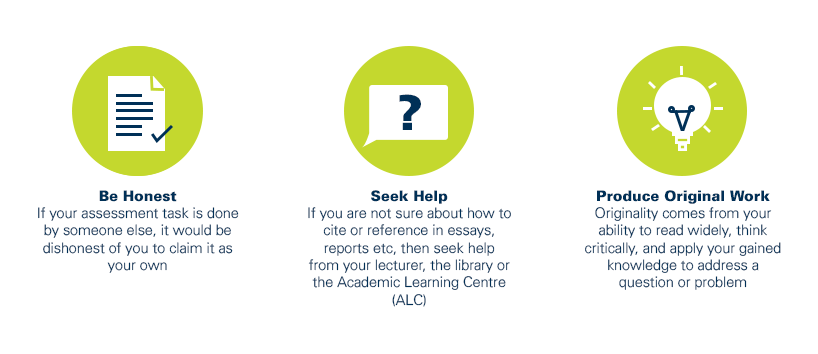
As a CQUniversity student you are expected to act honestly in all aspects of your academic work.
Any assessable work undertaken or submitted for review or assessment must be your own work. Assessable work is any type of work you do to meet the assessment requirements in the unit, including draft work submitted for review and feedback and final work to be assessed.
When you use the ideas, words or data of others in your assessment, you must thoroughly and clearly acknowledge the source of this information by using the correct referencing style for your unit. Using others’ work without proper acknowledgement may be considered a form of intellectual dishonesty.
Participating honestly, respectfully, responsibly, and fairly in your university study ensures the CQUniversity qualification you earn will be valued as a true indication of your individual academic achievement and will continue to receive the respect and recognition it deserves.
As a student, you are responsible for reading and following CQUniversity’s policies, including the Student Academic Integrity Policy and Procedure. This policy sets out CQUniversity’s expectations of you to act with integrity, examples of academic integrity breaches to avoid, the processes used to address alleged breaches of academic integrity, and potential penalties.
What is a breach of academic integrity?
A breach of academic integrity includes but is not limited to plagiarism, self-plagiarism, collusion, cheating, contract cheating, and academic misconduct. The Student Academic Integrity Policy and Procedure defines what these terms mean and gives examples.
Why is academic integrity important?
A breach of academic integrity may result in one or more penalties, including suspension or even expulsion from the University. It can also have negative implications for student visas and future enrolment at CQUniversity or elsewhere. Students who engage in contract cheating also risk being blackmailed by contract cheating services.
Where can I get assistance?
For academic advice and guidance, the Academic Learning Centre (ALC) can support you in becoming confident in completing assessments with integrity and of high standard.
What can you do to act with integrity?