Overview
This unit introduces you to the historical and cultural developments of jazz music, from the slave fields of the Mississippi Delta to jazz-rock fusion of the 1970s. It focuses on prominent musicians, composers and repertoire as well as the major sociological and political events that influenced musical trends in jazz from its origins to the present day.
Details
Pre-requisites or Co-requisites
For entry into this unit, you must have completed 36 credit points in CG51
Important note: Students enrolled in a subsequent unit who failed their pre-requisite unit, should drop the subsequent unit before the census date or within 10 working days of Fail grade notification. Students who do not drop the unit in this timeframe cannot later drop the unit without academic and financial liability. See details in the Assessment Policy and Procedure (Higher Education Coursework).
Offerings For Term 1 - 2026
Attendance Requirements
All on-campus students are expected to attend scheduled classes - in some units, these classes are identified as a mandatory (pass/fail) component and attendance is compulsory. International students, on a student visa, must maintain a full time study load and meet both attendance and academic progress requirements in each study period (satisfactory attendance for International students is defined as maintaining at least an 80% attendance record).
Recommended Student Time Commitment
Each 6-credit Undergraduate unit at CQUniversity requires an overall time commitment of an average of 12.5 hours of study per week, making a total of 150 hours for the unit.
Class Timetable
Assessment Overview
Assessment Grading
This is a graded unit: your overall grade will be calculated from the marks or grades for each assessment task, based on the relative weightings shown in the table above. You must obtain an overall mark for the unit of at least 50%, or an overall grade of 'pass' in order to pass the unit. If any 'pass/fail' tasks are shown in the table above they must also be completed successfully ('pass' grade). You must also meet any minimum mark requirements specified for a particular assessment task, as detailed in the 'assessment task' section (note that in some instances, the minimum mark for a task may be greater than 50%). Consult the University's Grades and Results Policy for more details of interim results and final grades.
All University policies are available on the CQUniversity Policy site.
You may wish to view these policies:
- Grades and Results Policy
- Assessment Policy and Procedure (Higher Education Coursework)
- Review of Grade Procedure
- Student Academic Integrity Policy and Procedure
- Academic Progression Policy and Procedure
- Student Refund and Credit Balance Policy and Procedure
- Complaints Policy and Procedure
- Information and Communications Technology Acceptable Use Policy and Procedure
This list is not an exhaustive list of all University policies. The full list of University policies are available on the CQUniversity Policy site.
Feedback, Recommendations and Responses
Every unit is reviewed for enhancement each year. At the most recent review, the following staff and student feedback items were identified and recommendations were made.
Feedback from Personal Communication
Inclusion of detailed Listening Guides
In this unit, you’ll have access to a range of extra resources to help you develop a deeper understanding of jazz concepts. Listening guides are provided for each topic, giving you clear support as you explore the music.
- Analyse the important musical, structural and aural characteristics of jazz music from the slave fields of the Mississippi Delta to the jazz-rock fusion of the 1970s
- Explore the contribution of significant musicians and composers to the development of jazz music from the slave fields of the Mississippi Delta to the jazz-rock fusion of the 1970s
- Contextualise the principal stylistic trends of jazz music from the slave fields of the Mississippi Delta to the jazz-rock fusion of the 1970s within the important social and political movements of this period.
Alignment of Assessment Tasks to Learning Outcomes
| Assessment Tasks | Learning Outcomes | ||
|---|---|---|---|
| 1 | 2 | 3 | |
| 1 - Online Quiz(zes) - 30% | |||
| 2 - Written Assessment - 40% | |||
| 3 - Online Quiz(zes) - 30% | |||
Alignment of Graduate Attributes to Learning Outcomes
| Graduate Attributes | Learning Outcomes | ||
|---|---|---|---|
| 1 | 2 | 3 | |
| 1 - Communication | |||
| 2 - Problem Solving | |||
| 3 - Critical Thinking | |||
| 4 - Information Literacy | |||
| 5 - Team Work | |||
| 6 - Information Technology Competence | |||
| 7 - Cross Cultural Competence | |||
| 8 - Ethical practice | |||
| 9 - Social Innovation | |||
| 10 - First Nations Knowledges | |||
| 11 - Aboriginal and Torres Strait Islander Cultures | |||
Textbooks
There are no required textbooks.
IT Resources
- CQUniversity Student Email
- Internet
- Unit Website (Moodle)
- Webcam
All submissions for this unit must use the referencing style: American Psychological Association 7th Edition (APA 7th edition)
For further information, see the Assessment Tasks.
j.smyth-tomkins@cqu.edu.au
Week 1
Begin Date: 09 Mar 2026Module/Topic
Introduction to Jazz History & Elements of Jazz
Chapter
Chapter 1, 2 & 3
Gridley, M. (2011). Jazz styles history and analysis. Upper Saddle River, NJ: USA
Events and Submissions/Topic
Week 2
Begin Date: 16 Mar 2026Module/Topic
Pre-Jazz History & Origins of Jazz
Chapter
Chapter 4
Gridley, M. (2011). Jazz styles history and analysis. Upper Saddle River, NJ: USA.
Events and Submissions/Topic
Week 3
Begin Date: 23 Mar 2026Module/Topic
New Orleans & Early Jazz
Chapter
Chapter 5
Gridley, M. (2011). Jazz styles history and analysis. Upper Saddle River, NJ: USA.
Events and Submissions/Topic
Week 4
Begin Date: 30 Mar 2026Module/Topic
The Swing Era
Chapter
Chapter 6 - 8
Gridley, M. (2011). Jazz styles history and analysis. Upper Saddle River, NJ: USA.
Events and Submissions/Topic
Week 5
Begin Date: 06 Apr 2026Module/Topic
The Bebop Revolution
Chapter
Chapter 9
Gridley, M. (2011). Jazz styles history and analysis. Upper Saddle River, NJ: USA.
Events and Submissions/Topic
Week 6
Begin Date: 13 Apr 2026Module/Topic
Women in Jazz
Chapter
See Moodle site.
Events and Submissions/Topic
Vacation Week
Begin Date: 20 Apr 2026Module/Topic
Chapter
Events and Submissions/Topic
Week 7
Begin Date: 27 Apr 2026Module/Topic
The Birth of the Cool
Chapter
Chapter 10
Gridley, M. (2011). Jazz styles history and analysis. Upper Saddle River, NJ: USA.
Events and Submissions/Topic
Week 8
Begin Date: 04 May 2026Module/Topic
The Hard Bop Academy
Chapter
Chapter 11
Gridley, M. (2011). Jazz styles history and analysis. Upper Saddle River, NJ: USA.
Events and Submissions/Topic
Week 9
Begin Date: 11 May 2026Module/Topic
Transitional Geniuses: Miles & Trane
Chapter
Chapter 12 & 13
Gridley, M. (2011). Jazz styles history and analysis. Upper Saddle River, NJ: USA.
Events and Submissions/Topic
Week 10
Begin Date: 18 May 2026Module/Topic
Latin Jazz
Chapter
See Moodle site.
Events and Submissions/Topic
Week 11
Begin Date: 25 May 2026Module/Topic
Free Jazz
Chapter
Chapter 14
Gridley, M. (2011). Jazz styles history and analysis. Upper Saddle River, NJ: USA.
Events and Submissions/Topic
Week 12
Begin Date: 01 Jun 2026Module/Topic
Jazz-Rock Fusion
Chapter
Chapter 15 & 16
Gridley, M. (2011). Jazz styles history and analysis. Upper Saddle River, NJ: USA.
Events and Submissions/Topic
Exam Week
Begin Date: 08 Jun 2026Module/Topic
Chapter
Events and Submissions/Topic
Vacation/Exam Week
Begin Date: 15 Jun 2026Module/Topic
Chapter
Events and Submissions/Topic
1 Online Quiz(zes)
In this assessment, you will complete a combined history and listening test based on the unit materials presented on the Moodle site throughout the term. This task evaluates your understanding of key jazz styles, artists, recordings, and historical developments, from the Elements of Jazz through to the Bebop Revolution.
The test integrates aural recognition with historical knowledge, requiring you to demonstrate both listening literacy and contextual understanding of jazz traditions.
The test will consist of two components:
Listening Identification
You will be required to identify selected musical works drawn from the prescribed listening list. For each excerpt, you may be asked to provide information such as:
- Title of the work
- Year of recording
- Artist or ensemble
- Historical period or sub-style
- Key musical/stylistic characteristics relative to the excerpt
Your responses should demonstrate familiarity with stylistic characteristics and listening examples studied during the term.
Short-Answer Responses
You will answer a series of short-answer questions related to:
- Major artists and ensembles
- Important stylistic periods (eg. Early Jazz, Swing, Bebop)
- Key musical developments and innovations
- Stylistic characteristics
- Social and cultural contexts influencing jazz evolution
AI Assessment Scale (AIAS): Level 1 No AI
This assessment is completed entirely without AI assistance in a controlled environment, ensuring that students rely solely on their existing knowledge and understanding. You must not use AI at any point in the assessment. You must use your core skills and knowledge.
72-hour grace period
IMPORTANT NOTE: This assessment is exempt from the 72-hour submission grace period.
Week 6 Monday (13 Apr 2026) 11:45 pm AEST
Exact details of the time and day of this assessment will be communicated to all students via the Unit Coordinator.
Week 8 Monday (4 May 2026)
This assessment is graded primarily on the accuracy of your responses.
Marks will be awarded for:
- Correct identification of musical works and artists/bands
- Accurate recognition of stylistic periods and key musical characteristics
- Clear and correct historical information relating to artists, recordings, dates and jazz eras
- Appropriate use of musical terminology where required
- Concise and relevant short-answer responses
Partial marks may be awarded where answers demonstrate sufficient understanding but lack complete detail.
Students are expected to demonstrate familiarity with the listening list and lecture content presented throughout the term.
- Analyse the important musical, structural and aural characteristics of jazz music from the slave fields of the Mississippi Delta to the jazz-rock fusion of the 1970s
- Contextualise the principal stylistic trends of jazz music from the slave fields of the Mississippi Delta to the jazz-rock fusion of the 1970s within the important social and political movements of this period.
2 Written Assessment
For this assessment task, you are required to write a 2500-word* written assignment. In completing this task, choose one of the following topics.
Topic 1 — The All-American Rhythm Section
The rhythm section plays a central role in defining the sound, feel, and direction of a jazz ensemble. The Count Basie Orchestra’s “All-American Rhythm Section” is widely regarded as one of the most influential rhythm sections in jazz history.
This assignment asks you to examine how this group reshaped big band performance practice through economy, groove, and collective interaction.
Your discussion must focus on the following musicians:
- Count Basie
- Freddie Green
- Walter Page
- Papa Jo Jones
You are encouraged to consider how their individual roles combined to create a unified rhythm section approach that influenced generations of jazz musicians.
Your discussion should include:
A brief historical overview of the Count Basie Orchestra
The individual discussion of each rhythm section member may address the following:
- Instrumental role and stylistic approach
- Technical or conceptual innovations
- Contribution to ensemble feel and swing
- A description of how these musicians functioned collectively as a rhythm section
- Discussion of how their approach differed from earlier big band rhythm sections
- Evaluation of their long-term influence on big band and small-group jazz performance
The inclusion of score samples or audio recordings is encouraged, as is the use of timestamps to provide precise examples.
Topic 2 — Ellington’s Genius
The Duke Ellington Orchestra stands as one of the most significant ensembles in jazz history. Beyond Duke Ellington’s leadership, the band’s identity was shaped by a group of highly individual musicians whose distinctive sounds informed Ellington’s compositional voice.
This assignment asks you to examine Ellington’s artistic legacy by exploring both his compositional development and the contributions of key ensemble members.
Your discussion must include:
Part A — Duke Ellington
A brief biographical introduction to Duke Ellington
An in-depth discussion of the following four periods of his compositional and arranging practice:
- Jungle Sounds Era
- Mood Era
- Concerto Era
- Blanton–Webster Era
For each compositional period, discuss:
- Musical characteristics
- Compositional or arranging techniques
- How Ellington wrote for specific musicians rather than generic sections
Part B — Key Ensemble Musicians
Choose three (3) musicians from the following list:
- Cootie Williams
- Barney Bigard
- Johnny Hodges
- Ben Webster
- Harry Carney
- Cat Anderson
- Juan Tizol
- Joe “Tricky Sam” Nanton
- Jimmy Blanton
For each selected musician, discuss:
- Brief biographical background
- Instrumental approach and stylistic identity
- How their voice contributed to Ellington’s compositional approach
- Specific examples of repertoire written to highlight their sound
The inclusion of score samples or audio recordings is encouraged, as is the use of timestamps to provide precise examples.
Topic 3 - Women in Jazz
Jazz history is often narrated through the achievements of celebrated male instrumentalists and bandleaders. However, women played vital roles as performers, composers, arrangers, educators, and cultural innovators. This assignment asks you to examine the contributions of women in jazz and to explore why their work has often been marginalised in mainstream historical narratives. You are encouraged to consider how gender, industry structures, media representation, and social context influenced whose achievements were celebrated and whose were overlooked.
Your discussion should include:
- At least three women discussed in this topic (for example, Lil Hardin Armstrong, Mary Lou Williams, Bessie Smith, Ella Fitzgerald, Billie Holiday, or Sarah Vaughan).
- A discussion of at least one prominent male jazz figure whose career intersected with or benefited from women’s contributions (eg. Louis Armstrong).
Your discussion should also address (as appropriate to the artist):
- Historical contribution
- Composition or arranging
- Career development of others
- Influence on jazz style or performance
- Visibility and recognition
- Gender narratives in jazz history (bandleaders vs collaborators, industry barriers, societal expectations etc.)
Topic 4: Miles Davis Influential Recordings
Miles Davis recorded several albums that are widely recognised as landmark recordings in jazz history. These albums not only introduced new musical approaches but also reshaped the direction of jazz more broadly.
This assignment asks you to discuss one of these recordings as a catalyst for stylistic change.
Choose one (1) of the following sub-styles:
Cool Jazz — Album: Birth of the Cool
Modal Jazz — Album: Kind of Blue
Your discussion must include:
A brief biographical introduction to Miles Davis
A historical overview of your chosen sub-style, including:
- Musical characteristics
- Social and cultural context
- Political or historical influences (where relevant)
A summary of performance practices associated with the chosen sub-style, such as:
- Instrumentation
- Ensemble size
- Improvisational approach
- Typical formal structures
Background information on the associated album (Birth of the Cool or Kind of Blue), including:
- Recording process
- Composer/arranger contributions
- Important roles played by other musicians on the recording
Musical Analysis Component
Using an original YouTube recording, provide a timestamped musical discussion of:
Boplicity (from Birth of the Cool)or So What (from Kind of Blue)
Your analysis should address:
- Form
- Harmony or modality
- Melody
- Rhythm section interaction
- Soloist approach
The inclusion of score samples or audio recordings is encouraged, as is the use of timestamps to provide precise examples.
Assignment presentation:
• Include your name, student number and chosen topic
• Must use 12 point Times New Roman font
• Must use 1.5 spacing for the body of the assignment
• You may use sub-headings to organise your assignment clearly
• You may refer to Youtube clips to demonstrate aspects of your discussion and reference appropriately
• Include in-text references
• Include a comprehensive reference list, adhering to the CQUniversity APA Style Guide
• All excerpts from URLs for music scores or recorded audio/video examples should include an in-text reference, and full details included in the reference list.
• Submit Microsoft Word (.docx) documents only.
*The word count is considered from the first word of the introduction to the last word of the conclusion. It excludes the cover page, abstract, contents page, reference page and appendices. It includes in-text references and direct quotations.
AI Assessment Scale: Level 2 for Planning and Research
You may use AI for planning, idea development, and research. Your final submission should show how you have developed and refined these ideas. Any misuse or lack of disclosure regarding AI tools will be considered a breach of academic integrity.
72-hour grace period
No exemption statement applies. The standard 72-hour grace period applies.
Week 9 Friday (15 May 2026) 11:45 pm AEST
Week 11 Friday (29 May 2026)
- Appropriateness of introduction & conclusion - 10%
- Quality of structure and organisation of sections - 10%
- Relevance of content - 20%
- Ability to write in a clear and coherent manner - 20%
- Accuracy of spelling, vocabulary and grammatical structure - 20%
- Depth of research and evidence of wide reading - 10%
- Accuracy of reference list and in-text referencing - 10%
- Appropriate introduction and conclusion - 5%
- Accuracy of biographical history of the artist - 15%
- Precise and relevant account of the development of the musical sub-style and identification of contributing social and political influences - 10%
- Accuracy in the identification and discussion of the sub-style specific performance practises - 15%
- Accuracy and depth of research of the chosen album and associated artists - 15%
- Accuracy of musical analysis of the chosen recording - 15%
- Grammatical accuracy, punctuation, spelling and general presentation - 10%
- Correct use of academic referencing conventions - 10%
- Evidence of wide reading - 5%
- Explore the contribution of significant musicians and composers to the development of jazz music from the slave fields of the Mississippi Delta to the jazz-rock fusion of the 1970s
- Contextualise the principal stylistic trends of jazz music from the slave fields of the Mississippi Delta to the jazz-rock fusion of the 1970s within the important social and political movements of this period.
3 Online Quiz(zes)
In this assessment, you will complete a combined history and listening test based on the unit materials presented on the Moodle site throughout the term. This task evaluates your understanding of key jazz styles, artists, recordings, and historical developments from Cool Jazz through to Jazz-Rock Fusion.
The test integrates aural recognition with historical knowledge, requiring you to demonstrate both listening literacy and contextual understanding of post-bebop jazz traditions and their stylistic evolution.
The test will consist of two components:
Listening Identification
You will be required to identify selected musical works drawn from the prescribed listening list. For each excerpt, you may be asked to provide information such as:
- Title of the work
- Year of recording
- Artist or ensemble
- Historical period or sub-style
- Key musical/stylistic characteristics relative to the excerpt
Your responses should demonstrate familiarity with stylistic characteristics and listening examples studied during the term.
Short-Answer Responses
You will answer a series of short-answer questions related to:
- Major artists and ensembles
- Important stylistic periods (eg: Cool Jazz, Hard Bop, Latin Jazz, Free Jazz, Fusion)
- Key musical developments and innovations
- Stylistic characteristics
- Social and cultural contexts influencing jazz evolution
Responses should be concise, accurate, and supported by relevant examples from the listening list where appropriate.
AI Assessment Scale (AIAS): Level 1 No AI
This assessment is completed entirely without AI assistance in a controlled environment, ensuring that students rely solely on their existing knowledge and understanding. You must not use AI at any point in the assessment. You must use your core skills and knowledge.
72-hour grace period
IMPORTANT NOTE: This assessment is exempt from the 72-hour submission grace period.
Exam Week Monday (8 June 2026) 11:45 pm AEST
Exact details of the time and day of this assessment will be communicated to all students via the Unit Coordinator.
End of term.
This assessment is graded primarily on the accuracy of your responses.
Marks will be awarded for:
- Correct identification of musical works and artists/bands
- Accurate recognition of stylistic periods and key musical characteristics
- Clear and correct historical information relating to artists, recordings, dates and jazz eras
- Appropriate use of musical terminology where required
- Concise and relevant short-answer responses
Partial marks may be awarded where answers demonstrate sufficient understanding but lack complete detail.
Students are expected to demonstrate familiarity with the listening list and lecture content presented throughout the term.
- Analyse the important musical, structural and aural characteristics of jazz music from the slave fields of the Mississippi Delta to the jazz-rock fusion of the 1970s
- Contextualise the principal stylistic trends of jazz music from the slave fields of the Mississippi Delta to the jazz-rock fusion of the 1970s within the important social and political movements of this period.
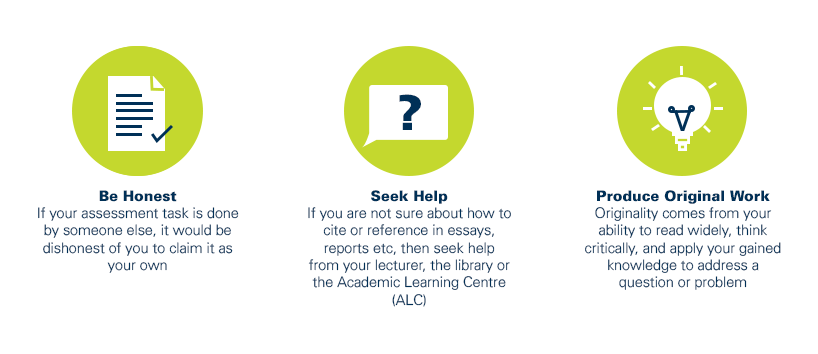
As a CQUniversity student you are expected to act honestly in all aspects of your academic work.
Any assessable work undertaken or submitted for review or assessment must be your own work. Assessable work is any type of work you do to meet the assessment requirements in the unit, including draft work submitted for review and feedback and final work to be assessed.
When you use the ideas, words or data of others in your assessment, you must thoroughly and clearly acknowledge the source of this information by using the correct referencing style for your unit. Using others’ work without proper acknowledgement may be considered a form of intellectual dishonesty.
Participating honestly, respectfully, responsibly, and fairly in your university study ensures the CQUniversity qualification you earn will be valued as a true indication of your individual academic achievement and will continue to receive the respect and recognition it deserves.
As a student, you are responsible for reading and following CQUniversity’s policies, including the Student Academic Integrity Policy and Procedure. This policy sets out CQUniversity’s expectations of you to act with integrity, examples of academic integrity breaches to avoid, the processes used to address alleged breaches of academic integrity, and potential penalties.
What is a breach of academic integrity?
A breach of academic integrity includes but is not limited to plagiarism, self-plagiarism, collusion, cheating, contract cheating, and academic misconduct. The Student Academic Integrity Policy and Procedure defines what these terms mean and gives examples.
Why is academic integrity important?
A breach of academic integrity may result in one or more penalties, including suspension or even expulsion from the University. It can also have negative implications for student visas and future enrolment at CQUniversity or elsewhere. Students who engage in contract cheating also risk being blackmailed by contract cheating services.
Where can I get assistance?
For academic advice and guidance, the Academic Learning Centre (ALC) can support you in becoming confident in completing assessments with integrity and of high standard.
What can you do to act with integrity?