Overview
As the first unit of the intermediate second year level in this series, you will continue the systematic development of skills in singing, music theory, aural musicianship and piano keyboard as it relates to your development as a music theatre singer. You will study the aspects of vocal technique appropriate for this level in your development as a music theatre singer along with a more in-depth exploration of music theatre vocal repertoire. As part of your singing technique, you will explore the phonetic aspects of various Australian Indigenous, Asian and European languages. The unit integrates your learning of singing with music theory, aural musicianship and piano keyboard, covering intermediate concepts of pitch, harmony, rhythm, pulse, tempo, articulation and expression. You are expected to develop cumulative levels of skill and knowledge through this series of units.
Details
Pre-requisites or Co-requisites
Pre-requisite: MUSC11415 Music Theatre Voice 2
Important note: Students enrolled in a subsequent unit who failed their pre-requisite unit, should drop the subsequent unit before the census date or within 10 working days of Fail grade notification. Students who do not drop the unit in this timeframe cannot later drop the unit without academic and financial liability. See details in the Assessment Policy and Procedure (Higher Education Coursework).
Offerings For Term 1 - 2026
Attendance Requirements
All on-campus students are expected to attend scheduled classes - in some units, these classes are identified as a mandatory (pass/fail) component and attendance is compulsory. International students, on a student visa, must maintain a full time study load and meet both attendance and academic progress requirements in each study period (satisfactory attendance for International students is defined as maintaining at least an 80% attendance record).
Recommended Student Time Commitment
Each 6-credit Undergraduate unit at CQUniversity requires an overall time commitment of an average of 12.5 hours of study per week, making a total of 150 hours for the unit.
Class Timetable
Assessment Overview
Assessment Grading
This is a graded unit: your overall grade will be calculated from the marks or grades for each assessment task, based on the relative weightings shown in the table above. You must obtain an overall mark for the unit of at least 50%, or an overall grade of 'pass' in order to pass the unit. If any 'pass/fail' tasks are shown in the table above they must also be completed successfully ('pass' grade). You must also meet any minimum mark requirements specified for a particular assessment task, as detailed in the 'assessment task' section (note that in some instances, the minimum mark for a task may be greater than 50%). Consult the University's Grades and Results Policy for more details of interim results and final grades.
All University policies are available on the CQUniversity Policy site.
You may wish to view these policies:
- Grades and Results Policy
- Assessment Policy and Procedure (Higher Education Coursework)
- Review of Grade Procedure
- Student Academic Integrity Policy and Procedure
- Academic Progression Policy and Procedure
- Student Refund and Credit Balance Policy and Procedure
- Complaints Policy and Procedure
- Information and Communications Technology Acceptable Use Policy and Procedure
This list is not an exhaustive list of all University policies. The full list of University policies are available on the CQUniversity Policy site.
Feedback, Recommendations and Responses
Every unit is reviewed for enhancement each year. At the most recent review, the following staff and student feedback items were identified and recommendations were made.
Feedback from In-Class
Request to continue with language learning
Continue to teach languages at a foundational level with music theatre industry application through song implementation and theatrical staging.
- Demonstrate development of tonal complexion and vocal stamina in the accurate presentation of songs and technical work
- Apply intermediate-level principles of breath usage, support and placement of the voice to various performance exercises
- Apply intermediate principles of foreign pronunciation, intonation and comprehension in various languages within selected songs
- Perform intermediate level pieces and exercises on the keyboard that relate to your musical development as a singer
- Develop an intermediate level of aural musicianship through various practical vocal exercises
- Complete music writing tasks using the elements of music relating to pitch, rhythm, keys, scales and chords as derived from the western art-music tradition and contemporary popular music styles at an intermediate level.
Alignment of Assessment Tasks to Learning Outcomes
| Assessment Tasks | Learning Outcomes | |||||
|---|---|---|---|---|---|---|
| 1 | 2 | 3 | 4 | 5 | 6 | |
| 1 - Practical Assessment - 50% | ||||||
| 2 - Practical Assessment - 15% | ||||||
| 3 - Practical Assessment - 15% | ||||||
| 4 - In-class Test(s) - 20% | ||||||
Alignment of Graduate Attributes to Learning Outcomes
| Graduate Attributes | Learning Outcomes | |||||
|---|---|---|---|---|---|---|
| 1 | 2 | 3 | 4 | 5 | 6 | |
| 1 - Communication | ||||||
| 2 - Problem Solving | ||||||
| 3 - Critical Thinking | ||||||
| 4 - Information Literacy | ||||||
| 5 - Team Work | ||||||
| 6 - Information Technology Competence | ||||||
| 7 - Cross Cultural Competence | ||||||
| 8 - Ethical practice | ||||||
| 9 - Social Innovation | ||||||
| 10 - First Nations Knowledges | ||||||
| 11 - Aboriginal and Torres Strait Islander Cultures | ||||||
Alignment of Assessment Tasks to Graduate Attributes
| Assessment Tasks | Graduate Attributes | ||||||||||
|---|---|---|---|---|---|---|---|---|---|---|---|
| 1 | 2 | 3 | 4 | 5 | 6 | 7 | 8 | 9 | 10 | 11 | |
| 1 - Practical Assessment - 50% | |||||||||||
| 2 - Practical Assessment - 15% | |||||||||||
| 3 - Practical Assessment - 15% | |||||||||||
| 4 - In-class Test(s) - 20% | |||||||||||
Textbooks
There are no required textbooks.
IT Resources
- CQUniversity Student Email
- Internet
- Unit Website (Moodle)
All submissions for this unit must use the referencing style: American Psychological Association 7th Edition (APA 7th edition)
For further information, see the Assessment Tasks.
s.rozekrans@cqu.edu.au
Week 1
Begin Date: 09 Mar 2026Module/Topic
Principal Instrument Tutorials
Music Theory Tutorials
Sight-Singing & Aural Tutorials
Language Tutorials
Chapter
Events and Submissions/Topic
Week 2
Begin Date: 16 Mar 2026Module/Topic
Principal Instrument Tutorials
Music Theory Tutorials
Sight-Singing & Aural Tutorials
Language Tutorials
Chapter
Events and Submissions/Topic
Week 3
Begin Date: 23 Mar 2026Module/Topic
Principal Instrument Tutorials
Music Theory Tutorials
Sight-Singing & Aural Tutorials
Language Tutorials
Chapter
Events and Submissions/Topic
Week 4
Begin Date: 30 Mar 2026Module/Topic
Principal Instrument Tutorials
Music Theory Tutorials
Sight-Singing & Aural Tutorials
Language Tutorials
Chapter
Events and Submissions/Topic
Week 5
Begin Date: 06 Apr 2026Module/Topic
Principal Instrument Tutorials
Music Theory Tutorials
Sight-Singing & Aural Tutorials
Language Tutorials
Chapter
Events and Submissions/Topic
Week 6
Begin Date: 13 Apr 2026Module/Topic
Principal Instrument Tutorials
Music Theory Tutorials
Sight-Singing & Aural Tutorials
Language Tutorials
Chapter
Events and Submissions/Topic
Vacation Week
Begin Date: 20 Apr 2026Module/Topic
Chapter
Events and Submissions/Topic
Week 7
Begin Date: 27 Apr 2026Module/Topic
Principal Instrument Tutorials
Music Theory Tutorials
Sight-Singing & Aural Tutorials
Language Tutorials
Chapter
Events and Submissions/Topic
Week 8
Begin Date: 04 May 2026Module/Topic
Principal Instrument Tutorials
Music Theory Tutorials
Sight-Singing & Aural Tutorials
Language Tutorials
Chapter
Events and Submissions/Topic
Week 9
Begin Date: 11 May 2026Module/Topic
Principal Instrument Tutorials
Music Theory Tutorials
Sight-Singing & Aural Tutorials
Language Tutorials
Chapter
Events and Submissions/Topic
Week 10
Begin Date: 18 May 2026Module/Topic
Principal Instrument Tutorials
Music Theory Tutorials
Sight-Singing & Aural Tutorials
Language Tutorials
Chapter
Events and Submissions/Topic
Week 11
Begin Date: 25 May 2026Module/Topic
In-Class Exams
Chapter
Events and Submissions/Topic
Musicianship Assessment (15%) Due: Week 11 Friday (29 May 2026) 11:45 pm AEST
Week 12
Begin Date: 01 Jun 2026Module/Topic
Intensive Production Block
Chapter
Events and Submissions/Topic
Exam Week
Begin Date: 08 Jun 2026Module/Topic
Intensive Production Block
Chapter
Events and Submissions/Topic
Vacation/Exam Week
Begin Date: 15 Jun 2026Module/Topic
Chapter
Events and Submissions/Topic
1 Practical Assessment
Singing Assessment
You will be required to complete a practical singing assessment consisting of the following:
Technical exam (closed exam)
- Participation and performance of part singing within ensemble pieces
- Demonstration of basic skills in a foreign language, as selected by staff
- One folk song to be sung a cappella, in a key suitable to the student's voice without a starting note being given
- Submission of printed book of Term 1 Repertoire selections by the end of Week 4 - 2 books required, one for accompanying and one for weekly tutorials
Performance exam (closed exam)
- The program should demonstrate a choice of 4 works covering the different genres available throughout the history of 20th and 21st century music theatre with a total performance time of no longer than 18 minutes.
- The genres to be represented are as follows:
- pre-1950s (including operetta)
- legitimate (Golden Era) 1950-1965 approx
- pre-2000s (MUST be composed by Stephen Sondheim)
- post-2000s (contemporary)
- One piece must be a 'Song & Dance' with planned choreography throughout the performance
- The program should show a variety of styles and tempos, and be sung entirely from memory.
- The program is to be chosen in consultation with your teacher to ensure an appropriate level of difficulty is attempted.
- Program notes for the performance exam must be submitted at the time of the vocal exam. These should include a song analysis of each piece, and a history of the work, composers and character. They should be a minimum of 200 words for each piece of music that you are performing.
AI Assessment Scale: Level 1 - You must not use AI at any point during this assessment. You must demonstrate your core skills and knowledge. Any misuse or lack of disclosure regarding the use of AI tools will be considered a breach of academic integrity.
Please note: The 72-Hour grace period does NOT apply to the Practical Voice Assessment as it is in a fixed schedule.
Week 11 Friday (29 May 2026) 11:45 pm AEST
Assessment to take place during the Examination period
Vacation/Exam Week Friday (19 June 2026)
After the conclusion of the Exam Period
Music Theatre specialisation
The following criteria will be applied:
Technical examination
- accuracy of intonation
- accuracy of musical elements
- clarity and accuracy of lyrics
- breath control and support
- pronunciation and comprehension of selected language as appropriate
Performance examination
- accuracy of intonation and consistency of pitch
- clarity and accuracy of lyrics
- ability to use support
- ability to use appropriate vocal colours and use of vocal colours
- ability to maintain correct vocal use whilst moving
- ability to make effective change between singing and speech qualities
- comprehension and appropriate interpretation of style
appropriateness of program notes with references
- Demonstrate development of tonal complexion and vocal stamina in the accurate presentation of songs and technical work
- Apply intermediate-level principles of breath usage, support and placement of the voice to various performance exercises
- Apply intermediate principles of foreign pronunciation, intonation and comprehension in various languages within selected songs
- Communication
- Problem Solving
- Critical Thinking
2 Practical Assessment
You will be continue to study intermediate Sight-Singing and Aural techniques through the application of Ensemble Singing with repertoire chosen in consultation with the class tutor.
Ensembles will sing in two-part and three-part harmony (or more within whole cohort repertoire) and will be required to sing any and all vocal parts as part of the examination process.
AI Assessment Scale: Level 1 - You must not use AI at any point during this assessment. You must demonstrate your core skills and knowledge. Any misuse or lack of disclosure regarding the use of AI tools will be considered a breach of academic integrity.
Please note: The 72-Hour grace period does NOT apply to the Musicianship Assessment as it is in a fixed schedule.
Week 11 Friday (29 May 2026) 11:45 pm AEST
Assessment to take place during the Examination period
Vacation/Exam Week Friday (19 June 2026)
After the conclusion of the Exam Period
Marking Criteria:
- Accuracy of pitch in holding melodic line
- Accuracy of pitch in holding harmony line
- Consistency in ensemble singing (ie blending of sound)
- Rhythmic accuracy and fluency
- Perform intermediate level pieces and exercises on the keyboard that relate to your musical development as a singer
- Communication
- Critical Thinking
3 Practical Assessment
By the end of this unit, you will demonstrate:
- Hands together piece in compound time
- Note bash vocal line (RH only) in original and transposed key
- Transpose given lead sheet and accompany a singer in the new key
AI Assessment Scale: Level 1 - You must not use AI at any point during this assessment. You must demonstrate your core skills and knowledge. Any misuse or lack of disclosure regarding the use of AI tools will be considered a breach of academic integrity.
Please note: The 72-Hour grace period does NOT apply to the Keyboard Assessment as it is in a fixed schedule.
Week 10 Friday (22 May 2026) 11:45 pm AEST
In-Class Exam
Vacation/Exam Week Friday (19 June 2026)
To Be Returned After The Conclusion Of The Examination Period
Assessment Criteria:
- Ability to maintain integrity of original score
- Ability to arrange music through the manipulation of music elements
- Ability to justify composition choices clearly and logically
- Overall quality of score OR sound file
- Develop an intermediate level of aural musicianship through various practical vocal exercises
- Critical Thinking
4 In-class Test(s)
Song Analysis Essay:
Task:
Study the following clip of "Let's Call The Whole Thing Off" by Gershwin from Shall We Dance.
https://www.youtube.com/watch?v=LOILZ_D3aRg
Compare with the following clip of "A Lovely Night" by Pasek and Paul from La La Land.
https://www.youtube.com/watch?v=waTDxRZ93Qc
Through an analysis of the manipulation of music elements (most notably, form), you are to compare and contrast the use of the 32-bar format in these clips. What are the similarities and differences between each score? Despite the years between productions, how does the 32-bar format help character development? How does music of the Tin Pan Alley era influence scores today?
Assignment format:
Include in your reference list all music scores used, CD and DVD recordings, Youtube sources, as well as books, academic journal articles, and articles from Oxford Music Online and Rocks Back Pages.
- You should have a minimum of 5 references for this assignment
- Do NOT cite from Wikipedia or other websites that do not have an acknowledged author
- Use 12 point Times New Roman font for the body of the essay
- Double line spacing throughout
- Include in-text references (citations) throughout the assignment
- Include a Reference List at the end of the assignment in APA style, 7th edition
AI Assessment Scale: Level 2 - You may use AI for planning, idea development, and research. Your final submission should show how you have developed and refined these ideas. Any misuse or lack of disclosure regarding AI tools will be considered a breach of academic integrity.
Please note: The 72-Hour grace period applies to the Music Theory Assessment. If you need longer than 72 hours, you'll still need to use the normal Assessment Extension System process.
Week 9 Friday (15 May 2026) 11:45 pm AEST
To be submitted through Moodle
Vacation/Exam Week Friday (19 June 2026)
To Be Returned To Students After The Conclusion Of The Examination Period
Assessment criteria:
- Clear introduction and conclusion (10%)
- Accuracy of information and depth of treatment of the topic (25%)
- Detailed discussion on the elements (especially 32-bar form) of the music examples provided
- Ability to write clearly and logically (15%)
- Correct spelling, grammar, punctuation and clear lay-out (10%)
- Correct use of APA 7th Edition for the in-text referencing and reference list (15%)
- Complete music writing tasks using the elements of music relating to pitch, rhythm, keys, scales and chords as derived from the western art-music tradition and contemporary popular music styles at an intermediate level.
- Communication
- Problem Solving
- Critical Thinking
- Information Technology Competence
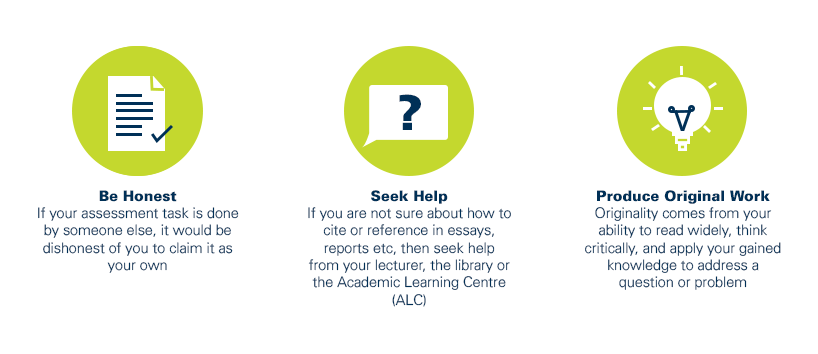
As a CQUniversity student you are expected to act honestly in all aspects of your academic work.
Any assessable work undertaken or submitted for review or assessment must be your own work. Assessable work is any type of work you do to meet the assessment requirements in the unit, including draft work submitted for review and feedback and final work to be assessed.
When you use the ideas, words or data of others in your assessment, you must thoroughly and clearly acknowledge the source of this information by using the correct referencing style for your unit. Using others’ work without proper acknowledgement may be considered a form of intellectual dishonesty.
Participating honestly, respectfully, responsibly, and fairly in your university study ensures the CQUniversity qualification you earn will be valued as a true indication of your individual academic achievement and will continue to receive the respect and recognition it deserves.
As a student, you are responsible for reading and following CQUniversity’s policies, including the Student Academic Integrity Policy and Procedure. This policy sets out CQUniversity’s expectations of you to act with integrity, examples of academic integrity breaches to avoid, the processes used to address alleged breaches of academic integrity, and potential penalties.
What is a breach of academic integrity?
A breach of academic integrity includes but is not limited to plagiarism, self-plagiarism, collusion, cheating, contract cheating, and academic misconduct. The Student Academic Integrity Policy and Procedure defines what these terms mean and gives examples.
Why is academic integrity important?
A breach of academic integrity may result in one or more penalties, including suspension or even expulsion from the University. It can also have negative implications for student visas and future enrolment at CQUniversity or elsewhere. Students who engage in contract cheating also risk being blackmailed by contract cheating services.
Where can I get assistance?
For academic advice and guidance, the Academic Learning Centre (ALC) can support you in becoming confident in completing assessments with integrity and of high standard.
What can you do to act with integrity?