Overview
The effective delivery of an instrumental music curriculum is contingent on the knowledge and ability of the teacher in two associated areas: multi-instrument instruction and conducting technique. Through beginner-intermediate studies of multi-instrument and conducting techniques, you will have the opportunity to develop the pedagogical skills and concepts required to deliver successful group instrumental music instruction and ensemble direction for beginner-intermediate students. Non-percussion majors must study percussion and drummers/percussionists must study an instrument from the woodwind or brass families. You will be required to develop skills on an unfamiliar instrument, performing repertoire and exercises on this instrument relative to the beginner-intermediate level. Additionally, you will continue to develop ensemble directing skills and conducting techniques for beginner-intermediate ensembles. In undertaking this unit, you will be required to have access to the instruments chosen for your study.
Details
Pre-requisites or Co-requisites
Pre-Requisite: Students must have completed MUSC13413 Multi-Instrument Fundamentals and Ensemble Direction 1
Important note: Students enrolled in a subsequent unit who failed their pre-requisite unit, should drop the subsequent unit before the census date or within 10 working days of Fail grade notification. Students who do not drop the unit in this timeframe cannot later drop the unit without academic and financial liability. See details in the Assessment Policy and Procedure (Higher Education Coursework).
Offerings For Term 2 - 2026
Attendance Requirements
All on-campus students are expected to attend scheduled classes - in some units, these classes are identified as a mandatory (pass/fail) component and attendance is compulsory. International students, on a student visa, must maintain a full time study load and meet both attendance and academic progress requirements in each study period (satisfactory attendance for International students is defined as maintaining at least an 80% attendance record).
Recommended Student Time Commitment
Each 6-credit Postgraduate unit at CQUniversity requires an overall time commitment of an average of 12.5 hours of study per week, making a total of 150 hours for the unit.
Class Timetable
Assessment Overview
Assessment Grading
This is a graded unit: your overall grade will be calculated from the marks or grades for each assessment task, based on the relative weightings shown in the table above. You must obtain an overall mark for the unit of at least 50%, or an overall grade of 'pass' in order to pass the unit. If any 'pass/fail' tasks are shown in the table above they must also be completed successfully ('pass' grade). You must also meet any minimum mark requirements specified for a particular assessment task, as detailed in the 'assessment task' section (note that in some instances, the minimum mark for a task may be greater than 50%). Consult the University's Grades and Results Policy for more details of interim results and final grades.
All University policies are available on the CQUniversity Policy site.
You may wish to view these policies:
- Grades and Results Policy
- Assessment Policy and Procedure (Higher Education Coursework)
- Review of Grade Procedure
- Student Academic Integrity Policy and Procedure
- Academic Progression Policy and Procedure
- Student Refund and Credit Balance Policy and Procedure
- Complaints Policy and Procedure
- Information and Communications Technology Acceptable Use Policy and Procedure
This list is not an exhaustive list of all University policies. The full list of University policies are available on the CQUniversity Policy site.
Feedback, Recommendations and Responses
Every unit is reviewed for enhancement each year. At the most recent review, the following staff and student feedback items were identified and recommendations were made.
Feedback from Personal communication
Students commented positively regarding access to staff and the flexibility of progress check-ins as they developed skills in the 2nd instrument study.
Continue to provide flexible arrangements and access to staff for feedback on the 2nd instrument study in this unit.
- Execute beginning-intermediate student repertoire on an instrument that is not your primary instrument of study from the woodwind, brass, OR percussion instrument families
- Master professional conducting techniques required for the musical direction of a beginner-intermediate ensemble
- Analyse the technical challenges of your chosen instruments of study and pedagogical methods for the successful development of beginner-intermediate students.
Alignment of Assessment Tasks to Learning Outcomes
| Assessment Tasks | Learning Outcomes | ||
|---|---|---|---|
| 1 | 2 | 3 | |
| 1 - Practical Assessment - 50% | |||
| 2 - Practical Assessment - 30% | |||
| 3 - Reflective Practice Assignment - 20% | |||
Alignment of Graduate Attributes to Learning Outcomes
| Graduate Attributes | Learning Outcomes | ||
|---|---|---|---|
| 1 | 2 | 3 | |
| 1 - Knowledge | |||
| 2 - Communication | |||
| 3 - Cognitive, technical and creative skills | |||
| 4 - Research | |||
| 5 - Self-management | |||
| 6 - Ethical and Professional Responsibility | |||
| 7 - Leadership | |||
| 8 - First Nations Knowledges | |||
| 9 - Aboriginal and Torres Strait Islander Cultures | |||
Textbooks
There are no required textbooks.
IT Resources
- CQUniversity Student Email
- Internet
- Unit Website (Moodle)
- Webcam
- Zoom
All submissions for this unit must use the referencing style: American Psychological Association 7th Edition (APA 7th edition)
For further information, see the Assessment Tasks.
j.smyth-tomkins@cqu.edu.au
p.mckenzie@cqu.edu.au
Week 1
Begin Date: 13 Jul 2026Module/Topic
Conducting:
Review Module 2: Laban Theory of Movement and associated articulation gestures.
Multi-Instrument:
Study of your chosen instruments, progressing through the online lesson content at your own pace.
Chapter
Events and Submissions/Topic
Week 2
Begin Date: 20 Jul 2026Module/Topic
Conducting:
Module 3: The pattern serves the music
Multi-Instrument:
Study of your chosen instruments, progressing through the online lesson content at your own pace.
Chapter
Events and Submissions/Topic
Week 3
Begin Date: 27 Jul 2026Module/Topic
Conducting:
Module 3: The pattern serves the music
Multi-Instrument:
Study of your chosen instruments, progressing through the online lesson content at your own pace.
Chapter
Events and Submissions/Topic
Week 4
Begin Date: 03 Aug 2026Module/Topic
Conducting:
Module 3: The pattern serves the music
Multi-Instrument:
Study of your chosen instruments, progressing through the online lesson content at your own pace.
Chapter
Events and Submissions/Topic
Week 5
Begin Date: 10 Aug 2026Module/Topic
Conducting:
Module 4: Advanced fundamentals
Multi-Instrument:
Study of your chosen instruments, progressing through the online lesson content at your own pace.
Chapter
Events and Submissions/Topic
Week 6
Begin Date: 17 Aug 2026Module/Topic
Conducting:
Module 4: Advanced fundamentals
Multi-Instrument:
Study of your chosen instruments, progressing through the online lesson content at your own pace.
Chapter
Events and Submissions/Topic
Vacation Week
Begin Date: 24 Aug 2026Module/Topic
Chapter
Events and Submissions/Topic
Week 7
Begin Date: 31 Aug 2026Module/Topic
Conducting:
Module 4: Advanced fundamentals
Multi-Instrument:
Study of your chosen instruments, progressing through the online lesson content at your own pace.
Chapter
Events and Submissions/Topic
Week 8
Begin Date: 07 Sep 2026Module/Topic
Multi-Instrument:
Study of your chosen instruments, progressing through the online lesson content at your own pace.
Chapter
Events and Submissions/Topic
Week 9
Begin Date: 14 Sep 2026Module/Topic
Multi-Instrument:
Study of your chosen instruments, progressing through the online lesson content at your own pace.
Chapter
Events and Submissions/Topic
Week 10
Begin Date: 21 Sep 2026Module/Topic
Multi-Instrument:
Study of your chosen instruments, progressing through the online lesson content at your own pace.
Chapter
Events and Submissions/Topic
Week 11
Begin Date: 28 Sep 2026Module/Topic
Multi-Instrument:
Study of your chosen instruments, progressing through the online lesson content at your own pace.
Chapter
Events and Submissions/Topic
Week 12
Begin Date: 05 Oct 2026Module/Topic
Multi-Instrument:
Study of your chosen instruments, progressing through the online lesson content at your own pace.
Chapter
Events and Submissions/Topic
Exam Week
Begin Date: 12 Oct 2026Module/Topic
Chapter
Events and Submissions/Topic
Vacation/Exam Week
Begin Date: 19 Oct 2026Module/Topic
Chapter
Events and Submissions/Topic
1 Practical Assessment
The objective of this practical assessment is to demonstrate developing conducting techniques relative to directing a beginner-to-intermediate ensemble. By submitting a video recording, you will showcase your ability to apply techniques discussed in "Become a Master Conductor" (Module 1, 2, 3 and 4), including preparation, downbeats and releases, articulation(s), time signatures, and dynamics. You will demonstrate increasing technical competence by selecting and conducting materials from the Level 0.5 - 2.0 repertoire recordings provided on Moodle.
Assessment Task:
Prepare and submit a video demonstrating your ensemble conducting skills.
- Technique Development from "Become a Master Conductor" Modules 1, 2, 3 and 4: Demonstrate preparation, downbeats and releases, articulation(s), time signatures (2/4, 3/4, 4/4), fermata, dynamics, and left-hand control, as discussed in the modules.
- Deadbeat Exercise: Accurately conduct the deadbeat exercise provided on Moodle.
- Presentation: Ensure a clear view of yourself facing towards the camera throughout the recording - from at least your waist up. Use a metronome where necessary to maintain tempo and rhythm accuracy. State the name of each gesture at the beginning of the exercise.
- Length: 10mins
- Other: Ensure the repertoire you select allows for the demonstration of the techniques listed above.
Week 7 Friday (4 Sept 2026) 11:45 pm AEST
Week 9
- Demonstration of appropriate stance and upper body position (torso and arms) - 10%
- Development of baton grip and baton position - 10%
- Clarity and accuracy of simple time conducting patterns - 25%
- Ability to convey precise tempo - 15%
- Effective communication of articulations - 35%
- Effective communication of dynamics (baton) - 5%
- Master professional conducting techniques required for the musical direction of a beginner-intermediate ensemble
2 Practical Assessment
The objective of this assessment task is to demonstrate your understanding and development of beginning techniques on an instrument previously unfamiliar to you through a video-recorded performance. Utilising a group-method tutor book, your performance should showcase a range of exercises increasing in difficulty, include at least one solo with accompaniment, and incorporate the required rudiments and patterns for this level.
Assessment Task:
Prepare a video recording of your performance lasting 10 to 15 minutes.
Content Requirements:
- Variety of Exercises: Demonstrate a variety of exercises from the group-method tutor book, showcasing a progression in difficulty. Be particular regarding the exercises you select to highlight particular developmental attributes reinforced by each exercise
- Solo Performance: Include at least one solo performance with accompaniment, highlighting your ability to play in accompanied or ensemble settings
- Rudiments: Perform the required rudiments for this level, demonstrating technical proficiency, rhythmic accuracy, and fluency
- Presentation: Clearly state the name of each piece, scale, or exercise, or indicate the number of the exercise being performed. Ensure that your performance is well-lit, properly framed, and free from distractions or interruptions.
AI Assessment Scale (AIAS): Level 1 No AI
This assessment is completed entirely without AI assistance in a controlled environment, ensuring that students rely solely on their existing knowledge, understanding and skills. You must not use AI at any point in the assessment. You must use your core skills and knowledge.
72-hour grace period
No exemption statement applies. The standard 72-hour grace period applies.
Week 10 Friday (25 Sept 2026) 11:45 pm AEST
Week 12
You will be assessed on a combination of criteria relating to the development of musical and technical performance skills as applied to your instrument of study. The criteria may include the assessment of:
Technical Proficiency
You will demonstrate the application of technical elements, including accuracy of pitch and intonation, agility/dexterity, and fluency, in the performance or notation of selected exercises and repertoire, relevant to your chosen instrument.
Articulation and Phrasing
You will demonstrate level-appropriate stylistic applications of articulation techniques, as well as an understanding and execution of appropriate phrasing within the selected exercises and repertoire.
Tone Production
You will produce a quality tone displaying aspects such as breath control, instrumental tone control, and consistency of tone across different registers, relative to the developmental level of study.
Rhythmic Accuracy
You will display precision and rhythmic control in performing the selected exercises and repertoire.
Overall Musical Interpretation
You will apply musical skills in context, demonstrating musicality through expression, phrasing, dynamics, tempo and stylistic understanding, in the performance of exercises and repertoire.
- Execute beginning-intermediate student repertoire on an instrument that is not your primary instrument of study from the woodwind, brass, OR percussion instrument families
3 Reflective Practice Assignment
In this assessment task, you will compile a reflective practice assessment of your instrumental performance in Assessment Item 2. This task requires you to listen critically to your own performance recording, identify specific technical and musical areas for improvement, and demonstrate how these insights can inform your approach to teaching a beginner student on the same instrument.
This assessment should demonstrate a reflective approach to your personal musical development, as well as a practical understanding of the methods and approaches required when introducing this instrument to a beginner student.
You are required to reflect honestly and specifically on your Assessment Item 2 recording. Your reflection must move beyond general description and include clear evidence from your own performance.
Your submission must include the following sections.
1. Introduction
Briefly introduce:
- Your chosen instrument.
- Your prior experience with the instrument, if any.
- The piece or material performed in Assessment Item 2.
- The purpose of this reflective practice assessment.
Your introduction should clearly establish the focus of your reflection and identify the main technical or musical areas you will discuss.
2. General Reflection on Preparation and Performance
Using your Assessment Item 2 recording, reflect on the following questions:
- How did you prepare for the performance?
- What went well during the performance?
- What technical challenges did you encounter while preparing for the recording?
- Were there any mistakes or errors in your playing? If so, what were they and why do you think they happened?
- How did you handle challenges during the performance?
- How could you have improved your performance?
- What will you do differently in future performances to address identified weaknesses or challenges?
- Your discussion should be honest, specific, and connected to your own experience of learning and performing the instrument.
3. Timestamped Self-Evaluation of Your Recording
You must identify at least eight (8) timestamped moments from your Assessment Item 2 recording.
For each timestamp, include:
- The exact time in the recording.
- A brief description of what happened.
- A diagnosis of the likely technical or musical cause.
- One specific practice strategy that could be used to address the issue.
You may present this section as a table.
The purpose of this section is to demonstrate close listening and evidence-based reflection. General statements such as “my rhythm was uneven” or “my multiple-bounce stroke needed improvement” should be supported by specific moments from the recording.
4. Four Instrument-Specific Technical Challenges
Discuss four instrument-specific technical challenges that you encountered while learning and performing your new instrument.
For each challenge, you should:
- Describe the technical challenge.
- Explain how it appeared in your own performance or preparation.
- Refer to a specific timestamp from your recording where relevant.
- Discuss why this challenge is common or significant for beginner players.
- Provide a researched and considered approach to improving this skill.
Examples of technical challenges may include, but are not limited to:
- stick grip
- stick control
- rebound control
- rhythm inaccuracies
- reading/interpretation inaccuracies
- coordination challenges
- sound quality
- dynamic contrasts
- rudiments
- adherence to sticking patterns.
You should support your discussion with appropriate references, such as instrumental method books, pedagogical texts, scholarly sources, or reputable instructional resources.
5. Teaching Micro-Plans
For each of the four technical challenges discussed, plan a beginner teaching activity.
Each micro-plan must directly address a technical issue that you experienced in your own performance.
For each teaching activity, include:
- The technical challenge being addressed.
- The aim of the activity.
- Teacher instructions.
- Student task.
- Expected beginner error or difficulty.
- Correction strategy.
- Evidence of success.
You may present this section as a table. This section should demonstrate that you can translate your own learning experience into practical beginner pedagogy.
Length
2000 words
The word count is considered from the first word of the introduction to the last word of the conclusion. It excludes the title page, reference list and appendices. It includes in-text references and direct quotations.
Tables may be included within the body of the assignment. Students should ensure that written explanations within tables are concise but sufficiently detailed.
Assignment Presentation Requirements
Your assignment must include:
- A title page with your name, student number and chosen instrument.
- 12-point Times New Roman font.
- 1.5 line spacing for the body of the assignment.
- Clear sub-headings to organise your work.
- In-text references where appropriate.
- A comprehensive reference list using the CQUniversity APA Style Guide.
- Microsoft Word format only: .docx.
- You may refer to YouTube clips, online demonstrations, method books, music scores, or recorded audio/video examples to support your discussion. Any sources used must be cited in-text and included in the reference list.
- All excerpts from URLs for music scores or recorded audio/video examples should include an in-text reference and full details in the reference list.
AI Assessment Scale: Level 2 for Planning and Research
You may use AI for planning, idea development, and research. Your final submission should show how you have developed and refined these ideas. Any misuse or lack of disclosure regarding AI tools will be considered a breach of academic integrity.
If you use Generative AI tools in the planning, drafting, editing, or refining of this assessment, you must include an acknowledgement statement explaining how AI was used.
Example:
Generative AI was used to assist with planning, editing and refining the structure of this reflection. The timestamped self-evaluation, teaching discussion and final reflections are based on my own Assessment Item 2 recording and personal practice process.
Week 12 Friday (9 Oct 2026) 11:45 pm AEST
End of term.
- Evidence-based reflection on preparation and performance (15%)
- Timestamped self-evaluation of recording (25%)
- Discussion of four instrument-specific technical challenges (25%)
- Beginner-teaching micro-plans (15%)
- Research, referencing and pedagogical support (5%)
- Structure, clarity and academic presentation (10%)
- Analyse the technical challenges of your chosen instruments of study and pedagogical methods for the successful development of beginner-intermediate students.
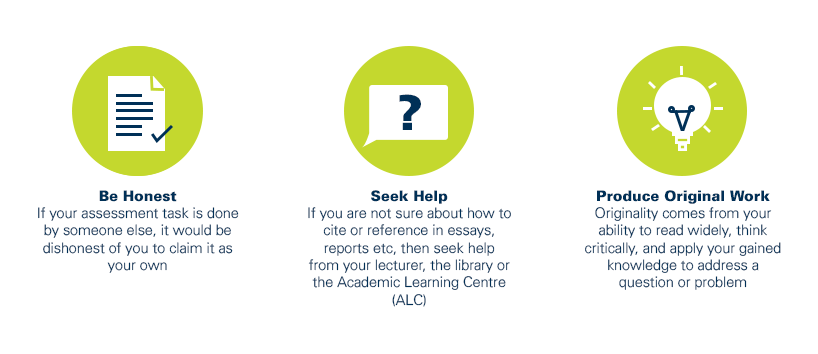
As a CQUniversity student you are expected to act honestly in all aspects of your academic work.
Any assessable work undertaken or submitted for review or assessment must be your own work. Assessable work is any type of work you do to meet the assessment requirements in the unit, including draft work submitted for review and feedback and final work to be assessed.
When you use the ideas, words or data of others in your assessment, you must thoroughly and clearly acknowledge the source of this information by using the correct referencing style for your unit. Using others’ work without proper acknowledgement may be considered a form of intellectual dishonesty.
Participating honestly, respectfully, responsibly, and fairly in your university study ensures the CQUniversity qualification you earn will be valued as a true indication of your individual academic achievement and will continue to receive the respect and recognition it deserves.
As a student, you are responsible for reading and following CQUniversity’s policies, including the Student Academic Integrity Policy and Procedure. This policy sets out CQUniversity’s expectations of you to act with integrity, examples of academic integrity breaches to avoid, the processes used to address alleged breaches of academic integrity, and potential penalties.
What is a breach of academic integrity?
A breach of academic integrity includes but is not limited to plagiarism, self-plagiarism, collusion, cheating, contract cheating, and academic misconduct. The Student Academic Integrity Policy and Procedure defines what these terms mean and gives examples.
Why is academic integrity important?
A breach of academic integrity may result in one or more penalties, including suspension or even expulsion from the University. It can also have negative implications for student visas and future enrolment at CQUniversity or elsewhere. Students who engage in contract cheating also risk being blackmailed by contract cheating services.
Where can I get assistance?
For academic advice and guidance, the Academic Learning Centre (ALC) can support you in becoming confident in completing assessments with integrity and of high standard.
What can you do to act with integrity?