The correct due date for Assessment 2: Reflective Practice is: Week 9 Friday (14 May 2021) 11:59 pm AEST
NURS11165
THE PROFESSION OF NURSING
ASSESSMENT 2 – Reflective Essay
|
Key Criteria |
High Distinction 84.5 – 100% |
Distinction 74.50 – 84.49% |
Credit 64.50 – 74.49% |
Pass 49.50 – 64.49% |
Fail <49.5% |
Fail (content absent) 0% |
|
Completion of required
task (10%) |
Exemplary effort.
Professional approach with no or very minor gaps. Attention to detail is
without fault and all requirements of task have been met. (8.5-10) |
Excellent effort
attending to requirements of the tasks. All items demonstrate due attention
to detail with some minor gaps. (7.5-8.4) |
Good effort attending
to requirements of the task. All items demonstrate due attention to detail
with some gaps that impact on presentation and understanding by the reader
and/or audience. (6.5-7.4) |
Satisfactory effort
attending to requirements of the task. Most items demonstrate due attention
to detail with some gaps that impact on presentation and understanding by the
reader and/or audience. (5-6.4) |
Submission is missing
aspects of task or task requirements have been misunderstood. (<5) |
Submission is missing
most aspects of task. Little evidence of task requirements. (0)
|
|
Summary of discussion
(Conclusion) (10%) |
Summary clearly
connects all aspects of the discussion. (8.5-10) |
Summary mostly
connects all aspects of the discussion. (7.5-8.4) |
Summary connects some
(but misses others) aspects of the discussion. (6.5-7.4) |
Although there are
gaps, there are sufficient connections to aspects of the discussion. (5-6.4) |
There is little or no connection between aspects of discussion. (<5) |
No summary. (0)
|
|
Description of the
experience (10%)
|
Comprehensive and
clear description of experience to become a Registered Nurse. (8.5-10) |
Clear description of
experience to become a Registered Nurse. (7.5-8.4)
|
Adequate description
of experience to become a Registered Nurse. (6.5-7.4) |
Some description of
experience to become a Registered Nurse.
(5-6.4) |
Minimal description of
description of experience to become a Registered Nurse. (<5) |
No description of
description of experience to become a Registered Nurse. (0) |
|
Reflection (30%) |
Comprehensively
addressed relevant inherent requirements you must meet to become a Registered
Nurse. (25.5-30) |
Clearly addressed relevant
inherent requirements you must meet to become a Registered Nurse. (22.4-25.4) |
Adequately addressed relevant
inherent requirements you must meet to become a Registered Nurse. (19.4-22.3) |
Addressed relevant
inherent requirements you must meet to become a Registered Nurse. (15 - 19.3) |
Minimal reflection of
relevant inherent requirements you must meet to become a Registered Nurse. (<15) |
No inherent
requirements present. (0) |
|
Influencing factors (10%) |
Comprehensive and
clear explanation of influencing factors that are impacting or assisting you
to become a Registered Nurse. (8.5-10) |
Clear explanation of
influencing factors that are impacting or assisting you to become a
Registered Nurse. (7.5-8.4) |
Adequate explanation
of influencing factors that are impacting or assisting you to become a
Registered Nurse. (6.5 – 7.4) |
Some explanation of
influencing factors that are impacting or assisting you to become a
Registered Nurse. (5-6.4) |
Minimal or no
explanation of influencing factors that are impacting or assisting you to
become a Registered Nurse. (<5) |
No explanation of
influencing factors that are impacting or assisting you to become a
Registered Nurse. (0) |
|
Approach (Can I
improve my approach?) (10%)
|
Comprehensive analysis
of approach to situations you will encounter in your journey to becoming a
registered nurse supported by 5 or more references. (8.5-10) |
Clear analysis of
approach to situations you will encounter in your journey to becoming a
registered nurse supported by 4 or more references. (7.5-8.4) |
Adequate analysis of
approach to situations you will encounter in your journey to becoming a
registered nurse supported by 3 or more references. (6.5 – 7.4) |
Some analysis of
approach to situations you will encounter in your journey to becoming a
registered nurse supported by 2 or more references. (5-6.4) |
Minimal analysis of
approach to situations you will encounter in your journey to becoming a
registered nurse with 2 or less references. (<5) |
No analysis of
approach to situations you will encounter in your journey to becoming a
registered nurse with no references. (0) |
|
Lessons learned
through assessment (Learning) (10%) |
Learning has been
addressed comprehensively. Expressed succinctly and with clarity supported by
5 or more references. (8.5-10) |
Learning has been
addressed clearly. Expressed with clarity supported by 4 or more references. (7.5-8.4) |
Learning has been
addressed mostly clear supported by 3 or more references. (6.5 – 7.4) |
Learning has been
somewhat addressed supported by 2 or more references. (5-6.4) |
Minimal learning
apparent supported by less than 2 references. (<5) |
No learning has been
addressed. No references. (0) |
|
Ability to write and
present effectively (10%) |
Exemplary writing
standard. Correct grammar, spelling and punctuation. Uses appropriate writing
and referencing styles. No or very minor mistakes evident. (8.5-10) |
Quality of writing is
of a high standard with only minor grammar, spelling, punctuation and referencing
mistakes evident. (7.5-8.4) |
Quality of writing is
of a good standard with a few grammar, spelling punctuation and referencing
mistakes evident. (6.5-7.4) |
Quality of writing and
presentation is of a satisfactory standard with quite a few grammar,
punctuation, spelling and referencing mistakes evident. (5-6.4) |
Quality of writing and
presentation is at a poor standard with many mistakes and lack of clarity
evident. (<5) |
Little to no
meaningful writing. (0) |
Assessment
3 – Portfolio
Type: Portfolio
Entry (Individual assignment)
Due date: Week 11 Friday (28 May 2021)
Weighting: 10%
Length: 500
words (+/- 10% of
word count permissible).
Unit Coordinator: Stephen Yu, Rachelle Cole and Patricia
Johnson
Learning Outcomes Assessed
·
Explain the four
major bioethical principles and relate these to your own expectations of
nursing;
·
Construct your
own nursing philosophy as a basis for your professional portfolio.
Aim
The aim of this assessment is to help
you articulate your nursing identity. This is an INDIVIDUAL assessment. This assessment
will help you create a profile of your nursing expectations and philosophy as
you begin your nursing career.
In this assessment, you are required
to compose a Portfolio entry (500 words) outlining:
1) Your expectations of nursing in relations to
the four major bioethical principles.
2) Your own nursing philosophy
Instructions
There are two parts to this assessment:
Part 1: My bioethical principles
Nurses are advocates for patients. When
advocating for patients, nurses are required to have a basic and clear
understanding of bioethical principles to make informed decisions. As presented
in Week 4, there are four main principles of bioethics: autonomy, beneficence, justice,
and non-maleficence.
In 300 words, briefly
explain each bioethical principle (1-2 sentences each). Reflect on the
bioethical principles. Then write a statement on how you see yourself as a
nurse. Relate your expectations of nursing to the bioethical principles. For
example, patients have the right to make their own decisions based on their
values and beliefs as informed by the bioethical principles (Beauchamp, 2007). As
a registered nurse I will respect the patients’ decision. However, I also
have a duty of care and moral responsibility to ensure that patients are fully
informed by the care they receive.
·
Please write in
first-person. Please also refer to the Requirements section for guidance on how
to present your portfolio.
·
HINT: You may utilise
work that you have previously completed in Week 4’s learning activities and
apply them here.
·
Remember
to support your explanation of bioethical principles with references.
Part 2: My nursing philosophy
Nursing philosophy is a statement about your
values, ethics and beliefs as a professional nurse. It also highlights your
motivation in pursuing the nursing profession. Knowing your nursing philosophy
will help you shape the choices you make as you progress in your nursing
career.
Adding to Part 1, in 200 words, construct
your own nursing philosophy in the format of a statement. Identify your
personal core values by asking yourself how you would like others to see you as
a nurse; where do you see yourself in five years; how do you think you can
contribute to the nursing profession. Make it personal.
·
Please write in
first-person. Refer to the Requirements section for guidance on how to present
your portfolio.
·
HINT: You may refer back to your reflective essay
(Assessment 2) to help you formulate your nursing philosophy. Remember to write
it as a statement in 200 words.
Literature and references
In this
assessment use at least 2 contemporary references (<5 years) to support your
statement. You may also use seminal scholarly literature where relevant.
Suitable references include peer-reviewed journal articles as well as textbooks
and credible websites. Use textbook sources published within ten years.
When sourcing
information, consider the 5 elements of a quality reference: currency,
authority, relevance, objectivity, and coverage. Grey literature sourced from
the internet must be from reputable websites such as from government,
university, or peak national bodies: for example, the Australian College of
Nursing.
Requirements
The whole
document is double spaced in Times New Roman 12-point font.
o
Written in the first person using the
APA (7th edition) referencing style.
o
Attach a Cover Page (include
Unit name and number, unit coordinators, title of assessment piece and number,
due date and any extension if granted, word count, reference style used,
student name and ID)
o
No Introduction or Conclusion is
required.
o
Use the following subheadings to write
your statements: My bioethical principles (Part 1); My
nursing philosophy (Part 2).
o
Include References (on a new page).
o
References are listed in alphabetical
order according to the published authors’ last names.
o
Use in date and credible academic
references to support your portfolio. Use textbook sources published within ten
years and journal sources published within five years.
o
The word count is considered from the first
word of your statements and includes in-text references and direct quotations.
Exclusions: the cover page, heading, subheadings and reference list.
o
Please save/upload your file in a
Microsoft Word format (.doc or .docx).
o
Ensure you have attached
a cover page to your portfolio before submission.
Resources
·
Writing assistance is available from ALC. When writing your assessment please ensure that you
follow the correct paragraph structure. Should you require assistance please
remember to utilise the ALC which is free to access for all students and is
self-referral based – you do not need a referral from your unit coordinator to access
this service for this unit.
· You can use unit provided materials and other credible
sources (e.g. journal articles, books) to reference your argument. The quality
and credibility of your sources are important.
·
We recommend you use EndNote to
manage your citations and reference list. More information on how to use EndNote is available at
the CQUniversity
Library website.
· For information on academic
communication please go to the Academic
Learning Centre Moodle site. The Academic
Communication section has many helpful resources including information for students with English
as a second language.
· Submit a draft before the due
date to review your Turnitin Similarity Score before making a final submission.
Instructions are
available here.
Submission
·
Submit
your assessment via the unit Moodle site in Microsoft Word format only.
· Submission Instructions: Assessment is to be submitted as
one file to the Moodle page for this unit under the Assessment Tile in the
correctly titled assessment heading submission option. Any technical issue
contact TASAC at tasac@cqu.edu.au or phone toll free 1300 666620.
Any technical issue contact TASAC at tasac@cqu.edu.au or phone
toll free 1300 666620.
Marking Criteria
Please refer to the Marking
Rubric.
Return Date to Students
Week 13 Friday (11 June 2021). In
accordance with policy: Any marks and/or grades for assessments released to
students prior to Certification of Grades are provisional and are subject to
moderation and confirmation through the relevant Program and Divisional
Assessment Committees.
Extension Request
Should you require an extension
please apply through the assessment extension option – please be aware you are
required to supply the necessary documentation to support your extension
request. Unit coordinators are able to approve extensions up to 14 days,
anything greater than this requires the approval of the Deputy Dean of Learning
and Teaching.
It
is strongly recommended that if you anticipate issues or maybe struggling with
your assessment due dates, please contact the unit coordinators as soon as
possible so that they may assist you with a plan to manage your extension
request for this assessment piece and any other due dates for this unit.
Assessment task re-attempt
If students receive a Fail grade
for this assessment, the Unit Coordinator may allow them an opportunity to
reattempt the assessment. For the Unit Coordinator to allow a re-attempt, they
will need to be satisfied that the student has made a reasonable attempt in the
assessment item. If a reattempt is offered, students will have only 7
consecutive days to resubmit their assessment and can only receive 50% of the
available grades. Only one reattempt will be allowed.
References
Beauchamp, T.L. (2007). The ‘Four
Principles’ Approach to Health Care Ethics. In R. Ashcroft, A. Dawson, H.
Draper, & J. McMillan (Eds.), Principles of Health Care Ethics (2nd , pp. 3-10). John Wiley & Sons,
Ltd.
Overview
The 21st-century nursing profession is a product of historical and contemporary, socio-political and cultural influences. You will explore these while considering legal and ethical frameworks, the role of professional governing bodies and governance while beginning to investigate the profession of nursing. You will explore the personal skills, inherent requirements and attributes required in the profession and consider what your personal journey towards becoming a registered nurse will require.
Details
Pre-requisites or Co-requisites
Pre-requisite: Must be enrolled in CL91 Bachelor of Nursing or CG41 Start Uni Now
Important note: Students enrolled in a subsequent unit who failed their pre-requisite unit, should drop the subsequent unit before the census date or within 10 working days of Fail grade notification. Students who do not drop the unit in this timeframe cannot later drop the unit without academic and financial liability. See details in the Assessment Policy and Procedure (Higher Education Coursework).
Offerings For Term 1 - 2021
Attendance Requirements
All on-campus students are expected to attend scheduled classes - in some units, these classes are identified as a mandatory (pass/fail) component and attendance is compulsory. International students, on a student visa, must maintain a full time study load and meet both attendance and academic progress requirements in each study period (satisfactory attendance for International students is defined as maintaining at least an 80% attendance record).
Recommended Student Time Commitment
Each 6-credit Undergraduate unit at CQUniversity requires an overall time commitment of an average of 12.5 hours of study per week, making a total of 150 hours for the unit.
Class Timetable
Assessment Overview
Assessment Grading
This is a graded unit: your overall grade will be calculated from the marks or grades for each assessment task, based on the relative weightings shown in the table above. You must obtain an overall mark for the unit of at least 50%, or an overall grade of 'pass' in order to pass the unit. If any 'pass/fail' tasks are shown in the table above they must also be completed successfully ('pass' grade). You must also meet any minimum mark requirements specified for a particular assessment task, as detailed in the 'assessment task' section (note that in some instances, the minimum mark for a task may be greater than 50%). Consult the University's Grades and Results Policy for more details of interim results and final grades.
All University policies are available on the CQUniversity Policy site.
You may wish to view these policies:
- Grades and Results Policy
- Assessment Policy and Procedure (Higher Education Coursework)
- Review of Grade Procedure
- Student Academic Integrity Policy and Procedure
- Monitoring Academic Progress (MAP) Policy and Procedure - Domestic Students
- Monitoring Academic Progress (MAP) Policy and Procedure - International Students
- Student Refund and Credit Balance Policy and Procedure
- Student Feedback - Compliments and Complaints Policy and Procedure
- Information and Communications Technology Acceptable Use Policy and Procedure
This list is not an exhaustive list of all University policies. The full list of University policies are available on the CQUniversity Policy site.
- Discuss historical and contemporary factors that influence the image, status and nature of nursing practice
- Outline and interpret the role of professional governing bodies in relation to professional nursing practice, patient safety and governance
- Explain the four major bioethical principles and relate these to your own expectations of nursing
- Reflect on your own perceptions of the role of the nurse and relate this to the professional inherent requirements
- Construct your own nursing philosophy as a basis for your professional portfolio.
Content in this unit incorporates a number of professional nursing requirements
Nursing and Midwifery Board of Australia (NMBA) Registered Nurse Standards for Practice
Thinks critically and analyses nursing practice
Engages in therapeutic and professional relationships
Maintains the capability for practice
Comprehensively conducts assessments
Develops a plan for nursing practice
Provides safe, appropriate and responsive quality nursing practice
Evaluates outcomes to inform nursing practice
Nursing and Midwifery Board of Australia (NMBA) Code of Conduct
Legal compliance
Person-centred practice
Cultural practice and respectful relationships
Professional behaviour
Research in health
Health and wellbeing
International Council of Nurses Code of Ethics for Nurses
Nurses and People
Nurses and Practice
Nurses and the Profession
Nurses and Co-workersNational Safety and Quality Health Service Standards
Clinical governance
Partnering with consumers
Communicating for safety
Patient Safety Competency Framework
Person-centred care
Therapeutic communication
Cultural competence
Teamwork and collaborative practice
Evidence-based practice
Preventing, minimising and responding to adverse events
Aged Care Quality Standards
Consumer dignity and choice
Alignment of Assessment Tasks to Learning Outcomes
| Assessment Tasks | Learning Outcomes | ||||
|---|---|---|---|---|---|
| 1 | 2 | 3 | 4 | 5 | |
| 1 - Portfolio - 10% | |||||
| 2 - Reflective Practice Assignment - 50% | |||||
| 3 - Online Quiz(zes) - 40% | |||||
Alignment of Graduate Attributes to Learning Outcomes
| Graduate Attributes | Learning Outcomes | ||||
|---|---|---|---|---|---|
| 1 | 2 | 3 | 4 | 5 | |
| 1 - Communication | |||||
| 2 - Problem Solving | |||||
| 3 - Critical Thinking | |||||
| 4 - Information Literacy | |||||
| 5 - Team Work | |||||
| 6 - Information Technology Competence | |||||
| 7 - Cross Cultural Competence | |||||
| 8 - Ethical practice | |||||
| 9 - Social Innovation | |||||
| 10 - First Nations Knowledges | |||||
| 11 - Aboriginal and Torres Strait Islander Cultures | |||||
Alignment of Assessment Tasks to Graduate Attributes
| Assessment Tasks | Graduate Attributes | ||||||||||
|---|---|---|---|---|---|---|---|---|---|---|---|
| 1 | 2 | 3 | 4 | 5 | 6 | 7 | 8 | 9 | 10 | 11 | |
| 1 - Portfolio - 10% | |||||||||||
| 2 - Reflective Practice Assignment - 50% | |||||||||||
| 3 - Online Quiz(zes) - 40% | |||||||||||
Textbooks
Contexts of Nursing: An Introduction
- Edition: 6th (2020)
- Authors: John Daly, Debra Jackson
- Elsevier
- ISBN: 9780729588164
- Binding: eBook
IT Resources
- CQUniversity Student Email
- Internet
- Unit Website (Moodle)
All submissions for this unit must use the referencing style: American Psychological Association 7th Edition (APA 7th edition)
For further information, see the Assessment Tasks.
s.yu@cqu.edu.au
r.cole@cqu.edu.au
Week 1
Begin Date: 08 Mar 2021Module/Topic
Introduction to NURS11165 The Profession of Nursing
Chapter
Moodle readings and activities only this week
Events and Submissions/Topic
An overview of the Unit is presented. Introducing learning outcomes, structure of Unit delivery, participation and assessments requirements.
Students will work through Module 1: My CQUni of Introduction to Study and Professional Practice offered by the Learning Development and Innovation team.
Students will focus on 4 topics from the Module 1:
1. Learning at university
2. University polices and expectations
3. Student support services
4. Essential computing skills
Week 2
Begin Date: 15 Mar 2021Module/Topic
Historical background to contemporary nursing and nursing philosophy
Chapter
Chapters 1, 2, 4, 5 of "Contexts of Nursing: An Introduction" 6th ed by Daly and Jackson
or
Chapters 1, 2, 5, 6 of "Contexts of Nursing" 5th ed by Daly, Speedy and Jackson
Events and Submissions/Topic
Introduces the historical and contemporary factors that influence the image, status and nature of nursing practice. Exploring how historical and contemporary nursing inform the philosophy of nursing practices. Students to work on prescribed learning activities.
Week 3
Begin Date: 22 Mar 2021Module/Topic
Professional nursing governing bodies
Chapter
Chapters 9, 10 of "Contexts of Nursing: An Introduction" 6th ed by Daly and Jackson
or
Chapters 10, 11 of "Contexts of Nursing" 5th ed by Daly, Speedy and Jackson
Events and Submissions/Topic
This week outlines and interprets the role of professional governing bodies in relation to professional nursing practice, patient safety and governance including the application of these standards and codes to clinical practice. The inherent requirements and expectations as nurse will be discussed. Students to work on prescribed learning activities.
Quiz#1 due Friday 26 March 2021 at 5:00pm.
Week 4
Begin Date: 29 Mar 2021Module/Topic
Introduction to bioethical principles
Chapter
Chapters 8, 9 of "Contexts of Nursing: An Introduction" 6th ed by Daly and Jackson
or
Chapters 9, 10 of "Contexts of Nursing" 5th ed by Daly, Speedy and Jackson
Events and Submissions/Topic
The four major bioethical principles will be presented. Students will relate these principles to their own expectations of nursing. Students to work on prescribed learning activities.
Week 5
Begin Date: 05 Apr 2021Module/Topic
Review of unit assessments, academic writing and references
Chapter
Moodle readings and activities only this week
Events and Submissions/Topic
In collaboration with the Academic Learning Centres team (ALC). ALC will present a session to help students prepare for Assessments 2 and 3 of this Unit. Topics will cover academic writing skills, referencing and using the library for research.
Students will also complete Topic 4: Academic skills for university from Module 1 introduced in Week 1.
Quiz#2 due Friday 9 April 2021 at 5:00pm.
Vacation Week
Begin Date: 12 Apr 2021Module/Topic
Chapter
Events and Submissions/Topic
Week 6
Begin Date: 19 Apr 2021Module/Topic
Resilience in nursing
Chapter
Chapter 10 of "Contexts of Nursing: An Introduction" 6th ed by Daly and Jackson
or
Chapter 11 of "Contexts of Nursing" 5th ed by Daly, Speedy and Jackson
Events and Submissions/Topic
This week focuses on gaining an understanding on the significance of resilience in nursing including identifications of useful strategies. A guest speaker will be invited to present this week's topic. Students to work on prescribed learning activities.
Week 7
Begin Date: 26 Apr 2021Module/Topic
Carper's way of Knowing in nursing
Chapter
Refer to reading list
Events and Submissions/Topic
Carper's ways of Knowing in nursing-empirical, aesthetic, personal, ethical and socio-political. Identifying the different sources from which knowledge and beliefs in professional practice are derived. Students to work on prescribed learning activities.
Week 8
Begin Date: 03 May 2021Module/Topic
Reflective practice in nursing
Chapter
Chapters 6, 7 of "Contexts of Nursing: An Introduction" 6th ed by Daly and Jackson
or
Chapters 7, 8 of "Contexts of Nursing" 5th ed by Daly, Speedy and Jackson
Events and Submissions/Topic
This week focuses on the importance of reflection in nursing practice including understanding the correlation between reflection and professional inherent requirements. Students to work on prescribed learning activities.
Week 9
Begin Date: 10 May 2021Module/Topic
Attitudes and preconceived judgements
Chapter
Chapter 17 of "Contexts of Nursing: An Introduction" 6th ed by Daly and Jackson
or
Chapter 18 of "Contexts of Nursing" 5th ed by Daly, Speedy and Jackson
Events and Submissions/Topic
Exploring attitudes and preconceived judgement in nursing practice and its relevance to the Code of Ethics. Identifying mental health-promoting opportunities in nursing practice. Strategies relating to attitudes and possible preconceived judgements about people for which we care eg. disability, ageism, marginalized groups will also be discussed. Students to work on prescribed learning activities.
Assessment 2 due Friday 14 May 2021 by 11:59pm.
Reflective practice Due: Week 9 Monday (10 May 2021) 11:59 pm AEST
Week 10
Begin Date: 17 May 2021Module/Topic
Personal values and moral judgments
Chapter
Refer to reading list
Events and Submissions/Topic
This week focuses on students' personal values and its relevance to the professional values of nursing. Students will also reflect on their own moral principles and how they relate to the ethical values of the nursing profession. Students to work on prescribed learning activities.
Week 11
Begin Date: 24 May 2021Module/Topic
Diversity in the workplace
Chapter
Chapters 15, 19, 21 of "Contexts of Nursing: An Introduction" 6th ed by Daly and Jackson
or
Chapters 16, 20, 22 of "Contexts of Nursing" 5th ed by Daly, Speedy and Jackson
Events and Submissions/Topic
This week focuses on diversity in the workplace and nurses working within a diverse cultural setting. Workplace bullying, harassment and discrimination will be discussed, as well as strategies of working within a diverse workplace setting. Students to work on prescribed learning activities.
Assessment 3 due Friday 28 May 2021 by 11:59pm.
Portfolio Due: Week 11 Friday (28 May 2021) 11:59 pm AEST
Week 12
Begin Date: 31 May 2021Module/Topic
Unit overview and summary
Chapter
Revision
Events and Submissions/Topic
Revision of the Unit - bringing it all together.
Students to complete Unit evaluation.
All ZOOM sessions are recorded this term for students.
1 Online Quiz(zes)
Type: Online Quiz (Individual assignment)
Due date: Quiz#1-Week 3 Friday (26 March 2021) at 1700pm; Quiz#2-Week 5 (09 April 2021) at 1700pm
Weighting: 40% comprise of 10% (Quiz#1) and 30% (Quiz#2)
Length: 15 Questions (Quiz#1) and 35 Questions (Quiz#2)
Unit Coordinators: Stephen Yu and Rachelle Cole
Learning Outcomes (LO) Assessed
· Discuss historical and contemporary factors that influence the image, status and nature of nursing practice (LO1) – QUIZ#1
· Outline and interpret the role of professional governing bodies in relation to professional nursing practice, patient safety and governance (LO2) – QUIZ#2
· Explain the four major bioethical principles and relate these to your own expectations of nursing (LO3) – QUIZ#2
Aim
The aim of this assessment is to assess your knowledge and understanding of materials covered in Week 2 for Quiz #1 and Weeks 3-4 for Quiz #2.
Instructions
· There are TWO Online Quizzes to be completed.
· Quiz#1 makes up 10% of the overall Unit Assessments.
· Quiz#2 makes up 30% of the overall Unit Assessments.
· There are 15 multiple choice questions and ONE short answer question in Quiz#1.
· There are 35 multiple choice questions and TWO short answer question in Quiz#2.
· There is a 40-MINUTES time limit for Quiz#1 and you will have only one attempt at the quiz.
· There is a ONE-HOUR and 10-MINUTES time limit for Quiz#2 and you will have only one attempt at the quiz.
· The time limit will count down after commencement of the quiz and will automatically 'Submit' the quiz at the end of the time limit.
· Each multiple-choice question will have only one correct answer (for both Quiz#1 and Quiz#2).
· Each multiple choice question is worth 1 mark (for both Quiz#1 and Quiz#2).
· Quiz#1 Short answer question is worth 5 marks.
· Quiz#2 Short answer questions is worth 5 marks.
· The quiz will be graded in Moodle.
· This is an open book assessment.
· Questions will assess your knowledge and understanding of materials covered in Week 2 for Quiz#1 and Weeks 3-4 for Quiz#2.
Requirements
Please ensure you access the quizzes in the following timeframe:
· QUIZ #1 (10%) - Week 3 Friday (26 March 2021) - Opens at 0800am Monday 22 March 2021 (Week 3) and Closes by 1700pm on Friday 26 March 2021 (Week 3)
· QUIZ #2 (30%) - Week 5 Friday (09 April 2021) - Opens at 0800am Monday 05/04/2021 (Week 5) and Closes by 1700pm on Friday 09/04/2021 (Week 5).
Resources
To prepare for the quizzes, please refer to readings and learning activities in Week 2 for Quiz#1 and Week 3-4 for Quiz#2.
Planning is essential to complete the quiz within the time frame. You can only attempt it once. Once logged in, you cannot log out. Make sure the internet supply is continuous, and do not refresh or reload you screen; this could impact on the successful completion of the quiz. For any technical issues please contact TASAC at tasac@cqu.edu.au or phone toll free 1300 666620.
Submission
Click Submit at the end of the quiz and your answers will be automatically submitted to the unit Moodle site. Please be aware that the time limit will count down after commencement of the quiz and will automatically 'Submit' the quiz at the end of the time limit.
Marking Criteria
Results (number of correct and incorrect responses) will be made available two weeks after the due date to ensure veracity of the Quiz for students completing at different times. In accordance with policy: Any marks and/or grades for assessments released to students prior to Certification of Grades are provisional and are subject to moderation and confirmation through the relevant Program and Divisional Assessment Committees.
Extension Request
Should you require an extension please apply through the assessment extension option – please be aware you are required to supply the necessary documentation to support your extension request. Unit coordinators are able to approve extensions up to 14 days, anything greater than this requires approval of the Deputy Dean for Learning and Teaching.
It is strongly recommended that if you anticipate issues or may be struggling with your assessment due dates that contact the unit coordinators as soon as possible so that they may assist you with a plan to manage your extension request for this assessment piece and any other due dates for this unit.
2
Other
Quiz#1: Week 3 Friday (26 March 2021) at 1700pm; Quiz#2: Week 5 (09 April 2021) at 1700pm
Results (number of correct and incorrect responses) will be made available two weeks after the due date to ensure veracity of the Quiz for students completing at different times.
Results (number of correct and incorrect responses) will be made available two weeks after the due date to ensure veracity of the Quiz for students completing at different times.
A total weighting of 40% (10% for Quiz#1 and 30% for Quiz#2) applies to this assessment.
- Discuss historical and contemporary factors that influence the image, status and nature of nursing practice
- Outline and interpret the role of professional governing bodies in relation to professional nursing practice, patient safety and governance
- Explain the four major bioethical principles and relate these to your own expectations of nursing
- Critical Thinking
- Information Literacy
- Ethical practice
- Social Innovation
2 Reflective Practice Assignment
Type: Reflective Practice (Individual assignment)
Due date: Week 9 Friday (14 May 2021)
Weighting: 50%
Length: 1500 words (+/- 10% of word count permissible)
Unit Coordinators: Stephen Yu and Rachelle Cole
Learning Outcomes (LO) Assessed
· Reflect on your own perceptions of the role of the nurse and relate this to the professional inherent requirements (LO4).
Aim
The aim of this assessment is to help you develop the reflective skills necessary to meet Standard 1 of the Registered Nurse Standards for Practice (Nursing and Midwifery Board of Australia [NMBA], 2016, p.3). You will be required to reflect on your journey to becoming a registered nurse and relate this to the relevant Inherent Requirements for the CQUniversity Bachelor of Nursing Course using John’s reflective cycle (Johns, 2017).
Instructions
· Review the Inherent Requirements for the CQUniversity Bachelor of Nursing Course and considering your journey into nursing. Consider which relevant Inherent Requirements you will discuss in your reflection.
· Use the Johns Reflective Model to demonstrate your understanding and knowledge of how the inherent requirements needed to complete the CQUniversity’s Bachelor of Nursing Course will influence and direct your journey to becoming a registered nurse.
· Go to the CL91 Bachelor of Nursing Handbook to the Getting Started Tab and find Inherent Requirements. There are 12 Inherent Requirements listed.
· Reflect upon your life experience to date, why you have chosen nursing as a career and your perceptions of the role of a registered nurse. Apply the Johns Reflective Model (below). To do this you will write under the headings (in bold in the below Johns Reflective Model) and answer the prompting questions under each major heading.
Johns Model Reflection (Modified by Euler, 2021)
Description of the experience
· Reflect upon your life experience to date, why you have chosen nursing as a career and your perceptions of the role of a registered nurse.
Reflection
· Why have you decided to commence the journey to becoming a registered nurse?
· What are your perceptions of the role of the nurse?
· How will the Inherent Requirements influence and direct this journey?
· What are you trying to achieve by understanding the application of the Inherent Requirements to your journey to becoming a registered nurse?
· What are the consequences of meeting and applying the Inherent Requirements or failing to do so?
Influencing Factors
· What factors (internal/external/knowledge) affect my current decision-making processes and abilities?
· How will this affect my growth along the journey to becoming a registered nurse?
Could I have dealt with it better? Can I improve my approach? (apply references from the literature here)
· What other choices do I have and what are those consequences for my journey to becoming a registered nurse?
· Can I change my approach to situations I will encounter on my journey to becoming a registered nurse?
· Am I willing to change my approach (yes or no)? Explain your answer.
Learning (apply references from the literature here)
· Empirics
- What knowledge has informed my learning to date?
· Ethics
- Did/do I act for the best?
- What factors influence me?
· Personal
- Why did/do I feel the way I did/do in this journey to becoming a registered nurse?
· Aesthetics
- What am I trying to achieve by undertaking this journey to becoming a registered nurse?
- Will or does this influence how I respond/react?
· Reflexivity
- Does this connect with past experiences?
- How can I handle uncomfortable and unfamiliar situations along my journey to becoming a registered nurse?
· What will change because of the understanding and knowledge I have gained through completion of this exercise (written assessment)?
· How do I feel about this experience?
· How will this experience change my ways of knowing?
Literature and References
In this assessment use at least 10 contemporary references (<5 years) to support your discussion. You may also use seminal scholarly literature where relevant. Suitable references include peer-reviewed journal articles as well as textbooks and credible websites. Use textbook sources published within ten years.
When sourcing information, consider the 5 elements of a quality reference: currency, authority, relevance, objectivity, and coverage. Grey literature sourced from the internet must be from reputable websites such as from government, university, or peak national bodies: for example, the Australian College of Nursing.
Requirements
· Double space your document, and present font in Times New Roman (12-point).
· Write in the first person using the APA (7th edition) referencing style. The CQUniversity Academic Learning Centre has an online APA Referencing Style Guide.
· Use the headings- they should be on the far left of the page and are to be in bold and in the same size font (12 point, Times New Roman).
· Include page numbers on each page in a footer.
· You may write in the first-person perspective.
· Use formal academic language
· Use a separate page labelled as References.
· References are double spaced with hanging indentations.
· References are listed in alphabetical order according to the published authors’ last names.
· The appendix is to be included after the references.
· The word count is considered from the first word of the introduction to the last word of the conclusion and includes in-text references and direct quotations (Exclusions: the cover page and reference list)
· Please save/upload your file in a Microsoft Word format (.doc or .docx).
Planning is crucial to writing effective academic essays. A reflective essay plan/layout has been created for you (below) to illustrate how to plan. You must use the following headings within your assignment.
- Title Page (include Unit name and number, unit coordinators, title of assessment piece and number, due date and any extension if granted, word count, reference style used, student name and ID)
- Introduction
- Description
- Reflection
- Influencing Factors
- Could I have dealt with it better? (Can I improve my approach?)
- Learning
- Conclusion
- References
Resources
· Writing assistance is available from ALC. When writing your assessment please ensure that you follow correct paragraph structure. Should you require assistance please remember to utilise the ALC which is free to access for all students and is self-referral based – you do not need a referral from your unit coordinator to access this service for this unit.
· You can use unit provided materials and other credible sources (e.g. journal articles, books) to reference your argument. The quality and credibility of your sources are important.
· We recommend you use EndNote to manage your citations and reference list. More information on how to use EndNote is available at the CQUniversity Library website.
· For information on academic communication please go to the Academic Learning Centre Moodle site. The Academic Communication section has many helpful resources including information for students with English as a second language.
· Submit a draft before the due date to review your Turnitin Similarity Score before making a final submission. Instructions are available here.
Submission
Submit your assessment via the unit Moodle site in Microsoft Word format only.
Submission Instructions: Assessment is to be submitted as one file to the Moodle page for this unit under the Assessment Tile in the correctly titled assessment heading submission option. Any technical issue contact TASAC at tasac@cqu.edu.au or phone toll free 1300 666620.
Marking Criteria
Please refer to the Marking Rubric.
Return Date to Students
Week 11 Friday (28 May 2021). In accordance with policy: Any marks and/or grades for assessments released to students prior to Certification of Grades are provisional and are subject to moderation and confirmation through the relevant Program and Divisional Assessment Committees.
Extension Request
Should you require an extension please apply through the assessment extension option – please be aware you are required to supply the necessary documentation to support your extension request. Unit coordinators are able to approve extensions up to 14 days, anything greater than this requires the approval of the Dean of Learning and Teaching.
It is strongly recommended that if you anticipate issues or may be struggling with your assessment due dates that contact the unit coordinators as soon as possible so that they may assist you with a plan to manage your extension request for this assessment piece and any other due dates for this unit.
Assessment Task Re-attempt
If students receive a Fail grade for this assessment, the Unit Coordinator may allow them an opportunity to reattempt the assessment. In order for the Unit Coordinator to allow a re-attempt, they will need to be satisfied that the student has made a reasonable attempt in the assessment item. If a reattempt is offered, students will have only 7 consecutive days to resubmit their assessment and can only receive 50% of the available grades. Only one reattempt will be allowed.
References
Johns, C. (2017). Becoming a reflective practitioner (5th edition). Hoboken, New Jersey: Wiley.
Week 9 Monday (10 May 2021) 11:59 pm AEST
Week 11 Friday (28 May 2021)
In accordance with policy: Any marks and/or grades for assessments released to students prior to Certification of Grades are provisional and are subject to moderation and confirmation through the relevant Program and Divisional Assessment Committees.
Marking Rubric Assessment 2 – Reflective Practice
| Key Criteria | High Distinction 84.5 – 100% | Distinction 74.50 – 84.49% | Credit 64.50 – 74.49% | Pass 49.50 – 64.49% | Fail <49.5% | Fail (content absent) 0% |
| Completion of required task (10%) | Exemplary effort. Professional approach with no or very minor gaps. Attention to detail is without fault and all requirements of task have been met. (8.5-10) | Excellent effort attending to requirements of the tasks. All items demonstrate due attention to detail with some minor gaps. (7.5-8.4) | Good effort attending to requirements of the task. All items demonstrate due attention to detail with some gaps that impact on presentation and understanding by the reader and/or audience. (6.5-7.4) | Satisfactory effort attending to requirements of the task. Most items demonstrate due attention to detail with some gaps that impact on presentation and understanding by the reader and/or audience. (5-6.4) | Submission is missing aspects of task or task requirements have been misunderstood. (<5) | Submission is missing most aspects of task. Little evidence of task requirements. (0) |
| Summary of discussion (Conclusion) (10%) | Summary clearly connects all aspects of the discussion. (8.5-10) | Summary mostly connects all aspects of the discussion. (7.5-8.4) | Summary connects some (but misses others) aspects of the discussion. (6.5-7.4) | Although there are gaps, there are sufficient connections to aspects of the discussion. (5-6.4) | There is little or no connection between aspects of discussion. (<5) | No summary. (0) |
| Description of the experience (10%) | Comprehensive and clear description of experience to become a Registered Nurse. (8.5-10) | Clear description of experience to become a Registered Nurse. (7.5-8.4) | Adequate description of experience to become a Registered Nurse. (6.5-7.4) | Some description of experience to become a Registered Nurse. (5-6.4) | Minimal description of description of experience to become a Registered Nurse. (<5) | No description of description of experience to become a Registered Nurse. (0) |
| Reflection (30%) | Comprehensively addressed all inherent requirements you must meet to become a Registered Nurse. (25.5-30) | Clearly addressed 9 or more inherent requirements you must meet to become a Registered Nurse. (22.4-25.4) | Adequately addressed 7 or more inherent requirements you must meet to become a Registered Nurse. (19.4-22.3) | Addressed 5 or more inherent requirements you must meet to become a Registered Nurse. (15 - 19.3) | Minimal reflection of inherent requirements you must meet to become a Registered Nurse. (<15) | No inherent requirements present. (0) |
| Influencing factors (10%) | Comprehensive and clear explanation of influencing factors that are impacting or assisting you to become a Registered Nurse. (8.5-10) | Clear explanation of influencing factors that are impacting or assisting you to become a Registered Nurse. (7.5-8.4) | Adequate explanation of influencing factors that are impacting or assisting you to become a Registered Nurse. (6.5 – 7.4) | Some explanation of influencing factors that are impacting or assisting you to become a Registered Nurse. (5-6.4) | Minimal or no explanation of influencing factors that are impacting or assisting you to become a Registered Nurse. (<5) | Mental health knowledge and skills are not present in analysis of therapeutic strategies. Inadequate linkages with concepts learned in the unit. (0) |
| Approach (Can I improve my approach?) (10%) | Comprehensive analysis of approach to situations you will encounter in your journey to becoming a registered nurse supported by 5 or more references. (8.5-10) | Clear analysis of approach to situations you will encounter in your journey to becoming a registered nurse supported by 4 or more references. (7.5-8.4) | Adequate analysis of approach to situations you will encounter in your journey to becoming a registered nurse supported by 3 or more references. (6.5 – 7.4) | Some analysis of approach to situations you will encounter in your journey to becoming a registered nurse supported by 2 or more references. (5-6.4) | Minimal analysis of approach to situations you will encounter in your journey to becoming a registered nurse with 2 or less references. (<5) | No analysis of approach to situations you will encounter in your journey to becoming a registered nurse with no references. (0) |
| Lessons learned through assessment (Learning) (10%) | Learning has been addressed comprehensively. Expressed succinctly and with clarity supported by 5 or more references. (8.5-10) | Learning has been addressed clearly. Expressed with clarity supported by 4 or more references. (7.5-8.4) | Learning has been addressed mostly clear supported by 3 or more references. (6.5 – 7.4) | Learning has been somewhat addressed supported by 2 or more references. (5-6.4) | Minimal learning apparent supported by less than 2 references. (<5) | No learning has been addressed. No references. (0) |
| Ability to write and present effectively (10%) | Exemplary writing standard. Correct grammar, spelling and punctuation. Uses appropriate writing and referencing styles. No or very minor mistakes evident. (8.5-10) | Quality of writing is of a high standard with only minor grammar, spelling, punctuation and referencing mistakes evident. (7.5-8.4) | Quality of writing is of a good standard with a few grammar, spelling punctuation and referencing mistakes evident. (6.5-7.4) | Quality of writing and presentation is of a satisfactory standard with quite a few grammar, punctuation, spelling and referencing mistakes evident. (5-6.4) | Quality of writing and presentation is at a poor standard with many mistakes and lack of clarity evident. (<5) | Little to no meaningful writing. (0) |
- Reflect on your own perceptions of the role of the nurse and relate this to the professional inherent requirements
- Critical Thinking
- Ethical practice
3 Portfolio
Type: Portfolio (Individual assignment)
Due date: Week 11 Friday (28 May 2021)
Weighting: 10%
Length: 500 words (+/- 10% of word count permissible).
Unit Coordinator: Stephen Yu and Rachelle Cole
Learning Outcomes (LO) Assessed
· Explain the four major bioethical principles and relate these to your own expectations of nursing (LO3);
· Construct your own nursing philosophy as a basis for your professional portfolio (LO5).
Aim
The aim of this assessment is to help you articulate your nursing identity. This is an INDIVIDUAL assessment. This assessment will help you create a profile of your nursing expectations and philosophy as you begin your nursing career.
In this assessment, you are required to compose a Portfolio entry (500 words) outlining:
1) Your expectations of nursing in relations to the four major bioethical principles.
2) Your own nursing philosophy
Instructions
There are two parts to this assessment. It is recommended that you complete the tasks separately on a Word document before submitting to Portfolium (further instructions in Submission below).
Part 1: My bioethical principles
Nurses are advocates for patients. When advocating for patients, nurses are required to have a basic and clear understanding of bioethical principles to make informed decisions. As presented in Week 4, there are four main principles of bioethics: autonomy, beneficence, justice, and non-maleficence.
In a paragraph (250 words), briefly explain each bioethical principle (1-2 sentences each). Reflect on the bioethical principles. Then write a statement on how you see yourself as a nurse. Relate your expectations of nursing to the bioethical principles. For example, patients have the right to make their own decisions based on their values and beliefs as informed by the bioethical principles (Beauchamp, 2007). As a registered nurse I will respect the patients’ decision. However, I also have a duty of care and moral responsibility to ensure that patients are fully informed by the care they receive.
· Please write in first-person. Please also refer to the Requirements section for guidance on how to present your portfolio.
· HINT: You may utilise work that you have previously completed in Week 4’s learning activities and apply them here.
· Remember to support your explanation of bioethical principles with references.
Part 2: My nursing philosophy
Nursing philosophy is a statement about your values, ethics and beliefs as a professional nurse. It also highlights your motivation in pursuing the nursing profession. Knowing your nursing philosophy will help you shape the choices you make as you progress in your nursing career.
Adding to Part 1, in a paragraph (250 words), construct your own nursing philosophy in the format of a statement. Identify your personal core values by ask yourself how you would like others to see you as a nurse; where do you see yourself in five years; how do you think you can contribute to the nursing profession. Make it personal.
· Please write in first-person. Refer to the Formatting section for guidance on how to present your portfolio.
· HINT: You may refer back to your reflective essay (Assessment 2) to help you formulate your nursing philosophy. Remember to write it as a statement in 250 words.
Literature and References
In this assessment use at least 2 contemporary references (<5 years) to support your statement. You may also use seminal scholarly literature where relevant. Suitable references include peer-reviewed journal articles as well as textbooks and credible websites. Use textbook sources published within ten years.
When sourcing information, consider the 5 elements of a quality reference: currency, authority, relevance, objectivity, and coverage. Grey literature sourced from the internet must be from reputable websites such as from government, university, or peak national bodies: for example, the Australian College of Nursing.
Requirements
The whole document is double spaced in Times New Roman 12-point font.
o Written in the first person using the APA (7th edition) referencing style.
o No Introduction or Conclusion is required.
o Include the title – Portfolio by [your name].
o Include the following subheadings: My bioethical principles; My nursing philosophy.
o Present both statements on the same page.
o Include References.
o References are listed in alphabetical order according to the published authors’ last names.
o Use in date and credible academic references to support your portfolio. Use textbook sources published within ten years and journal sources published within five years.
o The word count is considered from the first word of your portfolio and includes in-text references and direct quotations. Exclusions: the cover page, heading, subheadings and reference list.
o Please save/upload your file in a Microsoft Word format (.doc or .docx).
o Ensure you have attached a cover page to your portfolio before submission.
Resources
· Writing assistance is available from ALC. When writing your assessment please ensure that you follow correct paragraph structure. Should you require assistance please remember to utilise the ALC which is free to access for all students and is self-referral based – you do not need a referral from your unit coordinator to access this service for this unit.
· You can use unit provided materials and other credible sources (e.g. journal articles, books) to reference your argument. The quality and credibility of your sources are important.
· We recommend you use EndNote to manage your citations and reference list. More information on how to use EndNote is available at the CQUniversity Library website.
· For information on academic communication please go to the Academic Learning Centre Moodle site. The Academic Communication section has many helpful resources including information for students with English as a second language.
· Submit a draft before the due date to review your Turnitin Similarity Score before making a final submission. Instructions are available here.
Submission
Submit your assessment via Portfolium from the unit Moodle site in Microsoft Word format only. Follow the below instructions:
· Go to the Moodle site for NURS11165;
· Access Assessment 3 via the Assessment tile;
· Click on Portfolium: under Assessment 3 – Portfolio;
· Click on [Start Assignment] function on the right of the Instructions;
· Upload your Word document via Upload files function;
· In the Category box: Select Nursing;
· In the Description box, type in: Assessment 3 – Portfolio;
· In the Skills, Tools or Software box: Select in or type in Critical Thinking, Reflective Practice, Ethical Practice
· In the Teammates box: leave blank
· In the Tags box: leave blank
· Then click the SUBMIT ASSIGNMENT button
Any technical issue contact TASAC at tasac@cqu.edu.au or phone toll free 1300 666620.
Marking Criteria
Please refer to the Marking Rubric.
Return Date to Students
Week 13 Friday (11 June 2021). In accordance with policy: Any marks and/or grades for assessments released to students prior to Certification of Grades are provisional and are subject to moderation and confirmation through the relevant Program and Divisional Assessment Committees.
Extension Request
Should you require an extension please apply through the assessment extension option – please be aware you are required to supply the necessary documentation to support your extension request. Unit coordinators are able to approve extensions up to 14 days, anything greater than this requires the approval of the Dean of Learning and Teaching.
It is strongly recommended that if you anticipate issues or may be struggling with your assessment due dates that contact the unit coordinators as soon as possible so that they may assist you with a plan to manage your extension request for this assessment piece and any other due dates for this unit.
Assessment Task Re-attempt
If students receive a Fail grade for this assessment, the Unit Coordinator may allow them an opportunity to reattempt the assessment. In order for the Unit Coordinator to allow a re-attempt, they will need to be satisfied that the student has made a reasonable attempt in the assessment item. If a reattempt is offered, students will have only 7 consecutive days to resubmit their assessment and can only receive 50% of the available grades. Only one reattempt will be allowed.
References
Beauchamp, T.L. (2007). The ‘Four Principles’ Approach to Health Care Ethics. In R. Ashcroft, A. Dawson, H. Draper, & J. McMillan (Eds.), Principles of Health Care Ethics (2nd , pp. 3-10). John Wiley & Sons, Ltd.
Week 11 Friday (28 May 2021) 11:59 pm AEST
In accordance with policy: Any marks and/or grades for assessments released to students prior to Certification of Grades are provisional and are subject to moderation and confirmation through the relevant Program and Divisional Assessment Committees.
Marking Rubric Assessment 3 – Portfolio
| Key Criteria | High Distinction 84.5 – 100% | Distinction 74.50 – 84.49% | Credit 64.50 – 74.49% | Pass 49.50 – 64.49% | Fail <49.5% | Fail (content absent) 0% |
| Completion of required task (10%) | Exemplary effort. Professional approach with no or very minor gaps. Attention to detail is without fault and all requirements of task have been met. (8.5-10) | Excellent effort attending to requirements of the tasks. All items demonstrate due attention to detail with some minor gaps. (7.5-8.4) | Good effort attending to requirements of the task. All items demonstrate due attention to detail with some gaps that impact on presentation and understanding by the reader and/or audience. (6.5-7.4) | Satisfactory effort attending to requirements of the task. Most items demonstrate due attention to detail with some gaps that impact on presentation and understanding by the reader and/or audience. (5-6.4) | Submission is missing aspects of task or task requirements have been misunderstood. (<5) | Submission is missing most aspects of task. Little evidence of task requirements. (0) |
| Part 1: My bioethical principles (40%) | Comprehensive explanation to all bioethical principles supported by 3 or more references. Expressed succinctly and with clarity showing linkages with bioethical principles and own expectations of nursing. (33.9-40) | Clear explanation to all bioethical principles supported by 2 or more references. Expressed succinctly showing linkages with bioethical principles and own expectations of nursing. (29.8-33.8) | Explanation to 3 or more bioethical principles supported by 2 or more references. Mostly showing linkages with bioethical principles and own expectations of nursing. (25.8-29.7) | Explanation to 3 or less bioethical principles supported by 2 or less references. Showing some linkages with bioethical principles and own expectations of nursing. (19.8 – 25.7) | Explanation to 2 or less bioethical principles without support from references. Showing minimal linkages with bioethical principles and own expectations of nursing. (<19.8) | No statement of bioethical principles present. (0) |
| Part 2: My nursing philosophy (40%) | Comprehensive and logical construct of statement to own nursing philosophy. (33.9-40) | Clear and logical construct of statement to own nursing philosophy. (29.8-33.8) | Adequate and mostly logical construct of statement to own nursing philosophy. (25.8-29.7) | Some construct and somewhat logical statement to own nursing philosophy. (19.8 – 25.7) | Minimal construct and illogical statement to own nursing philosophy. (<19.8) | No statement on own nursing philosophy. (0) |
| Ability to write and present effectively (10%) | Exemplary writing standard. Correct grammar, spelling and punctuation. Uses appropriate writing and referencing styles. No or very minor mistakes evident. (8.5-10) | Quality of writing is of a high standard with only minor grammar, spelling, punctuation and referencing mistakes evident. (7.5-8.4) | Quality of writing is of a good standard with a few grammar, spelling punctuation and referencing mistakes evident. (6.5-7.4) | Quality of writing and presentation is of a satisfactory standard with quite a few grammar, punctuation, spelling and referencing mistakes evident. (5-6.4) | Quality of writing and presentation is at a poor standard with many mistakes and lack of clarity evident. (<5) | Little to no meaningful writing. (0) |
- Explain the four major bioethical principles and relate these to your own expectations of nursing
- Construct your own nursing philosophy as a basis for your professional portfolio.
- Communication
- Critical Thinking
- Ethical practice
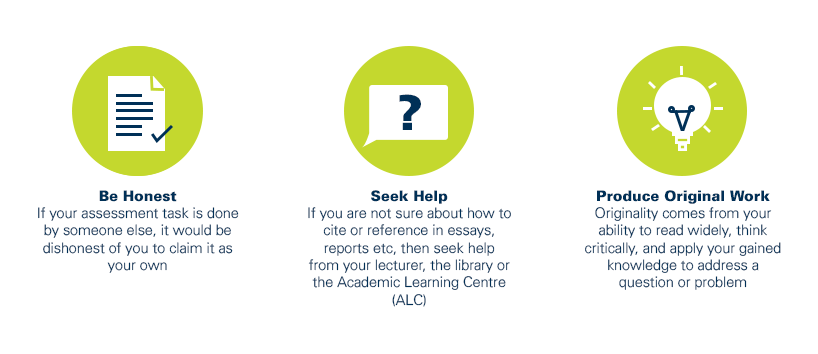
As a CQUniversity student you are expected to act honestly in all aspects of your academic work.
Any assessable work undertaken or submitted for review or assessment must be your own work. Assessable work is any type of work you do to meet the assessment requirements in the unit, including draft work submitted for review and feedback and final work to be assessed.
When you use the ideas, words or data of others in your assessment, you must thoroughly and clearly acknowledge the source of this information by using the correct referencing style for your unit. Using others’ work without proper acknowledgement may be considered a form of intellectual dishonesty.
Participating honestly, respectfully, responsibly, and fairly in your university study ensures the CQUniversity qualification you earn will be valued as a true indication of your individual academic achievement and will continue to receive the respect and recognition it deserves.
As a student, you are responsible for reading and following CQUniversity’s policies, including the Student Academic Integrity Policy and Procedure. This policy sets out CQUniversity’s expectations of you to act with integrity, examples of academic integrity breaches to avoid, the processes used to address alleged breaches of academic integrity, and potential penalties.
What is a breach of academic integrity?
A breach of academic integrity includes but is not limited to plagiarism, self-plagiarism, collusion, cheating, contract cheating, and academic misconduct. The Student Academic Integrity Policy and Procedure defines what these terms mean and gives examples.
Why is academic integrity important?
A breach of academic integrity may result in one or more penalties, including suspension or even expulsion from the University. It can also have negative implications for student visas and future enrolment at CQUniversity or elsewhere. Students who engage in contract cheating also risk being blackmailed by contract cheating services.
Where can I get assistance?
For academic advice and guidance, the Academic Learning Centre (ALC) can support you in becoming confident in completing assessments with integrity and of high standard.
What can you do to act with integrity?