Overview
This unit aims to develop fundamental knowledge, values and skills for professional practice as a registered nurse. You will explore the personal skills, inherent requirements and attributes required in the profession and consider what your journey towards becoming a registered nurse will involve. You will learn about reflective practice, critical thinking, clinical decision-making and the nursing process. You will examine factors that impact nursing practice in the contemporary Australian healthcare system. Throughout this unit, you will acquire fundamental knowledge, professionalism and skills, including application of mathematical principles for medication administration, necessary to provide nursing care at entry level. In particular, you will be able to conduct a holistic assessment, assist a person with their activities of daily living, practice infection control measures and recognise the legal and administration process for the safe delivery of medication within the simulated environment. You are required to participate in compulsory on-campus workshops or a residential school (24 hours) for this unit.
Details
Pre-requisites or Co-requisites
Must be enrolled in CL91 Bachelor of Nursing.
Important note: Students enrolled in a subsequent unit who failed their pre-requisite unit, should drop the subsequent unit before the census date or within 10 working days of Fail grade notification. Students who do not drop the unit in this timeframe cannot later drop the unit without academic and financial liability. See details in the Assessment Policy and Procedure (Higher Education Coursework).
Offerings For Term 1 - 2026
Attendance Requirements
All on-campus students are expected to attend scheduled classes - in some units, these classes are identified as a mandatory (pass/fail) component and attendance is compulsory. International students, on a student visa, must maintain a full time study load and meet both attendance and academic progress requirements in each study period (satisfactory attendance for International students is defined as maintaining at least an 80% attendance record).
Recommended Student Time Commitment
Each 6-credit Undergraduate unit at CQUniversity requires an overall time commitment of an average of 12.5 hours of study per week, making a total of 150 hours for the unit.
Class Timetable
Assessment Overview
Assessment Grading
This is a pass/fail (non-graded) unit. To pass the unit, you must pass all of the individual assessment tasks shown in the table above.
All University policies are available on the CQUniversity Policy site.
You may wish to view these policies:
- Grades and Results Policy
- Assessment Policy and Procedure (Higher Education Coursework)
- Review of Grade Procedure
- Student Academic Integrity Policy and Procedure
- Academic Progression Policy and Procedure
- Student Refund and Credit Balance Policy and Procedure
- Complaints Policy and Procedure
- Information and Communications Technology Acceptable Use Policy and Procedure
This list is not an exhaustive list of all University policies. The full list of University policies are available on the CQUniversity Policy site.
Feedback, Recommendations and Responses
Every unit is reviewed for enhancement each year. At the most recent review, the following staff and student feedback items were identified and recommendations were made.
Feedback from SUTE data
This unit was extremely beneficial in gaining the foundational knowledge of nursing.
Unit coordinators will continue to ensure that this unit maintains the most contemporary foundational knowledge for students related to nursing.
Feedback from SUTE data
The residential school was enjoyable while being interactive. Most definitely the best first-year nursing unit, hands down.
Moving forward, residential schools will continue to be interactive and immerse students in the foundations of nursing.
Feedback from SUTE data
The amount of content in some weeks was heavy. The residential school did not address all of the things it was supposed to, as indicated throughout the weekly Moodle content.
Students are advised to familiarise themselves with the information contained within the residential school tile prior to attending the face-to-face classes. Residential school and Moodle content will continue to be reviewed before the commencement of each term, and Unit Coordinators will ensure that students are aware of how Moodle content clearly links to residential school.
- Analyse historical and contemporary factors that continue to influence the image, status and nature of nursing practice.
- Investigate the role of professional governing bodies in relation to professional nursing practice, patient safety and governance.
- Apply the Nursing and Midwifery Board of Australia (NMBA) Registered nurse standards for practice (2016) in the provision of safe evidence-based nursing care, including application of mathematical principles for medication administration, while assisting a person with their activities of daily living using simulated modalities.
- Perform a holistic assessment of a person including the completion of appropriate documentation, using simulated modalities.
Content in this unit incorporates a number of professional nursing requirements
Nursing and Midwifery Board of Australia Decision-Making Framework (DMF) - Nursing
Nursing and Midwifery Board of Australia Registered Nurse Standards for Practice
Thinks critically and analyses nursing practice
Engages in therapeutic and professional relationships
Maintains the capability for practice
Comprehensively conducts assessments
Develops a plan for nursing practice
Provides safe, appropriate and responsive quality nursing practice
Evaluates outcomes to inform nursing practice
Nursing and Midwifery Board of Australia Nursing Code of Conduct
Legal compliance
Person-centred practice
Cultural practice and respectful relationships
Professional behaviour
Research in health
Health and wellbeing
International Council of Nursing Code of Ethics for Nursing
Nurses and People
Nurses and Practice
Nurses and the Profession
Nurses and co-workers
National Safety and Quality Health Service Standards
Partnering with consumers
Preventing and Controlling healthcare-associated infection
Medication safety
Comprehensive care
Communicating for safety
Recognising and responding to acute deterioration
Patient Safety Competency Framework
Person-centred care
Therapeutic communication
Cultural competence
Teamwork and collaborative practice
Clinical reasoning
Evidence-based practice
Preventing, minimising and responding to adverse events
Infection prevention and control
Medication safety
Aged Care Quality Standards
Consumer dignity and choice
Ongoing assessment and planning with consumers
Personal care and clinical care
Services and supports for daily living
Organisation’s service environment
Feedback and complaints
Human resources
Organisational governance
Alignment of Assessment Tasks to Learning Outcomes
| Assessment Tasks | Learning Outcomes | |||
|---|---|---|---|---|
| 1 | 2 | 3 | 4 | |
| 1 - Practical Assessment - 0% | ||||
| 2 - In-class Test(s) - 0% | ||||
| 3 - Online Quiz(zes) - 0% | ||||
Alignment of Graduate Attributes to Learning Outcomes
| Graduate Attributes | Learning Outcomes | |||
|---|---|---|---|---|
| 1 | 2 | 3 | 4 | |
| 1 - Communication | ||||
| 2 - Problem Solving | ||||
| 3 - Critical Thinking | ||||
| 4 - Information Literacy | ||||
| 5 - Team Work | ||||
| 6 - Information Technology Competence | ||||
| 7 - Cross Cultural Competence | ||||
| 8 - Ethical practice | ||||
| 9 - Social Innovation | ||||
| 10 - First Nations Knowledges | ||||
| 11 - Aboriginal and Torres Strait Islander Cultures | ||||
Textbooks
Kozier and Erb’s Fundamentals of Nursing
- Edition: 5th (2021)
- Authors: Harvey, N., Snyder, S. J., Burston, A., Frandsen, G., Langtree, T., Reid-Searl, K., Berman, A., Moxham, L., Rolf, F., & Stanley, D.
- Pearson Australia
- Melbourne Melbourne , Victoria , Australia
- ISBN: 9781488626593
Skills in Clinical Nursing
- Edition: 2nd (2021)
- Authors: Snyder, S. J., Berman, A., Burton, T., Levett-Jones, T., & Harvey, N.
- Pearson Australia
- Melbourne Melbourne , Victoria , Australia
- ISBN: 9781488620690
IT Resources
- CQUniversity Student Email
- Internet
- Unit Website (Moodle)
- Academic Learning Centre services
- Microsoft Office 2010 (including Word, Excel and Powerpoint)
- Zoom app on your smart phone or access to Zoom on your laptop
- CQUniveristy Library Resources
- Zoom (both microphone and webcam capability)
- Australian Standards (through CQU library)
All submissions for this unit must use the referencing style: American Psychological Association 7th Edition (APA 7th edition)
For further information, see the Assessment Tasks.
j.nikolsky@cqu.edu.au
n.adhikarineupane@cqu.edu.au
Week 1
Begin Date: 09 Mar 2026Module/Topic
The Nursing Profession: History and Image of Nursing
Chapter
Review the NURS11166 Moodle site and all unit information in the first six (6) tiles.
Familiarise yourself with the Student Section on the Moodle task bar. Find out:
- How to locate the Library.
- How to access the unit e-Reading List.
- What support services are available to CQUniversity students?
- What is in the Academic Learning Centre?
Readings and activities as outlined in module.
Events and Submissions/Topic
Recorded Presentations
Watch the ‘NURS11166 Welcome and Unit Introduction’ video found within the Unit Introduction tile in Moodle.
Virtual Classes
- Weekly tutorial.
- Optional weekly Q&A opportunity related to the content.
Activity
Access the Learning Community tile in Moodle. Navigate to the Question and Answer Forum and introduce yourself to your peers. You may like to include why you are studying this course.
Assessments
- Review the assessment tasks.
- Make a study plan.
Residential School Registration
Monitor your student email for the notification that Residential School registration is open for your campus. Once you receive the notification, complete your registration in SONIA.
Foundations of Academic Integrity Program
Complete your annual academic integrity program.
Announcements and Discussion Forums
Check for posts and updates in the forums.
Student Email
Check your student email at least twice per week for important communications.
Week 2
Begin Date: 16 Mar 2026Module/Topic
Contemporary Nursing Practice
Chapter
Readings and activities as outlined in module.
Events and Submissions/Topic
Weekly Online Tutorial (Zoom)
- Content presented in relation to learning outcomes for the unit.
- Optional Q&A opportunity related to the content.
Announcement and Discussion Forums
Check for posts and updates.
Student Email
Check your student email at least twice per week for important communications.
Residential School Registration
Monitor your student email for the notification that Residential School registration is open for your campus. Once you receive the notification, complete your registration in SONIA.
Week 3
Begin Date: 23 Mar 2026Module/Topic
Clinical Reasoning and the Nursing Process
Chapter
Readings and activities as outlined in module.
Events and Submissions/Topic
Weekly Online Tutorial (Zoom)
- Content presented in relation to learning outcomes for the unit.
- Optional Q&A opportunity related to the content.
Census Date
Census date is next week. If you are struggling, please contact your Unit Coordinator for help.
Announcement and Discussion Forums
Check for posts and updates.
Student Email
Check your student email at least twice per week for important communications.
Residential School Registration
Monitor your student email for the notification that Residential School registration is open for your campus. Once you receive the notification, complete your registration in SONIA.
Week 4
Begin Date: 30 Mar 2026Module/Topic
Infection Control
Chapter
Readings and activities as outlined in module.
Events and Submissions/Topic
Weekly Online Tutorial (Zoom)
- Content presented in relation to learning outcomes for the unit.
- Optional Q&A opportunity related to the content.
Census Date
Tuesday, Week 4: Official census date for changes in unit enrolment.
Announcement and Discussion Forums
Check for posts and updates.
Student Email
Check your student email at least twice per week for important communications.
Week 5
Begin Date: 06 Apr 2026Module/Topic
Vital Signs
Chapter
Readings and activities as outlined in module.
Events and Submissions/Topic
Weekly Online Tutorial (Zoom)
- Content presented in relation to learning outcomes for the unit.
- Optional Q&A opportunity related to the content.
Announcement and Discussion Forums
Check for posts and updates.
Student Email
Check your student email at least twice per week for important communications.
Week 6
Begin Date: 13 Apr 2026Module/Topic
Physical Assessment
Chapter
Readings and activities as outlined in module.
Events and Submissions/Topic
Weekly Online Tutorial (Zoom)
- Content presented in relation to learning outcomes for the unit.
- Optional Q&A opportunity related to the content.
Announcement and Discussion Forums
Check for posts and updates.
Student Email
Check your student email at least twice per week for important communications.
Vacation Week
Begin Date: 20 Apr 2026Module/Topic
Vacation week.
Chapter
Vacation week.
Events and Submissions/Topic
Vacation week.
Week 7
Begin Date: 27 Apr 2026Module/Topic
Physical Assessment Continued
Chapter
Readings and activities as outlined in module.
Events and Submissions/Topic
Weekly Online Tutorial (Zoom)
- Content presented in relation to learning outcomes for the unit.
- Optional Q&A opportunity related to the content.
Announcement and Discussion Forums
Check for posts and updates.
Student Email
Check your student email at least twice per week for important
Week 8
Begin Date: 04 May 2026Module/Topic
Risk Assessments
Chapter
Readings and activities as outlined in module.
Events and Submissions/Topic
Weekly Online Tutorial (Zoom)
- Content presented in relation to learning outcomes for the unit.
- Optional Q&A opportunity related to the content.
Announcement and Discussion Forums
Check for posts and updates.
Student Email
Check your student email at least twice per week for important communications.
Professional Nursing Practice (PNP) Unit – Term 2 2026 Enrolment
By Term 1, Monday Week 10, ensure you have:
- Enrolled in your PNP unit.
- Uploaded all Mandatory Checks by the Mandatory Check closing date.
Week 9
Begin Date: 11 May 2026Module/Topic
Patient Handling and Mobility
Chapter
Readings and activities as outlined in module.
Events and Submissions/Topic
Weekly Online Tutorial (Zoom)
- Content presented in relation to learning outcomes for the unit.
- Optional Q&A opportunity related to the content.
Announcement and Discussion Forums
Check for posts and updates.
Student Email
Check your student email at least twice per week for important communications.
Professional Nursing Practice (PNP) Unit – Term 2 2026 Enrolment
By Term 1, Monday Week 10, ensure you have:
- Enrolled in your PNP unit.
- Uploaded all Mandatory Checks by the Mandatory Check closing date.
Week 10
Begin Date: 18 May 2026Module/Topic
Activities of Daily Living
Chapter
Readings and activities as outlined in module.
Events and Submissions/Topic
Weekly Online Tutorial (Zoom)
- Content presented in relation to learning outcomes for the unit.
- Optional Q&A opportunity related to the content.
Announcement and Discussion Forums
Check for posts and updates.
Student Email
Check your student email at least twice per week for important communications.
Mandatory Checks
Due: Monday this week.
Upload all Mandatory Checks by the Mandatory Check closing date.
Review Your Term 2 2026 Enrollment
Deadline: Professional Nursing Practice unit enrolment closes Monday this week.
Week 11
Begin Date: 25 May 2026Module/Topic
Professional Communication and Documentation
Chapter
Readings and activities as outlined in module.
Events and Submissions/Topic
Weekly Online Tutorial (Zoom)
- Content presented in relation to learning outcomes for the unit.
- Optional Q&A opportunity related to the content.
Announcement and Discussion Forums
Check for posts and updates.
Student Email
Check your student email at least twice per week for important communications.
Student Unit and Teaching Evaluation Survey
We encourage you to provide feedback about your unit and teaching experiences in this unit. The survey opens Week 11 and closes one week before release of grades.
Week 12
Begin Date: 01 Jun 2026Module/Topic
Preparing for Professional Nursing Practice
Chapter
Readings and activities as outlined in module.
Events and Submissions/Topic
Weekly Online Tutorial (Zoom)
- Content presented in relation to learning outcomes for the unit.
- Optional Q&A opportunity related to the content.
Assessment
Assessment 3 Online Quiz due this week.
- Quiz opens: 00:01 hour (AEST) Monday the 1st of June 2026 (Week 12)
- Quiz closes: 23:59 hour (AEST) Wednesday the 3rd of June 2026 (Week 12)
Announcement and Discussion Forums
Check for posts and updates.
Student Email
Check your student email at least twice per week for important communications.
Student Unit and Teaching Evaluation Survey
Please complete the unit evaluation survey.
Congratulations on completing this unit. Don’t forget to check your unit enrolments for next term.
Online Quiz Due: Week 12 Monday (1 June 2026) 11:45 pm AEST
Exam Week
Begin Date: 08 Jun 2026Module/Topic
Nil.
Chapter
Nil.
Events and Submissions/Topic
Nil.
Vacation/Exam Week
Begin Date: 15 Jun 2026Module/Topic
Nil.
Chapter
Nil.
Events and Submissions/Topic
Nil.
As this unit is offered online with one face-to-face residential school block, students are asked to prepare their own individual study plan to undertake self-led and self-directed study throughout the term. A key to your success is a strategic self-directed approach to learning and regular contact with your Unit Coordinator/s. Please check the Announcements and Discussion forums at least twice a week – there will be regular announcements about assessments and unit resources throughout the term and reviewing this information is essential to unit knowledge and your success. CQUniversity communicates with students through CQUniversity email. We recommend that you access your CQUniversity email at least twice a week so that you do not miss vital information about your studies.
1 Practical Assessment
Task Description
You will complete a practical assessment to demonstrate your knowledge and ability to provide safe, holistic, evidence-based nursing assessment and care while adhering to professional nursing governance in a simulated environment.
Instructions
Please refer to the assessment task instructions on the unit Moodle site.
Academic Integrity
- You must abide by the principles of academic integrity (see Student Academic Integrity Policy and Procedure).
- Completion of this assessment with another party or sharing of responses is not permitted at any time.
- The use of any generative artificial intelligence is not permitted as per Level 1 (No AI) in the AI Assessment scale tool indicators.
Extensions
Extensions to this assessment are not available as per policy. The 72-hour grace period does not apply to this assessment.
Minimum Pass Criteria
- To pass this assessment, you must receive an Achieved result for all NURS11166 Fundamentals of Professional Nursing Assessment 1 marking criteria.
- To pass this unit, you are required to achieve a pass grade in all assessments.
Completed during the NURS11166 residential school.
Results are discussed immediately after the practical assessment.
The practical assessment will be based on the skills and theory you have learned in NURS11166 this term. To attain a pass grade for this assessment, you must satisfactorily complete all areas of the Assessment 1 Marking Criteria sheet found on the NURS11166 Moodle site under the Assessment tile.
- Investigate the role of professional governing bodies in relation to professional nursing practice, patient safety and governance.
- Apply the Nursing and Midwifery Board of Australia (NMBA) Registered nurse standards for practice (2016) in the provision of safe evidence-based nursing care, including application of mathematical principles for medication administration, while assisting a person with their activities of daily living using simulated modalities.
- Perform a holistic assessment of a person including the completion of appropriate documentation, using simulated modalities.
2 In-class Test(s)
Task Description
You will complete an invigilated in class test to demonstrate your ability to perform the basic math required for safe medication administration.
Instructions
Please refer to the assessment task instructions on the unit Moodle site.
Academic Integrity
- You must abide by the principles of academic integrity (see Student Academic Integrity Policy and Procedure).
- Completion of this assessment with another party or sharing of responses is not permitted at any time.
- The use of any generative artificial intelligence is not permitted as per Level 1 (No AI) in the AI Assessment scale tool indicators.
Extensions
Extensions to this assessment are not available as per policy. The 72-hour grace period does not apply to this assessment.
Minimum Pass Criteria
- You must achieve 100% to pass this assessment.
- To pass this unit, you are required to achieve a pass grade in all assessments.
Day 1 of residential school (re-attempts may be offered on day 2 and/or day 3 of residential school).
Results for the quiz will be available immediately after the attempt is complete.
- The quiz will be completed on Moodle in an invigilated setting.
- The quiz consists of twenty (20) questions which are drawn from a question bank and randomised for each attempt.
- You have a maximum of 60 minutes to complete the quiz and must do so in one sitting.
- Once the quiz has started it must be completed within the 60-minute time limit, after which it will automatically close and submit your result.
- You have three attempts to achieve 100% to pass the quiz.
- Apply the Nursing and Midwifery Board of Australia (NMBA) Registered nurse standards for practice (2016) in the provision of safe evidence-based nursing care, including application of mathematical principles for medication administration, while assisting a person with their activities of daily living using simulated modalities.
3 Online Quiz(zes)
Task Description
You will complete an online quiz to demonstrate your understanding of the historical and contemporary influences on nursing practice, and the role of professional bodies in promoting safe and professional care.
Instructions
Please refer to the assessment task instructions on the unit Moodle site.
Academic Integrity
- You must abide by the principles of academic integrity (see Student Academic Integrity Policy and Procedure).
- Completion of this assessment with another party or sharing of responses is not permitted at any time.
- The use of any generative artificial intelligence is not permitted as per Level 1 (No AI) in the AI Assessment scale tool indicators.
Extensions
Extensions to this assessment are not available as per policy. The 72-hour grace period does not apply to this assessment.
Minimum Pass Criteria
- You must achieve a minimum grade of 60% to pass this assessment.
- To pass this unit, you are required to achieve a Pass grade in all assessment tasks.
Week 12 Monday (1 June 2026) 11:45 pm AEST
Quiz opens: 00:01 hour (AEST) Monday the 1st of June 2026 (Week 12) and Quiz closes: 23:59 hour (AEST) Wednesday the 3rd of June 2026 (Week 12)
Results for the quiz will be available immediately after the attempt is complete.
- The quiz consists of thirty (30) multiple-choice questions.
- You have a maximum of 45 minutes to complete the quiz and must do so in one sitting.
- Once the quiz has started it must be completed within the 45-minute time limit, after which it will automatically close and submit your result.
- You are permitted a maximum of one (1) attempt at the quiz. Assessment re-attempt may be available for this Assessment task as per the Assessment Policy and Procedure (Higher Education Coursework).
- Analyse historical and contemporary factors that continue to influence the image, status and nature of nursing practice.
- Investigate the role of professional governing bodies in relation to professional nursing practice, patient safety and governance.
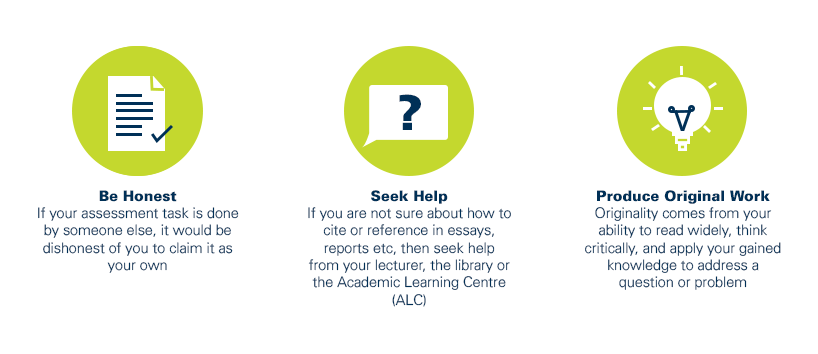
As a CQUniversity student you are expected to act honestly in all aspects of your academic work.
Any assessable work undertaken or submitted for review or assessment must be your own work. Assessable work is any type of work you do to meet the assessment requirements in the unit, including draft work submitted for review and feedback and final work to be assessed.
When you use the ideas, words or data of others in your assessment, you must thoroughly and clearly acknowledge the source of this information by using the correct referencing style for your unit. Using others’ work without proper acknowledgement may be considered a form of intellectual dishonesty.
Participating honestly, respectfully, responsibly, and fairly in your university study ensures the CQUniversity qualification you earn will be valued as a true indication of your individual academic achievement and will continue to receive the respect and recognition it deserves.
As a student, you are responsible for reading and following CQUniversity’s policies, including the Student Academic Integrity Policy and Procedure. This policy sets out CQUniversity’s expectations of you to act with integrity, examples of academic integrity breaches to avoid, the processes used to address alleged breaches of academic integrity, and potential penalties.
What is a breach of academic integrity?
A breach of academic integrity includes but is not limited to plagiarism, self-plagiarism, collusion, cheating, contract cheating, and academic misconduct. The Student Academic Integrity Policy and Procedure defines what these terms mean and gives examples.
Why is academic integrity important?
A breach of academic integrity may result in one or more penalties, including suspension or even expulsion from the University. It can also have negative implications for student visas and future enrolment at CQUniversity or elsewhere. Students who engage in contract cheating also risk being blackmailed by contract cheating services.
Where can I get assistance?
For academic advice and guidance, the Academic Learning Centre (ALC) can support you in becoming confident in completing assessments with integrity and of high standard.
What can you do to act with integrity?