The return due date for Assessment 1: Case Study assignment should read:
Week 10 Monday (20 May 2019)
Monday Week 10: Students who submit by/on the due date will have their assignments returned by Monday 20th May - Week 10
Overview
This unit provides you with information based on evidence and best practice principles in the safe use of medications across the lifespan. Knowledge of pharmacodynamics and pharmacokinetics as well as biochemical and microbial considerations are included to ensure safe nursing practice and quality use of medicines. You will also become familiar with the Australian legal requirements and ethical issues as they relate to the administration of medications. The content of this unit will be applied in the clinical nursing practice units.
Details
Pre-requisites or Co-requisites
Pre-requisites NURS11161 Clinical Nursing Practice 1 or NURS11154 Foundations of Nursing Practice 2 BIOH11005 Introduction to Anatomy and Physiology Co-requisite BIOH11006 Advanced Anatomy and Physiology
Important note: Students enrolled in a subsequent unit who failed their pre-requisite unit, should drop the subsequent unit before the census date or within 10 working days of Fail grade notification. Students who do not drop the unit in this timeframe cannot later drop the unit without academic and financial liability. See details in the Assessment Policy and Procedure (Higher Education Coursework).
Offerings For Term 1 - 2019
Attendance Requirements
All on-campus students are expected to attend scheduled classes - in some units, these classes are identified as a mandatory (pass/fail) component and attendance is compulsory. International students, on a student visa, must maintain a full time study load and meet both attendance and academic progress requirements in each study period (satisfactory attendance for International students is defined as maintaining at least an 80% attendance record).
Recommended Student Time Commitment
Each 6-credit Undergraduate unit at CQUniversity requires an overall time commitment of an average of 12.5 hours of study per week, making a total of 150 hours for the unit.
Class Timetable
Assessment Overview
Assessment Grading
This is a graded unit: your overall grade will be calculated from the marks or grades for each assessment task, based on the relative weightings shown in the table above. You must obtain an overall mark for the unit of at least 50%, or an overall grade of 'pass' in order to pass the unit. If any 'pass/fail' tasks are shown in the table above they must also be completed successfully ('pass' grade). You must also meet any minimum mark requirements specified for a particular assessment task, as detailed in the 'assessment task' section (note that in some instances, the minimum mark for a task may be greater than 50%). Consult the University's Grades and Results Policy for more details of interim results and final grades.
All University policies are available on the CQUniversity Policy site.
You may wish to view these policies:
- Grades and Results Policy
- Assessment Policy and Procedure (Higher Education Coursework)
- Review of Grade Procedure
- Student Academic Integrity Policy and Procedure
- Monitoring Academic Progress (MAP) Policy and Procedure - Domestic Students
- Monitoring Academic Progress (MAP) Policy and Procedure - International Students
- Student Refund and Credit Balance Policy and Procedure
- Student Feedback - Compliments and Complaints Policy and Procedure
- Information and Communications Technology Acceptable Use Policy and Procedure
This list is not an exhaustive list of all University policies. The full list of University policies are available on the CQUniversity Policy site.
Feedback, Recommendations and Responses
Every unit is reviewed for enhancement each year. At the most recent review, the following staff and student feedback items were identified and recommendations were made.
Feedback from Student evaluations
Assessment Explanations
Incorporating Assessment Q & As via Zoom and recording these for students who cannot attend for all assessments to address this issue. Currently there is an Overview of Assessments power-point and recording however, if other units have similar topics but different requirements, this can be confusing for the student and therefore will help prevent confusion for the student and make the assessment requirements clearer.
Feedback from Student evaluation
Evening Zoom sessions
Some students have requested evening Zoom sessions. This has been utilised in the past with minimal uptake from students. Therefore all instead of evening Zoom session, all Zoom sessions are recorded and placed on the Moodle site and students are encouraged to ask questions on the discussion forums. Students can email questions prior to these Zoom sessions to address any confusion/questions/clarification.
Feedback from Student evaluation
Replace written assessment 3 with an examination.
A unit proposal will be submitted to change the last assessment to an exam. There are 3 compelling reasons to change the last assessment which is currently a written piece, to an examination: a) Students have asked to be assessed on multiple medications which they believe would enhance their confidence in the clinical environment. As a written piece of assessment, students can only be assessed on a small number of medications. The exam provides a greater opportunity for extending knowledge regarding multiple medications that students will encounter in clinical environments. b) Students feel that the current written assessment overlaps with similar content from another Unit's assessment pieces. The examination would effectively address any perception of overlap in coverage of unit content. c) Students have also stated that they find it difficult to complete written assignments during Work Integrated Learning practicum in T1 that runs alongside this unit and in concert with other Units which also have written assessments.
- Examine the principles of quality use of medicines (QUM), as related to nursing practice
- Determine the implications of the pharmacokinetic, pharmacodynamics, biochemical and microbial influences medications can have on individuals across the lifespan
- Analyse the professional and ethical implications of medication administration and the associated legislative requirements to nursing practice.
The learning outcomes are linked to the Australian Nursing and Midwifery Accreditation (ANMAC) Standards for registered nurses and the Nursing and Midwifery Board of Australia (NMBA) registered nurse standards for practice.
Alignment of Assessment Tasks to Learning Outcomes
| Assessment Tasks | Learning Outcomes | ||
|---|---|---|---|
| 1 | 2 | 3 | |
| 1 - Case Study - 40% | |||
| 2 - Examination - 60% | |||
Alignment of Graduate Attributes to Learning Outcomes
| Graduate Attributes | Learning Outcomes | ||
|---|---|---|---|
| 1 | 2 | 3 | |
| 1 - Communication | |||
| 2 - Problem Solving | |||
| 3 - Critical Thinking | |||
| 4 - Information Literacy | |||
| 5 - Team Work | |||
| 6 - Information Technology Competence | |||
| 7 - Cross Cultural Competence | |||
| 8 - Ethical practice | |||
| 9 - Social Innovation | |||
| 10 - First Nations Knowledges | |||
| 11 - Aboriginal and Torres Strait Islander Cultures | |||
Alignment of Assessment Tasks to Graduate Attributes
| Assessment Tasks | Graduate Attributes | ||||||||||
|---|---|---|---|---|---|---|---|---|---|---|---|
| 1 | 2 | 3 | 4 | 5 | 6 | 7 | 8 | 9 | 10 | 11 | |
| 1 - Case Study - 40% | |||||||||||
| 2 - Examination - 60% | |||||||||||
Textbooks
Pharmacology in Nursing: Australian & New Zealand Edition
- Edition: 2nd edn (2016)
- Authors: McKenzie, Broyles, Reiss, Pleunik & Page
- Cengage Learning Australia
- South Melbourne South Melbourne , VIC , Australia
- ISBN: 9780170362030
- Binding: Paperback
Additional Textbook Information
No set textbooks are required for this unit. All readings are supplied via Course Resources Online (CROs) which are from various sources supplied accessed within the Unit Moodle page.
If students would like to refer the textbook suggested, then you can purchase at the CQUni Bookshop here: http://bookshop.cqu.edu.au (search on the Unit code)
IT Resources
- CQUniversity Student Email
- Internet
- Unit Website (Moodle)
All submissions for this unit must use the referencing style: American Psychological Association 6th Edition (APA 6th edition)
For further information, see the Assessment Tasks.
n.blunt@cqu.edu.au
t.sullivan@cqu.edu.au
a.adeleye@cqu.edu.au
Week 1
Begin Date: 11 Mar 2019Module/Topic
Chapter
Refer readings library CRO - see unit Moodle site
Events and Submissions/Topic
View online introduction/welcome message in Moodle.
Open Moodle tab: 'Study Guide, CRO readings and important resources' and review.
Week 2
Begin Date: 18 Mar 2019Module/Topic
QUM and Safety in Medication Administration
Chapter
Refer readings library CRO - see unit Moodle site
Events and Submissions/Topic
Review Assessment 1
Enroll in the NPS Medicinewise Learning website and commence course: 'Quality Use of Medications for Health Professional Students' - excluding case studies to obtain certificate.
Week 3
Begin Date: 25 Mar 2019Module/Topic
Chapter
Refer readings library CRO - see unit Moodle site
Events and Submissions/Topic
Commence Assessment 1
Week 4
Begin Date: 01 Apr 2019Module/Topic
Medication across the Lifespan: the Elderly, Paediatrics and Pregnant Women
Chapter
View online lecture - Module 4
Refer readings library CROs - see unit Moodle site
Events and Submissions/Topic
Week 5
Begin Date: 08 Apr 2019Module/Topic
Agents used to Treat Endocrine Imbalance
Chapter
View online lecture - Module 5
Refer readings library CRO & articles - see unit Moodle site
Events and Submissions/Topic
Vacation Week
Begin Date: 15 Apr 2019Module/Topic
Chapter
Events and Submissions/Topic
Week 6
Begin Date: 22 Apr 2019Module/Topic
Agents used to Treat Cardiovascular Disorders
Chapter
View online lecture - Module 6
Refer readings library CRO - see unit Moodle site
Events and Submissions/Topic
Complete Assessment 1 - due Tuesday 30 April 2019
Week 7
Begin Date: 29 Apr 2019Module/Topic
Chapter
View online lecture - Module 7
Refer readings library CRO & videos - see unit Moodle site
Events and Submissions/Topic
Week 8
Begin Date: 06 May 2019Module/Topic
Agents used to Treat Respiratory Disorders
Chapter
View online Lecture - Module 8
Refer readings library CRO - see unit Moodle site
Events and Submissions/Topic
Week 9
Begin Date: 13 May 2019Module/Topic
Module 9: Antimicrobial Agents
Module 10: Agents used to Control Pain and Inflammation
Chapter
View online lectures - Module 9 & Module 10
Refer readings library CRO for each Module - see unit Moodle site
Events and Submissions/Topic
Week 10
Begin Date: 20 May 2019Module/Topic
Agents used Treat Mental Health Disorders
Chapter
View online Lecture - Module 11
Refer readings library CRO - see unit Moodle site
Events and Submissions/Topic
Week 11
Begin Date: 27 May 2019Module/Topic
Non-traditional and Complementary Pharmacological Therapies
Chapter
View online lecture - Module 12
Refer readings library CROs - see unit Moodle site
Events and Submissions/Topic
Week 12
Begin Date: 03 Jun 2019Module/Topic
Review Week
Chapter
Events and Submissions/Topic
Review/Exam Week
Begin Date: 10 Jun 2019Module/Topic
Chapter
Events and Submissions/Topic
Exam Week
Begin Date: 17 Jun 2019Module/Topic
Chapter
Events and Submissions/Topic
1 Case Study
Assessment 1: Short Answer Topics
Overall Weighting: 40%
Due Date: Tuesday 30 April 2019 6pm (Week 7)
Learning Outcomes:
1. Examine the principles of quality use of medicines (QUM), as related to nursing practice
3. Analyse the professional and ethical implications of medication administration and the associated legislative requirements to nursing practice
Word Length: Topic 1: 600 words (+/- 10%)
Topic 2: 500 words (+/- 10%)
Topic 3: 500 words (+/- 10%)
NB: The word count is considered from the first word to the last word of each topic. It includes in-text references and direct quotations. It excludes the cover page, reference list.
Instructions: Assessment 1 consists of completing three (3) topics with questions linked to a case summary.
Step1: Read the case summary. The link to this document is available under the ‘Assessment for this Unit’ tab: Under Assessment 1.
Step 2: Using the case summary, complete the three topics listed below addressing the questions. You are expected to attempt all three topics.
Format:
· Size 12 font size (Times New Roman or Arial)
· Double-line spacing
- 2.54cm margins
- Page numbers, name and student number on each page
The following format is to be used to present your essay (include topic headings):
- First page: Cover page
- Next page:
· Topic 1: Medication Error
· Topic 2: Ethical Principles
· Topic 3: Legislation
- Last page: References (for all three topics)
Referencing Style: APA referencing 6th edition (available on the unit Moodle site under the 'Assessment' tab). Please note that referencing is worth 15% of your overall mark for this assessment.
· The study guide, unit profile, and PowerPoint slides supplied on the unit Moodle site are NOT to be used as reference sources but are good resources to guide your answers.
· Journal articles, textbooks and other sources less than 5 years old and textbooks less than 10 years old should be used.
NB: This assessment has a minimum mark or grade – This assessment contributes to 40% of your overall marks for this unit (the assessments combined will give the final grade). However, you need to score at least 25% of overall marks for this assessment item to pass the unit regardless of obtaining a pass mark in the final exam for this unit.
Topics
Topic 1: Medication Errors
There was a significant medication-related error that occurred leading to a poor outcome for this patient.
- Describe the medication-related error that occurred here and outline one (1) factor that contributed to the error.
- Refer to the NSQHS Standard 4 (2nd edition) - Medication Safety.
· Choose one action from the NSQHS Standard 4 (2nd edition) - Medication Safety list below and discuss how as the nurse caring for Mrs D, you would use this to prevent this type medication error occurring again.
o Partnering with consumers: Action 4.3
o Medication reconciliation: Action 4.5 & 4.6
o Medication Review: Action 4.10
o Information for patients: 4.11
o Provision of a medication list: 4.12
Topic 2: Ethical Principles
Ethical principles relate to medications just as they do to any other nursing practice. Therefore ethical principles apply to nurses’ practice in the administering of medication in this case summary.
After reading the case summary regarding Mrs D:
- Describe each of the following ethical principles:
o Beneficence
o Non-maleficence
- Then explain how these principles may apply in this case summary:
o Were either of these ethical principles upheld? Yes or no. Explain your response.
NB: It is expected that you write in third person (no ‘I’ or ‘we’ statements)
Topic 3. Legislation
Many laws govern medication and medication administration. The registered nurse has a responsibility to be aware of those that are relevant to their practice. With the case summary in mind:
- Briefly discuss the significance of the federal legislation that controls medications in Australia.
- State the legislative schedules of the medications discussed in the case summary i.e. fentanyl, oxycodone, and paracetamol.
- Describe the differences in the legal (not manufacturer’s) requirements relating to storage and documentation required for Schedule 4 (restricted) and Schedule 8 (controlled) medications.
- Explain the nurse’s responsibilities if a discrepancy is found between the quantity or volume of a Schedule 8 (controlled) medication stock and the entry made in the ward drug book?
Week 7 Tuesday (30 Apr 2019) 6:00 pm AEST
Week 9 Monday (13 May 2019)
Monday Week 9: Students who submit by/on the due date will have their assignments returned by Monday 13th May - Week 9
Assessment 1 Marking Criteria
| HD 85 – 100% | D 75-84% | C 65-74% | P 50-64% | F below 50% | Mark |
| Structure -15% | |||||
| Excellent presentation (formatted as per the APA Referencing Style Guide) of assignment with inclusion of cover page, double line spaced, and 12-point font size (Times New Roman or Arial). Consistently accurate with spelling (no errors), grammar and paragraph structure. | Well-presented assignment (formatted as per the APA Referencing Style Guide), including cover page, double line spaced, and 12-point font size (Times New Roman or Arial). Generally accurate (1 or 2 errors) in spelling, grammar and paragraph structure. | Well-presented assignment (formatted as per the APA Referencing Style Guide), including cover page, double line spaced, and 12-point font size (Times New Roman or Arial). Occasional inaccuracies (3 or 4 consistent errors) with spelling, grammar and/or paragraph structure. | Adequate assignment presentation (formatted as per the APA Referencing Style Guide), double line spaced with 12-point font size (Times New Roman or Arial). Frequent inaccuracies (5 to 7 consistent errors) with spelling, grammar and paragraph structure. | Poorly presented assignment – format is not as per APA Referencing Style Guide. Double spacing not used, and/or 12-point font size not used (Times New Roman or Arial). Many inaccuracies in spelling, grammar or and paragraph structure. | /15 |
| The structure of each topic is clearly and comprehensively set out as required and the discussion proceeds logically. Well linked to supporting literature. | The structure of each topic is clearly set out and the discussion proceeds logically. Supporting literature is used appropriately. | The structure of each topic is appropriate and the discussion, for the most part, proceeds logically. Minimal omissions in links to supporting literature. | The structure of each topic is apparent but at times the discussion is difficult to follow. Supporting literature used but frequent omissions in links identified. | The structure of each topic is poorly set out and/or the discussion is difficult to follow. There is a lack of cohesion. Little to no links to supporting literature. | |
| Approach and Argument -70% | |||||
| Topic 1 (30%) Comprehensively includes a detailed discussion of the topic with clear, coherent and convincing critical thought demonstrated of the medication error and application of NSQHS Standard 4 - Medication Safety as per the assessment. | Extensively includes a thorough discussion of the topic with well-developed critical thought evident of the medication error and application of NSQHS Standard 4 - Medication Safety as per the assessment. | Content is appropriate and answers the topic. Generally includes a reasonable discussion on the medication error and application of NSQHS Standard 4 - Medication Safety as per the assessment. | Content is relevant. Demonstrates a limited discussion of the medication error and application of NSQHS Standard 4 - Medication Safety as per the assessment. Perceptible critical thought demonstrated. | Not able to provide /an inadequate discussion of the medication error and application of NSQHS Standard 4 - Medication Safety as per the assessment. Lacks critical thought. | |
| Topic 2 (20%) Comprehensively includes a detailed discussion with clear, coherent and convincing critical thought demonstrated on the explanation and application of the ethical principles to the case study as per the assessment. | Extensively includes a thorough discussion with well-developed critical thought evident on the explanation and application of the ethical principles to the case study as per the assessment. | Content is appropriate and answers the topic. Generally includes a reasonable discussion of explanation and application of the ethical principles to the case study as per the assessment. | Content is relevant. Demonstrates a limited discussion on the explanation and application of the ethical principles to the case study as per the assessment. Perceptible critical thought demonstrated. | Not able to provide/an inadequate discussion on the application of the ethical principles as per the assessment. Lacks critical thought. | |
| Topic 3 (20%) Comprehensively includes a detailed discussion with clear, coherent and convincing critical thought demonstrated of the legal aspects as per the assessment. | Extensively includes a thorough discussion of the topic with well-developed critical thought evident of the legal aspects as per the assessment. | Content is appropriate and answers the topic. Generally includes a reasonable discussion of the legal aspects as per the assessment. | Content is relevant to the topic. Demonstrates a limited discussion on the legal aspects as per the assessment. Perceptible critical thought demonstrated. | Not able to provide/an inadequate discussion of legal aspects as per the assessment. Lacks critical thought. | /70 |
| Referencing - 15% | |||||
| Consistently accurate with in-text referencing to support and reflect all ideas, factual information and quotations. | 1 or 2 in-text referencing errors identified to support and reflect all ideas, factual information and quotations. | 3 or 4 in-text referencing errors identified to support and reflect all ideas, factual information and quotations. | 5 or more in-text referencing errors identified to support and reflect all ideas, factual information and quotations. | Referencing is not consistent with APA style. Many inaccuracies (>5) with in-text referencing to support and reflect all ideas, factual information and quotations. | /15 |
| A minimum of 8 up-to-date* references that includes at least 6 or more journal articles as well as relevant books and web sites spread consistently across all topics. | A minimum of 8 up-to-date* references that includes at least 4 journal articles as well as relevant books and web sites spread consistently across all topics. | A minimum of 7 up-to-date* references. Must include at least 3 journal articles as well as relevant books and web sites spread consistently across all topics. | A minimum of 6 up-to-date* references used including 2 journal articles as well as textbooks and web sites spread consistently across all topics. | The required number of 6 up-to-date* references not used. Journal articles or textbooks not sourced and not consistently spread across all topics. Web sites only used. | |
| Reference list appears in alphabetical order and fully adheres to reference list presentation guidelines APA style. | Reference list appears in alphabetical order and consistently adheres to reference list presentation guidelines APA style (1 or 2 errors). | Reference list appears in alphabetical order and frequently adheres to reference list presentation guidelines APA style (3 or 4 errors). | Reference list appears in alphabetical order and occasionally adheres to reference list presentation guidelines APA style (5 errors). | Reference list appears in no alphabetical order and does not adhere to reference list presentation guidelines APA style (>5 errors). | |
| Total Marks | /100 |
This Assessment is worth 25% of the weighting for this unit.
- Examine the principles of quality use of medicines (QUM), as related to nursing practice
- Determine the implications of the pharmacokinetic, pharmacodynamics, biochemical and microbial influences medications can have on individuals across the lifespan
- Analyse the professional and ethical implications of medication administration and the associated legislative requirements to nursing practice.
- Communication
- Problem Solving
- Critical Thinking
- Information Literacy
- Ethical practice
Examination
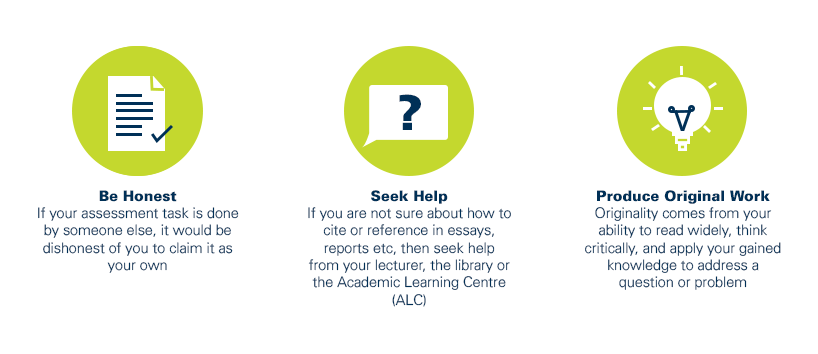
As a CQUniversity student you are expected to act honestly in all aspects of your academic work.
Any assessable work undertaken or submitted for review or assessment must be your own work. Assessable work is any type of work you do to meet the assessment requirements in the unit, including draft work submitted for review and feedback and final work to be assessed.
When you use the ideas, words or data of others in your assessment, you must thoroughly and clearly acknowledge the source of this information by using the correct referencing style for your unit. Using others’ work without proper acknowledgement may be considered a form of intellectual dishonesty.
Participating honestly, respectfully, responsibly, and fairly in your university study ensures the CQUniversity qualification you earn will be valued as a true indication of your individual academic achievement and will continue to receive the respect and recognition it deserves.
As a student, you are responsible for reading and following CQUniversity’s policies, including the Student Academic Integrity Policy and Procedure. This policy sets out CQUniversity’s expectations of you to act with integrity, examples of academic integrity breaches to avoid, the processes used to address alleged breaches of academic integrity, and potential penalties.
What is a breach of academic integrity?
A breach of academic integrity includes but is not limited to plagiarism, self-plagiarism, collusion, cheating, contract cheating, and academic misconduct. The Student Academic Integrity Policy and Procedure defines what these terms mean and gives examples.
Why is academic integrity important?
A breach of academic integrity may result in one or more penalties, including suspension or even expulsion from the University. It can also have negative implications for student visas and future enrolment at CQUniversity or elsewhere. Students who engage in contract cheating also risk being blackmailed by contract cheating services.
Where can I get assistance?
For academic advice and guidance, the Academic Learning Centre (ALC) can support you in becoming confident in completing assessments with integrity and of high standard.
What can you do to act with integrity?