To achieve a passing grade for the unit, you are required to pass Assessment 4. If you do not pass the required assessment item, you will have one opportunity to reattempt the assessment. If you are required to reattempt you can only achieve a maximum of 50% of the available marks for the reattempted assessment.
Overview
In this unit, you will have the opportunity to practice nursing care in the community or rehabilitative environment. You will apply the Nursing and Midwifery Board of Australia (NMBA) registered nurse standards for practice (2016). You will continue to explore the importance of the National Safety and Quality Health Service (NSQHS) Standards (2017) to all nursing practice in Australia and use the Patient Safety Competency Framework (PSCF) (Levett-Jones et al., 2017) in your practice as a nursing student. You will be expected to identify risk and recognise and respond appropriately to the deteriorating patient in the simulated and clinical environment. You will work within your scope of practice using the decision-making framework (DMF) (NMBA, 2020). You are required to participate in a compulsory three (3) day residential school prior to attending professional experience placement for this unit. This unit includes a 80 hour block professional experience placement in a community or rehabilitative environment. For students, who have completed NURS12157, Concepts of Mental Health Nursing but have not completed, NURS12158, Clinical Nursing Practice 3, you will be undertaking an extra 80 hour professional experience placement block. You must meet specific mandatory health, safety and security requirements to be eligible to attend each professional experience placement. Professional experience placements may be limited in your community and you may be placed in other locations. Please be prepared financially and personally to cover the costs to relocate for placements. Due to the limited availability of placements, some block placements have start and/or end dates that fall outside standard term dates.
Details
Pre-requisites or Co-requisites
Pre-requisites: NURS12161 Professional Experience Placement 2 or NURS12156 Clinical Practice 2BIOH12011Pathophysiology and Pharmacology 1 or BIOH11006 Advanced Anatomy and Physiology and NURS12154 Pharmacology of Nursing PracticeCo-requisiteNURS12163 Chronic Health and Community
Important note: Students enrolled in a subsequent unit who failed their pre-requisite unit, should drop the subsequent unit before the census date or within 10 working days of Fail grade notification. Students who do not drop the unit in this timeframe cannot later drop the unit without academic and financial liability. See details in the Assessment Policy and Procedure (Higher Education Coursework).
Offerings For Term 2 - 2021
Attendance Requirements
All on-campus students are expected to attend scheduled classes - in some units, these classes are identified as a mandatory (pass/fail) component and attendance is compulsory. International students, on a student visa, must maintain a full time study load and meet both attendance and academic progress requirements in each study period (satisfactory attendance for International students is defined as maintaining at least an 80% attendance record).
Recommended Student Time Commitment
Each 6-credit Undergraduate unit at CQUniversity requires an overall time commitment of an average of 12.5 hours of study per week, making a total of 150 hours for the unit.
Class Timetable
Assessment Overview
Assessment Grading
This is a graded unit: your overall grade will be calculated from the marks or grades for each assessment task, based on the relative weightings shown in the table above. You must obtain an overall mark for the unit of at least 50%, or an overall grade of 'pass' in order to pass the unit. If any 'pass/fail' tasks are shown in the table above they must also be completed successfully ('pass' grade). You must also meet any minimum mark requirements specified for a particular assessment task, as detailed in the 'assessment task' section (note that in some instances, the minimum mark for a task may be greater than 50%). Consult the University's Grades and Results Policy for more details of interim results and final grades.
All University policies are available on the CQUniversity Policy site.
You may wish to view these policies:
- Grades and Results Policy
- Assessment Policy and Procedure (Higher Education Coursework)
- Review of Grade Procedure
- Student Academic Integrity Policy and Procedure
- Monitoring Academic Progress (MAP) Policy and Procedure - Domestic Students
- Monitoring Academic Progress (MAP) Policy and Procedure - International Students
- Student Refund and Credit Balance Policy and Procedure
- Student Feedback - Compliments and Complaints Policy and Procedure
- Information and Communications Technology Acceptable Use Policy and Procedure
This list is not an exhaustive list of all University policies. The full list of University policies are available on the CQUniversity Policy site.
- Apply the Nursing and Midwifery Board of Australia (NMBA) registered nurse standards for practice in the physical and psychosocial assessment, planning, implementation and evaluation of people living with chronic health conditions or those requiring care residing in the community
- Recognise and respond appropriately to the deteriorating patient
- Identify factors associated with the wellbeing and experience of people living with chronic health conditions residing in the community
- Explain the nursing role as part of the interdisciplinary team and the requirements to provide holistic care
- Develop person-centred, evidence-based plans of care for a person experiencing an alteration in health identified in the National Health Priority Areas (NHPA)
- Demonstrate knowledge and application of safe supply and administration of non-parenteral and parenteral medication.
Content in this unit incorporates a number of professional nursing requirements
Nursing and Midwifery Board of Australia decision-making framework (DMF) - nursing
Nursing and Midwifery Board of Australia Registered Nurse Standards for Practice
Thinks critically and analyses nursing practice
Engages in therapeutic and professional relationships
Maintains the capability for practice
Comprehensively conducts assessments
Develops a plan for nursing practice
Provides safe, appropriate and responsive quality nursing practice
Evaluates outcomes to inform nursing practice
Nursing and Midwifery Board of Australia Nursing Code of Conduct
Legal compliance
Person-centred practice
Cultural practice and respectful relationships
Professional behaviour
Research in health
Health and wellbeing
International Council of Nursing Code of Ethics for Nursing
Nurses and People
Nurses and Practice
Nurses and the Profession
Nurses and co-workers
National Safety and Quality Health Service Standards
Clinical governance
Partnering with consumers
Preventing and Controlling healthcare-associated infection
Medication safety
Comprehensive care
Communicating for safety
Recognising and responding to acute deterioration
Patient Safety Competency Framework
Person-centred care
Therapeutic communication
Cultural competence
Teamwork and collaborative practice
Clinical reasoning
Evidence-based practice
Preventing, minimising and responding to adverse events
Infection prevention and control
Medication safety
Aged Care Quality Standards
Consumer dignity and choice
Ongoing assessment and planning with consumers
Personal care and clinical care
Services and supports for daily living
Organisation’s service environment
Feedback and complaints
Human resources
Organisation governance
Alignment of Assessment Tasks to Learning Outcomes
| Assessment Tasks | Learning Outcomes | |||||
|---|---|---|---|---|---|---|
| 1 | 2 | 3 | 4 | 5 | 6 | |
| 1 - In-class Test(s) - 0% | ||||||
| 2 - Practical Assessment - 0% | ||||||
| 3 - Professional Practice Placement - 0% | ||||||
| 4 - Written Assessment - 60% | ||||||
| 5 - Examination - 40% | ||||||
Alignment of Graduate Attributes to Learning Outcomes
| Graduate Attributes | Learning Outcomes | |||||
|---|---|---|---|---|---|---|
| 1 | 2 | 3 | 4 | 5 | 6 | |
| 1 - Communication | ||||||
| 2 - Problem Solving | ||||||
| 3 - Critical Thinking | ||||||
| 4 - Information Literacy | ||||||
| 5 - Team Work | ||||||
| 6 - Information Technology Competence | ||||||
| 7 - Cross Cultural Competence | ||||||
| 8 - Ethical practice | ||||||
| 9 - Social Innovation | ||||||
| 10 - First Nations Knowledges | ||||||
| 11 - Aboriginal and Torres Strait Islander Cultures | ||||||
Textbooks
Kozier & Erb's Fundamentals of Nursing, Volumes 1-3
- 5th Australian Edition (2020)
- Authors: A. Berman, G. Frandsen, S. Snyder, T. Levett-Jones, A. Burston et al. .
- Pearson
- Melbourne Melbourne , Victoria , Australia
- ISBN: 9781488626593
- Binding: Paperback
Skills in Clinical Nursing
- 2nd Australian Edition (2021)
- Authors: A. Berman, S. Snyder, T. Levett-Jones, T. Burton, and N. Harvey
- Pearson
- Melbourne Melbourne , Victoria , Australia
- ISBN: 9781488620690
- Binding: Hardcover
Additional Textbook Information
The above two texts are packaged together and are available for purchase at the CQUni Bookstore here: https://bookshop.cqu.edu.au/ (search the unit code to find the packaged text).
The individual texts can be purchased separately and eBook links can be found on the individual texts, if preferred.
IT Resources
- CQUniversity Student Email
- Internet
- Unit Website (Moodle)
- Sonia Online
All submissions for this unit must use the referencing style: American Psychological Association 7th Edition (APA 7th edition)
For further information, see the Assessment Tasks.
t.simes@cqu.edu.au
c.kurup@cqu.edu.au
t.j.bell@cqu.edu.au
j.l.harding@cqu.edu.au
a.t.buckley@cqu.edu.au
l.wirihana@cqu.edu.au
a.byrne@cqu.edu.au
Week 1
Begin Date: 12 Jul 2021Module/Topic
Preparation for and/or attendance at Residential School.
Attend allocated Professional Placement Experience.
Chapter
Required preparation activities for Residential School are available on Moodle site and in NURS12164 Clinical learning guide.
Events and Submissions/Topic
Assessment 3 - Formative Assessment via Sonia is due mid-way through the Professional Experience Placement. Summative Assessment is due at the end of the Professional Experience Placement via Sonia.
A scanned copy of the Professional Experience Placement record needs to be uploaded to NURS12164 Moodle site within 3 days after completing your placement.
Week 2
Begin Date: 19 Jul 2021Module/Topic
Preparation for and/or attendance at Residential School.
Attend allocated Professional Placement Experience.
Chapter
Required preparation activities for Residential School are available on Moodle site and in NURS12164 Clinical learning guide.
Events and Submissions/Topic
Assessment 3 - Formative Assessment via Sonia is due mid-way through the Professional Experience Placement. Summative Assessment is due at the end of the Professional Experience Placement via Sonia.
A scanned copy of the Professional Experience Placement record needs to be uploaded to NURS12164 Moodle site within 3 days after completing your placement.
Week 3
Begin Date: 26 Jul 2021Module/Topic
Preparation for and/or attendance at Residential School.
Attend allocated Professional Placement Experience.
Chapter
Required preparation activities for Residential School are available on Moodle site and in NURS12164 Clinical learning guide.
Events and Submissions/Topic
Assessment 3 - Formative Assessment via Sonia is due mid-way through the Professional Experience Placement. Summative Assessment is due at the end of the Professional Experience Placement via Sonia.
A scanned copy of the Professional Experience Placement record needs to be uploaded to NURS12164 Moodle site within 3 days after completing your placement.
Week 4
Begin Date: 02 Aug 2021Module/Topic
Preparation for and/or attendance at Residential School.
Attend allocated Professional Placement Experience.
Chapter
Required preparation activities for Residential School are available on Moodle site and in NURS12164 Clinical learning guide.
Events and Submissions/Topic
Assessment 3 - Formative Assessment via Sonia is due mid-way through the Professional Experience Placement. Summative Assessment is due at the end of the Professional Experience Placement via Sonia.
A scanned copy of the Professional Experience Placement record needs to be uploaded to NURS12164 Moodle site within 3 days after completing your placement.
Assessment 4 - submission due: Monday 6th September 2021 at 5pm.
Week 5
Begin Date: 09 Aug 2021Module/Topic
Preparation for and/or attendance at Residential School.
Attend allocated Professional Placement Experience.
Chapter
Required preparation activities for Residential School are available on Moodle site and in NURS12164 Clinical learning guide.
Events and Submissions/Topic
Assessment 3 - Formative Assessment via Sonia is due mid-way through the Professional Experience Placement. Summative Assessment is due at the end of the Professional Experience Placement via Sonia.
A scanned copy of the Professional Experience Placement record needs to be uploaded to NURS12164 Moodle site within 3 days after completing your placement.
Assessment 4 - submission due: Monday 6th September 2021 at 5pm.
Vacation Week
Begin Date: 16 Aug 2021Module/Topic
Preparation for and/or attendance at Residential School.
Attend allocated Professional Placement Experience.
Prepare assessment 4 for Submission Monday 5 pm week 8.
Chapter
Required preparation activities for Residential School are available on Moodle site and in the Clinical learning guide.
Events and Submissions/Topic
Assessment 3 - Formative Assessment via Sonia is due mid-way through the Professional Experience Placement. Summative Assessment is due at the end of the Professional Experience Placement via Sonia.
A scanned copy of the Professional Experience Placement record needs to be uploaded to NURS12164 Moodle site within 3 days after completing your placement.
Assessment 4 - submission due: Monday 6th September 2021 at 5pm.
Week 6
Begin Date: 23 Aug 2021Module/Topic
Attend allocated Professional Placement Experience.
Prepare assessment 4 for Submission Monday 5 pm week 8.
Chapter
Events and Submissions/Topic
Assessment 3 - Formative Assessment via Sonia is due mid-way through the Professional Experience Placement. Summative Assessment is due at the end of the Professional Experience Placement via Sonia.
A scanned copy of the Professional Experience Placement record needs to be uploaded to NURS12164 Moodle site within 3 days after completing your placement.
Assessment 4 - submission due: Monday 6th September 2021 at 5pm.
Week 7
Begin Date: 30 Aug 2021Module/Topic
Attend allocated Professional Placement Experience.
Prepare assessment 4 for Submission Monday 5 pm week 8.
Chapter
Events and Submissions/Topic
Assessment 3 - Formative Assessment via Sonia is due mid-way through the Professional Experience Placement. Summative Assessment is due at the end of the Professional Experience Placement via Sonia.
A scanned copy of the Professional Experience Placement record needs to be uploaded to NURS12164 Moodle site within 3 days after completing your placement.
Assessment 4 - submission due: Monday 6th September 2021 at 5pm.
Week 8
Begin Date: 06 Sep 2021Module/Topic
Attend allocated Professional Placement Experience.
Submit assessment 4 Monday 5 pm week 8.
Chapter
Events and Submissions/Topic
Assessment 4 - submission due: Monday 6th September 2021 at 5pm.
Assessment 3 - Formative Assessment via Sonia is due mid-way through the Professional Experience Placement. Summative Assessment is due at the end of the Professional Experience Placement via Sonia.
A scanned copy of the Professional Experience Placement record needs to be uploaded to NURS12164 Moodle site within 3 days after completing your placement.
Written Assessment (60% weighting) Due: Week 8 Monday (6 Sept 2021) 5:00 pm AEST
Week 9
Begin Date: 13 Sep 2021Module/Topic
Attend allocated Professional Placement Experience.
Prepared for the written exam.
Chapter
Review scenario's from residential school and information available on the NURS12164 Moodle site.
Events and Submissions/Topic
Assessment 3 - Formative Assessment via Sonia is due mid-way through the Professional Experience Placement. Summative Assessment is due at the end of the Professional Experience Placement via Sonia.
A scanned copy of the Professional Experience Placement record needs to be uploaded to NURS12164 Moodle site within 3 days after completing your placement.
Week 10
Begin Date: 20 Sep 2021Module/Topic
Attend allocated Professional Placement Experience.
Prepared for the written exam.
Chapter
Events and Submissions/Topic
Assessment 3 - Formative Assessment via Sonia is due mid-way through the Professional Experience Placement. Summative Assessment is due at the end of the Professional Experience Placement via Sonia.
A scanned copy of the Professional Experience Placement record needs to be uploaded to NURS12164 Moodle site within 3 days after completing your placement.
Week 11
Begin Date: 27 Sep 2021Module/Topic
Attend allocated Professional Placement Experience.
Prepared for the written exam.Chapter
Review scenario's from residential school and information available on the NURS12164 Moodle site.
Events and Submissions/Topic
Assessment 3 - Formative Assessment via Sonia is due mid-way through the Professional Experience Placement. Summative Assessment is due at the end of the Professional Experience Placement via Sonia.
A scanned copy of the Professional Experience Placement record needs to be uploaded to NURS12164 Moodle site within 3 days after completing your placement.
Week 12
Begin Date: 04 Oct 2021Module/Topic
Attend allocated Professional Placement Experience.
Prepared for the written exam.
Chapter
Review scenario's from residential school and information available on the NURS12164 Moodle site.
Events and Submissions/Topic
Assessment 3 - Formative Assessment via Sonia is due mid-way through the Professional Experience Placement. Summative Assessment is due at the end of the Professional Experience Placement via Sonia.
A scanned copy of the Professional Experience Placement record needs to be uploaded to NURS12164 Moodle site within 3 days after completing your placement.
Review/Exam Week
Begin Date: 11 Oct 2021Module/Topic
Attend allocated Professional Placement Experience.
Prepared for the written exam.
Chapter
Review scenario's from residential school and information available on the NURS12164 Moodle site.
Events and Submissions/Topic
Prepare for the exam to be scheduled in exam week.
Assessment 3 - Formative Assessment via Sonia is due mid-way through the Professional Experience Placement. Summative Assessment is due at the end of the Professional Experience Placement via Sonia.
A scanned copy of the Professional Experience Placement record needs to be uploaded to NURS12164 Moodle site within 3 days after completing your placement.
Exam Week
Begin Date: 18 Oct 2021Module/Topic
Attend allocated Professional Placement Experience.
Prepared for the written exam.
Chapter
Review scenario's from residential school and information available on the NURS12164 Moodle site.
Events and Submissions/Topic
Assessment 5 – Exam date to be scheduled in exam week. The exam will require short written responses that focus on:
- physical and psychosocial assessment, planning, implementation and evaluation of people living with chronic health conditions or those requiring care residing in the community.
- Identify factors associated with the wellbeing and experience of people living with chronic health conditions residing in the community.
- Explain the nursing role as part of the interdisciplinary team and the requirements to provide holistic care.
The chosen client case will be provided in the exam.
Assessment 3 - Formative Assessment via Sonia is due mid-way through the Professional Experience Placement. Summative Assessment is due at the end of the Professional Experience Placement via Sonia.
A scanned copy of the Professional Experience Placement record needs to be uploaded to NURS12164 Moodle site within 3 days after completing your placement.
If you have not undertaken a clinical placement for a period greater than 12 months, a number of online learning activities need to be completed. A list of online learning activity for Recency of Practice students can be found on the WIL Moodle site or the NURS12164 Moodle site. The completion certificate for each activities needs to be uploaded in NURS12164 Moodle site under the tab titled Recency of Practice. The Recency of Practice requirements needs to be completed prior to attending Residential School.
Please note that if you are a Recency of Practice student returning to the Bachelor of Nursing after a break of more than 23 consecutive months you may be required to attend further clinical learning sessions prior to commencement of NURS12164.
Attendance at Residential School Sessions with Injuries and/or Illness. Due to the nature of the practical skills being undertaken in the Clinical Learning Sessions, at times pre-existing injuries or illnesses may pose a problem. Should you have pre-existing or current injuries or be experiencing an illness please email the Head of Course for the Bachelor of Nursing at bnursingHOC@cqu.edu.au to seek clarification as to whether you are able to attend your Residential School sessions or require a medical clearance. Please forward a copy of the Head of Course correspondence to NURS12164@cqu.edu.au prior to your on-campus learning session. Please note – failure to receive clarification, or if required medical clearance, to attend the Residential School sessions with pre-existing or current injuries or illness may result in you being turned away from Residential School.
1 In-class Test(s)
This assessment aims to assess your ability to safely perform medication calculations.
This assessment will be conducted online in Moodle. Please test that your CQU Moodle login and password is working prior to attending the residential school.
Please follow the steps on the NURS12161 Moodle site to access preparatory resources for this test
The invigilated online test will occur on day two of your PEP3 residential school.
Day 2 of Residential School
Students will receive mark on completion of online test
A result of 100% is required to pass this assessment. You will have one (1) attempt only during residential school. If 100% is not obtained, the student must speak with a lecturer and a resit will be arranged for a future date and time via an invigilated zoom session. You will have a maximum of three (3) attempts to obtain 100%. Any suspected breaches in academic integrity may result in an academic integrity investigation.
Failure to achieve 100% after three attempts may result in a fail grade and the inability to progress to clinical placement.
- Apply the Nursing and Midwifery Board of Australia (NMBA) registered nurse standards for practice in the physical and psychosocial assessment, planning, implementation and evaluation of people living with chronic health conditions or those requiring care residing in the community
- Demonstrate knowledge and application of safe supply and administration of non-parenteral and parenteral medication.
- Communication
- Problem Solving
- Critical Thinking
- Information Literacy
- Team Work
- Information Technology Competence
- Cross Cultural Competence
- Ethical practice
2 Practical Assessment
This assessment will be a simulation assessment activity focusing on your clinical abilities and safe nursing practice. You will undertake one of five scenarios. The scenarios are available on the NURS12164 Moodle site. The time allocated to complete this assessment is 20 minutes. The Clinical Skills Assessment will be held during the last day of your residential school.
You will be advised on the day if you have been successful in your Clinical Skills Assessment or if remediation is required. A maximum of 3 attempts at achieving this assessment will be permitted. If a second or third attempt is required a 15-to-20-minute video recording will need to be submitted (due date to be negotiated with Unit Coordinator prior to clinical placement attendance). If you are not successful on the 3rd attempt, you may not be able to proceed to clinical placement and it may result in a Fail grade.
If you require a second or third attempt at achieving the clinical skills:
1. Review your allocated scenario and organise for two other people to assist you; one person to play the patient role and the second person to undertake the role of camera person/registered nurse.
2. Record a 15- to 20-minute video of your response to the allocated patient scenario within the scope of a student nurse undertaking NURS12164.
3. Complete clinical documentation required for care provided during the 15-to-20-minute video recording.
4. View video and complete self-assessment on the marking tool. If a small mistake has been made e.g., missing a moment of hand hygiene please note the correction in the feedback area at the bottom of the marking tool. If large mistakes have been made, we suggest that you re-record prior to submission.
5. Upload video to google docs and create a google doc link. When sharing the link to your google doc, please ensure that you change the access level to ‘anyone with the link’ to allow the assessor to view your submission (Step by step instructions are available on NURS12164 Moodle site).
6. Post google hyperlink for video into assessment 2 marking tool document.
7. Upload assessment 2 marking tool document and copies of your completed documentation in ONE PDF to the resubmission area for assessment 2 on the NURS12164 Moodle site prior to submission date and time set by Unit Coordinator.
Resources
You can use materials provided on the NURS12164 Moodle site and your clinical text to prepare for the recording of the clinical assessment.
First attempt is due during Residential School for PEP3 if second or third attempt is required due, date to be negotiated with Unit Coordinator prior to clinical placement attendance.
Pass or fail grade for first attempt will be provided at time of assessment in residential school. For second or third attempt a pass or fail grade will be provided five days after submission.
This Clinical Skills Assessment will be based on skills and theory covered during residential school sessions. To attain a pass, you must achieve all the following components for each skill:
1. The student demonstrates the 5 moments of hand hygiene and infection control principles.
2. The student demonstrates the ability to assess people with chronic conditions in community environments and plan interventions and evaluation using holistic care approaches.
3. The student recognises and responds to acute patient deterioration as per the simulation scenario.
4. The student demonstrates safe and timely administration of parenteral and non-parenteral medications adhering to safe supply and administration principles.
5. The student effectively communicates with the patient in a person-centred approach.
6. The student demonstrates the application of the ISBAR communication technique.
7. The student applies legal principles of professional documentation as per the clinical scenario.
Please see the Unit Moodle site for the NURS12164 Professional Experience Placement 3 detailed marking guide to be used by the clinical assessor.
No submission method provided.
- Apply the Nursing and Midwifery Board of Australia (NMBA) registered nurse standards for practice in the physical and psychosocial assessment, planning, implementation and evaluation of people living with chronic health conditions or those requiring care residing in the community
- Recognise and respond appropriately to the deteriorating patient
- Demonstrate knowledge and application of safe supply and administration of non-parenteral and parenteral medication.
- Communication
- Problem Solving
- Critical Thinking
- Information Literacy
- Team Work
- Information Technology Competence
- Cross Cultural Competence
- Ethical practice
3 Professional Practice Placement
This assessment aims to assess your ability to successfully apply learning from the NURS12164 to your Professional Experience Placement and think and act within the scope of a NURS12164 year nursing student. You must complete 80 hours Professional Experience Placement.
1. Complete a formative self-assessment ANSAT via Sonia at halfway mark of Professional Experience Placement.
2. Forward ANSAT self-assessment to placement assessor by submitting assessor's email address into ANSAT document via Sonia.
3. Formative student assessment is sent via Sonia link to assessors’ email.
4. Assessor completes formative assessment via Sonia in discussion with the student.
5. Unit Coordinator views and signs off on formative ANSAT assessment
6. Student receives an email asking to complete ‘Student declaration & signature’ in Sonia to finalise formative assessment.
7. Summative ANSAT assessment is automatically released when the Unit Coordinator has signed off formative ANSAT.
8. Student completes summative self-assessment ANSAT via Sonia towards the end of the placement.
9. Summative self-assessment is sent to assessor via link to assessor's email.
10. Assessor completes summative assessment in discussion with the student.
11. Paper attendance record signed each day by assessor needs to be submitted to NURS12164 Moodle site no later than 3 days after the completion of your placement.
12. Summative assessment and hours completed are signed off by Unit coordinators and grade is allocated for assessment 3.
Follow CQUniversity WIL Policy and Procedures
Please access Work Integrated Learning (WIL) Moodle Website for all matters relating to WIL information.
Satisfactorily meet the Registered Nurse Standards for Practice (NMBA, 2016) within your scope of practice.
Follow Code of Conduct for Nurses in Australia (NMBA, 2018), Code of Ethics, and Social Media Policy
If you are not meeting satisfactory practice standards at any point of the placement, a meeting will be scheduled with the facilitator, yourself and the unit coordinator to discuss your progress. A support plan may be implemented to assist you in meeting ANSAT criteria satisfactorily. Any unsatisfactory performance that jeopardises people's safety in your care or that do not adhere to the NMBA Registered Nurse Standards for Practice, Code of Professional Conduct, Code of Ethics, Professional Boundaries and/or Social Media Policy criteria may result in you being removed from placement. Please refer to Work-integrated Learning-Student Placement Policy & Procedure that can be found on the WIL Moodle site.
The required hours of clinical practice must be completed in entirety and with a satisfactory ANSAT summative to be eligible for a pass
No Assessment Criteria
No submission method provided.
- Apply the Nursing and Midwifery Board of Australia (NMBA) registered nurse standards for practice in the physical and psychosocial assessment, planning, implementation and evaluation of people living with chronic health conditions or those requiring care residing in the community
- Recognise and respond appropriately to the deteriorating patient
- Identify factors associated with the wellbeing and experience of people living with chronic health conditions residing in the community
- Explain the nursing role as part of the interdisciplinary team and the requirements to provide holistic care
- Demonstrate knowledge and application of safe supply and administration of non-parenteral and parenteral medication.
- Communication
- Problem Solving
- Critical Thinking
- Information Literacy
- Team Work
- Information Technology Competence
- Cross Cultural Competence
- Ethical practice
4 Written Assessment
The aim of this assessment is for you to demonstrate your knowledge in managing deterioration in a client with chronic health concerns. In this assessment, you will demonstrate the ability to apply assessment, planning and evaluation approaches in a case study describing a client showing signs of deterioration.
Read the case study provided on the NURS12164 Moodle assessment tile under assessment 4.
Identify and group vital information or client cues that demonstrates deterioration.
Conclude your assessment with a short paragraph explaining how you will identify client goals and linking with the multidisciplinary team.
Use the template provided to prepare your action plan. This is available on the NURS12164 Moodle site in Assessment 3 Tile.
Word Count
- 800 - 1000 words
Requirements
· Use a conventional and legible size 12 font, such as Times New Roman or Arial, with 2 line spacing and 2.54cm page margins (standard pre-set margin in Microsoft Word).
· You may write in the first-person perspective.
· Use the template provided/headings provided in the template.
· Use formal academic language.
· Use the seventh edition American Psychological Association (APA) referencing style. The CQUniversity Academic Learning Centre has an online APA Referencing Style Guide.
· The word count is considered from the first word of the document to the last word of the conclusion. The word count excludes the reference list but includes in-text references and direct quotations.
Resources
· You can use unit provided materials and other credible sources (e.g. journal articles, books) to reference your argument. The quality and credibility of your sources are important.
· We recommend that you access your discipline-specific library guide: the Nursing and Midwifery Guide; Social Work and Community Services Guide.
· For information on academic communication please go to the Academic Learning Centre Moodle site. The Academic Communication section has many helpful resources including information for students with English as a second language.
Submit a draft before the due date to review your Turnitin Similarity Score before making a final submission. Instructions are available here
Week 8 Monday (6 Sept 2021) 5:00 pm AEST
Week 11 Monday (27 Sept 2021)
| High Distinction 84.5 – 100% | Distinction 74.50 – 84.49% | Credit 64.50 – 74.49% | Pass 49.50 – 64.49% | Fail <49.5% | Fail (content absent) [TS1] 0% |
| Knowledge of deterioration (40%) All cues that trigger deterioration concerns are explicitly identified, expertly grouped, and discussed with advanced understanding of how they inform concern with reference to current evidence (34-40) | All cues that trigger deterioration concerns are identified, mostly appropriately grouped, and discussed with advanced understanding of how they inform concern with reference to current evidence (30-33.9) | 80-90% of cues that trigger deterioration concerns are identified, mostly appropriately grouped, and discussed with advanced understanding of how they inform concern with reference to current evidence (26-29.9) | 50-70% of cues that trigger deterioration concerns are identified, mostly appropriately grouped, and discussed with understanding of how they inform concern with reference to current evidence (20-25.9) | <50% of cues that trigger deterioration concerns are identified, &/OR are not appropriately grouped, &/OR show poor understanding of how they inform concern with reference to current evidence (<20) | <50% of cues that trigger deterioration concerns are identified, missing content about showing understanding of how they inform concern with little/no incorrect reference to current evidence OR missing content (0) |
| Ability to prioritise and plan interventions (30%) Action plan is presented in order of priority, all concerns are addressed by the action plan and advanced level of understanding is demonstrated about priority level. Consistent and judicious integration of appropriate references to support planned actions. (25.5-30) | Action plan is presented in mostly in order of priority, all concerns are addressed by the action plan and appropriate understanding is demonstrated about priority level. Consistent and judicious integration of appropriate references to support planned actions. (22.5-25) | Action plan is presented in mostly in order of priority, almost all concerns are addressed by the action plan and satisfactory understanding is demonstrated about priority level. Consistent integration of appropriate references to support planned actions. (19.5-22) | Action plan is presented in with at least one high priority concern in top two areas of concern, 60-70% of concerns are addressed by the action plan and perfunctory understanding is demonstrated about priority level. Appropriate references to support planned actions are included for most actions. (15-19) | Action plan is presented in no priority order, <50% of concerns are addressed by the action plan &/OR poor understanding is demonstrated about priority level. Some references to support planned actions are included. (<15) | Only one action is presented with no consideration for priority reason. Some or inappropriate references to support planned actions are included OR missing content (0) |
| Conclusion (10%) The action plan is finalised with concise and appropriate goals for the client, along with requirements for involving the multidisciplinary team in future care evaluation (8.5-10) | The action plan is finalised with clear and appropriate goals for the client, along with requirements for involving the multidisciplinary team in future care evaluation (7.5-8.4) | The action plan is finalised with appropriate goals for the client, along with requirements for involving the multidisciplinary team in future care evaluation. At times goals could be more concise or targeted. (6.5-7.4) | The action plan is finalised with appropriate goals for the client, some understanding is demonstrated for involving the multidisciplinary team in future care evaluation (5-6.4) | The action plan is unfinalised OR has inappropriate goals for the client, poor understanding is demonstrated for involving the multidisciplinary team in future care evaluation (<5) | Conclusion does not address goals or is missing (0) |
| Presentation, flow, spelling, grammar and referencing (20%) An engaging and well-planned assessment. The assessment material is logical, clear, concise, and persuasive. Written material is very well-presented and free from spelling, grammar, and structural errors. The assessment is within the set word count and the student's work is original. Accurate APA referencing. No errors. (17-20) | A well-planned submission. It is logical and clear. At times it is not concise or persuasive but mostly clear and comprehensive. There are 1-2 errors (in spelling, grammar, and paragraph structure) which do not affect the meaning and flow of the submission. The assessment is within the set word count and the students' work is original. References may have 1-2 consistent formatting errors (may be made multiple times) (15-16.5) | The submission is clearly presented. It is generally logical and somewhat clear and comprehensive. There are 3-4 errors (in spelling, grammar, and paragraph structure) which do not affect the meaning and flow of the submission. The assessment is within the set word count and the students' work is original. References may have 3-4 consistent formatting errors (may be made multiple times) (13-14.5) | The submission is clearly presented. It is generally logical and somewhat clear and comprehensive. There are 4-5 errors (in spelling, grammar, and paragraph structure) which do not affect the meaning and flow of the submission. The assessment is within the set word count and the students' work is original. References may have 4-5 consistent formatting errors (may be made multiple times) (10-12.5) | The submission is unclear. It is not logical OR unclear OR is perfunctory. There are >5 errors (in spelling, grammar, and paragraph structure) which affect the meaning and flow of the submission. The assessment is above or below the set word count. References may have >5 consistent formatting errors (may be made multiple times) (<10) | Poor presentation prevents understanding large tracts of the submission. References are not provided according to APA or are missing (0) |
[TS1]Make an assessor version
- Apply the Nursing and Midwifery Board of Australia (NMBA) registered nurse standards for practice in the physical and psychosocial assessment, planning, implementation and evaluation of people living with chronic health conditions or those requiring care residing in the community
- Recognise and respond appropriately to the deteriorating patient
- Explain the nursing role as part of the interdisciplinary team and the requirements to provide holistic care
- Develop person-centred, evidence-based plans of care for a person experiencing an alteration in health identified in the National Health Priority Areas (NHPA)
- Communication
- Problem Solving
- Critical Thinking
- Information Literacy
- Team Work
- Information Technology Competence
- Cross Cultural Competence
Examination
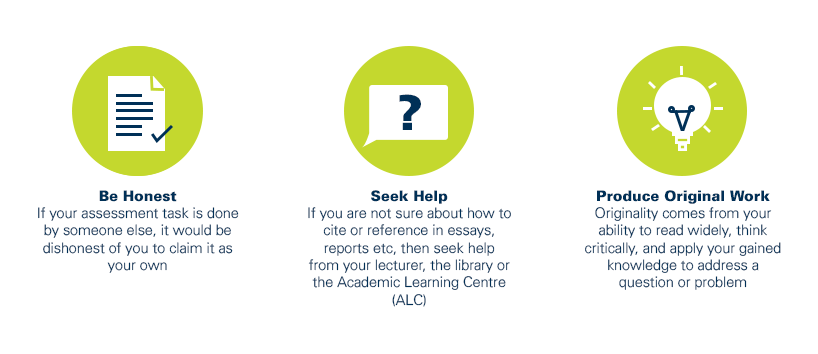
As a CQUniversity student you are expected to act honestly in all aspects of your academic work.
Any assessable work undertaken or submitted for review or assessment must be your own work. Assessable work is any type of work you do to meet the assessment requirements in the unit, including draft work submitted for review and feedback and final work to be assessed.
When you use the ideas, words or data of others in your assessment, you must thoroughly and clearly acknowledge the source of this information by using the correct referencing style for your unit. Using others’ work without proper acknowledgement may be considered a form of intellectual dishonesty.
Participating honestly, respectfully, responsibly, and fairly in your university study ensures the CQUniversity qualification you earn will be valued as a true indication of your individual academic achievement and will continue to receive the respect and recognition it deserves.
As a student, you are responsible for reading and following CQUniversity’s policies, including the Student Academic Integrity Policy and Procedure. This policy sets out CQUniversity’s expectations of you to act with integrity, examples of academic integrity breaches to avoid, the processes used to address alleged breaches of academic integrity, and potential penalties.
What is a breach of academic integrity?
A breach of academic integrity includes but is not limited to plagiarism, self-plagiarism, collusion, cheating, contract cheating, and academic misconduct. The Student Academic Integrity Policy and Procedure defines what these terms mean and gives examples.
Why is academic integrity important?
A breach of academic integrity may result in one or more penalties, including suspension or even expulsion from the University. It can also have negative implications for student visas and future enrolment at CQUniversity or elsewhere. Students who engage in contract cheating also risk being blackmailed by contract cheating services.
Where can I get assistance?
For academic advice and guidance, the Academic Learning Centre (ALC) can support you in becoming confident in completing assessments with integrity and of high standard.
What can you do to act with integrity?