Overview
Education is fundamental to the nursing role. The aim of this unit is to provide you with an understanding of the basic concepts associated with their role as educator. You will be provided with an opportunity to explore theories and principles of learning as they apply to a variety of practice settings. The unit will focus on resources and strategies for use in the development, implementation and evaluation of the diverse range of educational activities undertaken by the professional nurse.
Details
Pre-requisites or Co-requisites
Pre-requisites Students must have completed 96 credit points and NURS12158 Clinical Nursing Practice 3 or NURS13126 Critical Care Nursing
Important note: Students enrolled in a subsequent unit who failed their pre-requisite unit, should drop the subsequent unit before the census date or within 10 working days of Fail grade notification. Students who do not drop the unit in this timeframe cannot later drop the unit without academic and financial liability. See details in the Assessment Policy and Procedure (Higher Education Coursework).
Offerings For Term 1 - 2019
Attendance Requirements
All on-campus students are expected to attend scheduled classes - in some units, these classes are identified as a mandatory (pass/fail) component and attendance is compulsory. International students, on a student visa, must maintain a full time study load and meet both attendance and academic progress requirements in each study period (satisfactory attendance for International students is defined as maintaining at least an 80% attendance record).
Recommended Student Time Commitment
Each 6-credit Undergraduate unit at CQUniversity requires an overall time commitment of an average of 12.5 hours of study per week, making a total of 150 hours for the unit.
Class Timetable
Assessment Overview
Assessment Grading
This is a graded unit: your overall grade will be calculated from the marks or grades for each assessment task, based on the relative weightings shown in the table above. You must obtain an overall mark for the unit of at least 50%, or an overall grade of 'pass' in order to pass the unit. If any 'pass/fail' tasks are shown in the table above they must also be completed successfully ('pass' grade). You must also meet any minimum mark requirements specified for a particular assessment task, as detailed in the 'assessment task' section (note that in some instances, the minimum mark for a task may be greater than 50%). Consult the University's Grades and Results Policy for more details of interim results and final grades.
All University policies are available on the CQUniversity Policy site.
You may wish to view these policies:
- Grades and Results Policy
- Assessment Policy and Procedure (Higher Education Coursework)
- Review of Grade Procedure
- Student Academic Integrity Policy and Procedure
- Monitoring Academic Progress (MAP) Policy and Procedure - Domestic Students
- Monitoring Academic Progress (MAP) Policy and Procedure - International Students
- Student Refund and Credit Balance Policy and Procedure
- Student Feedback - Compliments and Complaints Policy and Procedure
- Information and Communications Technology Acceptable Use Policy and Procedure
This list is not an exhaustive list of all University policies. The full list of University policies are available on the CQUniversity Policy site.
Feedback, Recommendations and Responses
Every unit is reviewed for enhancement each year. At the most recent review, the following staff and student feedback items were identified and recommendations were made.
Feedback from Students and Unit Coordinator
Assessment - development of an education plan.
Due to the new knowledge required by this assessment task the following recommendation is made: An exemplar for this assessment be provided to students in the next offering of this unit.
- Examine the theory and practice of adult learning in the context of professional nursing.
- Assess factors that impact on the process of education in professional nursing.
- Explore inclusive educational initiatives for nurses in the clinical setting.
- Evaluate and reflect on the educational process.
The learning outcomes are linked to the Australian Nursing and Midwifery Accreditation Standards for registered nurses and the Nursing and Midwifery Board of Australia competencies.
Alignment of Assessment Tasks to Learning Outcomes
| Assessment Tasks | Learning Outcomes | |||
|---|---|---|---|---|
| 1 | 2 | 3 | 4 | |
| 1 - Presentation and Written Assessment - 40% | ||||
| 2 - Written Assessment - 60% | ||||
Alignment of Graduate Attributes to Learning Outcomes
| Graduate Attributes | Learning Outcomes | |||
|---|---|---|---|---|
| 1 | 2 | 3 | 4 | |
| 1 - Communication | ||||
| 2 - Problem Solving | ||||
| 3 - Critical Thinking | ||||
| 4 - Information Literacy | ||||
| 5 - Team Work | ||||
| 6 - Information Technology Competence | ||||
| 7 - Cross Cultural Competence | ||||
| 8 - Ethical practice | ||||
| 9 - Social Innovation | ||||
| 10 - First Nations Knowledges | ||||
| 11 - Aboriginal and Torres Strait Islander Cultures | ||||
Alignment of Assessment Tasks to Graduate Attributes
| Assessment Tasks | Graduate Attributes | ||||||||||
|---|---|---|---|---|---|---|---|---|---|---|---|
| 1 | 2 | 3 | 4 | 5 | 6 | 7 | 8 | 9 | 10 | 11 | |
| 1 - Presentation and Written Assessment - 40% | |||||||||||
| 2 - Written Assessment - 60% | |||||||||||
Textbooks
There are no required textbooks.
IT Resources
- CQUniversity Student Email
- Internet
- Unit Website (Moodle)
All submissions for this unit must use the referencing style: American Psychological Association 6th Edition (APA 6th edition)
For further information, see the Assessment Tasks.
j.connor@cqu.edu.au
Week 1
Begin Date: 11 Mar 2019Module/Topic
Chapter
Chapter 28 - Teaching and Learning
Kozier & Erb's Fundamentals of Nursing 4th Edition - Vol.2
PLUS online content
Events and Submissions/Topic
No submissions
Week 2
Begin Date: 18 Mar 2019Module/Topic
BEING AN EFFECTIVE NURSE TEACHER
Chapter
Chapter 28 - Teaching and Learning
Kozier & Erb's Fundamentals of Nursing 4th Edition - Vol.2
PLUS online content
Events and Submissions/Topic
No submissions
Week 3
Begin Date: 25 Mar 2019Module/Topic
THE THEORY OF ADULT LEARNING IN THE CONTEXT OF PROFESSIONAL NURSING.
Chapter
Chapter 28 - Teaching and Learning
Kozier & Erb's Fundamentals of Nursing 4th Edition - Vol.2
PLUS online content
Events and Submissions/Topic
No submissions
Week 4
Begin Date: 01 Apr 2019Module/Topic
FACTORS AFFECTING LEARNING
Chapter
Chapter 28 - Teaching and Learning
Kozier & Erb's Fundamentals of Nursing 4th Edition - Vol.2
PLUS online content
Events and Submissions/Topic
No submissions
Week 5
Begin Date: 08 Apr 2019Module/Topic
THE TEACHING PROCESS (SIMILAR TO THE NURSING PROCESS)
Chapter
Chapter 28 - Teaching and Learning
Kozier & Erb's Fundamentals of Nursing 4th Edition - Vol.2
PLUS online content
Events and Submissions/Topic
No submissions
Vacation Week
Begin Date: 15 Apr 2019Module/Topic
Vacation
Chapter
No set readings
Events and Submissions/Topic
No set tasks
Week 6
Begin Date: 22 Apr 2019Module/Topic
NEEDS ANALYSIS ASSESSMENT
Chapter
Chapter 28 - Teaching and Learning
Kozier & Erb's Fundamentals of Nursing 4th Edition - Vol.2
PLUS online content
Events and Submissions/Topic
No submissions
Week 7
Begin Date: 29 Apr 2019Module/Topic
EDUCATIONAL DIAGNOSIS and TEACHING PLAN
Chapter
Chapter 28 - Teaching and Learning
Kozier & Erb's Fundamentals of Nursing 4th Edition - Vol.2
PLUS online content
Events and Submissions/Topic
Assessment One Due
Monday 29th April - 5pm
Assessment One – Short Answer Questions and Audio Presentation Due: Week 7 Monday (29 Apr 2019) 5:00 pm AEST
Week 8
Begin Date: 06 May 2019Module/Topic
DELIVERY OR IMPLEMENTATION
Chapter
Chapter 28 - Teaching and Learning
Kozier & Erb's Fundamentals of Nursing 4th Edition - Vol.2
PLUS online content
Events and Submissions/Topic
No submissions
Week 9
Begin Date: 13 May 2019Module/Topic
EVALUATION OF THE EDUCATIONAL PROCESS
Chapter
Chapter 28 - Teaching and Learning
Kozier & Erb's Fundamentals of Nursing 4th Edition - Vol.2
PLUS online content
Events and Submissions/Topic
No submissions
Week 10
Begin Date: 20 May 2019Module/Topic
EDUCATION WITH PEERS AND SELF EDUCATION
Chapter
Chapter 28 - Teaching and Learning
Kozier & Erb's Fundamentals of Nursing 4th Edition - Vol.2
PLUS online content
Events and Submissions/Topic
No submissions
Week 11
Begin Date: 27 May 2019Module/Topic
EXPLORING A CAREER PATH in NURSING EDUCATION POST GRADUATE NURSE PROGRAM.
Chapter
Chapter 28 - Teaching and Learning
Kozier & Erb's Fundamentals of Nursing 4th Edition - Vol.2
PLUS online content
Events and Submissions/Topic
No submissions
Week 12
Begin Date: 03 Jun 2019Module/Topic
REVIEW WEEK
Chapter
Chapter 28 - Teaching and Learning
Kozier & Erb's Fundamentals of Nursing 4th Edition - Vol.2
PLUS online content
Events and Submissions/Topic
Assessment Two Due
Monday 3rd June - 5pm
Assessment Two – Essay Due: Week 12 Monday (3 June 2019) 5:00 pm AEST
Review/Exam Week
Begin Date: 10 Jun 2019Module/Topic
No EXAM for this UNIT
Chapter
Events and Submissions/Topic
Unit Coordinator - Justine Connor
Email - j.connor@cqu.edu.au
1 Presentation and Written Assessment
Assessment One NURS13125
Due Date - Monday 29th April 2019 (week 7)
Word Count - 1500 words
Weighting - 40%
This task requires students to provide short answer written responses and an audio reflection recording on the relevance of the teaching process to the registered nurse’s role in the following case study.
You are a third year nursing student and meet Henry at a community health screening session. You have identified that although Henry does not have Type 2 Diabetes Mellitus (T2DM) he has many of the risk factors of the disease.
Considering the Case Study of ‘Henry’, please provide a short answer response to the following tasks.
Task 1 - Analyse why andragogy would be a useful learning theory to utilise in creating an effective learning environment for Henry.
Task 2 - Identify and explain the factors affecting learning in adulthood with reference to Henry.
Task 3 - Explore the registered nurse obligation to share information and undertake health education opportunities. Please make reference to the Registered nurse standards for practice for all RNs – Standard 3.
Task 4 - Record a 3- 5 minute audio reflection on your thoughts, ideas and feelings in relation to the value of education within a professional registered nurse role. Audio must be a mp3 file.
(Audio files are submitted the same way as other file types in Moodle: Go to the assignment page and click on the 'add submission' button. Select and upload the file you wish to submit. Make sure you upload the mp3 file for audio submissions.)
Week 7 Monday (29 Apr 2019) 5:00 pm AEST
Submit through Turnitin
Week 10 Monday (20 May 2019)
estimated for return COB 20/05/19
| HD 85 – 100% | D 75 – 84% | C 65 – 74% | P 50 - 64% | F <50% | Marks |
| Structure (15%) | |||||
| Clear and succinct introduction that introduces the 3 short answer questions/audio presentation and outlines the direction of the assessment in relation to the case study. | Evident and appropriate introduction that introduces the short answer questions/audio presentation and outlines the direction of the assessment in relation to the case study. | Appropriate introduction that introduces the short answer concept/presentation and outlines the direction of the assessment in relation to the case study | Introduction is apparent. There is outline to the direction of the assessment but may/may not relate to the case study. | No recognisable introduction of the topic. Introduction is not apparent and/or there is no direction offered in respect of the paper. | /5 |
| Clear and succinct conclusion that outlines the 3 main topics/presentation of the assessment and brings the discussion to a logical close. No new information is added. | Evident and appropriate conclusion that outlines the main points and brings the argument to a close. No new information is added | Appropriate conclusion that outlines most of the main points and brings a sense of closure. No new information is added | Conclusion is apparent but there in incongruity to the closure of the discussion. New information may/may not be added. | No recognisable conclusion – little reference to the main points, does not offer a clear conclusion to the paper. New information may have been added. | /5 |
| Consistently accurate with spelling, grammar, use of punctuation. Excellent presentation of assignment, double spaced with 12 point font. | Generally accurate (1-3 inaccuracies) with spelling, grammar, use of punctuation. Well-presented assignment, double spaced with 12 point font. | Occasional inaccuracies (4-6) with spelling, grammar, use of punctuation. Well-presented assignment, double spaced with 12 point font. | Frequent inaccuracies (6-8) with spelling, grammar, use of punctuation. Neatly presented assignment, double spaced with 12 point Arial font. | Many inaccuracies (>8) with spelling, grammar, use of punctuation. Poorly presented assignment, double spacing not used, 12 point l font not used. | /5 |
| Approach and Argument (75%) | |||||
| Comprehensive explanation and analysis of Andragogy, including its use in creating an effective learning environment for the client. Inclusion of case study evident. | Detailed explanation and analysis of Andragogy, including its use in creating an effective learning environment for the client. Inclusion of case study evident. | Adequate explanation and discussion of Andragogy, including its use in creating an effective learning environment for the client. Inclusion of case study evident. | Basic explanation of Andragogy, including its use in creating an effective learning environment for the client. Some inclusion of case study is evident. | Minimal/No explanation of Andragogy. No clear inclusion of its use in creating a learning environment for the client. Inclusion of case study not evident. | /20 |
| Comprehensive identification and explanation of the factors affecting adult learning with strong reference to the case study. | Detailed identification and explanation of the factors affecting adult learning with clear reference to the case study. | Adequate identification and explanation of the factors affecting adult learning with reference to the case study. | Basic identification and explanation of the factors affecting adult learning with some reference to the case study. | Minimal/No identification and explanation of the factors affecting adult learning with minimal/No reference to the case study. | /20 |
| Comprehensive exploration of the Registered nurse obligation in relation to health education. Distinct reference made to the Registered nurse standards for practice for all RNs – Standard 3. Inclusion of case study evident. | Detailed exploration of the Registered nurse obligation in relation to health education. Obvious reference made to the Registered nurse standards for practice for all RNs – Standard 3. Inclusion of case study evident. | Adequate exploration of the Registered nurse obligation in relation to health education. Clear reference made to the Registered nurse standards for practice for all RNs – Standard 3. Inclusion of case study evident. | Basic exploration of the Registered nurse obligation in relation to health education. Some reference made to the Registered nurse standards for practice for all RNs – Standard 3. Some inclusion of case study evident. | Minimal/No exploration of the Registered nurse obligation in relation to health education. Minimal/No reference made to the Registered nurse standards for practice for all RNs – Standard 3. Inclusion of case study not evident. | /20 |
| Insightful and comprehensive personal reflection of the value of education within a professional registered nurse role | Detailed and personal reflection of the value of education within a professional registered nurse role | Adequate reflection of the value of education within a professional registered nurse role | Basic reflection of the value of education within a professional registered nurse role | Minimal/No reflection of the value of education within a professional registered nurse role | /15 |
| Referencing (10%) | |||||
| Consistently integrates up to date references to support and reflect all ideas, factual information and quotations. | Frequently integrates up to date references to support and reflect ideas, factual information and quotations, with 1 or 2 exceptions. | Generally integrates up to date references to support and reflect ideas, factual information and quotations, with 3 to 5 exceptions. | Occasionally integrates up to date references to support and reflect ideas, factual information and quotations with 6-10 exceptions. | Fails to / infrequent attempts to integrate up to date references to support and reflect ideas, factual information and quotations (>10). | /5 |
| Consistently accurate with referencing. Reference list adheres to APA presentation guidelines. Evidence of reading widely on the topic through an extensive reference list. All of which are used in the body of the text. (>/= 10 relevant sources) | Frequently accurate with referencing. Reference list adheres to APA presentation guidelines. Evidence of reading widely on the topic through a ample number of refernences included on the reference list. All of which are used in the body of the text. (>/= 8 relevant sources) | Mostly accurate with referencing. Reference list adheres to APA presentation guidelines. Evidence of reading widely on the topic through an adequate number of references included on the reference list. All of which are used in the body of the text. (>/= 6relevant sources) | Occasional inaccuracies with referencing. Reference list adheres to APA presentation guidelines. Evidence of reading widely on the topic through a passable number of references included in the reference list. All of which are used in the body of the text. (>/= 5 relevant sources) | Many inaccuracies with referencing. Reference list does not adhere to APA presentation guidelines. No evidence of reading widely on the topic through a brevity of references on the reference list. Not all of which are used in the body of the text. (< 5 relevant sources) | /5 |
| Mark/100 | |||||
| Alpha Grade | |||||
| Marker Name Marker Comments | |||||
No submission method provided.
- Examine the theory and practice of adult learning in the context of professional nursing.
- Assess factors that impact on the process of education in professional nursing.
- Explore inclusive educational initiatives for nurses in the clinical setting.
- Evaluate and reflect on the educational process.
- Communication
- Problem Solving
- Critical Thinking
- Information Literacy
- Team Work
- Information Technology Competence
- Cross Cultural Competence
- Ethical practice
2 Written Assessment
Assessment Two NURS13125
Due Date - Monday 3rd June 2019 (week 12)
Word Count - 2000 words
Weighting - 60%
In essay format, explain the teaching process and its relevance to preparing the delivery of a health education session to peers in the following scenario. Exploration of inclusive educational initiatives will need to be addressed and an evaluative and reflective component will be required on the educational process in your paper.
SCENARIO
Jane is registered nurse (RN) in her second year of nursing after completing her Bachelor of Nursing.
Jane has been asked to deliver a 45 minute education session in regards to the National Safety and Quality Health Service Standards of Australia, to a group of overseas visiting registered nurses commencing at her health care facility for a 4 month rotation in an exchange program. All of the nurses speak English as their second language. This is their first clinical position in Australia. The session will be in the orientation and induction day to the hospital and undertaken in the teaching space provided for such education (away from the ward).
To prepare for the education session there is some information Jane will need to gather, so as to determine the needs of the group. There are some decisions that will need to be considered in the delivery and evaluation of the session.
Your paper needs to consider;
• How Jane would use the teaching process in developing/delivering an education session for peers.
• How Jane might utilise inclusive educational initiatives with reference to the participants of the educational session. You are encouraged to use examples to demonstrate how they might use the teaching process/teaching modes or methods to achieve the learning outcomes of the session.
• How will Jane undertake an evaluative process for the teaching activity with a reflective component of the educational session.
Week 12 Monday (3 June 2019) 5:00 pm AEST
Submit through Turnitin
Exam Week Friday (21 June 2019)
estimated for return COB 21/06/19
| HD 85 – 100% | D 75 – 84% | C 65 – 74% | P 50 - 64% | F <50% | Marks |
| Structure (15%) | |||||
| Clear and succinct introduction that introduces the topic and outlines the direction of the assessment in relation to the educational session. | Evident and appropriate introduction that introduces the topic and outlines the direction of the assessment in relation to the educational session.. | Appropriate introduction that introduces the topic and outlines the direction of the assessment in relation to the educational session. | Introduction is apparent. There is outline to the direction of the assessment but may/may not relate to the education session. | No recognisable introduction of the topic. Introduction is not apparent and/or there is no direction offered in respect of the paper. | /5 |
| Clear and succinct conclusion that outlines the topic of the assessment and brings the discussion to a logical close. No new information is added. | Evident and appropriate conclusion that outlines the main points and brings the argument to a close. No new information is added | Appropriate conclusion that outlines most of the main points and brings a sense of closure. No new information is added | Conclusion is apparent but there in incongruity to the closure of the discussion. New information may/may not be added. | No recognisable conclusion – little reference to the main points, does not offer a clear conclusion to the paper. New information may have been added. | /5 |
| Consistently accurate with spelling, grammar, use of punctuation. Excellent presentation of assignment, double spaced with 12 point font. | Generally accurate (1-3 inaccuracies) with spelling, grammar, use of punctuation. Well-presented assignment, double spaced with 12 point font. | Occasional inaccuracies (4-6) with spelling, grammar, use of punctuation. Well-presented assignment, double spaced with 12 point font. | Frequent inaccuracies (6-8) with spelling, grammar, use of punctuation. Neatly presented assignment, double spaced with 12 point Arial font. | Many inaccuracies (>8) with spelling, grammar, use of punctuation. Poorly presented assignment, double spacing not used, 12 point l font not used. | /5 |
| Approach and Argument (75%) | |||||
| Comprehensive explanation and applicability of the Teaching Process when preparing an education session for peers. | Detailed explanation and applicability of the Teaching Process when preparing an education session for peers. | Adequate explanation and applicability of the Teaching Process when preparing an education session for peers. | Basic explanation and applicability of the Teaching Process when preparing an education session for peers.. | Minimal/No explanation or applicability of the Teaching Process when preparing an education session for peers. | /25 |
| Comprehensive exploration of inclusive educational initiatives with strong reference to the uniqueness of the participants of the educational session | Detailed exploration of inclusive educational initiatives with solid reference to the uniqueness of the participants of the educational session | Adequate exploration of inclusive educational initiatives with some reference to the participants of the educational session. | Basic exploration of inclusive educational initiatives with reference the participants of the educational session | Minimal/No exploration of inclusive educational initiatives with minimal/no reference to the participants of the educational session | /25 |
| Comprehensive discussion of an evaluative process for the teaching activity, with inclusion of an insightful reflective component of the overall educational session. | Detailed discussion of an evaluative process for the teaching activity, with inclusion of a sufficient reflective component of the educational session. | Adequate discussion of an evaluative process for the teaching activity and an acceptable reflective component of the educational session. | Basic discussion of an evaluative process for the teaching activity with a reflective component of the educational session. | Minimal/No discussion of an evaluative process for the teaching activity and minimal/no reflective component of the educational session.. | /25 |
| Referencing (10%) | |||||
| Consistently integrates up to date references to support and reflect all ideas, factual information and quotations. | Frequently integrates up to date references to support and reflect ideas, factual information and quotations, with 1 or 2 exceptions. | Generally integrates up to date references to support and reflect ideas, factual information and quotations, with 3 to 5 exceptions. | Occasionally integrates up to date references to support and reflect ideas, factual information and quotations with 6-10 exceptions. | Fails to / infrequent attempts to integrate up to date references to support and reflect ideas, factual information and quotations (>10). | /5 |
| Consistently accurate with referencing. Reference list adheres to APA presentation guidelines. Evidence of reading widely on the topic through an extensive reference list. All of which are used in the body of the text. (>/= 20 relevant sources) | Frequently accurate with referencing. Reference list adheres to APA presentation guidelines. Evidence of reading widely on the topic through a ample number of refernences included on the reference list. All of which are used in the body of the text. (>/= 15 relevant sources) | Mostly accurate with referencing. Reference list adheres to APA presentation guidelines. Evidence of reading widely on the topic through an adequate number of references included on the reference list. All of which are used in the body of the text. (>/= 10relevant sources) | Occasional inaccuracies with referencing. Reference list adheres to APA presentation guidelines. Evidence of reading widely on the topic through a passable number of references included in the reference list. All of which are used in the body of the text. (>/= 6 relevant sources) | Many inaccuracies with referencing. Reference list does not adhere to APA presentation guidelines. No evidence of reading widely on the topic through a brevity of references on the reference list. Not all of which are used in the body of the text. (<6 relevant sources) | /5 |
| Mark/100 | |||||
| Alpha Grade | |||||
| Marker Name Marker Comments | |||||
- Examine the theory and practice of adult learning in the context of professional nursing.
- Assess factors that impact on the process of education in professional nursing.
- Explore inclusive educational initiatives for nurses in the clinical setting.
- Evaluate and reflect on the educational process.
- Communication
- Problem Solving
- Critical Thinking
- Information Literacy
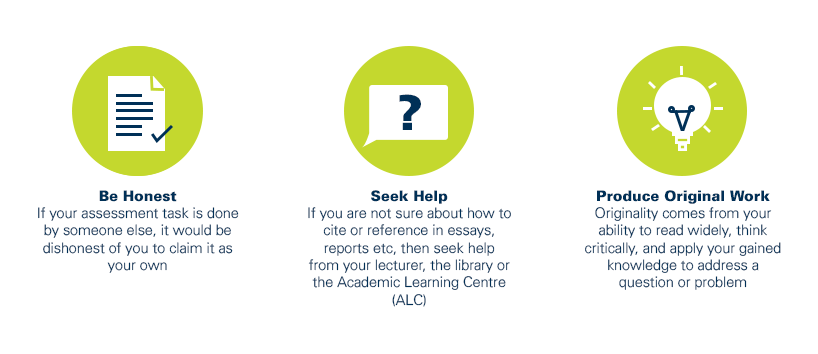
As a CQUniversity student you are expected to act honestly in all aspects of your academic work.
Any assessable work undertaken or submitted for review or assessment must be your own work. Assessable work is any type of work you do to meet the assessment requirements in the unit, including draft work submitted for review and feedback and final work to be assessed.
When you use the ideas, words or data of others in your assessment, you must thoroughly and clearly acknowledge the source of this information by using the correct referencing style for your unit. Using others’ work without proper acknowledgement may be considered a form of intellectual dishonesty.
Participating honestly, respectfully, responsibly, and fairly in your university study ensures the CQUniversity qualification you earn will be valued as a true indication of your individual academic achievement and will continue to receive the respect and recognition it deserves.
As a student, you are responsible for reading and following CQUniversity’s policies, including the Student Academic Integrity Policy and Procedure. This policy sets out CQUniversity’s expectations of you to act with integrity, examples of academic integrity breaches to avoid, the processes used to address alleged breaches of academic integrity, and potential penalties.
What is a breach of academic integrity?
A breach of academic integrity includes but is not limited to plagiarism, self-plagiarism, collusion, cheating, contract cheating, and academic misconduct. The Student Academic Integrity Policy and Procedure defines what these terms mean and gives examples.
Why is academic integrity important?
A breach of academic integrity may result in one or more penalties, including suspension or even expulsion from the University. It can also have negative implications for student visas and future enrolment at CQUniversity or elsewhere. Students who engage in contract cheating also risk being blackmailed by contract cheating services.
Where can I get assistance?
For academic advice and guidance, the Academic Learning Centre (ALC) can support you in becoming confident in completing assessments with integrity and of high standard.
What can you do to act with integrity?