Overview
The integument is the body’s mirror. When alterations occur in skin integrity there is the potential that this will impact on every aspect of the person. Wound management is a complex area with new information being continually generated. You will apply an evidence based approach in exploring the principles and practice of contemporary wound management.
Details
Pre-requisites or Co-requisites
Pre-requisites Students must have completed 96 credit points and NURS12158 Clinical Nursing Practice 3 or NURS13126 Critical Care Nursing
Important note: Students enrolled in a subsequent unit who failed their pre-requisite unit, should drop the subsequent unit before the census date or within 10 working days of Fail grade notification. Students who do not drop the unit in this timeframe cannot later drop the unit without academic and financial liability. See details in the Assessment Policy and Procedure (Higher Education Coursework).
Offerings For Term 1 - 2018
Attendance Requirements
All on-campus students are expected to attend scheduled classes - in some units, these classes are identified as a mandatory (pass/fail) component and attendance is compulsory. International students, on a student visa, must maintain a full time study load and meet both attendance and academic progress requirements in each study period (satisfactory attendance for International students is defined as maintaining at least an 80% attendance record).
Recommended Student Time Commitment
Each 6-credit Undergraduate unit at CQUniversity requires an overall time commitment of an average of 12.5 hours of study per week, making a total of 150 hours for the unit.
Class Timetable
Assessment Overview
Assessment Grading
This is a graded unit: your overall grade will be calculated from the marks or grades for each assessment task, based on the relative weightings shown in the table above. You must obtain an overall mark for the unit of at least 50%, or an overall grade of 'pass' in order to pass the unit. If any 'pass/fail' tasks are shown in the table above they must also be completed successfully ('pass' grade). You must also meet any minimum mark requirements specified for a particular assessment task, as detailed in the 'assessment task' section (note that in some instances, the minimum mark for a task may be greater than 50%). Consult the University's Grades and Results Policy for more details of interim results and final grades.
All University policies are available on the CQUniversity Policy site.
You may wish to view these policies:
- Grades and Results Policy
- Assessment Policy and Procedure (Higher Education Coursework)
- Review of Grade Procedure
- Student Academic Integrity Policy and Procedure
- Monitoring Academic Progress (MAP) Policy and Procedure - Domestic Students
- Monitoring Academic Progress (MAP) Policy and Procedure - International Students
- Student Refund and Credit Balance Policy and Procedure
- Student Feedback - Compliments and Complaints Policy and Procedure
- Information and Communications Technology Acceptable Use Policy and Procedure
This list is not an exhaustive list of all University policies. The full list of University policies are available on the CQUniversity Policy site.
- Evaluate the principles of cultural awareness and communication to enable effective collaboration with individuals, families and other members of the multidisciplinary health care team to facilitate positive outcomes for wound healing.
- Apply best practice principles and wound management guidelines to the assessment and management of individuals with either acute or chronic wounds.
- Evaluate the use of alternative wound management strategies to faciliate wound healing.
- Examine safe and effective person centred nursing care for individuals undergoing diagnostic and therapeutic procedures related to wound healing.
Relate the significance of the Nursing and Midwifery Board of Australia (NMBA) registered nurse standards for practice and specific National Safety and Quality Health Service Standards to nursing practice.
Alignment of Assessment Tasks to Learning Outcomes
| Assessment Tasks | Learning Outcomes | |||
|---|---|---|---|---|
| 1 | 2 | 3 | 4 | |
| 1 - Written Assessment - 40% | ||||
| 2 - Presentation and Written Assessment - 60% | ||||
Alignment of Graduate Attributes to Learning Outcomes
| Graduate Attributes | Learning Outcomes | |||
|---|---|---|---|---|
| 1 | 2 | 3 | 4 | |
| 1 - Communication | ||||
| 2 - Problem Solving | ||||
| 3 - Critical Thinking | ||||
| 4 - Information Literacy | ||||
| 5 - Team Work | ||||
| 6 - Information Technology Competence | ||||
| 7 - Cross Cultural Competence | ||||
| 8 - Ethical practice | ||||
| 9 - Social Innovation | ||||
| 10 - Aboriginal and Torres Strait Islander Cultures | ||||
Alignment of Assessment Tasks to Graduate Attributes
| Assessment Tasks | Graduate Attributes | |||||||||
|---|---|---|---|---|---|---|---|---|---|---|
| 1 | 2 | 3 | 4 | 5 | 6 | 7 | 8 | 9 | 10 | |
| 1 - Written Assessment - 40% | ||||||||||
| 2 - Presentation and Written Assessment - 60% | ||||||||||
Textbooks
Wound Care Manual
Edition: 7th (2016)
Authors: Keryln Carville
Silverchain
Osborne Park Osborne Park , WA , Australia
Binding: Other
Additional Textbook Information
IT Resources
- CQUniversity Student Email
- Internet
- Unit Website (Moodle)
All submissions for this unit must use the referencing style: American Psychological Association 6th Edition (APA 6th edition)
For further information, see the Assessment Tasks.
g.neilsen@cqu.edu.au
Module/Topic
Integumentary system - a quick review
Chapter
Carville (2016) Please read the chapters associated with the Anatomy of the skin and the Physiology of wound healing.
Complete readings, activities and view videos for Week 1.
Review this information in preparation for and development of, the Assignment task. Weeks 1 to 5 are the learning outcomes assessed in the Assignment task.
Events and Submissions/Topic
Complete formative quiz Week One. This is an optional review quiz and does not contribute to your assessment or final grades.
The zoom session will discuss how to be successful in this unit. This includes asking you, the student, what you expect to learn in this unit.
Module/Topic
Chronic wounds
Chapter
Carville (2016). Please read the chapters associated with holistic assessment, skin tears, leg ulcers and pressure injuries
Pan Pacific Clinical Practice Guideline for the Prevention and Management of Pressure Injury.
Fulbrook, M., Nowicki, T., Franks, C. Decreasing pressure injury prevalence in Australian general hospital: a 10-year review. Wound practice and research, 21(4). 148-156.
Pressure Injuries: Just the facts! Pan Pacific Pressure Injury Alliance
Kapp, S., Simpson, K., Santamaria, N. (2014).(Perspectives on living with and self-treating venous leg ulcers: a person's story and a health care perspective. Wound Practice and Research. 22(2). 98-101.
Grothier, L., Pardoe, A. (2013). Chronic wounds: management of healing and well being. British Journal Of Nursing, 22 (12), 24-30.
Payne, D. (2016). Strategies to support prevention, identification and management of pressure ulcers in the community. Community wound care. June. S10-S18.
Phillips, P., Lumley, E., Duncan, R., Aber, A., Woods, H., Jones, G., Michaels, J. (2017). A systematic review of qualitative research into people's experiences of living with venous leg ulcers. Journal of advanced nursing. 1-14. DOI:10.1111/jan.13465.
PanPacific Clinical Practice Guideline for the Prevention and Management of Pressure Injury
Complete readings, activities and view videos for Week 2.
Development of the Assignment task to continue.
Events and Submissions/Topic
Complete formative quiz Week Two. This is an optional review quiz and does not contribute to your assessment or final grades.
The zoom session will explore your knowledge of wound care and begin to fill gaps identified in week 2. Students will be encouraged to reflect on their tacit experience and knowledge acquired. .
Module/Topic
Wound Assessment - an holistic approach
Chapter
Cornforth, A. (2013). Holistic wound assessment in primary care. British Journal of Community Nursing, (12): S28-34.
Brooks, M. (2013). "So much to lose" - a holistic approach to wound management. Wound Practice and Research. 21(3). 136-140.
Milne, J. (2013). Improving wellbeing of those living with a wound. British Journal of Nursing, 22. 3-9.
Grothier, L., Pardoe, A. (2013). Chronic wounds:management of healing and wellbeing. British Journal of Nursing, 22, S24-30.
Brooks, M. (2013). So much to lose: a holistic approach to wound management. Wound Practice & Research, 21 (3), 136-40.
Brown, A. (2013). Implications of patient shared decision-making on wound care. British Journal of Community Nursing. 26 -32.
Hulme, K. (2013) How to engage better with patients. British Journal of Nursing. 22, 10-13
Complete readings, activities and view videos for Week 3.
Review this information in preparation for and development of the Assignment task. Weeks 1 to 5 are the learning outcomes assessed in the Assignment task.
Events and Submissions/Topic
Complete formative quiz Week Three. This is an optional review quiz and does not contribute to your assessment or final grades.
The zoom session will guide students to critically reflect on effective wound care approaches.
Module/Topic
Wound management principles
Chapter
Carville. (2016). Please read the chapters related to wound management and chronic wound management.
Jones, J. (2013). Exploring the link between the clinical challenges of wound exudate and infection. British Journal of Nursing, 22 (3), 8-12.
Probst, S. (2015). Wounds with exudate and odour. British Journal of Nursing, 24 (6), 22.
Grocott, P. (2007). Care of patients with fungating malignant wounds. Nursing Standard. 21(24). 57-66. This is an older reference but provides a valuable perspective.
Complete readings, activities and view videos for Week 4.
Review this information in preparation for and development of the Assignment task. Weeks 1 to 5 are the learning outcomes assessed in the Assignment task.
Events and Submissions/Topic
Assessment one task due next week.
Complete formative quiz Week Four. This is an optional review quiz and does not contribute to your assessment or final grades.
The zoom session aims to consolidate wound care principles and apply this to the assignment case studies.
Module/Topic
Wound infection
Chapter
Carville (2016).
Morgan, T. (2014). Wound care in the community: infection, exudate and confirmability. Journal of Community Nursing 5, 43 - 48.
Reynolds, V. (2013). Assessing and diagnosing wound infection (part one). Nurse Prescribing. 11 (3), 114-121.
Tickle, J. (2013). Wound infection: a clinician's guide to assessment and management. British Journal of Community Nursing. S16-22.
Gottrup, F., Apelqvist, J., Bjarnsholt, T., Cooper, R., Moore, Z., Peters, E., Probst, S. (2014). Antimicrobials and non-healing wounds. Evidence, controversies and suggestions-key messages. Journal of Wound Care. 23(10). 477-482.
International Wound Infection Institute (IWII). Wound infection in clinical practice. Wounds International 2016.
Complete readings, activities and view videos for Week 5.
Review this information for completion of the Assignment task.
Events and Submissions/Topic
Assessment One due this week, xxxDay, xth, April [this will be confirmed after collaboration with year coordinators] 2018. Complete formative quiz Week Five. This is an optional review quiz and does not contribute to your assessment or final grades.
The zoom session will provide final support prior to submission of assessment one. It will also examine the concepts surrounding wound healing, colonisation, bioburden, bacterial load and wound infection.
Assessment One - Essay Due: Week 5 Friday (6 Apr 2018) 12:00 am AEST
Module/Topic
Enjoy your vacation week
Chapter
Events and Submissions/Topic
Module/Topic
Assessment and Management of Lymphoedema
Chapter
Carville. (2016). Please read the text related to lymphatic disorders/lymphoedema.
Atkin, L. (2014). Lower limb oedema: assessment, treatment and challenges. British Journal of Community Nursing, 34 (6), 439 - 447.
Teerachaiskul, M., Ekataskin, W., Durongwatana, S., Taneepanichskul, S. (2013). Risk factors for cellulitis in patients with lymphedema[sic]: a case controlled study. Lymphology. 46(3). 150-156.
Complete readings, activities and view videos for Week 6.
Review this information in preparation for and development of the Assignment task.
Events and Submissions/Topic
Complete formative quiz Week Six. This is an optional review quiz and does not contribute to your assessment or final grades.
The zoom session will consider evidence based strategies for the assessment and management of lymphoedema.
Module/Topic
Compression Therapy
Chapter
Carville (2016) Please read the text related to bandages and surgical stockings.
Recommendations for compression therapy for patients with venous ulcers. EWMA Journal, 2013 Oct; 13 (2), 41-7.
Anderson, I. (2015). Optimising concordance with compression hosiery in the community setting. British Journal of Community Nursing. 20 (2), 67-72.
International Compression Club. Wounds International.
Complete readings, activities and view videos for Week 7.
Continue development of the Assignment task.
Events and Submissions/Topic
Assessment one feedback provided this week. Complete formative quiz Week Seven. This is an optional review quiz and does not contribute to your assessment or final grades.
The zoom session will provide general feedback from assessment one. Factors influencing the choice of compression therapy will also be discussed.
Module/Topic
Acute Wounds
Chapter
Carville (2016) Please read the text related to acute wound management, burns, drains and drain wound management.
Australian and New Zealand Burns Association
Complete readings, activities and view videos for Week 8.
Review this information in preparation for and development of the Assignment task.
Events and Submissions/Topic
Complete formative quiz Week Eight. This is an optional review quiz and does not contribute to your assessment or final grades.
The zoom session will focus on the evidence based management of acute wounds in diverse settings.
Module/Topic
Management of the Diabetic Foot
Chapter
Carville (2016) Please read the text related to the neuropathic foot.
Complete readings, activities and view videos for Week 9.
Development of the Assignment task to continue.
Events and Submissions/Topic
Complete formative quiz Week Nine. This is an optional review quiz and does not contribute to your assessment or final grades.
Module/Topic
Alternative Wound Management Strategies
Chapter
Brandon, T. (2015). A portable, disposable system for negative-pressure wound therapy. British Journal of Nursing, 24 (2), 98 - 106.
Tottle, A., Harris, S. (2014). The use of negative pressure wound therapy in a non-healing breast wound. Wound Practice & Research. 22 (3), 142 -144.
Mills, B. (2012) Wound healing: the evidence for hyperbaric oxygen therapy. British Journal of Nursing. 21, 28 - 34. This is dated but useful.
Maggot Wound Therapy. Institute of Clinical Pathology and Medical Research.
Complete readings, activities and view videos for Week 10.
Development of the Assignment task to continue.
Events and Submissions/Topic
Assignment task due next week. Complete formative quiz Week Ten. This is an optional review quiz and does not contribute to your assessment or final grades.
The zoom session will provide an overview of alternative wound strategies. Patient preferences, accessibility to wound care products as well as non traditional wound management will be discussed.
Module/Topic
Wound Management Guidelines
Chapter
Wounds Australia. Standards for Wound Prevention and Management. 3rd Edition. Cambridge Media: Osborne park, WA; 2016
Australian and New Zealand Clinical Practice Guidelines for Prevention and Management of Venous Leg Ulcers.
Pan Pacific Clinical Practice Guideline for the Prevention and Management of Pressure Injury.
Complete readings, activities and view videos for Week 11.
Events and Submissions/Topic
Assignment task due this week xxth, May, 2018. Complete formative quiz Week Eleven. This is an optional review quiz and does not contribute to your assessment or final grades.
The zoom session will focus on standards and guidelines essential for optimising wound management.
Assessment Two: Transcript and Power point Due: Week 11 Monday (21 May 2018) 12:00 am AEST
Module/Topic
Choosing a wound dressing
Chapter
Review Carville (2016) Please read text related to Dressings
Beldon, P. (2013). How to select and choose appropriate wound dressings. Nurse Prescribing. 11(10). 487-492.
Newton, H. (2013). An introduction to wound healing and dressings. British Journal of Healthcare Management. 19(6). 270-274.
Beldon, P. (2013). The judicious use of antimicrobial dressings. Nurse Prescribing. 12(2). 75-79.
Benbow, M. (2011). Dressing awkward wounds. Journal of Community Nursing. 25(5). 16-22. This is dated as there is a paucity of literature related to this topic.
Complete readings, activities and view videos for Week 12.
Events and Submissions/Topic
The zoom session will discuss how to effectively choose the best wound care product for your patient.
Module/Topic
Chapter
Events and Submissions/Topic
Module/Topic
Chapter
Events and Submissions/Topic
1 Presentation and Written Assessment
Part 1
1. Develop a power point presentation briefly outlining your understanding of pressure injuries
2. The power point should be aimed at educating care staff about pressure injuries. [Please refer to Notes to Students below]
3. 15-25 slides [excluding the title and reference slide] is acceptable
4. Include references on each slide [at the base of each slide in smaller font]
5. A title slide and reference slide is required
Part 2
1. Provide a 2000 word transcript for your PowerPoint presentation.
2. The transcript text should flow and be representative of the words spoken in your talk.
3. The transcript should be written as if the person reading it does not have access to the PowerPoint slide.
4. Outline your care of Maria focusing on your understanding of pressure injuries and the role of the nurse in caring for them. Include in your discussion:
a. Risk factors for pressure injuries including preventative nursing measures that can be undertaken.
b. The stages of pressure injuries and their assessment. Include information about management of each stage of pressure injury.
c. Consider in your responses, a holistic approach to Maria
Week 11 Monday (21 May 2018) 12:00 am AEST
Students to submit via the Assessment submission Tab on Moodle NURS13127
Exam Week Friday (15 June 2018)
Any marks for Assessment Two will be provisional until the completion of certification of grades
Marking Criteria NURS13127 Written assessment two and presentation
Student name: Student Number:
| HD 85-100% | D 75-84% | C 65-74% | P 50-64% | F <50% | Marks |
| Structure -15% | |||||
| Clear and succinct introduction that introduces the topic of pressure injuries and outlines the direction of the paper. (5%) | Clear and appropriate introduction that introduces the topic of pressure injuries and outlines the direction of the paper. | Appropriate introduction that introduces the topic of pressure injuries and outlines the direction of the paper. | Introduction is apparent and the topic of pressure injuries is introduced but there is no clear direction to the paper. | No recognisable introduction. The topic of pressure injuries is not introduced and or there is no direction offered in respect of the paper. | /15 |
| Clear and succinct conclusion that outlines the main points and brings the argument to a logical close. (5%) | Clear and appropriate conclusion that outlines the main points and brings the argument to a close. | Conclusion outlines most of the main points and brings some sense of closure. | Conclusion apparent – outlines most of the main points and endeavours to bring the argument to a close –some incongruity. | No recognisable conclusion – little reference to the main points does not offer a clear conclusion to the paper. | |
| Consistently accurate with spelling, grammar, use of punctuation. Excellent presentation of assignment, double spaced with 12 point font. (5%) | Generally accurate (1-3inaccuracies) with spelling, grammar, use of punctuation. A well-presented assignment, double spaced with 12 point font. | Occasional inaccuracies (4-6) with spelling, grammar, use of punctuation. A well-presented assignment, double spaced with 12 point font. | Frequent inaccuracies (6-8) with spelling, grammar, use of punctuation. A well- presented assignment, double spaced with 12 point font. | Many inaccuracies (>8) with spelling, grammar, use of punctuation. Poorly presented assignment, double spacing not used, 12 point font not used. | |
| Discussion (75%) | |||||
| Power-point includes comprehensive presentation of educational information for health professionals with accurate in-text referencing each slide and reference list that supports the essay. (15%) | Power-point includes detailed presentation of educational information for health professionals with accurate in-text referencing each slide and reference list that supports the essay. | Power-point includes reasonable presentation of educational information for health professionals with accurate in-text referencing each slide and reference list that supports the essay. | Power-point includes general presentation of educational information for health professionals with accurate in-text referencing most slides and reference list that supports the essay. | Power-point includes minimal or irrelevant or inaccurate presentation of educational information for health professionals with little to no or inaccurate in-text referencing or reference list that supports the essay. | /75 |
| Presentation is supported by an excellent choice of appropriate and relevant visual images (5%). | Presentation is supported by a considered choice of appropriate and relevant visual images | Presentation is supported by appropriate and relevant visual images | Presentation is supported by mostly appropriate and relevant visual images | Presentation is may or may not be supported by relevant visual images | |
| Comprehensive explanation and analysis of the stages of pressure injuries and their assessment. Comprehensive inclusion of management of each stage. (20%) | Detailed explanation and analysis of the stages of pressure injuries and their assessment. Detailed inclusion of management of each stage. | Reasonable explanation and analysis of the stages of pressure injuries and their assessment. Inclusion of management of each stage. | Explanation of the stages of pressure injuries and their assessment. Inclusion of management of each stage. | Minimal/no explanation of stages of pressure injuries and their assessment. Minimal/no inclusion of management of each stage. | |
| Comprehensive explanation and analysis of risk factors for pressure injuries and preventative nursing measures that can be undertaken. (20%) | Detailed explanation and analysis of risk factors for pressure injuries and preventative nursing measures that can be undertaken. | Clear explanation and discussion of risk factors for pressure injuries and preventative nursing measures that can be undertaken. | Adequate description of the role of risk factors for pressure injuries and preventative nursing measures that can be undertaken. | Minimal description of the role of risk factors for pressure injuries and preventative nursing measures that can be undertaken. | |
| Comprehensive inclusion of a holistic approach to individuals. (15%) | Detailed inclusion of a holistic approach to individuals. | Reasonable inclusion of a holistic approach to individuals. | General inclusion of a holistic approach to individuals. | Minimal inclusion of a holistic approach to inidividuals. | |
| Referencing - 10% | |||||
| Consistently integrates up to date in-text referencing to support and reflect all ideas, factual information and quotations. | Generally integrates up to date references to support and reflect ideas, factual information and quotations, with 1 or 2 exceptions. | Frequently integrates up to date references to support and reflect ideas, factual information and quotations, with 3 to 5 exceptions. | Occasionally integrates up to date references to support and reflect ideas, factual information and quotations (6-10 exceptions). | Fails to or infrequent attempts to integrate up to date references to support and reflect ideas, factual information and quotations (>10). | /10 |
| Reference list in alphabetical order. References in reference list have been entered as per APA referencing style guide. No errors identified in the reference list. Referencing are consistent throughout with APA style of referencing. Consistently accurate with in text referencing. | Referencing is mostly consistent throughout with APA style of referencing (1-2 errors). Reference list in alphabetical order. References in reference list have been entered as per APA referencing style guide. 1 or 2 consistent referencing errors identified in the reference list. | Reference list in alphabetical order. References in reference list have been entered as per APA referencing style guide. 3 or 4 consistent referencing errors identified in the reference list. Referencing is consistent throughout with APA style of referencing (3-5 errors) with in text referencing. | Reference list in alphabetical order. References in reference list have been entered as per APA referencing style guide. 3 or 4 inconsistent referencing errors identified in the reference list. Referencing is occasionally consistent with APA style. Frequent inaccuracies (6-10 errors) with in text referencing. | Reference list not alphabetical order. APA referencing style is not used. Many inaccuracies (>5) with reference list referencing style. Referencing is not consistent with APA style of referencing. Many inaccuracies (>10 errors) with referencing. | |
| A minimum of 20 references used. At least 10 journal articles with the others relevant websites and/or texts. | A minimum of 17references used. At least 6 journal articles with the others relevant websites and/or texts. | A minimum of 15 references used. At least 5 journal articles with the other relevant websites and/or texts. | A minimum of 10 references used. At least 4 journal articles with the others relevant websites and/or texts. | A minimum of 10 references not used. The required number of journal articles not sourced. Relevant websites and/or texts not used. | |
| Total Marks |
- Evaluate the principles of cultural awareness and communication to enable effective collaboration with individuals, families and other members of the multidisciplinary health care team to facilitate positive outcomes for wound healing.
- Apply best practice principles and wound management guidelines to the assessment and management of individuals with either acute or chronic wounds.
- Evaluate the use of alternative wound management strategies to faciliate wound healing.
- Examine safe and effective person centred nursing care for individuals undergoing diagnostic and therapeutic procedures related to wound healing.
- Communication
- Problem Solving
- Critical Thinking
- Information Literacy
- Team Work
- Information Technology Competence
- Cross Cultural Competence
- Ethical practice
2 Written Assessment
Task
In essay format using the information provided, discuss and explore:
1. The assessment, planning, implementation and evaluation of nursing care for venous leg ulcers.
2. Factors that may impact proposed nursing care and therapeutic wound management.
3. The role of the client and family in the management of the venous leg ulcer.
4. How the multidisciplinary team can facilitate improved care.
5. You are to consider in your responses a holistic approach to the client.
6. Content in weeks 1, 2, 3, 4,and 5 will assist you in developing your essay response, although additional research will be required.
Week 5 Friday (6 Apr 2018) 12:00 am AEST
Students to submit via the Assessment submission Tab on Moodle NURS13127
Week 7 Friday (27 Apr 2018)
Assessments will be available via the Assessment submission Tab Moodle NURS13127
Marking Criteria NURS13127 Written assessment one
Student name: Student Number:
| HD 85-100% | D 75-84% | C 65-74% | P 50-64% | F <50% | Marks |
| Structure -15% | |||||
| Clear and succinct introduction that introduces the topic of venous leg ulcers and outlines the direction of the paper. (5%) | Clear and appropriate introduction that introduces the topic of venous leg ulcers and outlines the direction of the paper. | Appropriate introduction that introduces the topic of venous leg ulcers and outlines the direction of the paper. | Introduction is apparent and the topic of venous leg ulcers is introduced but there is no clear direction to the paper. | No recognisable - introduction the topic of venous leg ulcers is not introduced and or there is no direction offered in respect of the paper. | /15 |
| Clear and succinct conclusion that outlines the main points and brings the argument to a logical close. (5%) | Clear and appropriate conclusion that outlines the main points and brings the argument to a close. | Conclusion outlines most of the main points and brings some sense of closure. | Conclusion apparent – outlines most of the main points and endeavours to bring the argument to a close –some incongruity. | No recognisable conclusion – little reference to the main points does not offer a clear conclusion to the paper. | |
| Consistently accurate with spelling, grammar, use of punctuation. Excellent presentation of assignment, double spaced with 12 point font. (5%) | Generally accurate (1-3inaccuracies) with spelling, grammar, use of punctuation. A well-presented assignment, double spaced with 12 point font. | Occasional inaccuracies (4-6) with spelling, grammar, use of punctuation. A well-presented assignment, double spaced with 12 point font. | Frequent inaccuracies (6-8) with spelling, grammar, use of punctuation. A well- presented assignment, double spaced with 12 point font. | Many inaccuracies (>8) with spelling, grammar, use of punctuation. Poorly presented assignment, double spacing not used, 12 point font not used. | |
| Discussion (75%) | |||||
| Comprehensive explanation and analysis of the pathophysiology; risk factors and factors that may impact on proposed care and therapeutic wound management of venous leg ulcers relating to Maria. (15%) | Detailed explanation and analysis of the pathophysiology; risk factors and factors that may impact on proposed care and therapeutic wound management of venous leg ulcers relating to Maria. | Explanation and discussion of the pathophysiology; risk factors and factors that may impact on proposed care and therapeutic wound management of venous leg ulcers relating to Maria. | Description of the pathophysiology; risk factors and factors that may impact on proposed care and therapeutic wound management of venous leg ulcers relating to Maria. | Minimal description of the pathophysiology; risk factors and factors that may impact on proposed care and therapeutic wound management of venous leg ulcers relating to Maria. | |
| Comprehensive explanation and analysis of the role of the nurse in the assessment, planning, implementation and evaluation of venous leg ulcers relating to Maria’s scenario. (15%) | Detailed explanation and analysis of the role of the nurse in the assessment, planning, implementation and evaluation of venous leg ulcers relating to Maria’s scenario. | Explanation and analysis of the role of the nurse in the assessment, planning, implementation and evaluation of venous leg ulcers relating to Maria’s scenario. | Description and some analysis of the role of the nurse in the assessment, planning, implementation and evaluation of venous leg ulcers relating to Maria’s scenario. | Minimal description and/or no analysis of the role of the nurse in the assessment, planning, implementation and evaluation of venous leg ulcers relating to Maria’s scenario. | |
| Comprehensive explanation and analysis of the role of the multidisciplinary team facilitating improved care for Maria. (35%) | Detailed explanation and analysis of the role of the multidisciplinary team facilitating improved care for Maria. | Reasonable explanation and analysis of the role of the multidisciplinary team facilitating improved care for Maria. | Explanation and analysis of the role of the multidisciplinary team facilitating improved care for Maria. | Minimal/no explanation or analysis of the role of the multidisciplinary team facilitating improved care for Maria. | |
| Comprehensive inclusions of a holistic approach to Maria and her family/significant others. (10%) | Detailed inclusions of a holistic approach to Maria and her family/significant others. | Reasonable inclusions of a holistic approach to Maria and her family/significant others. | General inclusions of a holistic approach to Maria and her family/significant others. | Minimal inclusions of a holistic approach to Maria and her family/significant others. | /75 |
| Referencing - 10% | |||||
| Consistently accurate with in-text referencing to support and reflect all ideas, factual information and quotations. | Generally integrates up to date references to support and reflect ideas, factual information and quotations, with 1 or 2 exceptions. | Frequently integrates up to date references to support and reflect ideas, factual information and quotations, with 3 to 5 exceptions. | Occasionally integrates up to date references to support and reflect ideas, factual information and quotations (6-10 exceptions). | Fails to or infrequent attempts to integrate up to date references to support and reflect ideas, factual information and quotations (>10). | /10 |
| Reference list in alphabetical order. References in reference list have been entered as per APA referencing style guide. No errors identified in the reference list. References are consistent throughout with APA style of referencing. Consistently accurate with in text referencing. | Referencing is mostly consistent throughout with APA style of referencing (1-2 errors). Reference list in alphabetical order. References in reference list have been entered as per APA referencing style guide. 1 or 2 referencing errors identified in the reference list. | Reference list in alphabetical order. References in reference list have been entered as per APA referencing style guide. 3 or 4 referencing errors identified in the reference list. Referencing is consistent throughout with APA style of referencing (3-5 errors) with in text referencing. | Reference list in alphabetical order. References in reference list have been entered as per APA referencing style guide. 3 or 4 referencing errors identified in the reference list. Referencing is occasionally consistent with APA style. Frequent inaccuracies (6-10 errors) with in text referencing. | Reference list not alphabetical order. APA referencing style is not used. Many inaccuracies (>5) with reference list referencing style. Referencing is not consistent with APA style of referencing. Many inaccuracies (>10 errors) with referencing. | |
| A minimum of 20 references used. At least 10 journal articles with the others relevant websites and/or texts. | A minimum of 17 references used. At least 6 journal articles with the others relevant websites and/or texts. | A minimum of 15 references used. At least 5 journal articles with the other relevant websites and/or texts. | A minimum of 10 references used. At least 4 journal articles with the others relevant websites and/or texts. | A minimum of 10 references not used. The required number of journal articles not sourced. Relevant websites and/or texts not used. | |
| Total |
- Evaluate the principles of cultural awareness and communication to enable effective collaboration with individuals, families and other members of the multidisciplinary health care team to facilitate positive outcomes for wound healing.
- Apply best practice principles and wound management guidelines to the assessment and management of individuals with either acute or chronic wounds.
- Evaluate the use of alternative wound management strategies to faciliate wound healing.
- Examine safe and effective person centred nursing care for individuals undergoing diagnostic and therapeutic procedures related to wound healing.
- Communication
- Problem Solving
- Critical Thinking
- Information Literacy
- Team Work
- Information Technology Competence
- Cross Cultural Competence
- Ethical practice
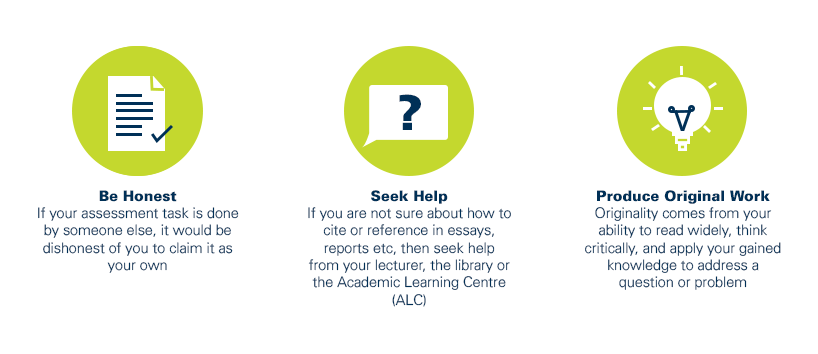
As a CQUniversity student you are expected to act honestly in all aspects of your academic work.
Any assessable work undertaken or submitted for review or assessment must be your own work. Assessable work is any type of work you do to meet the assessment requirements in the unit, including draft work submitted for review and feedback and final work to be assessed.
When you use the ideas, words or data of others in your assessment, you must thoroughly and clearly acknowledge the source of this information by using the correct referencing style for your unit. Using others’ work without proper acknowledgement may be considered a form of intellectual dishonesty.
Participating honestly, respectfully, responsibly, and fairly in your university study ensures the CQUniversity qualification you earn will be valued as a true indication of your individual academic achievement and will continue to receive the respect and recognition it deserves.
As a student, you are responsible for reading and following CQUniversity’s policies, including the Student Academic Integrity Policy and Procedure. This policy sets out CQUniversity’s expectations of you to act with integrity, examples of academic integrity breaches to avoid, the processes used to address alleged breaches of academic integrity, and potential penalties.
What is a breach of academic integrity?
A breach of academic integrity includes but is not limited to plagiarism, self-plagiarism, collusion, cheating, contract cheating, and academic misconduct. The Student Academic Integrity Policy and Procedure defines what these terms mean and gives examples.
Why is academic integrity important?
A breach of academic integrity may result in one or more penalties, including suspension or even expulsion from the University. It can also have negative implications for student visas and future enrolment at CQUniversity or elsewhere. Students who engage in contract cheating also risk being blackmailed by contract cheating services.
Where can I get assistance?
For academic advice and guidance, the Academic Learning Centre (ALC) can support you in becoming confident in completing assessments with integrity and of high standard.
What can you do to act with integrity?