Overview
The integument is the body’s mirror. When alterations occur in skin integrity there is the potential that this will impact on every aspect of the person. Wound management is a complex area with new information being continually generated. You will apply an evidence based approach in exploring the principles and practice of contemporary wound management.
Details
Pre-requisites or Co-requisites
Pre-requisites Students must have completed 96 credit points and NURS12158 Clinical Nursing Practice 3 or NURS13126 Critical Care Nursing
Important note: Students enrolled in a subsequent unit who failed their pre-requisite unit, should drop the subsequent unit before the census date or within 10 working days of Fail grade notification. Students who do not drop the unit in this timeframe cannot later drop the unit without academic and financial liability. See details in the Assessment Policy and Procedure (Higher Education Coursework).
Offerings For Term 1 - 2019
Attendance Requirements
All on-campus students are expected to attend scheduled classes - in some units, these classes are identified as a mandatory (pass/fail) component and attendance is compulsory. International students, on a student visa, must maintain a full time study load and meet both attendance and academic progress requirements in each study period (satisfactory attendance for International students is defined as maintaining at least an 80% attendance record).
Recommended Student Time Commitment
Each 6-credit Undergraduate unit at CQUniversity requires an overall time commitment of an average of 12.5 hours of study per week, making a total of 150 hours for the unit.
Class Timetable
Assessment Overview
Assessment Grading
This is a graded unit: your overall grade will be calculated from the marks or grades for each assessment task, based on the relative weightings shown in the table above. You must obtain an overall mark for the unit of at least 50%, or an overall grade of 'pass' in order to pass the unit. If any 'pass/fail' tasks are shown in the table above they must also be completed successfully ('pass' grade). You must also meet any minimum mark requirements specified for a particular assessment task, as detailed in the 'assessment task' section (note that in some instances, the minimum mark for a task may be greater than 50%). Consult the University's Grades and Results Policy for more details of interim results and final grades.
All University policies are available on the CQUniversity Policy site.
You may wish to view these policies:
- Grades and Results Policy
- Assessment Policy and Procedure (Higher Education Coursework)
- Review of Grade Procedure
- Student Academic Integrity Policy and Procedure
- Monitoring Academic Progress (MAP) Policy and Procedure - Domestic Students
- Monitoring Academic Progress (MAP) Policy and Procedure - International Students
- Student Refund and Credit Balance Policy and Procedure
- Student Feedback - Compliments and Complaints Policy and Procedure
- Information and Communications Technology Acceptable Use Policy and Procedure
This list is not an exhaustive list of all University policies. The full list of University policies are available on the CQUniversity Policy site.
Feedback, Recommendations and Responses
Every unit is reviewed for enhancement each year. At the most recent review, the following staff and student feedback items were identified and recommendations were made.
Feedback from 'Thank you for opening up all our information, I work full time and this will allow me to get started on the work'.
Moodle availability
Will continue to make all term content available from week 1 of term
Feedback from I really enjoyed the content of the unit. Very informative with good resources'.
Unit content
Unit content will continue to respond to student learning styles and be contemporary and appealing
Feedback from 'I really valued the zoom session and discussion format'.
Zoom sessions
Storyboarding of case studies will continue to be presented by guiding the student through each case study
Feedback from 'I absolutely loved this course. It is a shame this is only an elective and not part of the core subjects'. 'The knowledge I have gained from this unit will be applicable in any setting and in the community'.
Supporting students
Regular weekly personal contact will continue in future offerings to provide students with a conduit for communication.
Feedback from 'I would had [sic] much preferred an exam on topics as which dressings would be most appropriate for mini case study questions'. 'I believe the assessments [sic] tasks were beyond what should be expected of an elective unit'.
Assessment tasks
Assessments for the following year will be altered to include an app and step by step wound care and a short answer case study requiring responses used in clinical scenarios.
Feedback from Constructive feedback provided on assessment tasks facilitated further learning'. 'it was the most feedback I have ever received'.
Feedback
Students will continue to receive significant feedback with each assessment to ensure they understand their knowledge gaps.
- Evaluate the principles of cultural awareness and communication to enable effective collaboration with individuals, families and other members of the multidisciplinary health care team to facilitate positive outcomes for wound healing.
- Apply best practice principles and wound management guidelines to the assessment and management of individuals with either acute or chronic wounds.
- Evaluate the use of alternative wound management strategies to faciliate wound healing.
- Examine safe and effective person centred nursing care for individuals undergoing diagnostic and therapeutic procedures related to wound healing.
Relate the significance of the Nursing and Midwifery Board of Australia (NMBA) registered nurse standards for practice and specific National Safety and Quality Health Service Standards to nursing practice.
Alignment of Assessment Tasks to Learning Outcomes
| Assessment Tasks | Learning Outcomes | |||
|---|---|---|---|---|
| 1 | 2 | 3 | 4 | |
| 1 - Written Assessment - 40% | ||||
| 2 - Presentation and Written Assessment - 60% | ||||
Alignment of Graduate Attributes to Learning Outcomes
| Graduate Attributes | Learning Outcomes | |||
|---|---|---|---|---|
| 1 | 2 | 3 | 4 | |
| 1 - Communication | ||||
| 2 - Problem Solving | ||||
| 3 - Critical Thinking | ||||
| 4 - Information Literacy | ||||
| 5 - Team Work | ||||
| 6 - Information Technology Competence | ||||
| 7 - Cross Cultural Competence | ||||
| 8 - Ethical practice | ||||
| 9 - Social Innovation | ||||
| 10 - First Nations Knowledges | ||||
| 11 - Aboriginal and Torres Strait Islander Cultures | ||||
Alignment of Assessment Tasks to Graduate Attributes
| Assessment Tasks | Graduate Attributes | ||||||||||
|---|---|---|---|---|---|---|---|---|---|---|---|
| 1 | 2 | 3 | 4 | 5 | 6 | 7 | 8 | 9 | 10 | 11 | |
| 1 - Written Assessment - 40% | |||||||||||
| 2 - Presentation and Written Assessment - 60% | |||||||||||
Textbooks
Wound Care Manual
- Edition: 7th (2016)
- Authors: Keryln Carville
- Silverchain
- Osborne Park Osborne Park , WA , Australia
- Binding: Other
Additional Textbook Information
This book is available directly from the publisher here: https://pesorder.winc.com.au/silverchain/catalog/Books
IT Resources
- CQUniversity Student Email
- Internet
- Unit Website (Moodle)
All submissions for this unit must use the referencing style: American Psychological Association 6th Edition (APA 6th edition)
For further information, see the Assessment Tasks.
g.neilsen@cqu.edu.au
Week 1 Integumentary system review
Begin Date: 11 Mar 2019Module/Topic
Integumentary system - a quick review and the basis for your practice
Chapter
Carville. Please read the chapters associated with the Anatomy of the skin and the Physiology of wound healing.
Complete readings, activities and view videos for Week 1.
Review this information in preparation for and development of, the Assignment task. Weeks 1 to 5 are the learning outcomes assessed in the Assignment task.
Events and Submissions/Topic
Begin review of the App - related to assessment one
Complete formative quiz Week One. This is an optional review quiz and does not contribute to your assessment or final grades.
The zoom session will discuss how to be successful in this unit. This includes asking you, the student, what you expect to learn in this unit.
Week 2 Wound assessment
Begin Date: 18 Mar 2019Module/Topic
Wound Assessment - an holistic approach
Chapter
Ousey, K. & Cook, L. (2011). Understanding the importance of holistic wound assessment. Practice Nursing, 22(6). 308-314.
Brooks, M. (2013). "So much to lose" - a holistic approach to wound management. Wound Practice and Research. 21(3). 136-140.
Brown, A. (2013). Implications of patient shared decision-making on wound care. British Journal of Community Nursing. 26 -32.
Hulme, K. (2013) How to engage better with patients. British Journal of Nursing. 22, 10-13
Complete readings, activities and view videos for Week 2.
Review this information in preparation for and development of the Assignment task. Weeks 1 to 5 are the learning outcomes assessed in the Assignment task.
Events and Submissions/Topic
Continue review of the App.
Complete formative quiz Week Two. This is an optional review quiz and does not contribute to your assessment or final grades.
The zoom session will guide students to critically reflect on effective wound care approaches.
Week 3 Wound management
Begin Date: 25 Mar 2019Module/Topic
Wound management principles
Chapter
Carville. Please read the chapters related to wound management and chronic wound management.
Milne, J. (2013). Improving wellbeing of those living with a wound. British Journal of Nursing, 22. 3-9.
Jones, J. (2013). Exploring the link between the clinical challenges of wound exudate and infection. British Journal of Nursing, 22 (3), 8-12.
Probst, S. (2015). Wounds with exudate and odour. British Journal of Nursing, 24 (6), 22.
Ausmed Wound E-book
Complete readings, activities and view videos for Week 3.
Review this information in preparation for and development of the Assignment task. Weeks 1 to 5 are the learning outcomes assessed in the Assignment task.
Events and Submissions/Topic
Continue review of the App.
Assessment one task due in two weeks.
Complete formative quiz Week Three. This is an optional review quiz and does not contribute to your assessment or final grades.
The zoom session aims to consolidate wound care principles and apply this to the assignment case studies.
Week 4 Cellulitis
Begin Date: 01 Apr 2019Module/Topic
Assessment and Management of Lymphoedema/Cellulitis
Chapter
Carville. Please read the text related to lymphatic disorders.
Atkin, L. (2014). Lower limb oedema: assessment, treatment and challenges. British Journal of Community Nursing, 34 (6), 439 - 447.
Teerachaiskul, M., Ekataskin, W., Durongwatana, S., Taneepanichskul, S. (2013). Risk factors for cellulitis in patients with lymphedema[sic]: a case controlled study. Lymphology. 46(3). 150-156.
Complete readings, activities and view videos for Week 4.
Review this information in preparation for and development of, the Assignment task. Weeks 1 to 5 are the learning outcomes assessed in the Assignment task.
Events and Submissions/Topic
Continue review of the App.
Assessment task 1 due at the end of next week.
Complete formative quiz Week Four. This is an optional review quiz and does not contribute to your assessment or final grades.
The zoom session will consider evidence based strategies for the assessment and management of lymphoedema.
Week 5 Wound infections/exudate
Begin Date: 08 Apr 2019Module/Topic
Wound infection
Chapter
Morgan, T. (2014). Wound care in the community: infection, exudate and confirmability. Journal of Community Nursing5, 43 - 48.
Reynolds, V. (2013). Assessing and diagnosing wound infection (part one). Nurse Prescribing. 11 (3), 114-121.
Tickle, J. (2013). Wound infection: a clinician's guide to assessment and management. British Journal of Community Nursing. S16-22.
Gottrup, F., Apelqvist, J., Bjarnsholt, T., Cooper, R., Moore, Z., Peters, E., Probst, S. (2014). Antimicrobials and non-healing wounds. Evidence, controversies and suggestions-key messages. Journal of Wound Care. 23(10). 477-482.
International Wound Infection Institute (IWII). Wound infection in clinical practice. Wounds International 2016.
Complete readings, activities and view videos for Week 5.
Review this information for completion of the Assignment task.
Events and Submissions/Topic
Continue review of the App.
Assessment One due this week, Friday, April 12th, 2019 at 11:59 pm.
Complete formative quiz Week Five. This is an optional review quiz and does not contribute to your assessment or final grades.
The zoom session will provide final support prior to submission of assessment one. It will also examine the concepts surrounding wound healing, colonisation, bioburden, bacterial load and wound infection.
Written assessment Due: Week 5 Friday (12 Apr 2019) 12:00 am AEST
Vacation Week
Begin Date: 15 Apr 2019Module/Topic
Chapter
Events and Submissions/Topic
Week 6 Wound dressings Part 1
Begin Date: 22 Apr 2019Module/Topic
Choosing a wound dressing
Chapter
Carville. Please read text related to Dressings
Beldon, P. (2013). How to select and choose appropriate wound dressings. Nurse Prescribing. 11(10). 487-492.
Newton, H. (2013). An introduction to wound healing and dressings. British Journal of Healthcare Management. 19(6). 270-274.
Beldon, P. (2013). The judicious use of antimicrobial dressings. Nurse Prescribing.12(2). 75-79.
Benbow, M. (2011). Dressing awkward wounds. Journal of Community Nursing. 25(5). 16-22. This is dated as there is a paucity of literature related to this topic.
Complete readings, activities and view videos for Week 6.
Events and Submissions/Topic
Assessment two is due in five weeks. Complete formative quiz Week Six. This is an optional review quiz and does not contribute to your assessment or final grades.
The zoom session will discuss effectively choosing the best wound care product for your patient.
Week 7 Pressure Injuries and venous leg ulcers
Begin Date: 29 Apr 2019Module/Topic
Prevention and Management of pressure injuries and venous leg ulcers.
Chapter
Carville. Please read the chapters associated with leg ulcers and pressure injuries
Pan Pacific Clinical Practice Guideline for the Prevention and Management of Pressure Injury.
Fulbrook, M., Nowicki, T., Franks, C. (2013). Decreasing pressure injury prevalence in Australian general hospital: a 10-year review. Wound practice and research,21(4). 148-156.
Pressure Injuries: Just the facts! Pan Pacific Pressure Injury Alliance
Kapp, S., Simpson, K., Santamaria, N. (2014).(Perspectives on living with and self-treating venous leg ulcers: a person's story and a health care perspective.Wound Practice and Research. 22(2). 98-101.
Grothier, L., Pardoe, A. (2013). Chronic wounds: management of healing and well being. British Journal Of Nursing, 22 (12), 24-30.
Payne, D. (2016). Strategies to support prevention, identification and management of pressure ulcers in the community. Community wound care. June. S10-S18.
Phillips, P., Lumley, E., Duncan, R., Aber, A., Woods, H., Jones, G., Michaels, J. (2017). A systematic review of qualitative research into people's experiences of living with venous leg ulcers. Journal of advanced nursing. 1-14. DOI:10.1111/jan.13465.
PanPacific Clinical Practice Guideline for the Prevention and Management of Pressure Injury
Complete readings, activities and view videos for Week 7.
Development of the Assignment task to continue.
Events and Submissions/Topic
Complete formative quiz Week Seven. This is an optional review quiz and does not contribute to your assessment or final grades.
The zoom session will explore issues relevant to pressure injuries and venous leg ulcers. Students will be encouraged to reflect on their tacit experience and acquired knowledge.
Week 8 Skin tears and acute wounds
Begin Date: 06 May 2019Module/Topic
Skin tears and acute Wounds
Chapter
Carville. Please read the text related to acute wound management, skin tears, burns, drains and drain wound management.
Australian and New Zealand Burns Association
Complete readings, activities and view videos for Week 8.
Review this information in preparation for and development of the Assignment task.
Events and Submissions/Topic
Assessment two due in two weeks. Complete formative quiz Week Eight. This is an optional review quiz and does not contribute to your assessment or final grades.
The zoom session will focus on the evidence based management of acute wounds in diverse settings.
Week 9 Management of the diabetic foot
Begin Date: 13 May 2019Module/Topic
Management of the Diabetic Foot
Chapter
Carville. Please read the text related to the neuropathic foot.
Complete readings, activities and view videos for Week 9.
Development of the Assignment task to continue.
Events and Submissions/Topic
Assessment 2 due at the end of next week.
Complete formative quiz Week Nine. This is an optional review quiz and does not contribute to your assessment or final grades.
The zoom session will focus on the evidence based management of the diabetic foot wounds in diverse settings.
Week 10 Wound dressings Part 2
Begin Date: 20 May 2019Module/Topic
Wound dressings Part 2
Chapter
Tippett (2012) https://www.woundsource.com/blog/wound-care-shoestring-cost-effective-options-treatment-wounds
Tottle, A., Harris, S. (2014). The use of negative pressure wound therapy in a non-healing breast wound. Wound Practice & Research. 22 (3), 142 -144.
Mills, B. (2012) Wound healing: the evidence for hyperbaric oxygen therapy. British Journal of Nursing. 21, 28 - 34. This is dated but useful.
Maggot Wound Therapy. Institute of Clinical Pathology and Medical Research.
Complete readings, activities and view videos for Week 10.
Development of the Assignment task to continue.
Events and Submissions/Topic
Assessment two due this week - Friday May 24th, 11:59 pm, 2019.
Complete formative quiz Week Ten. This is an optional review quiz and does not contribute to your assessment or final grades.
The zoom session will provide an overview of alternative wound strategies. Patient preferences, accessibility to wound care products as well as non traditional wound management will be discussed.
Written Assessement Due: Week 10 Friday (24 May 2019) 12:00 am AEST
Week 11 Wound management guidelines
Begin Date: 27 May 2019Module/Topic
Wound Management Guidelines
Chapter
Wounds Australia. Standards for Wound Prevention and Management. 3rd Edition. Cambridge Media: Osborne park, WA; 2016
Australian and New Zealand Clinical Practice Guidelines for Prevention and Management of Venous Leg Ulcers.
Pan Pacific Clinical Practice Guideline for the Prevention and Management of Pressure Injury.
Complete readings, activities and view videos for Week 11.
Events and Submissions/Topic
Complete formative quiz Week Eleven. This is an optional review quiz and does not contribute to your assessment or final grades.
The zoom session will focus on standards and guidelines essential for optimising wound management.
Week 12 Semester in review
Begin Date: 03 Jun 2019Module/Topic
Review of concepts
Chapter
Events and Submissions/Topic
The zoom session this week will be an open forum where students can bring case studies to consolidate our decision making for wound management.
Exam Week
Begin Date: 17 Jun 2019Module/Topic
Chapter
Events and Submissions/Topic
Further information you will need to complete Assessment one will be available on the Wound Education App.
Details on how to download the App from the App Store is available on the Welcome Message link.
Links to the App is also available on the Moodle site.
1 Written Assessment
All assessment components relate to activities on the Wound education App.
Complete four [4] wound assessment templates with ONE appropriate image for each.
Write progress notes for final assessment template.
Reflective essay 1000 words on clinical decision making for wound dressings.
Week 5 Friday (12 Apr 2019) 12:00 am AEST
Submission as one document via Moodle
Week 7 Friday (3 May 2019)
Return with feedback via Moodle [date excludes extensions for extenuating circumstances]
| Excellent presentation of assignment, Consistently accurate with spelling, grammar, and use of punctuation and paragraph structure. (5%) |
| Uses all correct components: four templates accompanied by appropriate images, progress notes and essay included. Uses double line spacing, Arial or Times New Roman, 12-point size font, cover page and table of contents. (5%) |
| Organisation and structure is clear and easy to follow. Supporting literature is clearly integrated. Adheres to prescribed length. (5%) |
| Discussion (75%) |
| Comprehensive and accurate completion of all four 4 templates accompanied by appropriate image. (20%) |
| All information clearly organised in logical sequence; follows acceptable format using ISBAR. Treatment plan and patient education addresses all issues raised by diagnoses; excellent insight into patient’s needs. Evidence based decisions. (20%) |
| Comprehensively includes a detailed reflection on wound product selection with clear, coherent and convincing critical thought displayed. (35%) |
| Referencing - 10% |
| Consistently accurate with in-text referencing to support and reflect all ideas, factual information and quotations. (5%) |
| More than 10 up-to-date* and recent, relevant and reliable references used including 8 or more up-to-date journal articles as well as relevant books are used. (5%) |
No submission method provided.
- Evaluate the principles of cultural awareness and communication to enable effective collaboration with individuals, families and other members of the multidisciplinary health care team to facilitate positive outcomes for wound healing.
- Apply best practice principles and wound management guidelines to the assessment and management of individuals with either acute or chronic wounds.
- Evaluate the use of alternative wound management strategies to faciliate wound healing.
- Examine safe and effective person centred nursing care for individuals undergoing diagnostic and therapeutic procedures related to wound healing.
- Communication
- Problem Solving
- Critical Thinking
- Information Literacy
- Team Work
- Information Technology Competence
- Cross Cultural Competence
- Ethical practice
2 Presentation and Written Assessment
Four short answer case studies (600 words each).
For each case study you are required to select appropriate wound dressings and discuss the rationale for your choice of wound dressings f providing two options. These will include a first choice option and an alternative wound management strategy.
You are then required to develop a brief wound management around one of these options including the individual's preferences and their education needs.
Week 10 Friday (24 May 2019) 12:00 am AEST
Submitted as one document [excludes extensions for extenuating circumstances]
Exam Week Friday (21 June 2019)
Assessments will be returned to students with provisional marks
| Excellent presentation of assignment, Consistently accurate with spelling, grammar, and use of punctuation and paragraph structure. (5%) |
| Uses all correct components: cover page, short answer essay with individualised reference list. Completes four case studies, Uses double line spacing, Arial or Times New Roman, 12-point size font, cover page. (5%) |
| Discussion (80%) |
| Comprehensively includes detailed and convincing rationale for your choice of evidence based and appropriate wound dressing selection for each case study with clear, convincing critical thought displayed. (20%) |
| Comprehensively includes a detailed and convincing rationale for your alternative wound product selection for all four [4] case studies with clear, coherent and convincing critical thought displayed. (20%) |
| Provides a succinct and convincing wound management plan outlining an appropriate plan for all four [4] case studies. (20%) |
| Convincingly details presentation of person-centred care with clear, coherent and convincing critical thought for all four [4] case studies evident. (20%) |
| Referencing - 10% |
| Consistently accurate with in-text referencing to support and reflect all ideas, factual information and quotations. (5%) |
| More than 10 up-to-date* and recent, relevant and reliable references used including 8 or more up-to-date journal articles as well as relevant books are used. (5%) |
| Reference list appears in alphabetical order and fully adheres to reference list presentation guidelines APA style. (5%) |
No submission method provided.
- Evaluate the principles of cultural awareness and communication to enable effective collaboration with individuals, families and other members of the multidisciplinary health care team to facilitate positive outcomes for wound healing.
- Apply best practice principles and wound management guidelines to the assessment and management of individuals with either acute or chronic wounds.
- Evaluate the use of alternative wound management strategies to faciliate wound healing.
- Examine safe and effective person centred nursing care for individuals undergoing diagnostic and therapeutic procedures related to wound healing.
- Communication
- Problem Solving
- Critical Thinking
- Information Literacy
- Team Work
- Information Technology Competence
- Cross Cultural Competence
- Ethical practice
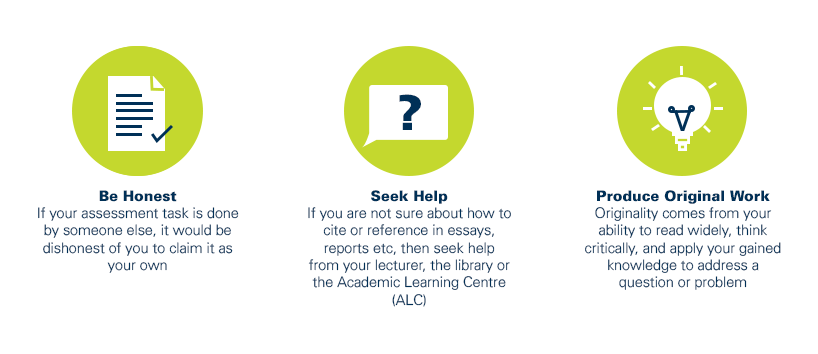
As a CQUniversity student you are expected to act honestly in all aspects of your academic work.
Any assessable work undertaken or submitted for review or assessment must be your own work. Assessable work is any type of work you do to meet the assessment requirements in the unit, including draft work submitted for review and feedback and final work to be assessed.
When you use the ideas, words or data of others in your assessment, you must thoroughly and clearly acknowledge the source of this information by using the correct referencing style for your unit. Using others’ work without proper acknowledgement may be considered a form of intellectual dishonesty.
Participating honestly, respectfully, responsibly, and fairly in your university study ensures the CQUniversity qualification you earn will be valued as a true indication of your individual academic achievement and will continue to receive the respect and recognition it deserves.
As a student, you are responsible for reading and following CQUniversity’s policies, including the Student Academic Integrity Policy and Procedure. This policy sets out CQUniversity’s expectations of you to act with integrity, examples of academic integrity breaches to avoid, the processes used to address alleged breaches of academic integrity, and potential penalties.
What is a breach of academic integrity?
A breach of academic integrity includes but is not limited to plagiarism, self-plagiarism, collusion, cheating, contract cheating, and academic misconduct. The Student Academic Integrity Policy and Procedure defines what these terms mean and gives examples.
Why is academic integrity important?
A breach of academic integrity may result in one or more penalties, including suspension or even expulsion from the University. It can also have negative implications for student visas and future enrolment at CQUniversity or elsewhere. Students who engage in contract cheating also risk being blackmailed by contract cheating services.
Where can I get assistance?
For academic advice and guidance, the Academic Learning Centre (ALC) can support you in becoming confident in completing assessments with integrity and of high standard.
What can you do to act with integrity?