1 Presentation
Aim
This assessment aims to demonstrate your critical thinking and clinical reasoning to manage the care of a person with an acute alteration in health presenting to the Emergency Department (ED). Information to assist you to undertake this assessment is covered in Modules 1-4.
Instructions
Please read the following patient scenario on which your assessment is based.
Peter is an 82-year-old man living alone after the death of his wife of 55 years two years ago. He has two daughters, Denise and Amanda, who live close by and keep an eye on him. When Denise visited Peter this morning at 0745 hours, she thought he looked quite unwell and seemed “feverish and a bit confused”. She called the ambulance shortly afterwards, and paramedics subsequently brought Peter to the ED where you are working as a new Graduate registered nurse.
On arrival at 0900 hours, Peter had in place nasal prongs at 2 litres of oxygen per minute, and an IV infusion of Sodium Chloride 0.9% 1 litre running at 125 ml/hour. The paramedics had initiated these interventions. The paramedics tell you Peter’s last recorded observations were BP 125/85mmHg, pulse rate 106 beats per minute and slightly irregular, respirations 26 breaths per minute, temperature 38.3°C, SpO2 95% on 2L O2, PEARLA, and that he is disorientated to time and place. You introduce yourself to Peter, and observe that he has a pleasant nature, is slightly short of breath, and appears confused about why he is in the ED. You note that he has a productive cough and expectorates thick green sputum into tissues. He tests negative for Covid on arrival at the ED. Peter is triaged and moved to an admission cubicle.
Denise arrives and informs you Peter is usually in reasonable health, despite a 15-year history of coronary artery disease and hypertension. Peter has never smoked, has no allergies and is up to date with his Covid vaccinations. She also informs you that he recently suffered a gash to his right forearm that she has been cleaning and dressing daily. His current medications are listed below. He hasn’t taken any medications today.
Peter’s current medications are:
-
Oral Aspirin 100 mg daily
-
Oral Metoprolol 50 mg twice daily
-
Oral Amlodipine 5mg daily Oral
-
Atorvastatin 20 mg daily
Instructions
-
Provide a structured handover based on the ISBAR framework to Team Leader RN and ED doctor based on the patient scenario.
-
To do this, develop a 12-15-minute oral presentation using PowerPoint (ppt) slides based on the plan provided below.
-
Your ppt slides should provide the main points only of your discussion. The slides will provide a structure for your oral presentation, and you should talk to your slides and expand on the points provided on the slide in your oral presentation.
-
Present your ppt and accompanying oral presentation as a video presentation. Instructions for compiling and submitting your presentation are provided on the Moodle site under Assessment Tile/Assessment 1.
Slide |
Slide Content |
Slide Requirements |
Slide 1 |
Assessment title, your name and student ID |
You may choose the design of your ppt. However, it must be presented at a professional standard and easy to read. |
Slide 2 (2-3 mins) |
ISBAR Overview of Patient |
From the information provided in the case scenario, present a structured overview of the patient using the first three components of the ISBAR framework. |
Slides 3-4 (2-3 mins) |
ISBAR Primary Survey assessment and triage score |
Present and explain your primary survey assessment, allocate a triage score and explain why you allocated this score. |
Slides 5-6 (2 -3 mins) |
ISBAR Secondary Survey requirements |
Explain how you would undertake a secondary survey, and identify data already available that would help inform your survey findings |
Slides 7-8 (3-4 minutes) |
ISBAR Recommend two (2) prioritised, appropriate, and evidence-based nursing interventions |
Based on your assessment, recommend two appropriate, prioritised, evidence-based nursing interventions for Peter that are within your scope of practice. |
Slide 9 (1-2 mins) |
ISBAR Recommend one (1) prioritised, appropriate, and evidence-based multidisciplinary intervention |
Based on your assessment and the case scenario data, recommend one appropriate, prioritised, evidence-based multidisciplinary intervention for Peter. |
Slide 10 |
References |
(Do not need to verbally present these) |
Literature and references
In this assessment, use at least four contemporary references (within the last five years, where possible), to support your discussion. You may also use seminal scholarly literature where relevant. Suitable references include peer-reviewed journal articles as well as textbooks, and credible websites. When sourcing information, consider the five elements of a quality reference: currency, authority, relevance, objectivity, and coverage. Information sourced from the internet must be from reputable websites such as from government, university, or peak national bodies: for example, the Australian College of Nursing.
Requirements
- Consider using a conventional and legible size 20 font, such as Times New Roman or Arial
- You can present in the first-person perspective.
- Use formal academic language in your slides.
- Use the 7th edition American Psychological Association (APA) referencing style. The CQUniversity Academic Learning Centre has an online APA Referencing Style Guide.
Resources
- You can use unit provided materials and other credible sources (e.g., journal articles, books) to reference your argument. The quality and credibility of your sources are important.
- We recommend that you access your discipline specific library guide: the Nursing and Midwifery Guide;
Submission
Submit your assessment via the unit Moodle site as per instructions.
Marking Criteria
Refer to the marking rubric on the Moodle site for more detail on how marks will be assigned.
Week 5 Wednesday (5 Apr 2023) 11:55 pm AEST
Submit via Unit Moodle site
Week 7 Wednesday (26 Apr 2023)
Returned via Unit Moodle site
UNIT CODE NURS13141
ASSESSMENT 1 MARKING RUBRIC
| Key Criteria | High Distinction 84.5 – 100% | Distinction 74.50 – 84.49% | Credit 64.50 – 74.49% | Pass 49.50 – 64.49% | Fail <49.5% | Mark |
| Structure, Presentation and Referencing (15%) | Excellent presentation of assignment as per assessment instructions. Consistently accurate spelling and grammar. Consistently accurate and appropriate attribution of ideas with references. At least 8 relevant high-quality references used (15-12.7) | Well-presented assignment as per assessment instructions. Generally accurate with 1 or 2 spelling and grammatical errors. Generally accurate with referencing. At least 6- 7 relevant quality references used (12.6-11.2) | Well-presented assignment as per assessment instructions. Occasional inaccuracies with 3 or 4 spelling and grammatical errors. Occasional inaccuracies with referencing. At least 5-6 relevant references used (11.1- 9.7) | Adequate assignment presentation mostly follows assessment instructions. Frequent inaccuracies with 5 to 7 spelling and/or grammatical errors. Several inaccuracies with referencing. At least 4 relevant references used. (9.6 – 7.4) | Poorly presented assignment does not follow assessment instructions. Multiple errors, and/or many inaccuracies in spelling and or grammar (> 7 errors). Many inaccuracies with referencing. Less than 4 relevant references used. (7.3-0) | /15 |
| Introduction, situation, and background (10%) | A clear, accurate, and logical presentation of the patient, their current situation, and relevant background to their ED presentation. (10-8.5) | A mostly clear, accurate, and logical presentation of the patient, their current situation, and relevant background to their ED presentation. (8.4-7.5) | A reasonably clear, accurate, and logical presentation of the patient, their current situation, and relevant background to their ED presentation Some aspects could have been discussed in more detail and/or clarity. (7.4-6.5) | Satisfactory presentation to convey sufficient and relevant information. Several aspects could have been discussed in more detail and/or clarity (6.4-5) | Insufficient discussion and/or many inaccuracies in presentation (4.9-0) | /10 |
| Primary assessment and triage score (15%) | Clearly and accurately presents and explains all aspects of the primary assessment. Provides clear and appropriate explanation for triage score. (15-12.7) | Clearly and accurately presents and explains most aspects of the primary assessment. Provides appropriate explanation for triage score. (12.6-11.2) | Mostly accurate presentation and explanation of the primary assessment. Triage score provided with adequate explanation. (11.1- 9.7) | Satisfactory presentation and explanation of the primary assessment. Triage score provided with adequate explanation. (11.1- 9.7) | Presents with some explanation the primary assessment and triage score/s. Some attempt at explaining triage score. (7.3-0) | /15 |
| Secondary survey (15%) | Presents a clear and accurate overview of all key secondary survey requirements. Identifies relevant data available to inform survey findings. (15-12.7) | Presents a mostly clear and accurate overview of the key secondary survey requirements. Identifies relevant data available to inform survey findings. (12.6-11.2) | Presents a reasonably clear and fairly accurate overview of most of the key secondary survey requirements. Identifies relevant data available to inform survey findings. (11.1- 9.7) | Presents a satisfactory overview of the key secondary survey requirements. Identifies relevant data available to inform survey findings. (11.1- 9.6) | Insufficient presentation of key secondary survey requirements. Does not identify relevant data available to inform survey findings (7.3-0) | /15 |
| Evidence-based nursing interventions (30%) | Clearly and accurately presents and explains 2 appropriate, prioritised, and evidence- based nursing interventions that are within the scope of practice of a graduate RN. Exemplary linking of physical assessment data and patient history to inform these interventions. (30 -25.4) | Clearly and accurately explains 2 appropriate, prioritised, and evidence- based nursing interventions that are within the scope of practice of a graduate RN. General elevated level linking of physical assessment data and patient history to inform these interventions. (25.3-22.4) | Clearly and accurately explains 1-2 appropriate, prioritised, and evidence- based nursing interventions that are within the scope of practice of a graduate RN. General elevated level linking of physical assessment data and patient history to inform these interventions. (22.3-19.4) | Presents 1-2 appropriate and prioritised evidence-based nursing interventions that are within the scope of practice of a graduate RN. Satisfactory linking of physical assessment data and patient history to inform these interventions. (19.3-14.9) | Insufficient and/or inappropriate presentation and explanation of nursing interventions. Some attempt at describing how physical assessment data and patient history was used to inform these interventions. (14.8-0) | /30 |
| Evidence-based multidisciplinary intervention (15%) | Clearly and accurately presents and explains 1 appropriate and prioritised multidisciplinary intervention. Exemplary evidence-based rationale provided for the intervention (15-12.7) | A mostly clear and accurate explanation of 1 appropriate and prioritised multidisciplinary intervention. General high-level evidence-based rationale provided for the intervention. (12.6-11.2) | A somewhat clear and accurate explanation of 1 appropriate multidisciplinary intervention. A reasonable level evidence-based rationale provided. (11.1- 9.7) | Satisfactory discussion of an appropriate multidisciplinary intervention. Satisfactory rationale provided with adequate supporting evidence. (9.6 – 7.4) | Insufficient and/or inappropriate prioritisation and explanation of multidisciplinary need (7.3-0) | /15 |
- Explain the pathophysiological changes that occur when a person experiences acute alterations in health.
- Apply the decision-making framework for nursing (NMBA 2020) to prioritise and justify care for the person experiencing acute alterations in health.
- Examine the role of the nurse and other members of the interdisciplinary team in the care of a person in a complex care environment.
- Analyse and apply the best available evidence, for safe, quality practice for a person experiencing an acute alteration in health.
2 Case Study
Aim
The aim of this assessment is for you to demonstrate your knowledge of managing persons with acute alterations in health.
Instructions
The information required to undertake this assessment is covered in Modules 1-10 of this Unit. Please read the three (3) case studies below and answer their associated questions.
Case Study 1: Mr Aron Black
You are a new graduate RN assigned to the care of Aron, a 70-year-old male, self-employed plumber who was admitted to the Acute Medical Ward for observation overnight and continuous cardiac monitoring. He presented earlier in the day to the Emergency Department (ED) with a history of palpitations, light headedness, and slight chest tightness. He has no known allergies (NKA) and weighs 95 kg. His initial observations recorded in ED were:
- BP 126/85mmHg
- Pulse rate 90 beats per min and irregular
- Respiratory rate 16 per minute
-
SpO2 95% on room air
His pain score was 2/10, described as an intermittent tightening in his chest area with no radiation.
His current medication regime includes Aspirin 100 mg daily, Atenolol 50mg daily, Atorvastatin 40mg daily and Ramipril 5mg twice daily. He was reviewed by the medical team in the ED, where he was placed on the acute coronary syndrome (ACS) pathway. However, this has since been ruled out as a diagnosis. Aron informs you that he has been very stressed lately because work has been very busy, and that he isn’t eating as well as he should and has put on a bit of weight.
Aron is connected to continuous cardiac monitoring and the following ECG tracing is recorded.

Case Study 1 Questions (suggested 600 words)
Using the table below, please analyse the above rhythm strip.
| Step 1: Heart rate | |
| Step 2: Heart rhythm | |
| Step 3: P Wave | |
| Step 4: PRI | |
| Step 5: QRS Complex | |
| What is the rhythm? | |
| Is this a shockable rhythm? |
- Describe the characteristics of the rhythm. Identify possible causes and explain pathophysiological changes that may have caused Aron to experience this alteration in rhythm.
- From your case scenario analysis, present two appropriate, prioritised evidence-based nursing interventions within your scope of practice as a graduate RN. Provide a rationale for each intervention.
- Identify two key members of the multidisciplinary team that would most likely be involved in Aron’s ongoing management and explain their role.
Case Study 2: Tyson Moton
You are a new graduate RN on duty in the Emergency Department (ED). Tyson presents to the ED at 0800. Tyson is a 15-year-old male who lives with his mother and his 20-year-old sister Samara. He attends the local high school and enjoys playing hockey with his mates.
He was bought to the hospital by Samara, who was concerned after he told her that he had experienced multiple episodes of vomiting throughout the night. Samara said she had brought her brother to hospital as their mother was working night shifts in a local supermarket the previous night and needed to sleep, and they did not want to worry her. Samara informs you that she became increasingly worried about Tyson, particularly following the last vomiting episode at 0700 this morning, where he seemed to ‘pass out.’ You observe that Tyson is a bit disorientated to time and place, and lethargic and sleepy. He is triaged and moved to a cubicle in the ED.
You undertake a secondary survey assessment at 0830 hours. The assessment data for Tyson is BP 120/60mmHg, RR (Respiratory Rate) 30 breaths/per min and deep, oxygen saturations at 95% on room air, HR 98 and regular, temperature 37.2° C, and PEARLA. He is 172 cm tall and weighs 60 kg. Tyson has no known medical or surgical history and is usually in good health. He is not on any medications.
Samara stated that Tyson had been losing weight in recent months, but she thought this was due to his unhappiness about their parent’s separation. Tyson’s urine was pale in colour and tested positive for ketones and glucose. Peripheral BGL reading was unable to be obtained as the reading was recorded as “HI.” Tyson denies taking any illicit drugs or drinking alcohol recently.
His pathology results were as follows:
- Glucose: 35 mmol/L (normal range 4.0-7.8 mmol/L)
- Bicarbonate 12 mEq/L (normal range 22-26 mEq/L)
- Venous pH 7.29 (normal range 7.35-7.45)
Case Study 2 Questions (suggested 600 words)
- Analyse the data presented in this case study and discuss the possible pathophysiological changes that Tyson may be experiencing.
- From your case scenario analysis, present two (2) appropriate, prioritised evidence-based nursing interventions within your scope of practice as a graduate RN. Provide a rationale for each intervention.
- Identify two key members of the multidisciplinary team that would be involved in Tyson’s ongoing management and explain their role.
Case Study 3: Cheryl Hope
You are a new graduate RN on duty in the Emergency Department (ED). Cheryl is a 55-year-old female, who presents to the ED stating that she has been experiencing increasing upper abdominal pain for the past few hours. On admission, she appears pale, diaphoretic, and unkempt and smells strongly of alcohol. She tells you that she is homeless and has been sleeping rough for several weeks. You note that Cheryl is bent over, clutching her upper abdomen, and appears quite distressed. She is triaged and moved to a cubicle.
You undertake a secondary survey assessment. Her vital signs are BP 90/65 mmHg RR (Respiratory rate) 25 and slightly irregular, O2 saturation 95% on RA, HR 116 and regular, Temp 35.8° C, and PEARLA. You observe that her abdomen is mildly distended and tender in the upper right quadrant on palpation. Bowel sounds are present on auscultation.
Cheryl denies having any significant medical or surgical history, and states that she is not on any medications except for Ibuprofen, which she takes often for “aches and pains”. She does tell you that she has been a heavy drinker for many years, which she says has “caused her many problems.”
Shortly afterward, she has a large emesis of bright red blood.
Case Study 3 Questions (suggested 600 words)
- Analyse the data presented in this case study and discuss the possible pathophysiological changes that Cheryl may be experiencing.
- From your case scenario analysis, present two appropriate, prioritised evidence-based nursing interventions within your scope of practice as a graduate RN. Provide a rationale for each intervention.
- Identify two (2) key members of the multidisciplinary team that would be involved in Cheryl’s ongoing management and explain their role.
Literature and references
In this assessment, use at least 10 contemporary references to support your discussion. You may also use seminal scholarly literature where relevant. Suitable references include peer-reviewed journal articles as well as textbooks and credible websites. When sourcing information, consider the 5 elements of a quality reference: currency, authority, relevance, objectivity, and coverage. Grey literature sourced from the internet must be from reputable websites such as from government, university, or peak national bodies: for example, the Australian College of Nursing.
Requirements
- Use a conventional and legible size 12 font, such as Times New Roman or Arial, with double line spacing and 2.54cm page margins (standard pre-set margin in Microsoft Word).
- Write in the third-person perspective.
- Use formal academic language.
- Use the 7th edition American Psychological Association (APA) referencing style. The CQUniversity Academic Learning Centre has an online APA Referencing Style Guide.
- The word count excludes the reference list but includes in-text references and direct quotations.
Resources
- You can use unit provided materials and other credible sources (e.g., journal articles, books) to reference your argument. The quality and credibility of your sources are important.
- We recommend that you access your discipline specific library guide: the Nursing and Midwifery Guide;
- Submit a draft before the due date to review your Turnitin Similarity Score before making a final submission. Instructions are available here.
Submission
Submit your assessment via the unit Moodle site in word format only.
Marking Criteria
Refer to the marking rubric on the Moodle site for more detail on how marks will be assigned.
Week 12 Monday (29 May 2023) 11:55 pm AEST
Submit via Unit Moodle site
Exam Week Friday (16 June 2023)
Returned via Unit Moodle site
| Key Criteria | High Distinction 84.5 – 100% | Distinction 74.50 – 84.49% | Credit 64.50 – 74.49% | Pass 49.50 – 64.49% | Fail <49.5% | Mark |
| Structure (5%) | Clear, succinct, and accurate presentation in all parts. | Clear, succinct, and accurate presentation in most parts. | Well-presented presentation in most parts. Some parts could have provided more clarity. | Satisfactory presentation of required information as per assessment instructions. Some parts lacked clarity. | Inadequate presentation of required information as per assessment task. Lacked clarity in many parts, and/or was not clearly presented. | /5 |
| Consistently accurate spelling, grammar, sentence structure and logical flow of discussion. (5-4.3) | Mostly accurate with 1-2 minor errors in spelling, grammar, sentence structure and logical flow of discussion. (4.2-3.8) | Generally accurate with 3-4 errors in spelling, grammar, sentence structure and logical flow of discussion. (3.7-3.3) | Occasionally accurate with 5-7 errors in spelling, grammar, sentence structure and logical flow of discussion. (3.2-2.5) | Many inaccuracies (>7) with spelling, grammar, sentence structure and lacks logical flow of discussion. (2.4-0) | ||
| Pathophysiological changes (30%) | Clearly and accurately explains key pathophysiological changes the patient may be experiencing for Case Study 1. (10-8.5) | Clearly and accurately explains most of the key pathophysiological changes the patient may be experiencing for Case Study 1 (7.5-8.4) | Clear explanation, of most of the key pathophysiological changes the patient may be experiencing for Case Study 1. Some aspects could have been discussed in more detail and/or clarity. (7.4-6.5) | Satisfactory discussion of some of key pathophysiological changes the patient may be experiencing in for Case Study 1. Several aspects could have been discussed in more detail and/or clarity. (6.4-5) | Insufficient discussion and/or many inaccuracies of the pathophysiological change's the patients may be experiencing. (4.9-0) | /10 |
| Clearly and accurately explains key pathophysiological changes the patient may be experiencing for Case Study 2. (10-8.5) | Clearly and accurately explains most of the key pathophysiological changes the patient may be experiencing for Case Study 2 (7.5-8.4) | Clear explanation, of most of the key pathophysiological changes the patient may be experiencing for Case Study 2. Some aspects could have been discussed in more detail and/or clarity. (7.4-6.5) | Satisfactory discussion of some of key pathophysiological changes the patient may be experiencing in for Case Study 2. Several aspects could have been discussed in more detail and/or clarity. (6.4-5) | Insufficient discussion and/or many inaccuracies of the pathophysiological change's the patients may be experiencing. (4.9-0) | /10 | |
| Clearly and accurately explains key pathophysiological changes the patient may be experiencing for Case Study 3. (10-8.5) | Clearly and accurately explains most of the key pathophysiological changes the patient may be experiencing for Case Study 3. (7.5-8.4) | Clear explanation, of most of the key pathophysiological changes the patient may be experiencing for Case Study 3. Some aspects could have been discussed in more detail and/or clarity. (7.4-6.5) | Satisfactory discussion of some of key pathophysiological changes the patient may be experiencing in for Case Study 3. Several aspects could have been discussed in more detail and/or clarity. (6.4-5) | Insufficient discussion and/or many inaccuracies of the pathophysiological change's the patients may be experiencing. (4.9-0) | /10 | |
| Evidence-based nursing interventions (30%) | Clearly and accurately explains 2 prioritised and evidence-based nursing interventions for Case Study 1 that are within their scope of practice. Exemplary linking of patient data to inform these interventions. (10-8.5) | Clearly and accurately explains 2 prioritised and evidence-based nursing interventions for Case Study 1 that are within their scope of practice. Very good attempt at linking patient data to inform these interventions. (7.5-8.4) | Clearly and accurately explains 1-2 prioritised and evidence-based nursing interventions for Case Study1 that are within their scope of practice. Good attempt at linking patient data to inform these interventions. (7.4-6.5) | Presents 1-2 prioritised evidence-based nursing interventions for Case Study 1 that are within their scope of practice. Satisfactory linking of patient data to inform these interventions. (6.4-5) | Insufficient and/or inappropriate presentation and explanation of nursing interventions. Some attempt at describing how patient data were used to inform these interventions. (4.9-0) | /10 |
| Clearly and accurately explains 2 prioritised and evidence-based nursing interventions for Case Study 2 that are within their scope of practice. Exemplary linking of patient data to inform these interventions. (10-8.5) | Clearly and accurately explains 2 prioritised and evidence-based nursing interventions for Case Study 2 that are within their scope of practice. Very good attempt at linking patient data to inform these interventions. (7.5-8.4) | Clearly and accurately explains 1-2 prioritised and evidence-based nursing interventions for Case Study 2 that are within their scope of practice. Good attempt at linking patient data to inform these interventions. (7.4-6.5) | Presents 1-2 prioritised evidence-based nursing interventions for Case Study 2 that are within their scope of practice. Satisfactory linking of patient data to inform these interventions. (6.4-5) | Insufficient and/or inappropriate presentation and explanation of nursing interventions. Some attempt at describing how patient data were used to inform these interventions. (4.9-0) | /10 | |
| Clearly and accurately explains 2 prioritised and evidence-based nursing interventions for Case Study 3 that are within their scope of practice. Exemplary linking of patient data to inform these interventions. (10-8.5) | Clearly and accurately explains 2 prioritised and evidence-based nursing interventions for Case Study 3 that are within their scope of practice. Very good attempt at linking patient data to inform these interventions. (7.5-8.4) | Clearly and accurately explains 1-2 prioritised and evidence-based nursing interventions for Case Study 3 that are within their scope of practice. Good attempt at linking patient data to inform these interventions. (7.4-6.5) | Presents 1-2 prioritised evidence-based nursing interventions for Case Study 3 that are within their scope of practice. Satisfactory linking of patient data to inform these interventions. (6.4-5) | Insufficient and/or inappropriate presentation and explanation of nursing interventions. Some attempt at describing how patient data were used to inform these interventions. (4.9-0) | /10 | |
| Role of the multidisciplinary team (30%) | Clearly identifies 2 key members of the multidisciplinary team and accurately explains their role in the ongoing management for Case Study 1. (10-8.5) | A mostly clear and accurate explanation of 2 key members of the multidisciplinary team and their role in the ongoing management for Case Study 1. (7.5-8.4) | Identifies 2 members of the multidisciplinary team and gives a reasonable explanation of their role in the ongoing management Case Study 1. (7.4-6.5) | Identifies 1-2 appropriate members of multidisciplinary team and gives a satisfactory explanation of their role in the ongoing management Case Study 1. (6.4-5) | Did not clearly identify appropriate members of multidisciplinary team, and/or did not give a satisfactory explanation of their role in the ongoing management Case Study 1. (4.9 – 0) | /10 |
| Clearly identifies 2 key members of the multidisciplinary team and accurately explains their role in the ongoing management for Case Study 2. (10-8.5) | A mostly clear and accurate explanation of 2 key members of the multidisciplinary team and their role in the ongoing management for Case Study 2. (7.5-8.4) | Identifies 2 members of the multidisciplinary team and gives a reasonable explanation of their role in the ongoing management Case Study 2. (7.4-6.5) | Identifies 1-2 appropriate members of multidisciplinary team and gives a satisfactory explanation of their role in the ongoing management Case Study 2. (6.4-5) | Did not clearly identify appropriate members of multidisciplinary team, and/or did not give a satisfactory explanation of their role in the ongoing management Case Study 2. (4.9 – 0) | /10 | |
| Clearly identifies 2 key members of the multidisciplinary team and accurately explains their role in the ongoing management for Case Study 3. (10-8.5) | A mostly clear and accurate explanation of 2 key members of the multidisciplinary team and their role in the ongoing management for Case Study 3. (7.5-8.4) | Identifies 2 members of the multidisciplinary team and gives a reasonable explanation of their role in the ongoing management Case Study 3. (7.4-6.5) | Identifies 1-2 appropriate members of multidisciplinary team and gives a satisfactory explanation of their role in the ongoing management Case Study 3. (6.4-5) | Did not clearly identify appropriate members of multidisciplinary team, and/or did not give a satisfactory explanation of their role in the ongoing management Case Study 3. (4.9 – 0) | /10 | |
| Referencing Referencing is consistent throughout APA (American Psychological Association) 7th Edition. (5%) | Consistently integrates up-to-date references to support and reflect all ideas, factual information, and quotations. | Generally, integrates up-to-date references to support and reflect ideas, factual information, and quotations. | Frequently integrates up-to-date references to support and reflect ideas, factual information, and quotations. | Occasionally integrates up-to-date references to support and reflect ideas, factual information, and quotations. | Infrequent attempts to integrate up-to-date references to support and reflect ideas, factual information, and quotations. | /5 |
| Consistently accurate with referencing as per APA 7th Edition. A minimum of 10 high-quality references are used (5-4.3) | Generally accurate with referencing as per APA 7th Edition. A minimum of 10 high-quality references are used (4.2-3.8) | Occasional inaccuracies with referencing as per APA 7th Edition. A minimum of 10 relevant references used (3.7-3.3) | Frequent inaccuracies with referencing as per APA 7th Edition. A minimum of 10 references are used (3.2-2.5) | Many inaccuracies with referencing as per APA 7th Edition. A minimum of 10 references are not used. (2.4-0) |
- Explain the pathophysiological changes that occur when a person experiences acute alterations in health.
- Apply the decision-making framework for nursing (NMBA 2020) to prioritise and justify care for the person experiencing acute alterations in health.
- Examine the role of the nurse and other members of the interdisciplinary team in the care of a person in a complex care environment.
- Analyse and apply the best available evidence, for safe, quality practice for a person experiencing an acute alteration in health.
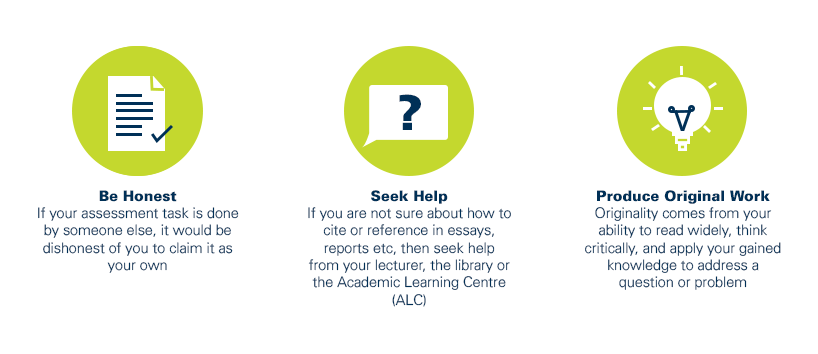
As a CQUniversity student you are expected to act honestly in all aspects of your academic work.
Any assessable work undertaken or submitted for review or assessment must be your own work. Assessable work is any type of work you do to meet the assessment requirements in the unit, including draft work submitted for review and feedback and final work to be assessed.
When you use the ideas, words or data of others in your assessment, you must thoroughly and clearly acknowledge the source of this information by using the correct referencing style for your unit. Using others’ work without proper acknowledgement may be considered a form of intellectual dishonesty.
Participating honestly, respectfully, responsibly, and fairly in your university study ensures the CQUniversity qualification you earn will be valued as a true indication of your individual academic achievement and will continue to receive the respect and recognition it deserves.
As a student, you are responsible for reading and following CQUniversity’s policies, including the Student Academic Integrity Policy and Procedure. This policy sets out CQUniversity’s expectations of you to act with integrity, examples of academic integrity breaches to avoid, the processes used to address alleged breaches of academic integrity, and potential penalties.
What is a breach of academic integrity?
A breach of academic integrity includes but is not limited to plagiarism, self-plagiarism, collusion, cheating, contract cheating, and academic misconduct. The Student Academic Integrity Policy and Procedure defines what these terms mean and gives examples.
Why is academic integrity important?
A breach of academic integrity may result in one or more penalties, including suspension or even expulsion from the University. It can also have negative implications for student visas and future enrolment at CQUniversity or elsewhere. Students who engage in contract cheating also risk being blackmailed by contract cheating services.
Where can I get assistance?
For academic advice and guidance, the Academic Learning Centre (ALC) can support you in becoming confident in completing assessments with integrity and of high standard.
What can you do to act with integrity?