Overview
This unit examines clinical assessment and diagnostic reasoning to recognise and respond to a patient's deteriorating condition with appropriate and timely actions. This unit will enhance your knowledge of serious adverse events such as unexpected death and cardiac arrest which often follow observable deterioration in the patient’s condition. You will develop knowledge and skills in the early identification of deterioration, the initiation of prompt and effective action to minimise serious consequences, improve outcomes and lessen the level of intervention required to stabilise patients. The unit will focus on the underlying pathology of the patient's deteriorating condition and the interpretation of clinical manifestations to implement safe and effective nursing care. This unit will develop your theoretical knowledge of reflection in professional practice of nursing care coordination of the deteriorating patient.
Details
Pre-requisites or Co-requisites
Students must be enrolled in CL22 Master of Clinical Nursing or CL16 Graduate Certificate in Clinical Nursing to undertake this unit.
Important note: Students enrolled in a subsequent unit who failed their pre-requisite unit, should drop the subsequent unit before the census date or within 10 working days of Fail grade notification. Students who do not drop the unit in this timeframe cannot later drop the unit without academic and financial liability. See details in the Assessment Policy and Procedure (Higher Education Coursework).
Offerings For Term 1 - 2026
Attendance Requirements
All on-campus students are expected to attend scheduled classes - in some units, these classes are identified as a mandatory (pass/fail) component and attendance is compulsory. International students, on a student visa, must maintain a full time study load and meet both attendance and academic progress requirements in each study period (satisfactory attendance for International students is defined as maintaining at least an 80% attendance record).
Recommended Student Time Commitment
Each 6-credit Postgraduate unit at CQUniversity requires an overall time commitment of an average of 12.5 hours of study per week, making a total of 150 hours for the unit.
Class Timetable
Assessment Overview
Assessment Grading
This is a graded unit: your overall grade will be calculated from the marks or grades for each assessment task, based on the relative weightings shown in the table above. You must obtain an overall mark for the unit of at least 50%, or an overall grade of 'pass' in order to pass the unit. If any 'pass/fail' tasks are shown in the table above they must also be completed successfully ('pass' grade). You must also meet any minimum mark requirements specified for a particular assessment task, as detailed in the 'assessment task' section (note that in some instances, the minimum mark for a task may be greater than 50%). Consult the University's Grades and Results Policy for more details of interim results and final grades.
All University policies are available on the CQUniversity Policy site.
You may wish to view these policies:
- Grades and Results Policy
- Assessment Policy and Procedure (Higher Education Coursework)
- Review of Grade Procedure
- Student Academic Integrity Policy and Procedure
- Academic Progression Policy and Procedure
- Student Refund and Credit Balance Policy and Procedure
- Complaints Policy and Procedure
- Information and Communications Technology Acceptable Use Policy and Procedure
This list is not an exhaustive list of all University policies. The full list of University policies are available on the CQUniversity Policy site.
Feedback, Recommendations and Responses
Every unit is reviewed for enhancement each year. At the most recent review, the following staff and student feedback items were identified and recommendations were made.
Feedback from Industry partners
Industry partners need to be better onboarded to the partnership model.
This is valuable feedback. We will work with the HOC and industry partners when staff turnover occurs to ensure a smooth handover and onboarding to the partnership model. Ongoing discussions about assessment two are also needed in these early stages, particularly where facilities have large numbers of grads.
- Interpret and explain physiological and psychosocial clinical parameters indicating patient deterioration.
- Communicate effectively with interdisciplinary health teams, the patient and family to accurately transfer and escalate critical information.
- Initiate and evaluate nursing interventions based on clinical assessment and diagnostic results to optimise patient outcomes.
- Analyse a person-centred care approach to the deteriorating patient through critical self-reflection of professional practice.
N/A.
Alignment of Assessment Tasks to Learning Outcomes
| Assessment Tasks | Learning Outcomes | |||
|---|---|---|---|---|
| 1 | 2 | 3 | 4 | |
| 1 - Written Assessment - 100% | ||||
| 2 - Practical Assessment - 0% | ||||
Alignment of Graduate Attributes to Learning Outcomes
| Graduate Attributes | Learning Outcomes | |||
|---|---|---|---|---|
| 1 | 2 | 3 | 4 | |
| 1 - Knowledge | ||||
| 2 - Communication | ||||
| 3 - Cognitive, technical and creative skills | ||||
| 4 - Research | ||||
| 5 - Self-management | ||||
| 6 - Ethical and Professional Responsibility | ||||
| 7 - Leadership | ||||
| 8 - First Nations Knowledges | ||||
| 9 - Aboriginal and Torres Strait Islander Cultures | ||||
Textbooks
There are no required textbooks.
IT Resources
- CQUniversity Student Email
- Internet
- Unit Website (Moodle)
- Academic Learning Centre services
- Microsoft Word
- Wordprocessing, spreadsheeting and powerpoint software
- Zoom account (Free)
- Zoom app on your smart phone or access to Zoom on your laptop
- CQUniversity Library Resources
- Endnote bibliographic software. This is optional for formatting references.
- Online access Australian Standards (through CQU Library)
- Zoom (both microphone and webcam capability)
- CQUniversity Library search engines for research articles
- CQUniversity Library Nursing/Midwifery/Social Work Resources
All submissions for this unit must use the referencing style: American Psychological Association 7th Edition (APA 7th edition)
For further information, see the Assessment Tasks.
c.kurup@cqu.edu.au
a.fuseini@cqu.edu.au
Week 1
Begin Date: 09 Mar 2026Module/Topic
Welcome to the unit.
Self-directed learning module.
Considering the deteriorating patient.
Clinical reasoning, patient deterioration and assessment frameworks.
Chapter
Review the Moodle site and click on all the links.
Review the recorded lecture and online Zoom tutorial timetable.
Find out what is in Student Support.
How do I find the Library?
Click on the link and learn what is the Academic Learning Centre.
Review the eReadings and activities as outlined in the module.
Events and Submissions/Topic
Recorded presentations:
Welcome and Unit Introduction O Week.
Assessments 1 and 2.
Considering the deteriorating patient.
Assessments 1 and 2 - Review the assessment tasks and rubrics and make a study plan.
Activity – Access the General Discussion page and introduce yourself to your colleagues by providing your:
Name
Where you work
Why you are studying GCN.
Foundations of Academic Integrity Program - complete your annual program.
Announcement and Discussion Boards - Check for posts and updates.
Week 2
Begin Date: 16 Mar 2026Module/Topic
Health Assessment - Primary and Secondary Survey.
Chapter
Readings and activities as outlined in the module.
Events and Submissions/Topic
Zoom - Drop-in question and answer, Unit content and assessments.
Assessment 1 - Review Assessment requirements.
Assessment 2 - Commence practicing clinical skills.
Announcement and Discussion Boards - Check for posts and updates.
Student email - Check your student email at least twice per week for communication.
Week 3
Begin Date: 23 Mar 2026Module/Topic
Respiratory Deterioration.
Chapter
Readings and activities as outlined in module.
Events and Submissions/Topic
Recorded presentation - Listen to the presentation.
Assessment 1 - Start planning your assessment.
Announcement and Discussion Boards - Check for posts and updates.
Student email - Check your student email at least twice per week for communication
Week 4
Begin Date: 30 Mar 2026Module/Topic
Cardiovascular Deterioration.
Chapter
Readings and activities as outlined in the module.
Events and Submissions/Topic
Zoom - Drop-in question and answer, Unit content and assessments.
Assessment 1 - Continue preparing assessment.
Announcement and Discussion Boards - Check for posts and updates.
Student email - Check your student email at least twice per week for communication.
Week 5
Begin Date: 06 Apr 2026Module/Topic
Neurological Deterioration.
Chapter
Readings and activities as outlined in the module.
Events and Submissions/Topic
Recorded presentation - Listen to the presentation.
Assessment 1 - Reflect on knowledge required to undertake this assessment.
Announcement and Discussion Boards - Check for posts and updates.
Student email - Check your student email at least twice per week for communication.
Week 6
Begin Date: 13 Apr 2026Module/Topic
Gastrointestinal Tract Deterioration.
Chapter
Readings and activities as outlined in the module.
Events and Submissions/Topic
Zoom - Drop-in question and answer, Unit content and assessments.
Announcement and Discussion Boards - Check for posts and updates.
Student email - Check your student email at least twice per week for communication.
Vacation Week
Begin Date: 20 Apr 2026Module/Topic
Vacation week!
Chapter
Please use this mid-term break as an opportunity to rest and recover. Enjoy your break!
Events and Submissions/Topic
No timetabled learning activities.
Please use this week to progress your assessments.
Week 7
Begin Date: 27 Apr 2026Module/Topic
Renal Deterioration.
Chapter
Readings and activities as outlined in the module.
Events and Submissions/Topic
Recorded presentation - Listen to the presentation.
Assessment 1 - Finalise assessment.
Announcement and Discussion Boards - Check for posts and updates.
Student email - Check your student email at least twice per week for communication.
Written case study Due: Week 7, Wednesday, 29th April 2026, 5 pm AEST
Written case study Due: Week 7 Wednesday (29 Apr 2026) 4:00 pm AEST
Week 8
Begin Date: 04 May 2026Module/Topic
Mental Health Deterioration.
Chapter
Readings and activities as outlined in module.
Events and Submissions/Topic
Zoom - Drop-in question and answer, Unit content and assessments.
Assessment 2 - Practice your clinical skills for assessment two.
Announcement and Discussion Boards - Check for posts and updates.
Student email - Check your student email at least twice per week for communication.
Week 9
Begin Date: 11 May 2026Module/Topic
Special population groups and deterioration.
Chapter
Readings and activities as outlined in the module.
Events and Submissions/Topic
Zoom - Drop-in question and answer, Unit content and assessments.
Assessment 2 - Work toward completing and passing assessment two.
Announcement and Discussion Boards - Check for posts and updates.
Student email - Check your student email at least twice per week for communication.
Week 10
Begin Date: 18 May 2026Module/Topic
Triage in the context of deterioration.
Chapter
Readings and activities as outlined in the module.
Events and Submissions/Topic
Zoom - Drop-in question and answer, Unit content and assessments.
Assessment 2 - Work toward completing and passing assessment two.
Announcement and Discussion Boards - Check for posts and updates.
Student email - Check your student email at least twice per week for communication.
Week 11
Begin Date: 25 May 2026Module/Topic
Patient transfer in the context of the deteriorating patient.
Chapter
Readings and activities as outlined in the module.
Events and Submissions/Topic
Recorded presentation - Listen to the presentation.
Assessment 2 - Complete within the next week.
Announcement and Discussion Boards - Check for posts and updates.
Student email - Check your student email at least twice per week for communication.
Student Unit and Teaching Evaluation survey – We encourage you to provide feedback about your unit and teaching experiences in this unit. The survey opens Week 11 and closes one week before release of grades
Week 12
Begin Date: 01 Jun 2026Module/Topic
Summary - Deterioration.
Chapter
Readings and activities as outlined in the module.
Events and Submissions/Topic
Zoom - Drop-in question and answer, Unit content and assessments.
Assessment 2 - Finalise Assessment two.
Announcement and Discussion Boards - Check for posts and updates.
Student email - Check your student email at least twice per week for communication.
Practical Assessment Due: Week 12 Wednesday 3rd June 2026, 5 pm AEST
Student Unit and Teaching Evaluation survey – Please complete the unit evaluation survey. AND Congratulations on completing this unit. Don’t forget to check your unit enrolments for next term’
Practical Assessment Due: Week 12 Wednesday (3 June 2026) 5:00 pm AEST
Exam Week
Begin Date: 08 Jun 2026Module/Topic
NIL
Chapter
NIL
Events and Submissions/Topic
NIL
Vacation/Exam Week
Begin Date: 15 Jun 2026Module/Topic
Chapter
Events and Submissions/Topic
As this unit is offered online, students are asked to prepare their own individual study plan to undertake self-led and self-directed study throughout the term. A key to your success is a strategic self-directed approach to learning and regular contact with your Unit Coordinator/s. Please check the Announcements and Discussion forums at least twice a week – there will be regular announcements about assessments and unit resources throughout the term and reviewing this information is essential to unit knowledge and your success. CQUniversity communicates with students through CQUniversity email. We recommend that you access your CQUniversity email at least twice a week so that you do not miss vital information about your studies.
1 Written Assessment
You must write a 1000-word written response to the provided case study that critically analyses acute clinical deterioration through application of pathophysiology, evidence-based communication, a nurse-led intervention, and person-centred reflective practice to enhance patient safety and outcomes.
Instructions
Please refer to the assessment task instructions on the unit Moodle site.
Academic Integrity
You must abide by the principles of academic integrity (see Student Academic Integrity Policy and Procedure). Completion of this assessment with another party or sharing of responses is not permitted at any time. This assessment requires students to adhere to the guidelines on the use of artificial intelligence tools as specified in the Artificial Intelligence Assessment Scale (AIAS). Any misuse or lack of disclosure regarding the use of AI tools will be considered a breach of academic integrity. CQUniversity Gen AI tools approved for use in this assessment are Microsoft CoPilot (protected version), Studiosity and Grammarly. You are permitted to use technology or tools that assist with spelling, grammar or formatting.
Level of GenAI Use Allowed
Level 2: You may use Al for planning, idea development, and research. Your final submission should show how you have developed and refined these ideas.
Extensions
Extensions to this assessment are available as per policy. The 72-hour grace period may apply to this assessment.
Minimum Pass Criteria
· You must achieve a minimum grade of 49.5% in this assessment to pass the unit.
· In order for a supplementary assessment to be considered, all assessment tasks must be reasonably attempted in this unit.
Week 7 Wednesday (29 Apr 2026) 4:00 pm AEST
Submit your assessment in Microsoft Word format only.The assessment is due by 4:00pm (AEST) as on the listed due date. Submit via the Moodle submission link. Late penalties of 5% per day of the available mark may be applied as per the Assessment Policy and Procedure (Higher Education Coursework). Contact TASAC if you experience technical issues submitting your assessment: • Phone (toll-free): 1300 666 620 • Email: tasac@cqu.edu.au
Week 10 Wednesday (20 May 2026)
Results for this assessment will be made available on Wednesday, 20th May 2026 (Week 10)
Refer to the marking rubric on the Moodle site for more detail on how marks will be assigned.
- Interpret and explain physiological and psychosocial clinical parameters indicating patient deterioration.
- Communicate effectively with interdisciplinary health teams, the patient and family to accurately transfer and escalate critical information.
- Initiate and evaluate nursing interventions based on clinical assessment and diagnostic results to optimise patient outcomes.
- Analyse a person-centred care approach to the deteriorating patient through critical self-reflection of professional practice.
2 Practical Assessment
You must demonstrate, in a simulated clinical setting, safe and competent recognition and management of a deteriorating patient by performing a systematic assessment, initiating appropriate nursing interventions, escalating care using ISBAR, and applying airway and oxygen therapy skills in alignment with national safety standards.
Instructions:
Please refer to the assessment task instructions on the unit Moodle site.
Academic Integrity
You must comply with the principles of academic integrity (refer to the Student Academic Integrity Policy and Procedure). Completing this assessment with another person or sharing responses at any time is strictly prohibited. This assessment requires adherence to the Artificial Intelligence Assessment Scale (AIAS) guidelines. The use of any generative artificial intelligence tools is not permitted, as this assessment is classified as Level 1 (No AI) under the AIAS tool indicators. Any use, misuse, or failure to disclose the use of AI tools will be considered a breach of academic integrity.
Extensions: Extensions to this assessment are available as per policy. The 72-hour grace period does not apply to this assessment.
Minimum Pass Criteria
· You must achieve a Pass in all criteria to pass this assessment.
· In order for a supplementary assessment to be considered, all assessment tasks must be reasonably attempted in this unit.
Week 12 Wednesday (3 June 2026) 5:00 pm AEST
The assessment date will be determined by the Graduate Coordinator. You must submit your signed rubrics via Moodle by the specified due date. The assessment must be submitted by 4:00 pm (AEST) on the listed due date using the Moodle submission link. If you experience technical difficulties when submitting your assessment, contact TASAC: • Phone (toll-free): 1300 666 620 • Email: tasac@cqu.edu.au
Exam Week Wednesday (10 June 2026)
Students will receive the results of this assessment shortly after their Clinical Deterioration assessment, from either the Graduate Coordinator or the Unit Coordinator.
Refer to the marking rubric on the Moodle site for more detail on how marks will be assigned.
- Interpret and explain physiological and psychosocial clinical parameters indicating patient deterioration.
- Communicate effectively with interdisciplinary health teams, the patient and family to accurately transfer and escalate critical information.
- Initiate and evaluate nursing interventions based on clinical assessment and diagnostic results to optimise patient outcomes.
- Analyse a person-centred care approach to the deteriorating patient through critical self-reflection of professional practice.
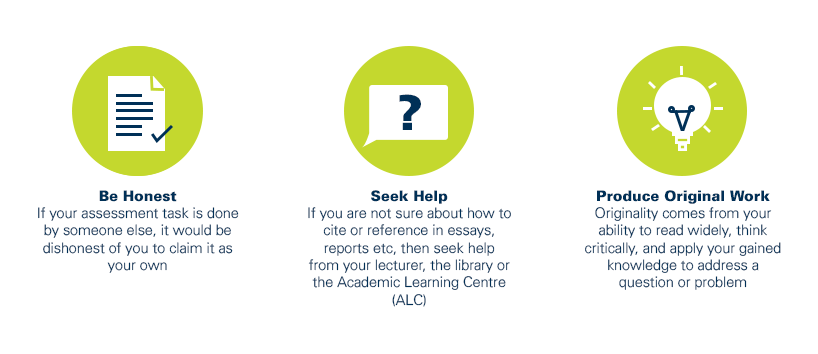
As a CQUniversity student you are expected to act honestly in all aspects of your academic work.
Any assessable work undertaken or submitted for review or assessment must be your own work. Assessable work is any type of work you do to meet the assessment requirements in the unit, including draft work submitted for review and feedback and final work to be assessed.
When you use the ideas, words or data of others in your assessment, you must thoroughly and clearly acknowledge the source of this information by using the correct referencing style for your unit. Using others’ work without proper acknowledgement may be considered a form of intellectual dishonesty.
Participating honestly, respectfully, responsibly, and fairly in your university study ensures the CQUniversity qualification you earn will be valued as a true indication of your individual academic achievement and will continue to receive the respect and recognition it deserves.
As a student, you are responsible for reading and following CQUniversity’s policies, including the Student Academic Integrity Policy and Procedure. This policy sets out CQUniversity’s expectations of you to act with integrity, examples of academic integrity breaches to avoid, the processes used to address alleged breaches of academic integrity, and potential penalties.
What is a breach of academic integrity?
A breach of academic integrity includes but is not limited to plagiarism, self-plagiarism, collusion, cheating, contract cheating, and academic misconduct. The Student Academic Integrity Policy and Procedure defines what these terms mean and gives examples.
Why is academic integrity important?
A breach of academic integrity may result in one or more penalties, including suspension or even expulsion from the University. It can also have negative implications for student visas and future enrolment at CQUniversity or elsewhere. Students who engage in contract cheating also risk being blackmailed by contract cheating services.
Where can I get assistance?
For academic advice and guidance, the Academic Learning Centre (ALC) can support you in becoming confident in completing assessments with integrity and of high standard.
What can you do to act with integrity?