Overview
In this unit, you will have the opportunity to practice fundamental nursing care in the clinical environment. You will apply the Nursing and Midwifery Board of Australia (NMBA) registered nurse standards for practice (2016). You will continue to explore the importance of the National Safety and Quality Health Service (NSQHS) Standards (2017) to all nursing practice in Australia and use the Patient Safety Competency Framework (PSCF) (Levett-Jones et al., 2017) in your practice as a nursing student. You will be expected to identify risk and recognise and respond appropriately to the older adult who is a deteriorating patient in the simulated and clinical environment. You will review the concept of scope of practice using the Decision-making framework (DMF) (NMBA, 2020). You are required to participate in a compulsory four (4) day residential school prior to attending professional experience placement for this unit. This unit includes a 240-hour block professional experience placement in a clinical environment. This must be undertaken in a fulltime capacity. You must meet specific mandatory health, safety and security requirements to be eligible to attend each professional experience placement. Professional experience placements may be limited in your community, and you may be placed in other locations. Please be prepared financially and personally to cover the costs to relocate for placements. Due to the limited availability of placements, some block placements have start and/or end dates that fall outside standard term dates. You must be physically and mentally well and meet the inherent requirements of the course to undertake this unit in the simulated and clinical environment. To be successful in this unit you must pass both assessment items.
Details
Pre-requisites or Co-requisites
Prerequisites: NURS28008 Nursing Foundations
Important note: Students enrolled in a subsequent unit who failed their pre-requisite unit, should drop the subsequent unit before the census date or within 10 working days of Fail grade notification. Students who do not drop the unit in this timeframe cannot later drop the unit without academic and financial liability. See details in the Assessment Policy and Procedure (Higher Education Coursework).
Offerings For Term 3 - 2026
Attendance Requirements
All on-campus students are expected to attend scheduled classes - in some units, these classes are identified as a mandatory (pass/fail) component and attendance is compulsory. International students, on a student visa, must maintain a full time study load and meet both attendance and academic progress requirements in each study period (satisfactory attendance for International students is defined as maintaining at least an 80% attendance record).
Recommended Student Time Commitment
Each 12-credit Postgraduate unit at CQUniversity requires an overall time commitment of an average of 25 hours of study per week, making a total of 300 hours for the unit.
Class Timetable
Assessment Overview
Assessment Grading
This is a pass/fail (non-graded) unit. To pass the unit, you must pass all of the individual assessment tasks shown in the table above.
All University policies are available on the CQUniversity Policy site.
You may wish to view these policies:
- Grades and Results Policy
- Assessment Policy and Procedure (Higher Education Coursework)
- Review of Grade Procedure
- Student Academic Integrity Policy and Procedure
- Academic Progression Policy and Procedure
- Student Refund and Credit Balance Policy and Procedure
- Complaints Policy and Procedure
- Information and Communications Technology Acceptable Use Policy and Procedure
This list is not an exhaustive list of all University policies. The full list of University policies are available on the CQUniversity Policy site.
Feedback, Recommendations and Responses
Every unit is reviewed for enhancement each year. At the most recent review, the following staff and student feedback items were identified and recommendations were made.
Feedback from Feedback collected from students, teaching staff and clinical placement hosts through Unit Coordinator contact sessions and communication with clinical facilitators.
Feedback from students undertaking six-week continuous clinical placements indicated a need for structured feedback earlier in the placement. Students reported that formal feedback at approximately Week 2, followed by another structured review later in the placement, would better support their learning, confidence and clinical skill development before the final summative assessment. Clinical facilitators also identified that the current assessment structure may delay recognition of learning needs or performance concerns, limiting opportunities for timely support and intervention. An inequity was also identified between placement structures. Students undertaking two separate three-week placements receive a formative and summative ANSAT during each placement, whereas students undertaking one continuous six-week placement receive only one formative ANSAT at Week 3 and one summative ANSAT at Week 6.
Revise the assessment structure for six-week continuous placements to include formative ANSATs at approximately Weeks 2 and 4, followed by the summative ANSAT at Week 6. This would enable earlier identification of learning needs, provide structured monitoring of student progress and improve consistency across placement models.
Feedback from Feedback collected from students and clinical facilitators, together with consideration of the NMBA Registered Nurse Standards for Practice and the Australian Nursing Standards Assessment Tool (ANSAT). These frameworks emphasise safe, evidence-based practice, capability for practice and the early identification of learning needs.
Student and clinical facilitator feedback identified variation in students’ preparedness for higher-risk clinical activities, particularly intravenous medication administration. This may contribute to placement difficulties, delayed identification of support needs and potential risks within the clinical environment.
Introduce a mandatory Objective Structured Clinical Examination (OSCE) assessing intravenous medication administration during Residential School Day 4, before students commence clinical placement. This would confirm baseline clinical readiness, enable early identification of students requiring additional support and allow targeted intervention before placement.
- Apply the Nursing and Midwifery Board of Australia (NMBA) Registered nurse standards for practice in the physical and psychosocial assessment, planning, implementation and evaluation of consumers, including those with cognitive impairment in the simulated and clinical environment
- Identify potential risks for the consumer, especially the elderly in clinical environments and determine strategies to minimise these risks
- Recognise and respond appropriately to the deteriorating patient in the simulated and clinical environment
- Develop strategies for self-care when managing decline in cognition in the older person with delirium and/or dementia
- Demonstrate knowledge and application of safe supply and administration of parenteral and non-parenteral medication.
Content in this unit incorporates a number of professional nursing requirements
Nursing and Midwifery Board of Australia decision-making framework (DMF) - nursing
Nursing and Midwifery Board of Australia Registered Nurse Standards for Practice
Thinks critically and analyses nursing practice
Engages in therapeutic and professional relationships
Maintains the capability for practice
Comprehensively conducts assessments
Develops a plan for nursing practice
Provides safe, appropriate and responsive quality nursing practice
Evaluates outcomes to inform nursing practice
Nursing and Midwifery Board of Australia Nursing Code of Conduct
Legal compliance
Person-centred practice
Cultural practice and respectful relationships
Professional behaviour
Research in health
Health and wellbeing
International Council of Nursing Code of Ethics for Nursing
Nurses and People
Nurses and Practice
Nurses and the Profession
Nurses and co-workers
National Safety and Quality Health Service Standards
Clinical governance
Partnering with consumers
Preventing and Controlling healthcare-associated infection
Medication safety
Comprehensive care
Communicating for safety
Recognising and responding to acute deterioration
Patient Safety Competency Framework
Person-centred care
Therapeutic communication
Cultural competence
Teamwork and collaborative practice
Clinical reasoning
Evidence-based practice
Preventing, minimising and responding to adverse events
Infection prevention and control
Medication safety
Aged Care Quality Standards
Consumer dignity and choice
Ongoing assessment and planning with consumers
Personal care and clinical care
Services and supports for daily living
Organisation’s service environment
Feedback and complaints
Human resources
Organisation governance
Alignment of Assessment Tasks to Learning Outcomes
| Assessment Tasks | Learning Outcomes | ||||
|---|---|---|---|---|---|
| 1 | 2 | 3 | 4 | 5 | |
| 1 - Online Test - 0% | |||||
| 2 - Professional Practice Placement - 0% | |||||
Alignment of Graduate Attributes to Learning Outcomes
| Graduate Attributes | Learning Outcomes | ||||
|---|---|---|---|---|---|
| 1 | 2 | 3 | 4 | 5 | |
| 1 - Knowledge | |||||
| 2 - Communication | |||||
| 3 - Cognitive, technical and creative skills | |||||
| 4 - Research | |||||
| 5 - Self-management | |||||
| 6 - Ethical and Professional Responsibility | |||||
| 7 - Leadership | |||||
| 8 - First Nations Knowledges | |||||
Textbooks
Nursing Student's Clinical Survival Guide
- Edition: 5 (2024)
- Authors: Reid-Searl, Kerry. Dwyer, Trudy. Moxham, Lorna.
- Pearson Imprint Rugby : Pearson Education, Limited
- ISBN: 0-6557-1362-X
https://cqu.primo.exlibrisgroup.com/permalink/61CQU_INST/liupuq/alma991002154397603441
Pearson eText for Critical Conversations for Patient Safety, 3e Australia Version
- ISBN: 9780655708674
Pearson eText for Critical Conversations for Patient Safety, 3e Australia Version
Author(s)
Tracy Levett-Jones
ISBN-13
9780655708674
Potter & Perry's Fundamentals of nursing
- Fourth, Fifth or Sixth Edition (2012 , 2026)
- Authors: Crisp, Jackie, editor.; Taylor, Catherine, RN, editor.; Douglas, Clint, editor.; Rebeiro, Geraldine, editor.; Potter, Patricia Ann, editor.; Perry, Anne Griffin, editor.; Stockert, Patricia A., editor
- Elsevier Australia
- ISBN: ISBN : 0-7295-8110-1 ISBN : 0-7295-4110-X
https://cqu.primo.exlibrisgroup.com/permalink/61CQU_INST/liupuq/alma991001823631203441
Principles of Anatomy and Physiology, 15th Edition
- (2017)
- ISBN: Print ISBN 9781119329398 eBook ISBN 9781119336563
https://ebookcentral.proquest.com/lib/cqu/detail.action?docID=5106480
Skills in Clinical Nursing, 2nd edition
- ISBN: ISBN : 9780655700548
https://cqu.primo.exlibrisgroup.com/permalink/61CQU_INST/117pkb8/alma991001820279503441
Additional Textbook Information
The following textbook is needed for four units in this course for Term 2, 2026 onwards:
"Potter and Perry's Fundamentals of Nursing" (7th edition, December 2025, ISBN: 9780729544870)
Four units: NURS28008, NURS29004, NURS29005, NURS29006
The 2012 version is available from Library Search.
Can we also have this book
Medical-Surgical Nursing - Single-Volume Text and Study Guide Package, 12th Edition
Author : By Mariann Harding
ISBN :9780323825207
Publication Date :01-09-2022
IT Resources
- CQUniversity Student Email
- Internet
- Unit Website (Moodle)
- Academic Learning Centre services
- CQUniversity library literature search tools
- Microsoft Word
- Wordprocessing, spreadsheeting and powerpoint software
- Access to eMIMs and AMH through the university library Paramedic Science Resource Guide
- Microsoft Teams
- CQUniversity Library Nursing Resources
- CQU Library hosted Literature Databases
- Students must have necessary equipment/accessories to attend online lectures via Zoom or Microsoft Teams
- Microsoft Teams (both microphone and webcam capability)
- EndNote (bibliographical software). EndNote bibliographic software to format your references is NOT mandatory. However, it will be a great tool to manage your research references and cite them in texts. Consult ITD for instructions on how to download this software. It is easy to use and very helpful. See https://my.cqu.edu.au/group/it-services/endonte to access the software
- Access to Microsoft software such as Word, PowerPoint, MS Project and Visio
- CQUniversity Library search engines for research articles
- CQUniversity Library Nursing/Midwifery/Social Work Resources
- Australian Standards (through CQU library)
- CQU Library Resources
All submissions for this unit must use the referencing style: American Psychological Association 7th Edition (APA 7th edition)
For further information, see the Assessment Tasks.
l.jose@cqu.edu.au
Module/Topic
Chapter
Events and Submissions/Topic
Week 0 – Residential School (4-Day Program)
Begin Date: 26 Oct 2026Module/Topic
● Primary taught clinical component before term begins and placement may start from Week 2
● Simulation-based practice across all five unit learning outcomes (ULOs)
● One unfolding older-person case used across all four days
Chapter
● Primary taught clinical component before term begins and placement starts in Week 2
● Simulation-based practice across all five unit learning outcomes (ULOs)
● One unfolding older-person case used across all four days
Events and Submissions/Topic
Activity: Access the General Channel on Teams page and review contents and complete activities as per Moodle
Student email – Check your student email at least twice per week for important communications.
● Day 1 – Safe entry to practice, baseline assessment and non-parenteral medicines
● Day 2 – Older-person risk, fundamental care, delirium/dementia and student self-care
● Day 3 – Parenteral medication and selected clinical interventions (wounds, IDC, enteral nutrition, mobility)
● Day 4 – Deterioration recognition, escalation, and an integrated placement-readiness simulation
Week 1 – Transition to Professional Placement
Begin Date: 09 Nov 2026Module/Topic
● Consolidate residential-school learning and confirm readiness for supervised placement
Chapter
● Placement orientation and professional conduct
● Scope, supervision and the NMBA Decision-making framework
● Self-care, fatigue awareness and maintenance of capability
Events and Submissions/Topic
Week 2 – Entering Practice Safely
Begin Date: 16 Nov 2026Module/Topic
● Safe transition from simulation to the realities of the clinical environment
Chapter
● Clinical-area orientation and local documentation/medication systems
● Consumer identification and infection prevention
● Emergency and deterioration escalation processes
Events and Submissions/Topic
Welcome and Unit Introduction.
Activity: Access the General Channel on Teams page and introduce yourself to your colleagues by providing your name and maybe why you are studying this unit and course.
Assessments: Review the assessment tasks and make a study plan.
Foundations of Academic Integrity Program: Complete your annual program.
Student email – Check your student email at least twice per week for important communications.
Week 3 – Comprehensive Assessment and Documentation
Begin Date: 23 Nov 2026Module/Topic
● Integrating physical, psychosocial, cognitive and functional findings into a defensible clinical picture
Chapter
● Health history and person-centred assessment
● Objective vs subjective data; baseline vs acute change
● Clinical documentation and structured handover
Events and Submissions/Topic
Census date is next week. If you are struggling, please contact your Unit Coordinator for help.
Activity: Access the General Channel on Teams page and review contents and complete activities as per Moodle
Student email – Check your student email at least twice per week for important communications.
Week 4 – Planning, Implementing and Evaluating Care
Begin Date: 30 Nov 2026Module/Topic
● Making the complete nursing process visible, not assessment alone
Chapter
● Clinical prioritisation and person-centred goals
● Planning and implementing fundamental care
● Evaluation criteria, outcome statements and revising care
Events and Submissions/Topic
Census Date T3 2026
Tuesday, 01 December 2026
Activity: Access the General Channel on Teams page and review contents and complete activities as per Moodle
Student email – Check your student email at least twice per week for important communications.
Week 5 – Older-Person Risk and Fundamental Care
Begin Date: 07 Dec 2026Module/Topic
● Integrated risk judgement rather than separate falls/skin/hydration checklists
Chapter
● Falls, mobility and functional decline
● Pressure injury, skin integrity, nutrition, hydration and continence
● Medication-related harm, polypharmacy and infection risk
Events and Submissions/Topic
Activity: Access the General Channel on Teams page and review contents and complete activities as per Moodle
Student email – Check your student email at least twice per week for important communications.
Week 6 – Cognitive Impairment, Delirium and Student Self-Care
Begin Date: 14 Dec 2026Module/Topic
● Strengthening the least visible outcome - student self-care
Chapter
● Cognitive baseline and acute change; delirium vs dementia
● Therapeutic communication; family and carer partnership
● Stress signals, clinical supervision, debriefing and help-seeking
Events and Submissions/Topic
Activity: Access the General Channel on Teams page and review contents and complete activities as per Moodle
Student email – Check your student email at least twice per week for important communications.
Vacation Week
Begin Date: 21 Dec 2026Module/Topic
Chapter
Events and Submissions/Topic
Activity: Access the General Channel on Teams page and review contents and complete activities as per Moodle
Student email – Check your student email at least twice per week for important communications.
Week 7 – Safe Medication Practice
Begin Date: 04 Jan 2027Module/Topic
● Connecting medication rights and calculations with clinical judgement
Chapter
● Medication orders, allergies, rights and checks
● Non-parenteral, Parenteral, Subcut IM and insulin routes; polypharmacy in older people
● Withholding, refusal, omitted doses, incidents and near misses
Events and Submissions/Topic
Practice Experience Unit 2 (NURS29005) – Master of Nursing
Enrol in NURS29005 Practice Experience Unit 2.
Ensure all Mandatory Checks are uploaded by the closing date (Monday, Week 10).
Activity: Access the General Channel on Teams page and review contents and complete activities as per Moodle
Student email – Check your student email at least twice per week for important communications.
Week 8 – Recognising and Responding to Deterioration
Begin Date: 11 Jan 2027Module/Topic
● Baseline, trend, escalation and reassessment as one coherent sequence
Chapter
● Atypical deterioration in older people, acute confusion, sepsis
● Respiratory, circulatory and neurological change
● Structured assessment, local escalation criteria and ISBAR
Events and Submissions/Topic
Practice Experience Unit 2 (NURS29005) – Master of Nursing
Enrol in NURS29005 Practice Experience Unit 2.
Ensure all Mandatory Checks are uploaded by the closing date (Monday, Week 10).
Activity: Access the General Channel on Teams page and review contents and complete activities as per Moodle
Student email – Check your student email at least twice per week for important communications.
Week 9 – Communication and Team-Based Safety
Begin Date: 18 Jan 2027Module/Topic
● Reliable communication behaviours for handover, escalation and collaboration
Chapter
● ISBAR and clinical handover; PACE / graded assertiveness
● Closed-loop communication and clarification
● Consumer, family and interprofessional communication
Events and Submissions/Topic
Practice Experience Unit 2 (NURS29005) – Master of Nursing
Enrol in NURS29005 Practice Experience Unit 2.
Ensure all Mandatory Checks are uploaded by the closing date (Monday, Week 10).
Activity: Access the General Channel on Teams page and review contents and complete activities as per Moodle
Student email – Check your student email at least twice per week for important communications.
Week 10 – Patient Safety and Evidence of Practice
Begin Date: 25 Jan 2027Module/Topic
● Connecting individual clinical experience with safety systems
Chapter
● NSQHS Standards and human factors
● Near-miss analysis, reporting and learning systems
● Review of evidence against all five ULOs
Events and Submissions/Topic
Practice Experience Unit 2 (NURS29005) – Master of Nursing
Enrol in NURS29005 Practice Experience Unit 2.
Ensure all Mandatory Checks are uploaded by the closing date (Monday, Week 10).
Activity: Access the General Channel on Teams page and review contents and complete activities as per Moodle
Student email – Check your student email at least twice per week for important communications.
Week 11 – Evaluation, Feedback and Placement Completion
Begin Date: 01 Feb 2027Module/Topic
● Transparent evidence, actionable feedback and safe professional closure
Chapter
● Final professional practice assessment and feedback conversations
● Completion of placement documentation
● Managing concerns and continuing self-care
Events and Submissions/Topic
Activity: Access the General Channel on Teams page and review contents and complete activities as per Moodle
Student email – Check your student email at least twice per week for important communications.
Student Unit and Teaching Evaluation survey – We encourage you to provide feedback about your unit and teaching experiences in this unit. The survey opens Week 11 and closes one week before release of grades.
Week 12 – Consolidation, Reflection and Progression
Begin Date: 08 Feb 2027Module/Topic
● Readiness for Registered Nurse practice at the next level – progression to NURS29005
Chapter
● Critical reflection across all five ULOs
● Evaluation of learning and self-care strategies
● Identification of knowledge and practice gaps
Events and Submissions/Topic
Activity: Access the General Channel on Teams page and review contents and complete activities as per Moodle
Student email – Check your student email at least twice per week for important communications.
Student Unit and Teaching Evaluation survey – Please complete the unit evaluation survey.
Congratulations on completing this unit. Don’t forget to check your unit enrolments for next term.
NURS29004 includes a mandatory four-day Residential School from 31 October 2026 - 2 November 2026, designed to consolidate clinical reasoning, practical skills, and professional judgement through immersive and applied learning experiences.
The Residential School provides an opportunity to translate your prior learning into practice within a Simulation Laboratory environment, with a strong focus on integration, performance, and structured feedback to support your development.
As this unit is delivered online with a Residential School component, you are expected to take responsibility for your own learning by developing and following an individual study plan. This includes engaging in self-directed and self-regulated learning throughout the term.
As this unit is offered in Mixed mode, students are asked to prepare their own individual study plan to undertake self-led and self-directed study throughout the term. A key to your success is a strategic self-directed approach to learning and regular contact with your Unit Coordinator/s. Please check the Announcements and Discussion forums at least twice a week – there will be regular announcements about assessments and unit resources throughout the term and reviewing this information is essential to unit knowledge and your success. CQUniversity communicates with students through CQUniversity email. We recommend that you access your CQUniversity email at least twice a week so that you do not miss vital information about your studies.
1 Online Test
The aim of this assessment is for you to demonstrate your ability to perform basic maths, medication calculations, and your understanding of medication safety.
Instructions
Please refer to the assessment task instructions on the unit Moodle site.
Academic Integrity
- You must abide by the principles of academic integrity (see Student Academic Integrity Policy and Procedure). Completion of this assessment with another party or sharing of responses is not permitted at any time.
- The use of any generative artificial intelligence is not permitted as per Level 1 (No AI) in the AI Assessment scale tool indicators.
Extensions
Extensions are not available as per policy for this assessment, and the 72-hour grace period does not apply to this assessment.
Minimum Pass Criteria
- You must achieve 100% to pass this assessment.
- You must pass this assessment to progress to professional experience placement.
- To pass this unit, you are required to achieve a pass grade in both assessments.
- Supplementary assessment is not available as per policy for Work Integrated Learning Units.
Day 1 of the compulsory residential School (re-attempts may be offered on day 2 and/or day 3 of residential school)
Results for the quiz will be available immediately after the attempt is complete
- Marks will automatically be applied to each question.
- A maximum one (1) mark per question will be allocated.
- Assessment re-attempt is available for Assessment One; that is, you may be eligible for up to three attempts to achieve a 100% grade for this assessment.
- Demonstrate knowledge and application of safe supply and administration of parenteral and non-parenteral medication.
2 Professional Practice Placement
The aim of this assessment is for you to demonstrate advanced application and integration of fundamental and complex nursing care within clinical settings, informed by the NMBA Registered Nurse Standards for Practice (2016), NSQHS Standards (2017), and the Patient Safety Competency Framework (2017) during a 240-hour Professional Experience Placement. The aim of this assessment is for you to demonstrate your ability to successfully embed learning from this unit into Professional Experience Placement as a Final semester Master of Nursing Graduate Entry Student.
Instructions
Please refer to the assessment task instructions on the unit Moodle site.
Academic Integrity
- You must abide by the principles of academic integrity (see Student Academic Integrity Policy and Procedure). Completion of this assessment with another party or sharing of responses is not permitted at any time.
- The use of any generative artificial intelligence is not permitted as per Level 1 (No AI) in the AI Assessment scale tool indicators.
Extensions:
Extensions to this assessment are not available as per policy. The 72-hour grace period does not apply to this assessment.
Minimum Pass Criteria
- You must achieve a minimum grade of 3 for all ANSAT criteria to pass this assessment.
- To pass this unit, you are required to achieve a pass grade in all assessments.
- Supplementary assessment is not available as per policy for Work Integrated Learning Units.
Assessment’s due: Formative ANSAT assessment due: During week two (after 80 hours) and week four (after 160 hours) of your clinical placement. Summative ANSAT due: Final day of placement.
Assessment Criteria
· Students are assessed against the Australian Nursing Standards Assessment Tool (ANSAT). A copy of this is available to you through SONIA.
· Completion of 240 hours of Professional Experience Placement and achieve a score of 3 or higher on each criterion on the summative ANSAT assessment.
· You are required to attempt and submit all assessment items in this unit.
- Apply the Nursing and Midwifery Board of Australia (NMBA) Registered nurse standards for practice in the physical and psychosocial assessment, planning, implementation and evaluation of consumers, including those with cognitive impairment in the simulated and clinical environment
- Identify potential risks for the consumer, especially the elderly in clinical environments and determine strategies to minimise these risks
- Recognise and respond appropriately to the deteriorating patient in the simulated and clinical environment
- Develop strategies for self-care when managing decline in cognition in the older person with delirium and/or dementia
- Demonstrate knowledge and application of safe supply and administration of parenteral and non-parenteral medication.
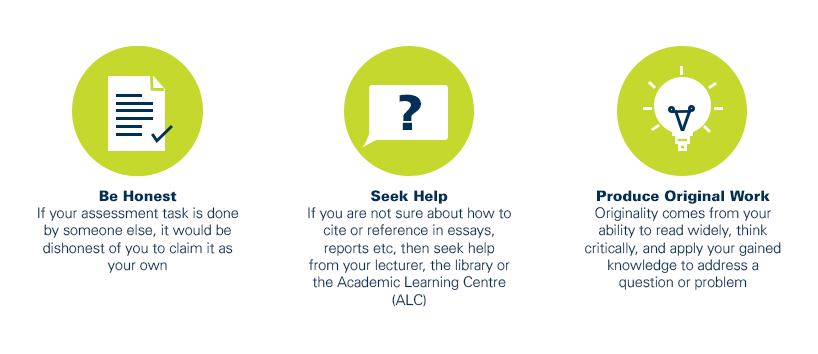
As a CQUniversity student you are expected to act honestly in all aspects of your academic work.
Any assessable work undertaken or submitted for review or assessment must be your own work. Assessable work is any type of work you do to meet the assessment requirements in the unit, including draft work submitted for review and feedback and final work to be assessed.
When you use the ideas, words or data of others in your assessment, you must thoroughly and clearly acknowledge the source of this information by using the correct referencing style for your unit. Using others’ work without proper acknowledgement may be considered a form of intellectual dishonesty.
Participating honestly, respectfully, responsibly, and fairly in your university study ensures the CQUniversity qualification you earn will be valued as a true indication of your individual academic achievement and will continue to receive the respect and recognition it deserves.
As a student, you are responsible for reading and following CQUniversity’s policies, including the Student Academic Integrity Policy and Procedure. This policy sets out CQUniversity’s expectations of you to act with integrity, examples of academic integrity breaches to avoid, the processes used to address alleged breaches of academic integrity, and potential penalties.
What is a breach of academic integrity?
A breach of academic integrity includes but is not limited to plagiarism, self-plagiarism, collusion, cheating, contract cheating, and academic misconduct. The Student Academic Integrity Policy and Procedure defines what these terms mean and gives examples.
Why is academic integrity important?
A breach of academic integrity may result in one or more penalties, including suspension or even expulsion from the University. It can also have negative implications for student visas and future enrolment at CQUniversity or elsewhere. Students who engage in contract cheating also risk being blackmailed by contract cheating services.
Where can I get assistance?
For academic advice and guidance, the Academic Learning Centre (ALC) can support you in becoming confident in completing assessments with integrity and of high standard.
What can you do to act with integrity?