Overview
This unit provides a critical and practical exploration of contemporary public health nutrition, addressing the complex socioecological, cultural, and systemic factors that influence food supply, food security, and population health in Australia and globally. Students will develop advanced skills to critically evaluate existing policies and regulatory frameworks, including the application of national nutrition guidelines and food standards. A key focus is placed on promoting equity and ensuring culturally safe practice when analysing and addressing nutritional issues in diverse and vulnerable communities, particularly among Aboriginal and Torres Strait Islander peoples. Practical application is emphasised through conducting data analysis on consumption trends and learning to design, implement, and evaluate evidence-based community nutrition promotion initiatives. The unit culminates in the ability to communicate professional research and strategies to foster healthier food environments and drive positive public health change.
Details
Pre-requisites or Co-requisites
Prerequisite: NUTR12002 or NUTR12001
Important note: Students enrolled in a subsequent unit who failed their pre-requisite unit, should drop the subsequent unit before the census date or within 10 working days of Fail grade notification. Students who do not drop the unit in this timeframe cannot later drop the unit without academic and financial liability. See details in the Assessment Policy and Procedure (Higher Education Coursework).
Offerings For Term 1 - 2026
Attendance Requirements
All on-campus students are expected to attend scheduled classes - in some units, these classes are identified as a mandatory (pass/fail) component and attendance is compulsory. International students, on a student visa, must maintain a full time study load and meet both attendance and academic progress requirements in each study period (satisfactory attendance for International students is defined as maintaining at least an 80% attendance record).
Recommended Student Time Commitment
Each 6-credit Undergraduate unit at CQUniversity requires an overall time commitment of an average of 12.5 hours of study per week, making a total of 150 hours for the unit.
Class Timetable
Assessment Overview
Assessment Grading
This is a graded unit: your overall grade will be calculated from the marks or grades for each assessment task, based on the relative weightings shown in the table above. You must obtain an overall mark for the unit of at least 50%, or an overall grade of 'pass' in order to pass the unit. If any 'pass/fail' tasks are shown in the table above they must also be completed successfully ('pass' grade). You must also meet any minimum mark requirements specified for a particular assessment task, as detailed in the 'assessment task' section (note that in some instances, the minimum mark for a task may be greater than 50%). Consult the University's Grades and Results Policy for more details of interim results and final grades.
All University policies are available on the CQUniversity Policy site.
You may wish to view these policies:
- Grades and Results Policy
- Assessment Policy and Procedure (Higher Education Coursework)
- Review of Grade Procedure
- Student Academic Integrity Policy and Procedure
- Academic Progression Policy and Procedure
- Student Refund and Credit Balance Policy and Procedure
- Complaints Policy and Procedure
- Information and Communications Technology Acceptable Use Policy and Procedure
This list is not an exhaustive list of all University policies. The full list of University policies are available on the CQUniversity Policy site.
Feedback, Recommendations and Responses
Every unit is reviewed for enhancement each year. At the most recent review, the following staff and student feedback items were identified and recommendations were made.
Feedback from Unit Coordinator and Head of Course self reflection, SUTE feedback.
The unit’s learning content, structure, and assessment tasks may require revision to better align with student learning needs, with consideration given to updating topics and incorporating alternative areas if appropriate.
Consider reviewing the unit’s weekly content delivery, overall structure, and assessment tasks to ensure they align with student learning needs. This may include revising weekly learning booklets, updating lecture materials, and incorporating alternative or updated assessment topics where appropriate.
Feedback from Unit Coordinator and SUTE feedback.
Students valued the applied nature of the assessment tasks, particularly the opportunity to collect and analyse real data. They noted that preparing a written report and oral presentation based on their own findings enhanced their understanding and supported the development of practical, transferable skills.
Maintain the applied focus of assessment tasks, ensuring students continue to engage in data collection, analysis, and presentation activities that build practical skills and reinforce real-world application of knowledge.
- Critically evaluate socioecological, cultural, and systemic factors influencing food supply, food security, and public health nutrition policy in Australia and globally.
- Analyse and apply nutrition guidelines, food standards, and regulatory frameworks to address the needs of diverse populations, with specific attention to Aboriginal and Torres Strait Islander peoples and vulnerable groups.
- Assess and apply food consumption trends and nutrition-related health issues in at-risk communities to propose evidence-based, culturally safe strategies to promote equity in public health nutrition.
- Conduct and communicate research and data analysis on current public health nutrition issues, demonstrating skills in systematic inquiry, interpretation, and professional reporting.
- Design and evaluate community nutrition promotion initiatives that incorporate principles of health promotion, culturally responsive practice, and effective group education.
Learning outcomes of this unit are linked to the following domains of the 2021 Dietitians Australia (DA) National Competency Standards for Dietitians in Australia:
Domain 1: Professional Practice
Domain 2: Expert Practice
Domain 3: Research Practice
Domain 4: Collaborative Practice
Alignment of Assessment Tasks to Learning Outcomes
| Assessment Tasks | Learning Outcomes | ||||
|---|---|---|---|---|---|
| 1 | 2 | 3 | 4 | 5 | |
| 1 - Report - 20% | |||||
| 2 - Project (applied) - 40% | |||||
| 3 - Essay - 20% | |||||
| 4 - Presentation - 20% | |||||
Alignment of Graduate Attributes to Learning Outcomes
| Graduate Attributes | Learning Outcomes | ||||
|---|---|---|---|---|---|
| 1 | 2 | 3 | 4 | 5 | |
| 1 - Communication | |||||
| 2 - Problem Solving | |||||
| 3 - Critical Thinking | |||||
| 4 - Information Literacy | |||||
| 5 - Team Work | |||||
| 6 - Information Technology Competence | |||||
| 7 - Cross Cultural Competence | |||||
| 8 - Ethical practice | |||||
| 9 - Social Innovation | |||||
| 10 - First Nations Knowledges | |||||
| 11 - Aboriginal and Torres Strait Islander Cultures | |||||
Textbooks
There are no required textbooks.
IT Resources
- CQUniversity Student Email
- Internet
- Unit Website (Moodle)
All submissions for this unit must use the referencing style: American Psychological Association 7th Edition (APA 7th edition)
For further information, see the Assessment Tasks.
a.vassallo@cqu.edu.au
Week 1
Begin Date: 09 Mar 2026Module/Topic
Public Health Nutrition: Concepts, Perspectives and Policies
Chapter
Events and Submissions/Topic
Tutorial: Introduction to the unit (including explanation of Assessment tasks, navigating the unit Moodle site, Unit Learning outcomes and expectations)
Week 2
Begin Date: 16 Mar 2026Module/Topic
Public Health Nutrition : Issues and Epidemiology
Chapter
Events and Submissions/Topic
Tutorial: Week 1 Learning Activities
Week 3
Begin Date: 23 Mar 2026Module/Topic
Public Health Nutrition: Principles, Theories and Frameworks
Chapter
Events and Submissions/Topic
Tutorial: Week 2 Learning Activities
Socioecological analysis of a nutritionally vulnerable community group Due: Week 3 Friday (27 Mar 2026) 9:00 am AEST
Week 4
Begin Date: 30 Mar 2026Module/Topic
Public Health Nutrition: Assessment and Monitoring
Chapter
Events and Submissions/Topic
Tutorial: Week 3 Learning Activities
Week 5
Begin Date: 06 Apr 2026Module/Topic
Food Environments and Public Health Nutrition Interventions
Chapter
Events and Submissions/Topic
Tutorial: Week 4 Learning Activities
Week 6
Begin Date: 13 Apr 2026Module/Topic
Data Collection, Analysis and Interpretation
Chapter
Events and Submissions/Topic
Tutorial: Group data set and data analysis for Assessment task 3
Vacation Week
Begin Date: 20 Apr 2026Module/Topic
Chapter
Events and Submissions/Topic
Week 7
Begin Date: 27 Apr 2026Module/Topic
Food and Health Literacy and Community Education
Chapter
Events and Submissions/Topic
Tutorial: Week 6 Learning Activities + Reporting data and developing tables
Week 8
Begin Date: 04 May 2026Module/Topic
Telehealth, eHealth and mHealth in Public Health Nutrition
Chapter
Events and Submissions/Topic
Tutorial: Week 7 Learning Activities
Felt needs assessment, nutrition intervention and evaluation plan Due: Week 8 Friday (8 May 2026) 9:00 am AEST
Week 9
Begin Date: 11 May 2026Module/Topic
Communication in Public Health Nutrition
Chapter
Events and Submissions/Topic
Tutorial: Week 8 Learning Activities
Week 10
Begin Date: 18 May 2026Module/Topic
Public Health Nutrition - Future Perspectives
Chapter
Events and Submissions/Topic
Tutorial: Week 9 Learning Activities
Week 11
Begin Date: 25 May 2026Module/Topic
Review week
Chapter
Events and Submissions/Topic
No tutorial
ASAP Data Analysis and Commentary Due: Week 11 Friday (29 May 2026) 9:00 am AEST
Week 12
Begin Date: 01 Jun 2026Module/Topic
Live interactive Viva presentations
Chapter
Events and Submissions/Topic
Exam Week
Begin Date: 08 Jun 2026Module/Topic
Chapter
Events and Submissions/Topic
Vacation/Exam Week
Begin Date: 15 Jun 2026Module/Topic
Chapter
Events and Submissions/Topic
Public Health Nutrition is a third-year unit which encompasses the biological, social and environmental dimensions of health in promoting and maintaining the nutritional health of populations.
Your unit coordinator is Anna Vassallo and can be contacted via email at a.vassallo@cqu.edu.au
Unit Design
The unit design is based on the concept of experiential learning (learning through reflection and 'doing') where you are expected to play an active role in your learning.
Learning Content:
There is no textbook for this unit, and the weekly learning activities and unit assessment tasks provide the framework for your learning. It is expected that you will explore learning topics beyond the basic concepts provided to develop an appreciation for how your learning can be applied to different contexts.
By way of professional development, it is also expected that you will share your learning experiences and exploration of subject content with other students in the unit via the Moodle discussion forums.
Your learning will be supported by pre-recorded lectures and weekly Zoom tutorials. The tutorials will explore weekly learning activities and provide all students with the opportunity to ask questions related to elements of assessment tasks. All tutorials will be recorded so that if you are unable to attend 'live', you can review them at a more convenient time.
Student Engagement:
You are strongly encouraged to engage with the learning activities and assessment tasks in a consistent manner across all weeks of the term to ensure timely completion of the assessment tasks.
Communication:
You are encouraged to regularly use online discussion forums in Moodle to pose questions and converse with the Unit Coordinator and other students enrolled in the unit.
Non-personal communication (e.g., related to assessment task details, issues with Moodle site resources, learning activities etc) must occur via the relevant forums on the unit Moodle site.
Assessment extension requests MUST be made via the Assessment Extension Request (AER) system via the unit Moodle site.
Personal communication (e.g., illness, life events etc) should be held with the Unit Coordinator via email. All emails to the Unit Coordinator should include your name and student number and the unit name or code that you are studying (your Unit Coordinator may be teaching more than one unit and many hundreds of students), and a brief message that clearly states your request or issue.
1 Report
Task Description
You are required to select one nutritionally vulnerable community group and write a report analysing the socioecological factors that may impact their nutritional health and wellbeing.
Your analysis must move beyond individual behaviour to critically examine how broader social, cultural, environmental, economic, and policy-level factors shape food access, food choice, food security, and health outcomes for your chosen group.
You must justify why these factors are relevant using current, high-quality evidence and public health nutrition frameworks.
Choosing a nutritionally vulnerable community
A nutritionally vulnerable community experiences systemic disadvantage or increased risk of poor nutritional health due to structural, social, cultural, or environmental factors.
Examples may include (but are not limited to):
Aboriginal and Torres Strait Islander communities
Refugee or newly arrived migrant populations
Low-income households experiencing food insecurity
Rural or remote communities
Older adults living alone
People living with disability
Children in socioeconomically disadvantaged communities
You may choose a community group relevant to Australia or a global context, provided sufficient evidence is available.
Report focus and expectations
Your report should be structured and written in an academic, professional tone. While headings may vary, the report should clearly address the following:
1. Introduction
- Briefly describe the chosen community group
- Justify why this group is considered nutritionally vulnerable
- Outline the purpose and scope of the report
2. Overview of nutritional health concerns
- Identify key nutrition-related health issues affecting the group
- Briefly link these concerns to broader public health nutrition priorities
3. Socioecological analysis
Using a socioecological framework, critically analyse factors at multiple levels that influence nutritional health, such as:
- Individual and interpersonal factors (e.g. health literacy, cultural food practices, household dynamics)
- Community and environmental factors (e.g. food environments, geographic access, availability and affordability of healthy foods)
- Social and cultural factors (e.g. cultural safety, historical context, social exclusion, community strengths)
- Systemic and policy-level factors (e.g. income support, food systems, public health nutrition policies, regulation, colonisation and its ongoing impacts)
Your analysis should demonstrate systems thinking, showing how these factors interact rather than considering them in isolation.
4. Implications for public health nutrition practice
Briefly reflect on how understanding these factors is essential for designing effective, culturally safe, and equitable nutrition interventions
5. Conclusion
- Summarise key insights from your analysis
- Reinforce the importance of addressing socioecological determinants in public health nutrition
Use of evidence
You must support your analysis with current, credible sources, such as peer-reviewed literature, government reports, and national or international public health nutrition guidelines.
Evidence should be used critically, not descriptively.
This assessment should clearly set the scene for the felt needs assessment and nutrition intervention design for Assessment 2.
Level of Gen AI use allowed:
Level 2: You may use Al for planning, idea development, and research. Your final submission should show how you
have developed and refined these ideas.
Week 3 Friday (27 Mar 2026) 9:00 am AEST
Week 5 Friday (10 Apr 2026)
You will be assessed on your ability to:
- Critically evaluate socioecological, cultural, and systemic determinants of nutritional health
- Justify the relevance of these factors using appropriate evidence
- Apply public health nutrition frameworks effectively
- Communicate ideas clearly, logically, and professionally
- Critically evaluate socioecological, cultural, and systemic factors influencing food supply, food security, and public health nutrition policy in Australia and globally.
2 Project (applied)
Task Description
This assessment requires you to apply public health nutrition principles to the design of a community nutrition intervention for populations experiencing constrained food environments, from Assessment 1.
Using ethical and evidence-informed approaches, you will:
- Construct felt needs assessment interview questions and analyse the perceived (felt) needs of your chosen community,
- Use these needs to inform the design of a nutrition intervention, and
- Develop an evaluation plan to assess the effectiveness of the proposed intervention.
Cultural Responsiveness Requirement:
Students must demonstrate culturally responsive practice in their analysis, intervention, and evaluation. This includes consideration of Aboriginal and Torres Strait Islander peoples and their dietary practices, cultural food preferences, and systemic barriers to nutrition. Students are expected to incorporate these perspectives ethically.
As students are not able to collect primary felt needs data for this assessment, perceived (felt) needs must be explored using secondary or simulated data sources, which may include published qualitative data, case studies, or simulated interview responses generated using AI tools such as CoPilot or ChatGPT. Any simulated data must be clearly identified as simulated and must not be presented as real community consultation. We will explicitly discuss how you are to generate your felt needs assessment responses using AI during the Week 4 and 5 live recorded tutorial.
Please note: While the word count for this task is identical to Assessment 1, Assessment 2 requires a higher level of application and design (constructing a nutrition intervention and evaluation plan) compared to the purely analytical nature of Assessment 1, hence the higher weighting.
Your proposed intervention must:
- be informed by the identified felt needs,
- align with relevant nutrition guidelines, food standards, and regulatory frameworks, and
- demonstrate principles of health promotion, equity, and culturally responsive practice, with particular attention to Aboriginal and Torres Strait Islander peoples.
This task assesses your ability to move from contextual understanding to practical, ethical, and evidence-based action in public health nutrition.
Report Focus and Expectations
This report must be presented as a structured report using clear headings and subheadings. The focus is on demonstrating the ability to move logically from community context, to identified perceived (felt) needs, to the design and evaluation of a feasible community nutrition intervention.
The report should include the following sections and remain within the suggested word limits.
1. Community Context (~100–150 words)
Briefly introduce the community group selected for Assessment 1, using strengths-based and culturally respectful language. This section should summarise:
- the community group and setting,
- key social, cultural, environmental, and systemic factors that shape food and nutrition experiences, and
- how broader structures and contexts contribute to nutrition-related inequities experienced by the community.
When describing the community, emphasise existing assets, strengths, cultural practices, resilience, and sources of knowledge relevant to nutrition, alongside any barriers or challenges.
This section should be concise and draw primarily on work completed in Assessment 1. Detailed epidemiological data is not required; however, contextual factors and culturally relevant considerations that will inform a strengths-based nutrition intervention should be clearly noted.
2. Felt Needs Assessment: Question Design and Data Generation (~250–300 words)
Develop a short set of felt needs assessment interview questions (approximately 5–8 open-ended questions) designed to explore the community’s perceived nutrition-related needs, priorities, and challenges.
As primary data collection is not required for this assessment, you will then:
- use an AI tool (e.g. ChatGPT or Copilot) to generate simulated responses from a hypothetical representative from your chosen community group of approximately 10 participants of varying demographic profiles (for example: cultural diversity, and variability relating to age , education attainment, household income) and (if possible)
- draw on existing qualitative data from published reports, case studies, or publicly available sources.
You must clearly state:
- the approach used to generate or source the data, and
- the assumed characteristics of participants
Simulated data must be clearly identified as such. Interview or focus group questions should be included in the appendix and referenced in this section. Ensure cultural perspectives are considered in question design, especially where Aboriginal and Torres Strait Islander peoples are represented or relevant.
3. Analysis of Perceived (Felt) Needs (~400–450 words)
Analyse the interview or focus group data to identify key themes representing the perceived nutrition-related needs of the population group.
In this section, you should:
- identify 2–4 key themes and prioritise these needs with justification,
- describe each theme clearly, and
- support themes with brief illustrative participant quotes.
Perceived needs must be framed as health needs or issues, rather than solutions or determinants (e.g. avoid framing needs as “more education” or attributing needs solely to individual behaviour).
Cultural considerations:
- Interpret data through a lens of culturally safe practice
- Consider Aboriginal and Torres Strait Islander dietary practices, preferences, and systemic barriers where relevant
The focus of this section is on interpreting community perspectives, not on intervention design.
4. Proposed Community Nutrition Intervention (~350–400 words)
Using the identified felt needs, propose a community nutrition intervention that is appropriate to the community group and setting.
This section must include:
- a clear overall goal,
- 1-2 SMART objectives, and
- a set of practical strategies aligned with each objective.
The proposed intervention should:
- align with relevant nutrition guidelines, food standards, and regulatory frameworks,
- demonstrate principles of health promotion, equity, and culturally responsive practice, including Aboriginal and Torres Strait Islander considerations,
- be feasible and appropriate to the community context and
- be sure to include at least one relevant group-based education strategy.
This section requires a program proposal for an intervention, not a detailed implementation or budgeting plan.
5. Evaluation Plan (~200–250 words)
Outline a brief evaluation plan describing how the effectiveness of the proposed intervention could be assessed.
You should:
- Identify what aspects would be evaluated (e.g. process, impact, or outcomes),
- Suggest appropriate evaluation methods or indicators, and
- Briefly justify why these methods are suitable for the proposed intervention and population group.
- Include consideration of cultural relevance and acceptability for Aboriginal and Torres Strait Islander peoples. A high-level evaluation plan is sufficient; detailed tools or statistical analysis are not required.
Appendices (not included in word count)
Appendices must include:
- felt needs interview questions, and
- a brief description of how simulated data were generated.
Level of Gen AI use allowed:
Level 4: You may use Al extensively throughout your work either as you wish, or as specifically directed in your assessment. Focus on directing AI to achieve your goals while demonstrating your critical thinking.
Week 8 Friday (8 May 2026) 9:00 am AEST
Week 10 Friday (22 May 2026)
You will be assessed on the following categories;
- Community context and use of Assessment 1
- Felt needs assessment design and data generation
- Analysis of perceived (felt) needs
- Nutrition intervention design (goal, objectives, strategies).
- Evaluation plan
- Academic communication and use of evidence
- Analyse and apply nutrition guidelines, food standards, and regulatory frameworks to address the needs of diverse populations, with specific attention to Aboriginal and Torres Strait Islander peoples and vulnerable groups.
- Design and evaluate community nutrition promotion initiatives that incorporate principles of health promotion, culturally responsive practice, and effective group education.
3 Essay
Task Description
In this task, you will:
- Conduct a food price survey at one local supermarket or general store where you live, using principles similar to the Healthy Diets ASAP method. You will record the prices of items in both a healthy (recommended) food basket and a current (unhealthy) food basket.
- Contribute your data to the shared class Excel sheet (available on Moodle under the Assessment tile) no later than 5 pm, Friday Week 5. The combined dataset will allow you to:
- Compare healthy vs. unhealthy basket costs across the class sample.
- Analyse price differences and trends between locations.
- Determine average household income for your survey location using ABS data (e.g., Census and SEIFA data). Use this information to assess the affordability of both healthy and unhealthy food baskets relative to local incomes.
- Analyse the dataset and identify one interesting finding or trend. Examples could include:
-
- A significant difference between healthy and unhealthy basket costs.
- Items that are disproportionately expensive in particular areas.
- Patterns of affordability or inaccessibility linked to income, remoteness, or socio-economic factors.
Write a 1,000-word commentary essay that:
-
- Describes your finding and its significance in the context of public health nutrition.
- Discusses affordability and/or accessibility in relation to nutrition-related health outcomes, including considerations for vulnerable populations and Aboriginal and Torres Strait Islander communities.
- Connects your findings to Australian nutrition guidelines, food standards, and policy frameworks as appropriate.
- Supports your analysis with credible evidence and incorporates a culturally responsive perspective.
Report Focus and Expectations
This assessment is presented as a structured analytical commentary and must use clear headings and subheadings. The emphasis is on demonstrating the ability to collect, analyse, and interpret food price and affordability data, and to critically discuss the implications for public health nutrition, equity, and access to healthy diets.
The report should move logically from description of the survey context, to analysis of food basket affordability, and then to interpretation of one key finding in relation to public health nutrition evidence, policy, and priority populations.
The report should include the following sections and remain within the suggested word limits.
Suggested Report Structure
1. Survey Context and Method Overview (~150–200 words)
Briefly describe:
- The location and type of food outlet surveyed
- The use of an ASAP-style food basket approach
- How the healthy (recommended) and current (unhealthy) baskets were defined
- The use of ABS income data to assess affordability
This section should demonstrate understanding of the method, not reproduce the full ASAP protocol.
2. Affordability Analysis and Key Finding (~300–350 words)
Using the combined class dataset:
- Present the cost of the healthy and current food baskets
- Describe how affordability was assessed using local household income data
- Clearly identify one key finding or trend emerging from the data
This may include differences by location, income level, remoteness, or basket type.
3. Interpretation and Public Health Nutrition Implications (~300–350 words)
Critically discuss:
- Why this finding matters for public health nutrition
- How affordability or accessibility may influence dietary patterns and nutrition-related health outcomes
- Implications for vulnerable populations, including Aboriginal and Torres Strait Islander communities
This section should demonstrate analytical thinking rather than simple description.
4. Policy, Guidelines, and Equity Considerations (~200–250 words)
Link your finding to:
- Australian Dietary Guidelines and relevant food standards
- Public health nutrition policy frameworks (e.g. food security, affordability, equity)
- Culturally responsive and equity-focused approaches to improving access to healthy diets
Level of Gen AI use allowed:
Level 2: You may use Al for planning, idea development, and research. Your final submission should show how you
have developed and refined these ideas.
Week 11 Friday (29 May 2026) 9:00 am AEST
Exam Week Friday (12 June 2026)
You will be assessed on the following categories;
- Food price survey context and method understanding
- Data analysis and identification of key finding
- Interpretation and public health nutrition implications
- Equity, vulnerable populations, and Aboriginal and Torres Strait Islander considerations
- Use of evidence, policy and guidelines
- Academic communication and referencing (5 marks)
- Analyse and apply nutrition guidelines, food standards, and regulatory frameworks to address the needs of diverse populations, with specific attention to Aboriginal and Torres Strait Islander peoples and vulnerable groups.
- Assess and apply food consumption trends and nutrition-related health issues in at-risk communities to propose evidence-based, culturally safe strategies to promote equity in public health nutrition.
- Conduct and communicate research and data analysis on current public health nutrition issues, demonstrating skills in systematic inquiry, interpretation, and professional reporting.
4 Presentation
Task Description
This assessment requires you to demonstrate your ability to critically defend a position on a contemporary public health nutrition issue, using evidence from peer-reviewed literature, policy documents, and population-level data.
You will select from a list of statements related to public health nutrition provided to follow. During a short individual oral defence (viva), you will be asked to critically respond to the statement, drawing on relevant evidence and concepts from across the unit.
This task assesses your ability to:
- synthesise research and provide policy evidence,
- demonstrate current systems and equity-based thinking,
- communicate clearly and professionally, and
- respond to questions that probe your understanding and reasoning.
The viva format reflects real-world public health nutrition practice, where professionals must justify decisions, interpret evidence, and respond to critique in professional settings.
Defence Statements
You will be asked to select and defend or critically respond to one statement.
Choose one of the following statements;
- Improving food affordability alone is insufficient to address food insecurity in Australia.
- Public health nutrition interventions that focus primarily on individual behaviour change risk reinforcing health inequities.
- Current Australian nutrition guidelines inadequately address the needs of Aboriginal and Torres Strait Islander peoples.
- Ultra-processed food availability is a greater driver of poor dietary patterns than individual choice.
- Population-level nutrition interventions are more effective than targeted interventions for reducing dietary inequities.
- Relocating supermarkets to eliminate 'food deserts' is less effective than increasing income support for improving the nutritional health of low-income households
Expectations for the Oral Defence
During your oral defence, you are expected to:
- Clearly articulate your understanding of the statement and your position in relation to it, demonstrating critical engagement rather than agreement or disagreement alone. You should explore multiple perspectives, acknowledge areas of uncertainty, and recognise potential biases or limitations in the evidence.
- Support your argument using relevant and credible evidence, which may include:
- peer-reviewed research,
- Australian nutrition guidelines,
- relevant policy or regulatory frameworks,
- population-level data or food consumption trends.
- Demonstrate understanding of socioecological and systemic influences on nutrition, including how factors beyond individual behaviour shape dietary patterns and health outcomes.
- Incorporate equity and culturally responsive perspectives, with appropriate consideration of Aboriginal and Torres Strait Islander peoples and other priority populations.
- Respond thoughtfully to follow-up questions, demonstrating the ability to reflect on your reasoning, assumptions, and interpretation of evidence in real time.
You are not required to use slides. Brief notes may be used to support your defence; however, responses should not be read verbatim.
For this Assessment task, please ensure a stable internet connection and a working camera for the 10-minute session.
Individual students' oral defence will be recorded and stored by the University for moderation purposes, and as required.
Level of Gen AI use allowed:
Level 2: You may use Al for planning, idea development, and research. Your final submission should show how you
have developed and refined these ideas.
The 72-hour grace period does not apply to this assessment.
Students will be required to self select an appropriate timeslot during Week 12 on the Unit Moodle site, according to their availability.
Exam Week Friday (12 June 2026)
You will be assessed on the following categories;
- Position and critical argument
- Use and interpretation of evidence
- Socioecological and systems thinking
- Equity and culturally responsive perspectives
- Oral communication and response to questions
- Critically evaluate socioecological, cultural, and systemic factors influencing food supply, food security, and public health nutrition policy in Australia and globally.
- Assess and apply food consumption trends and nutrition-related health issues in at-risk communities to propose evidence-based, culturally safe strategies to promote equity in public health nutrition.
- Conduct and communicate research and data analysis on current public health nutrition issues, demonstrating skills in systematic inquiry, interpretation, and professional reporting.
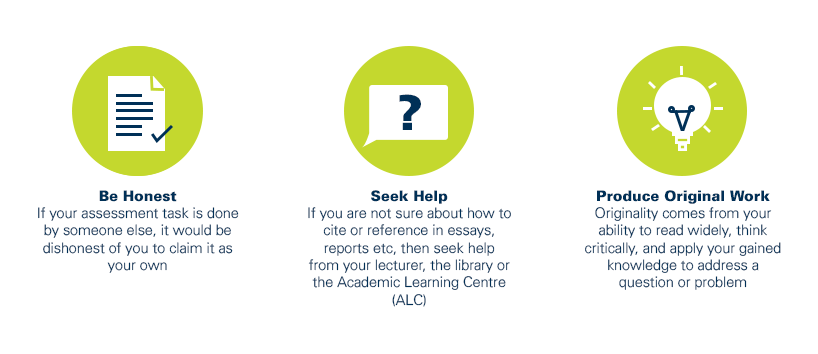
As a CQUniversity student you are expected to act honestly in all aspects of your academic work.
Any assessable work undertaken or submitted for review or assessment must be your own work. Assessable work is any type of work you do to meet the assessment requirements in the unit, including draft work submitted for review and feedback and final work to be assessed.
When you use the ideas, words or data of others in your assessment, you must thoroughly and clearly acknowledge the source of this information by using the correct referencing style for your unit. Using others’ work without proper acknowledgement may be considered a form of intellectual dishonesty.
Participating honestly, respectfully, responsibly, and fairly in your university study ensures the CQUniversity qualification you earn will be valued as a true indication of your individual academic achievement and will continue to receive the respect and recognition it deserves.
As a student, you are responsible for reading and following CQUniversity’s policies, including the Student Academic Integrity Policy and Procedure. This policy sets out CQUniversity’s expectations of you to act with integrity, examples of academic integrity breaches to avoid, the processes used to address alleged breaches of academic integrity, and potential penalties.
What is a breach of academic integrity?
A breach of academic integrity includes but is not limited to plagiarism, self-plagiarism, collusion, cheating, contract cheating, and academic misconduct. The Student Academic Integrity Policy and Procedure defines what these terms mean and gives examples.
Why is academic integrity important?
A breach of academic integrity may result in one or more penalties, including suspension or even expulsion from the University. It can also have negative implications for student visas and future enrolment at CQUniversity or elsewhere. Students who engage in contract cheating also risk being blackmailed by contract cheating services.
Where can I get assistance?
For academic advice and guidance, the Academic Learning Centre (ALC) can support you in becoming confident in completing assessments with integrity and of high standard.
What can you do to act with integrity?