Overview
This unit will build on knowledge and skills gained in OCCT11002 (Introduction to Occupational Therapy Theory and Practice) through exploration of occupational therapy assessment and intervention processes involving activity and occupation as core concepts. You will become familiar with a range of common meaningful occupations and learn how to undertake an occupational therapy activity analysis. Concepts of participation limitations at the person level will be introduced. You will engage in a variety of workshop activities that link key theoretical concepts to occupational therapy practice contexts for activity analysis. You will explore ways of grading and adapting activities to enable client participation.
Details
Pre-requisites or Co-requisites
Pre-requisite: OCCT11002Co-requisite: BMSC11008
Important note: Students enrolled in a subsequent unit who failed their pre-requisite unit, should drop the subsequent unit before the census date or within 10 working days of Fail grade notification. Students who do not drop the unit in this timeframe cannot later drop the unit without academic and financial liability. See details in the Assessment Policy and Procedure (Higher Education Coursework).
Offerings For Term 2 - 2026
Attendance Requirements
All on-campus students are expected to attend scheduled classes - in some units, these classes are identified as a mandatory (pass/fail) component and attendance is compulsory. International students, on a student visa, must maintain a full time study load and meet both attendance and academic progress requirements in each study period (satisfactory attendance for International students is defined as maintaining at least an 80% attendance record).
Recommended Student Time Commitment
Each 6-credit Undergraduate unit at CQUniversity requires an overall time commitment of an average of 12.5 hours of study per week, making a total of 150 hours for the unit.
Class Timetable
Assessment Overview
Assessment Grading
This is a graded unit: your overall grade will be calculated from the marks or grades for each assessment task, based on the relative weightings shown in the table above. You must obtain an overall mark for the unit of at least 50%, or an overall grade of 'pass' in order to pass the unit. If any 'pass/fail' tasks are shown in the table above they must also be completed successfully ('pass' grade). You must also meet any minimum mark requirements specified for a particular assessment task, as detailed in the 'assessment task' section (note that in some instances, the minimum mark for a task may be greater than 50%). Consult the University's Grades and Results Policy for more details of interim results and final grades.
All University policies are available on the CQUniversity Policy site.
You may wish to view these policies:
- Grades and Results Policy
- Assessment Policy and Procedure (Higher Education Coursework)
- Review of Grade Procedure
- Student Academic Integrity Policy and Procedure
- Academic Progression Policy and Procedure
- Student Refund and Credit Balance Policy and Procedure
- Complaints Policy and Procedure
- Information and Communications Technology Acceptable Use Policy and Procedure
This list is not an exhaustive list of all University policies. The full list of University policies are available on the CQUniversity Policy site.
Feedback, Recommendations and Responses
Every unit is reviewed for enhancement each year. At the most recent review, the following staff and student feedback items were identified and recommendations were made.
Feedback from SUTE Unit Comments Report T2, 2025 Informal student feedback Unit coordinator reflection
Students noted that clearer assessment instructions were needed for assessment 2 as they were occasionally unsure about exactly what was expected.
It is recommended that the unit coordinator reviews and edits the task description and rubric for assessment 2 to improve clarity of expectation prior to the unit offering in Term 2, 2026.
Feedback from SUTE Unit Comments Report - T2, 2025
Ten percent of student respondents expressed frustration arising from intermittent technology challenges. Students noted occasions where intercampus connections were disrupted, resulting in each campus working independently - creating concern about inconsistent learning experiences between campuses.
It is recommended that the unit coordinator and the CB84 academic team maintain active collaboration with the Teaching Technology and IT teams to pursue ongoing improvements to intercampus ISL connectivity, ensuring that the learning experience remains as consistent and equitable as possible across campuses.
- Use relevant terminology to define and classify concepts related to human performance in activity and occupation
- Choose suitable methods for grading common meaningful occupations
- Reflect on personal participation in meaningful occupations to integrate theoretical and practical knowledge
- Use occupational therapy processes for comprehensive activity analysis.
This unit feeds directly into Occupational Therapy Australia Competencies for unit accreditation requirements:
1.4 Promotes and facilitates occupation through application of knowledge, skills, attitudes and evidence appropriate to the practice context.
2.1 Performs relevant, comprehensive assessment of occupational performance
3.2 Promotes client occupational performance and participation
4.2 Demonstrates ability to understand and conduct multiple evaluation methods and techniques
Alignment of Assessment Tasks to Learning Outcomes
| Assessment Tasks | Learning Outcomes | |||
|---|---|---|---|---|
| 1 | 2 | 3 | 4 | |
| 1 - Practical Assessment - 20% | ||||
| 2 - Written Assessment - 40% | ||||
| 3 - Group Work - 40% | ||||
Alignment of Graduate Attributes to Learning Outcomes
| Graduate Attributes | Learning Outcomes | |||
|---|---|---|---|---|
| 1 | 2 | 3 | 4 | |
| 1 - Communication | ||||
| 2 - Problem Solving | ||||
| 3 - Critical Thinking | ||||
| 4 - Information Literacy | ||||
| 5 - Team Work | ||||
| 6 - Information Technology Competence | ||||
| 7 - Cross Cultural Competence | ||||
| 8 - Ethical practice | ||||
| 9 - Social Innovation | ||||
| 10 - First Nations Knowledges | ||||
| 11 - Aboriginal and Torres Strait Islander Cultures | ||||
Alignment of Assessment Tasks to Graduate Attributes
| Assessment Tasks | Graduate Attributes | ||||||||||
|---|---|---|---|---|---|---|---|---|---|---|---|
| 1 | 2 | 3 | 4 | 5 | 6 | 7 | 8 | 9 | 10 | 11 | |
| 1 - Practical Assessment - 20% | |||||||||||
| 2 - Written Assessment - 40% | |||||||||||
| 3 - Group Work - 40% | |||||||||||
Textbooks
Occupational and Activity Analysis
- Edition: 3rd (2023)
- Authors: Heather Thomas
- Routledge: Taylor & Francis Group/Slack Incorporated
- ISBN: ISBN 9781630918903
Additional Textbook Information
There is no requirement to purchase the prescribed textbook, as it is available as an e‑book through the library. However, if you prefer your own paperback copy, you may request the CQUniversity Bookshop to order one for you, or you can choose to order it yourself online.
IT Resources
- CQUniversity Student Email
- Internet
- Unit Website (Moodle)
- Microsoft Teams (both microphone and webcam capability)
All submissions for this unit must use the referencing style: American Psychological Association 7th Edition (APA 7th edition)
For further information, see the Assessment Tasks.
j.stanley@cqu.edu.au
Week 1
Begin Date: 13 Jul 2026Module/Topic
Introduction to OCCT11001
Frameworks used in Occupational Therapy
Group Work as an Assessment and Intervention
Chapter
Required Reading:
Ikiugu, M. N. (2024). Group process and group intervention. In G. Gillen & C. Brown (Eds.), Willard and Spackman's occupational therapy (14th ed., pp. 481-495). Wolters Kluwer.
Recommended Reading:
Boop, C., Cahill, S., Davis, C., Dorsey, J., Gibbs, V., Herr, B., Kearney, K., Lannigan, E.G., Metzger, L., Miller, J., Owens, A., Rives, K., Synovec, C., Winistorfer, W.L., & Lieberman, D. (2020). Occupational Therapy Practice Framework: Domain and process (4th ed.). The American Journal of Occupational Therapy, 74(S2), p.1-7412410010p.87.
World Health Organisation. (2002). Towards a common language for functioning, disability and health - ICF: The International Classification of Functioning, Disability and Health.
Events and Submissions/Topic
Emma Vanstone, Associate Lecturer, School of Access Education (ALC) will be attending to present a tutorial on search strategies and APA referencing. Please attend this session in your Occupational Therapy Clinical uniform.
Week 2
Begin Date: 20 Jul 2026Module/Topic
Activity and Occupation
Activity Analysis
Observation as a Clinical Tool
Chapter
Required Reading:
Thomas, H. (2023). Occupational and activity analysis (3rd ed.). Slack Incorporated. Chapter 1 (p. 1-13), Chapter 2 (p. 15-50), Chapter 3 (53-69).
Events and Submissions/Topic
Emma Vanstone, Associate Lecturer, School of Access Education (ALC) will be attending to present a tutorial on academic self-reflection. Please attend this session in your Occupational Therapy Clinical uniform.
Week 3
Begin Date: 27 Jul 2026Module/Topic
Determining Object, Space, & Social Demands
Determining Sequencing & Timing Demands
Chapter
Required Reading:
Thomas, H. (2023). Occupational and activity analysis (3rd ed.). Slack Incorporated. Chapter 4 (p. 71-82), Chapter 5 (p. 85-95).
Events and Submissions/Topic
Week 4
Begin Date: 03 Aug 2026Module/Topic
Determining Required Body Functions: Mental Functions
Chapter
Required Reading:
Thomas, H. (2023). Occupational and activity analysis (3rd ed.). Slack Incorporated. Chapter 6 (p. 97-115).
Events and Submissions/Topic
The unit coordinator will upload student group allocation to the Assessment 3 Moodle Tile by 5pm Friday 7 August 2026.
Week 5
Begin Date: 10 Aug 2026Module/Topic
Determining Required Body Functions: Sensory Functions
Chapter
Required Reading:
Thomas, H. (2023). Occupational and activity analysis (3rd ed.). Slack Incorporated. Chapter 6 (p. 115-123).
Events and Submissions/Topic
The unit coordinator will upload the allocated condition category to the Assessment 3 Moodle Tile by 5pm Friday 14 August 2026.
The unit coordinator will upload the allocated activity to the Assessment 3 Moodle Tile by 5pm Friday 14 August 2026.
Occupational Therapy: Activity and Occupation as Evaluation, Intervention, Planning and Outcome Measures (Information Sheet) Due: Week 5 Friday (14 Aug 2026) 8:00 am AEST
Week 6
Begin Date: 17 Aug 2026Module/Topic
Determining Required Body Functions: Neuromusculoskeletal and Movement-Related Functions
Chapter
Required Reading:
Thomas, H. (2023). Occupational and activity analysis (3rd ed.). Slack Incorporated. Chapter 6 (p. 123-137).
Events and Submissions/Topic
Student groups must notify the unit coordinator of the selected condition to be researched for Assessment 3 by 5pm Tuesday 25 August 2026. Please post selected condition to OCCT11001 Teams.
Vacation Week
Begin Date: 24 Aug 2026Module/Topic
Chapter
Events and Submissions/Topic
Week 7
Begin Date: 31 Aug 2026Module/Topic
Determining Required Performance Skills
Chapter
Required Reading:
Thomas, H. (2023). Occupational and activity analysis (3rd ed.). Slack Incorporated. Chapter 8 (p. 173-196).
Events and Submissions/Topic
Week 8
Begin Date: 07 Sep 2026Module/Topic
Occupational & Activity Analysis for Evaluation, Intervention, Planning, & Outcomes
Grading and Adapting Activity and Occupation
Chapter
Required Reading:
Thomas, H. (2023). Occupational and activity analysis (3rd ed.). Slack Incorporated. Chapter 9 (p. 197-213).
Walter, J. R. & Winston, K. (2025). Therapeutic occupations and modalities. In H. McHugh Pendleton & W. Schultz-Krohn (Eds.), Occupational therapy: Practice skills for physical dysfunction (9th ed., pp. 734-738). Elsevier.
Events and Submissions/Topic
Week 9
Begin Date: 14 Sep 2026Module/Topic
Inter-Professional Education (IPE): Functional Deprivation and Facilitation
** Please note that this session runs from 8.30am - 4.00pm
Chapter
No required readings this week.
Events and Submissions/Topic
Inter-Professional Education (IPE): Functional Deprivation and Facilitation
Please attend this session in your Occupational Therapy Clinical Uniform (including name badge).
Week 10
Begin Date: 21 Sep 2026Module/Topic
Grading and Adapting Activity and Occupation
Chapter
Required Reading:
Hersch, G.I., Lamport, N.K., & Coffey, M.S. (2005). Activity analysis: Application to occupation (5th ed., pp. 63-67). Slack Inc.
Events and Submissions/Topic
Week 11
Begin Date: 28 Sep 2026Module/Topic
Occupational Participation and Engagement
Occupational Deprivation
Overview of OCCT11001
Chapter
Required Reading:
Bailliard, A. (2024). Occupational justice. In G. Gillen & C. Brown (Eds.), Willard and Spackman's occupational therapy (14th ed., pp. 139-160). Wolters Kluwer.
Hocking, C. & Sutton, D. (2024). Contribution of occupation to health and well-being. In G. Gillen & C. Brown (Eds.), Willard and Spackman's occupational therapy (14th ed., pp. 111-122). Wolters Kluwer.
Occupational Therapy Australia. (2016). OT Australia position statement: Occupational deprivation. Australian Occupational Therapy Journal, 63, 445-447.
Recommended Reading:
Reitz, S.M. & DeLany, J.V. (2024). Health promotion theories. In G. Gillen & C. Brown (Eds.), Willard and Spackman's occupational therapy (14th ed., pp. 647-666). Wolters Kluwer.
Events and Submissions/Topic
The unit coordinator will upload the presentation schedule for Assessment 3 by 5pm Friday 2 October 2026.
Week 12
Begin Date: 05 Oct 2026Module/Topic
No scheduled lecture or workshop.
Chapter
Events and Submissions/Topic
Exam Week
Begin Date: 12 Oct 2026Module/Topic
Chapter
Events and Submissions/Topic
Vacation/Exam Week
Begin Date: 19 Oct 2026Module/Topic
Chapter
Events and Submissions/Topic
The Bachelor of Occupational Therapy - Honours (CB84) is an internal undergraduate course. Students are expected to attend all lectures, tutorials, workshops, interprofessional education (IPE), and work-integrated learning (WIL) sessions in person for each OCCT unit of study, unless otherwise notified.
The Introduction to Activity and Occupation (OCCT11001) unit is delivered internally and requires in-person on-campus attendance for lectures, workshops, WIL, IPE, and the Professional Presentation Seminar (Assessment 3), unless otherwise notified by the unit coordinator. It is your responsibility to ensure you sign the attendance sheet at every session. Watching recordings (if available) will not count as in person attendance.
In addition to signing the attendance sheet, you are required to have your WIL transcript signed at the conclusion of each relevant session. A printed copy of this document will be provided to you in the first week of term - an electronic copy will be posted to Moodle. It is your responsibility to bring this document to each relevant session for signing. Backdating of signatures is not permitted. These WIL hours contribute to the total of 1000 hours of professional practice required to graduate from CB84 and to register as an Occupational Therapist.
If you are unable to attend a session, you must notify your unit coordinator as soon as possible (j.stanley@cqu.edu.au). You are responsible for catching up on any missed content as repeat sessions are not offered as part of this unit.
If you require a prolonged absence (more than 2 weeks) due to personal or health-related reasons, you must not only notify the unit coordinator but also arrange a meeting with the unit coordinator to discuss your progression in the unit. Please make contact as soon as possible in this situation.
1 Practical Assessment

This assessment has two (2) component tasks:
Task 1:
You are required to design a professional information sheet to educate and promote occupational therapy to the general public. The information sheet should be suitable for display in a General Practice (GP) clinic waiting room, meaning it must be clear, engaging, and accessible to a broad audience.
Your information sheet must include:
-
- a definition of occupational therapy,
- an explanation of activity and occupation, and how these are central to occupational therapy practice (i.e., how occupational therapists use activity and occupational analysis clinically)
- an overview of the types of skills and body functions occupational therapists assess and address through activity and occupation, and
- examples of how one activity might be used differently by an occupational therapist across different client groups (e.g., adult, aged care, mental health, paediatric, etc.)
You can be as creative as you wish with your information sheet but must also be mindful that it contains useful information.
Task 2:
You are required to compile a Bibliography using APA 7th formatting.
It is expected that you will use a minimum of five (5) peer-reviewed literature sources to inform your content.
** It is NOT expected that you will produce a professionally printed information sheet for this task, however, you will need to create an information sheet that has the potential to be printed.
The 72-Hour Grace Period applies to Assessment 1
Please refer to the Assessment Tile on OCCT11001's Moodle site for further detail.
Week 5 Friday (14 Aug 2026) 8:00 am AEST
Tasks 1 & 2 need to be uploaded to Moodle by the due date and time for marking without penalty (5% of the total marks (i.e., 1 mark) will be deducted for each 24-hour period, or part thereof, that an assignment is submitted late). The 72-hour grace period applies to this assessment.
Your grade will be uploaded to Moodle Gradebook two (2) weeks after submission.
- definitions and explanation of occupational therapy, activity, and occupation (5 marks)
- identification of how occupational therapy uses activity or occupational analysis clinically, and identification of skills assessed and addressed (5 marks)
- application of how one activity might be used differently by occupational therapists between different client groups (5 marks)
- literature sources are relevant and peer reviewed, APA 7th formatting adhered to, professional composition (2.5 marks)
- information sheet designed according to message, layout, readability/accessibility, and attracting interest (2.5 marks)
Total Marks: 20
Please refer to the Assessment Tile on OCCT11001's Moodle site for further detail.
- Use relevant terminology to define and classify concepts related to human performance in activity and occupation
- Reflect on personal participation in meaningful occupations to integrate theoretical and practical knowledge
- Communication
- Problem Solving
- Critical Thinking
- Information Literacy
- Cross Cultural Competence
- Ethical practice
2 Written Assessment

Using Activity 1: Weaving (Week 3) as your focus, you are required to complete the following four (4) tasks as part of your Activity Analysis Report:
Task 1 (250 words):
Introduce the activity. In your introduction include:
-
- a brief description of the activity,
- a brief history of the activity, and
- how the activity is typically performed in the 21st century (that is, the typical modern setting, population, and purpose of the activity).
You will be required to use a minimum of 2 peer reviewed/reliable in support of your statements. These sources need to be included in your Reference List (see Task 4), using APA 7th formatting.
Task 2 (No prescribed word length):
Using the Adapted Activity Analysis Form (adapted from Thomas, 2023, pp. 215-226) provided, complete an activity analysis of Activity 1: Weaving (Week 3). The following should be adhered to:
-
- analyse the activity as a group activity,
- analyse the activity as it would typically be performed, and
- complete the Adapted Activity Analysis Form following specific instructions for each section.
You will be required to cite the reference for this template in your Reference List (see Task 4), using APA 7th formatting.
Task 3 (300 words):
Identify and discuss the potential therapeutic application/s of Activity 1: Weaving (Week 3), that is, how the activity could be used in occupational therapy practice. Base your discussion on the properties of the activity.
You will be required to use a minimum of 5 peer reviewed/reliable literature sources in support of your statements.
Part 4 (No prescribed word length):
Include in-text citations for parts 1 and 3, on-form citations for part 2 (i.e., the Adapted Activity Analysis Form), and a combined Reference List for parts 1-3 using APA 7th formatting.
The 72-Hour Grace Period applies to Assessment 2
Please refer to the Assessment Tile on OCCT11001's Moodle site for further detail.
Week 8 Friday (11 Sept 2026) 8:00 am AEST
Your completed report must be uploaded to Moodle by the due date and time for marking without penalty (5% of the total marks (i.e., 2 marks) will be deducted for each 24-hour period, or part thereof, that an assignment is submitted late). The 72-hour grace period applies to this assessment.
Your grade will be uploaded to Moodle Gradebook two (2) weeks after submission.
- description of activity, including historical and modern applications (when, where & by whom) (5 marks)
- identification of activity category and subcategory, relevance and importance, objects used, space demands, social demands, & sequencing and timing demands (6 marks)
- definition and examples for body functions (10 marks)
- muscular analysis and identification of movements required (2 marks)
- definition and examples for performance skills (10 marks)
- therapeutic application of selected activity (5 marks)
- in-text, AAA form, and reference list APA 7th formatting (2 marks)
Penalties are applied for failing to meet the word limit requirements of Tasks 1 and 3.
Total Marks: 40
Please refer to the Assessment Tile on OCCT11001's Moodle site for further detail.
- Use relevant terminology to define and classify concepts related to human performance in activity and occupation
- Choose suitable methods for grading common meaningful occupations
- Reflect on personal participation in meaningful occupations to integrate theoretical and practical knowledge
- Use occupational therapy processes for comprehensive activity analysis.
- Communication
- Problem Solving
- Critical Thinking
- Information Literacy
- Team Work
- Information Technology Competence
- Cross Cultural Competence
- Ethical practice
- Social Innovation
3 Group Work

This assessment has three (3) tasks:
Task 1:
You will work in an assigned group of 3–4 students to develop and deliver a 15-minute professional presentation (±1.5 minutes) at the OCCT11001 Occupational Therapy and Occupational Analysis Symposium on Tuesday 13 October 2026 (Week 13). In your presentation, you are required to deliver an occupational analysis of a person with a condition that would likely be referred to an occupational therapist.
Your presentation must include:
-
- a description of the condition,
- a description of your client (create and present a client case study/occupational profile),
- a description of the activity (an overview of the assigned ADL/IADL task)
- an occupational analysis of the task as relevant to your client, identifying:
- the key functions and skills required in the activity,
- the client’s capabilities (what functions and skills are manageable), and
- the client’s limitations (what functions and skills may be difficult or unachievable).
Each member of the group is expected to deliver an equal part of the presentation.
It is a requirement that you use a minimum of 10 peer reviewed/reliable and relevant literature sources to inform your presentation.
Task 2:
Your group will compile a PowerPoint resource to support and accompany your presentation. The resource must include on-slide citations and a reference list using APA 7th formatting. The resource should be saved and uploaded to Moodle in PDF format the day prior to your presentation.
Task 3:
You will participate in a 10-minute Q & A session following your group’s presentation, with each group member required to answer at least one question individually. Questions will focus on how the assigned activity could be graded or adapted to enable your client to complete it as safely and independently as possible.
Your answers should:
-
- be relevant to your client and their condition,
- be realistic and appropriate to your client’s needs,
- consider your client’s safety and independence,
- include considerations at the ‘environmental’, ‘task’, and ‘other’ levels, and
- demonstrate your clinical reasoning.
This task is marked individually.
The 72-Hour Grace Period DOES NOT apply to Assessment 3
Please refer to the Assessment Tile on OCCT11001's Moodle site for further detail.
One member of your group must upload the PowerPoint resource in PDF format (Task 2) by 10.00am Monday 12 October 2026, for marking without penalty (5% of the allocated marks (i.e., 0.25 marks) will be deducted for each 24-hour period, or part thereof, that your document is submitted late). Your group presentation (Task 1) and Q & A session (Task 3) will occur on Tuesday 13/10/2026 at an allocated time between 8.00am and 5.00pm. The 72-hour grace period does not apply to Assessment 3..
Your grade will be uploaded to Moodle Gradebook two (2) weeks after submission.
Group assessment criteria (35 marks):
- description of the condition (5 marks)
- client profile (5 marks)
- description of the activity (5 marks)
- occupational analysis of the task, client's potential capabilities and limitations (15 marks)
- quality of the PowerPoint resource, application of good design principles, on-slide grammar and spelling (2.5 marks)
- application of APA 7th formatting for on-slide citations and the reference list (2.5 marks)
A penalty will be applied if the presentation does not fall within the allocated time frame of 15 minutes (±1.5 minutes).
Individual assessment criteria (15 marks):
- professional presentation skills, communication and use of appropriate occupational therapy centred terminology (5 marks)
- application of client-centred practice and clinical reasoning in grading and adaptation answers (10 marks)
Total Marks: 50
Please refer to the Assessment Tile on OCCT11001's Moodle site for further detail.
- Choose suitable methods for grading common meaningful occupations
- Use occupational therapy processes for comprehensive activity analysis.
- Communication
- Problem Solving
- Critical Thinking
- Information Literacy
- Team Work
- Information Technology Competence
- Cross Cultural Competence
- Ethical practice
- Social Innovation
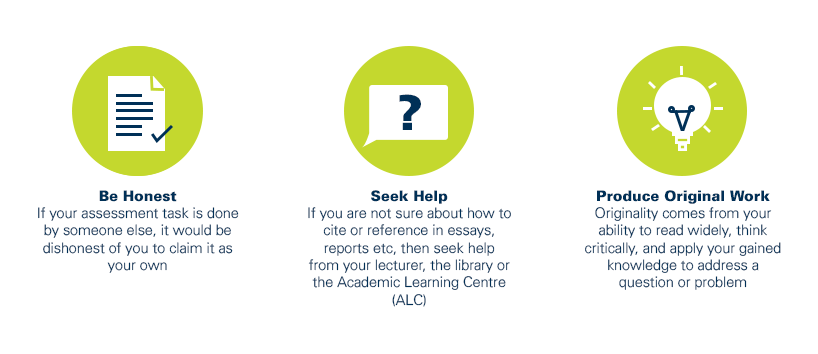
As a CQUniversity student you are expected to act honestly in all aspects of your academic work.
Any assessable work undertaken or submitted for review or assessment must be your own work. Assessable work is any type of work you do to meet the assessment requirements in the unit, including draft work submitted for review and feedback and final work to be assessed.
When you use the ideas, words or data of others in your assessment, you must thoroughly and clearly acknowledge the source of this information by using the correct referencing style for your unit. Using others’ work without proper acknowledgement may be considered a form of intellectual dishonesty.
Participating honestly, respectfully, responsibly, and fairly in your university study ensures the CQUniversity qualification you earn will be valued as a true indication of your individual academic achievement and will continue to receive the respect and recognition it deserves.
As a student, you are responsible for reading and following CQUniversity’s policies, including the Student Academic Integrity Policy and Procedure. This policy sets out CQUniversity’s expectations of you to act with integrity, examples of academic integrity breaches to avoid, the processes used to address alleged breaches of academic integrity, and potential penalties.
What is a breach of academic integrity?
A breach of academic integrity includes but is not limited to plagiarism, self-plagiarism, collusion, cheating, contract cheating, and academic misconduct. The Student Academic Integrity Policy and Procedure defines what these terms mean and gives examples.
Why is academic integrity important?
A breach of academic integrity may result in one or more penalties, including suspension or even expulsion from the University. It can also have negative implications for student visas and future enrolment at CQUniversity or elsewhere. Students who engage in contract cheating also risk being blackmailed by contract cheating services.
Where can I get assistance?
For academic advice and guidance, the Academic Learning Centre (ALC) can support you in becoming confident in completing assessments with integrity and of high standard.
What can you do to act with integrity?