Overview
In this unit you will learn how to work with clients who experience neuromuscular, sensory, cognitive and perceptual impairments as a result of a wide variety of neurological problems. Using the occupational therapy practice process you will gather information about the lived experience of people with these conditions and explore the evidence based literature in order to investigate best practice for collaborative goal-setting, intervention planning, service delivery and evaluation. You will extend your knowledge of the aetiology, pathology, and prognosis of various neurological conditions experienced by occupational therapy clients across the lifespan and from acute care settings through to the community. A series of case studies including presentations from real clients will be used to scaffold your learning and you will be required to analyse and select appropriate contemporary occupational therapy practice models to guide your response to these complex case studies.
Details
Pre-requisites or Co-requisites
Prerequisites: BMSC 12007 Neurological Physiology and Measurement and OCCT 12004 Occupational Performance across the Lifespan 2 and OCCT 12002 Occupational Justice: Local and Global and ALLH 12006 Evidence-Based Practice.
Important note: Students enrolled in a subsequent unit who failed their pre-requisite unit, should drop the subsequent unit before the census date or within 10 working days of Fail grade notification. Students who do not drop the unit in this timeframe cannot later drop the unit without academic and financial liability. See details in the Assessment Policy and Procedure (Higher Education Coursework).
Offerings For Term 1 - 2026
Attendance Requirements
All on-campus students are expected to attend scheduled classes - in some units, these classes are identified as a mandatory (pass/fail) component and attendance is compulsory. International students, on a student visa, must maintain a full time study load and meet both attendance and academic progress requirements in each study period (satisfactory attendance for International students is defined as maintaining at least an 80% attendance record).
Recommended Student Time Commitment
Each 6-credit Undergraduate unit at CQUniversity requires an overall time commitment of an average of 12.5 hours of study per week, making a total of 150 hours for the unit.
Class Timetable
Assessment Overview
Assessment Grading
This is a graded unit: your overall grade will be calculated from the marks or grades for each assessment task, based on the relative weightings shown in the table above. You must obtain an overall mark for the unit of at least 50%, or an overall grade of 'pass' in order to pass the unit. If any 'pass/fail' tasks are shown in the table above they must also be completed successfully ('pass' grade). You must also meet any minimum mark requirements specified for a particular assessment task, as detailed in the 'assessment task' section (note that in some instances, the minimum mark for a task may be greater than 50%). Consult the University's Grades and Results Policy for more details of interim results and final grades.
All University policies are available on the CQUniversity Policy site.
You may wish to view these policies:
- Grades and Results Policy
- Assessment Policy and Procedure (Higher Education Coursework)
- Review of Grade Procedure
- Student Academic Integrity Policy and Procedure
- Academic Progression Policy and Procedure
- Student Refund and Credit Balance Policy and Procedure
- Complaints Policy and Procedure
- Information and Communications Technology Acceptable Use Policy and Procedure
This list is not an exhaustive list of all University policies. The full list of University policies are available on the CQUniversity Policy site.
Feedback, Recommendations and Responses
Every unit is reviewed for enhancement each year. At the most recent review, the following staff and student feedback items were identified and recommendations were made.
Feedback from SUTE Feedback
Two separate quizzes, rather than one single quiz, was appreciated by students.
It is recommended that a two-part in-class online quiz be retained, with Part A to be implemented approximately mid-term and Part B to be implemented at end of term.
- Describe and demonstrate how a broad range of contemporary health theories and occupational therapy theories in particular, can be used to structure and guide occupational therapy neurological rehabilitation programs.
- Discuss how a variety of congenital and acquired neurological problems give rise to clients experiencing a range of impairments, activity limitations and participation restrictions that can be addressed through an occupational therapy neurological rehabilitation program.
- Articulate the varying roles, assessment and intervention priorities across a range of intervention contexts for clients with neurological dysfunction.
- Critically appraise the efficacy of current treatments, specific interventions and clinical practice guidelines commonly used in neurological rehabilitation providing evidence of this from the literature.
Alignment of Assessment Tasks to Learning Outcomes
| Assessment Tasks | Learning Outcomes | |||
|---|---|---|---|---|
| 1 | 2 | 3 | 4 | |
| 1 - Written Assessment - 20% | ||||
| 2 - Online Quiz(zes) - 40% | ||||
| 3 - Objective Structured Clinical Examinations (OSCEs) - 40% | ||||
Alignment of Graduate Attributes to Learning Outcomes
| Graduate Attributes | Learning Outcomes | |||
|---|---|---|---|---|
| 1 | 2 | 3 | 4 | |
| 1 - Communication | ||||
| 2 - Problem Solving | ||||
| 3 - Critical Thinking | ||||
| 4 - Information Literacy | ||||
| 5 - Team Work | ||||
| 6 - Information Technology Competence | ||||
| 7 - Cross Cultural Competence | ||||
| 8 - Ethical practice | ||||
| 9 - Social Innovation | ||||
| 10 - First Nations Knowledges | ||||
| 11 - Aboriginal and Torres Strait Islander Cultures | ||||
Textbooks
Quick Reference Neuroscience for Rehabilitation Professionals The Essential Neurologic Principles Underlying Rehabilitation Practice
- Edition: 4th (2025)
- Authors: Sharon A. Gutman & Marianne H. Mortera
- Routledge: Taylor & Francis Group
- ISBN: ISBN 9781638220541
Additional Textbook Information
There is no expectation that you purchase a copy of the supplementary textbook. This text is available online through the CQU Library system and is only required for intermittent readings over the course of the term.
IT Resources
- CQUniversity Student Email
- Internet
- Unit Website (Moodle)
- Microsoft Teams (both microphone and webcam capability)
All submissions for this unit must use the referencing style: American Psychological Association 7th Edition (APA 7th edition)
For further information, see the Assessment Tasks.
j.stanley@cqu.edu.au
Week 1
Begin Date: 09 Mar 2026Module/Topic
Introduction to OCCT13002: Enabling Strategies for Neurological Rehabilitation
Assessment 1: Introduction to Understanding Systematic Reviews
An Occupational Therapy Approach to Neurological Rehabilitation
Review of the Anatomy of the CNS and PNS
Chapter
** Please attend this session having pre-read the unit profile and the assessment requirements for the unit.
BMSC12007 Review:
- Batacan, R. (2025). Neuroanatomy overview and basic definitions: Part 1 [PowerPoint Slides]. CQUniversity Moodle. Week 1-Neuroanatomy overview part 1.ppt
- Blumenfeld, H. (2021.). Neuroanatomy through clinical cases (3rd ed., Chapter 2: pp. 14-46). Oxford University Press.
Required Readings:
- Boyt Schell, B.A. and Benfield, A.M. (2024). Professional reasoning in practice. In G. Gillen and C. Brown (Eds.), Willard and Spackman’s occupational therapy (14th ed., Chapter 25: pp. 420-437). Wolters Kluwer.
Recommended Readings:
- Gutman, S.A. & Mortera, M.H. (2025). Quick reference neuroscience for rehabilitation professionals: The essential neurologic principles underlying rehabilitation practice (4th ed., Section 2: pp. 6-9, Section 3: pp. 10-38, Section 6: pp. 52-56, & Section 7: pp. 58-74). Slack Incorporated.
Events and Submissions/Topic
The Assessment 1 journal article will be uploaded to the Assessment Moodle Tile by 5.00pm Monday 09/03/2026 (Week 1).
Week 2
Begin Date: 16 Mar 2026Module/Topic
Observation and Analysis of Occupational Performance
Hypothesis Testing
Writing a Behavioural Objective
Disorders of the Spinal Cord (Spinal Cord Injury/SCI)
Chapter
BMSC12007 Review:
- Batacan, R. (2025). Corticospinal Tract and other motor pathways [PowerPoint Slides]. CQUniversity Moodle. Week 3 Corticospinal Tract and other Motor Pathways.pptx
- Batacan, R. (2025). Somatosensory pathways [PowerPoint Slides]. CQUniversity Moodle. Week 4_Somatosensory Pathways.ppt
- Batacan, R. (2025). Spinal nerves [PowerPoint Slides]. CQUniversity Moodle. Week 4_Spinal Nerves.ppt
- Blumenfeld, H. (2021). Neuroanatomy through clinical cases (3rd ed., Chapter 6: pp. 222-240, Chapter 7: pp. 274-295 & Chapter 8: pp. 318-325 & 332-333,). Oxford University Press.
Required Readings:
- Bashar, J. & Dombish, H.A. (2024). Spinal cord injury. In H. McHugh Pendleton and W. Schulz-Krohn (Eds.), Pedretti’s occupational therapy: Practice skills for physical dysfunction (9th ed., Chapter 37: pp. 951-976). Elsevier.
- George, A. (2024). Occupation-based functional motion assessment. In H. Pendleton and W. Schulz-Krohn (Eds.), Pedretti’s occupational therapy: Practice skills for physical dysfunction (9th ed., Chapter 20: pp. 491-498). Elsevier.
Recommended Readings:
- Gutman, S.A. & Mortera, M.H. (2025). Quick reference neuroscience for rehabilitation professionals: The essential neurologic principles underlying rehabilitation practice (4th ed., Section 15: 211-247 & Section 16: pp. 248-265).
- Wallace, A.C., Bunn, L.M., & Cassidy, E. (2024). Observation and analysis of movement. In S. Lennon, G. Ramdharry & G. Verheyden (Eds.), Physical management for neurological conditions (5th ed., Chapter 4: pp. 71-112). Elsevier.
Events and Submissions/Topic
Week 3
Begin Date: 23 Mar 2026Module/Topic
Disorders of the Motor Unit
Disorders of the CNS
Initial Interviewing
Chapter
BMSC12007 Review:
- Batacan, R. (2025). Basal ganglia [PowerPoint Slides]. CQUniversity Moodle. Week 7_Basal Ganglia.ppt
- Batacan, R. (2025). Neuroanatomy overview: Part 2 [PowerPoint Slides]. CQUniversity Moodle. Week 1-Neuroanatomy overview part 2.pptx
- Batacan, R. (2025). Neuroanatomy overview: Part 3 [PowerPoint Slides]. CQUniversity Moodle. Week 1-Neuroanatomy overview part 3.pptx
- Blumenfeld, H. (2021). Neuroanatomy through clinical cases (3rd ed., Chapter 8: pp. 325-329 & Chapter 16: pp. 742-773). Oxford University Press.
Required Readings:
- George, A. & Schultz-Krohn, W. (2024). Disorders of the motor unit. In H. Pendleton and W. Schulz-Krohn (Eds.), Pedretti’s occupational therapy: Practice skills for physical dysfunction (9th ed., Chapter 38: pp. 977-993). Elsevier.
- Schultz-Krohn, W. & Long, K.M. (2024). Degenerative diseases of the central nervous system. In H. Pendleton and W. Schulz-Krohn (Eds.), Pedretti’s occupational therapy: Practice skills for physical dysfunction (9th ed., Chapter 36: pp. 911-950). Elsevier.
Recommended Readings:
- Gutman, S.A. & Mortera, M.H. (2025). Quick reference neuroscience for rehabilitation professionals: The essential neurologic principles underlying rehabilitation practice (4th ed., Section 10: 152-161 & Section 22: pp. 330-353). Slack Incorporate
- Thomas, H. (2023). Occupational and activity analysis (3rd ed.). Slack Incorporated. Review concepts from OCCT11001.
Events and Submissions/Topic
A person with a lived experience of a neurological condition will be attending campus. Please be sure to present to this session in your student uniform (including name badge).
Appraisal of a Systematic Review Due: Week 3 Friday (27 Mar 2026) 12:00 pm AEST
Week 4
Begin Date: 30 Mar 2026Module/Topic
Tone and Spasticity
Shoulder Subluxation
Assessing Motor Control
Assessing Motor Coordination
Assessing Pain
Intervention Planning for Pain
Chapter
Required Readings:
- Physiopedia. (n.d.). Hemiplegic shoulder subluxation.
- Schultz-Krohn, W. (2024). Evaluation of motor control. In H. McHugh Pendleton and W. Schulz-Krohn (Eds.), Pedretti’s occupational therapy: Practice skills for physical dysfunction (9th ed., Chapter 19: pp. 464-490). Elsevier.
- The Strokeed Collaboration. (2019). Spasticity after stroke: Part 1 [Blog]. Stroke Ed.
- The Strokeed Collaboration. (2019). Spasticity: Part 2 [Blog]. Stroke Ed.
- The Strokeed Collaboration. (2019). Spasticity: Part 3 [Blog]. Stroke Ed.
- The Strokeed Collaboration. (2019). Spasticity: Part 4 [Blog]. Stroke Ed.
Recommended Readings:
- Gutman, S.A. & Mortera, M.H. (2025). Quick reference neuroscience for rehabilitation professionals: The essential neurologic principles underlying rehabilitation practice (4th ed., Section 17: pp. 266-284 & Section 21: pp. 316-329). Slack Incorporated.
Events and Submissions/Topic
** The intensive preparatory skills workshop is being held on Monday 30/03/2026, between 8.00am and 5.00pm. This is a compulsory workshop for OCCT13009 and will also address skills that may be assessed in your OCCT13002 OSCE.
Required Readings:
- Abrams, M.R. & Ivy, C.C. (2024). Evaluation of sensation and intervention for sensory dysfunction. In H. Pendleton and W. Schulz-Krohn (Eds.), Pedretti’s occupational therapy: Practice skills for physical dysfunction (9th ed., Chapter 23: pp. 585-603). Elsevier.
- Kaskutas, V. & McAndrew, R. (2024). Evaluation of muscle strength. In H. McHugh and W. Schulz-Krohn (Eds.), Pedretti’s occupational therapy: Practice skills for physical dysfunction (9th ed., Chapter 22: pp. 534-584). Elsevier.
- Shurtleff, T., Kaskutas, V., & McAndrew, R. (2024). Joint range of motion. In H. Pendleton and W. Schulz-Krohn (Eds.), Pedretti’s occupational therapy: Practice skills for physical dysfunction (9th ed., Chapter 21: pp. 499-533). Elsevier.
Week 5
Begin Date: 06 Apr 2026Module/Topic
Introduction to Motor Learning Theories
Interventions for Motor Dysfunction (Motor Learning Techniques)
Assessment 2: Introduction to the In-class Online Quizzes (Parts A & B)
Chapter
Required Readings:
- Roberts, P. & Ouellette, D.S. (2024). Motor learning. In H. McHugh Pendleton and W. Schulz-Krohn (Eds.), Pedretti’s occupational therapy: Practice skills for physical dysfunction (9th ed., Chapter 33: pp. 830-842). Elsevier.
- Shultz-Krohn, W. & de Leon Arabit, L. (2024). Traditional sensorimotor approaches to intervention overview. In H. McHugh Pendleton and W. Schulz-Krohn (Eds.), Pedretti’s occupational therapy: Practice skills for physical dysfunction (9th ed., Chapter 32: pp. 789-829). Elsevier.
Recommended Readings:
- McCluskey, A., Lannin, N.A., Schurr, K., & Dorsch, S. (Pre-publication version, 2017). Optimizing motor performance and sensation after brain impairment. In M. Curtin, M. Egan & J. Adams (Eds.) Occupational therapy for people experiencing illness, injury or impairment: Promoting occupation and participation (7th ed., Chapter 40). Elsevier.
Events and Submissions/Topic
A person with a lived experience of a neurological condition will be attending campus. Please be sure to present to this session in your student uniform (including name badge).
In-Class Online Quiz Part A
Due: Week 6 Wednesday (15 Apr 2026) 8:30am - 9.30am AEST
Week 6
Begin Date: 13 Apr 2026Module/Topic
Interventions for Motor Dysfunction: e-STIM and Functional Electrical Stimulation (FES)
Chapter
** Please attend this session having reviewed the upper limb sections (especially the shoulder and wrist) from the following:
BMSC11008 Review:
- Ramlogan-Steel, C. (2024). Lecture 2: The arm and elbow [PowerPoint Slides]. CQUniversity Moodle.
- Ramlogan-Steel, C. (2024). Lecture 3: The forearm and wrist [PowerPoint Slides]. CQUniversity Moodle.
- Drake, R.L., Vogl, A.W., & Mitchell, A.W.M. (2024). Gray’s anatomy for students (5th ed., Chapter 7: pp. 686-814). Elsevier.
Events and Submissions/Topic
Please attend this session in a shirt that allows for easy access to the upper back and arm (for example, a singlet or racerback athletic top).
Vacation Week
Begin Date: 20 Apr 2026Module/Topic
Chapter
Events and Submissions/Topic
Week 7
Begin Date: 27 Apr 2026Module/Topic
Acquired Brain Injury (ABI): Traumatic Brain Injury (TBI) and Stroke (Cerebrovascular Accident/CVA)
Assessing Consciousness and Post-Traumatic Amnesia (PTA)
Introduction to Delirium
Assessing Delirium
Chapter
BMSC12007 Review:
- Batacan, R. (2025). Cerebellum [PowerPoint Slides]. CQUniversity Moodle. Week 7_Cerebellum.ppt
- Batacan, R. (2025). Cerebral hemispheres and vascular supply [PowerPoint Slides]. CQUniversity Moodle. Week 5_Cerebral Hemispheres and Vascular Supply.ppt
- Batacan, R. (2025). Clinical Concepts [PowerPoint Slides]. CQUniversity Moodle. Week 5_Clinical_Concepts.pptx
- Batacan, R. (2025). Limbic system [PowerPoint Slides]. CQUniversity Moodle. Week 8 Limbic System.pptx
- Blumenfeld, H. (2021). Neuroanatomy through clinical cases (3rd ed., Chapter 10: pp. 390-410, Chapter 12: 496-506, Chapter 14: pp. 616-663 & Chapter 15: 700-722). Oxford University Press.
Required Readings:
- Geller, D. & Gillen, G. (2024). Cerebrovascular accident (Stroke). In H. McHugh Pendleton and W. Schulz-Krohn (Eds.), Pedretti’s occupational therapy: Practice skills for physical dysfunction (9th ed., Chapter 34: pp. 843-876). Elsevier.
- Tipton-Burton, M. & Craig, B. (2024). Traumatic brain injury. In H. McHugh Pendleton and W. Schulz-Krohn (Eds.), Pedretti’s occupational therapy: Practice skills for physical dysfunction (9th ed., Chapter 35: pp. 877-910). Elsevier.
Recommended Readings:
- Gutman, S.A. & Mortera, M.H. (2025). Quick reference neuroscience for rehabilitation professionals: The essential neurologic principles underlying rehabilitation practice (4th ed., Section 25: pp. 374-403 & Section 26: pp. 404-415). Slack Incorporated.
- Toglia, J.P. & Goverover, Y. (2024). Cognition, perception and occupational performance. In G. Gillen and C. Brown (Eds.), Willard and Spackman’s occupational therapy (14th ed., Chapter 55: pp. 942-979). Wolters Kluwer.
Events and Submissions/Topic
A person with a lived experience of a neurological condition will be attending campus. Please be sure to present to this session in your student uniform (including name badge).
Week 8
Begin Date: 04 May 2026Module/Topic
Introduction to Cognition and Perception
Memory, Attention and Executive Functions
Screening Cognition & Perception
Assessing Cognition and Perception
Intervention Planning for Cognitive and/or Perceptual Dysfunction
Chapter
BMSC12007 Review:
- Batacan, R. (2025). Higher order cerebral function [PowerPoint Slides]. CQUniversity Moodle. Week 8 Higher Order Cerebral Function.pptx
- Batacan, R. (2025). Limbic system [PowerPoint Slides]. CQUniversity Moodle. Week 8 Limbic System.pptx
- Blumenfeld, H. (2021). Neuroanatomy through clinical cases (3rd ed., Chapter 18: pp. 824-852 & Chapter 19: pp. 888-934). Oxford University Press.
Required Readings:
- Gillen, G. (2020). Treatment of cognitive-perceptual deficits: A function-based approach. In G. Gillen & D.M. Nilsen (Eds.), Stroke rehabilitation: A function-based approach (5th ed., Chapter 26: 615-623). Elsevier.
Recommended Readings:
- Gutman, S.A. & Mortera, M.H. (2025). Quick reference neuroscience for rehabilitation professionals: The essential neurologic principles underlying rehabilitation practice (4th ed., Section 27: pp. 416-429, Section 28: pp. 430-443 & Section 29: pp. 444-459). Slack Incorporated.
- Toglia, J.P. & Goverover, Y. (2024). Cognition, perception and occupational performance. In G. Gillen and C. Brown (Eds.), Willard and Spackman’s occupational therapy (14th ed., Chapter 55: pp. 942-979). Wolters Kluwer.
Events and Submissions/Topic
Week 9
Begin Date: 11 May 2026Module/Topic
Perceptual Dysfunction: Visual Inattention and Unilateral Neglect
Assessing Visual Dysfunction
Intervention Planning for Visual Dysfunction
Chapter
BMSC12007 Review:
- Batacan, R. (2024). The visual pathway and visual processing [PowerPoint Slides]. CQUniversity Moodle. Week 6_Brainstem and Cranial nerves.ppt
- Blumenfeld, H. (2021). Neuroanatomy through clinical cases (3rd ed., Chapter 13: pp. 568-593). Oxford University Press.
Required Readings:
- Gillen, G. (2020). Treatment of cognitive-perceptual deficits: A function-based approach. In G. Gillen & D.M. Nilsen (Eds.), Stroke rehabilitation: A function-based approach (5th ed., Chapter 26: 609-614). Elsevier.
- Gillen, G. & Hreha, K. (2020). Managing visual and visuospatial impairments to optimise function. In G. Gillen & D.M. Nilsen (Eds.), Stroke rehabilitation: A function-based approach (5th ed., Chapter 24: pp. 537-555). Elsevier.
Recommended Readings:
- Corben, L. & Unsworth, C. (1999). Evaluation and intervention with unilateral neglect. In C. Unsworth (Ed.), Cognitive and perceptual dysfunction: A clinical reasoning approach to evaluation and intervention (Chapter 9: pp. 357-392). F.A. Davis.
Events and Submissions/Topic
A person with a lived experience of a neurological condition will be attending campus. Please be sure to present to this session in your student uniform (including name badge).
Week 10
Begin Date: 18 May 2026Module/Topic
Perceptual Dysfunction: Agnosia and Apraxia
Assessing Agnosia and Apraxia
Intervention Planning for Apraxia and Agnosia
Chapter
Required Readings:
- Gillen, G. (2020). Treatment of cognitive-perceptual deficits: A function-based approach. In G. Gillen & D.M. Nilsen (Eds.), Stroke rehabilitation: A function-based approach (5th ed., Chapter 26: 605-609 & 614-615). Elsevier.
Recommended Readings:
- Butler, J. (1999). Evaluation and intervention with apraxia. In C. Unsworth (Ed.), Cognitive and perceptual dysfunction: A clinical reasoning approach to evaluation and intervention (Chapter 8: pp. 299-356). F.A. Davis.
- Laver, A. & Unsworth, C. (1999). Evaluation and intervention with simple perceptual impairment (agnosias). In C. Unsworth (Ed.), Cognitive and perceptual dysfunction: A clinical reasoning approach to evaluation and intervention (Chapter 7: pp. 257-298). F.A. Davis.
Events and Submissions/Topic
Week 11
Begin Date: 25 May 2026Module/Topic
Functional Neurological Disorder (FND)
Implementing an Initial Neurological Screen
Assessment 3: Introduction to the OSCE
Chapter
Please refer to the Week 11 Moodle Tile for links to FND website addresses for review.
Events and Submissions/Topic
A person with a lived experience of a neurological condition will be attending campus. Please be sure to present to this session in your student uniform (including name badge).
In-Class Online Quiz Part B
Due: Week 11 Wednesday (27 May 2026) 8:30am - 9.30am AEST
Week 12
Begin Date: 01 Jun 2026Module/Topic
** The intensive preparatory skills workshop is being held on Monday 01/06/2026, between 8.00am and 5.00pm. This is a compulsory workshop for OCCT13009 and will also address skills that may be assessed in your OCCT13002 OSCE.
There are no scheduled OCCT13002 sessions this week.
Chapter
Events and Submissions/Topic
Exam Week
Begin Date: 08 Jun 2026Module/Topic
OSCE Practice
This is an optional session which will run from 8.00am-4.30pm, Wednesday 10 June 2026, however, the educators will only be available from 8.30am-12.30pm. After they leave, the room and resources will remain open and accessible until 4.30pm that day.
Chapter
Review of tutorial and workshop PowerPoints and practicals in preparation for the OCCT13002 OSCE.
Events and Submissions/Topic
Vacation/Exam Week
Begin Date: 15 Jun 2026Module/Topic
Chapter
Events and Submissions/Topic
OCCT13002 is an on-campus (internal unit) with the expectation that you will attend all lectures, tutorials, and workshops in-person. Of particular importance, is your attendance at the tutorials and workshops as they constitute work-integrated learning (WIL) experiences and contribute to your accumulated 1000 hours of WIL practice across the CB84 course (a requirement for graduation and professional registration). If, for some reason, you miss a WIL session, you need to advise the unit coordinator by email (j.stanley@cqu.edu.au) and will need to arrange a meeting with them to discuss options for managing missed hours.
1 Written Assessment
AI Assessment Scale: 1 NO AI - You must not use AI at any point during this assessment task. You must rely solely on your knowledge, understanding and skills.
You will be required to read an assigned systematic review (you are not required to find your own article - article details will be provided in Week 1) of an occupational therapy specific intervention used in neurological rehabilitation. Using the provided ‘Appraisal of a Systematic Review Proforma’, you are required to analyse the assigned systematic review and meta-analysis, addressing each section of the proforma in turn:
- What is the review about?
Provide a description of the review (PICO) including the research question, the population (P), the neurological interventions compared (I and C) and outcomes addressed (O).
- Can I trust this review?
Provide a robust appraisal of the review (this requires the identification of appropriate information in the article as well as your interpretation of the information) through identifying recency (search dates), rigour of research (level(s) of evidence), relevance/reproducibility (search strategy), selection bias/transparency (inclusion/exclusion criteria/article selection process), and methodological quality (evaluation of the quality of the studies included).
- What are the results?
Articulate the results of the review: study and participant numbers; method(s) of combining study results; statistical analysis/meta-analysis of the results; and findings related to statistical significance, in order to identify clinical relevance, that is, whether or not the review findings are of sufficient quality to be applied to practice. Provide conclusive current and future statements.
Please refer to the OCCT13002 Assessment Tile on Moodle for further details.
Week 3 Friday (27 Mar 2026) 12:00 pm AEST
The completed ‘Appraisal of a Systematic Review Proforma’ needs to be uploaded to Moodle by the due date and time for marking without penalty (5% or 2 marks of the total 40 marks will be deducted for each 24-hour period, or part thereof, that an assignment is submitted late).
- Professional Communication (5 marks): Report is professional, clear, and concise; grammar, spelling, and punctuation conventions are adhered to.
- APA 7th formatting (5 marks): APA 7th formatting adhered to both in-text, for the article’s reference, and the reference list (if included).
- What is the review about? (10 marks): Identification and description of the review’s research question, population, neurological intervention(s) and comparison(s), and outcome(s).
- Can I trust this review? (10 marks): Identification and interpretation of the review’s recency, rigour of research, relevance/reproducibility, selection bias/transparency, and methodological quality of the included studies.
- What are the results? (10 marks): Identification and interpretation of the review’s study and participant numbers, method of combining study results, statistical analysis/meta-analysis of the results, and statistical significance of the results in order to reach a valid conclusion as to whether or not the included studies and review outcome(s) are of sufficient quality to apply the intervention in clinical practice. Conclusive current and future statements.
- Describe and demonstrate how a broad range of contemporary health theories and occupational therapy theories in particular, can be used to structure and guide occupational therapy neurological rehabilitation programs.
- Discuss how a variety of congenital and acquired neurological problems give rise to clients experiencing a range of impairments, activity limitations and participation restrictions that can be addressed through an occupational therapy neurological rehabilitation program.
- Critically appraise the efficacy of current treatments, specific interventions and clinical practice guidelines commonly used in neurological rehabilitation providing evidence of this from the literature.
2 Online Quiz(zes)
The 72-hour grace period does not apply to this assessment.
You will undertake two in-class online quizzes:
Part A: 60-minute (1 hour) duration. The quiz will cover the content (lecture, tutorial, and workshop) from Weeks 1-5 inclusive.
Part B: 60-minute (1 hour) duration. The quiz will cover the content (lecture, tutorial, and workshop) from Weeks 1-10 inclusive.
The in-class online quizzes are closed book assessments which will be supervised by a CQUniversity staff member and must be completed at the scheduled time on either the Bundaberg or Rockhampton campus. Access to all resources other than your internet enabled device is prohibited (e.g. books, notes, phones, etc.). The in-class online quizzes will consist of a variety of question types, including multiple choice, matching, drag and drop, et cetera, +/- short answer questions. There will be no essay questions. All questions will be marked numerically, and an overall percentage mark awarded.
Please refer to the OCCT13002 Assessment Tile on Moodle for further details.
Part A will be held between 8.30am and 9.30am on Wednesday 15/04/2026 (Week 6). Part B will be held between 8.30am and 9.30 on Wednesday 27/05/2026 (Week 11). Please arrive at the designated room at least 15 minutes prior to the commencement time (that is, by 8.15am) so that you may be settled into the room before commencing the quiz. Students will not be admitted to the room from 8.25am onwards.
To be fair to all students, results will be released once ALL students (including any with extensions) have completed each quiz. This may be anywhere from two days to two weeks after each scheduled quiz.
There is no available marking criteria for this assessment.
- Discuss how a variety of congenital and acquired neurological problems give rise to clients experiencing a range of impairments, activity limitations and participation restrictions that can be addressed through an occupational therapy neurological rehabilitation program.
- Articulate the varying roles, assessment and intervention priorities across a range of intervention contexts for clients with neurological dysfunction.
3 Objective Structured Clinical Examinations (OSCEs)
The 72-hour grace period does not apply to this assessment.
There are two (2) components to this assessment:
Task 1: This practical assessment will be in the format of an Objective Structured Clinical Examination (OSCE). It is intended to assess the theoretical knowledge and practical assessment and treatment skills gained from OCCT13002 lectures, tutorials, workshops, client tutors and independent research, as well as that from prerequisite units.
The OSCE will take 40 minutes:
-
- 10-minute preparation
- 30-minute practical exam
The OSCE will include brief case study information on which you will base your responses in the practical component. The practical component will include seven (7) stations covering some of the following areas:
-
-
Cognitive Assessment and Intervention
-
Delerium Assessment and Intervention
-
Motor Coordination Assessment and Intervention
-
Pain Assessment
-
Perceptual Assessment and Intervention
-
UL Motor Control Assessment and Intervention
-
UL Motor Structure and Function Assessment and Intervention
-
UL Somatosensation Assessment and Intervention
-
Visual Function Assessment and Intervention
-
You will have approximately 4 minutes to demonstrate your skills at each station.
Upon entering the assessment room there will be time to organise yourself and any tools that you wish to use.
For the introduction stage of your practical assessment, you will be required to introduce yourself to the client, check the client's ID, provide a brief explanation of why you are seeing them, and obtain client consent to progress.
For the demonstration stage of your practical assessment (that is, for each of the 7 practical scenarios), you will need to:
-
- introduce the assessment and purpose to the client
- obtain client consent
- position the client optimally for safe, efficient, and effective implementation of an assessment and/or intervention
- position yourself optimally for safe, efficient, and effective implementation of an assessment and/or intervention
- implement the assessment and/or intervention safely, efficiently, and effectively, ensuring all required steps are demonstrated
- advise the client that the assessment has finished and you will either be moving onto another assessment or concluding the session
For the concluding stage of your practical assessment, you will be required to terminate the session and thank your client for their participation.
Task 2: You will be required to act as the client for the next students OSCE. This will require you to be available for 40 minutes following your own OSCE.
Please refer to the OCCT13002 Assessment Tile on Moodle for further details.
Vacation/Exam Week Monday (15 June 2026) 11:45 pm AEST
The OSCE's will be run across two days in Vacation/Exam Week (Week 14) - Monday 15/06/2026 and Tuesday 16/06/2026. The unit coordinator will randomly allocate you an assessment time between 8.30am-3.30pm (finishing at 4.10pm) on one of these days.
For the introduction stage:
- Professional introduction and checks client ID (1.0 marks)
- Appropriate and brief explanation of purpose of session (2 marks)
- Obtains consent for session (1 mark)
For the demonstration stage (each practical scenario will be marked using the following criteria):
- TASK A: Appropriate and brief explanation of purpose of assessment or intervention (1.5 marks)
- TASK B: Obtains consent for assessment or intervention (0.5 marks)
- TASK C: Positions client appropriately for a safe, effective and efficient assessment or intervention (0.5 marks)
- TASK D: Positions self appropriately for a safe, effective and efficient assessment or intervention (0.5 marks)
- TASK E: Provides clear, concise and jargon free instructions OR follows standardised instructions during demonstration of assessment or intervention (2 marks)
- TASK F: Implements assessment or intervention correctly according to assessment guidelines and instructions (e.g., correct starting point, correct and comprehensive order of steps, correct timing of termination) (6 marks)
- TASK G: Advises client assessment or intervention has finished (1.0 mark)
- TASK H: Answers knowledge question correctly using appropriate terminology (1.0 mark)
For the concluding stage:
- Appropriate termination of session AND thanks client for participation (1 mark)
- Describe and demonstrate how a broad range of contemporary health theories and occupational therapy theories in particular, can be used to structure and guide occupational therapy neurological rehabilitation programs.
- Articulate the varying roles, assessment and intervention priorities across a range of intervention contexts for clients with neurological dysfunction.
- Critically appraise the efficacy of current treatments, specific interventions and clinical practice guidelines commonly used in neurological rehabilitation providing evidence of this from the literature.
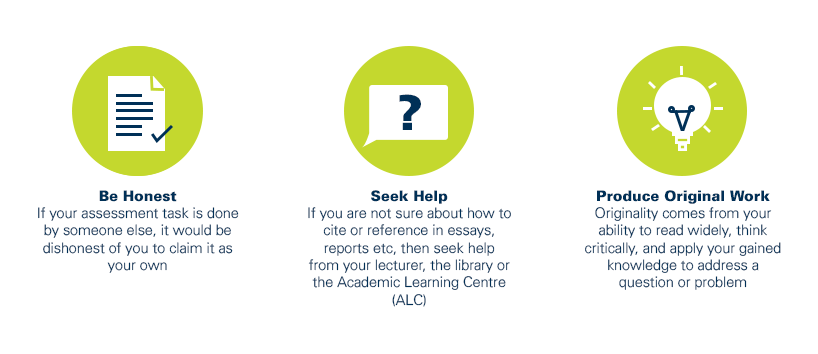
As a CQUniversity student you are expected to act honestly in all aspects of your academic work.
Any assessable work undertaken or submitted for review or assessment must be your own work. Assessable work is any type of work you do to meet the assessment requirements in the unit, including draft work submitted for review and feedback and final work to be assessed.
When you use the ideas, words or data of others in your assessment, you must thoroughly and clearly acknowledge the source of this information by using the correct referencing style for your unit. Using others’ work without proper acknowledgement may be considered a form of intellectual dishonesty.
Participating honestly, respectfully, responsibly, and fairly in your university study ensures the CQUniversity qualification you earn will be valued as a true indication of your individual academic achievement and will continue to receive the respect and recognition it deserves.
As a student, you are responsible for reading and following CQUniversity’s policies, including the Student Academic Integrity Policy and Procedure. This policy sets out CQUniversity’s expectations of you to act with integrity, examples of academic integrity breaches to avoid, the processes used to address alleged breaches of academic integrity, and potential penalties.
What is a breach of academic integrity?
A breach of academic integrity includes but is not limited to plagiarism, self-plagiarism, collusion, cheating, contract cheating, and academic misconduct. The Student Academic Integrity Policy and Procedure defines what these terms mean and gives examples.
Why is academic integrity important?
A breach of academic integrity may result in one or more penalties, including suspension or even expulsion from the University. It can also have negative implications for student visas and future enrolment at CQUniversity or elsewhere. Students who engage in contract cheating also risk being blackmailed by contract cheating services.
Where can I get assistance?
For academic advice and guidance, the Academic Learning Centre (ALC) can support you in becoming confident in completing assessments with integrity and of high standard.
What can you do to act with integrity?