Assessment 3 has now been changed to an alternative form of assessment. Please see your Moodle site for details of the assessment.
Overview
This unit provides an in-depth exploration of the roles of occupational therapists working in contemporary mental health service provision for youth, adults and older people. You will be introduced to the use of client-centred assessments and interventions to understand the factors that influence occupational functioning when mental health issues are present. Occupational therapy service delivery will be considered within the context of overarching mental health policies, legislation, standards, recovery principles and ethical issues.
Details
Pre-requisites or Co-requisites
The pre-requisites for this unit are as follows: OCCT12006 Understanding the Environment OCCT12002 Occupational Justice: Local and GlobalOCCT12004 Occupational Performance Across the Lifespan 2
Important note: Students enrolled in a subsequent unit who failed their pre-requisite unit, should drop the subsequent unit before the census date or within 10 working days of Fail grade notification. Students who do not drop the unit in this timeframe cannot later drop the unit without academic and financial liability. See details in the Assessment Policy and Procedure (Higher Education Coursework).
Offerings For Term 1 - 2020
Attendance Requirements
All on-campus students are expected to attend scheduled classes - in some units, these classes are identified as a mandatory (pass/fail) component and attendance is compulsory. International students, on a student visa, must maintain a full time study load and meet both attendance and academic progress requirements in each study period (satisfactory attendance for International students is defined as maintaining at least an 80% attendance record).
Recommended Student Time Commitment
Each 6-credit Undergraduate unit at CQUniversity requires an overall time commitment of an average of 12.5 hours of study per week, making a total of 150 hours for the unit.
Class Timetable
Assessment Overview
Assessment Grading
This is a graded unit: your overall grade will be calculated from the marks or grades for each assessment task, based on the relative weightings shown in the table above. You must obtain an overall mark for the unit of at least 50%, or an overall grade of 'pass' in order to pass the unit. If any 'pass/fail' tasks are shown in the table above they must also be completed successfully ('pass' grade). You must also meet any minimum mark requirements specified for a particular assessment task, as detailed in the 'assessment task' section (note that in some instances, the minimum mark for a task may be greater than 50%). Consult the University's Grades and Results Policy for more details of interim results and final grades.
All University policies are available on the CQUniversity Policy site.
You may wish to view these policies:
- Grades and Results Policy
- Assessment Policy and Procedure (Higher Education Coursework)
- Review of Grade Procedure
- Student Academic Integrity Policy and Procedure
- Monitoring Academic Progress (MAP) Policy and Procedure - Domestic Students
- Monitoring Academic Progress (MAP) Policy and Procedure - International Students
- Student Refund and Credit Balance Policy and Procedure
- Student Feedback - Compliments and Complaints Policy and Procedure
- Information and Communications Technology Acceptable Use Policy and Procedure
This list is not an exhaustive list of all University policies. The full list of University policies are available on the CQUniversity Policy site.
Feedback, Recommendations and Responses
Every unit is reviewed for enhancement each year. At the most recent review, the following staff and student feedback items were identified and recommendations were made.
Feedback from Have Your Say
A couple of students stated that they would have liked more guidance on the seminar presentation assessment, including preparing themselves for being asked questions by the examiner/s throughout the presentation.
It is recommended that additional explanation and information be included in the Task Description for this assessment piece on Moodle and in the Unit Profile.
Feedback from Teaching team review of unit at completion of term
The teaching team reflection at end of term identified that practical work-integrated learning opportunities added into the unit may further refine student knowledge of the nature of contemporary clinical settings for occupational therapy mental health practice and the application of the Recovery Model in those settings.
It is recommended that the addition of a work-integrated learning fieldwork component be considered as an addition to the unit in weeks 6-12 in 2020. In order to achieve this, it is recommended that a scoping exercise be undertaken prior to T1 with local mental health agencies in Rockhampton and Bundaberg to determine capacity to take students on WIL experiences over a 6 week period (1-2 hours per week over 6 weeks) and that if it possible, then this opportunity be incorporated into the 2020 unit profile.
- Articulate evidence-based practice for assessment, consumer-centred goal setting, and intervention to enable occupational performance for people with mental illness
- Select and practice administration of appropriate assessment tools to determine the impact of a mental health condition on a person’s occupational performance and to inform treatment planning
- Integrate principles of occupational justice in the promotion of occupationally-inclusive opportunities for people with mental illness
- Articulate the key legislative guidelines, policies, recovery principles and standards that impact on occupational therapy practice in mental health settings.
Alignment of Assessment Tasks to Learning Outcomes
| Assessment Tasks | Learning Outcomes | |||
|---|---|---|---|---|
| 1 | 2 | 3 | 4 | |
| 1 - Written Assessment - 30% | ||||
| 2 - Presentation - 45% | ||||
| 3 - In-class Test(s) - 25% | ||||
Alignment of Graduate Attributes to Learning Outcomes
| Graduate Attributes | Learning Outcomes | |||
|---|---|---|---|---|
| 1 | 2 | 3 | 4 | |
| 1 - Communication | ||||
| 2 - Problem Solving | ||||
| 3 - Critical Thinking | ||||
| 4 - Information Literacy | ||||
| 5 - Team Work | ||||
| 6 - Information Technology Competence | ||||
| 7 - Cross Cultural Competence | ||||
| 8 - Ethical practice | ||||
| 9 - Social Innovation | ||||
| 10 - First Nations Knowledges | ||||
| 11 - Aboriginal and Torres Strait Islander Cultures | ||||
Alignment of Assessment Tasks to Graduate Attributes
| Assessment Tasks | Graduate Attributes | ||||||||||
|---|---|---|---|---|---|---|---|---|---|---|---|
| 1 | 2 | 3 | 4 | 5 | 6 | 7 | 8 | 9 | 10 | 11 | |
| 1 - Written Assessment - 30% | |||||||||||
| 2 - Presentation - 45% | |||||||||||
| 3 - In-class Test(s) - 25% | |||||||||||
Textbooks
Occupational Therapy in Mental Health: A Vision for Participation
- 2nd edition (2019)
- Authors: Catana Brown, Virginia C.Stoffel, Jaime Munoz
- F.A.Davis Company
- Philadelphia Philadelphia , Pennsylvan , United States
- ISBN: ISBN-13:978-0-8036-5916-2
- Binding: Hardcover
Additional Textbook Information
Copies are available for purchase at the CQUni Bookshop here: http://bookshop.cqu.edu.au (search on the Unit code)
IT Resources
- CQUniversity Student Email
- Internet
- Unit Website (Moodle)
All submissions for this unit must use the referencing style: American Psychological Association 6th Edition (APA 6th edition)
For further information, see the Assessment Tasks.
desley.simpson@cqu.edu.au
Week 1
Begin Date: 09 Mar 2020Module/Topic
Chapter
Munoz, J.P., & Blaskowitz, M. (2019). Sociocultural perspectives in mental health practice. In Brown, C., Stoffel, V.C., & Munoz, J.P. (Eds.). Occupational therapy in mental health: A vision for participation (pp.513-537). Philadelphia: F.A. Davis Company.
Nugent, A., Hancock, N., & Honey, A. (2017). Developing and Sustaining Recovery-Orientation in Mental Health Practice: Experiences of Occupational Therapists. Occupational Therapy International.
Read, H. & Stoffel, V.C. (2019). Recovery. In Brown, C., Stoffel, V.C., & Munoz, J.P. (Eds.). Occupational therapy in mental health: A vision for participation (pp.3-13). Philadelphia: F.A. Davis Company.
Sayers, J.M., Cleary, M., Hunt, G.E., & Burmeister, O.K. (2017). Service and infrastructure needs to support recovery programmes for Indigenous community mental health consumers. International Journal of Mental Health Nursing, 26, 142-150. doi: 10.1111/inm.12287.
Events and Submissions/Topic
Introduction to the unit and teaching staff
Details about assessments, including seminar groups and topics
Week 2
Begin Date: 16 Mar 2020Module/Topic
The role of OT in a Recovery paradigm
Introducing MOHO as a model for mental health practice
Chapter
Kielhofner, G. (2009). Chapter 11. The Model of Human Occupation. Conceptual Foundations of Occupational Therapy Practice (pp. 147-174). Philadelphia: F. A. Davis Company.
Events and Submissions/Topic
Week 3
Begin Date: 23 Mar 2020Module/Topic
Chapter
Champagne, T. (2019). Trauma and stressor-related disorders. In Brown, C., Stoffel, V.C., & Munoz, J.P. (Eds.). Occupational therapy in mental health: A vision for participation (pp.211-224). Philadelphia: F.A. Davis Company.
Davis, J. & Noyes. S. (2019). Anxiety, obsessive-compulsive, and related disorders. In Brown, C., Stoffel, V.C., & Munoz, J.P. (Eds.). Occupational therapy in mental health: A vision for participation (pp.197-210). Philadelphia: F.A. Davis Company.
Fox, J., Erlandsson, L-K., & Shiel, A. (2019) A systematic review and narrative synthesis of occupational therapy-led interventions for individuals with anxiety and stress-related disorders. Occupational Therapy in Mental Health. doi: 10.1080/0164212X.2018.1516172.
Tse, S. & Spangler, N.W. (2019). Mood disorders. In Brown, C., Stoffel, V.C., & Munoz, J.P. (Eds.). Occupational therapy in mental health: A vision for participation (pp.182-196). Philadelphia: F.A. Davis Company.
Events and Submissions/Topic
Week 4
Begin Date: 30 Mar 2020Module/Topic
Chapter
Brown, C. (2019). Schizophrenia and schizoaffective disorder. In Brown, C., Stoffel, V.C., & Munoz, J.P. (Eds.). Occupational therapy in mental health: A vision for participation (pp.225-249). Philadelphia: F.A. Davis Company.
Lexen, A. & Bejerholm, U. (2018). Occupational engagement and cognitive functioning among persons with schizophrenia: An explorative study. Scandinavian Journal of Occupational Therapy, 25(3), 172-179. doi: 10.1080/11038128.2017.1290135.
Machingura, T., Shum, D., Molineux, M. & Lloyd, C. (2018). Effectiveness of sensory modulation in treating sensory modulation disorders in adults with schizophrenia: A systematic literature review. International Journal of Mental Health Addiction, 16, 764-780. doi: 10.1007/s11469-017-9807-2.
Events and Submissions/Topic
Week 5
Begin Date: 06 Apr 2020Module/Topic
Chapter
Barfoot, J., Meredith, P., Ziviani, J., & Whittingham, K. (2017). Relationship-based approaches in early childhood intervention: Are these applicable to paediatric occupational therapy under the NDIS? Aust Occup Ther J, 64(3), 273-276. doi:10.1111/1440-1630.12343.
Pizur-Barnekow, K. (2019). Early intervention: A practice setting for infant and toddler mental health. In Brown, C., Stoffel, V.C., & Munoz, J.P. (Eds.). Occupational therapy in mental health: A vision for participation (pp.573-584). Philadelphia: F.A. Davis Company.
Pizur-Barnekow, K. & Davel Pickens, N. (2019). Introduction to occupation and co-occupation. In Brown, C., Stoffel, V.C., & Munoz, J.P. (Eds.). Occupational therapy in mental health: A vision for participation (pp.759-771). Philadelphia: F.A. Davis Company.
Roush, S. & Read, H. (2019). Early psychosis programs for adolescents and young adults. In Brown, C., Stoffel, V.C., & Munoz, J.P. (Eds.). Occupational therapy in mental health: A vision for participation (pp.585-600). Philadelphia: F.A. Davis Company.
Events and Submissions/Topic
Written assessment 30% due
Consumer Story Written Assessment Due: Week 5 Wednesday (8 Apr 2020) 11:45 pm AEST
Vacation Week
Begin Date: 13 Apr 2020Module/Topic
Chapter
Events and Submissions/Topic
Week 6
Begin Date: 20 Apr 2020Module/Topic
Mental health across the lifespan - a focus on the older adult
Chapter
Cox, T., Hoang, H., Barnett, T., & Cross, M. (n.d.). Older Aboriginal men creating a therapeutic Men's Shed: An exploratory study. Ageing and Society, 1-14. doi:10.1017/S0144686X18001812.
Levasseur, M., Filiatrault, J., Larivière, N., Trépanier, J., Lévvesque, M.-H., Beaudry, M., … Sirois, F. (2019). Influence of Lifestyle Redesign® on Health, Social Participation, Leisure, and Mobility of Older French-Canadians. American Journal of Occupational Therapy, 73(5), 1–18. https://doi.org/10.5014/ajot.2019.031732.
Mulholland, F., & Jackson, J. (2018). The experience of older adults with anxiety and depression living in the community: Aging, occupation and mental wellbeing. British Journal of Occupational Therapy, 81(11), 657–666. https://doi.org/10.1177/0308022618777200.
Schaber, P. (2019). Neurocognitive disorders (dementia). In Brown, C., Stoffel, V.C., & Munoz, J.P. (Eds.). Occupational therapy in mental health: A vision for participation (pp. 250-263). Philadelphia: F.A. Davis Company.
Events and Submissions/Topic
Week 7
Begin Date: 27 Apr 2020Module/Topic
Chapter
Donoso Brown, E.V., Munoz, J.P. & Pan, A.W. (2019). Person-centred evaluation. In Brown, C., Stoffel, V.C., & Munoz, J.P. (Eds.). Occupational therapy in mental health: A vision for participation (pp. 47-68). Philadelphia: F.A. Davis Company.
Gartland, S. (2019). Spiritual occupation. In Brown, C., Stoffel, V.C., & Munoz, J.P. (Eds.). Occupational therapy in mental health: A vision for participation (pp. 931-940). Philadelphia: F.A. Davis Company.
Schwartz, J.K. & Brown, C. (2019). Activities of daily living and instrumental activities of daily living. In Brown, C., Stoffel, V.C., & Munoz, J.P. (Eds.). Occupational therapy in mental health: A vision for participation (pp. 787-808). Philadelphia: F.A. Davis Company.
PLEASE SPECIFICALLY ATTEND TO pp.790-794
Events and Submissions/Topic
Week 8
Begin Date: 04 May 2020Module/Topic
Student seminar assessments
Chapter
No readings
Events and Submissions/Topic
You will attend a workshop on Friday afternoon 8th May in which you will explore Yarning as a form of narrative and assessment. This will be facilitated within the OCCT13001 workshop time that week.
Student-led seminar Due: Week 8 Wednesday (6 May 2020) 8:00 am AEST
Week 9
Begin Date: 11 May 2020Module/Topic
Occupational therapy interventions in mental health practice part 1
Chapter
Kirsh, B., Martin, L., Hultqvist, J., & Eklund, M. (2019). Occupational Therapy Interventions in Mental Health: A Literature Review in Search of Evidence. Occupational Therapy in Mental Health, 35(2), 109-156. doi:10.1080/0164212x.2019.1588832.
Michael, L. (2018). Reviving nostalgia for an era of practice: An illustration of the therapeutic use of projective methods/media in occupational therapy. Occupational Therapy in Mental Health, doi: 10.1080/0164212X.2018.1538844.
Schwartz, J.K. & Brown, C. (2019). Activities of daily living and instrumental activities of daily living. In Brown, C., Stoffel, V.C., & Munoz, J.P. (Eds.). Occupational therapy in mental health: A vision for participation (pp. 787-808). Philadelphia: F.A. Davis Company.
PLEASE SPECIFICALLY ATTEND TO pp.794-803.
Events and Submissions/Topic
Week 10
Begin Date: 18 May 2020Module/Topic
Occupational therapy interventions in mental health practice part 2
Chapter
Eklund, M., Tjornstrand, C., Sandlund, M., & Argentzell, E. (2017). Effectiveness of Balancing Everyday Life (BEL) versus standard occupational therapy for activity engagement and functioning among people with mental illness - a cluster RCT study. BMC Psychiatry, 17(1), 363. doi:10.1186/s12888-017-1524-7.
Giroux, J.L., McLaughlin, R. & Scheinholz, M.K. (2019). Emotion. In Brown, C., Stoffel, V.C., & Munoz, J.P. (Eds.). Occupational therapy in mental health: A vision for participation (pp. 385-402). Philadelphia: F.A. Davis Company.
Haertl, K. (2019). Coping and resilience. In Brown, C., Stoffel, V.C., & Munoz, J.P. (Eds.). Occupational therapy in mental health: A vision for participation (pp. 342-365). Philadelphia: F.A. Davis Company.
N.B. Please refer to pp. 947 -951 of text “Appendix C – Index of Interventions”
Events and Submissions/Topic
Week 11
Begin Date: 25 May 2020Module/Topic
Special topics in mental health occupational therapy
Chapter
Amorelli, C.R. (2016). Psychosocial occupational therapy interventions for substance-use disorders: A narrative review. Occupational Therapy in Mental Health, 32(2), 167-184. doi: 10.1080/0164212X.2015.1134293.
Helfrich, C.A. & Synovec, C.E. (2019). Homeless and women’s shelters. In Brown, C., Stoffel, V.C., & Munoz, J.P. (Eds.). Occupational therapy in mental health: A vision for participation (pp. 672-690). Philadelphia: F.A. Davis Company.
Munoz, J.P. (2019). Mental health practice in criminal justice systems. In Brown, C., Stoffel, V.C., & Munoz, J.P. (Eds.). Occupational therapy in mental health: A vision for participation (pp. 615-641). Philadelphia: F.A. Davis Company.
Swarbrick, M. (2019). Peer-led services. In Brown, C., Stoffel, V.C., & Munoz, J.P. (Eds.). Occupational therapy in mental health: A vision for participation (pp. 601-614). Philadelphia: F.A. Davis Company.
Events and Submissions/Topic
Week 12
Begin Date: 01 Jun 2020Module/Topic
Summary case studies and review for in-class test
Chapter
No set readings
Events and Submissions/Topic
Students are required to attend the scheduled lecture and tutorial times this week. Revision of key learning outcomes will occur, mock examination questions will be conducted and a preparation notes for the in-class test will be compiled.
Review/Exam Week
Begin Date: 08 Jun 2020Module/Topic
Chapter
Events and Submissions/Topic
Exam Week
Begin Date: 15 Jun 2020Module/Topic
In-class test will be scheduled in this week
Chapter
Events and Submissions/Topic
1 Written Assessment
Assessment 1 – CONSUMER STORY WRITTEN ASSESSMENT
You are required to select one consumer story out of a range that will be presented to you in the first lecture. This task requires you to consider and reflect upon the authentic lived experience of a person with a mental illness and incorporate that lived experience into assessment and treatment decisions. After reflecting on that consumer story and investigating supporting evidence-based literature, please prepare a 1500-word written report (the inclusion of tables to present your work within the report is acceptable) addressing the following points:
1. An introduction that includes narrative paragraphs of your personal reflection on the impact of mental illness on this consumer. Consider the occupational therapy models you have studied in the first two years of your occupational therapy course and consider person and environment factors at play. What is this story telling you about this person’s strengths, their challenges and how their occupational performance is affected?
2. Articulate your understanding of stigma and the recovery process and how, if at all, it features in this consumer story. Include information, with referencing, on any relevant occupational injustices (consider participation in work, social and leisure occupations, etc).
3. Identify which occupational therapy assessments and outcome measures may be appropriate - support your choices with evidence from the literature and then prioritise which would be most appropriate for use with this consumer. Consider how the information yielded from these assessments will inform treatment planning. Perform database searches for the evidence-based literature and review relevant material in your text.
4. Reflect on your knowledge gaps at this early point in term and develop a learning plan (three to four specific strategies) to help you obtain that knowledge by the end of term. Document that learning plan prior to the conclusion of your submission.
Please note the following additional details:
- as a guideline, the length of the main body of your essay should be approximately 1500 words excluding references. Reports that are substantially longer (e.g. over 2000 words) or shorter than this (e.g. under 1000 words) are unlikely to score as highly as those that make the best use of the 1500 word length. Marks will not be deducted based on word count.
- you are required to use APA current edition guidelines for style and formatting. This includes your font size, spacing, indents and any use of headings and tables. Please refer to your CQUniversity APA style guide.
- please save and upload your file in a Word format (.doc or .docx) rather than PDF.
Week 5 Wednesday (8 Apr 2020) 11:45 pm AEST
Please submit your document in a Word format via Moodle.
Week 7 Wednesday (29 Apr 2020)
Via Moodle gradebook.
Personal reflection on your understanding of the lived experience of the consumer and their mental illness, with consideration of person and environment factors (15).
Ability to draw upon the literature to identify and justify the use of appropriate assessment and outcome measures in order to inform intervention planning (10).
Application of knowledge of stigma, recovery and occupational justice to what is known of the mental illness in the selected story (15)
Reflection on knowledge levels in week 5 of term 1 accompanied by individual goals and a learning plan for the duration of term (10).
Written communication skills (10).
- Articulate evidence-based practice for assessment, consumer-centred goal setting, and intervention to enable occupational performance for people with mental illness
- Select and practice administration of appropriate assessment tools to determine the impact of a mental health condition on a person’s occupational performance and to inform treatment planning
- Integrate principles of occupational justice in the promotion of occupationally-inclusive opportunities for people with mental illness
- Communication
- Critical Thinking
- Cross Cultural Competence
- Ethical practice
2 Presentation
ASSESSMENT 2 - SEMINAR
Assessment overview: In small student groups, you will deliver a one-hour interactive student-led seminar to other students in your cohort during the assessment intensive day in week 8, term 1, 2020. As part of this seminar you will develop and provide learning resources (e.g., poster, brochure, tip cards) for your peers to keep and refer to in the future.
Aim of the seminar: The key aim of each seminar is to develop your peers’ understanding about a designated area of contemporary mental health practice in occupational therapy. The secondary aim is to produce a useful resource for future reference.
Grouping details: You will undertake this assessment in groups of 3-4 (depending on enrolled numbers), with groups and seminar topics allocated within class during week 1 of term 1.
Seminar details: Each seminar will be 45 minutes in duration, with an additional 15 minutes for discussion and questions/answers. Seminars must not exceed 60 minutes in total. Allocation of seminar timing will be detailed by the unit co-ordinator early in semester. All students must attend all seminars.
Seminar tasks: Seminars should be designed to be a dynamic, engaging learning experience for your peers, with a mix of content delivery and hands-on learning activities. You must complete the following tasks as a group:
1. Perform preliminary research on the allocated seminar topic.
2. Generate a presentation for your student peers which addresses all learning objectives (see individual tasks below). Groups should have three to four learning objectives (depending on the size of your group).
3. Include substantial, evidence-based content, and interactive activities for students to consolidate learning and reinforce the learning objectives you have developed.
4. Proffer appropriate questions to the class to help you determine if learning outcomes have been met.
5. Demonstrate knowledge of the material to respond to questions from the class group.
6. Generate learning resources for your peers. These resources will aid the delivery of your subject matter and should be designed so that your peers can keep the resources to refer to in the future. These learning resources are in addition to the teaching resources you may utilise throughout your seminar i.e., they may be a poster, brochure, quizzes, tip cards, booklets, etc.
There is also an individual component within this assessment, and you must complete the following tasks individually:
1. In consultation with your group members, each student will generate one learning objective regarding peer outcomes from the seminar and provide a clear rationale for why that should guide content preparation and delivery within the seminar.
2. Learning objectives will be workshopped with the unit coordinator/lecturer in allocated times during week 6 of term. This will ensure preliminary investigations are in the right direction and support you to stay focused on relevant aims for your seminar.
There is a template on Moodle to support the completion of this individual component. Please submit this completed template on the morning of the seminar to accompany the group presentation submission.
Week 8 Wednesday (6 May 2020) 8:00 am AEST
Submit your presentation as a group to Moodle by 8am on the day of assessment, prior to attending the timetabled assessment day. Individual student will submit their own template to Moodle containing their finalised learning objective, rationale and supporting evidence (see template in unit resources).
Week 10 Wednesday (20 May 2020)
Grades will be returned via Moodle gradebook.
The student group presents contemporary evidence-based information in the topic area, informing occupational therapy practice (15).
Engagement with material and the audience featuring a balance of content, media and learning resources (15).
Teamwork skills including high-level quality of content delivery, group member contributions, time participation and group cohesion (10).
INDIVIDUAL COMPONENT: Generation of suitable learning objective and rationale for seminar content within the overall context of the seminar topic (5).
- Select and practice administration of appropriate assessment tools to determine the impact of a mental health condition on a person’s occupational performance and to inform treatment planning
- Integrate principles of occupational justice in the promotion of occupationally-inclusive opportunities for people with mental illness
- Articulate the key legislative guidelines, policies, recovery principles and standards that impact on occupational therapy practice in mental health settings.
- Communication
- Problem Solving
- Critical Thinking
- Information Literacy
- Team Work
- Social Innovation
3 In-class Test(s)
This in-class test is worth a total of 50 marks. You have a total of 90 minutes to complete the in-class test, not including the perusal time. It is a closed book in-class test, in which the only items permitted are pens and the provided examination booklets. Laptops and phones must be placed in a secure location within the classroom, and away from the desktop areas, as instructed by the invigilator on the day. At the scheduled commencement time, you will have fifteen minutes of perusal time in which you may jot down notes. There are a total of six short-answer questions. You are required to answer all parts of all six questions. Use a numbered/lettered sequence to show which part of your answer refers to which question. The in-class test will be supervised on each campus by an invigilator.
Each question has a marking guide to assess for desired content. This in-class test is mapped to learning outcome 1 and learning outcome 4. Therefore, questions will focus on:
-
contemporary evidence-based practice for assessment, goal-setting and intervention (unit learning outcome number 1).
-
legislative guidelines, policies, standards and recovery principles that impact on occupational therapy practice in mental health settings (unit learning outcome number 4).
Exam Week Wednesday (17 June 2020) 8:00 am AEST
You will be advised of the exact time of your week 14 test when timetabling confirms the session.
Results will be returned upon certification of grades in accordance with CQ University Assessment Policy and Procedure.
Each question has an examination marking guide for examiners in accordance with the marks allocated to that question. This assessment is mapped to unit learning outcomes one and four which are respectively:
- articulates evidence-based practice for assessment, consumer-centred goal setting, and intervention to enable occupational performance for people with mental illness
- articulate the key legislative guidelines, recovery principles and standards that impact on occupational therapy practice in mental health settings
No submission method provided.
- Articulate evidence-based practice for assessment, consumer-centred goal setting, and intervention to enable occupational performance for people with mental illness
- Articulate the key legislative guidelines, policies, recovery principles and standards that impact on occupational therapy practice in mental health settings.
- Problem Solving
- Critical Thinking
- Ethical practice
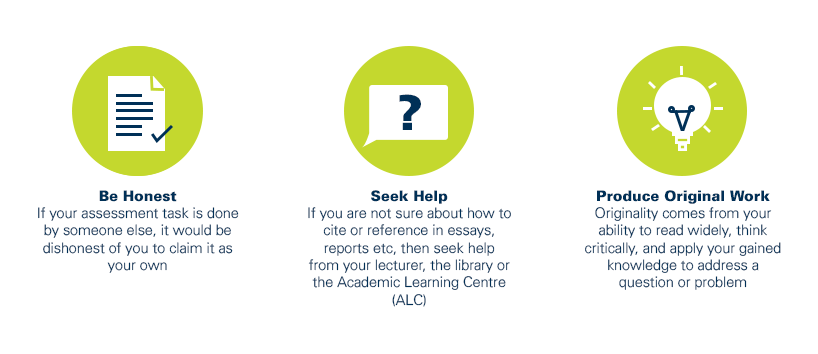
As a CQUniversity student you are expected to act honestly in all aspects of your academic work.
Any assessable work undertaken or submitted for review or assessment must be your own work. Assessable work is any type of work you do to meet the assessment requirements in the unit, including draft work submitted for review and feedback and final work to be assessed.
When you use the ideas, words or data of others in your assessment, you must thoroughly and clearly acknowledge the source of this information by using the correct referencing style for your unit. Using others’ work without proper acknowledgement may be considered a form of intellectual dishonesty.
Participating honestly, respectfully, responsibly, and fairly in your university study ensures the CQUniversity qualification you earn will be valued as a true indication of your individual academic achievement and will continue to receive the respect and recognition it deserves.
As a student, you are responsible for reading and following CQUniversity’s policies, including the Student Academic Integrity Policy and Procedure. This policy sets out CQUniversity’s expectations of you to act with integrity, examples of academic integrity breaches to avoid, the processes used to address alleged breaches of academic integrity, and potential penalties.
What is a breach of academic integrity?
A breach of academic integrity includes but is not limited to plagiarism, self-plagiarism, collusion, cheating, contract cheating, and academic misconduct. The Student Academic Integrity Policy and Procedure defines what these terms mean and gives examples.
Why is academic integrity important?
A breach of academic integrity may result in one or more penalties, including suspension or even expulsion from the University. It can also have negative implications for student visas and future enrolment at CQUniversity or elsewhere. Students who engage in contract cheating also risk being blackmailed by contract cheating services.
Where can I get assistance?
For academic advice and guidance, the Academic Learning Centre (ALC) can support you in becoming confident in completing assessments with integrity and of high standard.
What can you do to act with integrity?