Overview
You will develop and integrate the knowledge, skills and values relevant to working as an occupational therapist in contemporary practice settings, while exploring essential skills for entry to practice, sustaining a healthy career and contributing to the future of the occupational therapy profession. Your focus will be on topics that students preparing to become new graduate occupational therapists need to consider, knowledge of which supports the transition from student to registered professional. Professional supports and resources such as those available from Occupational Therapy Australia are addressed, as well as the legal requirements of professional registration. You will develop your working knowledge of the Australian Occupational Therapy Competency Standards (AOTCS 2018), critically examining how these standards and criteria will be incorporated into your new graduate and early career practice.
Details
Pre-requisites or Co-requisites
Pre-requisite: OCCT13009
Important note: Students enrolled in a subsequent unit who failed their pre-requisite unit, should drop the subsequent unit before the census date or within 10 working days of Fail grade notification. Students who do not drop the unit in this timeframe cannot later drop the unit without academic and financial liability. See details in the Assessment Policy and Procedure (Higher Education Coursework).
Offerings For Term 1 - 2026
Attendance Requirements
All on-campus students are expected to attend scheduled classes - in some units, these classes are identified as a mandatory (pass/fail) component and attendance is compulsory. International students, on a student visa, must maintain a full time study load and meet both attendance and academic progress requirements in each study period (satisfactory attendance for International students is defined as maintaining at least an 80% attendance record).
Recommended Student Time Commitment
Each 6-credit Undergraduate unit at CQUniversity requires an overall time commitment of an average of 12.5 hours of study per week, making a total of 150 hours for the unit.
Class Timetable
Assessment Overview
Assessment Grading
This is a graded unit: your overall grade will be calculated from the marks or grades for each assessment task, based on the relative weightings shown in the table above. You must obtain an overall mark for the unit of at least 50%, or an overall grade of 'pass' in order to pass the unit. If any 'pass/fail' tasks are shown in the table above they must also be completed successfully ('pass' grade). You must also meet any minimum mark requirements specified for a particular assessment task, as detailed in the 'assessment task' section (note that in some instances, the minimum mark for a task may be greater than 50%). Consult the University's Grades and Results Policy for more details of interim results and final grades.
All University policies are available on the CQUniversity Policy site.
You may wish to view these policies:
- Grades and Results Policy
- Assessment Policy and Procedure (Higher Education Coursework)
- Review of Grade Procedure
- Student Academic Integrity Policy and Procedure
- Academic Progression Policy and Procedure
- Student Refund and Credit Balance Policy and Procedure
- Complaints Policy and Procedure
- Information and Communications Technology Acceptable Use Policy and Procedure
This list is not an exhaustive list of all University policies. The full list of University policies are available on the CQUniversity Policy site.
Feedback, Recommendations and Responses
Every unit is reviewed for enhancement each year. At the most recent review, the following staff and student feedback items were identified and recommendations were made.
Feedback from SUTE comments
Some students requested more guidance to understand the requirements of assessment tasks.
It is recommended assessment instructions be reviewed for clarity.
Feedback from Unit Coordinator
The content respects the diversity and flexible learning requirements of the cohort while they undertake full-time practicum, and is seen as useful and relevant to emerging practice.
It is recommended that the flexibility in design of the unit continue to be emphasised to students, encouraging their autonomy in working through the content to achieve their learning outcomes.
- Interpret the contemporary contextual factors in Australia influencing the provision of occupational therapy services.
- Justify a plan for reflective practice and for ongoing learning, support and mentoring following graduation.
- Appraise the relevant legal, ethical and professional reasoning principles applicable to professional practice situations for a new graduate and early career occupational therapist.
- Construct a professional portfolio focusing on professional identity and mentoring skills which will demonstrate the imminent transition from student occupational therapist to a registered, employed occupational therapist.
All four learning outcomes and associated content and assessments map to specific criteria across the four Standards (Professionalism, Knowledge and Learning, Occupational Therapy Process & Practice, Communication) within the Australian Occupational Therapy Competency Standards 2018 (AOTCS 2018).
Alignment of Assessment Tasks to Learning Outcomes
| Assessment Tasks | Learning Outcomes | |||
|---|---|---|---|---|
| 1 | 2 | 3 | 4 | |
| 1 - Reflective Practice Assignment - 25% | ||||
| 2 - Portfolio - 35% | ||||
| 3 - Oral Examination - 40% | ||||
Alignment of Graduate Attributes to Learning Outcomes
| Graduate Attributes | Learning Outcomes | |||
|---|---|---|---|---|
| 1 | 2 | 3 | 4 | |
| 1 - Communication | ||||
| 2 - Problem Solving | ||||
| 3 - Critical Thinking | ||||
| 4 - Information Literacy | ||||
| 5 - Team Work | ||||
| 6 - Information Technology Competence | ||||
| 7 - Cross Cultural Competence | ||||
| 8 - Ethical practice | ||||
| 9 - Social Innovation | ||||
| 10 - First Nations Knowledges | ||||
| 11 - Aboriginal and Torres Strait Islander Cultures | ||||
Textbooks
Occupational Therapy in Australia: Professional and Practice Issues
- 2nd edition (2021)
- Authors: Ted Brown, Helen M. Bourke-Taylor, Stephen Isbel, Reinie Cordier & Louise Gustafsson (editors)
- Taylor & Francis Ltd
- London London , United Kingdom
- ISBN: 9781760877446
- Binding: Paperback
IT Resources
- CQUniversity Student Email
- Internet
- Unit Website (Moodle)
- Zoom (both microphone and webcam capability)
All submissions for this unit must use the referencing style: American Psychological Association 7th Edition (APA 7th edition)
For further information, see the Assessment Tasks.
desley.simpson@cqu.edu.au
Module 1 (weeks 1 & 2)
Begin Date: 09 Mar 2026Module/Topic
Understanding your registration requirements and competency standards for practice
Chapter
Events and Submissions/Topic
Module 2 (weeks 3 & 4)
Begin Date: 23 Mar 2026Module/Topic
Defining yourself as a practitioner
Chapter
1. Prescribed textbook, Chapter 27: "Occupational therapy practice in regional, rural and remote Australia" pp.368-382.
2. Prescribed textbook, Chapter 28:"Population and community occupational therapy practice and project management in Australia" pp.383-394.
3. Prescribed textbook, Chapter 29: "Advocacy, promotion, leadership and entrepreneurship in the occupational therapy profession in Australia" pp.395-402.
4. Jones, K. B., Schell, B. A. B., Neville, M., & Pickens, N. D. (2022). Novice occupational therapy practitioners’ use of occupation in practice: A scoping review [Article]. Occupational Therapy in Health Care. https://doi.org/10.1080/07380577.2022.2025513
5. Moir, E.M.A., Turpin, M., & Copley, J. (2021). The clinical challenges experienced by new graduate occupational therapists: A matrix review. Canadian Journal Occupational Therapy, 1-14. doi: 10.1177/00084174211022880
6. Murray, C. M., Edwards, I., Jones, M., & Turpin, M. (2019). Learning thresholds for early career occupational therapists: A grounded theory of learning-to-practice. British Journal of Occupational Therapy, 83(7), 469-482. https://doi.org/10.1177/0308022619876842
Events and Submissions/Topic
Module 3 (weeks 5 & 6)
Begin Date: 06 Apr 2026Module/Topic
Skills in supervision and mentoring
Chapter
Mentoring & Supervision
1. Jackson, O., Villeneuve, M., & Millington, M. (2022). The experience and role of mentorship for paediatric occupational therapists. Australian Occupational Therapy Journal, 70(1). https://doi.org/10.1111/1440-1630.12839
2. Stephenson, S., Kemp, E., Kiraly-Alvarez, A., Costello, P., Lockmillere, C., & Parkhill, B. (2022). Self-assessments of mentoring skills in healthcare professions applicable to occupational therapy: A scoping review [Review]. Occupational Therapy in Health Care. https://doi.org/10.1080/07380577.2022.2053923
3. Phillips, K., Di Tommaso, A., Molineux, M., & Nicholson, E. (2023). Occupation‐centred practice and supervision: Exploring senior occupational therapists' perspectives. Australian Occupational Therapy Journal, 70(5), 548-558.
AHA Delegation
4. Sarigiovannis, P., Jowett, S., Saunders, B., Corp, N., & Bishop, A. (2021). Delegation by allied health professionals to allied health assistants: a mixed methods systematic review [Review]. Physiotherapy, 112, 16-30. https://doi.org/10.1016/j.physio.2020.10.002
Events and Submissions/Topic
Vacation Week
Begin Date: 20 Apr 2026Module/Topic
Chapter
Events and Submissions/Topic
Module 4 (weeks 7 & 8)
Begin Date: 27 Apr 2026Module/Topic
Becoming and being a reflective, ethical practitioner
Chapter
1. Prescribed textbook, Chapter 7: "Ethical and legal responsibilities of occupational therapy practice" pp.80-88.
2. Prescribed textbook, Chapter 11: "Decolonising occupational therapy through a strengths-based approach" pp.130-142.
3. Hazelwood, T., Baker, A., Murray, C. M., & Stanley, M. (2019). New graduate occupational therapists’ narratives of ethical tensions encountered in practice. Australian occupational therapy journal, 66(3), 283-291.
4. VanderKaay, S., Letts, L., Jung, B., & Moll, S. E. (2020). Doing what’s right: A grounded theory of ethical decision-making in occupational therapy. Scandinavian Journal of Occupational Therapy, 27(2), 98-111. https://doi.org/10.1080/11038128.2018.1464060
Events and Submissions/Topic
Module 5 (weeks 9 & 10)
Begin Date: 11 May 2026Module/Topic
Navigating and working within the funding systems that influence our practice in Australia (special focus on NDIS and private practice)
Chapter
1. Prescribed textbook, Chapter 24: "Emerging professional practice areas: focus on
technology" pp.324-342. (required)
NDIS readings
2. O'Neill, M., Bourke-Taylor, H., Bhopti, A., & Cotter, C. (2024). The experiences of families of children with cerebral palsy and complex disability after three years accessing the National Disability Insurance Scheme [Article]. Australian Occupational Therapy Journal, 71(6), 910-924. https://doi.org/10.1111/1440-1630.12973
3. Currie, M., & Dafny, H. A. (2025). Burnout in physiotherapists and occupational therapists working in the Australian community disability sector under the national disability insurance scheme: a qualitative study. Disability and Rehabilitation, 47(23), 6122–6134. https://doi.org/10.1080/09638288.2025.2476022
4. Mitchell, T. K., Bray, L., Blake, L., Dickinson, A., & Carter, B. (2022). ‘I feel like my house was taken away from me’: Parents' experiences of having home adaptations for their medically complex, technology dependent child [Article]. Health and Social Care in the Community, 30(6), e4639-e4651. https://doi.org/10.1111/hsc.13870
6. Response to that article from the professional association, Occupational Therapy Australia
Events and Submissions/Topic
Module 6 (weeks 11 & 12)
Begin Date: 25 May 2026Module/Topic
Interprofessional practice, workplace policies & application of telehealth for workplace success and satisfaction
Chapter
1. Prescribed textbook, Chapter 30: "Looking forward: Occupational therapy in Australia's future" pp. 403-412.
2. Adamson, K., Loomis, C., Cadell, S. & Verweel, L.C. (2018). Interprofessional empathy: A fourstage model for a new understanding of teamwork. Journal of Interprofessional Care, 32(6), 752-761. doi: 10.1080/13561820.2018.1511523.
3. Seaton, J., Jones, A., Johnston, C., & Francis, K. (2021). Allied health professionals' perceptions of interprofessional collaboration in primary health care: an integrative review. Journal Interprofessional Care, 35(2), 217-228. https://doi.org/10.1080/13561820.2020.1732311
4. Love, R., & Carrington, J. M. (2020). Introducing telehealth skills into the Doctor of Nursing Practice curriculum. Journal of the American Association of Nurse Practitioners, 43(6), 382-383.
Events and Submissions/Topic
Your OCCT14003 was redesigned in 2023 as part of an overall curriculum change in CB84 and has been fully online since 2023. There is no requirement to attend scheduled lecture times. Your learning will be through your Moodle site, interacting with your unit coordinator through various tasks and communicating on Moodle. The unit coordinator and professional placement manager have liaised extensively about the obligations of OCCT14007 and OCCT14003, and we acknowledge you will be studying both simultaneously. We expect that you will prioritise and value both OCCT14007 and OCCT14003, and please be kind to yourselves and avoid comparing your study journey with others, as you are all on different practicum timelines. Many of you will be on different commencement and end dates for your practicum and OCCT14003 has been designed so that no student is disadvantaged because of when their placement falls. The six modules are designed to be stand-alone modules, so you can work through them at a pace that suits you. You are welcome to work through them at an intensive and quicker pace if your practicum starts e.g. halfway through the 12- week academic term. Be mindful of ensuring content related to your assessments is covered in preparation for your assessment submissions.
1 Reflective Practice Assignment
There are two elements to this written assessment piece. The first is the preparation and submission of a CPD plan, with a narrative reflection supporting it. The narrative reflection is to be no less than 750 words and no more than 1000 words. The second is the preparation of a curriculum vitae which must be no less than two pages in length and no more than four pages in length. When explored in combination, the two elements in this assessment provide a clear picture of you as you emerge into your final term before graduating and registering as an occupational therapist.
CPD plan- my preference is that you use a table format which allows you to get used to what you need to produce for Occupational Therapy Board/Ahpra. By all means, use a SWOT analysis to inform your choices and include the summary of that in your narrative. I want to see specific learning goals (either justified in that column next to the learning goal or more thoroughly in your reflection), reasons why they are your goals, selected CPD activities to meet those goals, notes about whether the CPD activity meets the 'interactive' criteria and then the very specific workshop name, date, cost , mode of delivery etc. Some of you may add your reflections if you have completed CPD activities between January and now. Ideally, you'll have a document at the end of this assessment, which can be updated for when you are out practicing. Focus on the timeframe of March (final year of study) to March (new graduate year).
Details of the assessment are as follows:
Part 1:
a) Initial development of CPD Plan (as per Occupational Therapy Board requirements - content covered in the first modules).
b) This is informed by a reflection on your current knowledge and gaps in knowledge.
c) The CPD plan will span your 4th year and is a realistic, authentic and practical plan for your individual professional development. Activities may include attendance at or provision of in-services at your professional placement venue, participation in journal clubs, reading of journal articles, workshop attendance to name a few, and will be in line with the relevant requirement as per Occupational Therapy Board of Australia (OTBA).
d) This is intended to be a living document throughout T1 (and then beyond into the remainder of your 4th year) and is designed to help you transition to developing your future CPD plans as required by OTBA as a registration condition.
(You are only required to submit a CPD plan. Upon registration, you add a CPD Portfolio to your CPD plan, documenting what you have learned and how it has changed your practice. You are not required to add this element for your assessment piece in OCCT14003).
f) You are encouraged to discuss CPD planning with your placement supervisors (past and present) to understand how practicing clinicians manage this requirement, what templates they prefer etc.
g) You do not need to exceed two pages in length, formatted in either landscape or portrait, for your CPD plan.
h) The final part of this process will be a narrative linking your CPD plan and reflections. It is a clear explanation of your rationale, identified gaps, objectives and goals, linking what you have learned in modules 1, 2 and 3 to the CPD plan (750-1000 words). You may use AI for this reflective piece at Level 3 of AI integration, which is 'AI Collaboration'. This means that you may use AI to help complete the task, including idea generation, drafting, feedback and refinement. According to the AI Assessment Scale (Perkins et al. 2024), at Level 3, you must critically evaluate and modify any AI-generated content you choose to use before you submit your final assessment piece.
Part 2:
a) The development of your curriculum vitae will be informed by your acquired knowledge in OCCT14003.
b) Specific guidance will be supplied in the module provided by the CQUni Careers specialist and this will add to your skills in communicating who you are as a candidate for an employed occupational therapy position.
c) The format must include: your personal contact details, career objective, education, details of professional placement skills and experience, past employment, transferable knowledge and skills from past employment or volunteering opportunities, details of two referees.
d) The CV must not exceed four pages.
Please upload ONE DOCUMENT ONLY for assessment in Word format including both:
1) CPD plan (2 pages formatted in either landscape or portrait), with the addition of your narrative summary at the end and
2) Curriculum vitae (2-4 pages)
Week 7 Wednesday (29 Apr 2026) 11:55 pm AEST
The full rubric is available to you on your Moodle site. The criteria and weighting is as follows:
- CPD plan content (detail, strategic, insightful, sophisticated, linked to AOTCS 2018, Ahpra Shared Code of Conduct, SPEF-R2) 15 marks
- Reflection on CPD plan - self-awareness, problem-solving, reflection upon competencies, code of conduct, ethical and legal obligations, practicum feedback 20 marks
- CV content - clear examples, experience, skills, knowledge, attributes and career objectives; organised, appropriate and contemporary 10 marks
- CV appearance - focus on first impressions, structure, polished and concise presentation 5 marks
- Justify a plan for reflective practice and for ongoing learning, support and mentoring following graduation.
2 Portfolio
Assessment 2: Portfolio 35% (week 9)
This is a mentoring experience in which you provide mentoring as a 4th year occupational therapy student to students in their first term of their 2nd year of occupational therapy studies. Mentoring is entirely online at a time mutually suitable to mentors and mentees. It is expected that a minimum of 6 sessions of 30 minutes each will be spent mentoring your allocated 2nd year occupational therapy students. There must be evidence of (via a record of the session) that each meeting occurred for a minimum of 30 minutes.The unit coordinator will group students in OCCT14003, and your group will be allocated a group of occupational therapy students in their second year. The allocations will be completed by your unit coordinator and you will have those from week 1.
Mentoring is expected to occur online via Microsoft Teams, Zoom or similar at a time that is mutually convenient to you and your group of mentees. As this occurs during the 1st half of the calendar year, it must be noted that expecting attendance of mentees on any of the public holidays is not appropriate. In addition, weekends and evening meetings must be avoided. The university and placement providers have an understanding that activities such as mentoring be included in the practicum time. The mentoring hours may be logged as WIL hours.
The focus will be on remote mentoring and so please creatively use any tools or strategies at your disposal such as Doodle, Google Doc, and free versions of project management tools such as Trello. Participation in this activity and associated assessment supports you to be ready for mentoring newer therapists, students and allied health assistants in your new graduate and early career as an occupational therapist.
Before you feel ready to engage in formal clinical supervision of students or newer graduates (which is expected to occur after your new graduate year), mentoring skills consolidate your knowledge and skills and ready you for a transition to supervising. During your early career and then beyond, you may provide both mentoring and supervision in various contexts. Mentoring and supervision are two different skill-sets, and this assessment and unit readies you for quality mentoring skills. It is acknowledged that you will build these skills as you go throughout Term 1 in this mentoring relationship and won’t possess everything you need immediately.
The main aims of this mentoring activity and assessment are as follows:
1. Encourage the development of mentees’ identity as a current 2nd year occupational therapy student and as a future health practitioner.
2. Support mentees in their own reflective practice and self-management, with a particular focus on managing their study demands and the first two assessment task expectations within OCCT12006 Understanding the Environment (and possibly OCCT12003 Occupational Therapy Across the Lifespan 1).
3. Conclude the period of mentoring by facilitating your mentees to articulate what they have gained from the mentoring arrangement and how it might shape their studies and self-management in T2 and beyond.
You will keep a mentoring portfolio that includes a list of the meeting topics, the actions and outcomes arising from the meetings and reflections on your developing mentoring skills. This portfolio must be in a format that can be readily uploaded to Moodle. It is usually preferable to upload in a Word format and large files will be allowed. Please upload ONE DOCUMENT for assessment, containing the following four elements:
1) The signed Mentoring Agreement (template available on Moodle).
2) Log of mentoring - dates, start & finish time of meeting, attendees, topics discussed, solutions/ideas/brainstorming and agreed actions (template available on Moodle). * **
3) Your self-assessment of where your mentoring skills sit at the conclusion of Term 1 (template available on Moodle). Select the appropriate number on the scale, and use those prompts to support your reflection.
4) Your weekly reflections (x6), summarising what went well in each session, what was difficult or challenging, observation of your personal strengths and weaker points, with a concluding overall summary of how this experience has developed your skills. Word count = 250 words maximum for each summary and 800-1000 for the overall concluding summary. You may use AI for this reflective piece at Level 3 of AI integration, which is 'AI Collaboration'. This means that you may use AI to help complete the task, including idea generation, drafting, feedback and refinement. According to the AI Assessment Scale (Perkins et al. 2024), at Level 3, you must critically evaluate and modify any AI-generated content you choose to use before you submit your final assessment piece.
A resource folder has been tailored and compiled for you on Moodle to support you to undertake this activity. You may find some resources and ideas more useful than others, but a range will be provided for you to peruse. Please ensure you are thoroughly cognisant of the resources that have been selected to support your skills in this mentoring activity and the associated documentation.
* Please note, the Unit Coordinator does not need to see details of each meeting, who said what, the details of issues raised, who suggested which strategy etc. You may keep a more detailed record that captures that for your purposes, but it is confidential between the mentors and mentee and I do not need to view it.
Assessment criteria:
· Evidence of active participation in the online mentoring experience (including maintenance of ethical and professional boundaries and confidentiality)
· Organised portfolio capturing all necessary elements
· Reflection skills linked to self-assessment of the process
** Please ensure that your 2nd year mentees have the final log of attendance before they submit for OCCT12006 in week 9.
You MUST contact all mentees allocated to you before cob on Friday of week 1. The Unit Coordinators in both OCCT14003 & OCCT12006 will be checking that this has occurred.
For those on placement during Term 1 dates (the majority of the cohort), please discuss with your practice educator your ability to attend mentoring obligations during your first week of placement and let your Professional Practice Manager (CQUniversity) know if you have any challenges with scheduling these mentoring sessions into your weekly schedule (6 weeks in total prior to the week 9 submission). Please have 6 sessions completed by the Sunday of week 8, ready to compile all paperwork for submission in week 9. Remember, this is 30 minutes out of each week for 6 weeks of the official academic term, prior to week 9 submission.
Week 9 Wednesday (13 May 2026) 11:45 pm AEST
Week 11 Wednesday (27 May 2026)
- record-keeping comprising submission of required documents (5 marks)
- reflection - self-awareness, learning and growth (25 marks)
- written communication and expression (10 marks)
Please refer to Moodle for the full and detailed rubric
- Interpret the contemporary contextual factors in Australia influencing the provision of occupational therapy services.
- Construct a professional portfolio focusing on professional identity and mentoring skills which will demonstrate the imminent transition from student occupational therapist to a registered, employed occupational therapist.
3 Oral Examination
This is an oral format assessment in which you will undergo a viva to examine your knowledge of the Australian Occupational Therapy Competency Standards (2018) (AOTCS 2018) and the principles within the AHPRA shared Code of Conduct 2022 as they relate specifically to a range of clinical scenarios and questions. This will occur as an individual assessment and will be for a duration of 15 minutes (with an additional 10 minutes of perusal time at the beginning). It will be conducted via zoom and will be recorded for the purposes of assessment moderation. Please set aside 30 minutes for this assessment as per the schedule provided to you by the unit coordinator.
All Oral Examinations will be scheduled during week 12 of term. The schedule will be provided to you in week 1 of term, so that you may arrange your time in advance, particularly regarding the provision of notice to your clinical supervisor if you are on professional practice placement at that time. It is expected that you will arrange all other commitments
around this appointment time of 30 minutes’ duration.
In this Oral Examination, you will demonstrate your thorough working knowledge of the AOTCS 2018, communicating how the criteria feature in the provision of occupational therapy services and critically determining which criterion or combination of criteria are applicable in which clinical and service scenarios. You will also demonstrate knowledge of the relevant and applicable key principles within the AHPRA shared Code of Conduct 2022.
Sample case scenarios with relevant questions about the AOTCS (2018) will be supplied on the Moodle platform throughout term to consolidate lecture content and will scaffold your learning and prepare you. You are encouraged to fully engage with those learning opportunities.
An Examination Guide for Students, detailing expectations of both student and examiner throughout the online oral assessment is available for you on your Moodle site to help your preparation.
Week 12 Tuesday (2 June 2026) 8:30 am AEST
Please attend your scheduled timeslot as supplied by the unit coordinator. Assessment appointments run across Tuesday to Friday week 12. The 72 hour grace period does not apply to this assessment.
Students will receive marks and feedback in accordance with the two-week turnaround
- problem identification & critical application of AOTCS 2018, Ahpra Code of Conduct 2022 (and any other relevant legislation) (12 marks)
- clinical judgment and professional reasoning (12 marks)
- translation of knowledge and all standards within AOTCS 2018 (professionalism, knowledge and learning, OT process and practice and communication) to the specific clinical scenario (12 marks)
- client-centred approach (10 marks)
- communication skills & explicit knowledge demonstration (12 marks)
- defense of ideas and justification of responses (10 marks)
- interaction during defense of responses (12 marks)
Moodle contains complete and detailed rubric information.
- Interpret the contemporary contextual factors in Australia influencing the provision of occupational therapy services.
- Appraise the relevant legal, ethical and professional reasoning principles applicable to professional practice situations for a new graduate and early career occupational therapist.
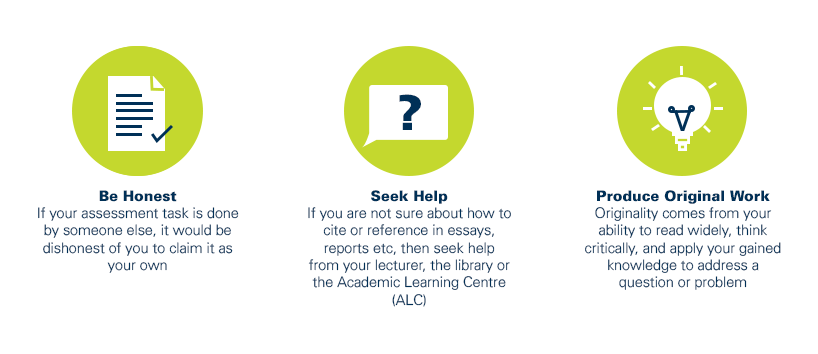
As a CQUniversity student you are expected to act honestly in all aspects of your academic work.
Any assessable work undertaken or submitted for review or assessment must be your own work. Assessable work is any type of work you do to meet the assessment requirements in the unit, including draft work submitted for review and feedback and final work to be assessed.
When you use the ideas, words or data of others in your assessment, you must thoroughly and clearly acknowledge the source of this information by using the correct referencing style for your unit. Using others’ work without proper acknowledgement may be considered a form of intellectual dishonesty.
Participating honestly, respectfully, responsibly, and fairly in your university study ensures the CQUniversity qualification you earn will be valued as a true indication of your individual academic achievement and will continue to receive the respect and recognition it deserves.
As a student, you are responsible for reading and following CQUniversity’s policies, including the Student Academic Integrity Policy and Procedure. This policy sets out CQUniversity’s expectations of you to act with integrity, examples of academic integrity breaches to avoid, the processes used to address alleged breaches of academic integrity, and potential penalties.
What is a breach of academic integrity?
A breach of academic integrity includes but is not limited to plagiarism, self-plagiarism, collusion, cheating, contract cheating, and academic misconduct. The Student Academic Integrity Policy and Procedure defines what these terms mean and gives examples.
Why is academic integrity important?
A breach of academic integrity may result in one or more penalties, including suspension or even expulsion from the University. It can also have negative implications for student visas and future enrolment at CQUniversity or elsewhere. Students who engage in contract cheating also risk being blackmailed by contract cheating services.
Where can I get assistance?
For academic advice and guidance, the Academic Learning Centre (ALC) can support you in becoming confident in completing assessments with integrity and of high standard.
What can you do to act with integrity?