Overview
This capstone unit will prepare you to use your emerging occupational therapy skills and knowledge to conduct a needs analysis and then design, implement and evaluate programs that will address the complex needs of clients in a community setting. You will work in a small group using an occupational justice lens to complete a unique workplace project identified by local stakeholders. Supervision and mentoring will be provided by academic staff in collaboration with selected community-based organisations. You will undertake a minimum of 150 hours of Work Integrated Learning during this unit. Your stakeholder focused workplace project will generate information that forms the basis of an industry standard conference presentation and written report, utilising the graduate level professional skills you have developed throughout your course of study in occupational therapy.
Details
Pre-requisites or Co-requisites
Pre-requisite: OCCT13008 Professional Occupational Therapy Practice 1 OR OCCT13009 Professional Occupational Therapy Practice 1 Co-requisite: OCCT14002 Specialisation in Occupational Therapy
Important note: Students enrolled in a subsequent unit who failed their pre-requisite unit, should drop the subsequent unit before the census date or within 10 working days of Fail grade notification. Students who do not drop the unit in this timeframe cannot later drop the unit without academic and financial liability. See details in the Assessment Policy and Procedure (Higher Education Coursework).
Offerings For Term 2 - 2026
Attendance Requirements
All on-campus students are expected to attend scheduled classes - in some units, these classes are identified as a mandatory (pass/fail) component and attendance is compulsory. International students, on a student visa, must maintain a full time study load and meet both attendance and academic progress requirements in each study period (satisfactory attendance for International students is defined as maintaining at least an 80% attendance record).
Recommended Student Time Commitment
Each 12-credit Undergraduate unit at CQUniversity requires an overall time commitment of an average of 25 hours of study per week, making a total of 300 hours for the unit.
Class Timetable
Assessment Overview
Assessment Grading
This is a graded unit: your overall grade will be calculated from the marks or grades for each assessment task, based on the relative weightings shown in the table above. You must obtain an overall mark for the unit of at least 50%, or an overall grade of 'pass' in order to pass the unit. If any 'pass/fail' tasks are shown in the table above they must also be completed successfully ('pass' grade). You must also meet any minimum mark requirements specified for a particular assessment task, as detailed in the 'assessment task' section (note that in some instances, the minimum mark for a task may be greater than 50%). Consult the University's Grades and Results Policy for more details of interim results and final grades.
All University policies are available on the CQUniversity Policy site.
You may wish to view these policies:
- Grades and Results Policy
- Assessment Policy and Procedure (Higher Education Coursework)
- Review of Grade Procedure
- Student Academic Integrity Policy and Procedure
- Academic Progression Policy and Procedure
- Student Refund and Credit Balance Policy and Procedure
- Complaints Policy and Procedure
- Information and Communications Technology Acceptable Use Policy and Procedure
This list is not an exhaustive list of all University policies. The full list of University policies are available on the CQUniversity Policy site.
Feedback, Recommendations and Responses
Every unit is reviewed for enhancement each year. At the most recent review, the following staff and student feedback items were identified and recommendations were made.
Feedback from SUTE comments
Students noted that tutorial content did not always align with the current stage of their projects.
It is recommended that the content, structure and timing of the support tutorials be reviewed prior to the 2026 offering, to ensure better alignment with the requirements of the community projects.
Feedback from SUTE comments Informal student feedback
Students requested clarity over what could and could not be counted towards the required WIL hours.
It is recommended that an information sheet outlining all expected WIL activities associated with the unit be developed.
Feedback from SUTE comments Educator observation
The volume of written assessment required is high and difficult to manage.
It is recommended that the nature and content of the assessment requirements be reviewed and streamlined where possible.
Feedback from SUTE comments Informal student feedback Educator reflection
The addition of a conference coordinator was beneficial for the organisation of the graduating conference.
It is recommended that the role of conference coordinator be continued by a staff member in 2026.
Feedback from SUTE comments Staff observation
The resultant community projects were high quality; however, projects were not made available until term commenced.
It is recommended that a more proactive and consistent approach to developing potential community projects be introduced for the 2026 offering.
- Select and apply appropriate theoretical principles to underpin the development of a community-based project for clients with complex needs
- Demonstrate a range of complex professional communication and problem-solving strategies to manage the expected and unexpected components of project development
- Exhibit graduate level professional and ethical behaviours to work with the university project supervisor to prioritise tasks, network with stakeholders and share responsibility for management of a community-based project
- Operate as an effective team member using objective reflection to evaluate the role of self and others throughout the project timeframe
- Prepare all project documentation to an industry expected standard incorporating feedback from key stakeholders into final documents.
The unit overview, unit learning outcomes, and assessment pieces are aligned with requirements in the Australian Occupational Therapy Competency Standards (AOTCS, 2018). These competency standards acknowledge the diversity of roles and contexts that currently exist in occupational therapy practice.
Alignment of Assessment Tasks to Learning Outcomes
| Assessment Tasks | Learning Outcomes | ||||
|---|---|---|---|---|---|
| 1 | 2 | 3 | 4 | 5 | |
| 1 - Written Assessment - 30% | |||||
| 2 - Presentation - 30% | |||||
| 3 - Workplace Project - 40% | |||||
Alignment of Graduate Attributes to Learning Outcomes
| Graduate Attributes | Learning Outcomes | ||||
|---|---|---|---|---|---|
| 1 | 2 | 3 | 4 | 5 | |
| 1 - Communication | |||||
| 2 - Problem Solving | |||||
| 3 - Critical Thinking | |||||
| 4 - Information Literacy | |||||
| 5 - Team Work | |||||
| 6 - Information Technology Competence | |||||
| 7 - Cross Cultural Competence | |||||
| 8 - Ethical practice | |||||
| 9 - Social Innovation | |||||
| 10 - First Nations Knowledges | |||||
| 11 - Aboriginal and Torres Strait Islander Cultures | |||||
Textbooks
Developing Occupation-Centred Programs with the Community
- Edition: 3rd ed. (2017)
- Authors: Fazio, L.S.
- Slack Incorporated
- Thorofare Thorofare , NJ , USA
- ISBN: 978-1-63091-259-8
- Binding: Paperback
Occupational Therapy in Community and Population Health Practice
- Edition: 3rd (2020)
- Authors: Scaffa, M. & Reitz, S.M.
- F.A. Davis
- Philadeplphia Philadeplphia , PA , USA
- ISBN: LCCN 2019046783
- Binding: eBook
IT Resources
- CQUniversity Student Email
- Internet
- Unit Website (Moodle)
- Microsoft PowerPoint
- Microsoft Teams (both microphone and webcam capability)
All submissions for this unit must use the referencing style: American Psychological Association 7th Edition (APA 7th edition)
For further information, see the Assessment Tasks.
m.oreilly@cqu.edu.au
Week 1
Begin Date: 13 Jul 2026Module/Topic
- Topic 1A: About this unit
- Topic 1B: What is "community" and why are we doing this unit?
- Topic 1C: Program design and development
Chapter
1A: Rai, R. (2016). Tips to organise a conference. Indian Dermatology Online Journal, 7(5), 424-427.
OCCT14004 Prescribed Text:
- 1B: Understanding Community, pp. 12, 15-16
- 1B: Practicing occupation in the community, pp. 24-30
- 1C: Program design and development, pp. 43-49, 51, 55
OCCT14004 Supplementary Text:
1C: Scaffa, M. & Reitz, M. (2020). Occupational therapy in community and population health practice (3rd ed.). F. A. Davis.
- PRECEDE-PROCEED model, pp. 51-52
- Program planning principles, pp. 75-79.
Events and Submissions/Topic
- Monday: ON-CAMPUS attendance required 12:30-3:00pm.
(Following the Post-Practicum Skills Translation Workshop) - Thursday:
ZOOM CLASS 9:00am-12:00pm
Self-directed study: 1:00pm-4:00pm - Ensure that you familiarise yourself with all assessment task requirements.
- Check the OCCT14004 Moodle Classes Tile for details about the weekly classes and additional readings.
- Project details including stakeholder contact details, expected time commitments, supervisor details and student allocations can be found on Moodle under the Community Project tile.
Week 2
Begin Date: 20 Jul 2026Module/Topic
- Topic 2A: Models, program planning and evaluation
Chapter
- Logic models, pp. 70-72
- Program planning, pp. 61-77, 91-96
- Program design, pp. 80-93
OCCT14004 Supplementary Text:
2A: Scaffa, M. & Reitz, M. (2020). Occupational therapy in community and population health practice (3rd ed.). F. A. Davis.
- Program evaluation pp. 114-130.
Events and Submissions/Topic
- Monday:
Self-directed study/project meetings: 12:00pm-4:30pm - Thursday:
ZOOM CLASS 9:00am-12:00pm
Self-directed study/project meetings: 1:00pm-4:00pm - Project-related fieldwork - 12 hours
Week 3
Begin Date: 27 Jul 2026Module/Topic
- Topic 3A: Needs Assessment.
- Topic 3B: KPIs, SWOT analysis and risk management
Chapter
OCCT14004 Prescribed Text:
- 3A: Continuing needs assessment, pp. 119-133
- 3B: Goals & theories pp. 149-168
OCCT14004 Supplementary Text:
Scaffa, M. & Reitz, M. (2020). Occupational therapy in community and population health practice (3rd ed.). F. A. Davis.
- 3A: Needs Assessment pp. 79-84
- 3B: Evaluation data and indicators pp. 126-127
3B: Hoffmann, T., Bennett, S., & Del Mar, C. (2013). Evidence-based practice across the health professions (2nd ed.). Proquest e-book.
- qualitative theories for evaluation, pp. 223-226
Owen, J. & Rogers, P. (1999). Program evaluation: Forms and approaches. Allen & Unwin.
- 3A: Purposes of evaluation types, pp. 40-54
- 3B: Theoretical underpinnings, pp. 86-89.
Events and Submissions/Topic
- Monday:
Self-directed study/project meetings: 12:00pm-4:30pm - Thursday:
ZOOM CLASS 9:00am-12:00pm
Self-directed study/project meetings: 1:00pm-4:00pm - Project-related fieldwork - 12 hours
Week 4
Begin Date: 03 Aug 2026Module/Topic
- Topic 4A:
Developing a project plan
Chapter
Events and Submissions/Topic
- Monday:
Self-directed study/project meetings: 12:00pm-4:30pm - Thursday:
ZOOM CLASS 9:00am-12:00pm
Self-directed study/project meetings: 1:00pm-4:00pm - Project-related fieldwork - 12 hours
Week 5
Begin Date: 10 Aug 2026Module/Topic
No classes: focus on finalising the project plan.
Drop-in session for questions about the plan and assessment requirements available on Monday afternoon.
Chapter
Events and Submissions/Topic
- Project-related fieldwork - 12 hours
- Practice SPA to be completed by 11.59pm Friday 14/08/2026
Project Plan Due: Week 5 Tuesday (11 Aug 2026) 11:45 pm AEST
Week 6
Begin Date: 17 Aug 2026Module/Topic
No scheduled classes to accommodate OCCT14002 assessment task. Students are expected to maintain project work commitments throughout the week.
Chapter
Events and Submissions/Topic
- Project-related fieldwork - 12 hours
- Action Learning Cycle schedule posted in Moodle at the end of Week 6.
Vacation Week
Begin Date: 24 Aug 2026Module/Topic
- Zoom or Teams consults with teaching staff by appointment
Chapter
Focus on group project based learning.
Events and Submissions/Topic
- Please be aware students may still be required to engage in their project work based on stakeholder needs and project progress.
Week 7
Begin Date: 31 Aug 2026Module/Topic
- Topic 7A: Measuring and reporting key performance indicators
Chapter
OCCT14004 Prescribed Text:
7A: Fazio, L. (2017) Developing occupation-centered programs with the community (3rd. ed.). SLACK, Inc.
Revisiting program goals, pp. 270-272
7A: Hitch, D., Lhuede, K., Vernon, L., Pepin, G., & Stagnitti, K. (2019). Longitudinal evaluation of a knowledge translation role in occupational therapy. BMC Health Services Research, 19(1), 154. https://doi.org/10.1186/s12913-019-3971-y
Events and Submissions/Topic
- Monday:
Self-directed study/project meetings: 12:00pm-4:30pm - Thursday:
ZOOM CLASS 9:00am-4:00pm
to allow for Action Learning Cycle presentations. Presentation schedule will be posted to Moodle at the end of Week 6. - Project-related fieldwork - 12 hours
- Action Learning Cycle presentations Thursday
Week 8
Begin Date: 07 Sep 2026Module/Topic
- Topic 8A: Writing your Report.
Chapter
8A: O'Brien, S. P., Marken, D., & Petrey, K. B. (2016). Student perceptions of scholarly writing. Open Journal of Occupational Therapy, 4(3), pp. 3, 7-11. https://doi.org/10.15453/2168-6408.1253
Events and Submissions/Topic
- Monday:
Self-directed study/project meetings: 12:00pm-4:30pm - Thursday:
ZOOM CLASS 9:00am-4:00pm
to allow for Action Learning Cycle presentations.
- Project-related fieldwork - 12 hours
Week 9
Begin Date: 14 Sep 2026Module/Topic
No formal lecture: class attendance on Thursday required for Action Learning Cycle Presentations.
Chapter
Events and Submissions/Topic
- Thursday:
ZOOM CLASS 9:00am-4:00pm
to allow for Action Learning Cycle presentations. - Project-related fieldwork - 12 hours
- Deadline for initial draft sections of Project Report for formative feedback is before 11.59pm Friday 18/09/2026.
Week 10
Begin Date: 21 Sep 2026Module/Topic
No formal lecture: class attendance on Thursday required for Action Learning Cycle Presentations.
Chapter
Events and Submissions/Topic
- Thursday:
ZOOM CLASS 9:00am-4:00pm
to allow for Action Learning Cycle presentations.
- Project-related fieldwork - 12 hours
- Project group meetings Monday
- Action Learning Cycle presentations
Week 11
Begin Date: 28 Sep 2026Module/Topic
- Topic 11A: Writing your abstract
- Topic 11B: Presenting at a conference
Chapter
11A: Albarran, J., & Dowling, S. (2017). Writing an effective conference abstract. British Journal of Cardiac Nursing, 12(7), 324-328. https://doi.org/doi:10.12968/bjca.2017.12.7.324
11B: Corwin, L. A., Prunuske, A., & Seidel, S. B. (2018). Scientific Presenting: Using Evidence-Based Classroom Practices to Deliver Effective Conference Presentations. CBE Life Science Education, 17(1). https://doi.org/10.1187/cbe.17-07-0146
11B: Cranford, S. (2020). 8 Simple Rules for Presenting at a Conference. Matter, 2(6), 1339-1342. https://doi.org/10.1016/j.matt.2020.04.024
Events and Submissions/Topic
- Thursday:
ZOOM CLASS 9:00am-4:00pm
to allow for Action Learning Cycle presentations.
- Project-related fieldwork - 12 hours
Week 12
Begin Date: 05 Oct 2026Module/Topic
No classes: time to prepare your final report and your conference presentation.
Chapter
Events and Submissions/Topic
- Monday: Project related work
- Thursday:
Self-directed study/conference preparation. - Feedback on conference slides available by appointment (Monday/Thursday).
Exam Week
Begin Date: 12 Oct 2026Module/Topic
Conference week!
Rehearsal and set up Tuesday 13 October (time to be confirmed).
Graduating students' conference: Wednesday 14 October, 8am-5pm
Chapter
Events and Submissions/Topic
Conference Presentation and Organisation Due: Exam Week Wednesday (14 Oct 2026) 8:00 am AEST
Vacation/Exam Week
Begin Date: 19 Oct 2026Module/Topic
Chapter
Events and Submissions/Topic
Timetabled classes:
To enable maximum flexibility, unless otherwise stated, all classes will be delivered online. However, the classrooms will remain available for those who wish to use them.
Classes will not be recorded, you will be expected to attend and participate. Participation is required by all students for the Action Learning Cycle Reports, Weeks 7-11.
While Monday is timetabled, it will only be used for formal classes in Week 1. It will be available for project group meetings with your supervisor for the remainder of term. Thursday classes will usually be in the morning, with the afternoon session available for group meetings. Further information about weekly timetables will be available in Moodle.
Hours of study and Work Integrated Learning (WIL):
As this unit is a 12 Credit Point offering, the total expected study time is 300 hours. There is an expectation that you will complete a minimum of 150 hours of Work Integrated Learning (WIL) directly doing tasks and activities that will lead to the successful completion of your community project. Any student who does not complete the Moodle Wiki and provide evidence of at least 150 WIL hours will be required to complete online simulation activities to achieve the 150 hours minimum. Participation in Action Learning Cycle discussions, and conference planning meetings are included in your WIL hours.
Project teams:
Students will be allocated to one of 10 project groups. Each group will be allocated a supervisor who will mentor you through the project process. You are expected to meet with your supervisor each week to discuss progress and trouble-shoot any challenges. Supervisors will be allocated in Week 1.
Workload for each project:
Project tasks may vary between organisations due to the nature of each project and the project aims set to meet community partner needs. The student workload for each project will be monitored by the Unit Coordinator and will take into account the number of team members as well as the expected timeframe for completion.
You will be required to meet with your project team, supervisor, and stakeholders at mutually convenient times outside of scheduled classes. You will need to allow yourself sufficient time at the end of term when many of your final assessment tasks will be due in order to manage multiple complex tasks.
Graduate Conference planning:
Organising and carrying out a professional learning event such as the end of term graduate conference provides students with an opportunity to demonstrate complex skills and knowledge as part of OCCT14004 Unit Learning Outcomes 2, 3 and 4. Managing the many planning and organisational tasks needed for the conference takes a large team to share the time required. Please note that while every effort is made to ensure the conference planning tasks are roughly equivalent, it is unrealistic to expect that each student will spend exactly the same amount of time for conference planning and organisation. Clarification of roles and expectations will be initiated in Week 1; however event planning requires students to demonstrate adaptable responsiveness to accommodate a range of expected and unexpected variables. Attendance at and contribution to Conference planning meetings (scheduled during class time) is required, and counts toward your WIL hours.
Microsoft Teams:
This term you will fully utilise Microsoft Teams as the preferred means of communication. This is for several reasons:
- You can invite your external stakeholders to your team channel and meet with them via the Teams videoconferencing facility.
- Teaching staff can follow each of the Team communication threads more easily and the notifications of your posts are instant rather than delayed as they are with Moodle forums.
- It is a commonly used tool in industry.
- It allows separate channels for each Project Team which are only accessible to members of your group and to teaching staff. Your team files will be confidential, and it makes it easy to provide formative and prompt feedback for your draft documents throughout the term.
- You can still post Q and A about assessment tasks for the whole class in the General Teams channel.
1 Written Assessment
This written plan will help guide your project across the term up until your Project Report is submitted. It will ensure your team is clear about allocation of tasks, timelines for completion and allows sufficient time for stakeholder input to the project design. Evaluation is a vital process for the development and sustainability of community-based programs. As you develop your community project you will become familiar with a range of different evaluation methods and common project management tools. You will research and explain a variety of strategies to be incorporated into your community project:
- Background and overview of the project – preliminary identified need
- Evaluation methods and their underpinning theoretical concepts appropriate to your project design.
- Key Performance Indicators to measure the project outcomes.
- Project Risk Identification and Management to problem solve anticipated issues that may impact progress of the project.
- Dates of expected project stages and task allocation within the team using a Gannt chart.
All team members will also complete a formative practice Self and Peer Assessment (SPA, not marked) in Week 5 to enable your supervisor to support your project team functioning.
Your tasks:
- Your team must consult with your University Educator to select appropriate evaluation methods.
- Use the Project Plan template to document all required individual and group components of the Project Plan.
- Work with your project team members to ensure your submitted plan is comprehensive and cohesive.
- Complete a Practice SPA for yourself and your project team (not graded).
Level of GenAI use allowed:
Level 3: You may use Al to assist with specific tasks such as drafting text, refining and evaluating your work. You must critically evaluate and modify any Al-generated content you use.
Any AI use must be appropriately acknowledged as per the following guideline:
https://delivery-cqucontenthub.stylelabs.cloud/api/public/content/Guidelines_referencing_Artificial_Intelligence?v=7f19c75d
More details about the requirements of the task are available on Moodle.
Week 5 Tuesday (11 Aug 2026) 11:45 pm AEST
Submit all files to Moodle by the due date. Complete online formative SPA by Friday 14 Aug, 11.45pm.
Week 7 Monday (31 Aug 2026)
Feedback will be returned via Moodle Gradebook
Criteria will be applied to individual and group components of this task as per the marking rubric available on Moodle.
- Introduction provides an overview of the Project Plan and rationale for the project (10 marks)
- Provides a general description of the evaluation method (Individual: 10 marks)
- Provides a rationale for use of the method in your project (Individual: 10 marks)
- KPIs are justified, relevant, measurable, clearly prioritised and linked to project timeline tasks (10 marks)
- SWOT analysis is comprehensive and well-structured, clearly identifying relevant internal (strengths, weaknesses) and external (opportunities, threats) factors (10 marks)
- Risks identified are realistic, stated objectively and professionally with appropriate management strategies planned for the project duration (10 marks)
- Written work meets professional standards for terminology use, articulation and flow of ideas, spelling & grammatical conventions. (2 X 5 marks)
- Use of relevant evidence from a broad range of high-quality sources including evidence based occupational therapy and other literature (2 X 5 marks)
- Referencing adheres to APA 7 style for in-text citations and reference list. (2 X 5 marks)
- Report presentation and organisation of content addresses formatting guidelines (5 marks)
- Presents a clear, detailed, and accurate Gantt chart that effectively outlines all project tasks (5 marks)
- Select and apply appropriate theoretical principles to underpin the development of a community-based project for clients with complex needs
- Demonstrate a range of complex professional communication and problem-solving strategies to manage the expected and unexpected components of project development
- Operate as an effective team member using objective reflection to evaluate the role of self and others throughout the project timeframe
2 Workplace Project
Overview and Purpose.
A written report authored by all members of your project team is the major deliverable for your project partner organisation in this unit.
In addition to the report, all student project team members will complete an individual graded Self and Peer Assessment (SPA), and participate in the action learning reflections sessions in Weeks 7-11.
You will also individually document your Work Integrated Learning (WIL) hours associated with your community project by completing the OCCT14004 Moodle wiki. You must demonstrate that you have achieved the 150 hours minimum towards your 1000 hours of professional practice required to graduate.
1. Written Report (Group component):
In your project team, you will produce a written report expanding on the content to be discussed in your conference presentation. Your team will seek and incorporate feedback from teaching staff and your project partners on draft sections of your report to ensure your content is appropriate for your partner organisation before submission for marking. You will adhere strictly to the report formatting guidelines to prepare the written document ready for sharing with your partner organisation.
Project Report context:
There is no word limit for this report. The report is a significant outcome of your project that will require attention to detail and extensive documentation of information. The preparation of all documentation is expected to be shared between your project team members.
When you are collating your report, consider that this project may be one component of a larger, long term future student project. The project may eventually span several years. Time will be made available to work on this report throughout term and your preparation will need to begin from Week 1.
Important note about the report writing style and terminology required:
Please write the report from the perspective that your team has been acting as advocates for your partner organisation. Do not include your personal perspective as students in this report, which is inappropriate. Refer to yourselves collectively as the project team, and not as students. It is expected you will use a consistent third person past tense throughout the report, and use professional rather than colloquial terminology. Use referencing and careful stating of any claims made in the report so there is objective and non-emotive presentation of facts and events relating to the project. If in doubt, please consult teaching staff for ideas on how to present sensitive or potentially provocative information.
Written Report Sections:
A detailed explanation of the content requirements for each section of the report is included in the project report template and task sheet available on Moodle. The report will contain all of the following sections:
- Table of contents
- Abstract (you may use your conference presentation abstract for the report if it is suitable)
- Description of partner organisations
- Project scoping
- Project Risk identification and management strategies
- Evaluation methodology, data collected and ethical considerations
- Project Key Performance Indicators and achievement status
- Outstanding tasks
- Future developments and recommendations
- List of contributors
- References
- Appendices
List of contributors:
- You will provide a table documenting which team member was primarily responsible for each section.
- The list of contributors will provide evidence for the individual mark you will receive for your contribution to the project report as per the marking criteria.
- You may include secondary contributors as long as there has been more than a rudimentary role for secondary contributors.
- All students must sign this record to indicate they agree it is a true representation of the distribution of team project tasks. The aim is for all students to contribute appropriately to the shared tasks.
Level of GenAI use allowed:
Level 3: You may use Al to assist with specific tasks such as drafting text, refining and evaluating your work. You must critically evaluate and modify any Al-generated content you use.
Any AI use must be appropriately acknowledged as per the following guideline:
https://delivery-cqucontenthub.stylelabs.cloud/api/public/content/Guidelines_referencing_Artificial_Intelligence?v=7f19c75d
Formative Feedback
You can submit sections of the report for formative feedback in Week 9. This is not compulsory, but highly recommended in order to produce the best quality results for your external stakeholder. Any requests for formative feedback must be made by the specified deadline, as listed in the schedule. Please see Moodle for further information.
2. Action Learning Cycle Reflection (Individual component)
You will prepare individual regular Action Learning Cycle reflections as part of your record of learning during this unit. You will choose one of these for marking as the individual component of the presentation task and present your reflection orally during class in Weeks 7-11. This individual component is worth 10 marks.
3. Graded Self and Peer Assessment (SPA) individual component:
- Your work this term will be the result of a significant team effort. You will complete a summative Self and Peer Assessment (SPA) of yourself and your team peers’ roles throughout the entire project.
- For the best possible ratings from your peers, you must contribute to your project team consistently and professionally across the whole duration of your community project.
- Please ensure that you follow the guidelines provided on Moodle for giving your peers constructive feedback and provide comments to support your ratings.
- The Week 13 SPA will be summatively graded and forms part of the individual component of this task as a way to measure Learning Outcome 4.
- You will be given an opportunity to practice giving feedback in a formative (non-graded) SPA in the Week 5 class. Both the formative and summative SPA will be submitted individually online.
- You must provide a brief narrative feedback statement along with the numerical ratings to justify your ratings for self and peers. Any score (including positive, negative and neutral ratings) that is not justified will be taken into consideration when providing your individual mark. Your explanations will be collated and used to determine the mark for each team member. If you do not provide sufficient explanations for your numerical ratings, it will impact your marks for this component as per the marking rubric available on Moodle.
- You MUST complete and submit the graded Self and Peer Evaluation (SPA) by the due date. If you do not complete the graded SPA by the due date, you cannot obtain any marks for this section of the rubric.
4. Work Integrated Learning (WIL) hours (individual component):
Most students have previously used a Moodle wiki to record evidence of WIL hours for OCCT12003. The Moodle wiki for OCCT14004 is laid out in a similar fashion.
- You will edit your individual wiki page to detail the tasks you have done and the hours you have spent on each task.
- Activities that you can include in the wiki are listed on Moodle- you can discuss with teaching staff any activities you are not sure are eligible for WIL.
- Please ensure you document the hours that you have spent on conference planning and organisation, as this task is eligible to count towards your WIL hours.
- You must detail how you accumulated your individual hours of Work Integrated Learning (WIL) associated with the project across the term for sign off by the Unit Coordinator.
- You must document a minimum of 150 hours for the project. The WIL hours are not graded however the 150 hour minimum requirement ensures that you meet the total 1000 hours of professional practice required to graduate.
IMPORTANT: Any student with less than the 150 hours of documented WIL will be expected to perform additional online simulation tasks to meet the minimum hours requirement. It is critical that you regularly record your weekly WIL hours to ensure you are on track to meet the minimum hours requirement.
Exam Week Monday (12 Oct 2026) 9:00 am AEST
One member of each group to submit all project documents to Moodle by the due date. Individuals to complete final SPA by 11.45pm Tuesday 14 October. Offline: Orally present individual Action Learning Cycle in class during Weeks 7-11;
Report and SPA feedback returned via Moodle gradebook prior to Certification of Grades.
Group component marks
- Abstract provides an overview of project purpose, process and outcomes. (5 marks)
- Provides a description of partner organisation's and stakeholders' role in project. (5 marks)
- Project scoping is explained. (10 marks)
- Project timelines, phases, inclusions and exclusions are clearly described. (10 marks)
- Evaluation methodology and outcomes are explained and justified. (10 marks)
- Achievement of KPIs are clearly indicated and justified (10 marks)
- Updated SWOT analysis describes suitable risk management strategies. (5 marks)
- Changes, outstanding tasks and recommendations are supported by professional reasoning. (10 marks)
- Written communication throughout the report meets professional standards for terminology use, articulation and flow of ideas, spelling and grammatical conventions. (5 marks)
- Broad range of highly relevant references published within past 10 years adhere to APA 7 style. (5 marks)
- Additional relevant project resources or documents are included in Appendices. (5 marks)
Individual component marks:
- Orally communicates an appropriate level of critical reflection for significant events, using the Action Learning Cycle model (10 marks)
- Evidence is provided of individual contribution to the project report. (5 marks)
- Provides a narrative explanation for SPA ratings. (5 marks)
- Peers provide evidence of individual contribution to team outcomes. (5 marks)
- Select and apply appropriate theoretical principles to underpin the development of a community-based project for clients with complex needs
- Demonstrate a range of complex professional communication and problem-solving strategies to manage the expected and unexpected components of project development
- Exhibit graduate level professional and ethical behaviours to work with the university project supervisor to prioritise tasks, network with stakeholders and share responsibility for management of a community-based project
- Operate as an effective team member using objective reflection to evaluate the role of self and others throughout the project timeframe
- Prepare all project documentation to an industry expected standard incorporating feedback from key stakeholders into final documents.
3 Presentation
Overview and Purpose:
All students will be part of a project team in this unit, communicating with community stakeholders towards achieving their organisation's goals for services. Disseminating the work you have done is crucial when sharing skills and new knowledge for occupational therapy practice. The graduate conference is designed to be a memorable conclusion to your coursework and to help you progress from student to independent occupational therapy practitioner.
Important features of independent practitioners are that they
- can articulate that occupational therapy is a fluid and responsive process that requires constant adaptation to change.
- are comfortable with a level of uncertainty that requires us to engage our collaborative problem solving and higher-level thinking capacities.
- independently prepare, reflect, plan and act with staged support rather than direct instruction.
- actively seek and respond to feedback
- utilise highly developed oral communication and self-reflective skills to engage with clients, colleagues and supervisors.
You will be required to verbally demonstrate these skills while participating in a range of experiences that will challenge and stretch your current skills and knowledge. Achieving your project objectives, planning the graduate conference and navigating challenges within your team will not always be a comfortable or easy process. However, it is important that your attitude towards learning from your project experiences remains professional.
The Presentation task contains individual and group components:
- Group Conference Presentation: Organising and participating in the Conference Day will provide an opportunity for your team to disseminate the results of your project to your stakeholders and to wider occupational therapy professional networks. You will collaborate with your team to prepare your conference PowerPoint presentation to deliver at Conference Day. The group presentation component is worth 70 marks.
- Individual contribution to the conference presentation. Each student will be allocated marks for their presentation style and contribution to question time at the end of the presentation. This individual component is worth 10 marks.
- Conference organisation: Each team will be allocated a conference task, and all members will be expected to contribute to the successful achievement of that task. There are 20 individual marks for how well you carry out your role helping to organise Conference Day. You must keep the unit coordinator regularly informed across the term of the progress of your allocated conference planning tasks so you can be marked appropriately.
Seeking and responding to feedback:
You will be able to obtain formative feedback for individual and group components when meeting with your University Educator. You will be expected to discuss your draft PowerPoint slides with teaching staff before Conference Day to make suggested improvements.
Level of GenAI use allowed:
Level 3: You may use Al to assist with specific tasks such as drafting text, refining and evaluating your work. You must critically evaluate and modify any Al-generated content you use.
Any AI use must be appropriately acknowledged as per the following guideline:
https://delivery-cqucontenthub.stylelabs.cloud/api/public/content/Guidelines_referencing_Artificial_Intelligence?v=7f19c75d
Please note, the 72-hour grace period does not apply for this assessment.
More details regarding your presentation content requirements are available on Moodle.
Exam Week Wednesday (14 Oct 2026) 8:00 am AEST
Online/Group: submit PowerPoint slides to Moodle by due date. Offline: orally present the final group presentation during the student conference.
Conference feedback will be returned by Certification of Grades.
Group component:
- Presents a clear and informative description of the project process and outcomes. (20 marks)
- Presents key performance indicators and clearly indicates achievement status. (20 marks)
- Provides relevant future directions and well-founded recommendations. (10 marks)
- Delivers oral content that is logically organised and aligned with presentation slides. (5 marks)
- Demonstrates a professional and visually balanced slide design, integrating text and images effectively. (5 marks)
- Demonstrates collaborative teamwork through coordinated delivery, with smooth and confident transitions between presenters. (5 marks)
- Manages presentation time effectively, including any discussion or Q&A components. (5 marks)
Individual component:
- Demonstrates effective individual presentation style, including clarity, engagement, and responsiveness to questions. (10 marks)
- Fulfils assigned role and responsibilities in conference organisation to an appropriate standard. (20 marks)
- Exhibit graduate level professional and ethical behaviours to work with the university project supervisor to prioritise tasks, network with stakeholders and share responsibility for management of a community-based project
- Prepare all project documentation to an industry expected standard incorporating feedback from key stakeholders into final documents.
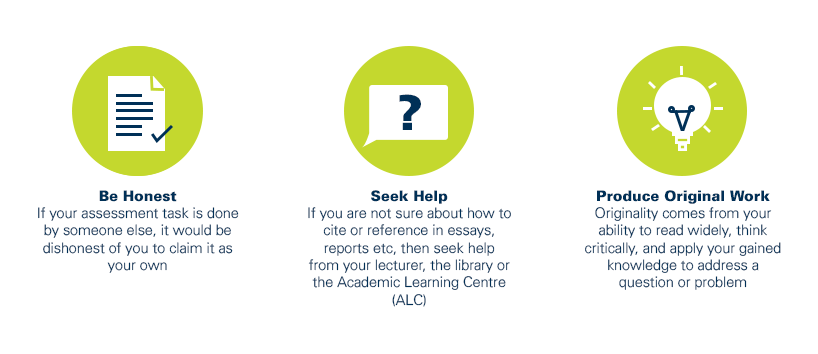
As a CQUniversity student you are expected to act honestly in all aspects of your academic work.
Any assessable work undertaken or submitted for review or assessment must be your own work. Assessable work is any type of work you do to meet the assessment requirements in the unit, including draft work submitted for review and feedback and final work to be assessed.
When you use the ideas, words or data of others in your assessment, you must thoroughly and clearly acknowledge the source of this information by using the correct referencing style for your unit. Using others’ work without proper acknowledgement may be considered a form of intellectual dishonesty.
Participating honestly, respectfully, responsibly, and fairly in your university study ensures the CQUniversity qualification you earn will be valued as a true indication of your individual academic achievement and will continue to receive the respect and recognition it deserves.
As a student, you are responsible for reading and following CQUniversity’s policies, including the Student Academic Integrity Policy and Procedure. This policy sets out CQUniversity’s expectations of you to act with integrity, examples of academic integrity breaches to avoid, the processes used to address alleged breaches of academic integrity, and potential penalties.
What is a breach of academic integrity?
A breach of academic integrity includes but is not limited to plagiarism, self-plagiarism, collusion, cheating, contract cheating, and academic misconduct. The Student Academic Integrity Policy and Procedure defines what these terms mean and gives examples.
Why is academic integrity important?
A breach of academic integrity may result in one or more penalties, including suspension or even expulsion from the University. It can also have negative implications for student visas and future enrolment at CQUniversity or elsewhere. Students who engage in contract cheating also risk being blackmailed by contract cheating services.
Where can I get assistance?
For academic advice and guidance, the Academic Learning Centre (ALC) can support you in becoming confident in completing assessments with integrity and of high standard.
What can you do to act with integrity?