Overview
This unit is designed to equip the learner with a comprehensive working knowledge of current work health and safety and workers' compensation law. Topics will include how common law and legislation are made, applied and interpreted, liability under the common law contract of employment, the common law duty of care and negligence and statutory developments regarding prevention and compensation.
Details
Pre-requisites or Co-requisites
There are no requisites for this unit.
Important note: Students enrolled in a subsequent unit who failed their pre-requisite unit, should drop the subsequent unit before the census date or within 10 working days of Fail grade notification. Students who do not drop the unit in this timeframe cannot later drop the unit without academic and financial liability. See details in the Assessment Policy and Procedure (Higher Education Coursework).
Offerings For Term 2 - 2026
Attendance Requirements
All on-campus students are expected to attend scheduled classes - in some units, these classes are identified as a mandatory (pass/fail) component and attendance is compulsory. International students, on a student visa, must maintain a full time study load and meet both attendance and academic progress requirements in each study period (satisfactory attendance for International students is defined as maintaining at least an 80% attendance record).
Recommended Student Time Commitment
Each 6-credit Undergraduate unit at CQUniversity requires an overall time commitment of an average of 12.5 hours of study per week, making a total of 150 hours for the unit.
Class Timetable
Assessment Overview
Assessment Grading
This is a graded unit: your overall grade will be calculated from the marks or grades for each assessment task, based on the relative weightings shown in the table above. You must obtain an overall mark for the unit of at least 50%, or an overall grade of 'pass' in order to pass the unit. If any 'pass/fail' tasks are shown in the table above they must also be completed successfully ('pass' grade). You must also meet any minimum mark requirements specified for a particular assessment task, as detailed in the 'assessment task' section (note that in some instances, the minimum mark for a task may be greater than 50%). Consult the University's Grades and Results Policy for more details of interim results and final grades.
All University policies are available on the CQUniversity Policy site.
You may wish to view these policies:
- Grades and Results Policy
- Assessment Policy and Procedure (Higher Education Coursework)
- Review of Grade Procedure
- Student Academic Integrity Policy and Procedure
- Academic Progression Policy and Procedure
- Student Refund and Credit Balance Policy and Procedure
- Complaints Policy and Procedure
- Information and Communications Technology Acceptable Use Policy and Procedure
This list is not an exhaustive list of all University policies. The full list of University policies are available on the CQUniversity Policy site.
Feedback, Recommendations and Responses
Every unit is reviewed for enhancement each year. At the most recent review, the following staff and student feedback items were identified and recommendations were made.
Feedback from Verbal feedback from student
The students enjoyed the the pre-recorded lectures and 'catch-up' tutorials which allowed easier time management.
Continue the method of pre-recorded lectures containing the content and live tutorials to add the context.
- Describe the current work health and safety and workers' compensation legal frameworks in Australia.
- Apply relevant principles in order to determine workers' compensation entitlements.
- Adopt a legal fault tree approach to the chain of incident causation in order to construct an accident analysis from a legal perspective.
- Apply common law and statutory work health and safety provisions to determine liability.
- Identify appropriate responses to the enforcement mechanisms contained in work health and safety legislation.
Alignment of Assessment Tasks to Learning Outcomes
| Assessment Tasks | Learning Outcomes | ||||
|---|---|---|---|---|---|
| 1 | 2 | 3 | 4 | 5 | |
| 1 - Written Assessment - 20% | |||||
| 2 - Written Assessment - 30% | |||||
| 3 - Written Assessment - 50% | |||||
Alignment of Graduate Attributes to Learning Outcomes
| Graduate Attributes | Learning Outcomes | ||||
|---|---|---|---|---|---|
| 1 | 2 | 3 | 4 | 5 | |
| 1 - Communication | |||||
| 2 - Problem Solving | |||||
| 3 - Critical Thinking | |||||
| 4 - Information Literacy | |||||
| 5 - Team Work | |||||
| 6 - Information Technology Competence | |||||
| 7 - Cross Cultural Competence | |||||
| 8 - Ethical practice | |||||
| 9 - Social Innovation | |||||
| 10 - First Nations Knowledges | |||||
| 11 - Aboriginal and Torres Strait Islander Cultures | |||||
Alignment of Assessment Tasks to Graduate Attributes
| Assessment Tasks | Graduate Attributes | ||||||||||
|---|---|---|---|---|---|---|---|---|---|---|---|
| 1 | 2 | 3 | 4 | 5 | 6 | 7 | 8 | 9 | 10 | 11 | |
| 1 - Written Assessment - 20% | |||||||||||
| 2 - Written Assessment - 30% | |||||||||||
| 3 - Written Assessment - 50% | |||||||||||
Textbooks
There are no required textbooks.
IT Resources
- CQUniversity Student Email
- Internet
- Unit Website (Moodle)
All submissions for this unit must use the referencing style: Harvard (author-date)
For further information, see the Assessment Tasks.
p.j.meredith@cqu.edu.au
Week 1
Begin Date: 13 Jul 2026Module/Topic
Introduction to law
Chapter
Neil Foster & Jacqueline Meredith; Workplace Health and Safety Law in Australia, 3rd ed. 2024, Lexis Nexis, Chapter 1
Prescribed readings in Moodle
Events and Submissions/Topic
Week 2
Begin Date: 20 Jul 2026Module/Topic
Common law
Chapter
Neil Foster & Jacqueline Meredith; Workplace Health and Safety Law in Australia, 3rd ed. 2024, Lexis Nexis, Chapter 1
Events and Submissions/Topic
Week 3
Begin Date: 27 Jul 2026Module/Topic
Statute law
Chapter
Neil Foster & Jacqueline Meredith; Workplace Health and Safety Law in Australia, 3rd ed. 2024, Lexis Nexis, Chapter 2
Events and Submissions/Topic
Week 4
Begin Date: 03 Aug 2026Module/Topic
OHS as a component of the contract of employment
Chapter
Neil Foster & Jacqueline Meredith; Workplace Health and Safety Law in Australia, 3rd ed. 2024, Lexis Nexis, Chapter 3
Events and Submissions/Topic
Week 5
Begin Date: 10 Aug 2026Module/Topic
Compensation and the common law - negligence
Chapter
Neil Foster & Jacqueline Meredith; Workplace Health and Safety Law in Australia, 3rd ed. 2024, Lexis Nexis, Chapters 4 & 5
Events and Submissions/Topic
Week 6
Begin Date: 17 Aug 2026Module/Topic
Compensation under statute law
Chapter
Neil Foster & Jacqueline Meredith; Workplace Health and Safety Law in Australia, 3rd ed. 2024, Lexis Nexis, Chapter 11
Events and Submissions/Topic
Vacation Week
Begin Date: 24 Aug 2026Module/Topic
Chapter
Events and Submissions/Topic
Week 7
Begin Date: 31 Aug 2026Module/Topic
Introduction to work health and safety under statute law
Chapter
Neil Foster & Jacqueline Meredith; Workplace Health and Safety Law in Australia, 3rd ed. 2024, Lexis Nexis, Chapter 7
Prescribed readings in Moodle
Events and Submissions/Topic
Week 8
Begin Date: 07 Sep 2026Module/Topic
The primary duty of care under the Work Health and Safety Act 2011
Chapter
Neil Foster & Jacqueline Meredith; Workplace Health and Safety Law in Australia, 3rd ed. 2024, Lexis Nexis Chapter 7
Prescribed readings in Moodle
Events and Submissions/Topic
Week 9
Begin Date: 14 Sep 2026Module/Topic
The primary duty of care (contd)
Chapter
Neil Foster & Jacqueline Meredith; Workplace Health and Safety Law in Australia, 3rd ed. 2024, Lexis Nexis, Chapter 9 (pp.413-420) & Chapter 10 (pp.447-454)
Events and Submissions/Topic
Week 10
Begin Date: 21 Sep 2026Module/Topic
Other statutory duties of care under the Work Health and Safety Act 2011 - corporate officers, workers & others
Chapter
Neil Foster & Jacqueline Meredith; Workplace Health and Safety Law in Australia, 3rd ed. 2024, Lexis Nexis, Chapter 8
Prescribed readings in Moodle
Events and Submissions/Topic
Week 11
Begin Date: 28 Sep 2026Module/Topic
Consultation
Chapter
Prescribed readings in Moodle
Events and Submissions/Topic
Week 12
Begin Date: 05 Oct 2026Module/Topic
Enforcement
Chapter
Neil Foster & Jacqueline Meredith; Workplace Health and Safety Law in Australia, 3rd ed. 2024, Lexis Nexis, Chapter 9 (pp.420-437)
Events and Submissions/Topic
Exam Week
Begin Date: 12 Oct 2026Module/Topic
Chapter
Events and Submissions/Topic
Vacation/Exam Week
Begin Date: 19 Oct 2026Module/Topic
Chapter
Events and Submissions/Topic
1 Written Assessment
Short‑Answer Case Analysis (Weeks 1–3 Content)
Word limit: 800–1 000 words
Format: Short‑answer responses (not an essay or report) Submission format: Word (.docx) or PDF only
Referencing: External referencing is not required
Task Instructions
Read the case study provided on the unit Moodle site. Using materials from Weeks 1–3 of the unit, respond to the set of short‑answer questions relating to the case.
Your responses should:
- Directly address each question
- Demonstrate understanding and application of the unit content
- Use clear, concise academic writing suitable for short‑answer format
- Draw explicitly on the definitions and frameworks introduced in Weeks 1–3
- Apply these concepts to the case scenario rather than describing them in isolation
Level of GenAI use allowed:
Level 1: You must not use Al at any point during the assessment. You must demonstrate your core skills and knowledge.

The full AI Assessment Scale table is available in the Assessment block on the Moodle site.
Week 6 Monday (17 Aug 2026) 9:00 am AEST
Within 1 weeks of due date
Your submission will be graded according to the following criteria:
- The responses to the questions relating to the case provided demonstrating an understanding of the material and how it relates.
- Describe the current work health and safety and workers' compensation legal frameworks in Australia.
- Adopt a legal fault tree approach to the chain of incident causation in order to construct an accident analysis from a legal perspective.
- Communication
- Problem Solving
- Critical Thinking
- Information Literacy
- Information Technology Competence
2 Written Assessment
Compensation Analysis Essay (Weeks 4–6 Content)
Word limit: 1 500–2 000 words
Format: Essay (Word document only)
Referencing: CQUni Harvard Format
Task Instructions
A scenario is provided on the unit Moodle site. Drawing on the concepts, legislation, and case law covered in Weeks 4–6 of the unit, analyse the scenario and determine:
1. Whether the injured person(s) has/have a valid claim for compensation, and
2. If so, the legal basis for that claim, including relevant statutory and common‑law considerations.
Your response must be presented as a formal essay, with a clear structure, coherent argument, and appropriate academic writing style. You are expected to integrate relevant legal principles, case law, and statutory provisions from the unit materials. Where external sources are used, they must be referenced correctly.
Level of GenAI use allowed:
Level 2: You may use Al for planning, idea development, and research. Your final submission should show how you have developed and refined these ideas.

The full AI Assessment Scale table is available in the Assessment block on the Moodle site.
Week 8 Monday (7 Sept 2026) 9:00 am AEST
Within 1 weeks of due date
Your submission will be graded according to the following criteria:
1. Identification and Analysis of Employment Status (5%)
- Accurately identifies and evaluates all relevant factors used to determine whether the individual(s) in the scenario is/are an employee or contractor
- Applies appropriate legal tests and principles to the facts of the case
2. Identification of Factors Relevant to Compensation Entitlement (10%)
- Identifies all relevant statutory and common law factors that determine whether the injured person(s) is/are entitled to compensation
- Demonstrates clear understanding of the legal thresholds and requirements for establishing entitlement
3. Identification and Application of Common Law Principles (10%)
- Identifies all relevant common law actions applicable to the scenario
- Applies these principles logically and accurately to the facts
- Demonstrates understanding of duty of care, breach, causation, and damage where relevant
4. Quality of Argument, Structure, and Academic Writing (5%)
- Essay is logically structured, with a clear flow of ideas and coherent argumentation
- Writing is accurate, professional, and free from spelling and grammatical errors
- Demonstrates evidence of wide reading and appropriate referencing of external sources
- Describe the current work health and safety and workers' compensation legal frameworks in Australia.
- Apply relevant principles in order to determine workers' compensation entitlements.
- Adopt a legal fault tree approach to the chain of incident causation in order to construct an accident analysis from a legal perspective.
- Apply common law and statutory work health and safety provisions to determine liability.
- Communication
- Problem Solving
- Critical Thinking
- Information Literacy
- Information Technology Competence
- Cross Cultural Competence
- Ethical practice
3 Written Assessment
Assessment Task: Legal Analysis of a Workplace Incident
Word limit: 2 500–3 000 words
Format: Essay (Word document only)
Referencing: CQUni Harvard Format
Task Overview After reading the incident scenario provided on the unit Moodle site, you are required to analyse the situation using the legal principles covered in Weeks 7–12 of the course. Your task is to determine whether any provisions of the Work Health and Safety Act 2011 (Qld) — or the equivalent legislation in other states, if applicable — have been breached.
Your analysis must:
- Identify the relevant duty holders involved in the scenario.
- Explain the scope and nature of their duties under the Act.
- Assess whether any of these duties have been breached, referring to:
- specific sections of the WHS Act
- relevant Regulations
- applicable Codes of Practice
- any other authoritative guidance material
- Provide a clear, well-reasoned explanation of how the incident occurred and which legal obligations were not met.
Level of GenAI use allowed:
Level 2: You may use Al for planning, idea development, and research. Your final submission should show how you have developed and refined these ideas.
The full AI Assessment Scale table is available in the Assessment block on the Moodle site.
Exam Week Monday (12 Oct 2026) 9:00 am AEST
Within 1 weeks of due date
Your submission will be assessed according to the following criteria:
1. Identification of Duty Holders (15%)
- Accurate identification of all relevant duty holders.
- Clear explanation of the extent of each duty.
- Identification of potential penalties associated with breaches.
2. Analysis of Incident Causes and Legislative Breaches (25%)
- Clear explanation of the causes of the incident.
- Accurate identification of breaches of the WHS Act, Regulations, and relevant Codes of Practice.
- Demonstrated understanding of how the legislation applies to the scenario.
3. Academic Quality and Communication (10%)
- Logical structure and coherent flow of ideas.
- Clear, concise writing with correct grammar and spelling.
- Evidence of wide reading and appropriate referencing.
- Describe the current work health and safety and workers' compensation legal frameworks in Australia.
- Apply relevant principles in order to determine workers' compensation entitlements.
- Adopt a legal fault tree approach to the chain of incident causation in order to construct an accident analysis from a legal perspective.
- Apply common law and statutory work health and safety provisions to determine liability.
- Identify appropriate responses to the enforcement mechanisms contained in work health and safety legislation.
- Communication
- Problem Solving
- Critical Thinking
- Information Literacy
- Information Technology Competence
- Cross Cultural Competence
- Ethical practice
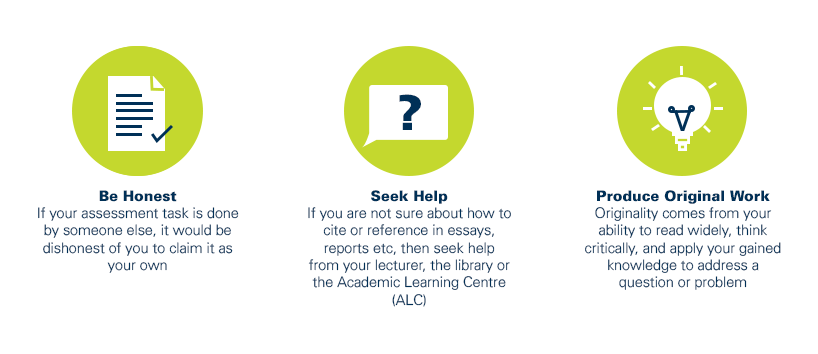
As a CQUniversity student you are expected to act honestly in all aspects of your academic work.
Any assessable work undertaken or submitted for review or assessment must be your own work. Assessable work is any type of work you do to meet the assessment requirements in the unit, including draft work submitted for review and feedback and final work to be assessed.
When you use the ideas, words or data of others in your assessment, you must thoroughly and clearly acknowledge the source of this information by using the correct referencing style for your unit. Using others’ work without proper acknowledgement may be considered a form of intellectual dishonesty.
Participating honestly, respectfully, responsibly, and fairly in your university study ensures the CQUniversity qualification you earn will be valued as a true indication of your individual academic achievement and will continue to receive the respect and recognition it deserves.
As a student, you are responsible for reading and following CQUniversity’s policies, including the Student Academic Integrity Policy and Procedure. This policy sets out CQUniversity’s expectations of you to act with integrity, examples of academic integrity breaches to avoid, the processes used to address alleged breaches of academic integrity, and potential penalties.
What is a breach of academic integrity?
A breach of academic integrity includes but is not limited to plagiarism, self-plagiarism, collusion, cheating, contract cheating, and academic misconduct. The Student Academic Integrity Policy and Procedure defines what these terms mean and gives examples.
Why is academic integrity important?
A breach of academic integrity may result in one or more penalties, including suspension or even expulsion from the University. It can also have negative implications for student visas and future enrolment at CQUniversity or elsewhere. Students who engage in contract cheating also risk being blackmailed by contract cheating services.
Where can I get assistance?
For academic advice and guidance, the Academic Learning Centre (ALC) can support you in becoming confident in completing assessments with integrity and of high standard.
What can you do to act with integrity?