Overview
In this problem based unit, you will be faced with a range of hazards, learning to apply both current problem solving approaches and a systems oriented approach to analysis with common systematic principles. The learning process is focused on specific hazards, chosen because they represent important issues in occupational health today and in the future. You will be expected to be able to extend your knowledge of the process to tackle new issues, although these may be issues that you have not previously dealt with. You will learn advanced approaches to the treatment of hazards and risk management, including knowledge of managing risk where a hazard cannot be eliminated. You will also learn the nature of illness and injury, as well as the pathogenesis to organs of the body caused by occupational exposure to a broad range of hazards. After graduation, you will be able to apply the problem solving and systems oriented approaches taught in this unit to contemporary employment settings, in particular to solving hazards not previously known to you.
Details
Pre-requisites or Co-requisites
Successful completion of 48 credit points.
Important note: Students enrolled in a subsequent unit who failed their pre-requisite unit, should drop the subsequent unit before the census date or within 10 working days of Fail grade notification. Students who do not drop the unit in this timeframe cannot later drop the unit without academic and financial liability. See details in the Assessment Policy and Procedure (Higher Education Coursework).
Offerings For Term 1 - 2026
Attendance Requirements
All on-campus students are expected to attend scheduled classes - in some units, these classes are identified as a mandatory (pass/fail) component and attendance is compulsory. International students, on a student visa, must maintain a full time study load and meet both attendance and academic progress requirements in each study period (satisfactory attendance for International students is defined as maintaining at least an 80% attendance record).
Recommended Student Time Commitment
Each 6-credit Undergraduate unit at CQUniversity requires an overall time commitment of an average of 12.5 hours of study per week, making a total of 150 hours for the unit.
Class Timetable
Assessment Overview
Assessment Grading
This is a graded unit: your overall grade will be calculated from the marks or grades for each assessment task, based on the relative weightings shown in the table above. You must obtain an overall mark for the unit of at least 50%, or an overall grade of 'pass' in order to pass the unit. If any 'pass/fail' tasks are shown in the table above they must also be completed successfully ('pass' grade). You must also meet any minimum mark requirements specified for a particular assessment task, as detailed in the 'assessment task' section (note that in some instances, the minimum mark for a task may be greater than 50%). Consult the University's Grades and Results Policy for more details of interim results and final grades.
All University policies are available on the CQUniversity Policy site.
You may wish to view these policies:
- Grades and Results Policy
- Assessment Policy and Procedure (Higher Education Coursework)
- Review of Grade Procedure
- Student Academic Integrity Policy and Procedure
- Academic Progression Policy and Procedure
- Student Refund and Credit Balance Policy and Procedure
- Complaints Policy and Procedure
- Information and Communications Technology Acceptable Use Policy and Procedure
This list is not an exhaustive list of all University policies. The full list of University policies are available on the CQUniversity Policy site.
Feedback, Recommendations and Responses
Every unit is reviewed for enhancement each year. At the most recent review, the following staff and student feedback items were identified and recommendations were made.
Feedback from Student attendance
Reconsider how unit content is being delivered to students.
Ensure that all important content is being communicated in multiple ways.
- Analyse actual occupational health cases and demonstrate individual initiative and effective problem solving in occupational health
- Apply a systems approach to complex problem solving in occupational health. thereby acquiring an ability to extend the reach of managing risk in diverse settings
- Apply the principles of critical assessment of severity and urgency in occupational health
- Identify the real problems in occupational health, including indoor and outdoor environments
- Apply knowledge of routes of exposure to the principles of exposure monitoring
- Describe the nature of illness and injury associated with occupational exposure to certain hazards.
Not applicable
Alignment of Assessment Tasks to Learning Outcomes
| Assessment Tasks | Learning Outcomes | |||||
|---|---|---|---|---|---|---|
| 1 | 2 | 3 | 4 | 5 | 6 | |
| 1 - Written Assessment - 40% | ||||||
| 2 - Group Work - 40% | ||||||
| 3 - Online Quiz(zes) - 20% | ||||||
Alignment of Graduate Attributes to Learning Outcomes
| Graduate Attributes | Learning Outcomes | |||||
|---|---|---|---|---|---|---|
| 1 | 2 | 3 | 4 | 5 | 6 | |
| 1 - Communication | ||||||
| 2 - Problem Solving | ||||||
| 3 - Critical Thinking | ||||||
| 4 - Information Literacy | ||||||
| 5 - Team Work | ||||||
| 6 - Information Technology Competence | ||||||
| 7 - Cross Cultural Competence | ||||||
| 8 - Ethical practice | ||||||
| 9 - Social Innovation | ||||||
| 10 - First Nations Knowledges | ||||||
| 11 - Aboriginal and Torres Strait Islander Cultures | ||||||
Alignment of Assessment Tasks to Graduate Attributes
| Assessment Tasks | Graduate Attributes | ||||||||||
|---|---|---|---|---|---|---|---|---|---|---|---|
| 1 | 2 | 3 | 4 | 5 | 6 | 7 | 8 | 9 | 10 | 11 | |
| 1 - Written Assessment - 40% | |||||||||||
| 2 - Group Work - 40% | |||||||||||
| 3 - Online Quiz(zes) - 20% | |||||||||||
Textbooks
There are no required textbooks.
IT Resources
- CQUniversity Student Email
- Internet
- Unit Website (Moodle)
All submissions for this unit must use the referencing styles below:
For further information, see the Assessment Tasks.
r.kift@cqu.edu.au
Week 1
Begin Date: 09 Mar 2026Module/Topic
Lecture: Introduction to unit
Chapter
Readings provided via Moodle
Events and Submissions/Topic
No tutorial this week
Week 2
Begin Date: 16 Mar 2026Module/Topic
Lecture: Occupational toxicology
Chapter
Readings provided via Moodle
Events and Submissions/Topic
Tutorial- review questions and assessment preparation
Week 3
Begin Date: 23 Mar 2026Module/Topic
Lecture: Risk management and exposure
Chapter
Readings provided via Moodle
Events and Submissions/Topic
Tutorial- review questions and assessment preparation
Week 4
Begin Date: 30 Mar 2026Module/Topic
Lecture: Chemical hazards 1 - Dusts and particulates
Chapter
Readings provided via Moodle
Events and Submissions/Topic
Tutorial- review questions and assessment preparation
Week 5
Begin Date: 06 Apr 2026Module/Topic
Lecture: Chemical hazards 2 - Chemical contaminants
Chapter
Readings provided via Moodle
Events and Submissions/Topic
Tutorial- review questions and assessment preparation
Week 6
Begin Date: 13 Apr 2026Module/Topic
Lecture: Biological hazards
Chapter
Readings provided via Moodle
Events and Submissions/Topic
Tutorial- review questions and assessment preparation
Week 6 Moodle quiz is open all week and closes at 11:55pm on 19/04/26
Vacation Week
Begin Date: 20 Apr 2026Module/Topic
Chapter
Events and Submissions/Topic
Week 7
Begin Date: 27 Apr 2026Module/Topic
Lecture: Control of Hazards - Chemical and biological
Chapter
Readings provided via Moodle
Events and Submissions/Topic
Tutorial- review questions and assessment preparation
Week 8
Begin Date: 04 May 2026Module/Topic
Lecture: Physical hazards 1 - Noise, vibration and lighting
Chapter
Readings provided via Moodle
Events and Submissions/Topic
Tutorial- review questions and assessment preparation
Chemical and biological hazards Due: Week 8 Monday (4 May 2026) 9:00 am AEST
Week 9
Begin Date: 11 May 2026Module/Topic
Lecture: Physical hazards 2 - Radiation and temperature
Chapter
Readings provided via Moodle
Events and Submissions/Topic
Tutorial- review questions and assessment preparation
Week 10
Begin Date: 18 May 2026Module/Topic
Lecture: Control of Hazards - Physical
Chapter
Readings provided via Moodle
Events and Submissions/Topic
Tutorial- review questions and assessment preparation
Week 11
Begin Date: 25 May 2026Module/Topic
Lecture: Biological monitoring and fitness for work
Chapter
Readings provided via Moodle
Events and Submissions/Topic
Tutorial- review questions and assessment preparation
Week 12
Begin Date: 01 Jun 2026Module/Topic
Lecture: Unit summary
Chapter
Readings provided via Moodle
Events and Submissions/Topic
Tutorial- review questions and assessment preparation
Assessment 2- Information Booklet Part A due Monday (1/06/26) 9:00am
Week 12 Moodle quiz is open all week and closes at 11:55pm on 07/06/26
Exam Week
Begin Date: 08 Jun 2026Module/Topic
Chapter
Events and Submissions/Topic
Assessment 2- Information Booklet Part B due Monday (8/06/26) 9:00am
Vacation/Exam Week
Begin Date: 15 Jun 2026Module/Topic
Chapter
Events and Submissions/Topic
1 Written Assessment
The lecturer will give you a list of real Australian work case studies. You are to select one case study and identify one hazard therein that is a chemical or biological hazard.
You will be required to:
- Provide an overview of the case study including the jurisdiction and any other important information (you can provide your own made up detail if the case study does not include them).
- Identify all potential chemical and biological hazards in this case study.
- Identify the hazard that the report will focus on.
- Explain the type of hazard, routes of exposure and the states of matter (if relevant) in which the hazard occurs.
- Explain why the hazard presents a risk to workers’ health. This section must be justified using the literature such as legislation, texts and journal articles. You may include information about the toxicology of the chemicals, exposure, acute and chronic health effects and how they occur, as well as the health effects to workers and to industry as a whole.
- Describe the different ways that the hazard would be monitored and analysed using an overview of occupational hygiene monitoring methods. This must be related to the case study given and include information about the standard methodology that is used for both the monitoring techniques and comparison of the findings against a benchmark or standard. You must include information about how the sampling and analysis would actually be carried out for the hazard. This will include information about how you would sample the workers, who should be sampled and if repeat samples are required.
- Describe the relevant Legislation, Codes and Standards which apply to this hazard and the issues involved with meeting these requirements.
- Use the Hierarchy of Control to outline the ways that the hazard may be controlled.
- Provide recommendations and conclusions.
The report should be written as an you would write to upper management to convince them that an external Occupational Hygienist is required to undertake monitoring (however, a budget is not required).
A limit of 2500 words will be applied.
Level of GenAI use allowed:
Level 2: You may use Al for planning, idea development, and research. Your final submission should show how you have
developed and refined these ideas.
Week 8 Monday (4 May 2026) 9:00 am AEST
Week 11 Monday (25 May 2026)
This assessment will be graded with the following criteria:
- Introduces the case study, correctly identifies all possible chemical and biological hazards, explains the route of exposure of the selected hazard (15%)
- Explains exposure and impacts, and describes the potential health effects (20%)
- Describes the way that monitoring would be carried out for the hazard (15%)
- Outlines relevant legislative requirements and identifies the issues of compliance (15%)
- Proposes appropriate control measures and recommendations (15%)
- A logical report structure and professional presentation including referencing (20%)
A detailed marking matrix will be provided in Moodle.
- Analyse actual occupational health cases and demonstrate individual initiative and effective problem solving in occupational health
- Apply a systems approach to complex problem solving in occupational health. thereby acquiring an ability to extend the reach of managing risk in diverse settings
- Apply the principles of critical assessment of severity and urgency in occupational health
- Identify the real problems in occupational health, including indoor and outdoor environments
- Apply knowledge of routes of exposure to the principles of exposure monitoring
- Communication
- Problem Solving
- Critical Thinking
- Information Literacy
- Cross Cultural Competence
- Ethical practice
2 Group Work
There are two parts to this assignment:
Part A (Group component)
Working as a group you are required to develop a booklet on one physical hazard for an Australian work environment. You will be required to design a technical information/educational information booklet with the main emphasis of the assignment on the quality of the content presented:
Your assignment should include (but not be restricted to):
- Introduction to the workplaces where the exposure occurs, who your target audience is, important factors and specific concepts related to the working environment and exposure.
- The physical/chemical breakdown of the hazard (what it is) and its relationship to the related health effects, mechanisms of injury and any other relevant information.
- An explanation of the health effects of exposure, its manifestation and progression.
- The monitoring techniques, equipment, methodologies, legislation, benchmarks and standards that should be used in relation to the evaluation of the hazards.
- Describe the relevant Legislation, Codes and Standards which apply to this hazard and the issues involved with meeting these requirements.
- Control (using the hierarchy of control) and containment measures that could be introduced to reduce workplace exposure and prevent the occurrence of the adverse health effects or reducing its severity.
Bear in mind that this unit has an emphasis on the quantitative evaluation of occupational hazards, utilising standards, accepted methodologies, specialised equipment and benchmarks, so it is expected that your information booklet will focus on developing an accurate, useful, and technically detailed information source that will cover the aspects mentioned previously. All information provided should be supported with relevant authoritative references and /or supporting documentation. You are encouraged to use graphics and other relevant resources in order to develop a visually appealing yet informative resource.
Ensure you reference and acknowledge all sources of information, graphics, etc.
You will be assigned a group and allocated a physical hazard in Week 8.
Length: 10 pages (max)
Level of GenAI use allowed:
Level 2: You may use Al for planning, idea development, and research. Your final submission should show how you have
developed and refined these ideas.
Part B (Individual component)
As an individual you will be required to review another teams Information booklet.
After submission of Part A, all teams information booklets will be deidentified and made available via Moodle. You are to select a booklet that is focused on a different physical hazard to the one that you completed. You will be provided with a marking criteria to use to review the chosen booklet.
Your review will then be submitted via Moodle.
Level of GenAI use allowed:
Level 2: You may use Al for planning, idea development, and research. Your final submission should show how you have
developed and refined these ideas.
Part A is due Monday (01/06/2026) of Week 12 at 09:00am. Part B is due Monday (08/06/2026) of Week 13 at 9:00am.
Length - 10 pages max (including title page, information and references).
This assessment will be graded with the following criteria
- Identifies and explains the background to the hazard, including the identification of the workplaces where exposure can be an issue (10%)
- Explains the way exposure occurs, its impacts, and describes the potential health effects (20%)
- Describes the way that monitoring would be completed for the hazard (15%)
- Outlines relevant legislative requirements and identifies the issues of compliance (10%)
- Proposes appropriate control measures (20%)
- Booklet structure and presentation including referencing (you may use Harvard or Vancouver style referencing for this assessment) (15%)
- Review (Part B) - you will have to assess a different teams booklet (10%). If you do not complete this assessment you will receive zero marks for this component.
- Identify the real problems in occupational health, including indoor and outdoor environments
- Describe the nature of illness and injury associated with occupational exposure to certain hazards.
- Communication
- Problem Solving
- Critical Thinking
- Information Literacy
- Team Work
- Information Technology Competence
- Cross Cultural Competence
- Ethical practice
3 Online Quiz(zes)
In week 6 and in week 12 you will be required to complete a Moodle quiz. (20% of total marks, 10% for each quiz)
Each quiz will be based on the information that has been covered in lectures until (and including) that week.
72-hr grace period will not apply to these quizzes.
Week 6 quiz will close at 11:55pm on 19/04/26. Week 12 quiz will close at 11:55pm on 07/06/26
Feedback is given when each quiz closes.
Marks will be awarded for correct answers. As these will be marked via an online method, the lecturer will review all answers provided after the quiz closes to ensure that all awarded marks are appropriate.
- Apply a systems approach to complex problem solving in occupational health. thereby acquiring an ability to extend the reach of managing risk in diverse settings
- Apply knowledge of routes of exposure to the principles of exposure monitoring
- Describe the nature of illness and injury associated with occupational exposure to certain hazards.
- Problem Solving
- Critical Thinking
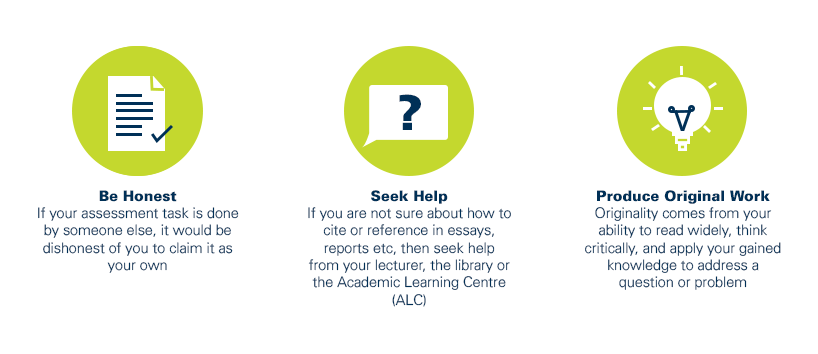
As a CQUniversity student you are expected to act honestly in all aspects of your academic work.
Any assessable work undertaken or submitted for review or assessment must be your own work. Assessable work is any type of work you do to meet the assessment requirements in the unit, including draft work submitted for review and feedback and final work to be assessed.
When you use the ideas, words or data of others in your assessment, you must thoroughly and clearly acknowledge the source of this information by using the correct referencing style for your unit. Using others’ work without proper acknowledgement may be considered a form of intellectual dishonesty.
Participating honestly, respectfully, responsibly, and fairly in your university study ensures the CQUniversity qualification you earn will be valued as a true indication of your individual academic achievement and will continue to receive the respect and recognition it deserves.
As a student, you are responsible for reading and following CQUniversity’s policies, including the Student Academic Integrity Policy and Procedure. This policy sets out CQUniversity’s expectations of you to act with integrity, examples of academic integrity breaches to avoid, the processes used to address alleged breaches of academic integrity, and potential penalties.
What is a breach of academic integrity?
A breach of academic integrity includes but is not limited to plagiarism, self-plagiarism, collusion, cheating, contract cheating, and academic misconduct. The Student Academic Integrity Policy and Procedure defines what these terms mean and gives examples.
Why is academic integrity important?
A breach of academic integrity may result in one or more penalties, including suspension or even expulsion from the University. It can also have negative implications for student visas and future enrolment at CQUniversity or elsewhere. Students who engage in contract cheating also risk being blackmailed by contract cheating services.
Where can I get assistance?
For academic advice and guidance, the Academic Learning Centre (ALC) can support you in becoming confident in completing assessments with integrity and of high standard.
What can you do to act with integrity?