Overview
In this unit you will consider some of the latest theories in the Safety Sciences, particularly in relation to the concept of resilience in organisations and broader organisational culture issues. The factors which influence the quality and validity of decision making within organisations, such as, values, mindfulness, culture, adaptive systems, participation and leadership in complex socio-technical systems will be considered. You will critically reflect on and evaluate theories such as resilience engineering, high reliability organisations, safety culture and safety climate, and discuss the usefulness of these theories to practice. You will also have the opportunity to evaluate the usefulness of the tools and methods available to measure and monitor factors that affect resilience and other safety science concepts within organisations.
Details
Pre-requisites or Co-requisites
Co-requisite:- AINV11002
Important note: Students enrolled in a subsequent unit who failed their pre-requisite unit, should drop the subsequent unit before the census date or within 10 working days of Fail grade notification. Students who do not drop the unit in this timeframe cannot later drop the unit without academic and financial liability. See details in the Assessment Policy and Procedure (Higher Education Coursework).
Offerings For Term 2 - 2026
Attendance Requirements
All on-campus students are expected to attend scheduled classes - in some units, these classes are identified as a mandatory (pass/fail) component and attendance is compulsory. International students, on a student visa, must maintain a full time study load and meet both attendance and academic progress requirements in each study period (satisfactory attendance for International students is defined as maintaining at least an 80% attendance record).
Recommended Student Time Commitment
Each 6-credit Undergraduate unit at CQUniversity requires an overall time commitment of an average of 12.5 hours of study per week, making a total of 150 hours for the unit.
Class Timetable
Assessment Overview
Assessment Grading
This is a graded unit: your overall grade will be calculated from the marks or grades for each assessment task, based on the relative weightings shown in the table above. You must obtain an overall mark for the unit of at least 50%, or an overall grade of 'pass' in order to pass the unit. If any 'pass/fail' tasks are shown in the table above they must also be completed successfully ('pass' grade). You must also meet any minimum mark requirements specified for a particular assessment task, as detailed in the 'assessment task' section (note that in some instances, the minimum mark for a task may be greater than 50%). Consult the University's Grades and Results Policy for more details of interim results and final grades.
All University policies are available on the CQUniversity Policy site.
You may wish to view these policies:
- Grades and Results Policy
- Assessment Policy and Procedure (Higher Education Coursework)
- Review of Grade Procedure
- Student Academic Integrity Policy and Procedure
- Academic Progression Policy and Procedure
- Student Refund and Credit Balance Policy and Procedure
- Complaints Policy and Procedure
- Information and Communications Technology Acceptable Use Policy and Procedure
This list is not an exhaustive list of all University policies. The full list of University policies are available on the CQUniversity Policy site.
Feedback, Recommendations and Responses
Every unit is reviewed for enhancement each year. At the most recent review, the following staff and student feedback items were identified and recommendations were made.
Feedback from Lecturer and Unit Coordinator Reflection
Emphasise the importance of including references to support claims (which could otherwise indicate use of artificial intelligence language applications) as well as the existence of self-plagiarism, even at the third-year level to circumvent further misunderstandings.
Before each assessment submission, continue to remind students of their academic integrity responsibilities, and provide some tips for avoiding plagiarism, including self-plagiarism.
- Explore the characteristics of resilience in organisations.
- Develop an ability to critically read and write on contemporary safety science theories from an evidence-informed advancing safety professional perspective.
- Evaluate the theories that underpin resilience in organisations such as resilience engineering, safety culture and high reliability organisations and discuss the usefulness of these theories to practice.
- Discern those factors which influence the quality and validity of decision making within organisations, such as, values, mindfulness, culture, adaptive systems, participation and leadership.
- Compare controversial terms related to safety and culture and the ongoing debate underlying these precepts and relationships.
- Evaluate the usefulness of the tools and methods available to measure and monitor contemporary safety science concepts such as organisational resilience potentials and safety culture/safety climate.
The course is accredited by the Australian OHS Education Board. This unit relates to the OHS body of knowledge chapters on the organisation.
Alignment of Assessment Tasks to Learning Outcomes
| Assessment Tasks | Learning Outcomes | |||||
|---|---|---|---|---|---|---|
| 1 | 2 | 3 | 4 | 5 | 6 | |
| 1 - Critical Review - 20% | ||||||
| 2 - Written Assessment - 40% | ||||||
| 3 - Literature Review or Systematic Review - 40% | ||||||
Alignment of Graduate Attributes to Learning Outcomes
| Graduate Attributes | Learning Outcomes | |||||
|---|---|---|---|---|---|---|
| 1 | 2 | 3 | 4 | 5 | 6 | |
| 1 - Communication | ||||||
| 2 - Problem Solving | ||||||
| 3 - Critical Thinking | ||||||
| 4 - Information Literacy | ||||||
| 5 - Team Work | ||||||
| 6 - Information Technology Competence | ||||||
| 7 - Cross Cultural Competence | ||||||
| 8 - Ethical practice | ||||||
| 9 - Social Innovation | ||||||
| 10 - First Nations Knowledges | ||||||
| 11 - Aboriginal and Torres Strait Islander Cultures | ||||||
Textbooks
There are no required textbooks.
IT Resources
- CQUniversity Student Email
- Internet
- Unit Website (Moodle)
All submissions for this unit must use the referencing style: Harvard (author-date)
For further information, see the Assessment Tasks.
k.klockner@cqu.edu.au
Week 1
Begin Date: 13 Jul 2026Module/Topic
An Introduction to Critical Reading and Writing
The 5th Age of Safety - The 3rd Era - Resilience
Chapter
Readings as supplied via the Moodle site
Events and Submissions/Topic
Weekly Zoom Lecture
Week 2
Begin Date: 20 Jul 2026Module/Topic
Safety I and Safety II
Chapter
Readings as supplied via the Moodle site
Events and Submissions/Topic
Weekly Zoom Lecture
Week 3
Begin Date: 27 Jul 2026Module/Topic
Safety II in Practice - The 4 Resilience Potentials
Chapter
Hollnagel - Safety-II in Practice (Book chapter/s)
Readings as supplied via the Moodle site
Events and Submissions/Topic
Weekly Zoom Lecture
Week 4
Begin Date: 03 Aug 2026Module/Topic
High Reliability Organisations (HROs)
Historical Theory Underpinnings
Current Theory
Chapter
Readings as supplied via the Moodle site
Events and Submissions/Topic
Weekly Zoom Lecture
Week 5
Begin Date: 10 Aug 2026Module/Topic
Safety Culture and Safety Climate
Chapter
Readings as supplied via the Moodle site and
OHS Body of Knowledge (BoK):-
Chapter 10.2.2. - Organisational Culture: A Search for Meaning
Chapter 10.2.2 - Organisational Culture: Reviewed and Repositioned
Events and Submissions/Topic
Weekly Zoom Lecture
Safety-II and the 4 Resilience Potentials Due: Week 5 Friday (14 Aug 2026) 11:45 pm AEST
Week 6
Begin Date: 17 Aug 2026Module/Topic
Tools and Methods to Measure and Monitor Contemporary Safety Science Concepts
Measuring Resilience Potentials - The Resilience Assessment Grid (RAG)
Other surveys/methods
Chapter
Readings as supplied via the Moodle site
Events and Submissions/Topic
Weekly Zoom Lecture
Vacation Week
Begin Date: 24 Aug 2026Module/Topic
Chapter
Events and Submissions/Topic
Week 7
Begin Date: 31 Aug 2026Module/Topic
The Fifth Age of Safety - The Adaptive Age and Adaptive Leadership for Complexity
Chapter
Readings as supplied via the Moodle site
Events and Submissions/Topic
Weekly Zoom Lecture
Week 8
Begin Date: 07 Sep 2026Module/Topic
OHS as a Critical Consumer of Research
Theory Controversies and Debates
Chapter
Readings as supplied via the Moodle site and
OHS BoK - Chapter 39.1 - The OHS professional as a ‘critical consumer’ of research
Events and Submissions/Topic
Weekly Zoom Lecture
Measuring Tools and Methods Due: Week 8 Friday (11 Sept 2026) 11:45 pm AEST
Week 9
Begin Date: 14 Sep 2026Module/Topic
Professional Resilience
Business Continuity - Resilience in Practice
Chapter
Readings as supplied via the Moodle site
Events and Submissions/Topic
Weekly Zoom Lecture
Week 10
Begin Date: 21 Sep 2026Module/Topic
OHS Organisational Strategy and Leadership
Chapter
Events and Submissions/Topic
Weekly Zoom Lecture
Week 11
Begin Date: 28 Sep 2026Module/Topic
Organisational Resilience Wrap Up
Chapter
Readings as supplied via the Moodle site
Events and Submissions/Topic
Weekly Zoom Lecture
Week 12
Begin Date: 05 Oct 2026Module/Topic
Chapter
Events and Submissions/Topic
Weekly Zoom Lecture
Theory Controversies and Debates Due: Week 12 Friday (9 Oct 2026) 11:45 pm AEST
Exam Week
Begin Date: 12 Oct 2026Module/Topic
Chapter
Events and Submissions/Topic
Vacation/Exam Week
Begin Date: 19 Oct 2026Module/Topic
Chapter
Events and Submissions/Topic
Permission to use Generative AI is given for limited purposes, please see the 'Permission to Use AI' sheet on the Moodle site.
Please refer to the CQUniversity guideline on AI Awareness for Academic Integrity as it relates to plagiarism.
1 Critical Review
This assessment item requires you to critically reflect on your readings and understanding from the first 4 weeks of the unit including the notions of Safety I & Safety II, Safety II in Practice and the notion of the 4 Resilience Potentials which informs current organisational practices around safety and resilience.
The context for this assignment is that: -
A senior manager in your company went to a management conference where several speakers discussed the notion that safety professionals now work in the Resilience Age of Safety. The manager would like a brief report on the following two aspects: -
1. The notion that Safety-II and its 4 Potentials of Resilience are believed to enhance organisational resilience practices and organisational resilience maturity; and
2. As a safety professional, your report is to also provide a critical reading informed opinion/viewpoint as to the usefulness of these theories to OHS professional practice.
Your work should be supported by at least 10 quality references, in order to explain and develop your viewpoint.
Your review should be 1000 (+ or - 10%) words and submitted as a word document, not a PDF.
Resource Material
In developing your assessment piece, you should consult peer-reviewed journals, relevant textbooks and the OHS Body of Knowledge. Extensive use of non-peer-reviewed information is strongly discouraged.
Level of Generative AI use allowed
Level 2 - You may use AI for planning, idea development and research. Your final submission should show how you have developed and refined these ideas.
Week 5 Friday (14 Aug 2026) 11:45 pm AEST
Week 7 Friday (4 Sept 2026)
The marking criteria are below:
- Conveys an understanding of the notion that Safety-II and its 4 Potentials of Resilience are believed to enhance organisational resilience practices and organisational resilience maturity (10%)
- Delivers from a safety professional perspective, a critical reading informed opinion/viewpoint as to the usefulness of these theories to OHS professional practice (10%)
A detailed marking matrix will be provided in Moodle.
- Explore the characteristics of resilience in organisations.
- Develop an ability to critically read and write on contemporary safety science theories from an evidence-informed advancing safety professional perspective.
- Evaluate the theories that underpin resilience in organisations such as resilience engineering, safety culture and high reliability organisations and discuss the usefulness of these theories to practice.
- Compare controversial terms related to safety and culture and the ongoing debate underlying these precepts and relationships.
2 Written Assessment
This assessment enables you to gain further experience in developing an ability to critically read and write on contemporary safety science theories from an evidence informed advancing safety professional perspective.
You are required to choose an area to explore from either (a) High Reliability Theory (HRO) or (b) Resilience Engineering (RE) or (c) Safety Culture or (d) Safety Climate.
You are required to use the current literature to understand and evaluate the usefulness of tools and methods (i.e. surveys) available to measure and monitor your chosen contemporary safety science concept.
In doing this you should be able to:-
1. Recognise the purpose of any relevant measurement tools and methods i.e. surveys;
2. Understand when and how the measurement tools and methods would be used in "real world" applications;
3. Discern how measurement tools and methods may influence the quality and validity of OHS decision making within organisations, i.e. values, mindfulness, culture, adaptive systems, participation and leadership; and
4. Reference appropriate material to support (evidence) your written arguments including a minimum of 10 peer-reviewed journal articles.
Word limit 1,500 words (+ or - 10%).
Resource Material
In developing your assessment piece, you should consult peer-reviewed journals, relevant textbooks and the OHS Body of Knowledge. Extensive use of non-peer-reviewed information is strongly discouraged.
Level of Generative AI use allowed: -
Level 2 - You may use AI for planning, idea development and research. Your final submission should show how you have developed and refined these ideas.
Week 8 Friday (11 Sept 2026) 11:45 pm AEST
Week 10 Friday (25 Sept 2026)
The marking criteria are below:
1. Recognise the purpose of any relevant measurement tools and methods i.e. surveys (10%);
2. Understand when and how the measurement tools and methods would be used in "real world" applications (10%);
3. Discern how measurement tools and methods may influence the quality and validity of OHS decision making within organisations, i.e. values, mindfulness, culture, adaptive systems, participation and leadership; (10%) and
4. Reference appropriate material to support (evidence) your written arguments including a minimum of 10 peer-reviewed journal articles (10%).
A detailed assessment rubric will be provided in Moodle.
- Develop an ability to critically read and write on contemporary safety science theories from an evidence-informed advancing safety professional perspective.
- Evaluate the theories that underpin resilience in organisations such as resilience engineering, safety culture and high reliability organisations and discuss the usefulness of these theories to practice.
- Discern those factors which influence the quality and validity of decision making within organisations, such as, values, mindfulness, culture, adaptive systems, participation and leadership.
- Evaluate the usefulness of the tools and methods available to measure and monitor contemporary safety science concepts such as organisational resilience potentials and safety culture/safety climate.
3 Literature Review or Systematic Review
In every good safety researcher's toolbox is the ability to review past and current research with a view to answering key questions. Evidence-informed practice is undertaken by reviewing key research findings (evidence) which then inform thinking and decisions around safety practices. Undertaking a review of relevant literature is the key starting point for robust research. A literature review is a critical look at an area of interest from its early theoretical underpinnings up to current concepts and research findings in order to enable you to make informed decisions and gain knowledge about current issues or gaps in current research.
Choose one of the following topics for your review - Resilience Engineering, High Reliability Organisations, Collective Mindfulness, Safety Culture or Adaptive Leadership in Complex Systems.
You are required to prepare a literature review which investigates the controversies within the theory with a view to answering the questions:
1. What are the current controversies or debates within the theory and why? and
2. How do you translate this knowledge into evidence-based practice for you, the safety professional?
You are required to undertake self-directed research by reviewing the latest literature on the topic and demonstrate correct CQUniversity Harvard style referencing.
Your literature review should include a minimum of 10 peer-reviewed journal articles and should be 1,500 words (+ or - 10%).
Resource Material
In developing your assessment piece, you should consult peer-reviewed journals, relevant textbooks and the OHS Body of Knowledge. Extensive use of non-peer-reviewed information is strongly discouraged.
Level of Generative AI use allowed:-
Level 2 - You may use AI for planning, idea development and research. Your final submission should show how you have developed and refined these ideas.
Week 12 Friday (9 Oct 2026) 11:45 pm AEST
Exam Week Friday (16 Oct 2026)
The marking criteria for the formal report are below:
1. What are the current controversies or debates within the theory and why? (18%); and
2. How would you translate this knowledge into evidence-based practice for you, the safety professional? (18%);
3. Uses correct Harvard style referencing and demonstration of advanced academic critical reading andreport writing (4%).
- Explore the characteristics of resilience in organisations.
- Develop an ability to critically read and write on contemporary safety science theories from an evidence-informed advancing safety professional perspective.
- Evaluate the theories that underpin resilience in organisations such as resilience engineering, safety culture and high reliability organisations and discuss the usefulness of these theories to practice.
- Discern those factors which influence the quality and validity of decision making within organisations, such as, values, mindfulness, culture, adaptive systems, participation and leadership.
- Compare controversial terms related to safety and culture and the ongoing debate underlying these precepts and relationships.
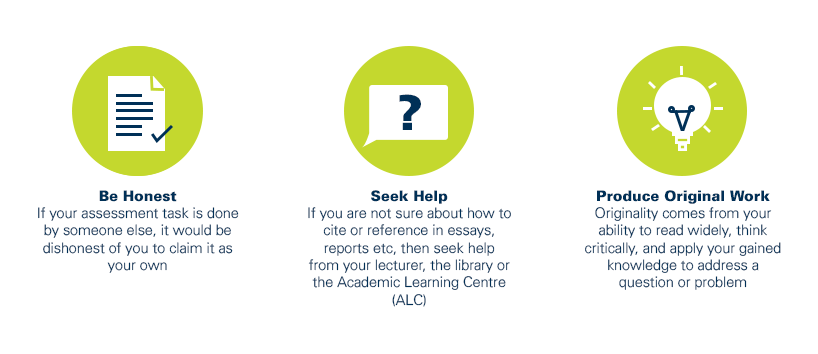
As a CQUniversity student you are expected to act honestly in all aspects of your academic work.
Any assessable work undertaken or submitted for review or assessment must be your own work. Assessable work is any type of work you do to meet the assessment requirements in the unit, including draft work submitted for review and feedback and final work to be assessed.
When you use the ideas, words or data of others in your assessment, you must thoroughly and clearly acknowledge the source of this information by using the correct referencing style for your unit. Using others’ work without proper acknowledgement may be considered a form of intellectual dishonesty.
Participating honestly, respectfully, responsibly, and fairly in your university study ensures the CQUniversity qualification you earn will be valued as a true indication of your individual academic achievement and will continue to receive the respect and recognition it deserves.
As a student, you are responsible for reading and following CQUniversity’s policies, including the Student Academic Integrity Policy and Procedure. This policy sets out CQUniversity’s expectations of you to act with integrity, examples of academic integrity breaches to avoid, the processes used to address alleged breaches of academic integrity, and potential penalties.
What is a breach of academic integrity?
A breach of academic integrity includes but is not limited to plagiarism, self-plagiarism, collusion, cheating, contract cheating, and academic misconduct. The Student Academic Integrity Policy and Procedure defines what these terms mean and gives examples.
Why is academic integrity important?
A breach of academic integrity may result in one or more penalties, including suspension or even expulsion from the University. It can also have negative implications for student visas and future enrolment at CQUniversity or elsewhere. Students who engage in contract cheating also risk being blackmailed by contract cheating services.
Where can I get assistance?
For academic advice and guidance, the Academic Learning Centre (ALC) can support you in becoming confident in completing assessments with integrity and of high standard.
What can you do to act with integrity?