Overview
In this unit you will gain theoretical knowledge in dental materials, restorative procedures and local anaesthetic pharmacology and techniques. You will also translate and integrate this knowledge in a simulated environment while fulfilling workplace health and safety, equipment maintenance and record management requirements. On successful completion of this unit, you will be able to demonstrate practical skills in local anaesthetic techniques and dental restorations in adults of all ages in a simulated environment. You will be able to display appropriate interpersonal / team communication skills, professional attitudes and ethical behaviours. You will be required to attend a two-week compulsory intensive program prior to the commencement of Term 1.
Details
Pre-requisites or Co-requisites
Pre-requisites: BMSC11011 Human Anatomy and Physiology 2 and ORAL11003 Introduction to Oral Disease and ORAL11005 Oral Anatomy 2 and ORAL11006 Introduction to Oral Health Practice Co-requisites: ORAL12001 Oral Disease Prevention and Management and ORAL12003 Oral Health Clinical Practice 1
Important note: Students enrolled in a subsequent unit who failed their pre-requisite unit, should drop the subsequent unit before the census date or within 10 working days of Fail grade notification. Students who do not drop the unit in this timeframe cannot later drop the unit without academic and financial liability. See details in the Assessment Policy and Procedure (Higher Education Coursework).
Offerings For Term 1 - 2026
Attendance Requirements
All on-campus students are expected to attend scheduled classes - in some units, these classes are identified as a mandatory (pass/fail) component and attendance is compulsory. International students, on a student visa, must maintain a full time study load and meet both attendance and academic progress requirements in each study period (satisfactory attendance for International students is defined as maintaining at least an 80% attendance record).
Recommended Student Time Commitment
Each 6-credit Undergraduate unit at CQUniversity requires an overall time commitment of an average of 12.5 hours of study per week, making a total of 150 hours for the unit.
Class Timetable
Assessment Overview
Assessment Grading
This is a graded unit: your overall grade will be calculated from the marks or grades for each assessment task, based on the relative weightings shown in the table above. You must obtain an overall mark for the unit of at least 50%, or an overall grade of 'pass' in order to pass the unit. If any 'pass/fail' tasks are shown in the table above they must also be completed successfully ('pass' grade). You must also meet any minimum mark requirements specified for a particular assessment task, as detailed in the 'assessment task' section (note that in some instances, the minimum mark for a task may be greater than 50%). Consult the University's Grades and Results Policy for more details of interim results and final grades.
All University policies are available on the CQUniversity Policy site.
You may wish to view these policies:
- Grades and Results Policy
- Assessment Policy and Procedure (Higher Education Coursework)
- Review of Grade Procedure
- Student Academic Integrity Policy and Procedure
- Academic Progression Policy and Procedure
- Student Refund and Credit Balance Policy and Procedure
- Complaints Policy and Procedure
- Information and Communications Technology Acceptable Use Policy and Procedure
This list is not an exhaustive list of all University policies. The full list of University policies are available on the CQUniversity Policy site.
Feedback, Recommendations and Responses
Every unit is reviewed for enhancement each year. At the most recent review, the following staff and student feedback items were identified and recommendations were made.
Feedback from Students and staff feedback
Students have requested that educator presentations be reviewed to ensure consistency in content details across simulation procedures.
It is recommended to review and update lecture content prior to Term 1, 2026 to align with new materials introduced in the on-campus dental clinic.
Feedback from SUTE comments
The unit coordinator needs to be attending and delivering lectures.
It is recommended that, subject to timetable availability, the unit coordinator be allocated to deliver the dental materials component of the subject in future terms.
- Discuss the theoretical basis of dental materials, restorative procedures, and local anaesthetic pharmacology and techniques in the management of oral diseases
- Apply the principles of local anaesthetic pharmacology and techniques in the simulated environment
- Apply knowledge and skills of dental materials and cavity preparation for dental restorations in the simulated environment
- Recognise and act upon the legal, ethical and safeguarding issues involving dental practitioners and patients as defined by the relevant professional regulatory bodies in Australia and overseas
All unit profiles in the Bachelor of Oral Health are made available to the Australian Dental Council for on-going accreditation purposes.
Alignment of Assessment Tasks to Learning Outcomes
| Assessment Tasks | Learning Outcomes | |||
|---|---|---|---|---|
| 1 | 2 | 3 | 4 | |
| 1 - Group Work - 30% | ||||
| 2 - Reflective Practice Assignment - 0% | ||||
| 3 - Practical Assessment - 0% | ||||
| 4 - In-class Test(s) - 70% | ||||
Alignment of Graduate Attributes to Learning Outcomes
| Graduate Attributes | Learning Outcomes | |||
|---|---|---|---|---|
| 1 | 2 | 3 | 4 | |
| 1 - Communication | ||||
| 2 - Problem Solving | ||||
| 3 - Critical Thinking | ||||
| 4 - Information Literacy | ||||
| 5 - Team Work | ||||
| 6 - Information Technology Competence | ||||
| 7 - Cross Cultural Competence | ||||
| 8 - Ethical practice | ||||
| 9 - Social Innovation | ||||
| 10 - First Nations Knowledges | ||||
| 11 - Aboriginal and Torres Strait Islander Cultures | ||||
Textbooks
Handbook of local anesthesia
- Edition: Seventh (2020)
- Authors: Malamed, Stanley F.,
- Elsevier
- St. Louis St. Louis , Missouri , USA
- ISBN: 0-323-58209-5
- Binding: eBook
Handbook of Pediatric Dentistry
- Edition: 5th (2021)
- Authors: Angus C. Cameron & Richard P. Widmer
- Elsevier
- ISBN: 9780702079856
Local Anesthesia for the Dental Hygienist
- Edition: Third (2022)
- Authors: Demetra D. Logothetis
- Elsevier
- St. Louis St. Louis , Missouri , USA
- ISBN: 978-0-323-71856-1
- Binding: eBook
Preservation and Restoration of Tooth Structure
- Edition: 3 (2016)
- Authors: G J Mount, W R Hume, H Ngo, M S Wolff
- Wiley Blackwell
- Chichester Chichester , West Suffex , UK
- ISBN: 9781118766590
- Binding: Hardcover
Sturdevant's Art and Science of Operative Dentistry
- Edition: 7th (2019)
- Authors: André V. Ritter, Lee W. Boushell and Ricardo Walter
- Elsevier
- St. Louis St. Louis , Missouri , USA
- ISBN: 978-0-323-47833-5
IT Resources
- CQUniversity Student Email
- Internet
- Unit Website (Moodle)
- Webcam and headset for on-line sessions.
All submissions for this unit must use the referencing style: American Psychological Association 7th Edition (APA 7th edition)
For further information, see the Assessment Tasks.
e.warlow@cqu.edu.au
Intensive Week 1
Begin Date: 17 Feb 2025Module/Topic
Restorative Dentistry Lectures and Simulation Activities:
- Composite Resin Adhesion to Enamel and Dentine
- Composite Resin
- Glass Ionomer Cement
- Pros and Sim Lab Induction
Chapter
Mount, GM., Hume, W.R., Ngo, H.C. and Wolff, M.S. (2016). Preservation and Restoration of Tooth Structure (3rd ed., Chap 9-10). Wiley Blackwell.
Events and Submissions/Topic
Intensive Week 2
Begin Date: 24 Feb 2025Module/Topic
Restorative Dentistry Lectures and Simulation Activities:
- The Restorative ‘Sandwich’ Technique
- Rubber Dam Placement
- Class I Cavity Preparation
- Restorative Closed Sandwich Technique
Chapter
Mount, GM., Hume, W.R., Ngo, H.C. and Wolff, M.S. (2016). Preservation and Restoration of Tooth Structure (3rd ed., Chap 7, 9, 10). Wiley Blackwell.
Events and Submissions/Topic
- Assessment 2: Reflective Blog Weekly Submission
- Assessment 3: Component 2 - Pre-SIM MCQ Quiz
Week 1
Begin Date: 09 Mar 2026Module/Topic
Restorative Dentistry Lectures and Simulation Activities:
- Rubber Dam Placement
- Class II Cavity Preparation
- Restorative Closed Sandwich Technique
Local Anaesthesia Lectures:
- Pharmacology of local anaesthetics
- Pharmacology of vasoconstrictors
- Clinical action of specific agents
- Local and Systemic complications
Chapter
Malamed, SF. (2012) Hand Book Of Local Anaesthesia (6th Ed., Chapter 3-4, 17-18). Mosby Elsevier.
Mount, GM., Hume, W.R., Ngo, H.C. and Wolff, M.S. (2016). Preservation and Restoration of Tooth Structure (3rd ed., Chap 7, 9, 10). Wiley Blackwell.
Events and Submissions/Topic
- Assessment 2: Reflective Blog Weekly Submission
- Assessment 3: Component 2 - Pre-SIM MCQ Quiz
Week 2
Begin Date: 16 Mar 2026Module/Topic
Restorative Dentistry Lectures and Simulation Activities:
- Rubber Dam Placement
- Class II Cavity Preparation
- Restorative Matrix Systems
- Restorative Closed Sandwich Technique
Local Anaesthesia Lectures and Simulation Activities:
- The armamentarium
Chapter
Malamed, SF. (2012) Hand Book Of Local Anaesthesia (6th Ed., Chapter 5-9). Mosby Elsevier.
Mount, GM., Hume, W.R., Ngo, H.C. and Wolff, M.S. (2016). Preservation and Restoration of Tooth Structure (3rd ed., Chap 7, 9, 10). Wiley Blackwell.
Events and Submissions/Topic
- Assessment 1: Component B - Group Work Step 1
- Assessment 2: Reflective Blog Weekly Submission
- Assessment 3: Component 2 - Pre-SIM MCQ Quiz
Week 3
Begin Date: 23 Mar 2026Module/Topic
Restorative Dentistry Lectures and Simulation Activities:
- Removal of defective restorative material and/or caries
- Pulpal Considerations
- Rubber Dam Placement
- Class I Cavity Preparation
- Restorative Closed Sandwich Technique
- Fissure Sealants
- Class III Cavity Preparation
- Shade Selection
- Composite Finishing and Polishing
Local Anaesthesia Lectures and Simulation Activities:
- Basic Atraumatic Injection Technique
- Management of the anaesthetised
patient - Supplementary Techniques including
Oraqix
Chapter
Malamed, SF. (2012) Hand Book Of Local Anaesthesia (6th Ed., Chapter 11, 15). Mosby Elsevier.
Mount, GM., Hume, W.R., Ngo, H.C. and Wolff, M.S. (2016). Preservation and Restoration of Tooth Structure (3rd ed., Chap 2, 7, 9, 10, 12). Wiley Blackwell.
Events and Submissions/Topic
- Assessment 2: Reflective Blog Weekly Submission
- Assessment 3: Component 2 - Pre-SIM MCQ Quiz
Week 4
Begin Date: 30 Mar 2026Module/Topic
Restorative Dentistry Lectures and Simulation Activities:
- Rubber Dam Placement
- Restorative Matrix Systems
- Class III Cavity Preparation and Restoration
- Class IV Cavity Preparation and Restoration
Chapter
Mount, GM., Hume, W.R., Ngo, H.C. and Wolff, M.S. (2016). Preservation and Restoration of Tooth Structure (3rd ed., Chap 7, 9, 10). Wiley Blackwell.
Events and Submissions/Topic
- Assessment 2: Reflective Blog Weekly Submission
- Assessment 3: Component 2 - Pre-SIM MCQ Quiz
Week 5
Begin Date: 06 Apr 2026Module/Topic
Restorative Dentistry Lectures and Simulation Activities:
- Amalgam Cavity Preparation Design
- Amalgam Placement
- Complex Amalgam Restorations
- Pulp Capping
- Temporary Restorations
Chapter
Mount, GM., Hume, W.R., Ngo, H.C. and Wolff, M.S. (2016). Preservation and Restoration of Tooth Structure (3rd ed., Chap 7, 11, 12, ). Wiley Blackwell.
Events and Submissions/Topic
- Assessment 2: Reflective Blog Weekly Submission
- Assessment 3: Component 2 - Pre-SIM MCQ Quiz
Week 6
Begin Date: 13 Apr 2026Module/Topic
Restorative Dentistry Lectures and Simulation Activities:
- Amalgam Restorations
- Complex Amalgam Restorations
- Rubber Dam Placement
- Restorative Matrix Systems
- Class II Cavity Preparation
- Restorative Closed Sandwich Technique
Chapter
Mount, GM., Hume, W.R., Ngo, H.C. and Wolff, M.S. (2016). Preservation and Restoration of Tooth Structure (3rd ed., Chap 7, 9, 10). Wiley Blackwell.
Events and Submissions/Topic
- Assessment 1: Component A - Individual Work Submission
- Assessment 2: Reflective Blog Weekly Submission
- Assessment 3: Component 2 - Pre-SIM MCQ Quiz
Vacation Week
Begin Date: 20 Apr 2026Module/Topic
Chapter
Events and Submissions/Topic
Week 7
Begin Date: 27 Apr 2026Module/Topic
Restorative Dentistry Lectures and Simulation Activities:
- Dental Impressions
- Rubber Dam Placement
- Restorative Matrix Systems
- Class III Cavity Preparation and Restoration
Chapter
Mount, GM., Hume, W.R., Ngo, H.C. and Wolff, M.S. (2016). Preservation and Restoration of Tooth Structure (3rd ed., Chap 7, 10). Wiley Blackwell.
Events and Submissions/Topic
- Assessment 2: Reflective Blog Weekly Submission
- Assessment 3: Component 2 - Pre-SIM MCQ Quiz
Week 8
Begin Date: 04 May 2026Module/Topic
Restorative Dentistry Lectures and Simulation Activities:
- Amalgam Polishing
- Amalgam Removal
- Bonded Amalgams
- Rubber Dam Placement
- Restorative Matrix Systems
- Class III Cavity Preparation and Restoration
Chapter
Mount, GM., Hume, W.R., Ngo, H.C. and Wolff, M.S. (2016). Preservation and Restoration of Tooth Structure (3rd ed., Chap 7, 10, 11). Wiley Blackwell.
Events and Submissions/Topic
- Assessment 2: Reflective Blog Weekly Submission
- Assessment 3: Component 2 - Pre-SIM MCQ Quiz
- Assessment 4: In-class test Part A
Week 9
Begin Date: 11 May 2026Module/Topic
Restorative Dentistry Lectures and Simulation Activities:
- Class I Cavity Preparation
- Class II Cavity Preparation
- Rubber Dam Placement
- Restorative Matrix Systems
- Restorative Closed Sandwich Technique
- Restorative Open Sandwich Technique
Chapter
Mount, GM., Hume, W.R., Ngo, H.C. and Wolff, M.S. (2016). Preservation and Restoration of Tooth Structure (3rd ed., Chap 7, 9, 10). Wiley Blackwell.
Events and Submissions/Topic
- Assessment 1: Component B - Group Work Step 2 Submission
- Assessment 1: Component C - Self and Peer Assessment Submission
- Assessment 2: Reflective Blog Weekly Submission
Week 10
Begin Date: 18 May 2026Module/Topic
Restorative Dentistry Lectures and Simulation Activities:
- Silver Fluoride
- Atraumatic Restoration Technique
- Rubber Dam Placement
- Restorative Matrix Systems
- Class IV Cavity Preparation and Restoration
Local Anaesthesia Lectures and Simulation Activities:
- Local Anaesthetic Techniques - Maxillary Anaesthesia
- Local Anaesthetic Techniques - Mandibular Anaesthesia
Chapter
Malamed, SF. (2012) Hand Book Of Local Anaesthesia (6th Ed., Chapter 13, 14). Mosby Elsevier.
Mount, GM., Hume, W.R., Ngo, H.C. and Wolff, M.S. (2016). Preservation and Restoration of Tooth Structure (3rd ed., Chap 7, 9, 10). Wiley Blackwell.
Events and Submissions/Topic
- Assessment 2: Reflective Blog Weekly Submission
- Assessment 3: Component 2 - Pre-SIM MCQ Quiz
Week 11
Begin Date: 25 May 2026Module/Topic
Restorative Dentistry Lectures and Simulation Activities:
- Safety Audit Practice:
- Rubber Dam Placement
- Restorative Matrix Systems
- Class I, II and III Cavity Preparation and Restoration
Local Anaesthesia Lectures and Clinical Activities:
- Local Anaesthetic Techniques - Maxillary Anaesthesia
Local Anaesthetic Techniques - Mandibular Anaesthesia
Chapter
Malamed, SF. (2012) Hand Book Of Local Anaesthesia (6th Ed., Chapter 13, 14). Mosby Elsevier.
Mount, GM., Hume, W.R., Ngo, H.C. and Wolff, M.S. (2016). Preservation and Restoration of Tooth Structure (3rd ed., Chap 7, 9, 10). Wiley Blackwell.
Events and Submissions/Topic
Week 12
Begin Date: 01 Jun 2026Module/Topic
Restorative Dentistry Lectures and Simulation Activities:
- Safety Audit:
- Rubber Dam Placement
- Restorative Matrix Systems
- Class I, II and III Cavity Preparation and Restoration
Local Anaesthesia Lectures and Clinical Activities:
- Local Anaesthetic Techniques - Maxillary Anaesthesia
Local Anaesthetic Techniques - Mandibular Anaesthesia
Chapter
Malamed, SF. (2012) Hand Book Of Local Anaesthesia (6th Ed., Chapter 13, 14). Mosby Elsevier.
Mount, GM., Hume, W.R., Ngo, H.C. and Wolff, M.S. (2016). Preservation and Restoration of Tooth Structure (3rd ed., Chap 7, 9, 10). Wiley Blackwell.
Events and Submissions/Topic
- Assessment 3: Component 3 - Pre-clinical skills assessment
Exam Week
Begin Date: 08 Jun 2026Module/Topic
Chapter
Events and Submissions/Topic
- Assessment 4: In-class test Part B
Vacation/Exam Week
Begin Date: 15 Jun 2026Module/Topic
Chapter
Events and Submissions/Topic
Clinical Attire in the Oral Health Clinics and Off-Campus Placements:
All students are required to wear their oral health polo or scrubs plus an outer protective garment - theatre gowns are required for this purpose and gowns will be provided at Queensland Health placements. The outer protective garment (theatre gown) must be placed in a plastic bag after the session or day and washed appropriately. All garments must be freshly laundered and ironed. The outer protective garment (theatre gown) cannot be worn in the Oral Health Prosthetic Laboratory or Simulation Laboratory. All students must wear long black pants and low-heeled closed-in shoes, their protective eyewear, have their hair tied back and wear no jewellery on their hands or arms. Facial hair must be closely trimmed and tidy. A student can be sent home if the clinical attire is not adequate.
Laboratory Attire in the Oral Health Simulation and Prosthetic Laboratories:
All students are required to wear their oral health polo or scrubs. All garments must be freshly laundered and ironed. All students must wear long black pants or scrub pants and low-heeled closed-in shoes, their protective eyewear, have their hair tied back and wear no jewellery on their hands or arms. A student can be sent home if the laboratory attire is not adequate.
Workplace Health and Safety:
Students must abide by infection control policies, guidelines and procedures at each clinical placement. All mandatory requirements for clinical practice must be met before and during the term. Failure to comply will lead to withdrawal from the clinical placements and failure in the Unit.
1 Group Work
The objective of this assessment is to apply your knowledge of dental direct restorative materials, including their properties, indications, and techniques. This assignment will help you demonstrate your understanding of the materials used in restorative dentistry and their practical applications.
Component A - Individual Work (10 marks)
Create a short video demonstrating the complete restorative technique for a designated restoration.
There are two restorative tasks to choose from below, including the requirements for each task.
You must record the task during the designated SIM session on Monday of Week 4.
- Please prepare your cavity preparation and do the restoration on the benchtop rather than intraorally.
- As you will need to buddy with someone to assist with recording, you must choose a different task to your buddy. The supervisor must approve your task before you commence.
- The cavity prep should be a large enough size for demonstration, but not excessive. The cavity preparation is not assessed, but check suitability for the task with the unit coordinator on the day.
- As it will be too noisy in the SIM lab to record effectively, it is best to record your narration over the video separately afterwards. You may create this using any software of your choosing, however the output needs to be a video file natively supported by browsers .fmp4 .m4v .mov .mp4 .ogv .webm
- Ensure your video has comprehensive narration and clear visibility of all procedural steps. There is no need to discuss rationale in the video narration, it should simply be a narration of the steps performed eg Placement of the dentine conditioner to the entire cavity. This will be left in place for xx seconds and rinsed…… etc. You do not need to actually leave the materials in place for the designated time, as this will make the video long and dull!
- Your video should not exceed 5 minutes. You are allowed to edit to remove “dead time”, however you must not alter the speed.
Task Option 1: 17MO Closed Sandwich Technique using Vitrebond Plus, Flowable Composite and Composite Resin.
Vitrebond Plus Placement:
How will you prepare the cavity surface for placement of the Vitrebond Plus? As relevant, include in your answer:
-
- Product name
- Active ingredient including %
- What surfaces you place it on
- Time on tooth
- Removal of product
Vitrebond Plus Placement:
-
- What surfaces you place it on
- Thickness of product
- Setting procedure
Composite Resin (including flowable composite) placement:
How will you prepare the cavity surface for placement of the composite resin? As relevant, include in your answer:
Product name #1
-
- Active ingredient including %
- What surfaces you place it on
- Time on tooth
- Removal of product
Product name #2
-
- What surfaces you place it on
- Additional steps prior to placement of composite resin
Flowable Composite Placement:
-
- What surfaces you place it on
- Thickness of product
- Setting procedure
Composite Resin Placement:
Demonstrate your incremental layering technique including setting procedure. There is no need to demonstrate polishing and finishing.
Task Option 2: 17MO Open Sandwich Technique using Fuji 8 and Composite Resin.
Fuji 8 Placement:
How will you prepare the cavity surface for placement of the Fuji 8? As relevant, include in your answer:
-
- Product name
- Active ingredient including %
- What surfaces will you place it on
- Time on tooth
- Removal of product
Fuji 8 Placement:
-
- What surfaces you place it on
- Thickness of product (and how you determine thickness)
- Setting procedure
Composite Resin placement:
How will you prepare the cavity surface for placement of the composite resin? As relevant, include in your answer:
Product name #1
-
- Active ingredient including %
- What surfaces will you place it on
- Time on tooth
- Removal of product
Product name #2
-
- What surfaces will you place it on
- Additional steps prior to placement of composite resin
Composite Resin Placement:
Demonstrate your incremental layering technique including setting procedure. There is no need to demonstrate polishing and finishing.
Component B - Group Work (17 marks)
Work as a group (4-5 students in each group - unit coordinator to allocate groups).
Step 1: Your group will be designated a clinical scenario. From this clinical scenario, determine your choice of restorative material/s and techniques (eg open/closed sandwich if relevant). If GIC/RMGIC is a material selection, you should also include which one you would use from the Fuji range of products. Submit your choice via the assignment task in Moodle. This step is ungraded, however is necessary to ensure you complete Step 2 correctly.
Step 2: Based on the above, prepare a written report including the following:
- Detailed step-by-step procedure e.g. placement of etch, conditioner, bond etc.
- Rationale for why you would recommend the selected restorative material and techniques for this specific case. Include here why you use conditioner, prime, bond, incremental technique etc.
- Discuss the material's properties that make it suitable and the advantages it offers.
- Mention any other restorative materials that could be considered for the same case and explain why you have not chosen these alternatives.
Your report should be concisely written in an academic style and should not exceed 3 pages (excluding references). You are welcome to use images as appropriate, however these should be original to demonstrate your understanding. You are not expected to do an in-depth literature search, as the resources provided in ORAL11006 and ORAL12002 should be sufficient to answer the majority of this assessment. However, ensure that you review and cite the original sources in your written report.
Level of GenAI use allowed: Level 1: You must not use AI at any point during the assessment. You must demonstrate your core skills and knowledge.
The 72 hour grace period does not apply to this assessment.
Component C - Self and Peer Assessment (5 marks)
The self and peer assessment involves completing a questionnaire form, presented in a set of questions. Students are to evaluate their own and peer’s contributions during group-work exercises. The completed evaluations will NOT be provided to other students. Evaluation responses will ONLY be accessible by teaching staff, conducting the Self and Peer Assessment activity. The purpose for which the responses will be used is to assess teamwork performance.
Level of GenAI use allowed: Level 1: You must not use AI at any point during the assessment. You must demonstrate your core skills and knowledge.
The 72 hour grace period does not apply to this assessment.
Component A - Individual Work Sunday 19 April 2026 5pm; Component B - Group Work Step 1 Sunday 22 March 2026 5pm; Component B - Group Work Step 2 Monday 11 May 2026 5pm; Component C - Self and Peer Assessment Tuesday 12 May 2026 5pm
All work will be returned within 2 weeks from the component due date.
The final grade for this assessment comprises the combined grade of all three components. The assessment criteria for your group and individual components are defined on the rubrics below.
ORAL12002 Component A - Individual Work ASSESSMENT RUBRIC

ORAL12002 Component B - Group Work ASSESSMENT RUBRIC


- Discuss the theoretical basis of dental materials, restorative procedures, and local anaesthetic pharmacology and techniques in the management of oral diseases
2 Reflective Practice Assignment
Self-reflection is an important practice for personal and professional development. You will be required to write daily self-reflective entries in your ePortfolio based on your work-integrated learning experiences (clinic).
Include a brief summary of procedures OR A brief summary of placement.
Which procedures were performed well? OR Expectation of learning on the placement.
What procedures could be improved? OR What did you learn today on placement?
Strategies for improvement OR Strategies to enhance learning on placement.
What did I learn today?
The completion of the personal reflective blog is a compulsory assessment, and each entry must be completed to a satisfactory standard.
There are two places you are to enter your reflective blog.
1. ePortfolio: Firstly, in your ePortfolio, complete a separate reflection entry for each placement day. Entries must be completed for every placement day, including DA and FTAs.
Here is an example of an entry in the ePortfolio for week 6:

2. Moodle Submission: Then at the end of the week, copy these entries into the Moodle submission for the week eg "Week 1 Reflective Blog Entry". NOTE: There is no need to copy these onto and upload a word document. You can simply copy and paste directly into the Moodle assignment. These Moodle Submissions are due by 11.59pm Sunday night each week. A reviewer will view these each week on Moodle and assign a satisfactory/unsatisfactory for each week.
At the end of the term, there will be a final check of your submissions on your ePortfolio to ensure all assessment criteria have been met.
Please be aware that the teaching team will read your weekly reflections. This is used to triangulate data from ORAS to monitor your performance throughout the term. You will not be provided detailed feedback on your reflections as feedback is provided at the time of the student-client interaction. Additionally, reflections are very personal, and this is why they are not given a quantitative grade, nor the level of feedback that would be expected of a quantitative grade.
It is important that you use your reflections to reflect on your own learning. If you have concerns regarding the performance of another student or a supervisor, please use other forms of communication.
Level of GenAI use allowed: Level 1: You must not use AI at any point during the assessment. You must demonstrate your core skills and knowledge.
Weekly by midnight Sunday night.
Results will be added to final assessments, however feedback will be ongoing.

- Recognise and act upon the legal, ethical and safeguarding issues involving dental practitioners and patients as defined by the relevant professional regulatory bodies in Australia and overseas
3 Practical Assessment
There are four components in this Practical Assessment. Each component must be passed in order to pass the assessment.
Component 1 Pre-Clinical Practice:
There are two 3 hour operative pre-clinical sessions per week. In each pre-clinical session, you are required to complete tasks. These exercises are designed to introduce you to practice as an Oral Health Therapist.
A criterion-referenced analytical assessment rubric for evaluation of student performance of procedures is provided in the Online Real-time Assessment System (ORAS). ORAS records all work-integrated learning experiences, including a number of assessed student-client interactions and performance of procedures. Placement supervisors are required to complete an entry into ORAS for each student-client interaction assessed.
Each student-client interaction is graded on a rubric, which will reflect a grade of Not Yet Competent (0), Approaching Competent (1), Competent (2), and Highly Competent (3) for each procedure part (see example below). An average grade is given at the end of each student-client interaction assessment for all procedures completed.
Summative assessment for this component commences Monday of Week 4. Prior to that, performance is completed on a formative basis.

The data is collated over the term to monitor performance and as a “log” of the procedures and student-client assessments completed by the student. The unit teaching team will assess the data aggregated in ORAS over the period of the term to form a longitudinal comprehensive picture of the achievement and development of competence by the student.
In order to achieve a grade of pass in this component, you are required to achieve a minimum average score of Competent (2).
Students are responsible for checking ORAS daily. If there are any errors or omissions, they should contact the clinical assessor within 2 working days. If the clinical assessor does not resolve the issue within a further 2 working days, the student should contact the unit coordinator.
To maintain academic integrity, modifications or additions after more than 5 working days will not be considered.
Component 2 Pre-SIM MCQ quizzes:
Prior to each simulation session, you will complete a multiple-choice online quiz related to the learning material for that session.
You must complete each quiz in a limited time within the quiz open period. Your attempt for each quiz will be submitted automatically, but no more questions can be answered once the time limit expires.
To prepare for this assessment you can study the learning resources for the relevant quiz.
If you are unable to complete the quiz by the due date, you must apply for an extension before the due date.
In order to achieve a grade of pass in this component, you are required to achieve a minimum cumulative score of 60%.
Component 3 Pre-Clinical Skills Assessment:
Students will undergo a pre-clinical skills assessment during Week 12. The pre-clinical skills assessment assesses your restorative dentistry skills to ensure you are safe to commence treatment on patients from the general public. Students are graded against a criterion-referenced rubric. Students must achieve a satisfactory score in all criteria to pass the pre-clinical skills assessment.
Re-attempt:
Re-attempt is where you are given a second opportunity to demonstrate your achievement of one or more of the unit’s learning outcomes before you can progress to new learning or participate in subsequent learning activities.
If you do not pass the pre-clinical skills assessment, you will be given an opportunity to re-attempt the assessment task within a week. Note that only one opportunity to do a re-attempt will be given. If you do not pass the re-attempt, you will be unable to pass ORAL12002.
Component 4 Attendance:
Attendance at pre-clinical placements is compulsory. You are required to attend a minimum of 90% of pre-clinical placement days. This allows you approximately 2-3 days of absence without penalty. Absences are required to be supported with a medical certificate or negotiated with the Unit Coordinator/s in advance.
Note that ALL tasks must be completed for the term. If you miss a session, it is your responsibility to contact the unit coordinator and make an arrangement to complete the missed tasks. Absences are to be made up at operational convenience.
The 2-week intensive requires 100% attendance.
A pass for satisfactory attendance is defined as 100% attendance at the 2-week intensive, as well as maintaining and fulfilling the 90% pre-clinical placement attendance for the days rostered during the term. Not meeting attendance requirements may result in a placement outstanding until the next available unit offering, which may delay your progress through the course and graduation.
Who to contact if you are sick
If you require an extension for this assessment please refer to the Assessment Policy and Procedure (Higher Education Coursework)
Level of GenAI use allowed: Level 1: You must not use AI at any point during the assessment. You must demonstrate your core skills and knowledge.
The 72 hour grace period does not apply to this assessment.
Weekly by midnight Sunday night.
Results will be added to final assessments, however feedback will be ongoing.
See information in Task Description, which includes assessment criteria.
- Apply the principles of local anaesthetic pharmacology and techniques in the simulated environment
- Apply knowledge and skills of dental materials and cavity preparation for dental restorations in the simulated environment
- Recognise and act upon the legal, ethical and safeguarding issues involving dental practitioners and patients as defined by the relevant professional regulatory bodies in Australia and overseas
4 In-class Test(s)
Part A In-Class test - Dental Materials (90 minutes)
Part B In-Class test - Local Anaesthesia (90 minutes)
You will be given an answer booklet in which to write your responses to the exam questions. At the end of the assessment, your answer booklet must be returned to the assessor. These in-class tests are closed book, so the only items you will be allowed to have on you are pens (black ink only) and your answer booklet. Only those answers that have been written in your answer booklet will be marked.
NOTE: You are also able to bring your own noise-cancelling head/earphones if you prefer.
If you are unable to undertake the in class test at the set time and date you will need to apply for an extension in Moodle (in the support area on the top of the page) and supply supporting documentation as per normal extension requests.
Level of GenAI use allowed: Level 1: You must not use AI at any point during the assessment. You must demonstrate your core skills and knowledge.
The 72 hour grace period does not apply to this assessment.
Part A - Week 8 - 2pm Tuesday 5th May, 2026, Part B - Exam Week 1 - 9am Wednesday 10th June, 2026.
Feedback for Part A will be available during week 10, Part B results will be added to the end of term results
You will be assessed on your competence through short answer questions, based on the linked content.
- Discuss the theoretical basis of dental materials, restorative procedures, and local anaesthetic pharmacology and techniques in the management of oral diseases
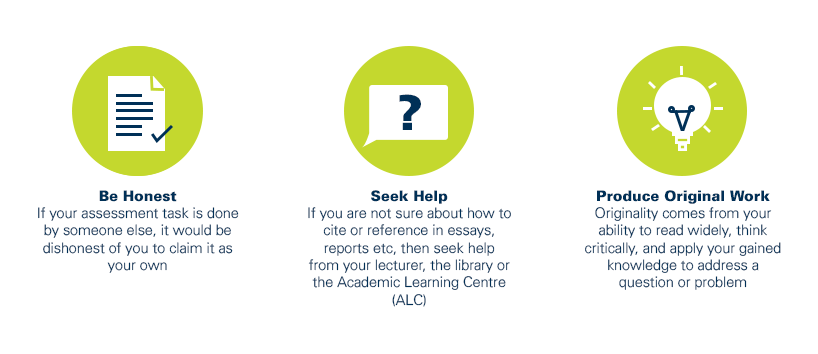
As a CQUniversity student you are expected to act honestly in all aspects of your academic work.
Any assessable work undertaken or submitted for review or assessment must be your own work. Assessable work is any type of work you do to meet the assessment requirements in the unit, including draft work submitted for review and feedback and final work to be assessed.
When you use the ideas, words or data of others in your assessment, you must thoroughly and clearly acknowledge the source of this information by using the correct referencing style for your unit. Using others’ work without proper acknowledgement may be considered a form of intellectual dishonesty.
Participating honestly, respectfully, responsibly, and fairly in your university study ensures the CQUniversity qualification you earn will be valued as a true indication of your individual academic achievement and will continue to receive the respect and recognition it deserves.
As a student, you are responsible for reading and following CQUniversity’s policies, including the Student Academic Integrity Policy and Procedure. This policy sets out CQUniversity’s expectations of you to act with integrity, examples of academic integrity breaches to avoid, the processes used to address alleged breaches of academic integrity, and potential penalties.
What is a breach of academic integrity?
A breach of academic integrity includes but is not limited to plagiarism, self-plagiarism, collusion, cheating, contract cheating, and academic misconduct. The Student Academic Integrity Policy and Procedure defines what these terms mean and gives examples.
Why is academic integrity important?
A breach of academic integrity may result in one or more penalties, including suspension or even expulsion from the University. It can also have negative implications for student visas and future enrolment at CQUniversity or elsewhere. Students who engage in contract cheating also risk being blackmailed by contract cheating services.
Where can I get assistance?
For academic advice and guidance, the Academic Learning Centre (ALC) can support you in becoming confident in completing assessments with integrity and of high standard.
What can you do to act with integrity?