Overview
In this unit you will gain theoretical knowledge in periodontal and dental hygiene diagnosis, treatment planning and treatment procedures. You will translate and integrate knowledge and skills learnt throughout the Bachelor of Oral Health course through work-integrated learning clinical practice. You must comply with clinical policies and procedures while undertaking clinical practice. You will improve your clinical reasoning skills in a supportive environment aimed to increase your confidence through reflective and self-directed learning. On successful completion of this unit, you will be able to demonstrate clinical judgment and practical skills in oral examination and diagnosis of dental conditions in adults of all ages. You will also be able to demonstrate safety and competence in patient care over a range of periodontal and dental hygiene clinical procedures, including referral of patients for complex care outside your scope of practice. You will be able to apply the principles of radiation biology and protection when producing diagnostic intra-oral and extra-oral radiographic images in the clinic. You will be able to communicate information regarding oral health in oral and written forms utilising appropriate interpersonal and team communication skills, professional attitudes and ethical behaviours. You will be required to attend a two-week compulsory intensive program prior to the commencement of Term 1.
Details
Pre-requisites or Co-requisites
Prerequisites: ORAL11006 Introduction to Oral Health Practice; AND ORAL11005 Oral Anatomy 2; AND ORAL11003 Introduction to Oral Disease; AND BMSC11011 Human Anatomy and Physiology 2; AND Co-requisites: ORAL12002 Oral Health Pre Clinical Practice; AND ORAL12001 Oral Disease Prevention and Management; AND ALLH12006 Evidence Based Practice for Health Professionals
Important note: Students enrolled in a subsequent unit who failed their pre-requisite unit, should drop the subsequent unit before the census date or within 10 working days of Fail grade notification. Students who do not drop the unit in this timeframe cannot later drop the unit without academic and financial liability. See details in the Assessment Policy and Procedure (Higher Education Coursework).
Offerings For Term 1 - 2026
Attendance Requirements
All on-campus students are expected to attend scheduled classes - in some units, these classes are identified as a mandatory (pass/fail) component and attendance is compulsory. International students, on a student visa, must maintain a full time study load and meet both attendance and academic progress requirements in each study period (satisfactory attendance for International students is defined as maintaining at least an 80% attendance record).
Recommended Student Time Commitment
Each 6-credit Undergraduate unit at CQUniversity requires an overall time commitment of an average of 12.5 hours of study per week, making a total of 150 hours for the unit.
Class Timetable
Assessment Overview
Assessment Grading
This is a graded unit: your overall grade will be calculated from the marks or grades for each assessment task, based on the relative weightings shown in the table above. You must obtain an overall mark for the unit of at least 50%, or an overall grade of 'pass' in order to pass the unit. If any 'pass/fail' tasks are shown in the table above they must also be completed successfully ('pass' grade). You must also meet any minimum mark requirements specified for a particular assessment task, as detailed in the 'assessment task' section (note that in some instances, the minimum mark for a task may be greater than 50%). Consult the University's Grades and Results Policy for more details of interim results and final grades.
All University policies are available on the CQUniversity Policy site.
You may wish to view these policies:
- Grades and Results Policy
- Assessment Policy and Procedure (Higher Education Coursework)
- Review of Grade Procedure
- Student Academic Integrity Policy and Procedure
- Academic Progression Policy and Procedure
- Student Refund and Credit Balance Policy and Procedure
- Complaints Policy and Procedure
- Information and Communications Technology Acceptable Use Policy and Procedure
This list is not an exhaustive list of all University policies. The full list of University policies are available on the CQUniversity Policy site.
Feedback, Recommendations and Responses
Every unit is reviewed for enhancement each year. At the most recent review, the following staff and student feedback items were identified and recommendations were made.
Feedback from SUTE comments
Clear expectations for exams would be highly recommended, students understand that there is availablility to ask questions in review week 12, however clear topics, outlines or guidance for the exams would be highly benificial. Students struggle to target studying for these end of term exams due to the un specific instructions.
It is recommended that current examination guidelines are enhanced.
Feedback from SUTE comments
Students feel as if some of the exam questions could be more specific and clarify in terms (give x amount of examples) especially for questions that require a high amount of marks (example 14 marks).
It is recommended that exam questions be reviewed and updated to provide more information on answer requirements.
Feedback from SUTE comments
It would have been nice to have a lecture either in class or video access on how to complete notes in clinic prior to working on patients.
It is recomended that a lecture be developed in conjunction with the ORAL12001 Unit Co-ordinator. The aim will be to better outline the expectations, and the processes involved for the correct and succint completion of patient notes in the CQUniversity Oral Health Clinic.
- Discuss the theoretical basis of oral health practice and dental procedures for the diagnosis, prevention and management of oral diseases
- Implement processes for the assessment, prevention and management of dental diseases including non-carious tooth structure loss, dental caries (including root caries) and periodontal diseases in a clinical environment
- Formulate a diagnosis and appropriate treatment plan for adult patients in a clinical environment, including identification of patients who require referral for care outside one's scope of practice
- Apply the principles of radiation biology and protection when producing diagnostic intra-oral and extra-oral radiographic images in the clinic
- Advocate for, and promote, oral health to individuals and groups across diverse community settings in a variety of formats
- Recognise and act upon the legal, ethical and safeguarding issues involving dental practitioners and patients as defined by the relevant professional regulatory bodies in Australia and overseas
All unit profiles in the Bachelor of Oral Health are made available to the Australian Dental Council for on-going accreditation purposes.
Alignment of Assessment Tasks to Learning Outcomes
| Assessment Tasks | Learning Outcomes | |||||
|---|---|---|---|---|---|---|
| 1 | 2 | 3 | 4 | 5 | 6 | |
| 1 - Online Quiz(zes) - 20% | ||||||
| 2 - Reflective Practice Assignment - 0% | ||||||
| 3 - Practical Assessment - 0% | ||||||
| 4 - In-class Test(s) - 80% | ||||||
Alignment of Graduate Attributes to Learning Outcomes
| Graduate Attributes | Learning Outcomes | |||||
|---|---|---|---|---|---|---|
| 1 | 2 | 3 | 4 | 5 | 6 | |
| 1 - Communication | ||||||
| 2 - Problem Solving | ||||||
| 3 - Critical Thinking | ||||||
| 4 - Information Literacy | ||||||
| 5 - Team Work | ||||||
| 6 - Information Technology Competence | ||||||
| 7 - Cross Cultural Competence | ||||||
| 8 - Ethical practice | ||||||
| 9 - Social Innovation | ||||||
| 10 - First Nations Knowledges | ||||||
| 11 - Aboriginal and Torres Strait Islander Cultures | ||||||
Textbooks
Foundations of Periodontics for the Dental Hygienist
- Edition: 6th (2024) (2024)
- Authors: Gehrig, J.S and Shin, D.E.
- Lippincott Williams & Wilkins
- Philadelphia Philadelphia , Pennsylvan , US
- ISBN: Print ISBN 9781284261059, 1284261050 eText ISBN 9781284291520, 1284291529
Diagnosis and Treatment Planning in Dentistry
- Edition: 4th (2024) (2024)
- Authors: Stephen J. Stefanac and Samuel P. Nesbit
- Elsevier
- St Louis St Louis , Missouri , USA
- ISBN: Paperback ISBN: 9780323809757 eBook ISBN: 9780323809788
Fundamentals of Periodontal Instrumentation and Advanced Root Instrumentation, Enhanced
- Edition: Eighth (2020) (2020)
- Authors: Gehrig, Jill S ; Sroda, Rebecca ; Saccuzzo, Darlene
- Jones & Bartlett Learning, LLC
- Burlington Burlington , Vermont , USA
- ISBN: 9781284456752
Modern Dental Assisting
- Edition: 14th (2024) (2024)
- Authors: Debbie S. Robinson
- Elsevier
- St Louis St Louis , Missouri , USA
- ISBN: Print ISBN 9780323824408, 0323824404 eText ISBN 9780323882422, 0323882420
Mosby's Dental Drug Reference
- Edition: 13th (2021) (2021)
- Authors: Arthur Jeske
- Mosby
- St Louis St Louis , Missouri , USA
- ISBN: 9780323511216
Therapeutic Guidelines Oral and Dental
- Edition: Version 3 (2019) (2019)
- Authors: Oral and Dental Expert Group
- Therapeutic Guidelines Limited
- Melbourne Melbourne , Victoria , Australia
- ISBN: 9780980825312
IT Resources
- CQUniversity Student Email
- Internet
- Unit Website (Moodle)
- Webcam and headset for on-line sessions
All submissions for this unit must use the referencing styles below:
For further information, see the Assessment Tasks.
s.billinghurst@cqu.edu.au
Intensive Week 1
Begin Date: 17 Feb 2025Module/Topic
Lectures:
- Classification of Periodontal and Peri-implant Diseases and Conditions
Clinical Sessions:
- Session 1: Infection Control and Clinic Changeover Procedures
- Session 3: A-Dec Training and Ergonomics
- Session 4: Hygiene Refresher
Chapter
Gehrig, J.S, Shinn, D.E. & Willmann, D.E. (2018) Foundations of Periodontics for the Dental Hygienist (5th Ed.) Wolters Kluwer/Lippincott Williams & Wilkins.
Chapter 4
Events and Submissions/Topic
Weekly Reflective Blog
Intensive Week 2
Begin Date: 24 Feb 2025Module/Topic
Lectures:
- Nil
Clinical Sessions:
- Session 5: Comprehensive Examination 1
- Session 6: Radiography Refresher
- Session 7: Comprehensive Examination 2
Chapter
Events and Submissions/Topic
Weekly Reflective Blog
Week 1
Begin Date: 09 Mar 2026Module/Topic
Lectures:
- Overview of Diseases of the Periodontium
- Periodontal Health, Gingival Diseases and Conditions
- Dentinal Hypersensitivity
Clinical Sessions:
- Session 8: Comprehensive Examination 3
- Session 9: Saliva Testing and Periodontal Charting
Chapter
Gehrig, J.S, Shinn, D.E. & Willmann, D.E. (2018) Foundations of Periodontics for the Dental Hygienist (5th Ed.) Wolters Kluwer/Lippincott Williams & Wilkins.
Chapters 3, 6
Events and Submissions/Topic
Weekly Quiz
Weekly Reflective Blog
Week 2
Begin Date: 16 Mar 2026Module/Topic
Lectures:
- Clinical Periodontal Assessment
- Periodontitis
Clinical Sessions:
- Session 10: Oral Hygiene Instruction, Prophylaxis and Fluoride Application
- Session 11: Periodontal Instrumentation (Typodont) and Digital Scanning
Chapter
Gehrig, J.S, Shinn, D.E. & Willmann, D.E. (2018) Foundations of Periodontics for the Dental Hygienist (5th Ed.) Wolters Kluwer/Lippincott Williams & Wilkins.
Chapters 7, 20
Events and Submissions/Topic
Weekly Quiz
Weekly Reflective Blog
Week 3
Begin Date: 23 Mar 2026Module/Topic
Lectures:
- Clinical Decision-Making for Periodontal Care
- Shared Decision-Making for Periodontal Care
Clinical Sessions:
- Session 12: Comprehensive examination – Complete
- Session 13: Isolation, Disclosing, OHE and Fluoride Varnish
Chapter
Gehrig, J.S, Shinn, D.E. & Willmann, D.E. (2018) Foundations of Periodontics for the Dental Hygienist (5th Ed.) Wolters Kluwer/Lippincott Williams & Wilkins.
Chapters 10, 11
Events and Submissions/Topic
Weekly Quiz
Weekly Reflective Blog
Week 4
Begin Date: 30 Mar 2026Module/Topic
Lectures:
- Etiologic Factors: Risk for Periodontal Disease
- Host Immune Response to Biofilm
Clinical Sessions:
- Session 14: Periodontal Instrumentation
- Session 15: Revision and preparation for Clinical Hurdle Assessment
- Summative period begins
Chapter
Gehrig, J.S, Shinn, D.E. & Willmann, D.E. (2018) Foundations of Periodontics for the Dental Hygienist (5th Ed.) Wolters Kluwer/Lippincott Williams & Wilkins.
Chapters 12, 15
Events and Submissions/Topic
Weekly Quiz
Weekly Reflective Blog
Week 5
Begin Date: 06 Apr 2026Module/Topic
Lectures:
- Systemic Risk Factors that Amplify Susceptibility to Periodontal Disease
- Local Factors Contributing to Periodontal Disease
Clinical Sessions
- Clinical Hurdle Assessment
Chapter
Gehrig, J.S, Shinn, D.E. & Willmann, D.E. (2018) Foundations of Periodontics for the Dental Hygienist (5th Ed.) Wolters Kluwer/Lippincott Williams & Wilkins.
Chapters 16, 17
Events and Submissions/Topic
Weekly Quiz
Weekly Reflective Blog
Clinical Hurdle Assessment Task
OHE Videos
Week 6
Begin Date: 13 Apr 2026Module/Topic
Lectures:
- Nil
Clinical Sessions:
- Session 16: Comprehensive examination
- Students will also begin seeing patients
Chapter
Events and Submissions/Topic
Weekly Reflective Blog
In-Class Test A
Vacation Week
Begin Date: 20 Apr 2026Module/Topic
No lectures or clinical sessions
Chapter
Events and Submissions/Topic
Week 7
Begin Date: 27 Apr 2026Module/Topic
Lectures:
- Nil
Clinical Sessions
- Patients
Chapter
Events and Submissions/Topic
Weekly Reflective Blog
Week 8
Begin Date: 04 May 2026Module/Topic
Lectures:
- Nil
Clinical Sessions:
- Patients
Chapter
Events and Submissions/Topic
Weekly Reflective Blog
Week 9
Begin Date: 11 May 2026Module/Topic
Lectures:
- Nonsurgical Periodontal Therapy
- Acute Periodontal Conditions - Necrotizing periodontal diseases ONLY
Clinical Sessions:
- Patients
Chapter
Gehrig, J.S, Shinn, D.E. & Willmann, D.E. (2018) Foundations of Periodontics for the Dental Hygienist (5th Ed.) Wolters Kluwer/Lippincott Williams & Wilkins.
Chapters 24, 30
Events and Submissions/Topic
Weekly Quiz
Weekly Reflective Blog
Week 10
Begin Date: 18 May 2026Module/Topic
Lectures:
- Chemical Agents in Periodontal Care
- Maintenance for the Periodontal Patient
Clinical Sessions:
- Patients
Chapter
Gehrig, J.S, Shinn, D.E. & Willmann, D.E. (2018) Foundations of Periodontics for the Dental Hygienist (5th Ed.) Wolters Kluwer/Lippincott Williams & Wilkins.
Chapters 27, 33
Events and Submissions/Topic
Weekly Quiz
Weekly Reflective Blog
Week 11
Begin Date: 25 May 2026Module/Topic
Lectures:
- Tobacco Smoking and Periodontal Disease
- Peri-implant Health and Diseases
Clinical Sessions:
- Patients
Chapter
Gehrig, J.S, Shinn, D.E. & Willmann, D.E. (2018) Foundations of Periodontics for the Dental Hygienist (5th Ed.) Wolters Kluwer/Lippincott Williams & Wilkins.
Chapters 9, 19
Events and Submissions/Topic
Weekly Quiz
Weekly Reflective Blog
Week 12
Begin Date: 01 Jun 2026Module/Topic
Lectures:
- Revision
Clinical Sessions:
- Patients
Chapter
Nil
Events and Submissions/Topic
Weekly Reflective Blog
ePortfolio Final Check
Exam Week
Begin Date: 08 Jun 2026Module/Topic
Chapter
Events and Submissions/Topic
In-Class Test B
Vacation/Exam Week
Begin Date: 15 Jun 2026Module/Topic
Chapter
Events and Submissions/Topic
Clinical Attire in the Oral Health Clinics and Off-Campus Placements:
All students are required to wear their oral health polo or scrubs plus an outer protective garment - theatre gowns are required for this purpose and gowns will be provided at Queensland Health placements. The outer protective garment (theatre gown) must be placed in a plastic bag after the session or day and washed appropriately. All garments must be freshly laundered and ironed. The outer protective garment (theatre gown) cannot be worn in the Oral Health Prosthetic Laboratory or Simulation Laboratory. All students must wear long black pants and low-heeled closed-in shoes, their protective eyewear, have their hair tied back and wear no jewellery on their hands or arms. Facial hair must be closely trimmed and tidy. A student can be sent home if the clinical attire is not adequate.
Laboratory Attire in the Oral Health Simulation and Prosthetic Laboratories:
All students are required to wear their oral health polo or scrubs. All garments must be freshly laundered and ironed. All students must wear long black pants or scrub pants and low-heeled closed-in shoes, their protective eyewear, have their hair tied back and wear no jewellery on their hands or arms. A student can be sent home if the laboratory attire is not adequate.
Workplace Health and Safety:
Students must abide by infection control policies, guidelines and procedures at each clinical placement. All mandatory requirements for clinical practice must be met before and during the term. Failure to comply will lead to withdrawal from the clinical placements and failure in the Unit.
1 Online Quiz(zes)
Each week you will complete an online quiz related to the learning material for that week.
You must complete each quiz in a limited time within the quiz open period. Your attempt for each quiz will be submitted automatically, but no more questions can be answered once the time limit expires.
To prepare for this assessment you can study the learning resources for the relevant quiz - this includes lectures and relevant textbook readings.
There are a number of support and technology mechanisms of which you need to be aware.
- If you experience any technical difficulties accessing or during the quiz, please contact TASAC (Moodle assistance option) on 1300 666 620.
- Notify the unit coordinator as soon as physically possible (same day) with details of the technical issues. If you are able, take a screenshot of any error message received and include that in your email to the unit coordinator.
- If you are unable to undertake the quiz at the set time and date you will need to apply for an extension in Moodle (in the support area at the top of the page) and supply supporting documentation as per normal extension requests.
Level of GenAI use allowed: Level 1 No AI
The assessment is completed entirely without Al assistance in a controlled environment, ensuring that students rely solely on their existing knowledge, understanding, and skills.
The 72-hour grace period does not apply to this assessment.
There are weekly quizzes throughout the term. The online quiz times are available under the assessment tile on Moodle.
The score for the weekly quizzes will be available on-line after the completion of each quiz.
You will be assessed on your competence through online quizzes. Each quiz will be based on the linked content.
- Discuss the theoretical basis of oral health practice and dental procedures for the diagnosis, prevention and management of oral diseases
- Apply the principles of radiation biology and protection when producing diagnostic intra-oral and extra-oral radiographic images in the clinic
2 Reflective Practice Assignment
Self-reflection is an important practice for personal and professional development. You will be required to write daily self-reflective entries in your ePortfolio based on your work-integrated learning experiences (clinic).
Your reflections over the course of the term must cover the full range of topics. The range of topics for your self-reflection could be:
- pre-clinical / clinical reflections, and
- communication, teamwork and professionalism reflections
What to include in your daily reflections
- Link to ORAS sheet/s
- ORAS score/s:
- Areas scored 0 or 1:
- Include a brief summary of procedures OR a brief summary of placement.
- Which procedures were performed well? OR Expectation of learning on the placement.
- What procedures could be improved? OR What did you learn today on placement?
- Strategies for improvement OR Strategies to enhance learning on placement.
- What did I learn today?
The completion of the personal reflective blog is a compulsory assessment, and each entry must be completed to a satisfactory standard.
There are two places you are to enter your reflective blog.
1. ePortfolio: Firstly, in your ePortfolio, complete a separate reflection entry for each placement day. Entries must be completed for every placement day, including DA and FTAs.
Here is an example of an entry in the ePortfolio for week 6:

2. Moodle Submission: Then at the end of the week, copy these entries into the Moodle submission for the week eg "Week 1 Reflective Blog Entry". NOTE: There is no need to copy these onto and upload a word document. You can simply copy and paste directly into the Moodle assignment. These Moodle Submissions are due by 11.59pm Sunday night each week. A reviewer will view these each week on Moodle and assign a satisfactory/unsatisfactory for each week.
At the end of the term, there will be a final check of your submissions on your ePortfolio to ensure all assessment criteria have been met.
Please be aware that the teaching team will read your weekly reflections. This is used to triangulate data from ORAS to monitor your performance throughout the term. You will not be provided detailed feedback on your reflections as feedback is provided at the time of the student-client interaction. Additionally, reflections are very personal, and this is why they are not given a quantitative grade, nor the level of feedback that would be expected of a quantitative grade.
Level of GenAI use allowed: Level 1 No AI
The assessment is completed entirely without Al assistance in a controlled environment, ensuring that students rely solely on their existing knowledge, understanding, and skills.
Weekly by 11:59 PM Sunday night.
Results will be added to final assessments, however feedback will be ongoing.

- Recognise and act upon the legal, ethical and safeguarding issues involving dental practitioners and patients as defined by the relevant professional regulatory bodies in Australia and overseas
3 Practical Assessment
Component 1 Clinical Hurdle Assessment:
The clinical hurdle assessment is an assessment of your oral hygiene education and basic hygiene clinical skills, to ensure you are safe to commence treatment on patients from the general public.
There are 2 parts to the clinical hurdle assessment.
PART A: Patient advice on preventative home care
VIDEO UPLOADS Due Date: Monday 6th April 2026, 11:59 PM
This component will be assessed via video upload. For each of the below topics, you are to upload a video to Moodle.
- Periodontal Disease diagnosis, prevention and management
- Caries diagnosis, prevention and management
- Non-carious tooth loss diagnosis, prevention and management
This is a pass/fail assessment. To pass, students must achieve 'Competent' or 'Proficient' in all criteria. Any 'Developing' or 'Not Yet Competent' ratings require resubmission. Only one resubmission will be allowed per topic. The student must have attempted recording of all topics, and demonstrated genuine effort. On the second attempt, all criteria must be marked as ‘Competent’ or ‘Proficient’ to pass this assessment task.
A few guidelines:
- Use terminology relevant to ADULT patients
- Keep it brief and to the point. Remember a patient’s attention span is only 2-3 minutes long
- Have a peer check it!
- You do not need to go into detail about actual biofilm disruption (toothbrushing/interdental cleaning) techniques
- NOTE: Please upload 3 SEPARATE VIDEOS
Discussions will be held during your regular tutorial sessions, to provide an opportunity for students to explore the topics listed above, ask questions and seek guidance for this assessment task.
Feedback will be provided in Break Week. If needed, you will have the opportunity for a resubmission, within a week.
Students are graded against criterion-referenced rubrics. Please review the rubrics below, when preparing for your assessments.
Periodontitis

Dental Caries

Non-Carious Tooth Structure Loss

PART B: Clinical Hurdle Assessment
This clinical hurdle assessment will occur during your clinical session in Week 5.
The clinical hurdle assessment is an assessment of your basic hygiene clinical skills to ensure you are safe to commence treatment on patients from the general public.
There will be 2 periodontal typodont stations set up. At these stations, we will be assessing:
- Periodontal probing technique
- Use of powered and hand debridement instruments.
There will be a third station where you will be assessed on your clinical changeover procedure. REMEMBER: you must complete the changeover task with no prompting from the Supervisor.
Feedback will be provided by the end of the next day. If needed, you will have the opportunity for a resit during Break Week.
Students are graded against criterion-referenced rubrics. Please review the rubrics when preparing for your assessments.


STUDENTS MUST ACHIEVE A SATISFACTORY SCORE IN ALL CRITERIA TO PASS THE CLINICAL HURDLE ASSESSMENT
Re-attempt for Clinical Hurdle Assessment:
Re-attempt is where you are given a second opportunity to demonstrate your achievement of one or more of the unit’s learning outcomes before you can progress to new learning or participate in subsequent learning activities.
If you do not pass the Clinical Hurdle Assessment, you will be given an opportunity to re-attempt. Note that only one opportunity to do a re-attempt will be given during Break Week. If you do not pass the re-attempt, you will be unable to continue clinical practice in ORAL12003.
Level of GenAI use allowed: Level 1 No AI
The assessment is completed entirely without Al assistance in a controlled environment, ensuring that students rely solely on their existing knowledge, understanding, and skills.
The 72-hour grace period does not apply to this assessment.
Component 2 Clinical Performance:
There are two 3-hour clinical sessions per week.
Weeks 1-5 consist of peer learning activities designed to consolidate, apply and extend the theory learnt in years 1 and 2 into clinical practice.
Weeks 6-12 consist of seeing patients for dental hygiene treatments.
Attendance at all clinical sessions is compulsory. Failure to provide a medical certificate to the unit coordinator for missed sessions will result in failure of this unit component.
All clinical sessions are graded by the supervisor on the Online Realtime Assessment System (ORAS).
A criterion-referenced analytical assessment rubric for evaluation of student performance of procedures is provided in the Online Real-time Assessment System (ORAS). ORAS records all work-integrated learning experiences, including a number of assessed student-client interactions and performance of procedures. Placement supervisors are required to complete an entry into ORAS for each student-client interaction assessed.
Each student-client interaction is graded on a rubric, which will reflect a grade of Not Yet Competent (0), Approaching Competent (1), Competent (2), and Highly Competent (3) for each procedure part (see example below). An average grade is given at the end of each student-client interaction assessment for all procedures completed.

In each student-client interaction assessment, there are also Critical Competencies. A Not Yet Competent (NYC) in one or more of the Critical Competencies results in a mark of 0 overall for that student-client interaction.

The data is collated over the term to monitor performance and as a “log” of the procedures and student-client assessments completed by the student. The unit teaching team will assess the data aggregated in ORAS over the period of the term to form a longitudinal comprehensive picture of the achievement and development of competence by the student.
Summative assessment for this component commences Monday of Week 4. Prior to that, clinical performance is completed on a formative basis.
In order to achieve a grade of pass in this component, you are required to achieve a minimum average score of Competent (2).
Re-attempt:
Re-attempt is where you are given a second opportunity to demonstrate your achievement of one or more of the unit’s learning outcomes.
If you achieve a minimum average score of 1.8-1.99, you will be offered a re-attempt:
- Three additional student-client interactions will be offered on a mutually agreeable day.
- This task is to be completed no later than one week before the release of grades.
- You must achieve an average minimum score of 1.8 in ALL three student-client interactions.
- These additional sessions will be offered at the CQUniversity Oral Health Clinic based in Rockhampton. It is your responsibility to arrange transport and accommodation if needed to attend these additional sessions.
- Note that only one opportunity to do a re-attempt will be given.
- If you do not pass the re-attempt, you will be unable to pass ORAL12003.
The data is collated over the term to monitor performance and as a “log” of the procedures and student-client assessments completed by the student. The unit teaching team will assess the data aggregated in ORAS over the period of the term to form a longitudinal comprehensive picture of the achievement and development of competence by the student.
Level of GenAI use allowed: Level 1 No AI
The assessment is completed entirely without Al assistance in a controlled environment, ensuring that students rely solely on their existing knowledge, understanding, and skills.
The 72-hour grace period does not apply to this assessment.
Patient Safety
If there is a breach of patient safety, a student may be removed from patient contact and be required to undertake remediation. The student must then pass a safety audit prior to re-entering the clinical environment.
If you do not pass the safety audit, you will be unable to return to operative clinical practice. Therefore, you will not be able to meet the learning outcomes for ORAL12003 and will receive a failing grade for the unit. There is no opportunity for a re-attempt. This will mean you will need to reattempt the unit at the next offering and that your graduation will be delayed.
Component 3 Attendance:
Attendance at clinical placements is compulsory. You are required to attend a minimum of 90% of clinical placement days. This allows you approximately 2-3 days of absence without penalty. Absences are required to be supported with a medical certificate or negotiated with the Unit Coordinator in advance.
Note that ALL peer-on-peer tasks must be completed for the term. If you miss a session, it is your responsibility to contact the unit coordinator and make an arrangement to complete the missed tasks. Absences are to be made up at operational convenience.
The 2-week intensive requires 100% attendance.
A pass for satisfactory attendance is defined as 100% attendance at the 2-week intensive, as well as maintaining and fulfilling the 90% pre-clinical placement attendance for the days rostered during the term. Not meeting attendance requirements may result in a placement outstanding until the next available unit offering, which may delay your progress through the course and graduation.
Who to contact if you are sick: The unit coordinator (via email) and Libby Warlow (via phone).
Level of GenAI use allowed: Level 1 No AI
The assessment is completed entirely without Al assistance in a controlled environment, ensuring that students rely solely on their existing knowledge, understanding, and skills.
The 72-hour grace period does not apply to this assessment.
Completed via the Online Real-time Assessment System.
Completed via the Online Real-time Assessment System.
See information in Task Description, which includes assessment criteria.
- Implement processes for the assessment, prevention and management of dental diseases including non-carious tooth structure loss, dental caries (including root caries) and periodontal diseases in a clinical environment
- Formulate a diagnosis and appropriate treatment plan for adult patients in a clinical environment, including identification of patients who require referral for care outside one's scope of practice
- Apply the principles of radiation biology and protection when producing diagnostic intra-oral and extra-oral radiographic images in the clinic
- Advocate for, and promote, oral health to individuals and groups across diverse community settings in a variety of formats
- Recognise and act upon the legal, ethical and safeguarding issues involving dental practitioners and patients as defined by the relevant professional regulatory bodies in Australia and overseas
4 In-class Test(s)
There will be TWO (2) in-class tests for ORAL12003.
These in-class tests will assess the knowledge you will develop in ORAL12003. You will be given an answer booklet in which to write your responses to the exam questions. At the end of the assessment, your answer booklet must be returned to the assessor. These in-class tests are closed book, so the only items you will be allowed to have on you are pens (black ink only) and your answer booklet. Only those answers that have been written in pen, in your answer booklet will be marked.
NOTE: You are also able to bring your own noise-cancelling head/earphones if you prefer.
In-class Test A
This in-class test will consist of questions requiring detailed, written responses.
Topics that may be covered:
- Content of all lectures and tutorials from Intensive to Week 3
- Management of dentine hypersensitivity
- Periodontal diagnosis NOTE: Staging and Grading clinical reference tool will be provided
- Plaque Disclosing
- In-clinic and at-home Fluoride/remineralisation therapy and other home oral hygiene products including:
- Duraphat
- MI Varnish
- Neutrafluor 5000
- Tooth Mousse
- Tooth Mousse Plus
- Colgate desensitising toothpastes
- Sensodyne desensitising toothpastes
- Oral B desensitising toothpastes
- Savacol
- Listerine
You may be asked to give information on the following:
-
- Active ingredients and active desensitising ingredient/s
- Mode of action of desentising ingredient/s
- Is there fluoride in this product? If so, what type and what concentration (ppm)?
- Indications
- Contra-indications
- Instructions for use
- Side-effects
In-class Test B
This in-class test will consist of questions requiring detailed, written responses.
Topics that may be covered:
Content of all lectures and tutorials from Week 4 - Week 12.
Level of GenAI use allowed: Level 1 No AI
These assessments are completed entirely without Al assistance in a controlled environment, ensuring that students rely solely on their existing knowledge, understanding, and skills.
In-class Test A will be held in Week 6 2026, In-class Test B will be held in Exam Week 1 2026.
Results will returned to students with end of term results.
Critical thinking and application of learnt basic clinical concepts into real-life situations.
- Discuss the theoretical basis of oral health practice and dental procedures for the diagnosis, prevention and management of oral diseases
- Advocate for, and promote, oral health to individuals and groups across diverse community settings in a variety of formats
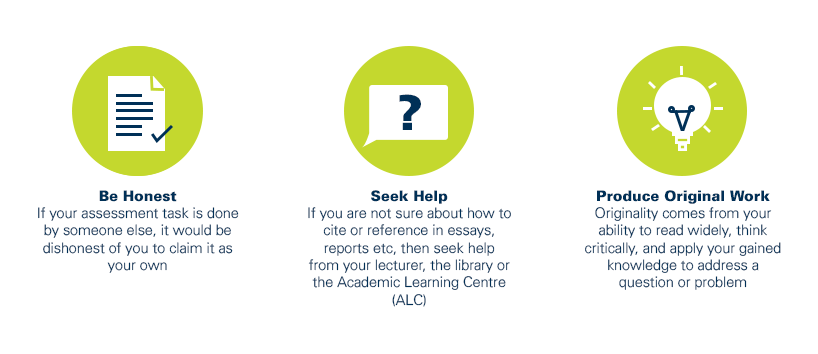
As a CQUniversity student you are expected to act honestly in all aspects of your academic work.
Any assessable work undertaken or submitted for review or assessment must be your own work. Assessable work is any type of work you do to meet the assessment requirements in the unit, including draft work submitted for review and feedback and final work to be assessed.
When you use the ideas, words or data of others in your assessment, you must thoroughly and clearly acknowledge the source of this information by using the correct referencing style for your unit. Using others’ work without proper acknowledgement may be considered a form of intellectual dishonesty.
Participating honestly, respectfully, responsibly, and fairly in your university study ensures the CQUniversity qualification you earn will be valued as a true indication of your individual academic achievement and will continue to receive the respect and recognition it deserves.
As a student, you are responsible for reading and following CQUniversity’s policies, including the Student Academic Integrity Policy and Procedure. This policy sets out CQUniversity’s expectations of you to act with integrity, examples of academic integrity breaches to avoid, the processes used to address alleged breaches of academic integrity, and potential penalties.
What is a breach of academic integrity?
A breach of academic integrity includes but is not limited to plagiarism, self-plagiarism, collusion, cheating, contract cheating, and academic misconduct. The Student Academic Integrity Policy and Procedure defines what these terms mean and gives examples.
Why is academic integrity important?
A breach of academic integrity may result in one or more penalties, including suspension or even expulsion from the University. It can also have negative implications for student visas and future enrolment at CQUniversity or elsewhere. Students who engage in contract cheating also risk being blackmailed by contract cheating services.
Where can I get assistance?
For academic advice and guidance, the Academic Learning Centre (ALC) can support you in becoming confident in completing assessments with integrity and of high standard.
What can you do to act with integrity?