Overview
Understanding Public Health introduces you to ways of thinking and perspectives that form the foundations of public health. These include examining the received wisdom of public health from the last 200 years such as different models of health and theoretical frameworks, and critiquing the approaches used in the past. You will be introduced to the social-ecological model of health that forms the basis of community-based and community-led public health. As such, you will consider the different types of leadership required for various approaches to public health practice and consider your own positionality. You will explore the differences between evidence-based practice and practice-based evidence and how these types of evidence can apply to the various approaches in public health. Finally, you will be introduced to strengths-based and disease prevention approaches as they are applied in public health.
Details
Pre-requisites or Co-requisites
There are no requisites for this unit.
Important note: Students enrolled in a subsequent unit who failed their pre-requisite unit, should drop the subsequent unit before the census date or within 10 working days of Fail grade notification. Students who do not drop the unit in this timeframe cannot later drop the unit without academic and financial liability. See details in the Assessment Policy and Procedure (Higher Education Coursework).
Offerings For Term 1 - 2026
Attendance Requirements
All on-campus students are expected to attend scheduled classes - in some units, these classes are identified as a mandatory (pass/fail) component and attendance is compulsory. International students, on a student visa, must maintain a full time study load and meet both attendance and academic progress requirements in each study period (satisfactory attendance for International students is defined as maintaining at least an 80% attendance record).
Recommended Student Time Commitment
Each 6-credit Postgraduate unit at CQUniversity requires an overall time commitment of an average of 12.5 hours of study per week, making a total of 150 hours for the unit.
Class Timetable
Assessment Overview
Assessment Grading
This is a graded unit: your overall grade will be calculated from the marks or grades for each assessment task, based on the relative weightings shown in the table above. You must obtain an overall mark for the unit of at least 50%, or an overall grade of 'pass' in order to pass the unit. If any 'pass/fail' tasks are shown in the table above they must also be completed successfully ('pass' grade). You must also meet any minimum mark requirements specified for a particular assessment task, as detailed in the 'assessment task' section (note that in some instances, the minimum mark for a task may be greater than 50%). Consult the University's Grades and Results Policy for more details of interim results and final grades.
All University policies are available on the CQUniversity Policy site.
You may wish to view these policies:
- Grades and Results Policy
- Assessment Policy and Procedure (Higher Education Coursework)
- Review of Grade Procedure
- Student Academic Integrity Policy and Procedure
- Academic Progression Policy and Procedure
- Student Refund and Credit Balance Policy and Procedure
- Complaints Policy and Procedure
- Information and Communications Technology Acceptable Use Policy and Procedure
This list is not an exhaustive list of all University policies. The full list of University policies are available on the CQUniversity Policy site.
Feedback, Recommendations and Responses
Every unit is reviewed for enhancement each year. At the most recent review, the following staff and student feedback items were identified and recommendations were made.
Feedback from Self reported
Updates needed within unit content to reflect contemporary Public Health practice.
Review and update unit content, learning resources, and case studies to ensure alignment with current public health priorities, emerging evidence, contemporary practice standards, and workforce expectations. Incorporate recent examples and policy developments to maintain the currency and relevance of the unit.
- Analyse the history of public health and its changing philosophical, theoretical and practice models over the last 200 years
- Critique the ethics associated with different scales and approaches to public health, particularly in relation to First Nations Peoples
- Discuss the impact of a social ecological model of health on public health practice
- Differentiate between transactional and collaborative leadership and the related implications for public health practice
- Reflect on own positionality regarding approach to health practice and relationships with others, especially those from different backgrounds
- Distinguish between practice-based and evidence-based approaches used in public health and relate each to different models of health and approaches to practice
- Justify taking a strengths-based or disease prevention approach to public health practice.
Alignment of Assessment Tasks to Learning Outcomes
| Assessment Tasks | Learning Outcomes | ||||||
|---|---|---|---|---|---|---|---|
| 1 | 2 | 3 | 4 | 5 | 6 | 7 | |
| 1 - Written Assessment - 40% | |||||||
| 2 - Group Work - 40% | |||||||
| 3 - Reflective Practice Assignment - 20% | |||||||
Alignment of Graduate Attributes to Learning Outcomes
| Graduate Attributes | Learning Outcomes | ||||||
|---|---|---|---|---|---|---|---|
| 1 | 2 | 3 | 4 | 5 | 6 | 7 | |
| 1 - Knowledge | |||||||
| 2 - Communication | |||||||
| 3 - Cognitive, technical and creative skills | |||||||
| 4 - Research | |||||||
| 5 - Self-management | |||||||
| 6 - Ethical and Professional Responsibility | |||||||
| 7 - Leadership | |||||||
| 8 - First Nations Knowledges | |||||||
| 9 - Aboriginal and Torres Strait Islander Cultures | |||||||
Alignment of Assessment Tasks to Graduate Attributes
| Assessment Tasks | Graduate Attributes | ||||||||
|---|---|---|---|---|---|---|---|---|---|
| 1 | 2 | 3 | 4 | 5 | 6 | 7 | 8 | 9 | |
| 1 - Written Assessment - 40% | |||||||||
| 2 - Group Work - 40% | |||||||||
| 3 - Reflective Practice Assignment - 20% | |||||||||
Textbooks
There are no required textbooks.
IT Resources
- CQUniversity Student Email
- Internet
- Unit Website (Moodle)
- Computer access
All submissions for this unit must use the referencing style: American Psychological Association 7th Edition (APA 7th edition)
For further information, see the Assessment Tasks.
s.cassar@cqu.edu.au
Week 1
Begin Date: 09 Mar 2026Module/Topic
What is Public Health?
Chapter
Events and Submissions/Topic
Recorded online lecture + weekly tutorial
Week 2
Begin Date: 16 Mar 2026Module/Topic
Models of Health
Chapter
Events and Submissions/Topic
Recorded online lecture + weekly tutorial
Week 3
Begin Date: 23 Mar 2026Module/Topic
The Historical Context
Chapter
Events and Submissions/Topic
Recorded online lecture + weekly tutorial
Week 4
Begin Date: 30 Mar 2026Module/Topic
Public Health Practice: Surveillance
Chapter
Events and Submissions/Topic
Recorded online lecture + weekly tutorial
Week 5
Begin Date: 06 Apr 2026Module/Topic
Public Health Practice: Disease Control
Chapter
Events and Submissions/Topic
Recorded online lecture + weekly tutorial
Assessment task 1 due
Research Report Due: Week 5 Thursday (9 Apr 2026) 4:00 pm AEST
Week 6
Begin Date: 13 Apr 2026Module/Topic
Public Health Practice: The Changing Nature of Human Health
Chapter
Events and Submissions/Topic
Recorded online lecture + weekly tutorial
Vacation Week
Begin Date: 20 Apr 2026Module/Topic
Chapter
Events and Submissions/Topic
Week 7
Begin Date: 27 Apr 2026Module/Topic
Public Health Practice: People and the Living Environment
Chapter
Events and Submissions/Topic
Recorded online lecture + weekly tutorial
Week 8
Begin Date: 04 May 2026Module/Topic
Public Health Practice: Protecting the Public Sphere
Chapter
Events and Submissions/Topic
Recorded online lecture + weekly tutorial
Assessment task 2 due
Poster Due: Week 8 Thursday (7 May 2026) 4:00 pm AEST
Week 9
Begin Date: 11 May 2026Module/Topic
Public Health in a Changing World: New Challenges to Population Health
Chapter
Events and Submissions/Topic
Recorded online lecture + weekly tutorial
Week 10
Begin Date: 18 May 2026Module/Topic
Public Health in a Changing World: Impacts of Technology
Chapter
Events and Submissions/Topic
Recorded online lecture + weekly tutorial
Week 11
Begin Date: 25 May 2026Module/Topic
Public Health in a Changing World: The Future of Public Health
Chapter
Events and Submissions/Topic
Recorded online lecture + weekly tutorial
Week 12
Begin Date: 01 Jun 2026Module/Topic
Wrap-up and revision week
Chapter
Events and Submissions/Topic
Recorded online lecture + weekly tutorial
Assessment task 3 due
Reflective Essay Due: Week 12 Monday (1 June 2026) 4:00 pm AEST
Exam Week
Begin Date: 08 Jun 2026Module/Topic
Chapter
Events and Submissions/Topic
Vacation/Exam Week
Begin Date: 15 Jun 2026Module/Topic
Chapter
Events and Submissions/Topic
1 Written Assessment
The first assessment task is a written assignment of about 1000 words that you will complete on an individual basis. For this assignment, you will choose one of the topics from the list below and write about its significance in Public Health. The assignment will require some very focused research, so it is important to begin early and seek help from the Academic Learning Centre, or seek advice from your lecturer or tutor if you need it.
The topics for this assignment are:
1. Extreme heat events and their growing public health burden
2. The public health implications of declining childhood immunisation coverage
3. The expansion of Japanese encephalitis virus (JEV)
4. Alcohol‑related harm and the changing patterns of risky drinking
5. The health impacts of ultra‑processed food consumption
For your chosen topic, you will need to research the scholarly literature as well as information available from organisations like the AIHW (Australian Institute of Health and Welfare) to understand the background of your topic.
However, you are not to write about the clinical aspects of the topic.
Your assignment must address the following issues in separate sections:
- Introduction - outlines the issue and gives an indication of its Public Health significance; this section must include the population affected or at risk, if relevant
- Public Health Implications – describes how has your topic affected thinking and practice in the field of Public Health and what are some important issues that came to attention because of your topic
- Historical Context – discusses how your topic fits into the Public Health context that came before and the broader history of Public Health
- Future Context– discusses your personal view on the future of your topic and how you believe it will change or affect Public Health thinking and practice into the future
This assignment must be written in a formal, academic style (not first person) and must be fully referenced. APA 7th referencing is preferred for this unit. You will need to have BOTH in text references and a complete, properly formatted reference list.
Use of Generative AI
Level of GenAI use allowed: Level 2: You may use Al for planning, idea development, and research. Your final submission should show how you have developed and refined these ideas.
Weighting and Pass Requirement
This assessment is worth 40% of your final grade for the unit. You must achieve at least 50% on this assessment to pass the unit.
Due Date
4:00pm, Thursday of Week 5
Week 5 Thursday (9 Apr 2026) 4:00 pm AEST
Assessments will be returned 3 weeks after submission
The following assessment criteria appply:
1. The assessment contains the required sections and discussion
2. The public health aspects of the topic are explicitly discussed
3. Accurate referencing is provided with all material from sources fully cited
4. A formal writing style conforming to academic convention is used
5. There is evidence of the student's own thinking, analysis and opinion
- Analyse the history of public health and its changing philosophical, theoretical and practice models over the last 200 years
- Discuss the impact of a social ecological model of health on public health practice
- Distinguish between practice-based and evidence-based approaches used in public health and relate each to different models of health and approaches to practice
- Knowledge
- Cognitive, technical and creative skills
- Research
2 Group Work
The second assessment task is a group poster presentation. Your lecturer will assign you to a group.
The purpose of this task is to present your group’s interpretation of the statement “This is Public Health.” Your poster should highlight an object, scene, practice, or feature of your local environment that demonstrates a principle of Public Health in action.
Choosing Your Topic
Your chosen example must:
- Exist in your own local environment
- Be documented using photographs taken by your group (at least one original photo is required)
- Represent an innovation, system, or feature that improves Public Health, rather than a Public Health problem
- Your topic must not be a Public Health issue (e.g., obesity, poor nutrition, pollution). Instead, focus on something that promotes or protects health, especially something that may not be widely recognised as Public Health.
More guidance is available on Moodle.
Poster Requirements
Your poster should resemble those commonly presented at academic conferences. You may use Microsoft Word, Microsoft PowerPoint, or another common presentation format.
Your poster must include:
- At least one original photograph taken by your group
- Clear text explaining the phenomenon you selected and how it exemplifies Public Health
- Only original text and images created by your group (no images or text taken from the internet)
Individual Written Component
In addition to the group poster, each student in the group must submit an individual written explanation (approximately 300 words). This short piece should:
- Expand on the Public Health representation shown in the poster
- Explain the reasoning behind your group’s choice
- Discuss the key elements of the poster
This component must be submitted as a Word document.
Use of Generative AI
Level of GenAI use allowed: Level 2: You may use Al for planning, idea development, and research. Your final submission should show how you have developed and refined these ideas.
Weighting and Pass Requirement
This assessment is worth 40% of your final grade for the unit. You must achieve at least 50% on this assessment to pass the unit.
Due Date
4:00pm, Thursday of Week 8
Week 8 Thursday (7 May 2026) 4:00 pm AEST
Assessments will be returned 3 weeks after submission
1. Poster contains the required photos and content and is accompanied by explanatory text
2. Any material taken from other sources is fully cited
3. Language is original, formal and academic in nature, and reflects contribution by all group members
4. Content shows evidence of original thinking, analysis, and creativity on the part of the groups
5. Individual description shows individual reflection on learning and analysis
- Critique the ethics associated with different scales and approaches to public health, particularly in relation to First Nations Peoples
- Differentiate between transactional and collaborative leadership and the related implications for public health practice
- Justify taking a strengths-based or disease prevention approach to public health practice.
- Knowledge
- Communication
- Cognitive, technical and creative skills
- Ethical and Professional Responsibility
- Leadership
3 Reflective Practice Assignment
The third assessment task for this unit is a reflective practice report of 500 words that describes your growing understanding of Public Health as a discipline. This is an individual assignment. You are strongly encouraged to work on your reflection throughout the term and to make notes of ideas that occur to you or issues that interest you that you can include when you write your assignment.
Your reflection should focus on how your understanding of Public Health changed over the course of the term, and you should compare your knowledge, perceptions, and attitudes at the beginning of this unit with how you feel at the end.
You should also reflect specifically on the following questions:
- How does an understanding of the history of Public Health contribute to your future professional practice?
- How important are the non-health factors that are part of public health practice?
- What are some of the ethical issues associated with public health practice?
- How will the things you have learned as part of this unit affect your own practice in the future?
- Using the socio-ecological model of health, adapt the model in diagrammatic form to reflect how your personal factors are impacted at each level.
This reflective assignment is an essay. A less formal writing style may be used, and references are not required. If you do use any source material, however, each item must be identified in an in-text reference and also appear fully cited on a reference list.
Use of Generative AI
Level 1: You must not use Al at any point during the assessment. You must demonstrate your core skills and knowledge.
Weighting and Pass Requirement
This assessment is worth 20% of your final grade for the unit. You must achieve at least 50% on this assessment to pass the unit.
Due Date
4:00pm, Monday of Week 12
Week 12 Monday (1 June 2026) 4:00 pm AEST
Assessments will be returned 3 weeks after submission
1. Assessment shows real reflection and consideration on professional practice in Public Health
2. The assigned questions are considered and discussed
3. Any sources used are fully cited
4. All language is original and reflects the student's own work
5. Personal learning has been documented
- Reflect on own positionality regarding approach to health practice and relationships with others, especially those from different backgrounds
- Communication
- Self-management
- Ethical and Professional Responsibility
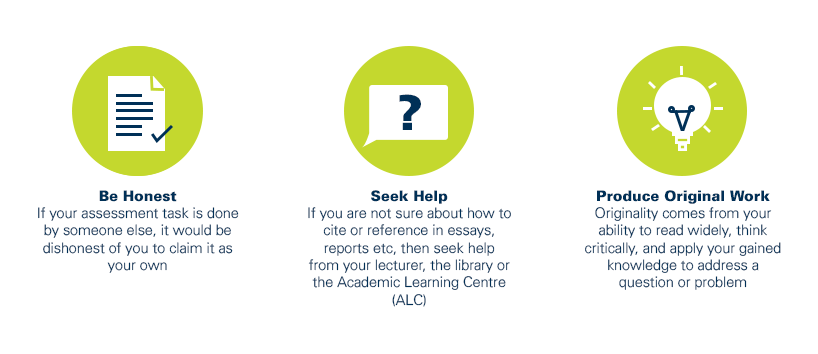
As a CQUniversity student you are expected to act honestly in all aspects of your academic work.
Any assessable work undertaken or submitted for review or assessment must be your own work. Assessable work is any type of work you do to meet the assessment requirements in the unit, including draft work submitted for review and feedback and final work to be assessed.
When you use the ideas, words or data of others in your assessment, you must thoroughly and clearly acknowledge the source of this information by using the correct referencing style for your unit. Using others’ work without proper acknowledgement may be considered a form of intellectual dishonesty.
Participating honestly, respectfully, responsibly, and fairly in your university study ensures the CQUniversity qualification you earn will be valued as a true indication of your individual academic achievement and will continue to receive the respect and recognition it deserves.
As a student, you are responsible for reading and following CQUniversity’s policies, including the Student Academic Integrity Policy and Procedure. This policy sets out CQUniversity’s expectations of you to act with integrity, examples of academic integrity breaches to avoid, the processes used to address alleged breaches of academic integrity, and potential penalties.
What is a breach of academic integrity?
A breach of academic integrity includes but is not limited to plagiarism, self-plagiarism, collusion, cheating, contract cheating, and academic misconduct. The Student Academic Integrity Policy and Procedure defines what these terms mean and gives examples.
Why is academic integrity important?
A breach of academic integrity may result in one or more penalties, including suspension or even expulsion from the University. It can also have negative implications for student visas and future enrolment at CQUniversity or elsewhere. Students who engage in contract cheating also risk being blackmailed by contract cheating services.
Where can I get assistance?
For academic advice and guidance, the Academic Learning Centre (ALC) can support you in becoming confident in completing assessments with integrity and of high standard.
What can you do to act with integrity?