Overview
Research Methods for Public Health explores the importance and relevance of research in public health, professional practice and human health more broadly. The unit emphasises the critical role of knowledge in evidence-based decision making and foundational research skills central to your practice and to real-world public health settings. In particular, you will develop an understanding of the ethical principles and practices in research as well as different research approaches, methodologies and methods, including data collection, analysis, and the development of research proposals. You will also advance your knowledge and skills in interpreting and critically appraising research articles and scientific literature.
Details
Pre-requisites or Co-requisites
There are no requisites for this unit.
Important note: Students enrolled in a subsequent unit who failed their pre-requisite unit, should drop the subsequent unit before the census date or within 10 working days of Fail grade notification. Students who do not drop the unit in this timeframe cannot later drop the unit without academic and financial liability. See details in the Assessment Policy and Procedure (Higher Education Coursework).
Offerings For Term 1 - 2026
Attendance Requirements
All on-campus students are expected to attend scheduled classes - in some units, these classes are identified as a mandatory (pass/fail) component and attendance is compulsory. International students, on a student visa, must maintain a full time study load and meet both attendance and academic progress requirements in each study period (satisfactory attendance for International students is defined as maintaining at least an 80% attendance record).
Recommended Student Time Commitment
Each 6-credit Postgraduate unit at CQUniversity requires an overall time commitment of an average of 12.5 hours of study per week, making a total of 150 hours for the unit.
Class Timetable
Assessment Overview
Assessment Grading
This is a graded unit: your overall grade will be calculated from the marks or grades for each assessment task, based on the relative weightings shown in the table above. You must obtain an overall mark for the unit of at least 50%, or an overall grade of 'pass' in order to pass the unit. If any 'pass/fail' tasks are shown in the table above they must also be completed successfully ('pass' grade). You must also meet any minimum mark requirements specified for a particular assessment task, as detailed in the 'assessment task' section (note that in some instances, the minimum mark for a task may be greater than 50%). Consult the University's Grades and Results Policy for more details of interim results and final grades.
All University policies are available on the CQUniversity Policy site.
You may wish to view these policies:
- Grades and Results Policy
- Assessment Policy and Procedure (Higher Education Coursework)
- Review of Grade Procedure
- Student Academic Integrity Policy and Procedure
- Academic Progression Policy and Procedure
- Student Refund and Credit Balance Policy and Procedure
- Complaints Policy and Procedure
- Information and Communications Technology Acceptable Use Policy and Procedure
This list is not an exhaustive list of all University policies. The full list of University policies are available on the CQUniversity Policy site.
- Discuss the significance of research in public health
- Locate appropriate literature relevant to public health issues
- Identify different research approaches, methodologies and methods
- Select suitable sampling strategies and appropriate methods for data analysis, interpretation and reporting
- Analyse ethical issues, frameworks, and practices underpinning the ethical conduct of research, including Indigenous Data Sovereignty, to reflect the rights and cultural responsiveness of study participants.
N/A
Alignment of Assessment Tasks to Learning Outcomes
| Assessment Tasks | Learning Outcomes | ||||
|---|---|---|---|---|---|
| 1 | 2 | 3 | 4 | 5 | |
| 1 - Online Quiz(zes) - 20% | |||||
| 2 - Written Assessment - 30% | |||||
| 3 - Written Assessment - 50% | |||||
Alignment of Graduate Attributes to Learning Outcomes
| Graduate Attributes | Learning Outcomes | ||||
|---|---|---|---|---|---|
| 1 | 2 | 3 | 4 | 5 | |
| 1 - Knowledge | |||||
| 2 - Communication | |||||
| 3 - Cognitive, technical and creative skills | |||||
| 4 - Research | |||||
| 5 - Self-management | |||||
| 6 - Ethical and Professional Responsibility | |||||
| 7 - Leadership | |||||
| 8 - First Nations Knowledges | |||||
| 9 - Aboriginal and Torres Strait Islander Cultures | |||||
Textbooks
There are no required textbooks.
IT Resources
- CQUniversity Student Email
- Internet
- Unit Website (Moodle)
All submissions for this unit must use the referencing style: American Psychological Association 7th Edition (APA 7th edition)
For further information, see the Assessment Tasks.
ekramul.hoque@cqu.edu.au
Week 1
Begin Date: 09 Mar 2026Module/Topic
Introduction to Research Methods
- Structure of the Unit PBHL28002 (Research Methods for Public Health)
- Introduction to the concept of research
- Historical perspectives on research
- Objectives and motivations for conducting research
- Types and approaches to research
- Research as a scientific method
- Importance of the research process
- Criteria of good research
Chapter
See the weekly Learning Activities and the e-Reading list in Moodle.
Events and Submissions/Topic
In addition to online lectures and resources, tutorials provide opportunities to complete individual and group activities and to further develop the skills and knowledge required for this Unit.
Week 2
Begin Date: 16 Mar 2026Module/Topic
Steps in Developing a Research Proposal
- Concept and features of a research proposal
- Needs and objectives of a research proposal
- Selecting and documenting a suitable research topic
- Searching for background information and reviewing the literature
- Identifying research gaps and formulating research questions
- Strategies for selecting an appropriate research paradigm and design
- Organising and planning a research project
Chapter
See the weekly Learning Activities and the e-Reading list in Moodle.
Events and Submissions/Topic
In addition to online lectures and resources, tutorials provide opportunities to complete individual and group activities and to further develop the skills and knowledge required for this Unit.
Week 3
Begin Date: 23 Mar 2026Module/Topic
Understanding and Defining a Research Problem
- Defining a research problem
- Understanding the needs for, and components of, a research problem
- Techniques for defining and selecting a research problem
- Developing the research problem through literature review and discussion
- Purpose and goals of a research problem
- Qualities of an effective research question
Chapter
See the weekly Learning Activities and the e-Reading list in Moodle.
Events and Submissions/Topic
In addition to online lectures and resources, tutorials provide opportunities to complete individual and group activities and to further develop the skills and knowledge required for this Unit.
Week 4
Begin Date: 30 Mar 2026Module/Topic
Critical Review of Research Literature for Evidence‑Informed Practice
- Defining and discussing the purpose of evidence-based practice (EBP)
- Exploring the steps of evidence-based practice using the Five-As model
- Converting information into answerable questions using the PICO framework
- Understanding basic principles of literature searching
- Searching for evidence across different types of literatures and understanding their hierarchy
- Becoming acquainted with and exploring information in discipline-based databases
- Assessing the quality of information by critical review of the literature
- Understanding the need for a literature review and the steps involved in conducting one.
Chapter
See the weekly Learning Activities and the e-Reading list in Moodle.
Events and Submissions/Topic
In addition to online lectures and resources, tutorials provide opportunities to complete individual and group activities and to further develop the skills and knowledge required for this Unit.
Week 5
Begin Date: 06 Apr 2026Module/Topic
Research Methodology and Methods: Quantitative and Qualitative
- Defining types of research study designs and criteria for selecting them
- Understanding the differences between qualitative and quantitative research designs
- Exploring quantitative research study designs and their applications
- Examining the merits and limitations of different study designs
- Understanding qualitative research study designs and their key characteristics
- Discussing the various types of qualitative research study designs
- Introducing mixed‑methods research designs and their uses
Chapter
See the weekly Learning Activities and the e-Reading list in Moodle.
Events and Submissions/Topic
In addition to online lectures and resources, tutorials provide opportunities to complete individual and group activities and to further develop the skills and knowledge required for this Unit.
Online Quiz 1 Due: Week 5 Friday (10 April 2026) 6:00 pm AEST
Week 6
Begin Date: 13 Apr 2026Module/Topic
Sampling Strategies and Methods in Research
- Discussing sampling and sampling designs
- Understanding the concepts of population, sampling frames, and selecting a sample from a population
- Exploring the importance of generalisability and sampling errors, and their relationship with reliability and validity
- Discussing probability and non‑probability sampling methods
- Determining sample size and understanding its relationship with Type I and Type II errors
Chapter
See the weekly Learning Activities and the e-Reading list in Moodle.
Events and Submissions/Topic
In addition to online lectures and resources, tutorials provide opportunities to complete individual and group activities and to further develop the skills and knowledge required for this Unit.
Vacation Week
Begin Date: 20 Apr 2026Module/Topic
Vacation week: no teaching sessions
Chapter
Events and Submissions/Topic
Week 7
Begin Date: 27 Apr 2026Module/Topic
Variables and Measurements in Health Research
- Describing different types of variables in health data
- Discussing data distributions and methods of data presentation
- Identifying common measures used for frequency data
- Discussing the difference between prevalence and incidence
- Exploring different methods of risk calculation
- Explaining data standardisation and approaches to comparing data
Chapter
See the weekly Learning Activities and the e-Reading list in Moodle.
Events and Submissions/Topic
In addition to online lectures and resources, tutorials provide opportunities to complete individual and group activities and to further develop the skills and knowledge required for this Unit.
Deconstructed Research Report (DRR) Due: Week 7 Friday (1 May 2026) 6:00 pm AEST
Week 8
Begin Date: 04 May 2026Module/Topic
Methods of Data Collection, Management, and Validation
- Describing the need for data collection in research projects
- Identifying types of data collection methods and their merits and limitations
- Discussing data distribution and methods of data presentation
- Exploring different data collection processes
- Understanding data collection tools used in research and their merits and limitations
- Learning how to develop questionnaires for data collection and administer them effectively
- Recognising different type of question formats and the use of appropriate units when recording data
Chapter
See the weekly Learning Activities and the e-Reading list in Moodle.
Events and Submissions/Topic
In addition to online lectures and resources, tutorials provide opportunities to complete individual and group activities and to further develop the skills and knowledge required for this Unit.
Week 9
Begin Date: 11 May 2026Module/Topic
Quantitative Data Processing and Analysis
- Concepts of statistics and biostatistics
- Basic terms and major divisions of statistics
- Types of statistical data and variables
- Data presentation in descriptive statistics
- Parameters of frequency distribution
- Measures of central tendency, dispersion, and variation
- Standard statistical measures and measures of relationship (correlations)
Chapter
See the weekly Learning Activities and the e-Reading list in Moodle.
Events and Submissions/Topic
In addition to online lectures and resources, tutorials provide opportunities to complete individual and group activities and to further develop the skills and knowledge required for this Unit.
Online Quiz 2 Due: Week 9 Friday (15 May 2026) 6:00 pm AEST
Week 10
Begin Date: 18 May 2026Module/Topic
Qualitative data Processing and Analysis
- Understanding qualitative data analysis
- Identifying types and approaches to qualitative data analysis
- Outlining the steps involved in qualitative data analysis
- Creation of categories in qualitative analysis
- Conducting thematic analysis
- Searching for and refining themes
Chapter
See the weekly Learning Activities and the e-Reading list in Moodle.
Events and Submissions/Topic
In addition to online lectures and resources, tutorials provide opportunities to complete individual and group activities and to further develop the skills and knowledge required for this Unit.
Week 11
Begin Date: 25 May 2026Module/Topic
Ethics in Health Research
- Defining ethics
- Understanding the historical context of current ethical principles
- Appreciating the importance of informed consent
- Understanding key ethical principles and theories
- Exploring the application and practical relevance of biomedical ethics principles in health research
Chapter
See the weekly Learning Activities and the e-Reading list in Moodle.
Events and Submissions/Topic
In addition to online lectures and resources, tutorials provide opportunities to complete individual and group activities and to further develop the skills and knowledge required for this Unit.
Week 12
Begin Date: 01 Jun 2026Module/Topic
Research Report Writing, Presentation, and Communication
- Learning how to write a research report
- Becoming familiar with the writing process, audience awareness, tone, and writing style
- Organising ideas and identifying additional academic resources
- Understanding how to avoid plagiarism
- Knowing the components and steps involved in preparing a research report
Chapter
See the weekly Learning Activities and the e-Reading list in Moodle.
Events and Submissions/Topic
In addition to online lectures and resources, tutorials provide opportunities to complete individual and group activities and to further develop the skills and knowledge required for this Unit.
Research Project Proposal (RPP) Due: Week 12 Friday (5 June 2026) 6:00 pm AEST
Exam Week
Begin Date: 08 Jun 2026Module/Topic
Chapter
Events and Submissions/Topic
Online Quiz 3 Due: (Exam) Week 13 Friday (12 June 2026) 6:00 pm AEST
Vacation/Exam Week
Begin Date: 15 Jun 2026Module/Topic
Chapter
Events and Submissions/Topic
This unit is offered at Melbourne, Sydney and online:
- Lecturer (Melbourne and online): Dr Ekramul Hoque (ekramul.hoque@cqu.edu.au) - Unit Coordinator
- Lecturer (Sydney): Dr Lal Rawal (l.rawal@cqu.edu.au)
For any inquiries regarding this unit, please contact the Unit Coordinator
Class schedules:
- Melbourne (On-campus): All classes are scheduled on Fridays
- Online: All online classes are scheduled on Wednesdays from 7:00 pm to 9:00 pm
- Sydney (On-campus): All classes are scheduled on Mondays
Holiday replacement classes:
Week-4 Friday (3 April 2026); and Week-5 Monday (6 April 2026) are public holidays.
- Melbourne on-campus students affected by this are advised to join the Week-4 online Zoom class on Wednesday, 1 April 2026, from 7:00 pm to 9.00 pm
- Sydney on-campus students affected by this are advised to join the Week-5 online Zoom class on Wednesday, 8 April 2026, from 7:00 pm to 9.00 pm
The Zoom class link will be made available to the relevant on‑campus students closer to the session date.
1 Online Quiz(zes)
Assessment 1 consists of a series of individual quizzes. Each quiz includes multiple‑choice questions and/or matching-questions. The Quizzes provide balanced coverage of the unit content, and each quiz focuses on the concepts and materials introduced in the previous week(s).
There are three quizzes in total. The number of questions in each quiz is appropriate for the weighting and the time allowed. Together, these quizzes provide a meaningful measure of students progress and achievement of the unit learning outcomes.
Quiz Schedule and Weighting
There are Three quizzes to complete; each quiz will be marked out of 10, with the overall final marks worth 20% of the grade.
Quiz 1:
- Covers content from Weeks 1-4, including academic learning materials relevant to research skills.
- Duration: 30 minutes
- Due: Week-5, Friday (10 April 2026) 6:00pm
Quiz 2:
- Covers content from Weeks 5-8
- Duration: 30 minutes
- Due: Week-9, Friday (15 May 2026) 6:00pm
Quiz 3:
- Covers content from Weeks 9-12
- Duration: 30 minutes
- Due: Week-13, Friday (12 June 2026) 6:00pm
Availability Window:
Each quiz opens at 00:00 AEDT on the final Friday of the relevant content week and closes at 18:00 AEDT on the Friday of the due week. For example, the quiz due in Week 5 (covering Weeks 1–4) opens on the Friday of Week 4 and closes on the Friday of Week 5 at 6:00 pm. You will receive your score and feedback once the quiz has closed for the entire student cohort.
Important Notes:
STUDENTS MUST NOT USE GENERATIVE AI TO COMPLETE THESE QUIZZES
The 72 Hour Grace Period does not apply to this assessment.
Respective quiz window will open on the Fridays prior to their due dates. Quizzes are due by 6:00 PM (AEDT) on the Friday of Weeks 5 (10 April), 9 (15 May), and 13 (12 May).
Students will receive their score and feedback on the answers after the quiz has closed to the student cohort.
Student responses must match the pre‑set correct answer stored in the system for each quiz item. All quizzes are automatically marked to ensure consistency, accuracy, and fairness for every student.
- Discuss the significance of research in public health
- Identify different research approaches, methodologies and methods
- Select suitable sampling strategies and appropriate methods for data analysis, interpretation and reporting
- Analyse ethical issues, frameworks, and practices underpinning the ethical conduct of research, including Indigenous Data Sovereignty, to reflect the rights and cultural responsiveness of study participants.
2 Written Assessment
Assessment 2 Overview
Assessment 2 is an individual written assignment for PBHL28002. It is a 1,000 (±10.00%) words Deconstructed Research Report (DRR), due on Friday (1 May 2026) 6:00 pm. The DRR contributes 30% to the overall mark for this unit.
The Assessment 2 Deconstructed Research Report (DRR) Information Booklet explains the purpose of the major written assessment, how to complete it, and the resources required.
The task is to explain the research presented in a published scientific article to a casual, non‑academic reader using professional, accessible, and non‑technical language. You are required to select one article from the list provided on the Unit Moodle Assessment 2 site. You will then deconstruct your chosen article and explain:
- The theories, aims, objectives, hypotheses, concepts, or ideas that underpin the article.
- The background to the primary DRR article, using additional research articles to elaborate on the context of the study.
- Why the study was conducted (rationale).
- How the study was conducted (methods).
- What the findings were (results) and how they can be applied in real‑world settings (implications).
- How the findings extend previous research or have informed subsequent research (discussion).
- Potential future avenues for research (further research directions).
The DRR must use accurate APA 7.0 referencing, including correct in‑text citations and a full reference list. Use the marking criteria to understand the performance levels and review your work carefully before submitting. Prioritise clarity, accuracy, and well‑integrated research throughout your writing to meet academic expectations.
Important Note:
You are responsible for keeping a backup copy of every assessment and any materials used to complete it. If a submission becomes corrupted, incorrectly uploaded, or lost, you may be asked to provide the backup. All submitted work may be checked electronically or by other means to detect breaches of academic integrity, including plagiarism, collusion, and contract cheating. You must act honestly and uphold academic integrity, as CQUniversity treats all breaches seriously. This unit uses a universal submission time of 6:00 pm AEDT/AEST.
GenAI Scale 2 is acceptable for use in PBHL28002 Assessment Task (AT) 2. More information on Generative AI Assessment Scale is available on your unit Moodle site.
Week 7 Friday (1 May 2026) 6:00 pm AEST
Online
Week 9 Friday (15 May 2026)
Assessments returned prior to certification of grades
These criteria outline what is expected for each component of the DRR and how your work will be assessed. Use it alongside the marking criteria to guide the structure, depth, and clarity of your submission.
1. Theory and Background (Weight: 22.00%)
a. Explains the major theories, concepts, or ideas underpinning the primary article in a non-technical and accessible manner, using appropriate academic sources, e.g., peer-reviewed journal articles or textbooks (12.00%)
b. Identifies, integrates, and cites at least two relevant journal articles to provide background, and rationale for the primary article (10.00%)
2. Primary Deconstructed Research Report Article (Weight: 38.00%)
a. Explains the aims and where applicable, hypotheses of the primary article in a succinct, accessible, and non-technical manner (5.00%)
b. Describes key important information about the participants, procedures, and methodology in a succinct, accessible, and non-technical manner (15.00%)
a. Explains the findings of the primary article in a clear, non‑technical manner, using language accessible to a general, non‑academic audience (18.00%)
3. Discussion, Implications, Real-World application (Weight: 30.00%)
a. Explains how the findings of the primary article extend past research and/or apply to other research. The explanation must reference at least one additional published journal article beyond the primary DRR article (15.00%)
b. Identifies practical implications of the primary article and translates them into at least one well‑conceived real‑world scenario or application (10.00%)
c. Provides at least one suggestion for future research that logically extends from the findings of the primary article or the broader research area (5.00%)
4. Academic Writing and Referencing (APA7.0) (Weight: 10.00%)
a. Demonstrates clear academic writing, with appropriate sentence structure and grammar consistent with Australian English conventions (5.00%)
b. All sources are referenced accurately according to APA7.0 referencing guidelines (5.00%)
A detailed grade distribution for each of these criteria is available from the Moodle site.
- Discuss the significance of research in public health
- Locate appropriate literature relevant to public health issues
- Identify different research approaches, methodologies and methods
- Select suitable sampling strategies and appropriate methods for data analysis, interpretation and reporting
3 Written Assessment
Assessment 3 Overview
Assessment 3 is an individual written assignment and the third task in the PBHL28002 assessment sequence. It is a 1800 (±10.00%) words Research Project Proposal (RPP) due on Friday (5 June 2026) 6:00 pm. The RPP contributes 50% of the overall unit grade. The Assessment 3 Information Booklet, available on the Assessment 3 Moodle site, outlines the purpose of the task, how to approach it, and the resources available to support you.
The RPP provides you experience in designing a research study and writing a formal proposal. Its purpose is to justify the need to investigate a research problem and to outline the practical steps for conducting the study. A strong proposal demonstrates, through a focused and well-synthesised literature review, that a genuine research need exists. It also presents a clear methodology aligned with disciplinary standards and includes anticipated outcomes and potential benefits of the study.
Your proposal should include all the key elements required to design a complete research study. This allows readers to assess the validity, feasibility, and usefulness of the proposed study. However, because this is proposal, no data collection or findings (results) are expected or required.
A list of research topics will be provided. You must select a topic from this list. If you wish to pursue a different topic, you must consult the Unit Coordinator to confirm its suitability.
This unit uses APA 7.0 as the required referencing style. Ensure your assessment follows APA formatting conventions, with support available through Moodle and the Academic Learning Centre (ALC).
A detailed marking criteria outlining the standards used to assess your work will be provided. Markers will award grades based on these requirements. You should review your proposal against the criteria to ensure each component is fully and appropriately addressed.
Important Note:
You are responsible for keeping a backup copy of every assessment and any materials used to complete it. If a submission becomes corrupted, incorrectly uploaded, or lost, you may be asked to provide the backup. All submitted work may be checked electronically or by other means to detect breaches of academic integrity, including plagiarism, collusion, and contract cheating. You must act honestly and uphold academic integrity, as CQUniversity treats all breaches seriously. This unit uses a universal submission time of 6:00 pm AEDT/AEST.
GenAI Scale 2 is acceptable for use in PBHL28002 Assessment Task (AT) 3. More information on Generative AI Assessment Scale is available on your unit Moodle site.
Week 12 Friday (5 June 2026) 6:00 pm AEST
Submit online
Vacation/Exam Week Friday (19 June 2026)
These assessment criteria outline what is expected for each component of the Research Project Report (RPP) and how your work will be assessed. Use it alongside the marking criteria to guide the structure, depth, and clarity of your submission. Broadly, you will be assessed on:
Abstract (Weighting 10.00%):
- Abstract includes all key elements: brief introduction, aims/objectives/ hypotheses, methods overview, expected results, and implications.
- Highly concise, clear, and well‑structured.
Literature Review (Weighting 30.00%):
- Specific, well‑formulated research questions or hypotheses.
- Directly and logically connected to the literature review.
Research Questions and Hypotheses (Weighting 10.00%):
- Very comprehensive coverage of relevant literature.
- Purpose of the study is clearly articulated.
- Excellent, explicit connection between reviewed literature and study purpose.
Methods (Weighting 30.00%):
- Methods section is complete, clear, and well‑structured.
- Includes all key elements: participants/data, conditions, materials, procedures, analysis plan, and ethical considerations.
Implications and Conclusion (Weighting 10.00%):
- Broad, well‑reasoned implications directly connected to the proposed study.
- Includes both theoretical and practical implications discussed
Referencing (Weighting 5.00%):
- Referencing is excellent.
- Correctly used APA 7.0 style
- No errors in in‑text citations or reference list.
Writing, Grammar and Spelling (Weighting 5.00%):
- No grammar, punctuation, or spelling errors.
- Writing is well edited and clearly proofread.
A detailed grade distribution for each of these criteria is available from the Moodle site.
- Discuss the significance of research in public health
- Locate appropriate literature relevant to public health issues
- Identify different research approaches, methodologies and methods
- Select suitable sampling strategies and appropriate methods for data analysis, interpretation and reporting
- Analyse ethical issues, frameworks, and practices underpinning the ethical conduct of research, including Indigenous Data Sovereignty, to reflect the rights and cultural responsiveness of study participants.
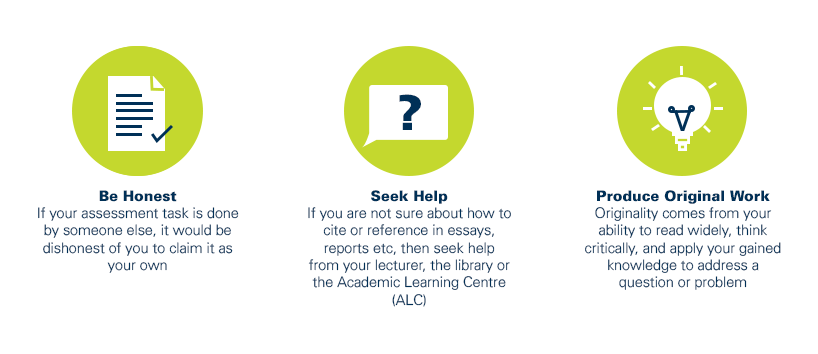
As a CQUniversity student you are expected to act honestly in all aspects of your academic work.
Any assessable work undertaken or submitted for review or assessment must be your own work. Assessable work is any type of work you do to meet the assessment requirements in the unit, including draft work submitted for review and feedback and final work to be assessed.
When you use the ideas, words or data of others in your assessment, you must thoroughly and clearly acknowledge the source of this information by using the correct referencing style for your unit. Using others’ work without proper acknowledgement may be considered a form of intellectual dishonesty.
Participating honestly, respectfully, responsibly, and fairly in your university study ensures the CQUniversity qualification you earn will be valued as a true indication of your individual academic achievement and will continue to receive the respect and recognition it deserves.
As a student, you are responsible for reading and following CQUniversity’s policies, including the Student Academic Integrity Policy and Procedure. This policy sets out CQUniversity’s expectations of you to act with integrity, examples of academic integrity breaches to avoid, the processes used to address alleged breaches of academic integrity, and potential penalties.
What is a breach of academic integrity?
A breach of academic integrity includes but is not limited to plagiarism, self-plagiarism, collusion, cheating, contract cheating, and academic misconduct. The Student Academic Integrity Policy and Procedure defines what these terms mean and gives examples.
Why is academic integrity important?
A breach of academic integrity may result in one or more penalties, including suspension or even expulsion from the University. It can also have negative implications for student visas and future enrolment at CQUniversity or elsewhere. Students who engage in contract cheating also risk being blackmailed by contract cheating services.
Where can I get assistance?
For academic advice and guidance, the Academic Learning Centre (ALC) can support you in becoming confident in completing assessments with integrity and of high standard.
What can you do to act with integrity?