Overview
This unit builds on your earlier studies in the foundations of research and introduces epidemiological and statistical principles, concepts, and skills that form the foundation of public health and evidence-based practice. Epidemiology is the study of the distribution and determinants of health-related states/events in specified populations, and the application of study findings in the prevention and control of health problems in the community. It addresses the 5 Ws: What (health states/events), Who (people), Where (places), When (time), and Why/How (causes, risk factors, and modes of disease transmission) of health-related states (not just diseases) in populations. The unit provides an introduction to the analysis and interpretation of numerical data for epidemiological study and reporting. You will also learn essential statistical concepts and methods to estimate the magnitude of disease risk in the community, which forms the basis for public health research, practice, and decision-making processes. This unit will focus on ethical principles used to maintain and protect the Data Sovereignty of First Nations People and other health research populations. Upon completion of this unit, you will be introduced to knowledge translation frameworks and consider their utility and guidance for effective dissemination of epidemiological findings, disease prevention, control, and improvement in health outcomes in the population.
Details
Pre-requisites or Co-requisites
Pre-requisites: PBHL28002 Research Methods for Public Health or PBHL20002 Systems Thinking in Public Health.
Important note: Students enrolled in a subsequent unit who failed their pre-requisite unit, should drop the subsequent unit before the census date or within 10 working days of Fail grade notification. Students who do not drop the unit in this timeframe cannot later drop the unit without academic and financial liability. See details in the Assessment Policy and Procedure (Higher Education Coursework).
Offerings For Term 1 - 2026
Attendance Requirements
All on-campus students are expected to attend scheduled classes - in some units, these classes are identified as a mandatory (pass/fail) component and attendance is compulsory. International students, on a student visa, must maintain a full time study load and meet both attendance and academic progress requirements in each study period (satisfactory attendance for International students is defined as maintaining at least an 80% attendance record).
Recommended Student Time Commitment
Each 6-credit Postgraduate unit at CQUniversity requires an overall time commitment of an average of 12.5 hours of study per week, making a total of 150 hours for the unit.
Class Timetable
Assessment Overview
Assessment Grading
This is a graded unit: your overall grade will be calculated from the marks or grades for each assessment task, based on the relative weightings shown in the table above. You must obtain an overall mark for the unit of at least 50%, or an overall grade of 'pass' in order to pass the unit. If any 'pass/fail' tasks are shown in the table above they must also be completed successfully ('pass' grade). You must also meet any minimum mark requirements specified for a particular assessment task, as detailed in the 'assessment task' section (note that in some instances, the minimum mark for a task may be greater than 50%). Consult the University's Grades and Results Policy for more details of interim results and final grades.
All University policies are available on the CQUniversity Policy site.
You may wish to view these policies:
- Grades and Results Policy
- Assessment Policy and Procedure (Higher Education Coursework)
- Review of Grade Procedure
- Student Academic Integrity Policy and Procedure
- Academic Progression Policy and Procedure
- Student Refund and Credit Balance Policy and Procedure
- Complaints Policy and Procedure
- Information and Communications Technology Acceptable Use Policy and Procedure
This list is not an exhaustive list of all University policies. The full list of University policies are available on the CQUniversity Policy site.
- Examine foundational level concepts related to epidemiology and statistics, and their application in public health
- Apply epidemiological methods and measures to identify and document the occurrence and patterns of disease in a public health context, and their relationship with determinants of health
- Differentiate between social and traditional epidemiology, and between endemic, epidemic, and pandemic diseases, relating them to population and environmental factors
- Apply statistical methods, including descriptive and inferential statistics, in the analysis of epidemiological data
- Critically appraise and interpret epidemiological studies, including study methods, analyses, outcomes, and their relevance to public health practice
- Apply ethical principles in population health research, including Indigenous Data Sovereignty, to uphold the rights and cultural responsiveness of study participants when collecting, analysing, and interpreting epidemiological data.
Not applicable
Alignment of Assessment Tasks to Learning Outcomes
| Assessment Tasks | Learning Outcomes | |||||
|---|---|---|---|---|---|---|
| 1 | 2 | 3 | 4 | 5 | 6 | |
| 1 - Online Test - 30% | ||||||
| 2 - Online Test - 20% | ||||||
| 3 - Written Assessment - 50% | ||||||
Alignment of Graduate Attributes to Learning Outcomes
| Graduate Attributes | Learning Outcomes | |||||
|---|---|---|---|---|---|---|
| 1 | 2 | 3 | 4 | 5 | 6 | |
| 1 - Knowledge | ||||||
| 2 - Communication | ||||||
| 3 - Cognitive, technical and creative skills | ||||||
| 4 - Research | ||||||
| 5 - Self-management | ||||||
| 6 - Ethical and Professional Responsibility | ||||||
| 7 - Leadership | ||||||
| 8 - First Nations Knowledges | ||||||
| 9 - Aboriginal and Torres Strait Islander Cultures | ||||||
Textbooks
Essential Epidemiology: An Introduction for Students and Health Professionals
- Edition: 5th (2024)
- Authors: Penelope Webb, Chris Bain and Andrew Page
- Cambridge University Press
- ISBN: 978-1-009-41536-1; https://doi.org/DOI: 10.1017/9781009415323
Please make eBook of Essential Epidemiology: An Introduction for Students and Health Professionals, available at the library for students to access.
Statistics translated: a step-by-step guide to analyzing and interpreting data
- Edition: 2nd (2021)
- Authors: Steven R. Terrell
- The Guilford Press
- ISBN: 9781462545407
eBook available in the CQU library
IT Resources
- CQUniversity Student Email
- Internet
- Unit Website (Moodle)
All submissions for this unit must use the referencing style: American Psychological Association 7th Edition (APA 7th edition)
For further information, see the Assessment Tasks.
ekramul.hoque@cqu.edu.au
Week 1
Begin Date: 09 Mar 2026Module/Topic
Introduction to Epidemiology
- Introduction to the Unit
- Structure of Unit PBHL29005 (Epidemiology and Statistics)
- Introduction to Concept and Scope of Epidemiology
- Historical Perspectives of Epidemiology
- Purpose and Applications of Epidemiology
- Disease Concepts and the Epidemiological Triad/Triangle
- Principles of Social Epidemiology
- Socio-Ecological Framework for Health and Disease risk
Chapter
See weekly weekly learning activities and e-Reading list in Moodle.
Events and Submissions/Topic
In addition to weekly lectures and resources, tutorials provide the opportunity to complete individual and group activities; and build your skills and knowledge base related to Unit content.
Week 2
Begin Date: 16 Mar 2026Module/Topic
Epidemiological Measures
- Measures of Morbidity: Incidence, Prevalence, and Attack Rates
- Measures of Mortality: Mortality rates, Case-Fatality Rates
- Data Standardisation: Direct, Indirect, Proportional Mortality
- Measures of Disease Burden in Population Health: Years of Potential Life Lost (YPLL)
Chapter
See weekly weekly learning activities and e-Reading list in Moodle.
Events and Submissions/Topic
In addition to weekly lectures and resources, tutorials provide the opportunity to complete individual and group activities; and build your skills and knowledge base related to Unit content.
Week 3
Begin Date: 23 Mar 2026Module/Topic
Epidemiological Study Designs I: Descriptive and Analytical Studies
- Case studies and Case Series
- Ecological Studies
- Cross Sectional and Longitudinal Study Designs
- Cohort and Case-Control Studies
- Attributable Risk and Population Attributable Risk
- Experimental Study Designs, including Randomised Control Trials (RCTs)
Chapter
See weekly weekly learning activities and e-Reading list in Moodle.
Events and Submissions/Topic
In addition to weekly lectures and resources, tutorials provide the opportunity to complete individual and group activities; and build your skills and knowledge base related to Unit content.
Week 4
Begin Date: 30 Mar 2026Module/Topic
Epidemiological Study Designs II: Screening and Diagnostic Tests
- Key Aspects of Screening and Diagnostic Tests
- Requirements for an Effective Screening Program
- Validity and Reliability of Screening and Diagnostic Tests
- Measures of Test Validity, Sensitivity and Specificity
- Positive and Negative Predictive Values
- Measures of Test Reliability: Percent Agreement and Kappa
Chapter
See weekly weekly learning activities and e-Reading list in Moodle.
Events and Submissions/Topic
In addition to weekly lectures and resources, tutorials provide the opportunity to complete individual and group activities; and build your skills and knowledge base related to Unit content.
Week 5
Begin Date: 06 Apr 2026Module/Topic
Sampling Methods and Data Collection
- Reasons for Using Sampling in Research
- Types of Sampling Methods
- Validity and Reliability in Sampling Procedures
- Requirements for Determining Sample Size
- Procedures of Effective Data Collection
Chapter
See weekly weekly learning activities and e-Reading list in Moodle.
Events and Submissions/Topic
In addition to weekly lectures and resources, tutorials provide the opportunity to complete individual and group activities; and build your skills and knowledge base related to Unit content.
Week 6
Begin Date: 13 Apr 2026Module/Topic
Reliability, Validity and Biases in Data
- Concept of Bias in Epidemiological Research
- Influence Bias on Estimates in Epidemiological Studies
- Methods to Prevent Bias
- Strategies to Address or Minimise Bias
- Importance of Maintaining a Critical and Analytical Mindset.
Chapter
See weekly weekly learning activities and e-Reading list in Moodle.
Events and Submissions/Topic
In addition to weekly lectures and resources, tutorials provide the opportunity to complete individual and group activities; and build your skills and knowledge base related to Unit content.
Vacation Week
Begin Date: 20 Apr 2026Module/Topic
Vacation Week: no teaching session.
Chapter
Events and Submissions/Topic
Week 7
Begin Date: 27 Apr 2026Module/Topic
Infectious Disease Epidemiology: Concepts of Disease Transmission
- Key Concepts of Infectious Disease Transmission
- Patterns of Disease Occurrence by Pathogen Type
- Modes of Infection and Transmission Cycles
- Epidemiological Characteristics of Infectious Diseases
- Natural history of Infectious Disease Propagation
- Stages of Infectious Disease Occurrence
- Concept and Application of Epidemiological Triad/Triangle
- Epidemic Patterns and Factors Influencing Infectious Disease Occurrence
Chapter
See weekly weekly learning activities and e-Reading list in Moodle.
Events and Submissions/Topic
In addition to weekly lectures and resources, tutorials provide the opportunity to complete individual and group activities; and build your skills and knowledge base related to Unit content.
Week 8
Begin Date: 04 May 2026Module/Topic
Introduction to (Bio)statistics: Descriptive Statistics
- Basic Concepts and Principles of Biostatistics
- Types and Classification of Variables
- Frequency Distribution of Data
- Measures of Data Distribution and Data Dispersion
- z-Score Distributions and their Use in Health-Care Decision-Making
- Correlations Between Variables
Chapter
See weekly weekly learning activities and e-Reading list in Moodle.
Events and Submissions/Topic
In addition to weekly lectures and resources, tutorials provide the opportunity to complete individual and group activities; and build your skills and knowledge base related to Unit content.
Short Answer Questions on Epidemiological Concepts Due: Week 8 Friday (8 May 2026) 6:00 pm AEST
Week 9
Begin Date: 11 May 2026Module/Topic
Probability and Hypothesis Testing: Inferential Statistics
- Concepts Probability and the Normal Curve Model
- Confidence Intervals and Principles of Hypothesis Testing
- Types of Parametric Statistical Tests
- Types of Non-Parametric Statistical Tests
- Select of Appropriate Statistical Tests based on Data Type and Study Design
Chapter
See weekly weekly learning activities and e-Reading list in Moodle.
Events and Submissions/Topic
In addition to weekly lectures and resources, tutorials provide the opportunity to complete individual and group activities; and build your skills and knowledge base related to Unit content.
Week 10
Begin Date: 18 May 2026Module/Topic
Statistical data analysis in SPSS: Practical Tutorial Session
- Creation and structure of an SPSS Data File
- Data Manipulation and Management in SPSS
- Descriptive data analysis in SPSS
- Data Visualisation using SPSS: Graphs and Charts
- Correlation Analyses in SPSS
- Non-Parametric Statistical Tests in SPSS
- Parametric Statistical Tests in SPSS
Chapter
See weekly weekly learning activities and e-Reading list in Moodle.
Events and Submissions/Topic
In addition to weekly lectures and resources, tutorials provide the opportunity to complete individual and group activities; and build your skills and knowledge base related to Unit content.
Week 11
Begin Date: 25 May 2026Module/Topic
Critical Appraisal in Epidemiology: An Evidence-Based Practice Approach
- Principles of Critical Appraisal and its Importance in Evidence-Based Practice
- Reliability and Relevance of Published Literature
- Simple Association and Causal Association in Disease Occurrence
- Hill’s Criteria for Causality
- Relevance of Published Research to Public Health Practice and Decision-Making Process
Chapter
See weekly weekly learning activities and e-Reading list in Moodle.
Events and Submissions/Topic
In addition to weekly lectures and resources, tutorials provide the opportunity to complete individual and group activities; and build your skills and knowledge base related to Unit content.
Short Answer Questions on Statistical Data Analysis Due: Week 11 Friday (29 May 2026) 6:00 pm AEST
Week 12
Begin Date: 01 Jun 2026Module/Topic
This week, students are expected to work on Assessment 3, which is due on Friday of this week (5 June 2026, 6:00PM).
Chapter
See weekly weekly learning activities and e-Reading list in Moodle.
Events and Submissions/Topic
In addition to weekly lectures and resources, tutorials provide the opportunity to complete individual and group activities; and build your skills and knowledge base related to Unit content.
Critical appraisal of an epidemiological research article Due: Week 12 Friday (5 June 2026) 6:00 pm AEST
Exam Week
Begin Date: 08 Jun 2026Module/Topic
No final exam for this unit.
Chapter
Events and Submissions/Topic
Vacation/Exam Week
Begin Date: 15 Jun 2026Module/Topic
Chapter
Events and Submissions/Topic
This unit is offered at Melbourne, Sydney and online:
- Lecturer (Melbourne and online): Dr Ekramul Hoque (ekramul.hoque@cqu.edu.au) - Unit Coordinator
- Lecturer (Sydney): Dr Tomas Megalaa (t.megalaa@cqu.edu.au)
For any inquiries regarding this unit, please contact the Unit Coordinator
Class schedules:
- Melbourne (On-campus): All classes are scheduled on Mondays and Tuesdays, except in Week 10
- Online: All online classes are scheduled on Tuesdays from 7:00 pm to 9:00 pm
- Sydney (On-campus): All classes are scheduled on Wednesdays, except in Week 10
Holiday replacement classes:
Week-5 Monday (6 April 2026) is a public holiday.
Melbourne on-campus students affected by this are advised to join the Week-5 online Zoom class on Tuesday, 7 April 2026, from 7:00 pm to 9.00 pm
The Zoom class link will be made available to the relevant on‑campus students closer to the session date.
1 Online Test
Assessment Overview
This individual assessment is designed to evaluate your understanding of key concepts used in epidemiological investigation and their application in public health practice. It assesses your ability to distinguish different measures of disease frequency, understand their association with determinant factors, apply principles of sampling and data validity, and interpret epidemiological information in real-world public health contexts.
Assessment Format & Structure
- The assessment questions will be available in Moodle as a softcopy Workbook Word format.
- It will consist of five short-answer questions, requiring critical thinking, data interpretation, and application of epidemiological concepts.
- The total marks available for this assessment are 50 marks.
- The assessment will be available from Friday, 1 May 2026 (Week 7) and is due on Friday, 8 May 2026 (Week 8) at 6:00 pm.
- Please download the softcopy Workbook, record your response spaces provided beneath each question, and submit the completed Workbook in Moodle.
Scope of Assessment
The assessment covers content from Weeks 1 to 7, focusing on fundamental epidemiological principles, including:
Epidemiological Measures:
- Measures of frequency: cumulative incidence, incidence rate, point and period prevalence
- Measures of mortality, morbidity and case fatality, and data standardisation
Measures of Association:
- Relationship between exposure and outcomes
- Calculation and interpretation of risk ratios, rate ratios, odds ratios, measure of impacts
Epidemiological study designs:
- Characteristics of descriptive and analytical quantitative study designs
- Associate measures of association
Population data distribution, presentation and analysis:
- Distribution of data into exposure and outcome groups
- Conducting appropriate analyses, explaining effects, and interpreting findings.
Sampling process and data validity:
- Identification of sampling strategy and procedures
- Assessment of data validity, representativeness, and generalisability
Preparation & Study Recommendations
To ensure you are well-prepared:
- Engage with Weekly Content: Review lecture materials, tutorials, readings, and discussions from Weeks 1–7.
- Review Quizzes and Activities: Revisit previous quizzes and learning activities to reinforce key concepts.
- Seek Clarification: If you have questions, contact your lecturer or participate in the discussion forums.
Important Note:
You are responsible for keeping a backup copy of every assessment and any materials used to complete it. If a submission becomes corrupted, incorrectly uploaded, or lost, you may be asked to provide the backup. All submitted work may be checked electronically or by other means to detect breaches of academic integrity, including plagiarism, collusion, and contract cheating. You must act honestly and uphold academic integrity, as CQUniversity treats all breaches seriously. This unit uses a universal submission time of 6:00 pm AEDT/AEST.
The 72 Hour Grace Period does not apply to this assessment.
Please refer to the Level of Generative AI Use guideline provided on your Moodle site for information on the acceptable and unacceptable use of generative AI in this unit.
Week 8 Friday (8 May 2026) 6:00 pm AEST
Assessment 1 online tests window will open on 1 May (Friday) 00:00 AM and will close on 8 May (Friday) 2026 at 6:00 PM
Week 10 Friday (22 May 2026)
Students will receive their grade and feedback on the assessment two weeks following submission.
- Marks will be allocated according to the weighting of each short-answer questions and its component parts.
- A set of requirements align with each question types will be developed and used to assess the quality of responses and determine grades of this assessment task.
- The detailed marking criteria will be available on the unit Moodle site.
- Examine foundational level concepts related to epidemiology and statistics, and their application in public health
- Apply epidemiological methods and measures to identify and document the occurrence and patterns of disease in a public health context, and their relationship with determinants of health
- Differentiate between social and traditional epidemiology, and between endemic, epidemic, and pandemic diseases, relating them to population and environmental factors
- Critically appraise and interpret epidemiological studies, including study methods, analyses, outcomes, and their relevance to public health practice
- Apply ethical principles in population health research, including Indigenous Data Sovereignty, to uphold the rights and cultural responsiveness of study participants when collecting, analysing, and interpreting epidemiological data.
2 Online Test
Assessment Overview
This individual assessment is designed to evaluate your skills in statistical data analysis and your ability to interpret results within public health practice. It assesses your capacity to distinguish between different types of quantitative data, produce appropriate data visualisation, select suitable statistical methods to examine associations between variables, and interpret analytical outcomes using correct statistical terminology.
Assessment Format & Structure
- The assessment questions will be available in Moodle as a softcopy Workbook Word format.
- An SPSS dataset in .sav format will be provided. This dataset contains the data required to complete the assessment questions, conduct analyses, and generate output files.
- The assessment consists of four short‑answer questions that require you to identify variable types, assess data distribution, conduct appropriate analyses, and interpret statistical outputs.
- The total marks available for this assessment are 50 marks.
- The assessment will be available from Friday, 22 May 2026 (Week 10) and is due on Friday, 29 May 2026 (Week 11) at 6:00 pm.
- Please download the Workbook and the SPSS data file, conduct the required analyses, record your responses in the spaces provided beneath each question, and submit the completed Workbook in Moodle.
- You must also submit the SPSS output file and the syntax file containing the commands used for your data analysis.
Scope of Assessment
The assessment covers content from Weeks 8 to 10, focusing on statistical data analysis concepts and methods, including:
Data identification:
- Data and variable types: dependent, independent, categorical (nominal, ordinal), and numerical (discrete, continuous, interval, ratio)
- Data spread: parametric and nonparametric distributions
Statistical analysis:
- Descriptive analysis: data summarisation (tables and charts), means, median, IQR, SD, SE, z-score, correlations between variables
- Inferential analysis: confidence interval (CI), p-value, t-tests, ANOVA, and chi-square tests
Outcome presentation:
- Presentation of relevant tables and charts
- Accurate interpretation of analytical results
- Reporting findings in a clear and coherent format
To ensure you are well-prepared:
- Engage with Weekly Content: Review lecture materials, tutorials, readings, and discussions from Weeks 8–10.
- Review Quizzes and Activities: Revisit lecture and tutorial materials, including week 10 practical statistical session.
- Seek Clarification: If you have questions, contact your lecturer or participate in the discussion forums.
Important Note:
You are responsible for keeping a backup copy of every assessment and any materials used to complete it. If a submission becomes corrupted, incorrectly uploaded, or lost, you may be asked to provide the backup. All submitted work may be checked electronically or by other means to detect breaches of academic integrity, including plagiarism, collusion, and contract cheating. You must act honestly and uphold academic integrity, as CQUniversity treats all breaches seriously. This unit uses a universal submission time of 6:00 pm AEDT/AEST.
The 72 Hour Grace Period does not apply to this assessment.
Please refer to the Level of Generative AI Use guideline provided on your Moodle site for information on the acceptable and unacceptable use of generative AI in this unit.
Week 11 Friday (29 May 2026) 6:00 pm AEST
Assessment 2 online tests window will open on 22 May (Friday) 00:00 AM and will close on 29 May (Friday) 2026 at 6:00 PM
Exam Week Friday (12 June 2026)
Students will receive their grade and feedback on the assessment two weeks following submission.
- Marks will be allocated according to weight of the short questions and their component questions.
- A set of requirements by the question types will be created which will be used to assess the quality of the response to the questions and allocation of grades on the assessment task.
- Assessment marking criteria will be available on the unit Moodle site with the distribution of marks per questions.
- Three days grace period may apply
- Late penalty may apply for late submission of the assessment.
- Examine foundational level concepts related to epidemiology and statistics, and their application in public health
- Apply statistical methods, including descriptive and inferential statistics, in the analysis of epidemiological data
- Critically appraise and interpret epidemiological studies, including study methods, analyses, outcomes, and their relevance to public health practice
- Apply ethical principles in population health research, including Indigenous Data Sovereignty, to uphold the rights and cultural responsiveness of study participants when collecting, analysing, and interpreting epidemiological data.
3 Written Assessment
Assessment Overview
For Assessment Task Three, you will be provided with a peer‑reviewed research article and required to conduct a systematic and objective critical appraisal to evaluate its trustworthiness, relevance, and findings. This task requires a strong understanding of the epidemiological and statistical concepts covered throughout the unit.
This assessment is designed to develop your ability to critically evaluate epidemiological research and apply key public health principles in a structured and evidence‑based manner. It requires you to draw on all topics and learning activities covered during the Term.
To support the appraisal process, you will be provided with a validated critical appraisal checklist (tool) to systematically extract and assess key information from the selected article. Based on this analysis, you will then construct a critical appraisal report that synthesises and evaluates the evidence.
Each student will select one article from the four articles provided for review.
Assessment components: You must submit two files:
- The completed critical appraisal checklist (Graded but excluded from the word count).
- A 1,500(±10.00%) words critical appraisal report (Graded, with the title, abstract and reference list excluded from the word count):
A detailed assessment instruction sheet and the marking criteria outlining the requirements for the report are available on the unit's Moodle site.
Important Note:
You are responsible for keeping a backup copy of every assessment and any materials used to complete it. If a submission becomes corrupted, incorrectly uploaded, or lost, you may be asked to provide the backup. All submitted work may be checked electronically or by other means to detect breaches of academic integrity, including plagiarism, collusion, and contract cheating. You must act honestly and uphold academic integrity, as CQUniversity treats all breaches seriously. This unit uses a universal submission time of 6:00 pm AEDT/AEST, and late penalties apply to work submitted after 11:59 pm AEDT/AEST.
GenAI Scale 2 is acceptable for use in PBHL29005 Assessment Task (AT) 3. More information on Generative AI Assessment Scale is available on your unit Moodle site.
Week 12 Friday (5 June 2026) 6:00 pm AEST
Assessment 3 submission window will open on 22 May (Friday) 00:00 AM and will close on 5 June (Friday) 2026 at 6:00 PM
Vacation/Exam Week Friday (19 June 2026)
Students will receive their grade and feedback on the assessment two weeks following submission.
Marking Criteria for Critical Appraisal of Epidemiological Study
TITLE (Weighting 2.00%): Concisely described the critical appraisal report topic
- Summarises the research article topic and extent of the review Is in 15 words or less
- Assessment marking criteria will be available on the unit Moodle site.
ABSTRACT (Weighting 5.00%): Provides a concise and accurate summary of the report in 150 words, by considering
- Structured or non-structured
- Content: background. Methods, findings and conclusion
INTRODUCTION and BACKGROUND (Weighting18.00%): Relevant introduction & background information of research topic
- Highlighted and assessed the scientific background and rationale for the study
- Specific objectives mentioned
- Highlighted prespecified hypothesis/es to be tested?
METHODS (Weighting 35.00%): Components and steps of investigation
- Study design: study design is stated, and justified the appropriateness to the study objective/s and/or hypothesis addressed, any limitation of the study design mentioned
- Participants: sample size calculation and justification; criteria, sources and methods of case ascertainment; methods of control selection, control matched, any limitation of the matched control (if any)
- Biases: Sources of biases and confounders identified and specified control strategies
- Analysis: Statistical methods and appropriateness of analysis, control of confounders mentioned
- Ethical approval sought, and ethics approval authority
RESULTS and DISCUSSION (Weighting 15.00%)
- Main findings presented, both descriptive and analytical epidemiological outcomes with 95% CI and p-values
- Outcome findings, with adjusted values presented
- Appropriate presentation of results, e.g., described with relevant table and charts; results are easy to follow
- Consistency of the findings with existing literatures, interpretations of findings and the implications of the findings discussed
- Representativeness and generalisability of the findings discussed and commented on
CONCLUSION AND RECOMMENDATIONS (Weighting 5%): precise, relevant and realistic
- Identified key findings of the study
- Future direction of the research discussed
- Recommendations provided
- Any conflict of interest?
CRITICAL APPRAISAL CHECKLIST (Weighting 10%)
- Checklist questions attempted and appropriate boxes checked
- Explanations (reasons) for the checklist questions are provided
REFERENCES AND REFERENCING (Weighting 5.00%): Correct citations and acknowledge the original sources of evidence
- Statements and ideas are referenced appropriately (in-text citations)
- Reference list is accurate and complete
- APA7.0 format/style used for referencing and reference list
SCIENTIFIC WRITING STYLE and PRESENTATION (5.00%): Information is conveyed effectively
- Perspectives and arguments within the report flow logically
- Tone is appropriately formal
- Writing style is clear, coherent, concise, and free from grammar, punctuation, and spelling errors
- Layout and formatting are accurate and follow a professional style
A detailed grade distribution for each marking criteria is available on the Moodle site.
- Examine foundational level concepts related to epidemiology and statistics, and their application in public health
- Apply epidemiological methods and measures to identify and document the occurrence and patterns of disease in a public health context, and their relationship with determinants of health
- Differentiate between social and traditional epidemiology, and between endemic, epidemic, and pandemic diseases, relating them to population and environmental factors
- Apply statistical methods, including descriptive and inferential statistics, in the analysis of epidemiological data
- Critically appraise and interpret epidemiological studies, including study methods, analyses, outcomes, and their relevance to public health practice
- Apply ethical principles in population health research, including Indigenous Data Sovereignty, to uphold the rights and cultural responsiveness of study participants when collecting, analysing, and interpreting epidemiological data.
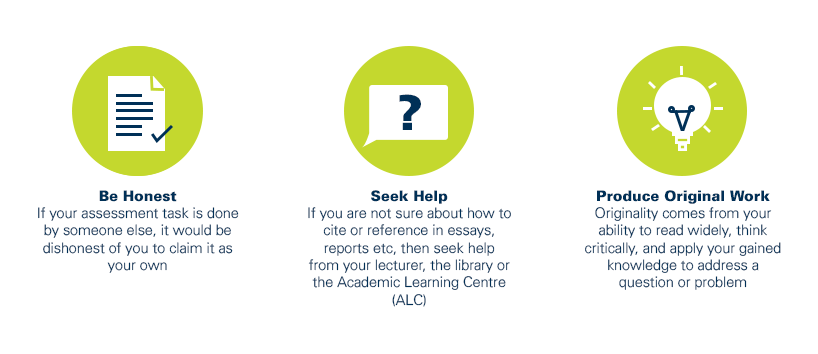
As a CQUniversity student you are expected to act honestly in all aspects of your academic work.
Any assessable work undertaken or submitted for review or assessment must be your own work. Assessable work is any type of work you do to meet the assessment requirements in the unit, including draft work submitted for review and feedback and final work to be assessed.
When you use the ideas, words or data of others in your assessment, you must thoroughly and clearly acknowledge the source of this information by using the correct referencing style for your unit. Using others’ work without proper acknowledgement may be considered a form of intellectual dishonesty.
Participating honestly, respectfully, responsibly, and fairly in your university study ensures the CQUniversity qualification you earn will be valued as a true indication of your individual academic achievement and will continue to receive the respect and recognition it deserves.
As a student, you are responsible for reading and following CQUniversity’s policies, including the Student Academic Integrity Policy and Procedure. This policy sets out CQUniversity’s expectations of you to act with integrity, examples of academic integrity breaches to avoid, the processes used to address alleged breaches of academic integrity, and potential penalties.
What is a breach of academic integrity?
A breach of academic integrity includes but is not limited to plagiarism, self-plagiarism, collusion, cheating, contract cheating, and academic misconduct. The Student Academic Integrity Policy and Procedure defines what these terms mean and gives examples.
Why is academic integrity important?
A breach of academic integrity may result in one or more penalties, including suspension or even expulsion from the University. It can also have negative implications for student visas and future enrolment at CQUniversity or elsewhere. Students who engage in contract cheating also risk being blackmailed by contract cheating services.
Where can I get assistance?
For academic advice and guidance, the Academic Learning Centre (ALC) can support you in becoming confident in completing assessments with integrity and of high standard.
What can you do to act with integrity?