Overview
In this unit, you will develop an understanding of paramedic care through the investigation of underpinning theory and practice of procedural applications in the discipline. This will include examples of clinical investigations of the neurological, respiratory, cardiovascular, gastrointestinal and endocrine systems including specific paramedic interventions such as cannulation, ventilation techniques, defibrillation and trauma management at an introductory level. Your knowledge and skills will be developed through a series of coursework exercises and practical laboratory sessions. The knowledge and skills developed in this unit ensure you meet the Paramedicine Board of Australia's registration requirements through a series of coursework exercises and practical laboratory sessions.
Details
Pre-requisites or Co-requisites
Pre-requisites: PMSC11002 Foundations of Paramedic Clinical Practice BMSC11010 Human Anatomy and Physiology 1 or BMSC11001 Human Body Systems 1 Co-requisite PMSC11004 Paramedic Medical Emergencies 1
Important note: Students enrolled in a subsequent unit who failed their pre-requisite unit, should drop the subsequent unit before the census date or within 10 working days of Fail grade notification. Students who do not drop the unit in this timeframe cannot later drop the unit without academic and financial liability. See details in the Assessment Policy and Procedure (Higher Education Coursework).
Offerings For Term 2 - 2022
Attendance Requirements
All on-campus students are expected to attend scheduled classes - in some units, these classes are identified as a mandatory (pass/fail) component and attendance is compulsory. International students, on a student visa, must maintain a full time study load and meet both attendance and academic progress requirements in each study period (satisfactory attendance for International students is defined as maintaining at least an 80% attendance record).
Recommended Student Time Commitment
Each 6-credit Undergraduate unit at CQUniversity requires an overall time commitment of an average of 12.5 hours of study per week, making a total of 150 hours for the unit.
Class Timetable
Assessment Overview
Assessment Grading
This is a graded unit: your overall grade will be calculated from the marks or grades for each assessment task, based on the relative weightings shown in the table above. You must obtain an overall mark for the unit of at least 50%, or an overall grade of 'pass' in order to pass the unit. If any 'pass/fail' tasks are shown in the table above they must also be completed successfully ('pass' grade). You must also meet any minimum mark requirements specified for a particular assessment task, as detailed in the 'assessment task' section (note that in some instances, the minimum mark for a task may be greater than 50%). Consult the University's Grades and Results Policy for more details of interim results and final grades.
All University policies are available on the CQUniversity Policy site.
You may wish to view these policies:
- Grades and Results Policy
- Assessment Policy and Procedure (Higher Education Coursework)
- Review of Grade Procedure
- Student Academic Integrity Policy and Procedure
- Monitoring Academic Progress (MAP) Policy and Procedure - Domestic Students
- Monitoring Academic Progress (MAP) Policy and Procedure - International Students
- Student Refund and Credit Balance Policy and Procedure
- Student Feedback - Compliments and Complaints Policy and Procedure
- Information and Communications Technology Acceptable Use Policy and Procedure
This list is not an exhaustive list of all University policies. The full list of University policies are available on the CQUniversity Policy site.
Feedback, Recommendations and Responses
Every unit is reviewed for enhancement each year. At the most recent review, the following staff and student feedback items were identified and recommendations were made.
Feedback from Student feedback
Assessment task and weightings to better reflect learning outcomes of unit.
Poster presentation to be updated to an online quiz covering the all the unit content. The quiz will assess a broader range of skills, rather than focused on one skill.
Feedback from Student feedback
Residential school assessment expectations not clear.
Consider restructure of residential school assessments. The division of each skill into separate skill station will provide clarity of each skill assessment requirement.
- Articulate the theoretical underpinnings, including the anatomical and pathophysiological reasons, for the application of advanced care skills and interventions in the management of a critically ill or injured patient relevant to paramedic practice
- Identify and interpret the indications, precautions, risks and contraindications of using specific paramedic interventions involved in advanced care prehospital practice
- Employ critical thinking and clinical reasoning for using specific paramedic interventions involved in advanced care prehospital skills and interventions
- Explain and demonstrate the skills and interventions for specific paramedic interventions involved in advanced care prehospital practice in a safe, ethical and professional manner
It is now a requirement of the Paramedicine Board of Australia that units align with the AHPRA Professional Capabilities for Registered Paramedics. These are broken down into five (5) domains. Below aligns the proposed learning outcomes with these domains, with each domain also listed below:
- Learning outcome 1 aligns with professional capabilities for registered paramedics Domain 1, 3 & 5
- Learning outcome 2 aligns with professional capabilities for registered paramedics Domain 3 & 5
- Learning outcome 3 aligns with professional capabilities for registered paramedics Domain 1, 2, 3, 4 & 5
- Learning outcome 4 aligns with professional capabilities for registered paramedics Domain 1, 2, 3, 4 & 5
Domain 1 - Professional and ethical conduct:
- Practice ethically and professionally, consistent with relevant legislation and regulatory requirements
- Provide each patient with an appropriate level of dignity and care
- Assume responsibility, and accept accountability, for professional decisions
- Advocate on behalf of the patient, when appropriate within the context of the practitioner's practice as a paramedic
Domain 2 - Professional communication and collaboration:
- Communicate clearly, sensitively and effectively with the patient and other relevant people
- Collaborate with other health practitioners
Domain 3 - Evidence-based practice and professional learning:
- Make informed and reasonable decisions
- Use clinical reasoning and problem-solving skills to determine clinical judgements and appropriate actions
- Draw on appropriate knowledge and skills in order to make professional judgements
- identify ongoing professional learning, developmental needs and opportunities
Domain 4 - Safety, risk management and quality assurance:
- Protect and enhance patient safety
- Maintain safety of self and others in the work environment
- Operate effectively in an emergency care environment
- Maintain records appropriately
- Monitor and review the ongoing effectiveness of their practice and modify it accordingly
- Audits, reflects on and reviews practice
- Participate in the mentoring, teaching and development of others
Domain 5 - Paramedicine practice:
- Use patient information management systems appropriately
- Assess and monitor the patient capacity to receive care
- understand the key concepts of the bodies of knowledge which are specifically relevant to paramedicine practice
- Conduct appropriate diagnostic or monitoring procedures, treatment, therapy or other actions safely
- Demonstrate the requisite knowledge and skills to participate in mass casualty or major incident situations
- Formulate specific and appropriate patient care and treatment actions
Alignment of Assessment Tasks to Learning Outcomes
| Assessment Tasks | Learning Outcomes | |||
|---|---|---|---|---|
| 1 | 2 | 3 | 4 | |
| 1 - Practical Assessment - 0% | ||||
| 2 - Online Quiz(zes) - 50% | ||||
| 3 - Written Assessment - 50% | ||||
Alignment of Graduate Attributes to Learning Outcomes
| Graduate Attributes | Learning Outcomes | |||
|---|---|---|---|---|
| 1 | 2 | 3 | 4 | |
| 1 - Communication | ||||
| 2 - Problem Solving | ||||
| 3 - Critical Thinking | ||||
| 4 - Information Literacy | ||||
| 5 - Team Work | ||||
| 6 - Information Technology Competence | ||||
| 7 - Cross Cultural Competence | ||||
| 8 - Ethical practice | ||||
| 9 - Social Innovation | ||||
| 10 - First Nations Knowledges | ||||
| 11 - Aboriginal and Torres Strait Islander Cultures | ||||
Textbooks
Textbook of Adult Emergency Medicine
- 5th edition (2019)
- Authors: Peter Cameron, Mark Little, Biswadev Mitra, Connor Deasy
- Elsevier
- ISBN: 9780702076244
- Binding: Paperback
Additional Textbook Information
Both the eBook and paper versions are available to purchase at the CQUni Bookshop here: http://bookshop.cqu.edu.au (Check on eBook link)
IT Resources
- CQUniversity Student Email
- Internet
- Unit Website (Moodle)
- Computer - ability to access study materials, including instructional videos and scan and upload assessment.
- Earphones
All submissions for this unit must use the referencing style: American Psychological Association 7th Edition (APA 7th edition)
For further information, see the Assessment Tasks.
k.verney@cqu.edu.au
Week 1
Begin Date: 11 Jul 2022Module/Topic
Systematic Approach Overview
Chapter
See eReading list and Moodle page.
Events and Submissions/Topic
Week 2
Begin Date: 18 Jul 2022Module/Topic
Airway Management
Chapter
Events and Submissions/Topic
Week 3
Begin Date: 25 Jul 2022Module/Topic
Chapter
Events and Submissions/Topic
Week 4
Begin Date: 01 Aug 2022Module/Topic
Chapter
Events and Submissions/Topic
Week 5
Begin Date: 08 Aug 2022Module/Topic
Chapter
Events and Submissions/Topic
Vacation Week
Begin Date: 15 Aug 2022Module/Topic
VACATION WEEK
Chapter
No assigned readings; use this time to ensure learning and assessment tasks are completed.
Events and Submissions/Topic
VACATION WEEK
Week 6
Begin Date: 22 Aug 2022Module/Topic
Chapter
Events and Submissions/Topic
Week 7
Begin Date: 29 Aug 2022Module/Topic
Chapter
Events and Submissions/Topic
Week 8
Begin Date: 05 Sep 2022Module/Topic
Chapter
Events and Submissions/Topic
Internal student assessment day 6th &7th Sep.
Week 9
Begin Date: 12 Sep 2022Module/Topic
Infection control
Chapter
Events and Submissions/Topic
Residential School A Monday 12th Sep- Thur 15th Sep
Week 10
Begin Date: 19 Sep 2022Module/Topic
Resuscitation, CPR and Defibrillation
Chapter
Events and Submissions/Topic
Residential School B Tuesday 20th Sep- Friday 23rd Sep
Week 11
Begin Date: 26 Sep 2022Module/Topic
Self Orientated Course Revision
Chapter
Events and Submissions/Topic
Week 12
Begin Date: 03 Oct 2022Module/Topic
Self Orientated Course Revision
Chapter
Events and Submissions/Topic
Review/Exam Week
Begin Date: 10 Oct 2022Module/Topic
Chapter
Events and Submissions/Topic
Exam Week
Begin Date: 17 Oct 2022Module/Topic
Chapter
Events and Submissions/Topic
Students enrolled as On-campus will be required to attend compulsory tutorial sessions during the term. Students must nominate their preferred tutorial location and time via the student portal. Tutorial numbers are capped per session, you are not guaranteed a place at your preferred session, but you are guaranteed one session per week. Students may be requested to move internal tutorial session to maintain appropriate student numbers to enhance the overall student experience, and learning and teaching requirements.
Students enrolled as Distance/mixed mode will be required to attend a compulsory residential school. Students must nominate their preferred residential school location via the student portal. Numbers at residential schools are capped and a position at your preferred residential school is not guaranteed. Geographical proximity to and/or previous attendance at a residential school location does not guarantee placement at your preferred residential school location. If student numbers are considered low at a particular residential school, you may be requested to change the date of your attendance to enhance the overall student experience.
Attendance at internal tutorials and residential schools is compulsory. If for any reason you cannot attend a tutorial or day at residential school you must provide appropriate evidence, as per Assessment Policy and Procedure, to justify your absence. You will be responsible for making arrangements, with the unit coordinator, to make up for the missed learning and teaching.
1 Written Assessment
Clinical case studies are a valuable tools used by health professionals to simulate authentic situations to enable the application of knowledge to develop clinical reasoning to complex problems. Clinical case studies allow the practitioner to consider the case, research and reflect without pressure and constraints.
In this unit there are two clinical case studies, each of the case studies will focus on a different complex clinical presentation. You will be required to answer the clinical questions and discuss the use of relevant paramedic procedures and skills. Your response must be academic and supported by evidence.
Each clinical case study is to be 500 words (+/- 10%).
Each clinical case study is worth 25%.
Clinical case study ONE- Due Friday 5th August
Clinical case study TWO- Due Friday 2nd September
See Moodle page for case study questions.
Week 4 Friday (5 Aug 2022) 5:00 pm AEST
Feedback and grading will be made available two weeks post due date
You will be required to demonstrate your theoretical knowledge through a clinical case study.
The word limit for this assessment is 500 words (+/-10%, not including cover page, headings, in-text references and reference page).
Presentation:
Your assessment should be formatted on A4 International Standard paper with margins of 2.54cm. Arial font and size set to 12 point, and line spacing set to 1.5.
Format:
Cover page: a cover page must be included for this assessment in the following format:
• Assessment name
• Unit number and name
• Your name
• Student number
• Word count (not including cover page, headings, in-text references and reference page)
• Assessment due date (if you have an approved extension this needs to be noted here)
• Appropriately referenced using the APA 7th Edition format
Reference page:
• The reference list must be on a separate page at the end of your assessment
• References must be listed using the APA 7th Edition format
You must provide a reference list of no less than 5 peer reviewed scientific journal articles published after 2012. Subsequent resources can include Australian and/or New Zealand ambulance service guidelines, expert textbooks and websites, as appropriate. Whilst you may refer to ambulance service guidelines, do not overuse them or use them as your primary source of evidence. Ensure you are predominantly using recent peer reviewed journal articles (minimum 5).
The assessment will be marked against a rubric, which will be available on the Moodle page.
In the absence of an approved extension, a penalty of 5% of the total marks for the assessment will be deducted for each full or part calendar day the assessment is overdue, in accordance with the Assessment Policy and Procedure.
You must attempt all assessments to pass this unit.
- Articulate the theoretical underpinnings, including the anatomical and pathophysiological reasons, for the application of advanced care skills and interventions in the management of a critically ill or injured patient relevant to paramedic practice
- Employ critical thinking and clinical reasoning for using specific paramedic interventions involved in advanced care prehospital skills and interventions
2 Practical Assessment
The safe and competent performance of medical procedures and skills forms a core aspect of paramedic practice. Paramedics must posses the theoretical knowledge underpinning these skills whilst also able to apply them to a safe standard. This practical assessment will be conducted using a variety of platforms, including written short answer quiz, skill station and voice viva. There are six (6) elements of assessment; a short answer quiz and five (5) skill stations. The skill station may assess one, or a combination of skills with verbal questions relating to that skill. These skill stations are designed to asses knowledge and practical application of paramedic skills. Each skill station will be 5 -10 minute duration.
Internal students will complete all assessment during week 8 on Tuesday 6th September or Wednesday 7th September.
Mixed mode students will undertake the 15 minute short answer assessment on the first day of residential school. This is the first of six assessments. On the final day of residential school students will undertake five skill stations.
The practical assessment is Pass/Fail.
Students are required to demonstrate their competence by passing four (4) out of six (6) assessments. Students who fail by one element (passing three out of six) will be offered one reattempt in order to resolve any doubt of their safe and competent performance. If a student fails the reattempt they will receive a fail for their practical assessment and fail the unit. If a student does not achieve a pass in three out of six assessments they are not eligible for a reattempt.
Assessments will be carried out during the internal assessment day or residential school.
Feedback will be provided within two weeks after the assessment is conducted.
The assessment will be marked in accordance to rubrics specific to the skill station. The rubric will assess the articulation of theoretical knowledge of the skills and the safe and competent demonstration of each component in a timely manner. Points will be allocated to each step of the correct performance of the skill.
Critical errors:
Critical errors in this unit will be classed as anything, by act or omission, that causes immediate harm or the potential to cause harm, to yourself, partner, patient or bystanders or any procedure that is performed outside your scope of practice. During any form of assessment, if any of the following are witnessed, no marks will be given for that assessment. Furthermore, any critical error discovered on review or moderation will also result in no marks being given for that particular assessment:
· Unsafe defibrillation
· Incorrect joules delivered during defibrillation
· Defibrillation of a non-shockable rhythm
· Failure to recognise a cardiac arrest (>1minute)
· Failure to shock a shockable rhythm in a timely manner (<2 minutes)
· Failure to perform a complete drug check, including dose, volume and contraindications
· Failure to check indications, and contraindications before performing a skill or procedure.
· Incorrect sharps disposal or unsafe practice with a sharp
· Performing a skill or procedure or administering a drug outside your scope of practice
· Any grossly unsafe practice, as determined by the assessing academic.
If you do not understand any of the above, please do not hesitate to clarify with your unit coordinator.
No submission method provided.
- Identify and interpret the indications, precautions, risks and contraindications of using specific paramedic interventions involved in advanced care prehospital practice
- Explain and demonstrate the skills and interventions for specific paramedic interventions involved in advanced care prehospital practice in a safe, ethical and professional manner
3 Online Quiz(zes)
The safe application of procedures and skills in a clinical setting must be underpinned by theoretical knowledge. The ability to rapidly recall indications, contraindications and complications of procedures and skills is imperative for safe paramedic practice. The online quiz will assess knowledge and understanding of the procedures and skills taught within the unit.
The online quiz will assess content from PMSC12001 from Weeks 1-11.
The quiz will open in Week 11 on Monday 26th September and close Monday 3rd October.
You will only receive one attempt at the quiz.
1
Other
Week 12 Monday (3 Oct 2022) 8:00 am AEST
Quiz will open Monday 26th September at 0800 and close Monday 3rd October 0800.
Results will be released two weeks post quiz closure.
- Time allocation of 60 minutes to complete the quiz.
- There will be a combination of multiple choice, short answer and diagrams.
- You will only be given one attempt.
- When the due date expires, any open attempts are automatically submitted; you must therefore start the quiz before that deadline or you will not receive your full time period.
- This is an individual assessment with no collaboration allowed.
- No late submissions will be accepted and the test will close and become unavailable after the due date and time.
- In the absence of an approved extension, there will be no opportunity to complete the test after this date.
- If you have any technical issues you must notify the unit coordinator immediately
No submission method provided.
- Articulate the theoretical underpinnings, including the anatomical and pathophysiological reasons, for the application of advanced care skills and interventions in the management of a critically ill or injured patient relevant to paramedic practice
- Identify and interpret the indications, precautions, risks and contraindications of using specific paramedic interventions involved in advanced care prehospital practice
- Employ critical thinking and clinical reasoning for using specific paramedic interventions involved in advanced care prehospital skills and interventions
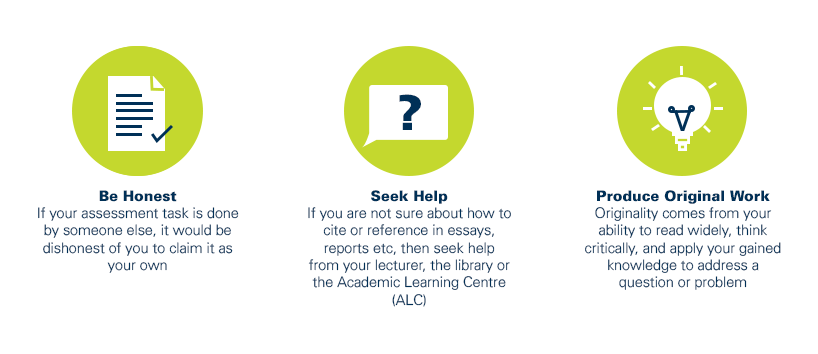
As a CQUniversity student you are expected to act honestly in all aspects of your academic work.
Any assessable work undertaken or submitted for review or assessment must be your own work. Assessable work is any type of work you do to meet the assessment requirements in the unit, including draft work submitted for review and feedback and final work to be assessed.
When you use the ideas, words or data of others in your assessment, you must thoroughly and clearly acknowledge the source of this information by using the correct referencing style for your unit. Using others’ work without proper acknowledgement may be considered a form of intellectual dishonesty.
Participating honestly, respectfully, responsibly, and fairly in your university study ensures the CQUniversity qualification you earn will be valued as a true indication of your individual academic achievement and will continue to receive the respect and recognition it deserves.
As a student, you are responsible for reading and following CQUniversity’s policies, including the Student Academic Integrity Policy and Procedure. This policy sets out CQUniversity’s expectations of you to act with integrity, examples of academic integrity breaches to avoid, the processes used to address alleged breaches of academic integrity, and potential penalties.
What is a breach of academic integrity?
A breach of academic integrity includes but is not limited to plagiarism, self-plagiarism, collusion, cheating, contract cheating, and academic misconduct. The Student Academic Integrity Policy and Procedure defines what these terms mean and gives examples.
Why is academic integrity important?
A breach of academic integrity may result in one or more penalties, including suspension or even expulsion from the University. It can also have negative implications for student visas and future enrolment at CQUniversity or elsewhere. Students who engage in contract cheating also risk being blackmailed by contract cheating services.
Where can I get assistance?
For academic advice and guidance, the Academic Learning Centre (ALC) can support you in becoming confident in completing assessments with integrity and of high standard.
What can you do to act with integrity?