Overview
This unit is the first of three (3) clinical placement units within the Bachelor of Paramedic Science course, with a maximum of four (4) weeks clinical placement in a clinical setting with an approved provider. You will apply clinical knowledge, reasoning and practical skills at a novice level in the clinical environment, whilst engaging in reflective practice activities to support self-directed learning. Preparation activities will increase workplace literacy and provide guidance on navigating the student-mentor relationship, ensuring you enjoy a positive and successful first clinical placement.
Details
Pre-requisites or Co-requisites
Pre-requisite: PMSC12001 Procedures and Skills in Paramedic CarePMSC12004 Advanced Electrophysiology and Coronary Care. Please note: Any student who has not successfully completed a PMSC residential school within the preceding 12 months or undertaken a clinical placement unit, must complete a PMSC12001 Procedures & Skills refresher. This ensures currency with all contemporary skills and procedures in line with industry standards and professional capabilities
Important note: Students enrolled in a subsequent unit who failed their pre-requisite unit, should drop the subsequent unit before the census date or within 10 working days of Fail grade notification. Students who do not drop the unit in this timeframe cannot later drop the unit without academic and financial liability. See details in the Assessment Policy and Procedure (Higher Education Coursework).
Offerings For Term 2 - 2022
Attendance Requirements
All on-campus students are expected to attend scheduled classes - in some units, these classes are identified as a mandatory (pass/fail) component and attendance is compulsory. International students, on a student visa, must maintain a full time study load and meet both attendance and academic progress requirements in each study period (satisfactory attendance for International students is defined as maintaining at least an 80% attendance record).
Recommended Student Time Commitment
Each 6-credit Undergraduate unit at CQUniversity requires an overall time commitment of an average of 12.5 hours of study per week, making a total of 150 hours for the unit.
Class Timetable
Assessment Overview
Assessment Grading
This is a pass/fail (non-graded) unit. To pass the unit, you must pass all of the individual assessment tasks shown in the table above.
All University policies are available on the CQUniversity Policy site.
You may wish to view these policies:
- Grades and Results Policy
- Assessment Policy and Procedure (Higher Education Coursework)
- Review of Grade Procedure
- Student Academic Integrity Policy and Procedure
- Monitoring Academic Progress (MAP) Policy and Procedure - Domestic Students
- Monitoring Academic Progress (MAP) Policy and Procedure - International Students
- Student Refund and Credit Balance Policy and Procedure
- Student Feedback - Compliments and Complaints Policy and Procedure
- Information and Communications Technology Acceptable Use Policy and Procedure
This list is not an exhaustive list of all University policies. The full list of University policies are available on the CQUniversity Policy site.
Feedback, Recommendations and Responses
Every unit is reviewed for enhancement each year. At the most recent review, the following staff and student feedback items were identified and recommendations were made.
Feedback from Student feedback Staff reflection
Assessment paperwork was not clear.
Review the assessment guidelines and investigate the use of an electronic mentor report.
Feedback from Student feedback Staff reflection
Return of assessment items was delayed.
Review the marking rubric to more easily review and return assessment items.
- Apply clinical reasoning and practical skills at a novice level whilst working within a collaborative clinical setting with allied health professionals
- Employ reflective practice principles associated with clinical reasoning and conduct whilst supporting diverse client groups in the health care setting
- Discuss legal responsibilities and requirements, ethical and professional responsibilities and the legal and ethical boundaries of paramedicine practice.
It is now a requirement of Paramedic Registration, to align with the AHPRA accreditation guidelines. These are broken down into five (5) domains. Below aligns the proposed learning outcomes with these domains, with each domain also listed below:
- Learning outcome 1 aligns with professional capabilities for registered paramedics Domain 1, 2, 3 & 5
- Learning outcome 2 aligns with professional capabilities for registered paramedics Domain 1, 2 & 5
- Learning outcome 3 aligns with professional capabilities for registered paramedics Domain 1, 2, 3, 4 & 5.
Domain 1 - Professional and ethical conduct
- Practice ethically and professionally, consistent with relevant legislation and regulatory requirements
- Provide each patient with an appropriate level of dignity and care
- Assume responsibility, and accept accountability, for professional decisions
- Advocate on behalf of the patient, when appropriate within the context of the practitioner's practice as a paramedic.
Domain 2 - Professional communication and collaboration
- Communicate clearly, sensitively and effectively with patient and other relevant people
- Collaborate with other health practitioners.
Domain 3 - Evidence-based practice and professional learning
- Make informed and reasonable decisions
- Use clinical reasoning and problem-solving skills to determine clinical judgements and appropriate actions
- Draw on appropriate knowledge and skills in order to make professional judgements
- Identify ongoing professional learning, developmental needs and opportunities.
Domain 4 - Safety, risk management and quality assurance
- Protect and enhance patient safety
- Maintain safety of self and others in the work environment
- Operate effectively in an emergency care environment
- Maintain records appropriately
- Monitor and review the ongoing effectiveness of their practice and modify it accordingly
- Audits, reflects on and reviews practice
- Participate in the mentoring, teaching and development of others.
Domain 5 - Paramedicine practice
- Use patient information management systems appropriately
- Assess and monitor the patient capacity to receive care
- Understand the key concepts of the bodies of knowledge which are specifically relevant to paramedicine practice
- Conduct appropriate diagnostic or monitoring procedures, treatment, therapy or other actions safely
- Demonstrate the requisite knowledge and skills to participate in mass casualty or major incident situations
- Formulate specific and appropriate patient care and treatment actions.
Alignment of Assessment Tasks to Learning Outcomes
| Assessment Tasks | Learning Outcomes | ||
|---|---|---|---|
| 1 | 2 | 3 | |
| 1 - Portfolio - 0% | |||
| 2 - Professional Practice Placement - 0% | |||
| 3 - Online Quiz(zes) - 0% | |||
Alignment of Graduate Attributes to Learning Outcomes
| Graduate Attributes | Learning Outcomes | ||
|---|---|---|---|
| 1 | 2 | 3 | |
| 1 - Communication | |||
| 2 - Problem Solving | |||
| 3 - Critical Thinking | |||
| 4 - Information Literacy | |||
| 5 - Team Work | |||
| 6 - Information Technology Competence | |||
| 7 - Cross Cultural Competence | |||
| 8 - Ethical practice | |||
| 9 - Social Innovation | |||
| 10 - First Nations Knowledges | |||
| 11 - Aboriginal and Torres Strait Islander Cultures | |||
Textbooks
There are no required textbooks.
IT Resources
- CQUniversity Student Email
- Internet
- Unit Website (Moodle)
All submissions for this unit must use the referencing style: American Psychological Association 7th Edition (APA 7th edition)
For further information, see the Assessment Tasks.
k.shearer@cqu.edu.au
Week 1 - Introduction and Professional Communication
Begin Date: 11 Jul 2022Module/Topic
- Professional Communication
- Student and academic integrity, Student Charter & Code of Conduct (CQU and QAS).
Chapter
- Read the Clinical Placement Guide, relevant Policies and Code of Conduct documents.
Events and Submissions/Topic
Week 2 - Maintaining Health & Wellbeing
Begin Date: 18 Jul 2022Module/Topic
- Online clinical learning activities
- Pre-placement student survey.
Chapter
- Familiarize with Scope of Practice (Clinical Skills Matrix) document
- As per eReading list.
Events and Submissions/Topic
Week 3 - Ethical Considerations and Documentation
Begin Date: 25 Jul 2022Module/Topic
- Online clinical learning activities.
Chapter
- As per eReading list.
Events and Submissions/Topic
Week 4 - Constructive Feedback / Clinical Placement Week 1
Begin Date: 01 Aug 2022Module/Topic
- All students on clinical placement
- Online clinical learning activities.
Chapter
- As per eReading list.
Events and Submissions/Topic
Week 5 - Reflective Practice Part 1 / Clinical Placement Week 2
Begin Date: 08 Aug 2022Module/Topic
- All students on clinical placement
- Online clinical learning activities.
Chapter
Events and Submissions/Topic
Vacation Week
Begin Date: 15 Aug 2022Module/Topic
Clinical Placement Week 3
Chapter
Events and Submissions/Topic
Week 6 - Reflective Practice Part 2 / Clinical Placement Week 4
Begin Date: 22 Aug 2022Module/Topic
- Final week of clinical placement
- Online clinical learning activities.
Chapter
Events and Submissions/Topic
Week 7 - Reflective Practice Part 3
Begin Date: 29 Aug 2022Module/Topic
- Post-placement review
- Online clinical learning activities.
Chapter
Events and Submissions/Topic
Mentor Reports due Friday
Mentor Reports Due: Week 7 Friday (2 Sept 2022) 5:00 pm AEST
Week 8 - Injury Prevention and Occupational Violence
Begin Date: 05 Sep 2022Module/Topic
Online clinical learning activities.
Chapter
Events and Submissions/Topic
Portfolio Due Friday
Portfolio Due: Week 8 Friday (9 Sept 2022) 5:00 pm AEST
Week 9 - Review Week
Begin Date: 12 Sep 2022Module/Topic
- Summary of assessible unit content
Chapter
Events and Submissions/Topic
Week 10 - Review Week / Quiz
Begin Date: 19 Sep 2022Module/Topic
- Content review week / Quiz Open
Chapter
Events and Submissions/Topic
Quiz opens Friday
Week 11 - Quiz
Begin Date: 26 Sep 2022Module/Topic
Chapter
Events and Submissions/Topic
Quiz closes Friday
Online Quiz Due: Week 11 Friday (30 Sept 2022) 5:00 pm AEST
Week 12 - Infection Control Review
Begin Date: 03 Oct 2022Module/Topic
Infection Control Review
Chapter
Events and Submissions/Topic
Review/Exam Week
Begin Date: 10 Oct 2022Module/Topic
Chapter
Events and Submissions/Topic
Exam Week
Begin Date: 17 Oct 2022Module/Topic
Chapter
Events and Submissions/Topic
1 Professional Practice Placement
Your first clinical placement will see you enter the clinical environment as a novice clinician, and begin applying your clinical skills and judgement under the support and guidance of your supervising paramedic or health mentor. A major aspect of your continued development is mentor feedback, providing you with independent commentary on your current clinical performance from the point of view of industry colleagues. The Mentor Reports capture student-led supervisor feedback on performance and attendance in electronic format for assessment and progress tracking.
This assessment task guides you and your work team through a review process designed to promote self-assessment on your part and to prompt the most practical and useful type of feedback from mentors. You will complete these reports together with your supervising mentor so that you can discuss the feedback and grade choices. Yourself, mentors or Officer in Charge (OIC) are also required to complete details of shift attendance and professional conduct for the purpose of academic verification. Students are expected to uphold the standards and requirements of the Clinical Placement Guidelines as provided within Moodle.
This task is designed to enhance the educational quality and value of your clinical placement by:
- Establishing clear expectations of students’ clinical performance and knowledge, enabling mentors to frame assessment, feedback, and support at the appropriate level.
- Providing a framework for communication and feedback to guide and strengthen the student - mentor relationship.
- Recording your performance on a fortnightly basis, to demonstrate achievement of unit learning objectives and assessment requirements.
- Ensure adherence to required standards of conduct and attendance during clinical placement.
It is important to note that these documents are not solely to confirm your completion of unit requirements; they are equally valuable as evidence logs of your professionalism, conduct, and clinical performance that will support your future employment applications. For these reasons they are arguably the most valuable documents from your clinical placement, and it is imperative that you are diligent in completing them with your mentors as instructed.
Week 7 Friday (2 Sept 2022) 5:00 pm AEST
Mentor Reports are due one week after the completion of your clinical placement.
Week 9 Friday (16 Sept 2022)
Assessments will be marked and returned two weeks after submission.
Whilst attending placement you will provide the Mentor Report template and Scope of Practice document to the station OIC and all mentors that you work with. These provide information on appropriate performance expectations, the goals of this placement phase, and on the performance and self-review process. Appropriate feedback and grading from your mentor depends upon their access to this information. Your submission must meet the following criteria to pass this assessment task:
- You must attend all scheduled shifts as a minimum of two (2) Mentor Reports apply
- You will complete 2 Mentor Reports, one for each fortnight (or equivalent).
- You will submit both mentor reports together on the first Friday following completion of your final placement week, if not before
- All fields must be completed in full according to directions on the cover page at the front of the document
- The shift attendance log must be verified as true and correct by either one of your mentors or your station OIC
- Notify the placement host by phone asap of any unplanned absenteeism, followed by the completion of the Absenteeism Notification form in Moodle and notify your Unit Coordinators via email (paramedic.placements@cqu.edu.au)
- Absences must be captured in the mentor reports, however there is no allowance for make-up shifts with QAS
- Minimum expectations of clinical performance and professional conduct grades are detailed within the submission checklist found on Moodle under the Assessment tile
- Direct reports from industry of student misconduct, or of significant concerns regarding clinical performance and/or behaviour, are investigated fully and may impact successful completion of this unit
- Details on the electronic completion and submission of your mentor reports will be on the Moodle page
- Attendance and mentor reports are subject to random validity checks with placement hosts.
You must submit and pass this assessment to pass the unit. This is a pass/fail assessment.
- Apply clinical reasoning and practical skills at a novice level whilst working within a collaborative clinical setting with allied health professionals
- Employ reflective practice principles associated with clinical reasoning and conduct whilst supporting diverse client groups in the health care setting
- Discuss legal responsibilities and requirements, ethical and professional responsibilities and the legal and ethical boundaries of paramedicine practice.
2 Portfolio
This unit is divided into three main phases: pre-placement preparation, the 3-5 weeks of clinical placement, and post-placement review. The activities of this assessment task span all three phases, and are designed to lead you confidently through your first paramedic clinical placement.
- The pre-placement activities ensure adequate preparation for all aspects of clinical placement and establish performance goals and expectations. You will learn about the concept of reflective practice for paramedics, and through a process of self-assessment and planning will begin to proactively manage your own clinical learning and development.
- During your 3-5 weeks of clinical placement you will be performing assessment and assisting with treatment of patients, and during downtime complete a placement workbook. The workbook is designed to complement your professional experience by leading you through self-review tasks.
- Finally, on completion of your placement, you will review your overall clinical development and placement outcomes this term. This involves reviewing the experiences and achievements that you have gained and identifying what you must continue working upon to adequately prepare for Clinical Placement Two next year.
Week 8 Friday (9 Sept 2022) 5:00 pm AEST
Portfolios are due for submission two weeks after the completion of your clinical placement.
Week 10 Friday (23 Sept 2022)
Two weeks after submission date.
To pass the Reflective Practice Portfolio assessment you must complete your portfolio to the given instructions and include all required documents.
- All components of your completed Placement Workbook.
- Completed Submission Checklist.
Please see the unit Moodle for a complete description and discussion of this assessment task, including completion guidelines and examples.
Your Portfolio is due at 5 pm on the second Friday following your final week of clinical placement.
- Apply clinical reasoning and practical skills at a novice level whilst working within a collaborative clinical setting with allied health professionals
- Employ reflective practice principles associated with clinical reasoning and conduct whilst supporting diverse client groups in the health care setting
3 Online Quiz(zes)
You will complete one online quiz which will consist of multiple choice questions, True/False and Sequence questions, exploring content included in the unit (such as, but not limited to, lecture materials, links and required readings). Content for the quiz is based on the previous weekly topics (as detailed in the schedule). The quiz will be open for 1 week, failure to complete the quiz in this time will result in a fail of the assessment item and ultimately the unit.
You will need to obtain a pass for each assessment item in order pass the unit.
Other
Week 11 Friday (30 Sept 2022) 5:00 pm AEST
Quiz only open for 1 week.
Marks are awarded if a question is answered correctly and the total marks are tallied after the quiz has been attempted. Non-attempts will score a zero mark. The quiz is open-book, so the use of Clinical Practice Guidelines and book chapters are allowed. Please take note that this is an individual assessment. Collaboration is not allowed and may lead to disciplinary action.
The quiz will have a specific time limit imposed to complete the quiz. This is a multiple attempt quiz allowing endless attempts until the student successfully achieves 100%, which is the passing grade for this assessment.
In the absence of an approved extension, there will be no opportunity to complete the task after the due date.
You are required to achieve an overall mark of 100% to pass this assessment item, and therefore pass the unit.
- Apply clinical reasoning and practical skills at a novice level whilst working within a collaborative clinical setting with allied health professionals
- Discuss legal responsibilities and requirements, ethical and professional responsibilities and the legal and ethical boundaries of paramedicine practice.
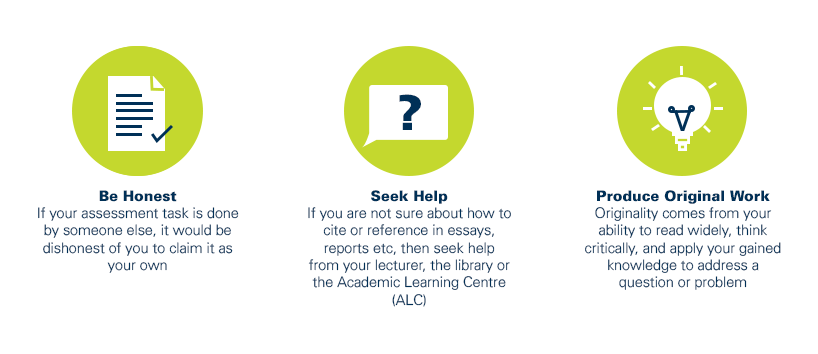
As a CQUniversity student you are expected to act honestly in all aspects of your academic work.
Any assessable work undertaken or submitted for review or assessment must be your own work. Assessable work is any type of work you do to meet the assessment requirements in the unit, including draft work submitted for review and feedback and final work to be assessed.
When you use the ideas, words or data of others in your assessment, you must thoroughly and clearly acknowledge the source of this information by using the correct referencing style for your unit. Using others’ work without proper acknowledgement may be considered a form of intellectual dishonesty.
Participating honestly, respectfully, responsibly, and fairly in your university study ensures the CQUniversity qualification you earn will be valued as a true indication of your individual academic achievement and will continue to receive the respect and recognition it deserves.
As a student, you are responsible for reading and following CQUniversity’s policies, including the Student Academic Integrity Policy and Procedure. This policy sets out CQUniversity’s expectations of you to act with integrity, examples of academic integrity breaches to avoid, the processes used to address alleged breaches of academic integrity, and potential penalties.
What is a breach of academic integrity?
A breach of academic integrity includes but is not limited to plagiarism, self-plagiarism, collusion, cheating, contract cheating, and academic misconduct. The Student Academic Integrity Policy and Procedure defines what these terms mean and gives examples.
Why is academic integrity important?
A breach of academic integrity may result in one or more penalties, including suspension or even expulsion from the University. It can also have negative implications for student visas and future enrolment at CQUniversity or elsewhere. Students who engage in contract cheating also risk being blackmailed by contract cheating services.
Where can I get assistance?
For academic advice and guidance, the Academic Learning Centre (ALC) can support you in becoming confident in completing assessments with integrity and of high standard.
What can you do to act with integrity?